

Korma, Kurma or Qorma has its roots in Mughlai cuisine tracing its history back to the 16th century and consists of meat or vegetables braised with yoghurt or cream, coupled with water and spices to produce a thick sauce or glaze.
Various regions in the Indian subcontinent have made it their own and though it started life as a meat dish, it has vegetarian versions also, one of which I made a few days back for our Sunday lunch.
My recipe is a simplified version and is fairly easy to make. It took me around 45 minutes from start to finish to make this dish.
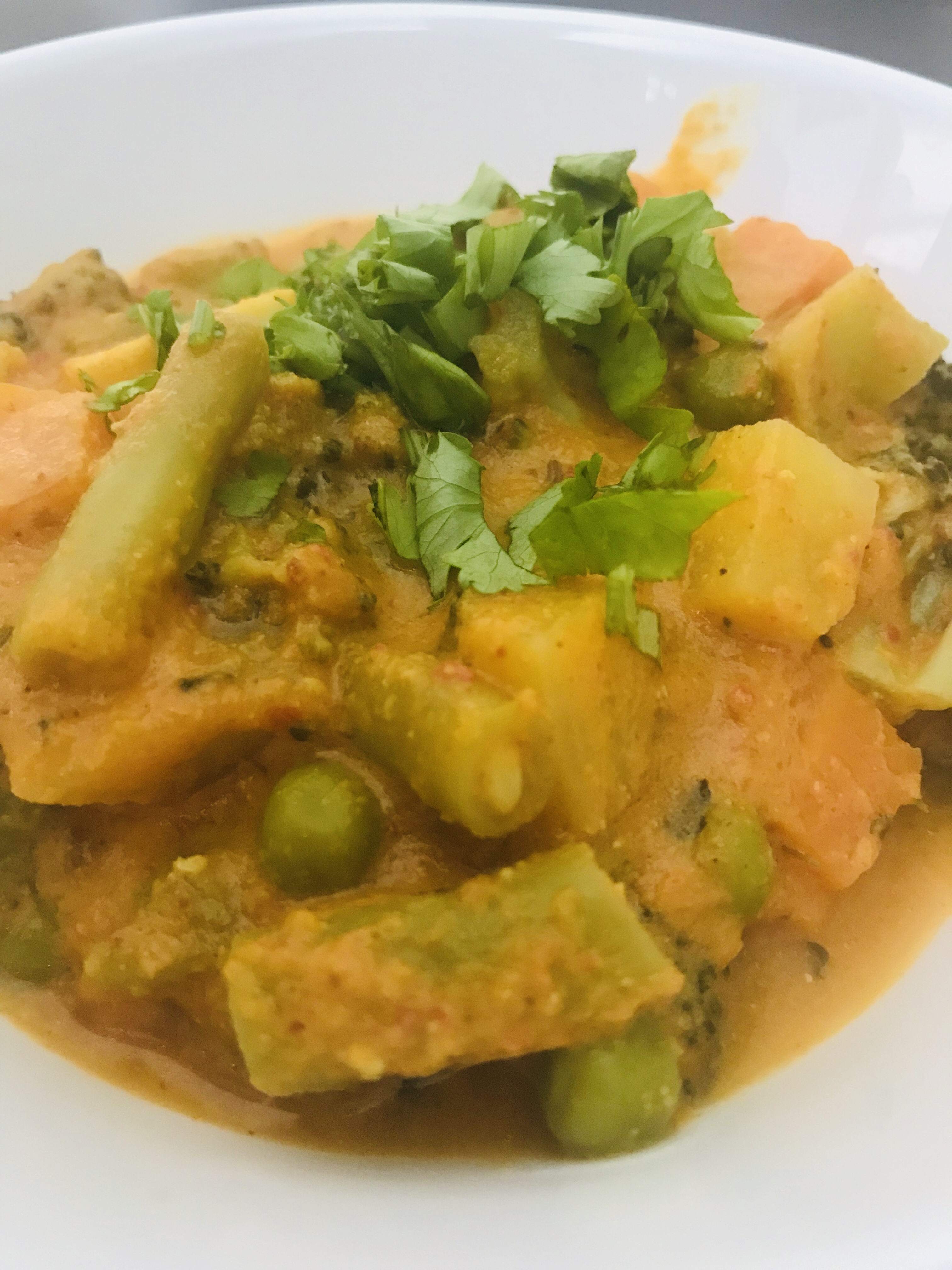
Mixed Vegetable Korma
Ingredients:
- 2 cups mixed vegetables (I used a combination of carrots, potatoes, broccoli and peas. You can also add cauliflower, spinach and cabbage)
- 1 cup frozen paneer, soaked in hot water for 30-40 minutes
- 2 medium-sized onions
- 2 medium-sized tomatoes
- 4-6 almonds
- 4-6 fresh red chillies (you can use green chillies if you don’t have red chillies)
- 1 pod of garlic (10-12 cloves)
- 1-inch piece of ginger
- 1 tsp of red chilli powder
- 1 tsp cumin powder
- 1 tsp coriander powder
- 1 tsp Kasuri methi
- 1/2 tsp turmeric powder
- 1-2 tsp garam masala powder
- 1 tsp cumin seeds
- 1/2 to 3/4 cup thick beaten yoghurt
- 2 tbsp oil
- Salt to taste
Method:
- Heat 1 tbsp oil in a pan and when the oil warms, add in the chopped vegetables plus 1/4 tsp turmeric powder and cook until it is 80% cooked. When cooked, remove from the pan and keep aside.
- In a blender, blend to a fine paste the onions, tomatoes, ginger, garlic, red chillies and almonds and keep aside.
- In the same pan you used to cook the vegetables, heat the remaining oil and when the oil is warm, add the cumin seeds. When the seeds pop, pour in the blended tomato paste and let it cook. When the paste starts to bubble, add the dry spices – red chilli powder, turmeric powder, cumin powder, coriander powder and salt and let it cook till the paste starts to reduce and oil starts to come out from the sides.
- At this point add the semi-cooked vegetables and stir well. Let it come to a rolling boil. You can add some water, but be careful not to water down the gravy too much.
- Reduce the flame to a low medium and pour in the beaten yoghurt. The yoghurt should be very smooth otherwise it may curdle. The presence of the masalas and the ginger garlic paste does not allow it to curdle, but keep stirring on a low flame so that it is not allowed to curdle.
- Chop the paneer (optional) and add to the gravy. I prefer to chop the paneer to the same size as that of my vegetables, but you can choose to keep it as you brought it.
- Check for seasoning and crush the Kasuri methi in the palms of your hands and season the gravy with it.
- Serve hot garnished with coriander leaves.
- This goes very well with Indian flatbreads or rice. I served it with a simple jeera rice.


 Memories and Such