2025 Week 51 Update

Today’s quote is from Jon Kabat-Zinn, an American mindfulness teacher, scientist, and author who played a major role in bringing mindfulness meditation into mainstream medicine and psychology. He founded the Mindfulness-Based Stress Reduction (MBSR) programme at the University of Massachusetts Medical School and has written influential books such as Wherever You Go, There You Are and Full Catastrophe Living. His work bridges ancient Buddhist practices with modern science, emphasising awareness as a path to healing and clarity.

Kabat-Zinn’s quote turns a common human experience on its head. Boredom is usually something we try to escape. We distract ourselves, scroll our phones, or search for stimulation because boredom feels empty, uncomfortable, or pointless. But Kabat-Zinn invites us to do the opposite: to stay with it and really look at it. When we pay attention to boredom, we begin to notice that it isn’t a single, solid thing. It’s made up of sensations, thoughts, restlessness, impatience, and subtle emotions. There may be tightness in the body, a looping inner voice, or a craving for something “else.” By observing these details, boredom transforms from a dull void into a rich field of experience. What once felt flat suddenly has texture and movement.

This shift reveals a deeper truth about mindfulness. Life becomes interesting not because it changes, but because our attention changes. When we stop demanding that every moment entertain us, we start discovering depth in the ordinary. The breath, sounds in a room, or even the feeling of waiting can become unexpectedly vivid. Boredom, in this sense, is not a problem to solve but an invitation to wake up to the present moment. The quote also challenges our habit of constant stimulation. It suggests that our discomfort with boredom says more about our relationship with our minds than about the moment itself. By learning to be present even when nothing exciting is happening, we cultivate patience, curiosity, and inner freedom.

We’re back in Singapore from a few days in Cameron Highlands. The weather was perfect, mild and chilly at night and when it rained, which was pretty much everyday. The tea plantations were gorgeous, and we purchased so many different kinds of tea from the two major tea plantations that we are good for a good part of 2026. We also spent a day each way in Kuala Lumpur, breaking the 8-9 hour journey into half so that S, who was the only driver, could rest. Hopefully, by the time we do this kind of trip again, either BB or GG or both will have their driver’s license, and they can take over for parts of the journey.

Today’s weekly talk is about happiness. Happiness doesn’t have a specific recipe. There’s no one way to be happy. What brings one person joy may not do the same for someone else. Even the things that once made you happy may have changed over time. Be open to redefining your idea of what a happy life should look like. Instead of chasing someone else’s idea of happiness, honour what feels right for you. Exploring your interests and passions, without worrying about others’ judgment, is key to living authentically. Celebrate the life that is uniquely and beautifully yours.

And on that note, here’s to the penultimate week of 2025. Have you started planning your goals, wishes, and hopes for 2026? I have started the process and will share some with you; some will remain private. Have an incredible end of 2025!

In My Hands Today…

Early Indians: The Story of Our Ancestors and Where We Came From – Tony Joseph

Who are we Indians? Where did we come from? Many of us believe our ancestors have lived in South Asia since ‘time immemorial’. But, as it turns out, ‘time immemorial’ may not have been all that long ago. To tell us the story of our ancestry, journalist Tony Joseph goes 65,000 years into the past—when a band of modern humans, or Homo sapiens, first made their way from Africa into the Indian subcontinent.

Citing recent DNA evidence, he traces the subsequent large migrations of modern humans into India—of agriculturalists from Iran between 7000 and 3000 BCE and pastoralists from the Central Asian Steppe between 2000 and 1000 BCE, among others.

As Joseph unravels our history using the results of genetic and other research, he takes head-on some of the most controversial and uncomfortable questions of Indian history: Who were the Harappans? Did the ‘Aryans’ really migrate to India? Are North Indians genetically different from South Indians? And are the various castes genetically distinct groups?

This book relies heavily on path-breaking DNA research of recent years. But it also presents earlier archaeological and linguistic evidence—all in an entertaining and highly readable manner. A hugely significant book, Early Indians authoritatively and bravely puts to rest several ugly debates on the ancestry of modern Indians. It not only shows us how the modern Indian population came to be composed as it is, but also reveals an undeniable and important truth about who we are: we are all migrants. And we are all mixed.

Sacred Stones, Spaces, and Stories: Ashtavinayaka Part 8

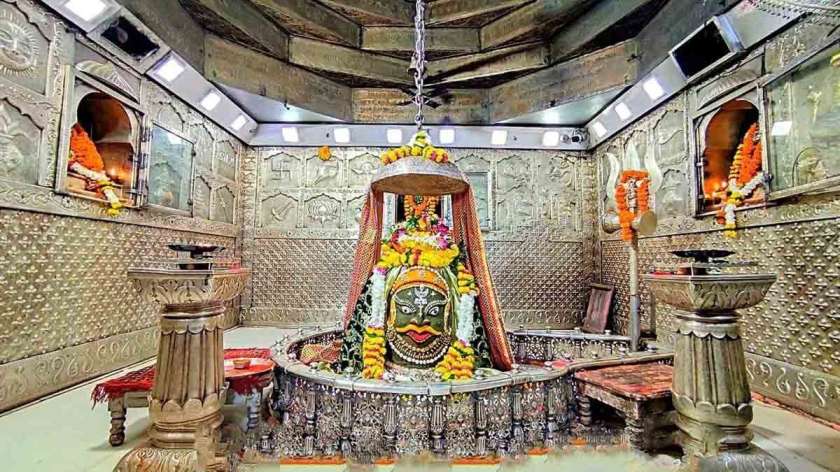
Renowned as the “Remover of Obstacles,” the Vighneshwar Temple at Ozar lies on the banks of the Kukadi River. Here, Lord Ganesha is worshipped as Vighneshwar or Vighnahar, the vanquisher of Vighnasura, the demon of obstacles, making Ozar a beacon for those seeking the removal of life’s impediments and the fulfilment of their aspirations.

Ozar is a small town in the Pune district, about 85 km from Pune city and near the famed Lenyadri caves. The temple’s riverside location, close to the Yedagaon dam, and its proximity to the Lenyadri shrine and Shivneri Fort imbue the site with a sense of history and natural beauty. The approach to the temple is marked by a fortified stone gateway, flanked by deep malas, or lamp towers, and meditation rooms.

The lore of Vighneshwar Temple is rooted in ancient scriptures such as the Mudgala Purana, Skanda Purana, and Vinayaka Purana and is central to its spiritual identity. Once, King Abhinandana performed a grand sacrifice but neglected to offer due respect to Indra, the king of gods. Feeling slighted, Indra commanded Kala (time/death) to disrupt the sacrifice. Kala assumed the form of the demon Vighnasura, “the demon of obstacles,” and not only destroyed the ritual but unleashed havoc across the universe, creating impediments in the virtuous deeds and sacrifices of sages and mortals alike.

Distressed by the chaos, the sages sought help from Brahma, or Shiva in some versions, who advised them to worship Lord Ganesha. Responding to their prayers, Ganesha confronted Vighnasura. Realising he could not defeat the divine child, Vighnasura surrendered and promised to desist from troubling those who invoked Ganesha’s name. In some retellings, Vighnasura became Ganesha’s attendant, tasked with testing the devotion of those who neglected his worship.

To commemorate this cosmic victory, the sages consecrated an idol of Ganesha as Vighneshwar at Ozar. From that day, it was decreed that obstacles, or Vighnas, would only trouble those who failed to honour Ganesha, cementing his role as the universal remover of obstacles.

The Vighneshwar Temple’s historical prominence is closely linked to the Maratha Peshwas. After the victorious Battle of Vasai or Bacaim in 1739, Chimaji Appa, the younger brother and military commander of Peshwa Baji Rao I, renovated the temple and adorned its shikhara, or spire, with gold as an offering of gratitude for his triumph. The temple underwent further restoration in 1967 under the guidance of Appa Shastri Joshi, a devoted follower of Ganesha.

The Vighneshwar Temple exemplifies classic Hindu temple architecture, blending grandeur with spiritual symbolism. The temple faces east, welcoming the rising sun and symbolising new beginnings. It is set within a large, walled courtyard with a prominent gateway, flanked by two massive stone Dwarapalas, or gatekeepers, and adorned with bas-reliefs of musicians. Two large deepmalas, or lamp towers, stand near the entrance, and small meditation rooms on either side offer spaces for contemplation. The temple features three intricately carved entrances, with the eastern gate serving as the main access point. The first hall houses an image of Dhundiraj Ganesha, while the second contains a white marble statue of Mushika, Ganesha’s mouse vehicle. The temple walls are decorated with vibrant murals and sculptures depicting scenes from Ganesha’s legends and the Ashtavinayak pilgrimage. The sanctum’s shikhara is covered in gold foil, a legacy of Chimaji Appa’s offering.

The presiding deity is a swayambhu, or self-manifested idol, naturally formed as an elephant-faced stone. The idol faces east, with its trunk turned to the left, and is covered in indoor, or vermilion. The eyes are set with emeralds, and diamonds adorn the forehead and navel. Brass images of Ganesha’s consorts, Riddhi and Siddhi, flank the main idol, symbolising prosperity and spiritual power.

The temple opens early, and devotees offer flowers, durva grass, and modaks to the deity. Ritual bathing of the idol is performed, especially on auspicious days. Morning and evening aartis are conducted with great devotion, accompanied by the ringing of bells and the chanting of hymns. Circumambulation, or pradakshina, of the sanctum is a common practice, with devotees seeking the removal of obstacles from their lives. On Sankashti Chaturthi, the fourth day after the full moon, special pujas and offerings are made, drawing large crowds of devotees.

The deepmalas are lit during festivals, creating a mesmerising spectacle of light that symbolises the victory of knowledge over ignorance. The marble statue of Mushika is also worshipped, as he is considered Ganesha’s loyal vehicle and a symbol of humility and service.

Ganesh Chaturthi or Bhadrapada Shuddha Chaturthi, is the most important festival at Ozar. The temple is adorned with flowers and lights, and thousands of devotees gather for special abhisheks, aartis, and processions. The atmosphere is charged with devotion, music, and communal harmony.

Other major festivals include Tripuri Pournima, the full moon in the month of Kartik and Magh Chaturthi in January or February, when fairs are organised and the temple becomes a hub of religious and cultural activities.

Vighneshwar’s legend is a powerful reminder that obstacles are an inevitable part of life, but with faith and devotion, they can be overcome. The temple’s rituals, architecture, and festivals all reinforce the message that invoking Ganesha brings clarity, strength, and the removal of impediments.

Ozar is traditionally the seventh temple visited on the Ashtavinayak pilgrimage, though many pilgrims visit it fifth for convenience. The temple’s association with the defeat of Vighnasura makes it a crucial stop for those seeking to complete the spiritual circuit and receive Ganesha’s blessings.

The temple stands as a radiant beacon of faith, resilience, and triumph over adversity. Its legends speak of cosmic battles and divine grace; its architecture embodies the grandeur and serenity of Hindu sacred spaces; its rituals and festivals unite communities in celebration and prayer.

In My Hands Today…

Gods, Guns and Missionaries: The Making of the Modern Hindu Identity – Manu S. Pillai

When European missionaries arrived in India in the sixteenth century, they entered a world both fascinating and bewildering. Hinduism, as they saw it, was a pagan a worship of devils and monsters by a people who burned women alive, performed outlandish rites and fed children to crocodiles. But it quickly became clear that Hindu ‘idolatry’ was far more layered and complex than European stereotypes allowed, surprisingly even sharing certain impulses with Christianity.

Nonetheless, missionaries became a threatening force as European power grew in India. Western ways of thinking gained further ascendancy during the British while interest in Hindu thought influenced Enlightenment thinkers like Voltaire in Europe, Orientalism and colonial rule pressed Hindus to reimagine their religion. In fact, in resisting foreign authority, they often adopted the missionaries’ own tools and strategies. It is this encounter, Manu S. Pillai argues, that has given Hinduism its present shape, also contributing to the birth of an aggressive Hindu nationalism.

Gods, Guns and Missionaries surveys these remarkable dynamics with an arresting cast of characters – maharajahs, poets, gun-wielding revolutionaries, politicians, polemicists, philosophers and clergymen. Lucid, ambitious, and provocative, it is at once a political history, an examination of the mutual impact of Hindu culture and Christianity upon each other, and a study of the forces that have prepared the ground for politics in India today. Turning away from simplistic ideas on religious evolution and European imperialism, the past as it appears here is more complicated – and infinitely richer – than previous narratives allow.

Weaponised Incompetence: The Art of Avoidance

Incompetence, at its core, refers to the inability to perform tasks effectively due to a lack of skill, knowledge, or aptitude. While genuine incompetence stems from legitimate shortcomings, weaponised incompetence is a manipulative behavior where individuals feign inability to avoid responsibility or shift burdens onto others. This tactic can lead to frustration, resentment, and imbalances in relationships and workplaces.

Incompetence is broadly defined as the inability to perform tasks or fulfill responsibilities effectively. It manifests in various forms across different domains: Administrative incompetence refers to dysfunctional behaviours that hinder organisational goals, while legal incompetence is the inability of individuals to make decisions due to mental impairment, and military incompetence is the failures in judgment or execution within military operations. Social ineptitude is the struggle with interpersonal skills or social interactions. Incompetence may arise from a lack of training, experience, or aptitude. However, when incompetence is intentionally feigned for personal gain or avoidance of responsibility, it becomes weaponised.

What is weaponised incompetence? Weaponised incompetence, also known as strategic incompetence, involves pretending to be incapable of performing tasks or intentionally doing them poorly to evade responsibility. This behavior often results in others taking over the task to ensure it is completed properly.

Key characteristics of weaponised incompetence include intentional underperformance, where one deliberately does tasks poorly or claims ignorance; manipulation, which is the shifting of responsibilities onto others through feigned inability; and imbalance, which creates unequal dynamics where one person bears an unfair workload.

Examples of weaponised incompetence include a partner consistently claiming they are “bad” at household chores like laundry or cooking, forcing the other person to take over, or a coworker who avoids group responsibilities by showing up unprepared or delegating their tasks under the guise of incompetence.

Why do people weaponise incompetence? Weaponised incompetence is often driven by psychological motives and personal dynamics. Understanding these underlying factors can help address the behaviour effectively.

Psychological motives include a desire for control whereby by feigning incompetence, individuals manipulate others into taking over tasks, maintaining control over how responsibilities are distributed. There is also a fear of failure where some people avoid tasks due to anxiety about performing poorly or being exposed as inadequate. Some individuals also need validation by creating dependency through perceived incompetence that ensures others seek their assistance, feeding their need for attention and affirmation.

In situational factors, when responsibility is avoided, weaponised incompetence allows individuals to shirk unpleasant tasks while ensuring they are completed by someone else. Power dynamics also play a role, as weaponised incompetence can reinforce existing imbalances in relationships or workplaces with unequal power structures.

Weaponised incompetence can have far-reaching consequences in personal relationships and professional settings. In relationships, romantic partnerships, or family dynamics, weaponised incompetence leads to emotional distress and resentment. Over time, it undermines trust and respect between partners. For example, one partner consistently avoids shared responsibilities like childcare or household chores, and the other partner feels burdened by the disproportionate workload.

Weaponised incompetence disrupts teamwork and productivity in workplaces and professional environments. It often manifests as poor contributions to group projects, delegating tasks under pretenses, and consistently underperforming while expecting others to compensate. These behaviours create frustration among colleagues and may hinder career growth for those forced to pick up the slack.

So, what are the strategies for addressing weaponised incompetence? When faced with weaponised incompetence, individuals can employ various strategies tailored to their specific situations. General approaches include recognising the manipulation by identifying patterns of feigned incompetence and acknowledging its impact on workload or emotional well-being. They also include setting boundaries, clearly defining expectations, and refusing to take over responsibilities unnecessarily. Finally, they can communicate effectively by using “I” statements to express feelings and encourage constructive dialogues about sharing tasks equitably.

In personal relationships, addressing weaponised incompetence in relationships requires patience and open communication. Frame conversations around teamwork, and instead of blaming your partner, discuss how both parties can contribute equally and highlight the importance of shared responsibilities for a healthy relationship. Offer support without enabling, and if your partner genuinely struggles with certain tasks, offer guidance or teach them how to improve. Avoid stepping in every time they underperform; let them face the consequences of their actions. If weaponised incompetence persists despite efforts to address it, consider counseling or therapy as a neutral space for resolving conflicts.

In workplaces, dealing with weaponised incompetence at work requires assertiveness and collaboration. Document patterns and keep records of instances where coworkers feign inability or fail to contribute effectively. Use this documentation when addressing the issue with supervisors or HR. Delegate tasks strategically and assign responsibilities clearly, and ensure accountability for completion. Avoid taking over tasks unless necessary. Foster a culture of accountability by encouraging teamwork by emphasising shared goals and mutual respect and advocating for policies that reward effort and penalise consistent underperformance.

When dealing with weaponized incompetence, prioritise your mental health. Practice mindfulness to manage frustration, seek support from friends or colleagues who understand your situation, and focus on maintaining balance in your own responsibilities without overextending yourself.

Weaponised incompetence is a subtle yet impactful form of manipulation that can strain relationships and hinder productivity in workplaces. By understanding its motivations and effects, individuals can develop strategies to address this behaviour effectively. Tackling weaponised incompetence requires patience and assertiveness, whether through boundary-setting, communication, or professional intervention. Ultimately, fostering personal and professional environments that value accountability and teamwork can mitigate the prevalence of this manipulative tactic. Recognising the signs early on empowers individuals to protect their well-being while promoting fairness in shared responsibilities.