
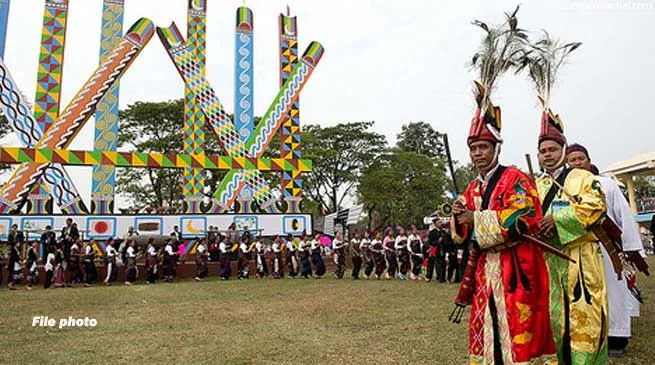
The Shapawng Yawng Manau Poi festival is a vibrant annual celebration of the Singpho tribe, primarily in Arunachal Pradesh, held in memory of their ancestral forefather, Shapawng Yawng. Also known as the Manau Poi or Dance Festival, it holds great cultural and spiritual significance for the Singpho people, bridging generations and fostering unity within the community. Celebrated between 12th and 15th February, this festival showcases the rich traditions, customs, and heritage of one of Arunachal Pradesh’s important tribal groups.
Shapawng Yawng is revered as the progenitor of the Singpho tribe, who trace their lineage back to this legendary ancestor. The festival originated as a homage to him, incorporating elements of nature, spirituality, and community bonding. The traditional Manau dance symbolically connects the Singpho people with their environment and history, deriving inspiration from the movements of birds feasting and celebrating life.
This festival is not only an expression of cultural pride but also a concerted effort to preserve the Singpho heritage in the face of modern challenges, including substance abuse among youth and cultural dilution. Its organisation and revival in the 1980s underline the community’s resilience and commitment to passing their legacy intact to future generations.
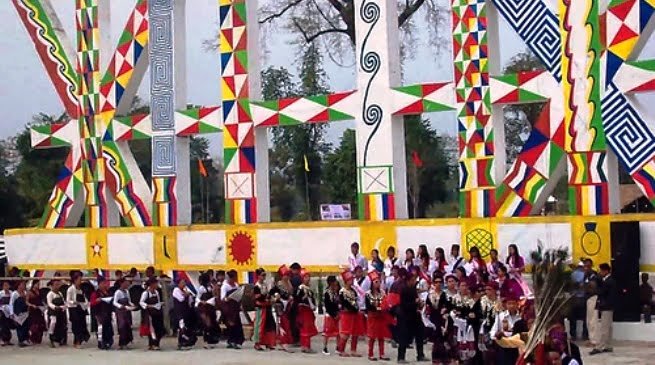
The rituals and attire of the Shapawng Yawng Manau Poi festival carry deep symbolic meanings that reflect the Singpho tribe’s cultural values, spiritual beliefs, and connection to nature. The festival’s key ritual centres around the sacred “Shadung,” tall, multicoloured wooden poles that represent male and female energies, symbolising the creation of life and the cosmic balance between these forces. Dancing around the Shadung during the Manau dance embodies unity, harmony, and the intimate relationship between the community and the environment, inspired by the movements of birds that signify life and prosperity.
The traditional attire worn during the festival further expresses cultural identity and heritage. Men wear patterned lungis, turbans, and shirts symbolising strength and valour, while women don colourful Choi or Pipa tops and Singket skirts adorned with intricate jewellery, representing beauty, fertility, and continuity of family lineage. The vibrant colours and designs in the costumes celebrate joy, abundance, and the community’s unique craftsmanship, while also signifying social status and respect for tradition.
Rhythmic beats from traditional drums called ‘Gongs’ and ‘Thongs’ set the tempo for dancers, who move in unison to express unity, strength, and the community’s collective spirit. More broadly, the rhythmic drumming and coordinated dance movements function as ritualistic expressions that reinforce social cohesion, collective identity, and the transmission of ancestral wisdom. The festival’s symbols and attire thus serve as visual and performative vessels carrying centuries of Singpho history, beliefs, and values, fostering pride and cultural continuity amid changing times. Alongside dance performances, there are exhibitions of local handlooms, handicrafts, folk songs, and fashion shows, providing a comprehensive view of Singpho artistry and lifestyle.
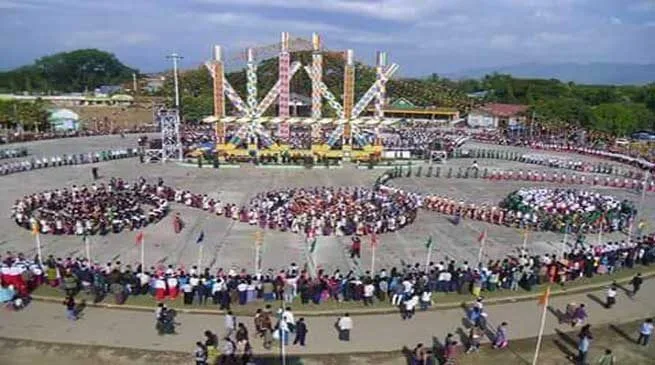
The festival acts as a social adhesive, fostering communication, cohesion, and mutual understanding among different segments of the Singpho and wider communities. It strengthens social bonds and reinforces a sense of identity and belonging. The economic benefits through tourism and the promotion of indigenous crafts and cuisine further empower the community and help integrate the Singphos into the larger cultural mosaic of India.
Primarily celebrated in the Changlang and Namsai districts of Arunachal Pradesh, the festival rotates its main venue, often held at Bordumsa. It has grown in visibility and participation each year, drawing visitors and dignitaries keen to experience this unique cultural exposition.
As a vibrant cultural festival, Shapawng Yawng Manau Poi continues to educate youth, promote cultural pride, and showcase the Singphos’ rich traditions on national and international stages. The festival embodies the dynamism of tribal culture, adapting while retaining its roots, making it both a heritage celebration and a progressive social movement.
 Memories and Such