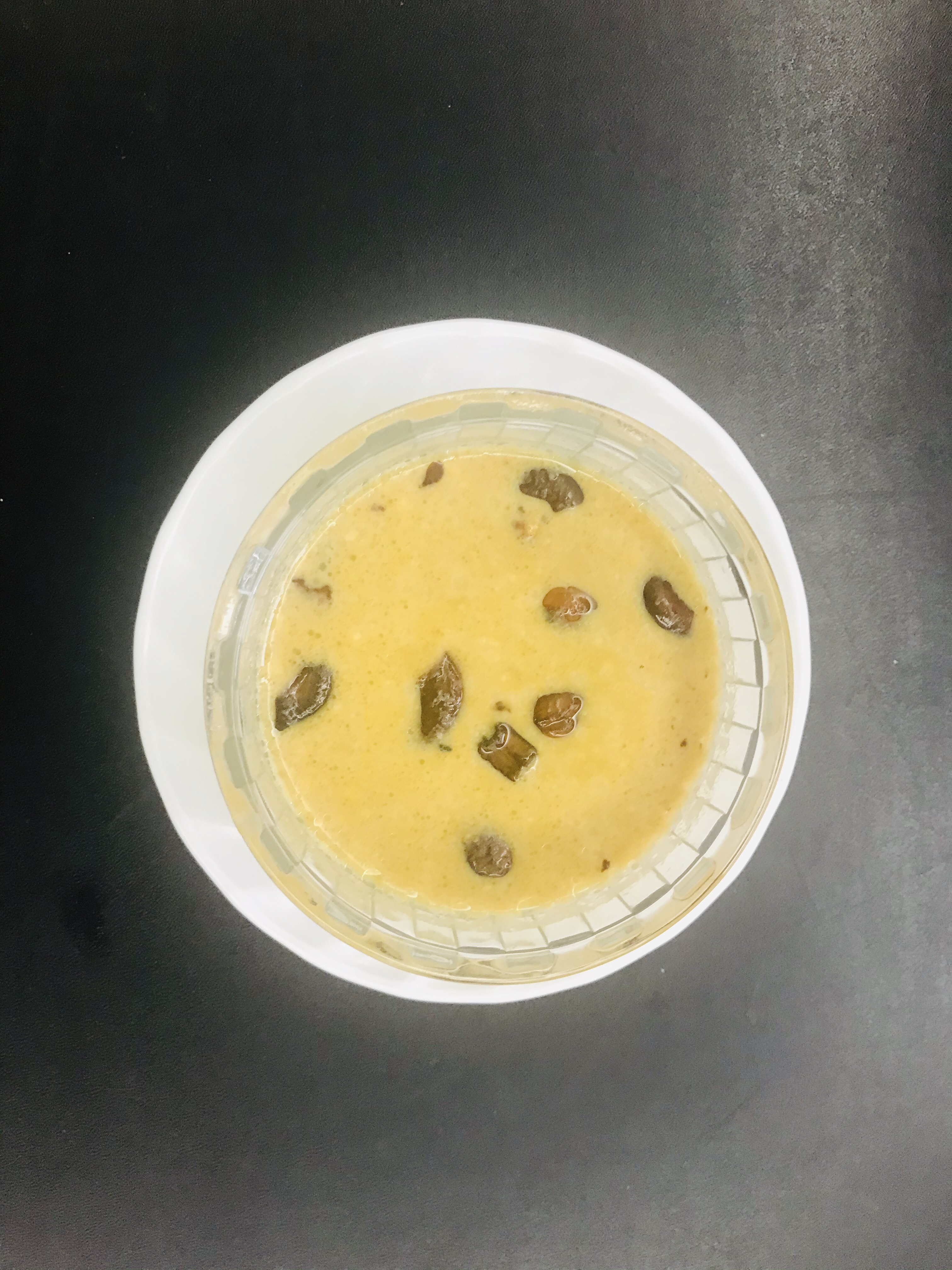
Recipes: Paruppu Payasam aka Moongdal Payasam

A very simple traditional recipe which does not take much time to prepare, I made this payasam the day after Avani Avittam, when S and BB had to say the Gayatri Japam 1008 times. It is traditional to make a sweet on this day, and since I didn’t have much time in the morning, I decided to go with this simple and tasty sweet dish.

Paruppu Payasam

Ingredients:
1 litre milk, boiled and cooled
1/3 cup moong dal
10-15 cashewnuts, halved
¼ to ½ cup powdered Jaggery or brown sugar
1 tbsp ghee
1/8 tsp cardamom powder
Water as required

Method:
Heat a pan and once the pan is warm, dry roast the moong dal till you get a a lovely fragrance. Make sure you don’t over-roast it and burn it. Remove from the pan and keep aside.

Fry the cashewnuts in the ghee until they are nice and brown and keep aside.
In a small pressure cooker or a container which you can put inside the cooker, mix the roasted moong dal with some milk and water and pressure cook it for some 3-4 whistles. Open the cooker when it cools down and lightly mash the dal.

If you are doing this on a stove top, the method is the same, only keep an eye on the dal when it is cooking and top up milk or water as needed and then lightly mash the dal.
Once the dal has been mashed up a bit, add in the powdered jaggery and mix well.

Put this back on the flame and then add the balance boiled and cooled milk and cook on a low flame for another 5 minutes until the milk, dal and jaggery gets completely mixed together.

Now sprinkle the cardamom powder and the fried cashewnuts along with the ghee.

Do a taste test and serve hot or cold. If you are making this as an offering, then of course, you can’t taste it. We prefer eating this cold as I feel this enhances the taste, but this is personal preference.

You can also make this with only milk to get a richer taste. Also some people use coconut milk plus normal milk, but I don’t make this version.
Recipes: Spinach Mint Rice

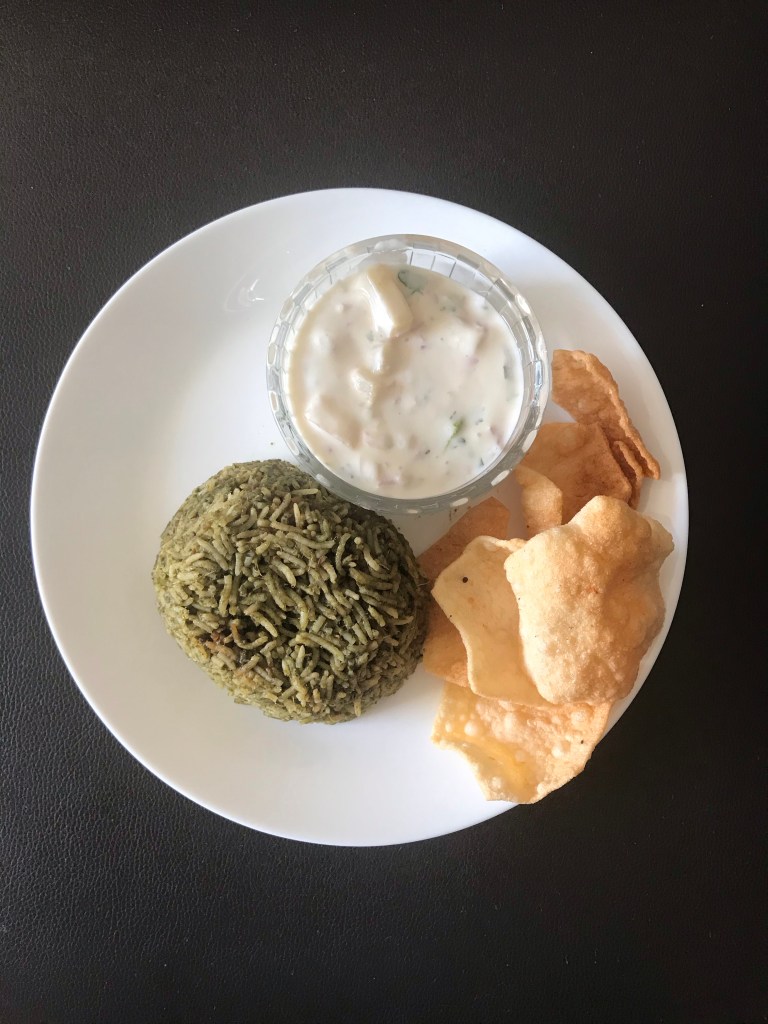
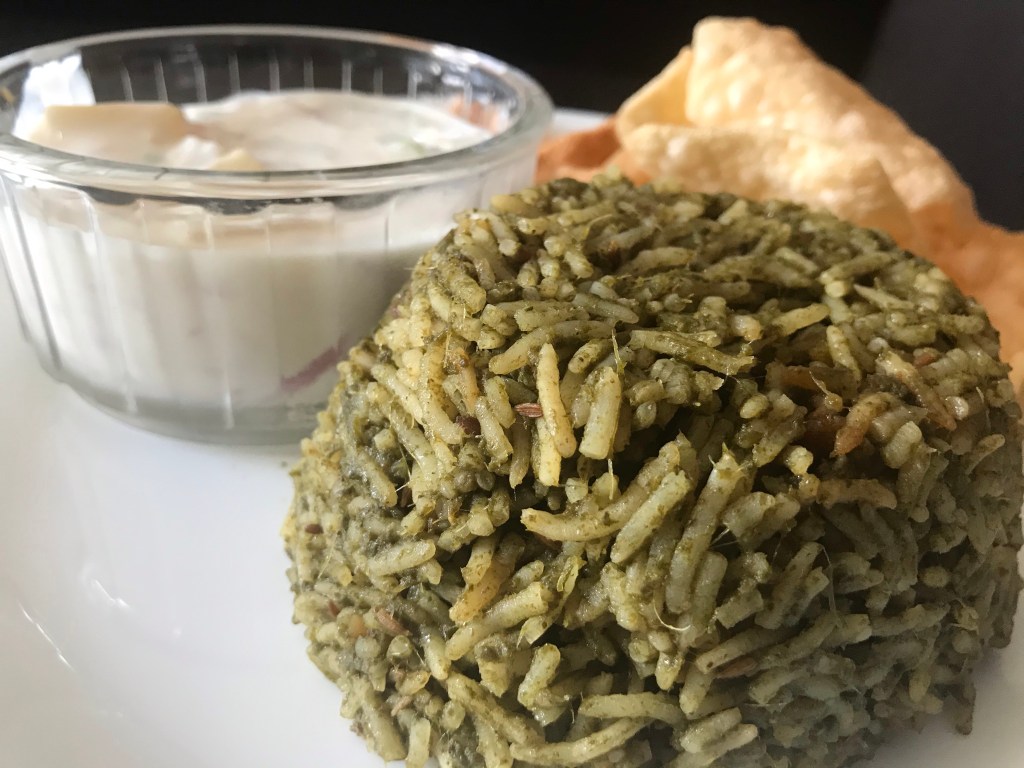
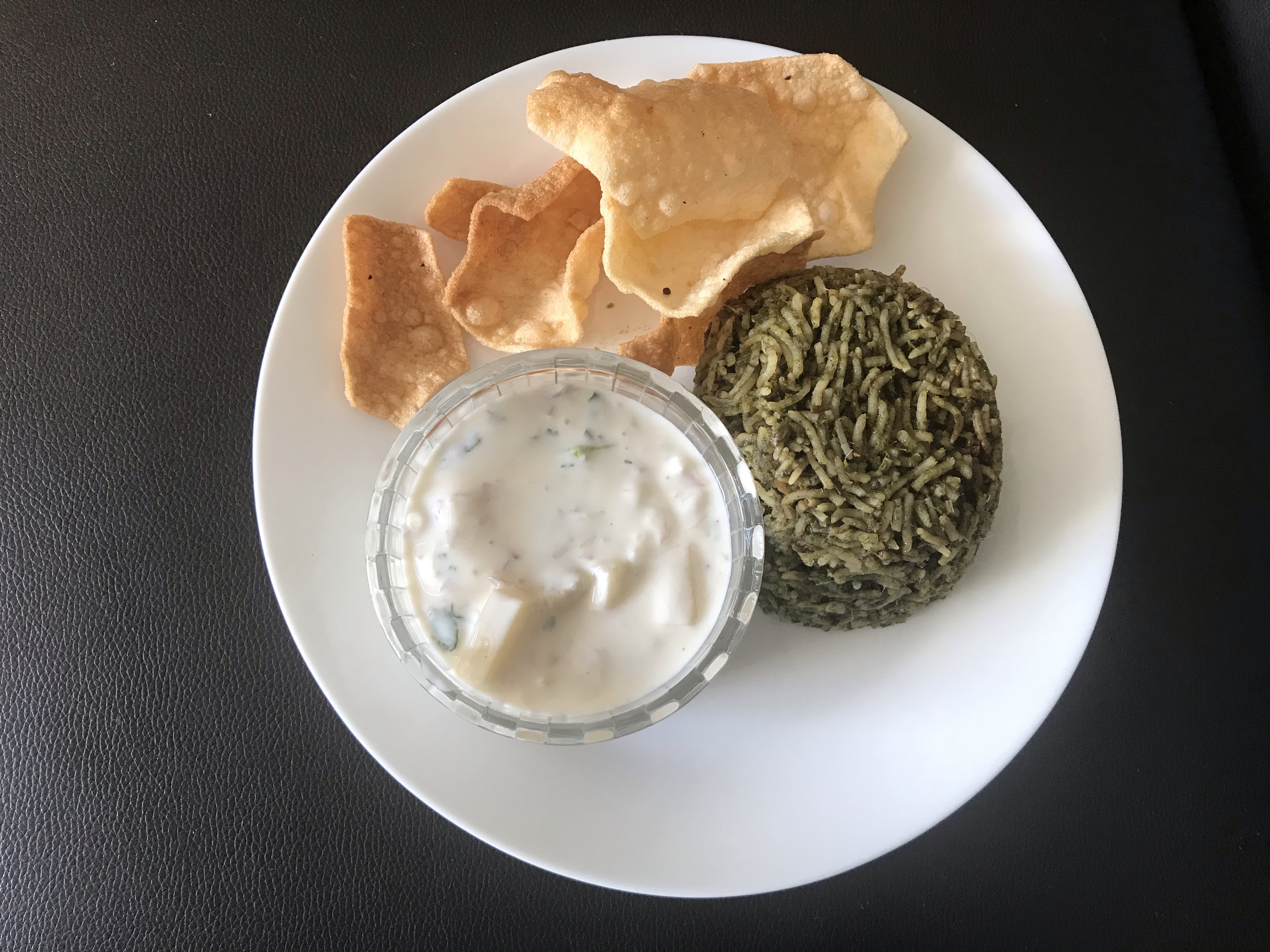
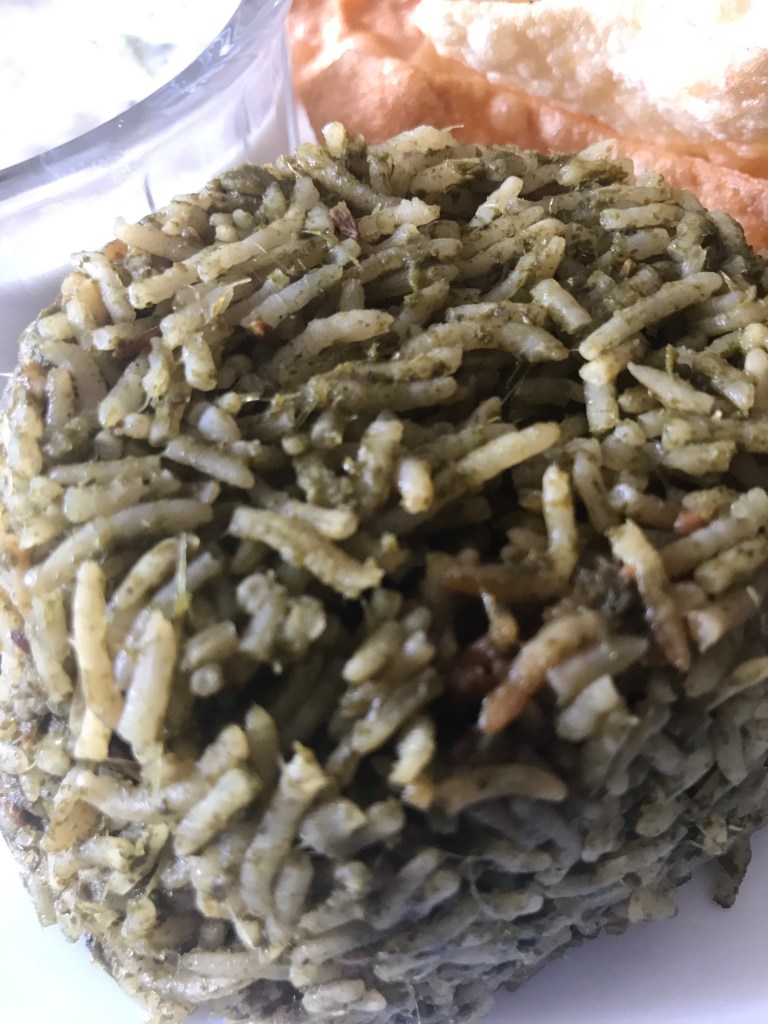
During the lockdown, I was experimenting with food and one day found a small bunch of spinach and another small bunch of mint lying in the fridge. I usually make a chutney with the mint, but I didn’t have enough coriander leaves to make my usual chutney, so thought of combining the two. I used my Spinach Rice recipe as the basis of this one and it turned out super yummy! When the rice was cooking, the whole house was enveloped with this pleasant mint aroma and while eating this dish, I was eating with more than just my mouth! And the best part about this recipe is that it is a one pot meal dish. This is a great addition to a lunchbox and both GG & BB have asked me to add this to their lunch boxes.

Spinach Mint Rice

Ingredients:
• 2 cups basmati rice
• 1 bunch spinach
• 1 bunch mint with the leaves plucked
• 2-3 tbsp chopped coriander leaves
• 10-15 curry leaves
• 1 medium sized onion, chopped roughly
• 1 bulb garlic, peeled
• inch piece of ginger, peeled
• 5-6 green chillies
• 1 tsp cumin seeds
• 10-12 pieces of cashewnuts, chopped into half
• 2 tbsp oil or ghee
• Salt to taste

Method:
Soak the rice in water for 20-30 minutes and then wash it thoroughly, drain and keep aside.
• Take some water in a large pan and boil it. While the water is boiling, wash the spinach leaves thoroughly and keep aside.
• Wash the mint, curry and coriander leaves and keep aside.
• Blanch the spinach leaves, a few at a time for around 10-15 seconds in the boiling water and remove and keep aside.
• In a blender, blend together the spinach, mint leaves, coriander leaves, curry leaves, garlic, ginger, green chillies and onion into a smooth paste. Keep aside.
• Heat the ghee in a pan and when it warms up, add the cashewnuts and fry until they are brown and nicely toasted. Remove with a slotted spoon and keep aside.
• In the same pan, with the remaining ghee, add the cumin seeds and let them splutter.
• Then add the blended paste and some salt and let the paste cook for around 5 minutes. The paste should start thickening and at this point add the rice.
• Mix the rice well into the spinach mint paste and once each grain of rice is coated with the paste, remove it to a rice cooker and add the water needed to cook the rice. Cook until it is done and then let it sit for 10 minutes before opening the rice cooker. Fluff it with a fork and add the fried cashewnuts.
• If you are cooking in a pan, when the rice is coated with the paste, add the water and let it cook until the rice is done. Switch off the gas and let it sit for 10 minutes before fluffing with a fork and then garnishing with the cashewnuts.
• Serve hot with a raita and some chips. I served this with an onion pineapple raita. This raita is very simple. Beat some yoghurt in a bowl and add salt and pepper to it. Then add some finely chopped onions, finely chopped pineapples (either fresh or from a tin) and some finely chopped coriander leaves. Taste for seasoning and serve. For the chips, I fried some traditional vadam.
• Vadam is traditionally made by drying a paste made of rice and other ingredients in the sun until all the water is leeched out. Then during days when vegetables are in short supply, you fry these in hot oil and use them as an accompaniment to any rice dish.

Recipes: Dal Dhokli

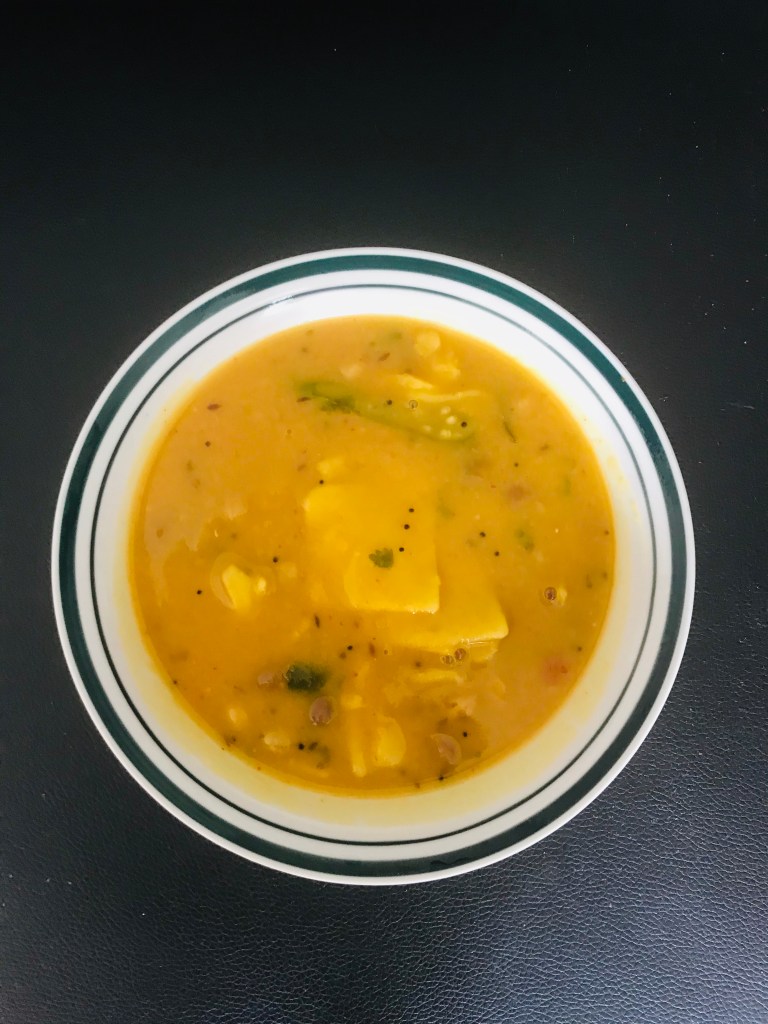
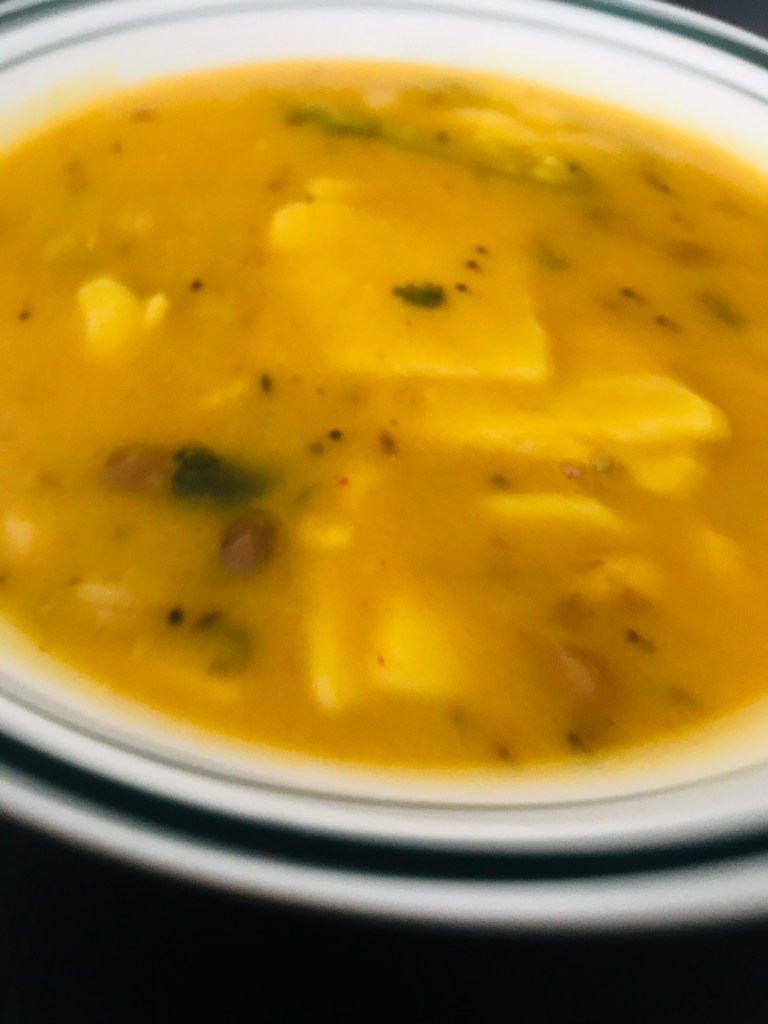
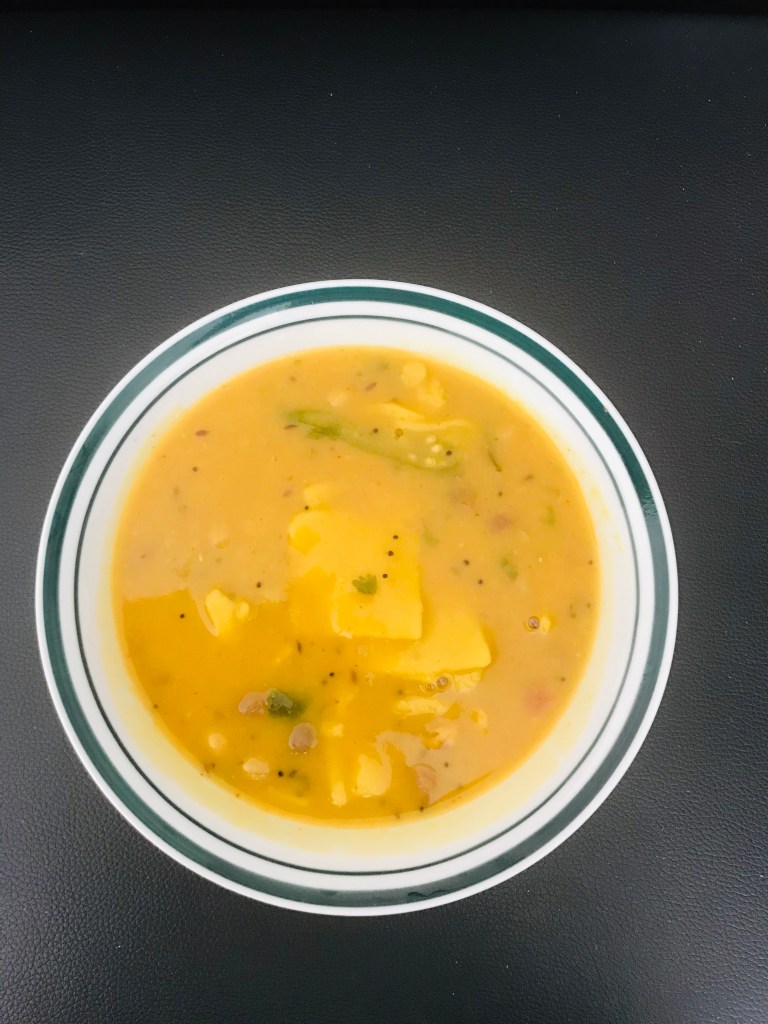
Dal Dhokli is a warm and comforting food from Gujarat. One day, during Singapore’s Circuit Breaker, I woke up with a craving for a dish I had never made. So I decided to make it and this dish pleasantly surprised me. It was warm and comforting and a wonderful addition to my repertoire. You can have this as a hearty soup like we did or over rice as some people do.

Dal Dhokli

Ingredients:

1 cup Toovar Dal, washed
½ tsp turmeric powder
1 tsp red chilli powder
1 tomato
4-5 cups water plus more, as needed
1 tsp jaggery
2-3 tbsp lemon juice
4 tbsp raw peanuts
1 cup whole wheat flour or atta
2 tbsp chickpea flour or besan
1 tsp caraway seeds or ajwain
2 tbsp ghee
1 tbsp oil
2 green chillies, slit lengthwise
1 tsp mustard seeds
¼ tsp asafoetida powder
1 sprig curry leaves
Salt to taste
Finely chopped coriander leaves to garnish

Method:

Soak about 2 tbsp of the raw peanuts in hot water for 15 minutes, drain and keep aside.
Wash the dal thoroughly and cook it in the pressure cooker along with ¼ tsp turmeric powder, 1 tsp red chilli powder, 2 tbsp peanuts, the tomato which has a cross made on the stem and about 3-4 cups of water.
Pressure cook it for some 4-5 whistles until the dal is completely mushed. If using the stove top, cook until the dal has broken down completely.
Let the pressure be released and then once the cooker can be opened, carefully remove the tomato, peel the skin which should have started to come out and then put the tomato back into the dal.
Whisk the dal until the dal, tomatoes and the peanuts are completely mixed into a mixture. Keep aside.
Kneed the atta, besan, ajwain, ¼ tsp turmeric powder, oil and salt into a soft dough. Keep aside.
Add the jaggery and another cup or two of water and mix well. Put this back into the flame and cook the dal on a slow simmer.
Make small balls from the dough and roll it into a thin circle or chapati.
Cut the chapatti into largish pieces or even strips.
Add these pieces into the simmering dal and add more water if needed.
Let the pieces cook for another 10 mins on a low flame on simmer.
In a small pan heat the ghee and once the ghee is warm, add the mustard seeds and let it crackle. Then add the asafoetida and then the balance peanuts, the curry leaves and the green chilli let the leaves crackle and the chilli start to brown.
When the peanuts become crisp, pour this tempering over the Dal Dhokli and switch off the gas. Add the lemon juice and garnish with coriander leaves.
Serve hot.

Notes: This dish does not keep well as the dough pieces tend to stick together after a while. If you plan on serving this later, then make the dal and about 10 minutes before serving, add the dough pieces and simmer before serving. Add more water if needed as the dough pieces will soak up the water in the dish.

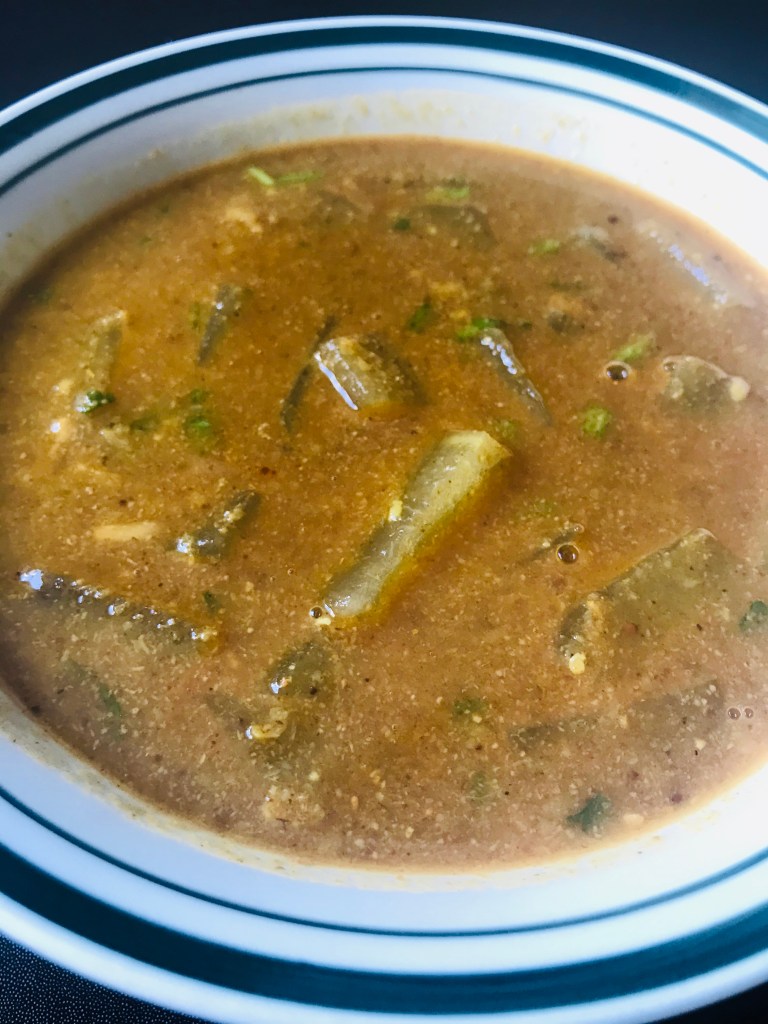
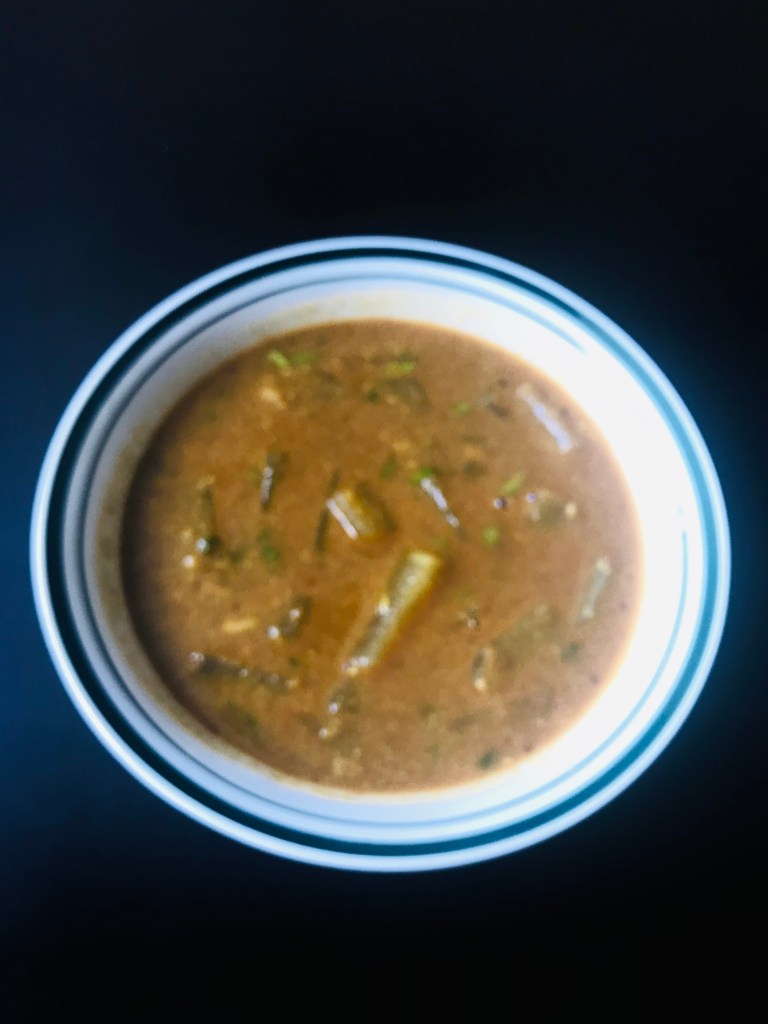
Recipes: Arachavitta Vellai Pooshnikkai Sambar or Ground White Pumpkin Sambar

This recipe initially started its life as an experiment, but it was quite successful and the resulting sambar was so tasty, I was pleasantly surprised. While any arachavitta or ground sambar is yummy, the addition of the white pumpkin or Winter Melon or Ash Gourd as its called in English and Vellai Pooshnikkai in Tamil elevated this recipe. This recipe is perfect for the days you can’t use onions in your recipe. I have blogged about both Arachivitta Sambar and White Pumpkin Rasavangi and this is a lovely marriage between the two. So let’s go to the recipe.

Arachavitta Vellai Pooshnikkai Sambar or Ground White Pumpkin/Ash Groud/Winter Melon Sambar

Ingredients:

  • 2 cups white pumpkin, peeled, the seeds removed and cut into 1 inch cubes
  • 1 lemon sized piece of tamarind, soaked in hot water for 30-40 minutes
  • 1 cup toor dal
  • 2 tbsp oil
  • 1 tsp mustard seeds
  • 1 tbsp chana dal
  • 2 tbsps coriander seeds
  • 6-8 dried red chillies
  • ¼ cup fresh grated coconut
  • 1 tbsp sambar powder (optional)
  • 1-2 tbsp jaggery (optional)
  • Salt to taste
  • 2 tbsp finely chopped coriander leaves to garnish

Method:

  • In a small pressure cooker, pressure cook the toor dal with ¼ tsp turmeric powder till it is soft and the dal has broken down complety. This usually will take around 3 whistles in the cooker. When the pressure reduces, open the cover of the cooker and then whisk the dal well. Keep aside.
  • Mash the tamarind when it becomes cool to touch and then squeeze tamarind and drain the water so the fibres get separated and you have the water. Alternatively use 3-4 tbsp tamarind paste which you can get at any Indian store.
  • Heat 1 tbsp oil in a small pan and put the chana dal, coriander seeds and dried red chillies and stir a while till the chana dal starts to brown. At this point add the fresh grated coconut and constantly stir until all the water from the coconut dries up and you have a crisp brown coconut with no water whatsoever. Note that if there is any water left in this, your sambar may spoil later in the day.
  • Once this coconut mixture is cool, grind it to a fine paste using some water in a blender. Make sure the paste is as fine as you can make it.
  • In a large pan, heat the balance 1 tbsp oil and when the oil is warm, add the mustard seeds and when the seeds pop, add the chopped white pumpkin and cook the cubes for about 5 minutes.
  • Then add the tamarind water which has been thinned to suit your taste and add salt to taste. You can also add sambar powder at this point if you want. Also add the jaggery if you are using here.
  • Let the white pumpkin cook until it is cooked, but still has a bite to it.
  • At this point, add the ground paste and the cooked dal and cook for another 5-10 minutes.
  • Check for seasoning at this point before switching off the gas.
  • Garnish with coriander leaves and serve hot with plain rice, white or brown and a curry of your choice.
  • This is also very tasty with any South Indian food like Upma, Idli or Dosai.

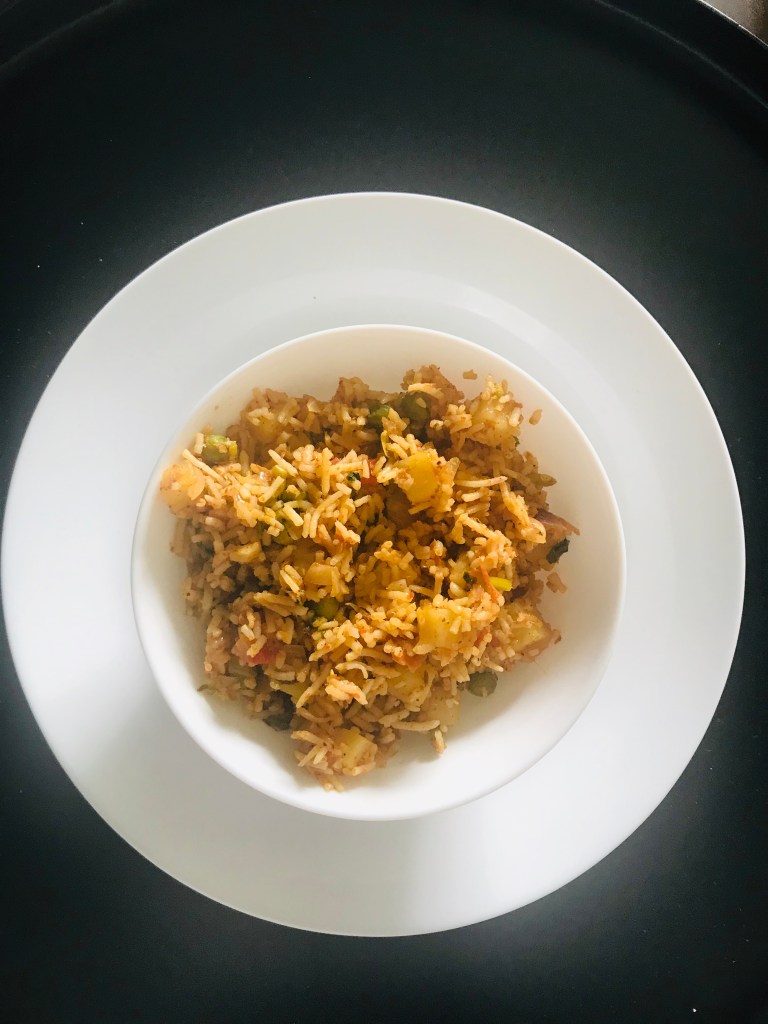
Recipes: Bombay Tawa Pulao

In Bombay or Mumbai, there are street stalls which sell Pav Bhaji and towards the end of the day, when the bhaji is almost over, they add some rice to the gravy and this is the origin of the Tawa Pulao. This rice works best with leftover rice, but can be made with fresh rice which has been cooled down. This makes a very good lunchbox recipe and if you cook the rice in advance, it’s a jiffy dish to make during the morning rush

Bombay Tawa Pulao

Ingredients:

  • 1 cup Basmati rice which has be cooked and completely cooled. It’s best if you can make the rice a day earlier, but making it far ahead of time also works.
  • 1 carrot, chopped into bit sized pieces
  • 1 potato, chopped into bite-sized pieces
  • 2-3 tbsp frozen peas
  • 2 medium sized onions, finely chopped
  • 2 medium sized tomatoes, finely chopped
  • 1 inch piece of ginger
  • 1 pod garlic, peeled
  • 4-5 fresh red chillies (or green if you don’t have red chillies)
  • 2-3 tbsp pav bhaji masala
  • 1 tsp cumin seeds
  • 2 tbsp oil
  • 2 tbsp coriander leaves, finely chopped
  • 2-3 tsp lemon juice (more or less as per taste)
  • 1 tbsp butter
  • 1/4 tsp turmeric powder
  • Salt to taste
  • 1 tsp red chilli powder (optional)

Method:

  • Blend the ginger, garlic and chillies into a smooth paste and keep aside.
  • Wash the chopped carrots, potatoes and peas and keep aside.
  • Heat 1 tsp oil in a pan and when the oil warms, add the cumin seeds and let them splutter.
  • Then add the turmeric powder and stir for a couple of seconds.
  • Now add the chopped and washed vegetables and a bit of salt and cook until the vegetables are almost cooked.
  • When the vegetables are almost cooked, remove the vegetables from the pan and keep aside.
  • In the same pan, add the balance oil and butter and when the butter melts, add in the blended ginger-garlic-chilli paste.
  • Let the paste cook a bit and then add the finely chopped onions and let the onions become translucent. Then add the finely chopped tomatoes and let the tomatoes cook and become mushy and break down.
  • Now add the pav bhaji masala and chilli powder if you want it spicer and salt to taste and cook till the mixture becomes slightly thicker.
  • Then add the cooked vegetables and also check for seasoning.
  • Add in the cooked and cooled rice and gently toss the rice to mix it with the vegetables till the rice is completely coated with the vegetables and the onion-tomato gravy.
  • Check for seasoning, remove from the fire and drizzle 1-2 tsp of lemon juice. Then garnish with coriander leaves and serve hot with a yoghurt raita.

The children and S loved it and asked me why I didn’t make it earlier for school. You can also substitute garam masala if you don’t have pav bhaji masala. The taste will still be fantastic, but will not taste like how it’s made in Bombay. You can also add more vegetables like french beans, cauliflower etc if you are planning to make a larger batch. Remember, in this recipe, a little goes a long way.

Want to know how I make Pav Bhaji? Here’s how I make it?

Try it and let me know how you liked it!