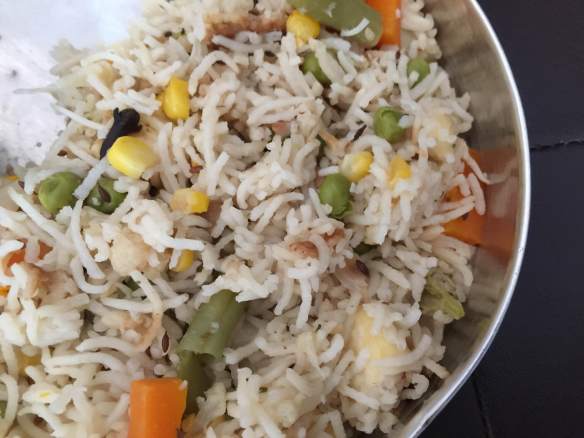
Recipe: Avial

img_6065

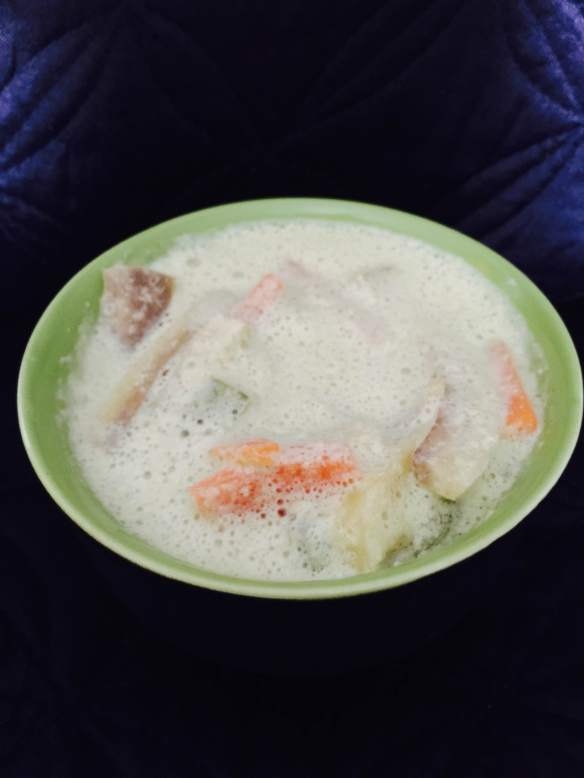
One of the eponymous dishes which are common across South India, Avial is one of my favourite dishes. I remember when my mum used to make this dish, I would eat it the whole day, so much that what was supposed to be enough for both meals, would finish by the time we had lunch!

Both GG & BB love it as much as I do, S is quite indifferent to it. When S started working with us, she also started to love it and if we go a couple of months without making it, she will remind me to make it soon.

This dish is quite ancient and is said to be invented by Bhima, the second Pandava brother during their year in exile. Most vegetables used to make Avial are what we call local (Indian) vegetables. Some ‘English’ vegetables like potato, carrots, beans and peas are also used. Other vegetables like Yellow/Orange pumpkin, white pumpkin, drumstick, snake gourd, yam, raw banana are also used. You can use all of these or some, depending on what you have at home. The dish can also be made thick or thin – thick if you are not planning to eat it mixed with rice (like a gravy) or thin if this will be mixed with rice. In my home, if we make Avial, we don’t usually make anything else since it has all vegetables in it, we eat it with rice and some crisps.

img_6067

Avial

Ingredients:

  • 2 carrots, chopped lengthwise in 2 inch sticks
  • 2 potatoes, chopped lengthwise in 2 inch sticks
  • 2 raw bananas, chopped lengthwise in 2 inch sticks
  • 1/4 piece of yellow pumpkin, chopped lengthwise in 2 inch sticks
  • 7-8 beans, chopped 2 inch
  • 2 drumsticks, chopped in 2 inch sticks
  • 1 snake gourd, chopped lengthwise in 2 inch sticks
  • 1 cup yoghurt, beaten
  • 1/4 tsp turmeric powder
  • salt to taste
  • 3-4 curry leaves (optional)
  • 1 tsp coconut oil (optional)

To be ground into a paste

  • 2 tsps cumin seeds
  • 6-8 green chillies
  • 1 cup grated coconut
  • 1/2 cup yoghurt

Method:

  • In a deep bottomed pan, add all the chopped vegetables and cook them with very little water and the turmeric powder and 1 tsp salt. Cook till the vegetables are al-dente, they should be still firm to touch.
  • While the vegetables are cooking, grind the coconut, chillies and cumin seeds, using the yoghurt as moisture. Grind the coconut till it is very fine.
  • Once the vegetables are cooked, add the coconut mixture to the vegetables. Stir well and add salt to taste.
  • From the remaining yoghurt, add as much yoghurt as you need to make it as thick as you need. If you need to make the avial thick, add very little yoghurt and more if you want to make the gravy watery.
  • When the avial comes to a nice rolling boil, add the coconut oil and curry leaves (if using) and switch off the gas. Cover the dish with a plate or cover to keep the fragrance of the curry leaves and oil.
  • Serve hot with rice and some crisps or papad.

Enjoy…..
img_6068img_6066


Recipe: Peanut, Ginger & Sesame Chutney

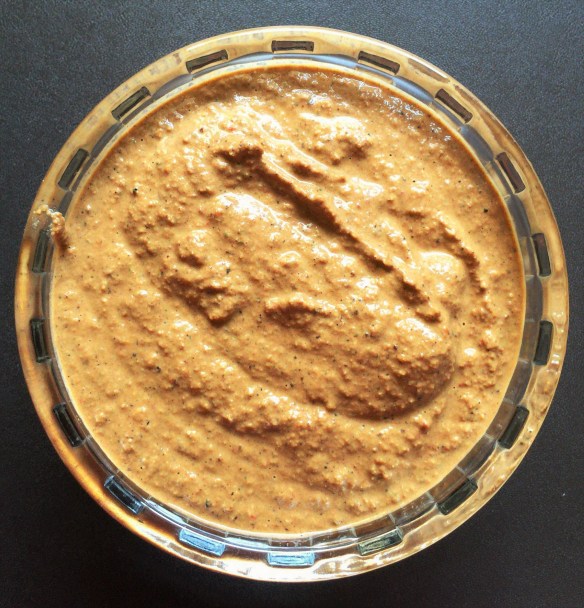
IMG_6059Most Thursdays we cook without onions and garlic as this is S does not eat these as part of his religious belief. Most Thursdays, lunch is not a problem, but dinner takes some thinking. We usually make idlis or dosas for dinner, but chutneys without coconut which do not have onions or garlic is a bit tricky.

This week, I also ran out of some coconut, and found I had just a few tablespoons of peanuts, so I came up with this chutney which incorporates ingredients I found in my pantry.

IMG_6061

Peanut, Ginger and Sesame Chutney

Ingredients:

  • 3 tbsps raw peanuts
  • 1 tbsp chana dal
  • 2 tbsps white sesame seeds
  • 2 tbsps ginger, peeled and chopped
  • 5-6 dried red chillies
  • 1 lemon sized ball of tamarind
  • 5-6 curry leaves
  • 1 tsp mustard seeds
  • 1 tbsp oil
  • Salt to taste
  • Water to blend the chutney

Method:

  • In a dry pan, dry roast the sesame seeds and keep aside.
  • Put ½ tsp oil in the same pan and when the oil heats, fry the chana dal and the peanuts until the chana dal becomes slightly brown and the peanuts crisp. Remove and keep aside.
  • In the same pan, heat the remaining oil and fry the mustard seeds, curry leaves, ginger, dried red chillies and the tamarind and fry until the curry leaves becomes crisp.
  • Let everything cool down completely and blend until smooth in a blender or mixer. Add water to help you blend.
  • Salt the chutney according to taste and serve with idlis, dosas or even as a dip.

IMG_6063

IMG_6060

Recipe: Mor Kozambu aka Buttermilk Gravy

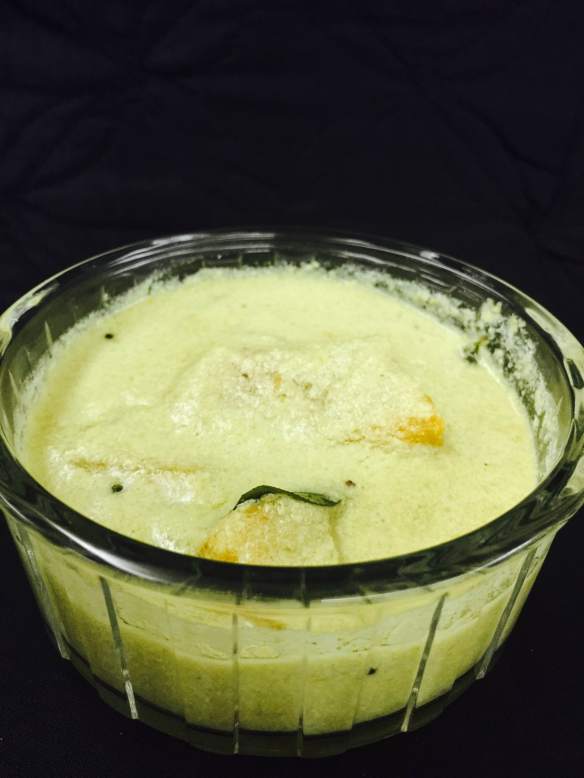
IMG_6069A very traditional south Indian dish, this is our version of Kadhi, a yoghurt based gravy, which is found almost all over India, in various avatars – the kadhis which you have in Gujarat and Punjab and the pitla from Maharashtra.
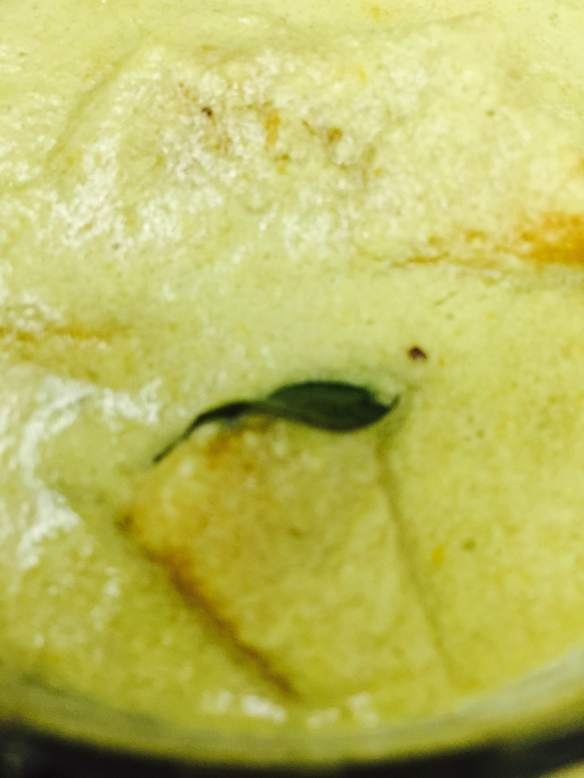
This is a very easy dish to make with minimal ingredients, which you can make with not much effort.

IMG_6071Mor Kuzambu or Buttermilk Gravy

Ingredients:

  • 2 cups yoghurt, thinned to a pouring consistency
  • 5-6 ladies fingers or Okra, cut into long pieces
  • 3-4 tbsps grated coconut
  • 5-6 green chillies (more or less depending on the spice intensity or your ability to take the heat)
  • 1 tsp cumin seeds
  • 2 tbsps oil (any vegetable cooking oil)
  • 1 tsp mustard seeds
  • ¼ tsp turmeric powder
  • Salt to taste

Method:

  • In a pan, warm the oil and add the mustards. When the mustard seeds pop, add the chopped ladies finger and turmeric powder and let it cook till it is crisp. You can also add a tsp of salt to lightly salt the okra.
  • When the ladies finger becomes crisp, switch off the gas and keep aside.
  • In a blender, add the coconut, chillies and the cumin seeds and blend until smooth. Use the yoghurt to add moisture to blend.
  • When smoothly blended, add it to the fried okra and let it cook.
  • Add some more of the thinned yoghurt to bring it to the consistency you like (think or thick) and once the whole gravy comes to a rolling boil, switch off the gas and remove from the flame.
  • Serve with rice and a vegetable of your choice.
  • Enjoy yummy Mor Kozambu

Notes: Instead of Okra, you can also use orange pumpkin, white pumpkin or even potatoes to make this gravy.

IMG_6070

Recipe: Semiya/Vermicelli Payasam (Dessert)

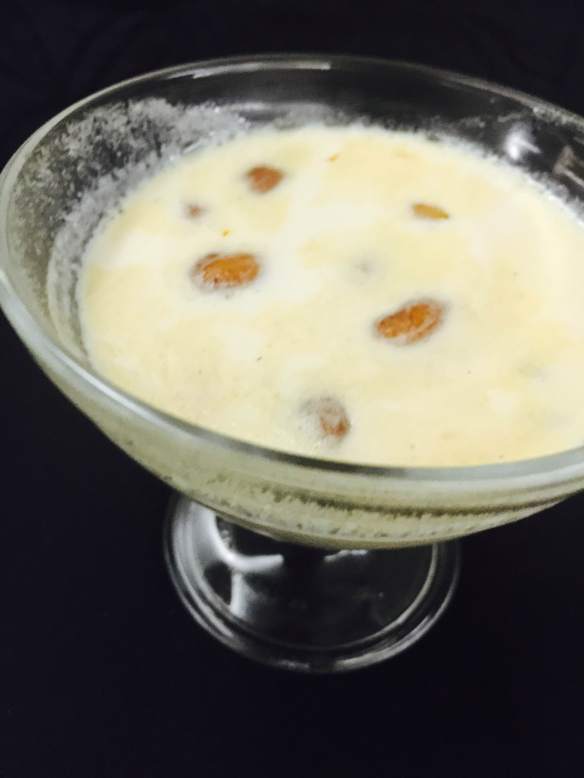
IMG_6073This sweet is the favourite of everyone at home, especially the children and is my go-to recipe when I need to whip up a sweet for any festival. GG & BB love it so much that I have to hide some for S, otherwise, he won’t get any when he comes home from work! This is a very easy recipe but takes a little bit of time stirring if you want to get the rich taste.

IMG_6072Semiya/Vermicelli Payasam

Ingredients:

  • 1 cup vermicelli
  • 1 cup sugar
  • 1-litre milk (full cream is the best for taste)
  • 10-12 pieces cashew nuts (chopped into half)
  • 2 tbsp raisins
  • ½ tsp cardamom powder
  • 2 tbsp ghee

Method:

  • In a deep bottom pan, heat the ghee and when it warms, fry the raisins till they plump up and keep aside in a kitchen towel.
  • In the same pan, fry the cashew nuts until they turn brown and crisp and remove into the same kitchen towel.
  • With the remaining ghee, fry the vermicelli till it becomes brown and starts to develop an aroma.
  • At this point, pour 1/3 to half a litre of milk and let it come to a rolling boil. Reduce the flame and let the milk and vermicelli boil until the vermicelli is completely cooked. This will take between 15-20 minutes. If at any point, the milk reduces, add some more milk to cover the vermicelli.
  • When the vermicelli is completely cooked, add the remaining milk and let it come to a nice rolling boil.
  • Now add the sugar and let it boil for a while until the sweet has thickened.
  • Add the sugar, cardamom, saffron and the nuts and let it boil for another 5 minutes.
  • Remove from the flame and let it cool before serving.
  • This sweet is very tasty both hot or cold, but we prefer to drink it cold. A few hours in the fridge really improves the taste dramatically.

Tips:

  • If you want to increase the proportions, just remember to put the sugar and vermicelli in a ratio of 1:1.
  • I prefer to use a pestle and mortar to grind my cardamom on an ‘as I need it‘ basis. I feel that grinding a whole bunch of cinnamon at the same time makes the smell of the spice go away after a while. You will need the pods from 5-6 cardamoms to make up ¼ tsp of the powder.

Recipe: Vegetable Pulao

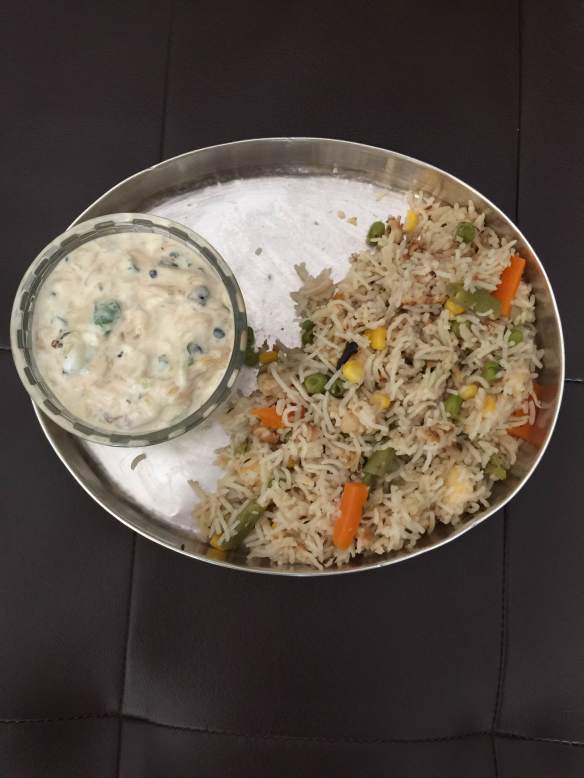
IMG_6049An easy one-pot meal, this pulao can be put together when you are in a hurry. This is the perfect meal for a bachelor to make as it does not need many utensils as well as a lot of skills to make it.

This also makes a perfect school or work packed lunch. You can also prep this the night before and if you are using a rice cooker, keep it in the cooker to cook overnight. Then in the morning, you have fresh pulao all ready for you before you leave for school or work!

Vegetable Pulao

IMG_6047Ingredients:

  • 1 cup basmati rice, washed and soaked for 15 minutes
  • 1 cup chopped mixed vegetables (I used potatoes, carrots, cauliflower, broccoli, green peas and sweet corn)
  • 2-3 tablespoons frozen paneer refreshed in hot water for 10 minutes
  • 1 onion, sliced thinly
  • 1 tsp cumin seeds
  • 1 bay leaf
  • 4-5 cloves of cardamom
  • 3-4 cloves
  • 1-star anise
  • 10-15 cashew nuts, chopped
  • 2 tsp golden raisins
  • 2 green chillies, chopped
  • 1-inch piece of ginger julienned
  • Salt to taste
  • 1 tsp ghee

Method:

  • Wash the rice well and remove all the water and keep aside.
  • Heat a pan and when it is warm, add the ghee. When the ghee liquefied, add the cumin seeds and when the seeds pop, add the bay leaf, cloves, cardamom and star anise. Stir each for a few seconds before adding the next ingredient.
  • Add the green chillies and ginger and stir well.
  • Add the cashew nuts and the raisins and stir for a few seconds.
  • Next add the onions and stir, letting it become translucent.
  • Next, add the chopped vegetables and stir well. Add the washed and drained rice next along with the salt and stir well, letting the salt coat the rice grains and vegetables.
  • Remove from the flame and put this mixture into a rice cooker and add the water (normally I add ¾ cup water to 1 cup of Basmati rice, but you can play with it depending on the rice you use)
  • When the rice is done, fluff with a fork and serve with any gravy or a raita.

IMG_6050

IMG_6049