Diwali Recipes: 7 Cup Cake

IMG_5059

This is another traditional tambram recipe and which is one of my go-to recipes when I need to make something quickly. It does take a bit of time to make, but the efforts are super worth it! The ingredients are given as cups which is where the name of the recipe came from, but essentially it’s just a measure. It doesn’t matter how big your cup size is, just use the same amount for all the ingredients and your cake or barfi will come out fab!
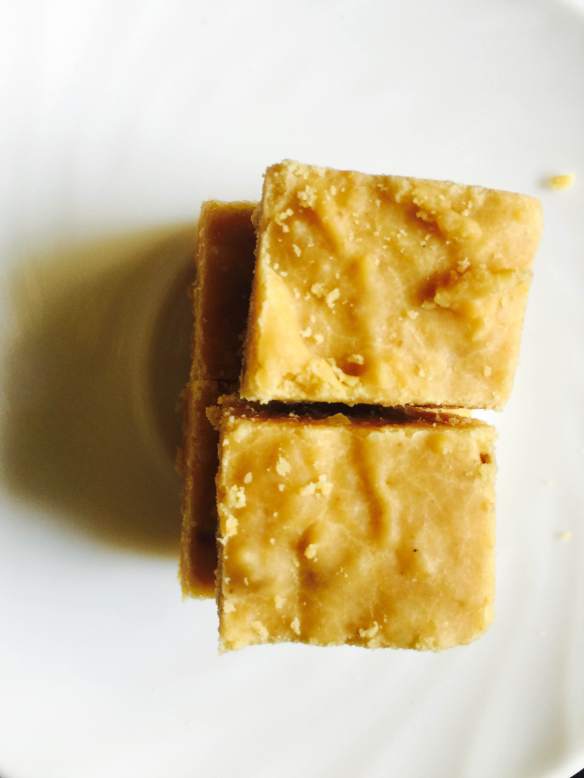
IMG_5057

Ingredients:

  • 1 cup chickpea flour or besan
  • 1 cup ghee
  • 1 cup grated coconut (you can fresh or frozen, I’ve used fresh for this recipe)
  • 1 cup Milk
  • 3 cups Sugar

Method:

  • Take a big plate or cake tin and grease it slightly. Or, you could lightly spray it with oil and then put baking paper over to completely cover it, this reduces the amount of ghee used in the recipe slightly.
  • Fry the chickpea flour or besan in a dry pan and do not overfry it. Stop when it starts changing colour. At this point, add the coconut, sugar and milk to the pan and continue stirring.
  • When the sugar starts to dissolve, add the ghee and keep stirring. You will need to keep stirring the pan, so that the mixture does not catch in the bottom.
  • After about 15 minutes (more or less depending on your quantity), the mixture will start leaving the sides of the pan. At this point, take a few drops and put it in your greased plate. If it stays in shape, it is ready, otherwise continue stirring and repeating this step till you get to this point.
  • Switch off the gas and pour it into your prepared greased plate. Using a clean spatula, level the mixture and make it smooth. Let it cool for a while and when still slightly warm, lightly score lines in the mixture with a knife or pizza cutter. You could cut squares or diamonds in any size. Let it cool completely before transferring to an airtight container.

This should be good for a week or so outside and around 2 weeks or so inside the fridge.

IMG_5060

Diwali Recipes: Diwali Legiyam

Diwali is the one time, when everybody, irrespective on their take on fitness and healthy eating, throws all of it out of the window and eats like there’s no tomorrow! You start the day early and start stuffing your mouth (and stomach) and stop probably four days later, when either you can’t have another morsel or you’ve run out of goodies to eat!

IMG_5065

The legiyam is traditionally eaten as soon as you take your bath and pray and much before you start stuffing your mouth with all the delicacies. This legiyam is an herbal medicine, made with things found in your pantry to strengthen your digestive system. This medicine also helps the body adjust to the changes in the temperature when autumn moves to winter. This medicine re-ignites the digestive fire, digests toxic build-up in the body and helps us fight the ill-effects of the heavy foods that we may indulge in at this time.

Each family has its own traditional recipe and the recipe below is the one my mom makes. Most people I know do not cook according to a recipe, they just have approximate amounts and then cook as they go along, adjusting the recipe to suit palates. I made the recipe slightly sweeter than what she suggested as I know S & BB can’t take spicy food, so if you can eat the spicy ginger, then go ahead and reduce the amount of jaggery in the recipe.

IMG_5067

Ingredients:

  • 150 gms of ginger, peeled and chopped into smaller pieces
  • 3 tsps of coriander seeds
  • 1.5 tsps of cumin seeds
  • 1.5 tsps of whole black peppers
  • 10 pieces of cardamom, only use the pods, discard the outer covering
  • 10 pieces of cloves
  • 10 pieces of thippili
  • ¾ tsp of cinnamon powder (you can use a 1 inch piece instead)
  • 2 tsps of dry ginger powder (saunth/sukku)
  • 1 cup (less or more) jaggery (according to taste)
  • 3-5 tbsps of ghee (according to taste)

Method:

  • In a largish bowl, put the coriander seeds, cumin seeds, black peppers, cardamom pods, cloves, thippili, cinnamon powder and dry ginger powder and soak them for around 10-15 minutes.
  • While the above are soaking, peel and chop the ginger into smallish pieces (this depends on the size of the mixer you will be using).
  • Grind the ginger and when it becomes a paste, add in the soaked ingredients and continue grinding till it becomes a smooth paste
  • Then in a non-stick pan, add the paste and start boiling it. The paste will be quite watery at first due to the water content, but as you cook it, it will gradually get harder. At this point, add the jaggery and 1-2 tbsps of ghee. You may want to add the jaggery a bit by bit, tasting as you go along so that you add only the right amount and it does not taste too spicy. The ghee will help it cook and when it reaches the consistency where the mixture starts leaving the sides of the bowl, it is ready. Remove from the flame and cook.

Have this first thing in the morning when you are going to indulge in heavy food and this will definitely help your stomach! This keeps for a few weeks in the fridge.

Recipe: Raw Banana Stew aka Vazhakkai Kootu

IMG_5061

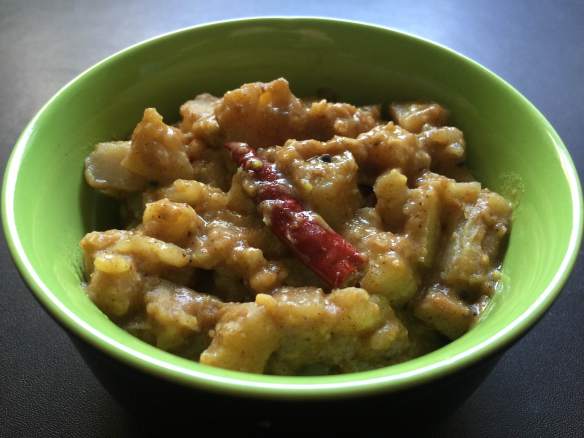
This is one of my favourite kootus, the tanginess combined with the slight sweetness that jaggery imparts along with the crispy coconut flavouring is just yum! I love to eat it as it is, no rice or anything else needed to dress it up for me!

It’s quite versatile also, if you make it a bit runny (like a sambar), it can be eaten with rice. Add some papads or chips to go with it and becomes a delicious meal. When made thicker, it becomes the perfect addition to your meal. Eat with with a rasam or a mor kozambu and lick your fingers!

Vazhakkai Kootu

IMG_5064

Ingredients:
3-4 raw bananas (vazhakai)
3-4 tbsp Toor Dal
1 small lime sized tamarind
2-3 tsps Sambar powder
1.5 tsps oil
1 tsp mustard seeds
1 tsp chana dal
1 tsp broken urad dal
2-3 tbsps coconut
3-4 dried red chillies
1 pinch asafoetida
2 tsps jaggery
Salt to taste

Method:

  • Wash the toor dal and soak it in a some hot water for 10-15 mins. After that pressure cook it and keep aside. Once you can open the cooker, mash the dal well so that it is even.
  • Soak the tamarind in hot to warm water for a while (depending on the size, it should take 20-30 mins). Once it’s soft and cool, mash it with your fingers and extract the juice. You can run it through a seive to make sure you don’t have any fruit in the juice extracted. Alternatively, just buy tamarind paste which is easily available in most Indian stores.
  • In a pan, add the oil and once it is hot, add the mustard seeds. When the seeds begin to crackle, add the chana dal and fry till it starts to change colour. Do not let it get black, as it will then become bitter. Then add the dried red chillies and a pinch of asafoetida and lastly the grated coconut. Keep frying the cocounut until it starts to lose moisture and becomes brown. When the coconut is brown and crisp, remove from the flame and keep aside. We will use this in the end.
  • Peel and chop the raw bananas into small pieces. The pieces should be slightly larger than bite-size. Peel and chop one by one as otherwise the bananas will blacken. While peeling, you can keep a container with water next to you and drop the bananas into it while cutting the next one. This slows the blackening process.
  • When you have chopped all the bananas, cook them in a pan with just enough water to cover them. When the bananas are half cooked, add the tamarind juice to the pan along with sambar powder and salt to taste.
  • Let the tamarind water in the pan come to a rolling boil and let it boil for 5-10 minutes untill the banana is fully cooked. Bananas usually cook very fast so make sure you do not over cook them.
  • Once the bananas are cooked, add in the mashed dal and check for salt. If you want, you can also add the jaggery at the point.
  • When the dal has mixed well with the mixture add the coconut, give it a good stir and switch off the flame.
  • Garnish with a bit of coriander leaves and your delicious vazakkai kootu aka raw banana stew is ready!
  • Serve with rice or rotis for a delicious meal…

Recipes: Mor Keerai aka Greens in Youghurt

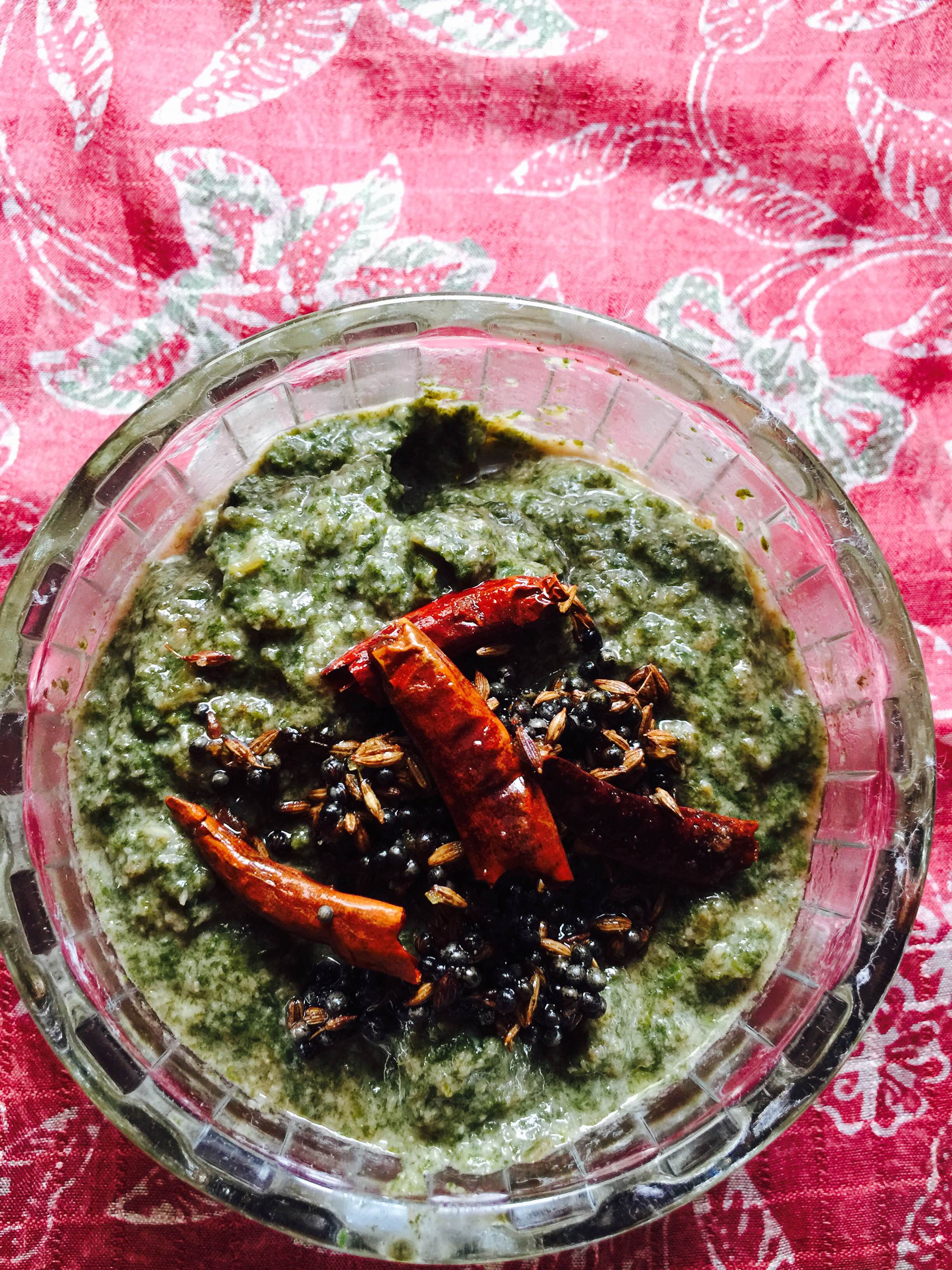
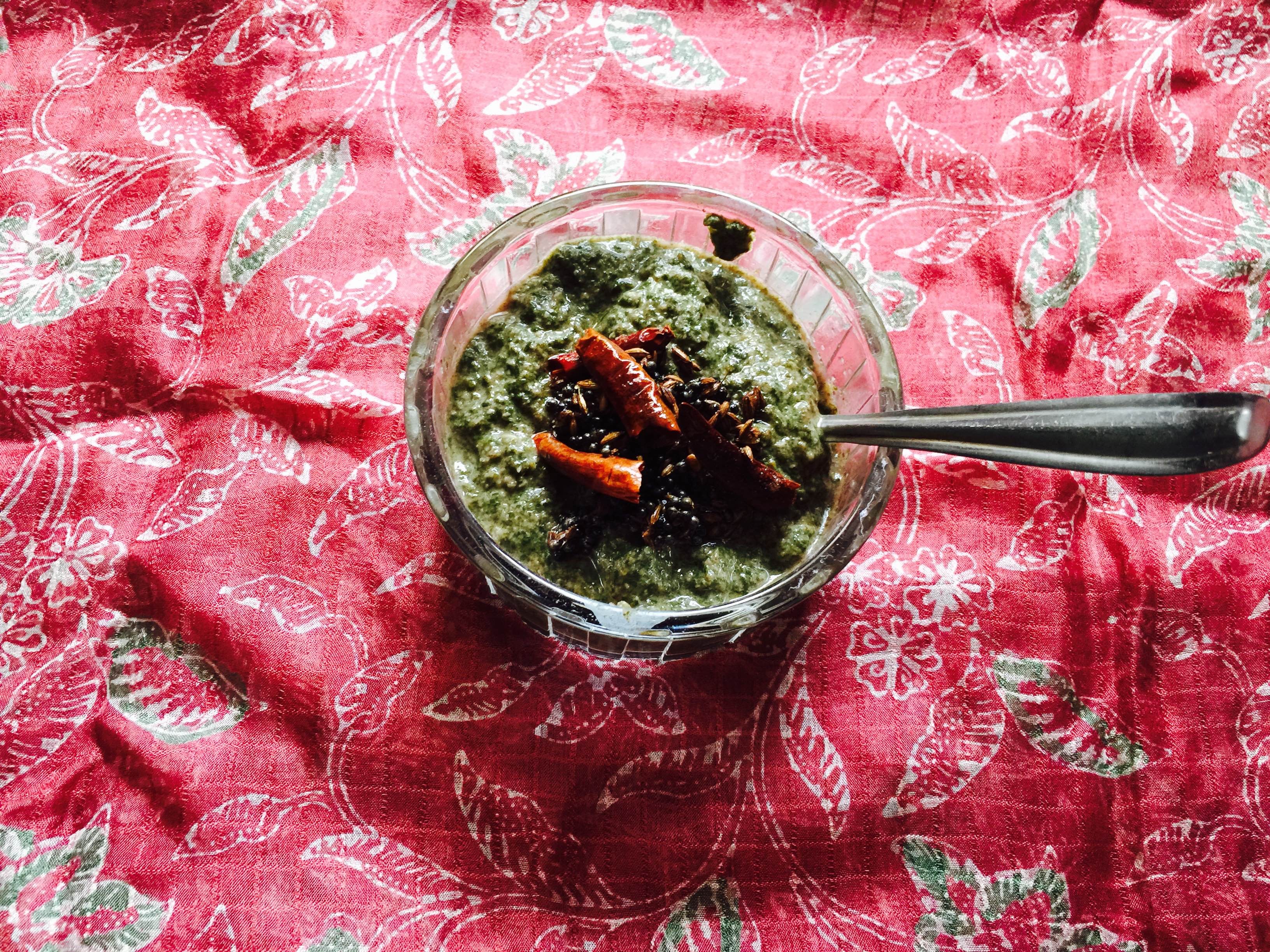
Another very typical tambram recipe is this spinach recipe. You can make this using any greens, and though the look of the dish is not that special (at least mine didn’t look very photogenic), the end result is a very tasty dish, which goes equally well with rice or with any Indian bread.

Mor Keerai

IMG_4683Ingredients:

  • 3-4 heaped cups of chopped and washed greens
  • 1 cup yoghurt which is whisked and smooth
  • 1/3 to ½ cup grated coconut
  • 3-4 red chillies
  • 1-2 tsps cumin seeds
  • 1 tbsp Oil or ghee for seasoning
  • 1 tsp Mustard seeds
  • 3-4 red chillies
  • 1 tsp urad dal
  • A pinch of asafetida

Method:

  • Wash the greens well, making sure that all dirt is washed away.
  • In a pan, put the washed greens with a little water and let it cook.
  • In the meantime, using a bit of the yoghurt, grind the coconut, cumin seeds, green chillies into a smooth paste.
  • Once the greens have cooked, using a potato smasher or stick blender, mash it or blend it coarsely. Then add the coconut paste, yoghurt and salt to taste.
    Let it boil for 5-10 mins and switch off the gas
  • In a smaller pan, heat the ghee or oil and when warm, put the mustard seeds. When the splutter, add the urad dal, red chillies and asafetida powder. Once the urad dal starts to brown, remove from the gas and pour over the cooked spinach.

IMG_4680Delicious Mor Keerai is ready to eat. Serve with rice and rasam as a kootu (make it thicker then) or over rice (make it thinner)

Recipes: Pumpkin, Carrot & Coriander Soup

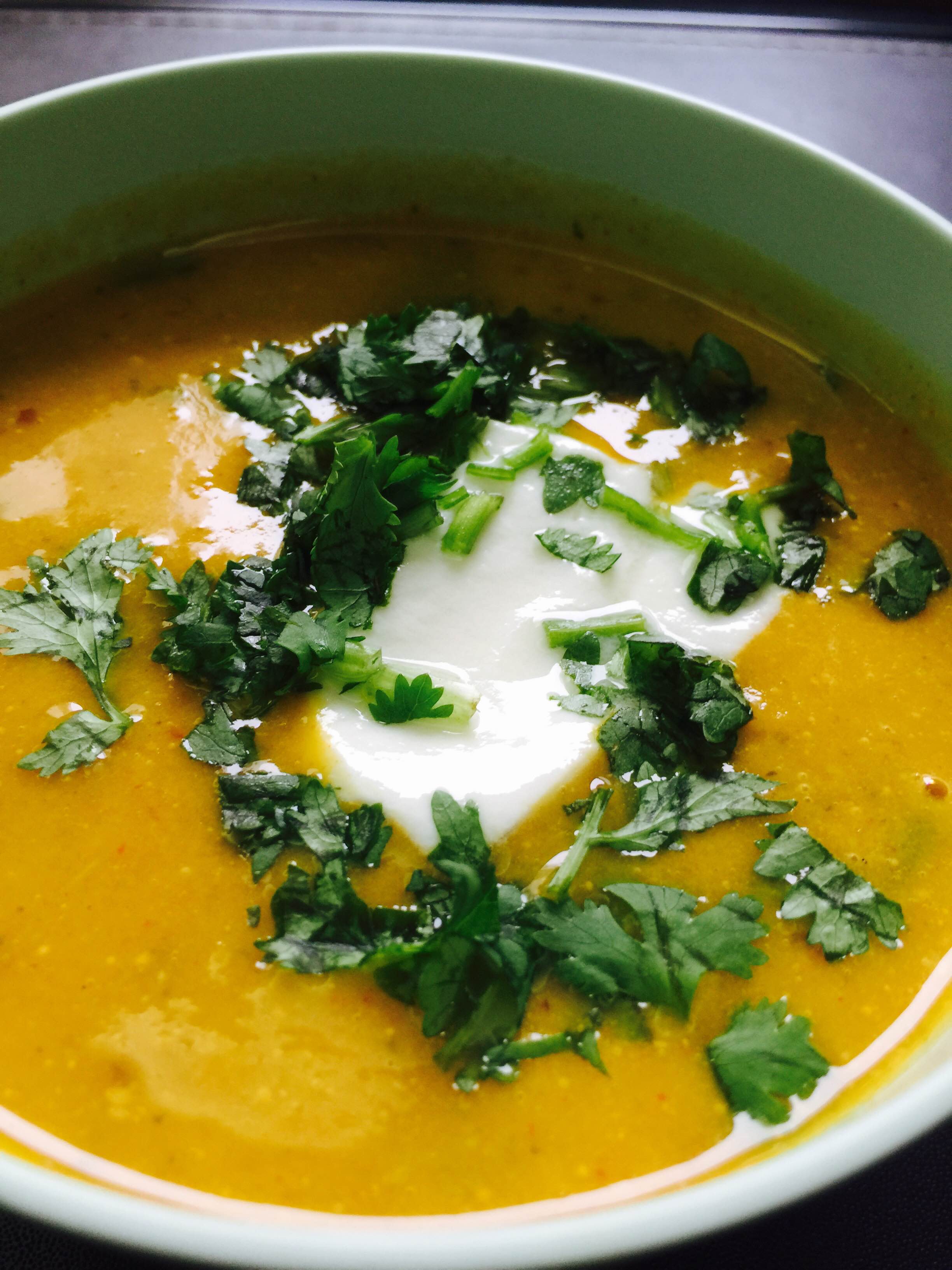
IMG_4709Last week I started craving for soup at work. The thought kept me company until I reached home and made this yummy soup. It was sweet with spicy undertones and extremely delicious. It didn’t take very long to make and is perfect for cold and rainy days!

Carrot, Pumpkin and Coriander Soup

IMG_4711Ingredients:

  • 1 large onion, chopped
  • 7-8 cloves of garlic, roughly chopped
  • 1.5 inch knob of ginger, peeled and roughly chopped
  • 3-4 dry red chillies, halved (can substitute fresh red chillies for this)
  • 1 tbsp cumin seeds
  • 1 to 1.5 tbsps coriander seeds
  • 3 medium carrots, peeled and chopped
  • ¼ orange pumpkin, peeled and chopped
  • Half to one cup chopped coriander (use half for the soup and reserve the rest for the garnish)
  • Low fat milk as desired (to achieve the soup consistency you like)
  • 2 tbsps thick yoghurt
  • 2 tsps Red chilli powder (less or more as per your spice intensity)
  • 2 tbsps Cumin seed powder
  • Salt to taste
  • 2 tsps oil (I used a Olive Canola blend, you can use your normal cooking oil)

Method:

  • Heat oil in a pan and once it’s warm, add in the cumin seeds and coriander seeds.
  • Once they splutter add the dried red chillies (or fresh if that is what you are using) and stir for 30 seconds.
  • Next, add the garlic, ginger and onions in that order, stirring each one for 30 seconds before adding the next ingredient.
  • Once the onions have become translucent add the carrots and stir for a while.
  •  When the carrots become half cooked, which will take around 5-10 minutes, depending on the carrots,  add in the orange pumpkin and a handful of chopped coriander.
  • Add in a bit of salt to help the vegetables cook faster and stir the vegetables once a while.
  • You can also add in some water (about half a cup) and cover the pan to help cook the vegetables faster.
  • Once the vegetables are cooked and cooled, add in the yoghurt and blend using a stick blender or your mixer to a smooth paste. Use milk to help you blend, and get the consistency you like for your soups.
  • Transfer the soup back to the pan and heat it till it achieves a rolling boil. Check for seasoning and add more salt if needed.
  • Add in the balance yoghurt and switch off the gas.
  • Serve with garnishes of yoghurt and coriander leaves.

IMG_4708