Recipe: Cucumber and Okra (Ladies Finger) Raita

IMG_6051A couple of days each week, I need to send BB & GG to school with a packed lunch as they have to stay back in school for either CCA or supplementary lessons.

Most days it’s either some sort of stuffed paratha or some sort of rice. So making appropriate accompaniments with that then becomes important.

I made a vegetable pulao recently and was thinking of something to accompany that when I thought of marrying two kinds of raitas to come up with this raita. The Okra or Ladies Finger Raita is a traditional south Indian raita (called pachadi) and we make the Cucumber raita quite often at home. It was surprisingly good and goes very well with any kind of rice or roti.

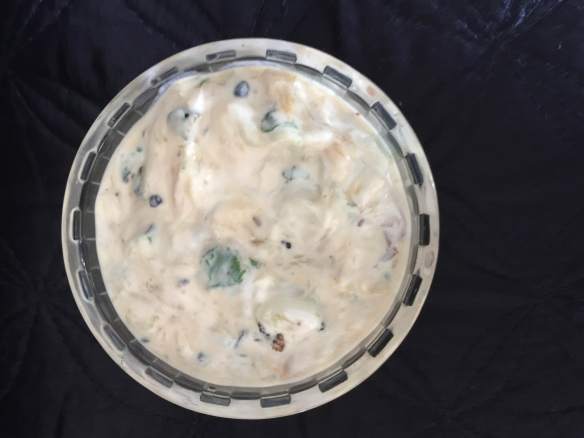
Cucumber and Okra (Ladies Finger) Raita
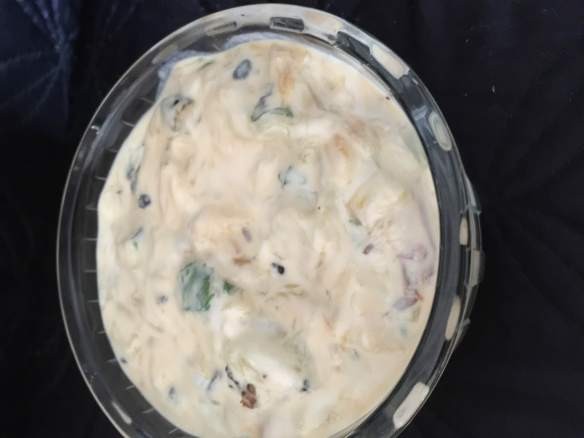
IMG_6052Ingredients:

  • 2 large cucumbers
  • 10-15 okra or ladies finger washed and dried thoroughly
  • 2 cups yoghurt, beaten well
  • 2 green chillies
  • 1-inch piece ginger
  • 3-4 tbsps oil
  • 1 tsp cumin seeds
  • Salt to taste
  • Coriander leaves to garnish

Method:

  • Peel and grate the cucumber and salt it lightly and keep aside for a while.
  • Slice the ladies finger as thin as you can and keep aside.
  • Slice the green chillies and ginger finely and keep aside.
  • Heat oil in a pan and when warm, fry the chillies and ginger till they are crisp. Remove and keep on some kitchen paper to remove all excess oil.
  • In the same oil, fry the okra till it becomes brown and crisp.
  • Remove from the pan and put on the kitchen paper to remove excess oil.
  • In a large serving bowl, beat the yoghurt and add salt to taste.
  • Squeeze the grated cucumber with the palms of your hands to remove all excess water and add to the beaten yoghurt.
  • When the fried okra, chilli and ginger are cool, add to the yoghurt cucumber mixture.
  • Heat another dry pan, and add the cumin seeds and let them pop. When the cumin seeds are crisp, add them to the yoghurt mixture.
  • Garnish with coriander leaves and serve cold.

IMG_6053

Recipes: Red Chilli Chutney

I love having chutneys in the house and will have one or more lying around at any point in time.

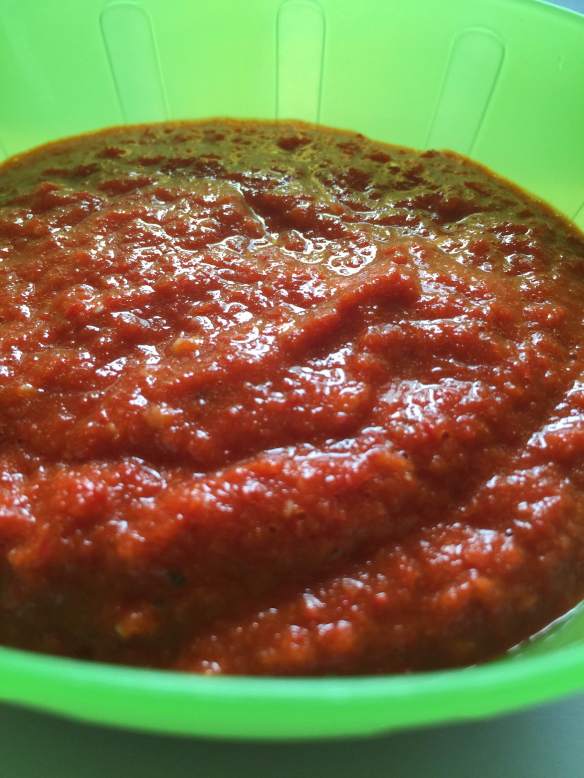
A couple of weeks back, while making veggie burgers with my Mixed Veg Kofta recipe, I played with this recipe and found one that suits me! Don’t be fooled with the name, though its made from red chillies, it’s not as fiery as the name suggests.

This chutney is made from fresh, largish red chillies which are not spicy. I suspect they will be very nice with red peppers also, though I’ve not yet tried them with them.

red-chilly-959567

Fresh red chillies

Fresh Red Chili Chutney

IMG_5357Ingredients:

  • 1 cup fresh red chilies, chopped into large chunks
  • 2 onions, chopped into large pieces
  • 10-12 cloves of garlic
  • 1 large handful of raisins, soaked in warm water for a while
  • Salt to taste
  • 1-2 tbsps lemon juice

Method:

  • In a blender, using the water used to soak the raisins, blend all the ingredients except the salt and lemon juice.
  • Use water sparingly to keep the chutney thick.
  • Add salt and lemon juice and blend till you get the consistency you want.

This chutney is amazing with bread and also goes very well with chats and and any fried food like samosa, pakoras etc. The chutney was not very spicy and the raisins helped cut the spice factor even more. If you can take a lot more spiciness, you can reduce the amount of raisins, or increase the chili amount.

IMG_5358

IMG_5359

Carrot Chutney/Thuvaiyal

My definition of a Thuvaiyal is a chutney to which coconut has been added. A chutney is a mixture of vegetables and spices. A thuvaiyal, on the other hand, has in addition to the chutney ingredients, coconut to give it some body.

I had some carrots which were slightly bitter to taste. I didn’t know what to do with them, then remembered this thuvaiyal that my mom used to make. This thuvaiyal  can be eaten with idli/dosa/bread or even mixed with rice. My mom used to make thuvaiyals to be eaten with rice when she didn’t want to cook much that day.

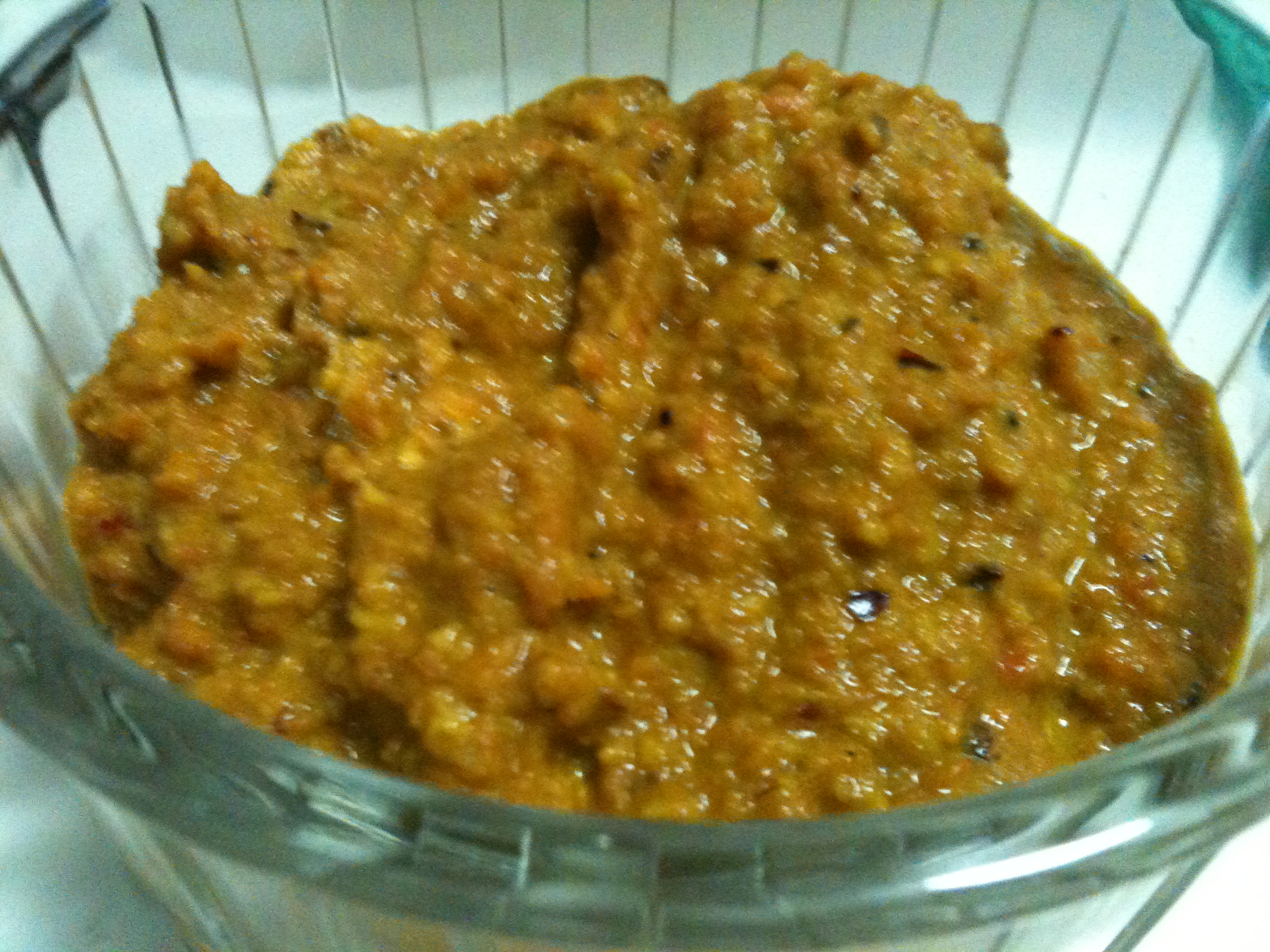
Carrot Thuvaiyal

Ingredients:

  • 1 cup chopped carrots
  • 1/2 cup grated coconut
  • 1 tsp mustard seeds
  • 4-5 dried red chillies
  • 1 tsp urad dal
  • a pinch of asafoetida
  • a small lime-sized ball of tamarind
  • 1 tsp oil
  • Salt to taste
Method:
Heat oil in a pan and put in the mustard seeds. When they pop, add the urad dal, asafoetida and red chillies. Stir for a few seconds and then add the carrots and tamarind. Fry for a while till the carrots a bit soft and the raw smell goes away. You do not need to cook the carrots, but they do need to lose the raw hardness. When the carrots soften, remove from the fire and let it cool.
When the carrots mixture are cool, blend it in a mixer with coconut adding water if needed. Since my carrots were a bit bitter, I added some jaggary to this, but if you have sweet carrots, you can omit this. Once the carrot-coconut mixture is finely ground, add salt to taste and transfer to a serving bowl. This can be eaten mixed with rice when you don’t want to cook or eaten with idli, dosa or even with bread. This keeps for upto a week in the fridge.

Milagai Podi

Milagai Podi or Gunpowder as it is commonly called, is a staple in most South Indian homes. It is basically a coarse to fine powder made out of different lentils and chillies. The powder is used as an accompaniment to Idlis and Dosas and is eaten with a serving of sesame or gingelly oil poured in it and mixing it up. The oil tones down the spiciness and dryness of the powder.

Different communities and families play around with the basic recipe to have a milagai Podi recipe which is unique to their home. This version was taught to me by my mother and is probably a variation of what is made in most Tamil Brahmin households.


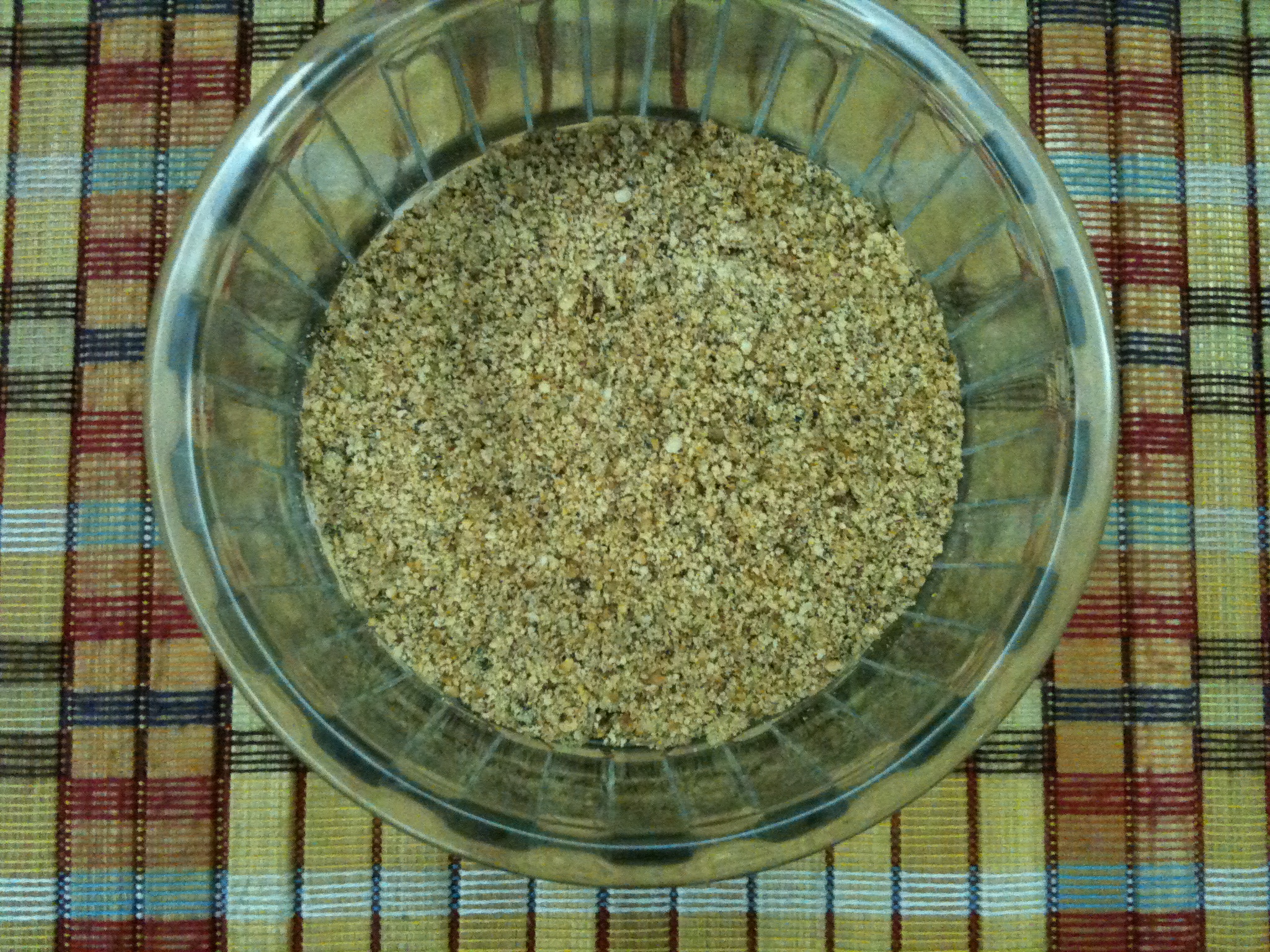
Milagai Podi

Ingredients:

I cup Chana Dal

1 cup Urad Dal

¾ cup white Sesame seeds

1 cup chopped dry red chilies

1 tsp oil

¼ tsp asafetida

2 tbsps jaggary

Salt to tast

Method:

Before starting, soak the sesame seeds in water for around 10-15 minutes. While it is soaking, dry roast the chana dal and urad dal separately. Keep stirring the dal while roasting so that they do not burn. This is an important part of the whole cooking process. The dals should be totally dry and if you bite a piece, it should not have any softness or wetness in it. Once the dals are roasted, put them in separate plates to cool. At this point, strain the sesame seeds and dry roast it too. When the seeds start popping, it usually means they are done. At this point, pop a few into your mouth. If they crackle, they are done. Put this also in a separate plate to cool down. Now pour 1 tsp of oil (any oil can be used, I used my normal cooking oil, which is a blend of canola and olive oils) and add the asafetida powder. Then add in the chillies and stir for around 5-7 minutes. Switch off the gas and now we are ready for the blending. The chillies can be kept in the pan itself to cool down.

Once the dals are cool, grind each of them separately in a mixer. I prefer to have the podi more fine than coarse, but that is personal choice. If you prefer a coarser podi, grind it that way. Once you’ve ground the chana dal, put it in a big bowl to mix. Then grind the urad dal and the sesame seeds separately and add it to the bowl. Now grind the chillies and add it to the mixed lentils. Lastly, take the jaggary and run it in the mixer to powder it (if you have pre-powdered jaggary, this step is redundant) and add it to the bowl. Using a spoon or your hands, if you prefer, mix the various powders thoroughly. Add salt to taste and the podi is ready.

The colour of the podi will vary, depending on the type and colour of the red chillies. For best colour, use Kashmir chillies, they give you oodles of colour without being very spicy. The chillies I had were not Kashmiri chillies, so the colour is like this.

This recipe gives approximately 3 cups of powder, so if you want more or less, just reduce the proportions accordingly. The proportions according to my mom is like this for urad dal, chana dal, chillies and sesame seeds 1:1:1:3/4