
 Earlier this week was the festival of Thiruvathirai which is mostly celebrated in the southern states of Tamil Nadu and Kerala. I decided, for the first time, to make this dish which is only made for this festival.
This dish is a traditional dish of the brahmins who come from the Tirunelveli district in Tamil Nadu (of which I am also a part of from my parents) and is something I’ve always grown up with, but never actually made.
It is traditionally eaten with a sweet rice dish called kali, but I decided to pair with Ven Pongal. I also didn’t have all the vegetables traditionally used for this dish, so I improvised!
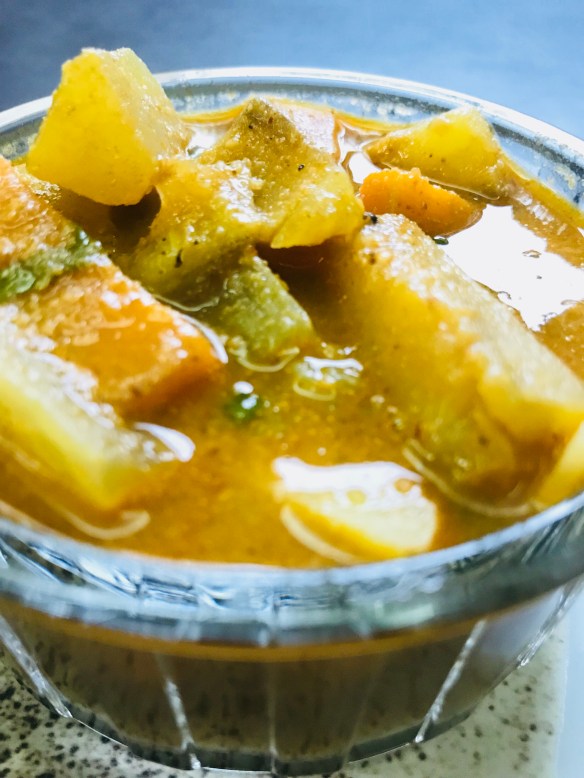
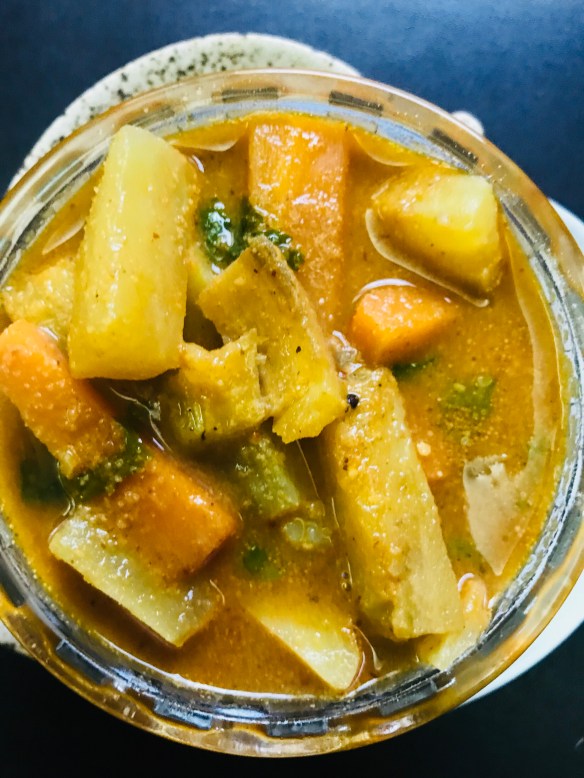 Talaga Kozambu
Ingredients:
- 1 small lime-sized ball of tamarind, soaked in warm water for 30 minutes and the juice squeezed out
- 1 carrot, chopped into big pieces
- 1 radish, chopped into big pieces
- 2 large potatoes, chopped into big pieces
- 2 raw bananas, chopped into large pieces
- 1/2 tsp turmeric powder
- Salt to taste
To be ground into a paste
- 6 dried red chillies
- 2 tsp toor dal
- 2 tsp white sesame seeds
- 1/2 cup grated coconut
- 1 tbsp oil
To temper
- 1 tbsp ghee
- 1 tsp mustard seeds
- 1/4 tsp fenugreek/methi seeds
- 5-6 curry leaves
- 1/2 tsp asafoetida powder
Method:
- Heat oil in a pan and put in the red chillies, toor dal and sesame seeds and stir.
- When the dal turns light brown, add the grated coconut and continuously stir until the coconut is crisp and brown. Ensure the coconut does not burn.
- Let it cool completely and blend this into a fine paste with water.
- Wash the vegetables and put them in the same pan. Add just enough water to cover and then the turmeric powder and some salt. Cover and cook until the vegetables are half cooked.
- When the vegetables are half cooked, pour in the tamarind juice and cover and cook for approximately 5 minutes or till the raw smell of the tamarind goes away.
- Next, add the blended masala and stir well. Check and add salt if needed. Remove from the flame around five minutes after it comes to a rolling boil.
- In a smaller pan, heat the ghee and put in the mustard seeds, fenugreek/methi seeds, curry leaves and asafoetida. When the curry leaves become crisp, remove from the flame and pour over the Kozambu.
- Enjoy with any rice of your choice through the traditional accompaniment is kali
Notes
The traditional vegetables used are raw banana, ash gourd, yellow/orange pumpkin, yam, brinjal/aubergine, broad beans, sweet potato, potatoes, radish, etc.


 I’m actually surprised at myself that even though I’ve been cooking for so long, I’ve never made sweet corn soup. The other day, as I was planning our Sunday menu, my dad asked for this soup. I then realised I’ve yet to make this so looked around some sites and came up with my version of sweet corn soup. This recipe has minimal ingredients and I omitted corn paste which is traditionally used to thicken the soup, instead used nuts to thicken the soup. The verdict was very encouraging, everyone loved the soup and went for seconds and thirds and there was none left in the pot at the end of the meal!
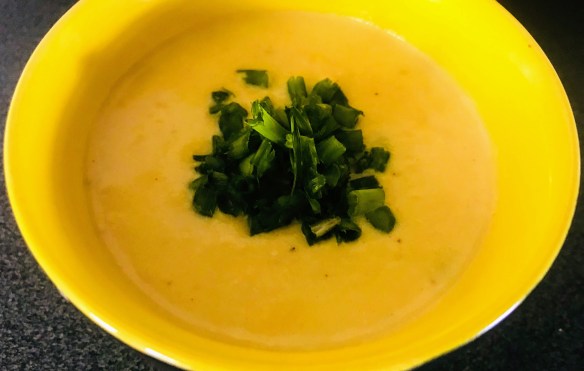 Sweet Corn Soup

 This is my take on a super easy my mum makes for my dad. My mum makes this very often at home and so I decided to tweak it a bit. I made it as a no onion, no garlic recipe, but feel free to add both to your version.
 No Onion, No Garlic Mixed Vegetable Rice
 Notes
Notes

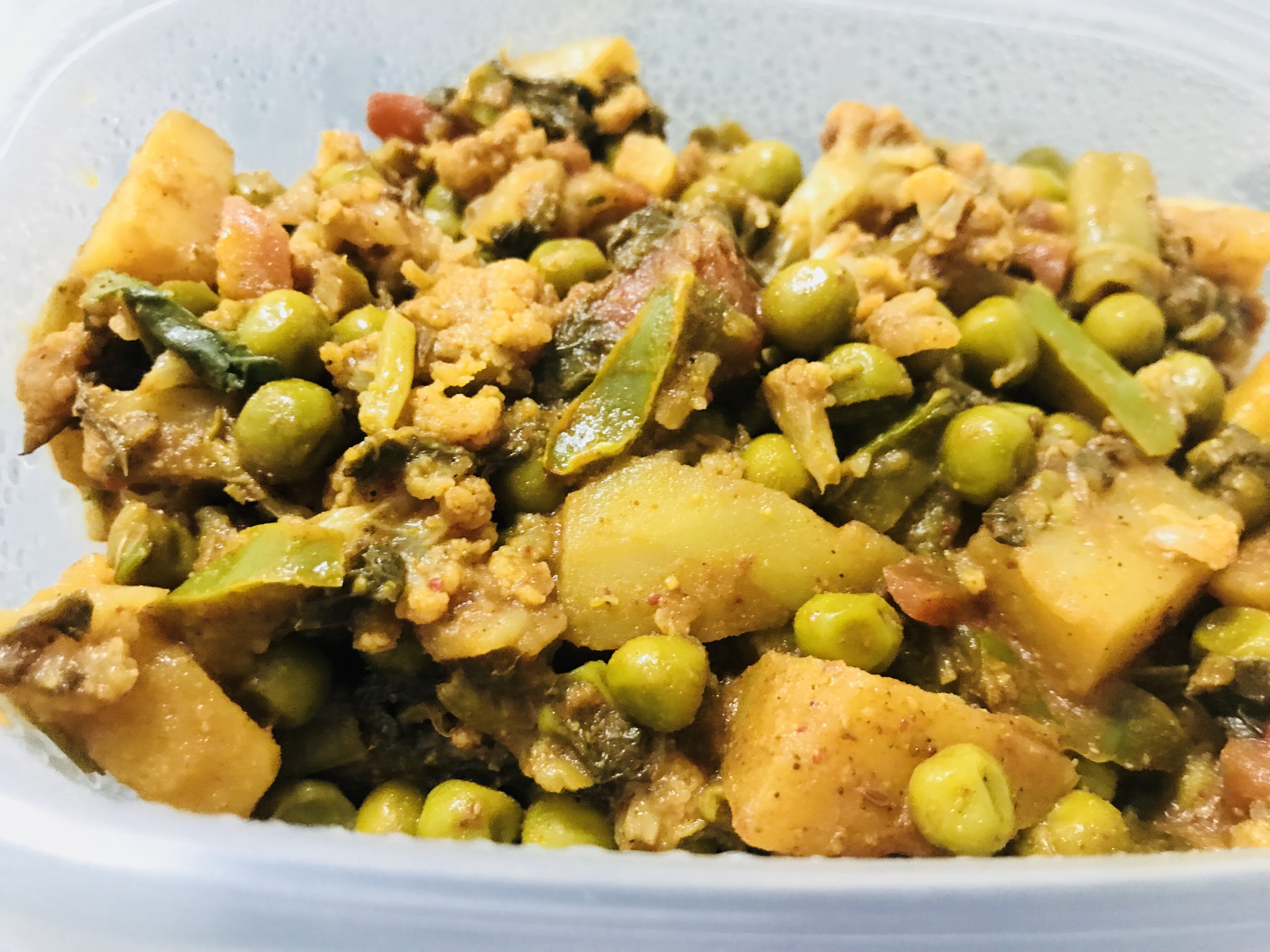

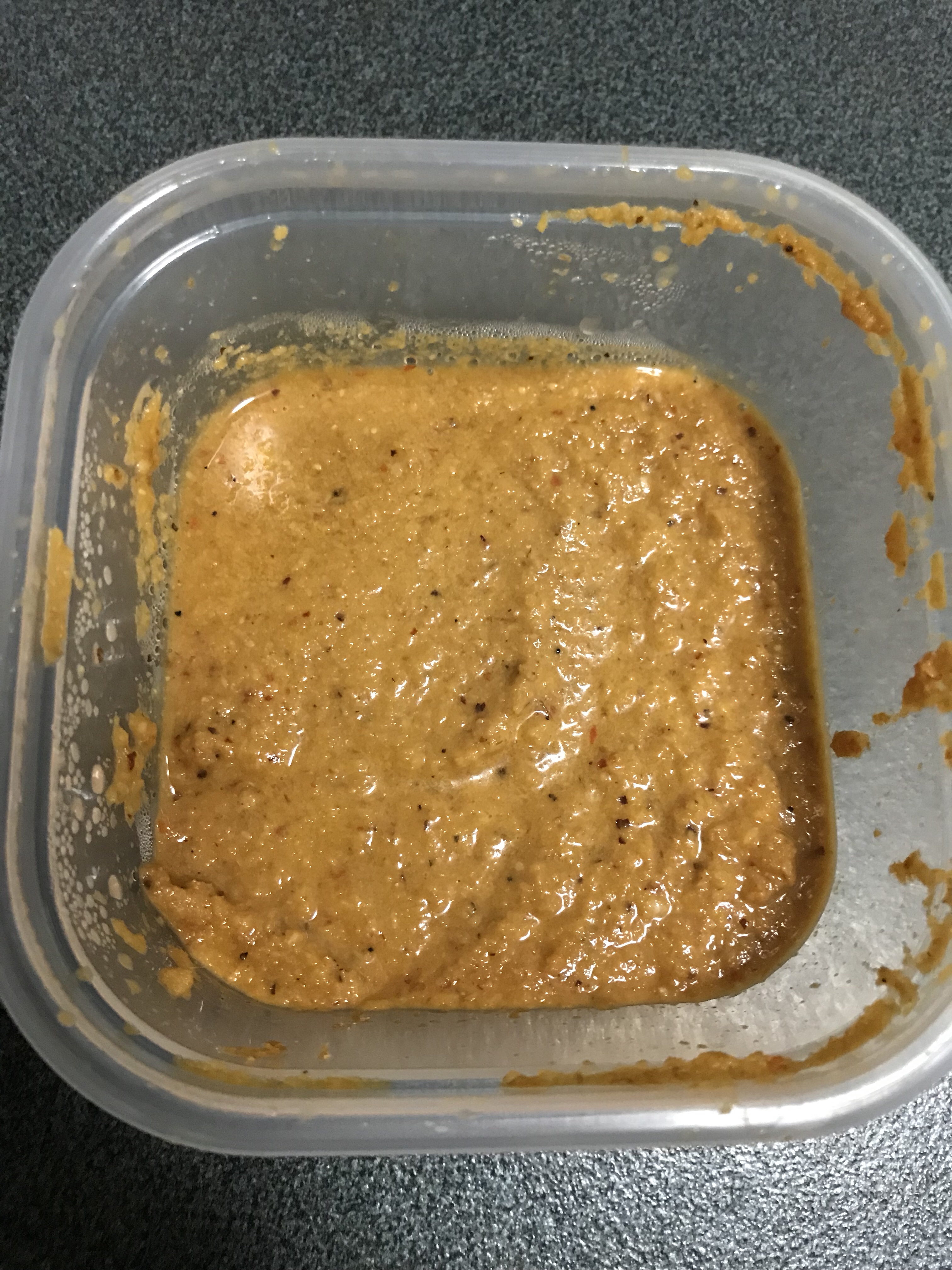
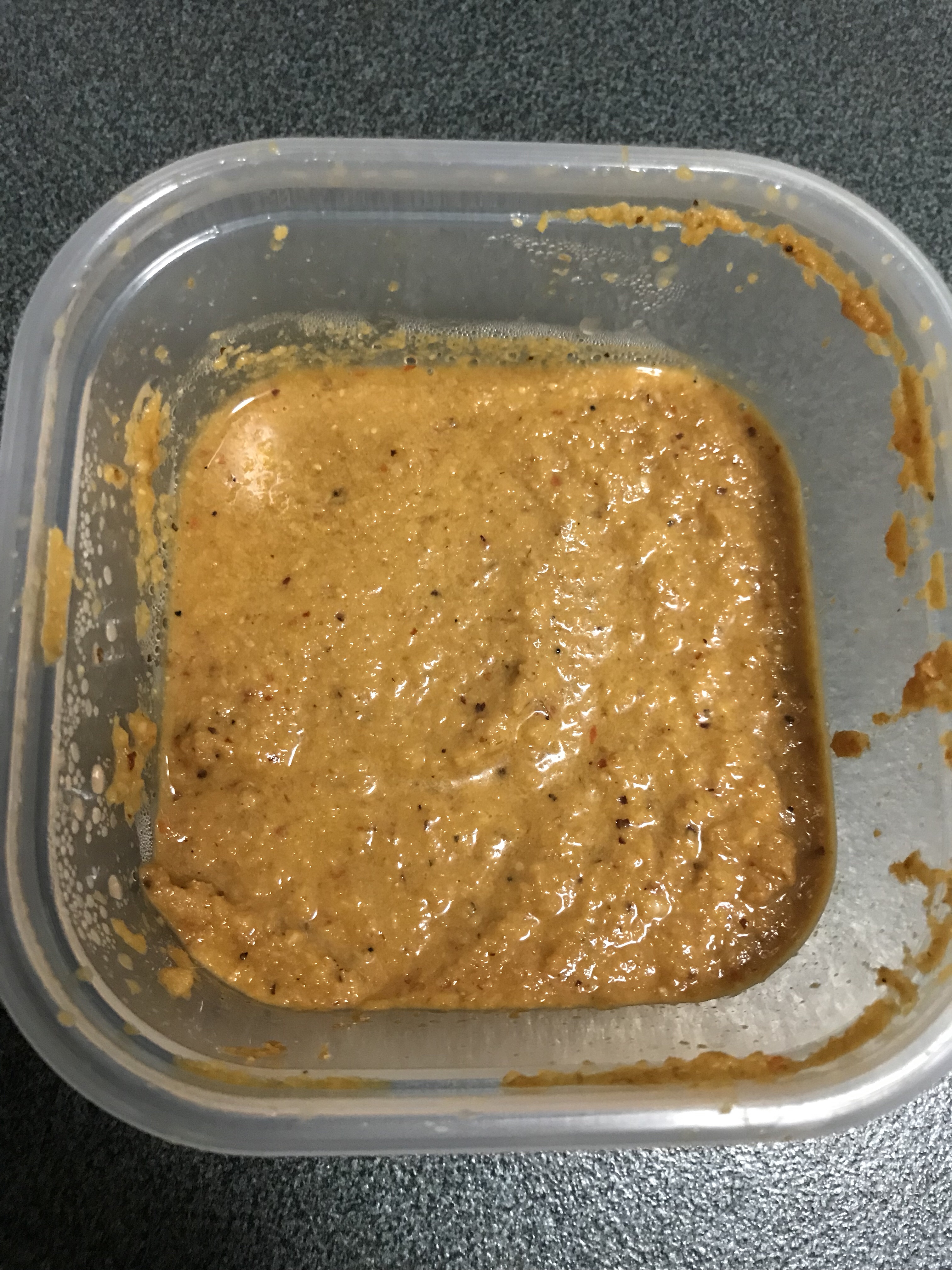 This Chutney came about completely serendipitously! I started off making something else, felt it was not going to be enough, added some coconut and the end result was this yummy Chutney.
 Ginger Coconut Chutney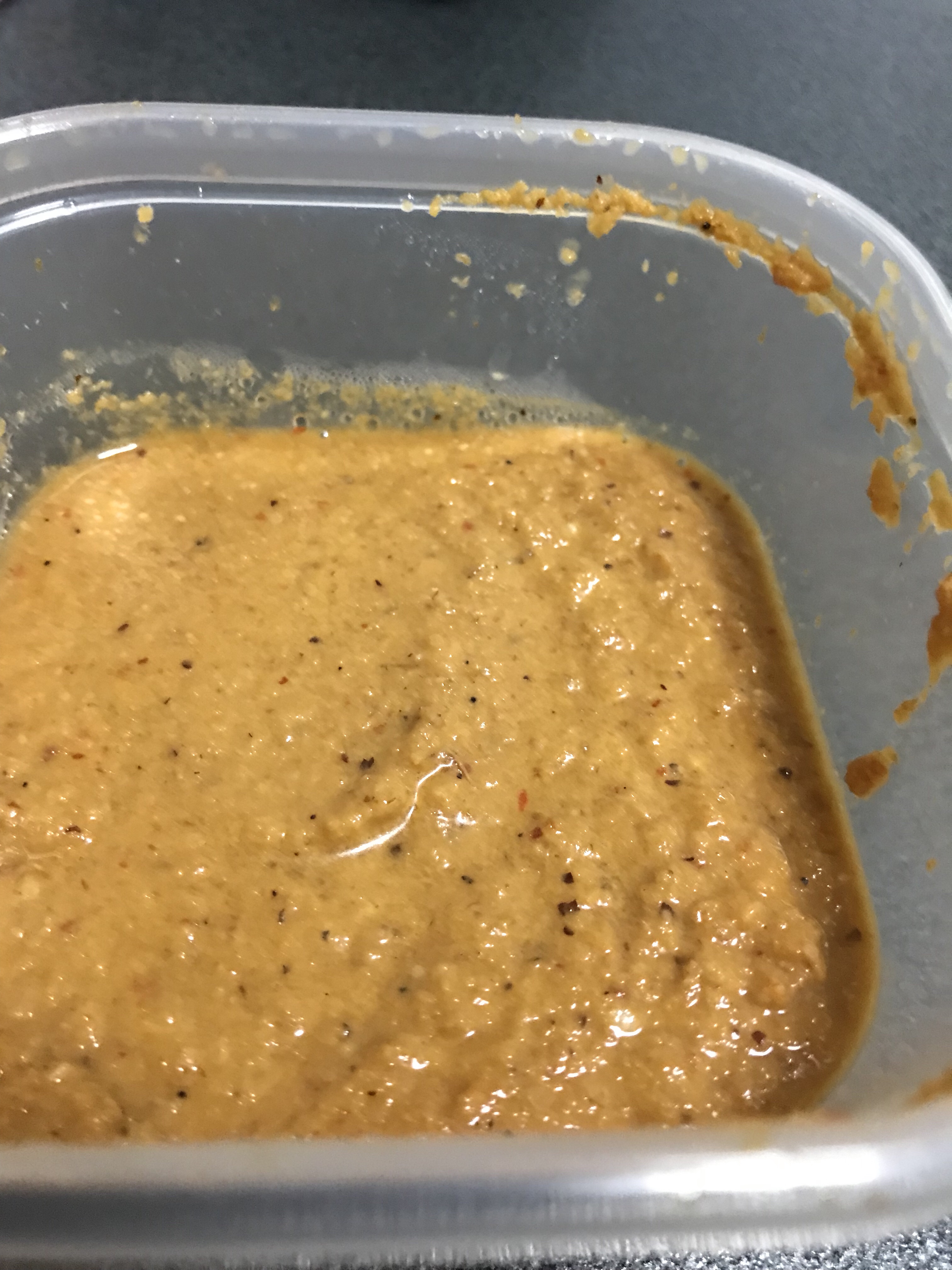

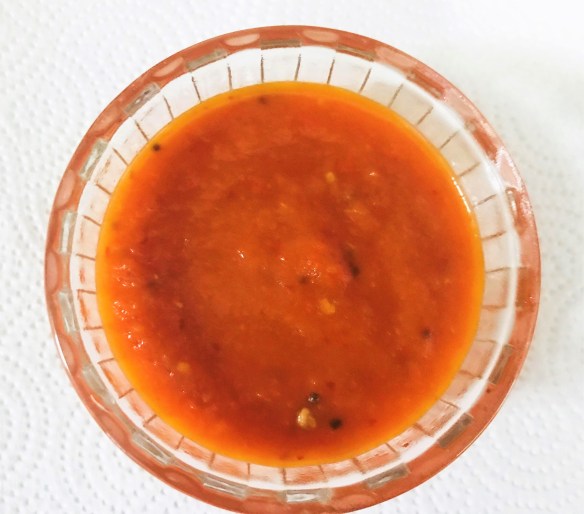 This is a new take on an old, but gold chutney recipe. This chutney is super easy to make and goes very well with any Indian flatbread or even dosai or ildi. My helper even had it with rice and she relished it a lot!
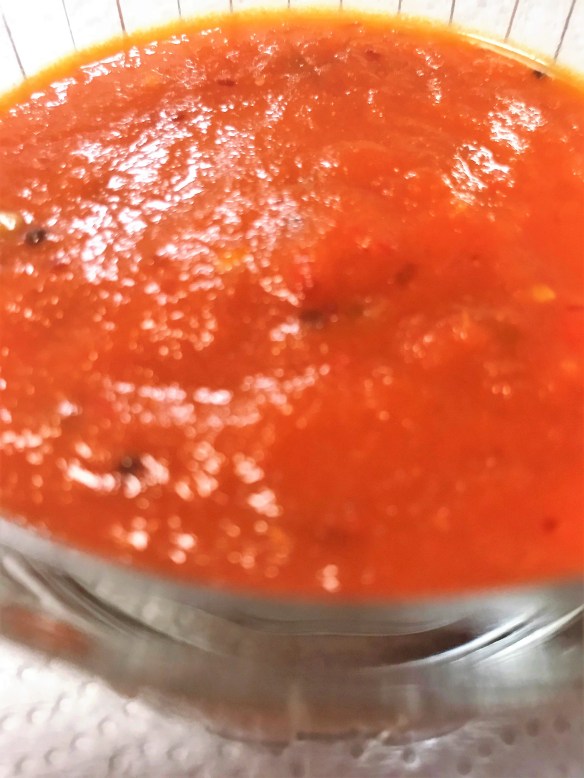 Tomato Bell Pepper Chutney


 Memories and Such