Recipe: Brown Rice Savory Pongal aka Ven Pongal

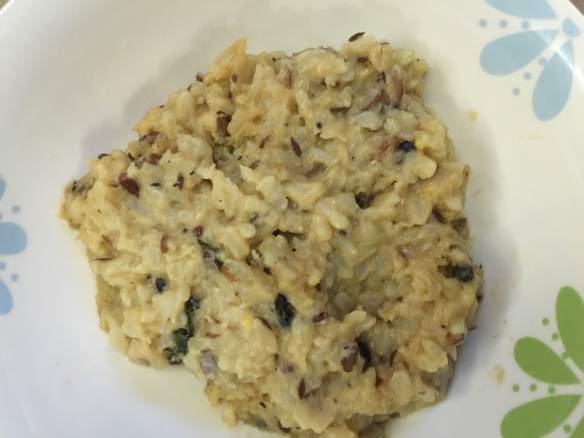
IMG_5277Last week, I blogged about the sweet Pongal recipe which I made as a neividhyam or offering to the Lord on the occasion of the festival of Pongal. That evening, I made the salted version for dinner. The method for both is quite similar and you can make both at the same time with little extra effort.

This is often eaten as a breakfast dish, especially in the southern parts of India. This combination of rice and dal will really fill you up and if you, like me, plan on having this for dinner, then go a bit easy as you tend to feel really full sometime after your meal!

Brown Rice Ven Pongal
IMG_5278

Ingredients:

  • 2 cups brown rice (traditionally made with white rice)
  • 1 cup yellow moong dal
  • 2 cups water
  • 2 cups milk
  • 2 tsps cumin seeds
  • 2-3 tbsps ghee
  • 2 tsps whole black pepper
  • 1 tsp pepper powder
  • 1 tsp grated ginger
  • 4-5 leaves of curry leaves
  • A handful of broken cashew nuts
  • Salt to taste

Method:

  • Wash the rice well, drain and keep aside. In a pressure cooker, lightly pan fry the dal till a nice aroma comes.
  • Add the rice, water, milk, salt, peppercorns and cook under pressure for 4-5 whistles.
  • In another pan, heat 1 tbsp ghee and fry the cashewnuts until they brown nicely. Remove and keep aside and in the same pan, fry the cumin seeds, and when it begins to splutter, add the curry leaves, grated ginger and pepper powder and fry for a few seconds. Remove from the flame and keep aside.
  • When the pressure reduces, open the cover of the pressure cooker and check if the rice and dal mixture has become mushy (it should look like a risotto at this point). If no, add more water and/or milk and cook it further till it becomes mushy.
  • Add the remaining ghee here and stir well. When it has achieved the right consistency, add the fried cashewnuts and the seasoning (cumin seeds, ginger, curry leaves and pepper powder) and mix well checking for salt.
  • Serve with sambar or coconut chutney

IMG_5276

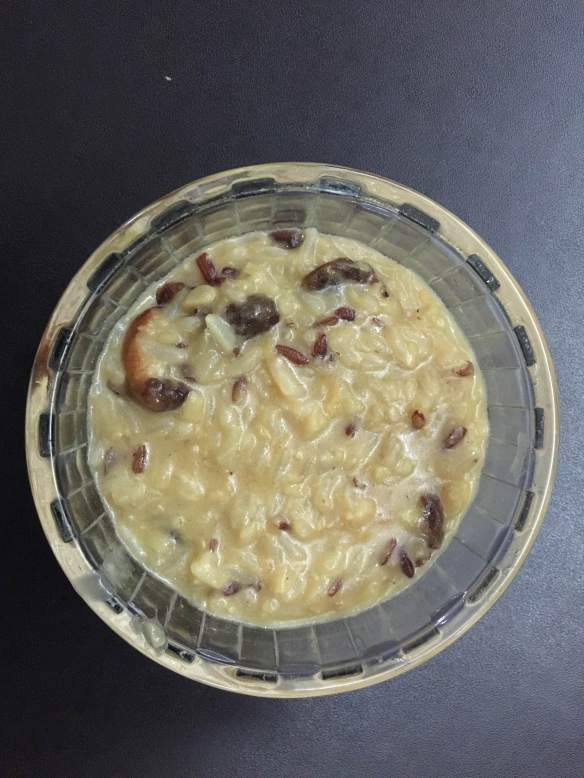
Recipe: Brown Rice Sweet Pongal

IMG_5275

Last week was the festival of Pongal, and as is the tradition I made some sweet Pongal in the morning. The only twist to the recipe was that instead of normal white rice, I used the healthier brown rice. It was quite good, though you need to cook it a tad longer than usual.

IMG_5274

Ingredients:

  • 1 cup brown rice
  • 3 tbsps yellow moong dal
  • ½ cup jaggery (increase this measure to ¾ cup if you like it sweeter)
  • 1 cup milk
  • 2 cups water
  • A handful of cashewnuts
  • A handful of raisins
  • 3-4 tbsps Ghee.

Method:

  • Wash the rice, drain and keep aside.
  • In a largish pressure cooker, dry roast the moong dal for a while till it emits a nice aroma. Do not let it burn.
  • Then add the washed rice, 2 cups of water and 1 cup of milk and pressure cook for 4-6 whistles. Let the pressure come down. You can cook it in a large pot also if you do not have a pressure cooker. In that case, keep an eye on it and add water and milk periodically. You need to cook it till the dal and rice break down and cook, becoming mushy.
  • While the pressure is coming down, in a small skillet, put 1 tbsp ghee and fry the cashewnuts and raisins till the cashewnuts brown and the raisins plump up. Remove and keep aside.
  • Put the jaggery in another container and pour a bit of water over it to cover. It will dissolve in a few seconds. You could also do this in a microwave for 1 minute. Then once the jaggery has dissolved, strain it to remove any impurities present and keep aside.
  • Once you can open the lid of the cooker, add the jaggery, cashewnuts and raisins and cook over a medium flame for 5-10 mins.
  • When the mixture becomes thick, it’s time to remove it from the flame and enjoy!

Picture1

Recipes: Broccoli in Red Gravy

IMG_5182

Broccoli is not a vegetable that you will see in Indian dishes. The first time I tasted this vegetable was when I moved to Singapore. Though these days, you find it in markets in most Indian metros.

Both my children love broccoli as a vegetable, but unfortunately when my helper cooks using this vegetable, she loves to cook it to death. That totally spoils the vegetable for all of this. So this weekend, when I cooked for us, I decided to make an Indian sabzi which would go well with both rotis and rice.

IMG_5184

Ingredients:
3 heads of broccoli, cut into florets
2 onions, chopped roughly
2 tomatoes, roughly chopped
5-6 garlic cloves,
1 inch piece of ginger
1.5 tsps Cumin seeds
1 tsp fennel seeds
½ tsp carom seeds (can omit if not available)
2 tsps coriander seeds
¼ tsp turmeric seeds
1-2 tsps chilli powder
1 -2 tsps Garam Masala Powder
3 tbsps Oil
Salt to taste

Method:
In a pan, warm 2 tbsps oil and then temper with cumin seeds, carom seeds and fennel seeds.
Next add the garlic and ginger and saute them for a few seconds.
Now add the onions and saute till they turn translucent. At this point add the tomatoes and a pinch of salt to help breakdown the water in the tomato and let it cook well.
Once the tomatoes are well cooked, switch off the gas and blend into a smooth paste.
In another pan, heat 1 tbsp oil and when warm add half tsp of cumin seeds and wait for them to pop. When they pop, add the turmeric powder and stir once.
Next add in the washed broccoli and stir for a couple of seconds. Add some salt and cook on a slightly higher heat than normal so that broccoli cooks, but retains it’s crispness.
When the broccoli is almost fully cooked, add in the blended gravy, chilli powder, garam masala powder and adjust for salt.
Let this come to a rolling boil and finish off this dish with some coriander/cilantro garnish.

IMG_5185

Receipes: Plum Chutney

I first made this plum chutney on a whim last week. S loved it so much that today he brought loads of Plums for me to recreate it. That’s when I knew it was a winner. This recipe is inspired by Sanjeev Kapoor’s Aloo Bhukare ki Chutney, which I then tweaked to make it my own! This is a super easy recipe with just a handful of ingredients, so read on and enjoy!!

Plum Chutney

IMG_4542[1]Ingredients:

  • 4 red/purple plums
  • 1 small cup raisins
  • 2 tsps cumin seed powder
  • Red chilli powder to taste
  • Salt to taste

Method:

  • In a small bowl, soak the raisins in water for while till they plump up and soften. Using hot water may speed this up.
  • Next chop and deseed the plums and blend the plums and raisins together untill they become a smooth purée.
  • Next take a thick bottomed pan and pour this purée in it. Add salt and red chilli powder and let it start boiling.
  • Once it reaches a rolling boil, and cumin seed powder and stir well.  Let it boil for a while till it thickens.
  • At this point, the colour was slightly brownish with a glaze to the mixture. Once it has thickened to your satisfaction, remove from heat and cool. Once cool, it becomes this rich purple colour.
  • Transfer to a covered dish and refrigerate. This should keep well for upto a week in the fridge.

IMG_4541[1] IMG_4543[1]

This chutney tastes sweet, salty and a bit spicy. If you need to make it more spicy, just increase the chilli while cooking it. It goes well with most Indian food and I also loved having it with bread as a sandwich spread.

Rajma Paratha – Indian Red Kidneybean Flatbread

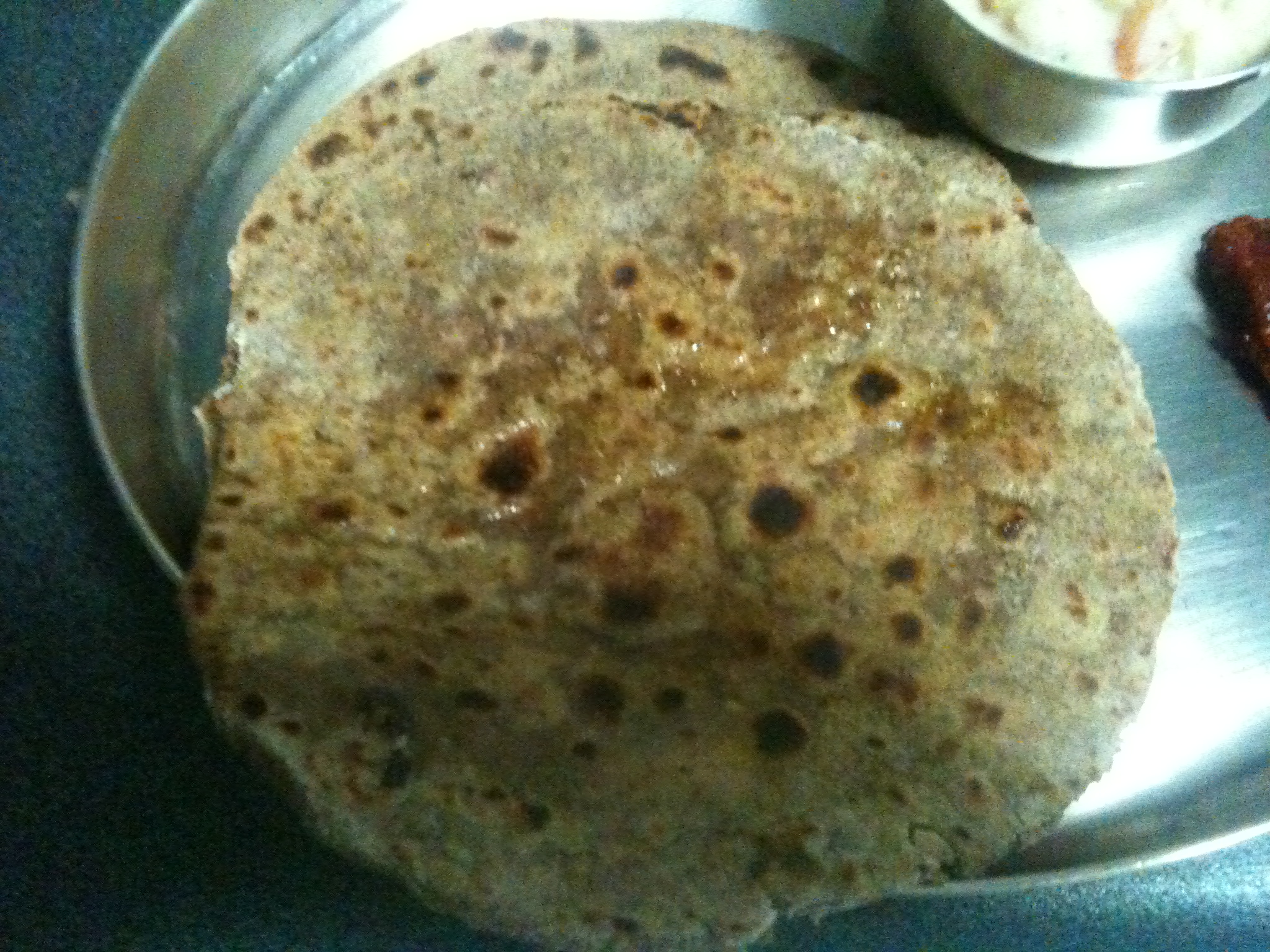
I had made Rajma over the weekend and as usual made too much for all of us to eat. We had leftovers and I didn’t know what to do with them. I love Rajma, so thought I will eat them with rotis when I chanced upon this recipe by The Steaming Pot. I tweaked it a bit and voila – spicy, tasty rajma parathas which we had with a dash of ginger pickle and a quick raita of baby cucumbers, tomatoes and onions.

Rajma Parathas

Ingredients:

  • 1.5 cup pre-made rajma masala, blended and pureed well to make it a smooth paste
  • 3 cups whole wheat flour
  • Some warm water to kneed the dough
  • 1 tsp oil for the dough
  • ghee/oil for the parathas (optional)

Method:

In a large dish mix the pureed rajma and the wheat flour and if needed, use the warm water to make it a smooth dough. Use 1 tap oil at the very end and mix into the dough to avoid stickiness.

Roll out into slightly thicker than usual parathas. In a non-stick tava, put the parathas in medium high heat and once the first side is done, flip and put a few drops of ghee in the first side. Repeat for the second side and remove and eat hot!

3 cups of wholewheat flour gave me around 12 parathas.