

India is a land of diverse cultures and traditions, where festivals hold a sacred place in the hearts of its people. Among the myriad of celebrations that adorn the Indian calendar, Kajari Teej stands out as a vibrant and deeply revered festival, particularly in the northern regions of the country. This auspicious occasion, celebrated by married women, is a testament to the enduring love and devotion between Lord Shiva and Goddess Parvati, the divine couple whose union symbolises the eternal bond of marriage.
Kajari Teej, also known as Badi Teej, Kajali Teej, or Satudi Teej, finds its roots in the ancient Hindu scriptures and mythological tales. The word Teej refers to the third day of the lunar cycle, which holds immense significance in the Hindu calendar. This festival is celebrated on the third day of the waning moon or Krishna Paksha in the month of Bhadrapada, typically falling in August or September. This year Kajari Teej falls tomorrow.
The festival’s name, Kajari, is derived from the word Kajal, which refers to the traditional kohl or kajal used to adorn the eyes. This name is a nod to the belief that on this day, Lord Shiva applied kajal to his eyes before marrying Goddess Parvati, symbolising the beauty and allure of their sacred union.
At the heart of Kajari Teej lies the mythological tale of Lord Shiva and Goddess Parvati’s marriage. According to Hindu mythology, Parvati, the daughter of the Himalayas, was deeply enamoured with Lord Shiva, the supreme ascetic and the destroyer of evil. Determined to win his heart, she underwent severe austerities and penances, eventually impressing Lord Shiva with her unwavering devotion. On the auspicious day of Kajari Teej, their divine union was solemnised, marking the triumph of love and perseverance over all obstacles.

Kajari Teej is primarily celebrated in the northern states of India, where it holds immense cultural and religious significance. The festival is observed with great fervour in Rajasthan, Uttar Pradesh, Madhya Pradesh, Bihar, and parts of Uttarakhand and Himachal Pradesh.
In Rajasthan, the celebration of Kajari Teej is particularly vibrant and grand. The city of Bundi, known for its rich cultural heritage, hosts a month-long celebration that culminates on the day of Kajari Teej. The festivities in Bundi are marked by colourful processions, traditional music and dance performances, and a grand fair called the Kajali Teej Mela.
The celebration of Kajari Teej is a joyous occasion filled with rituals and traditions that honour the sacred bond of marriage and the divine love between Lord Shiva and Goddess Parvati. Married women observe a strict fast on the day of Kajari Teej, abstaining from food and water from sunrise to sunset. This fast, known as the Nirjala Vrat, is a symbol of their devotion and a means to seek blessings for a long and prosperous married life. On the eve of Kajari Teej, women adorn themselves in vibrant attire, apply henna or mehndi on their hands and feet, and decorate their homes with rangoli and diyas or earthen lamps. They then perform a special puja, offering prayers and seeking blessings from Lord Shiva and Goddess Parvati. Clay idols of the divine couple are often placed on a red cloth, and offerings of flowers, fruits, and sweets are made. One of the most captivating aspects of Kajari Teej is the singing of traditional folk songs called Kajris. These melodious compositions narrate the love story of Shiva and Parvati, celebrating their union and the virtues of a devoted wife. Women gather in groups, adorned in colourful attire, and sing these songs with great enthusiasm, accompanied by the rhythmic clapping of hands and the beating of drums.
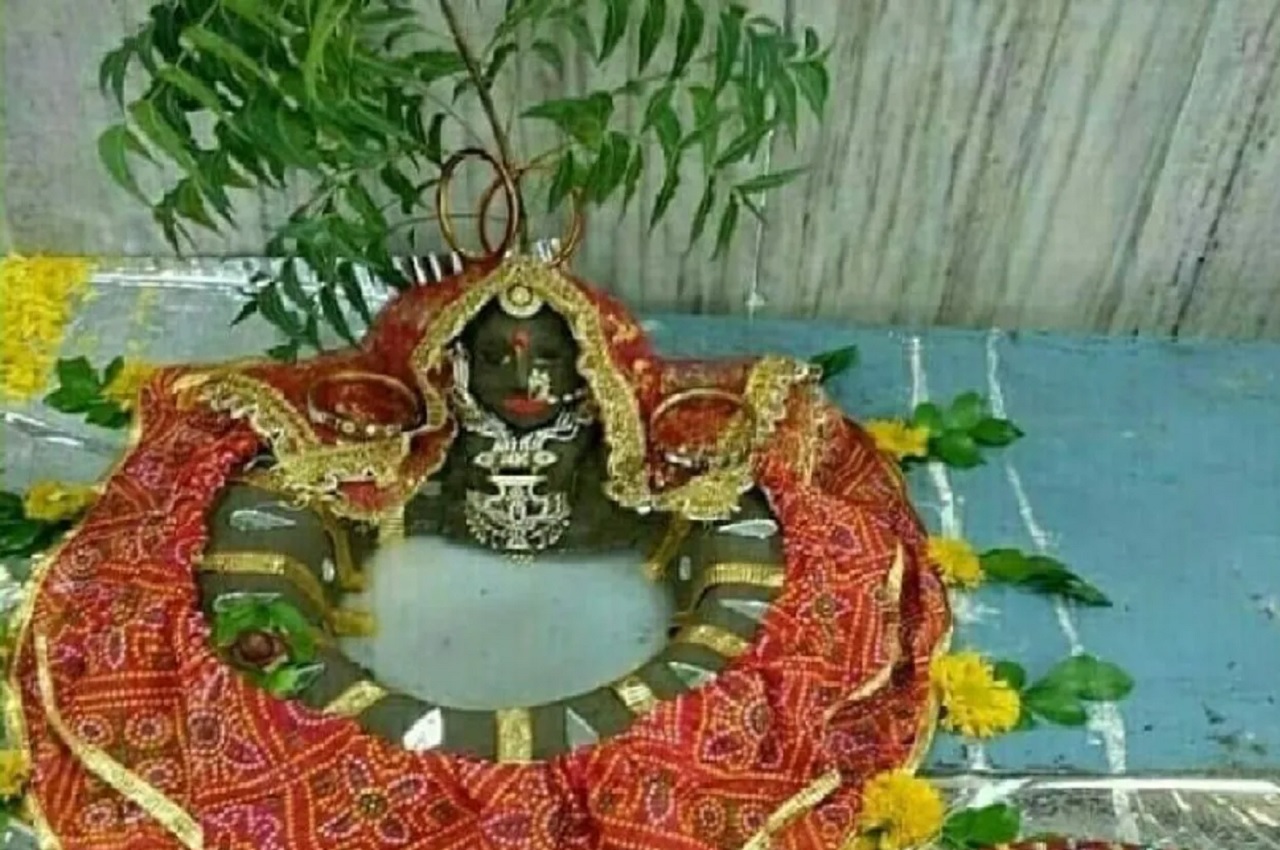
The neem tree holds a sacred place in the celebration of Kajari Teej. It is believed that Lord Shiva and Goddess Parvati rested under a neem tree after their marriage. As a result, married women perform a special puja around a neem tree, adorning it with vermilion, flowers, and offerings. They also tie sacred threads around the tree, symbolising their wish for a long and prosperous married life. As the sun sets on the day of Kajari Teej, women break their fast by consuming a traditional dish made of sattu or roasted gram flour. This dish, known as Sattu ki Ghari, is prepared with love and shared among family members and friends. The breaking of the fast is accompanied by joyous celebrations, music, and the exchange of blessings.
Like many Indian festivals, Kajari Teej is steeped in mythology and folklore, with various stories and legends associated with its origin. The most widely known myth behind Kajari Teej is the story of Lord Shiva and Goddess Parvati’s marriage. According to the legend, Parvati, the daughter of the Himalayas, was deeply enamoured with Lord Shiva, the supreme ascetic. To win his heart, she underwent severe austerities and penances, eventually impressing Lord Shiva with her unwavering devotion. On the auspicious day of Kajari Teej, their divine union was solemnised, marking the triumph of love and perseverance over all obstacles. The neem tree holds a special place in the celebration of Kajari Teej, and there is a legend associated with its significance. It is believed that after their marriage, Lord Shiva and Goddess Parvati rested under a neem tree, seeking respite from the scorching sun. Since then, the neem tree has been revered as a symbol of their sacred union, and women perform a special puja around it during the festival.
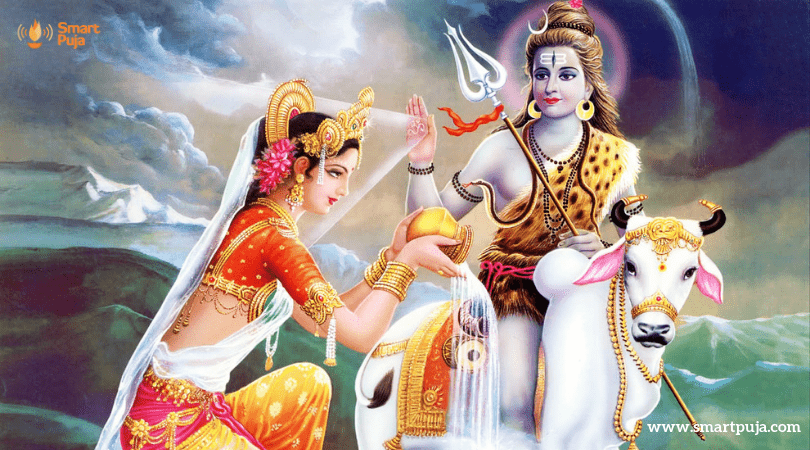
Another popular myth associated with Kajari Teej is the story of Lord Shiva applying kajal or kohl to his eyes before his marriage to Parvati. It is said that Shiva adorned his eyes with kajal to enhance his beauty and allure, symbolising the eternal love and devotion between the divine couple. This legend is believed to be the origin of the festival’s name, Kajari Teej. The melodious Kajri songs, an integral part of the Kajari Teej celebrations, are said to have their roots in a mythological tale. According to legend, when Lord Shiva and Goddess Parvati were separated for a brief period, Parvati composed and sang these songs to express her longing and devotion for her beloved husband. These songs, filled with love and longing, have since become an integral part of the festival’s celebrations.
Kajari Teej is a vibrant and deeply revered festival that celebrates the eternal love and devotion between Lord Shiva and Goddess Parvati. Through its rituals, traditions, and mythological tales, it reinforces the sacred bond of marriage and the virtues of a devoted wife. As women across northern India observe this auspicious occasion, they not only honour the divine couple but also strengthen their marital bonds and seek blessings for a prosperous and fulfilling life. Kajari Teej is a testament to the enduring power of love, perseverance, and the rich cultural tapestry that weaves together the diverse traditions of India.
 Memories and Such