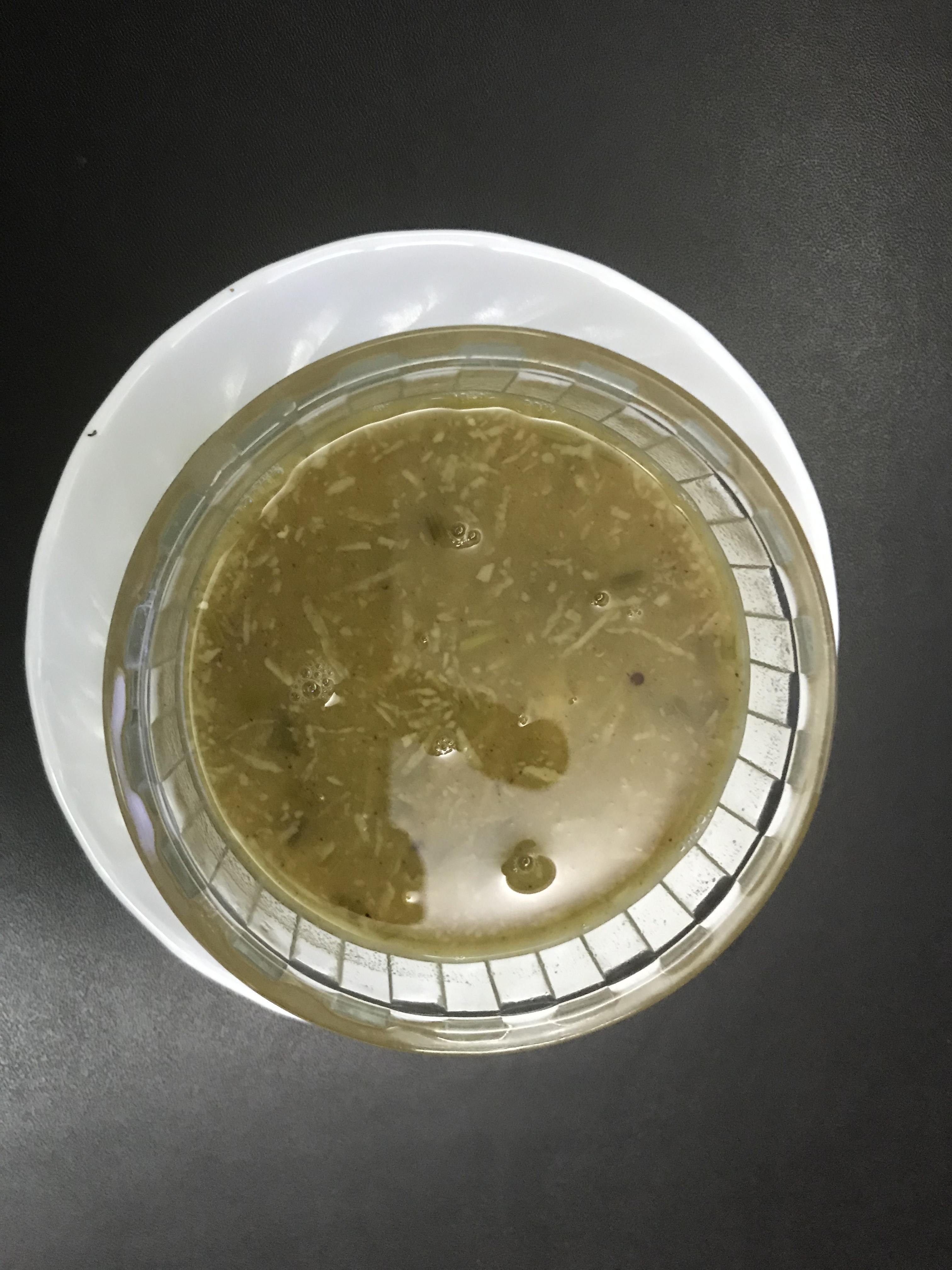
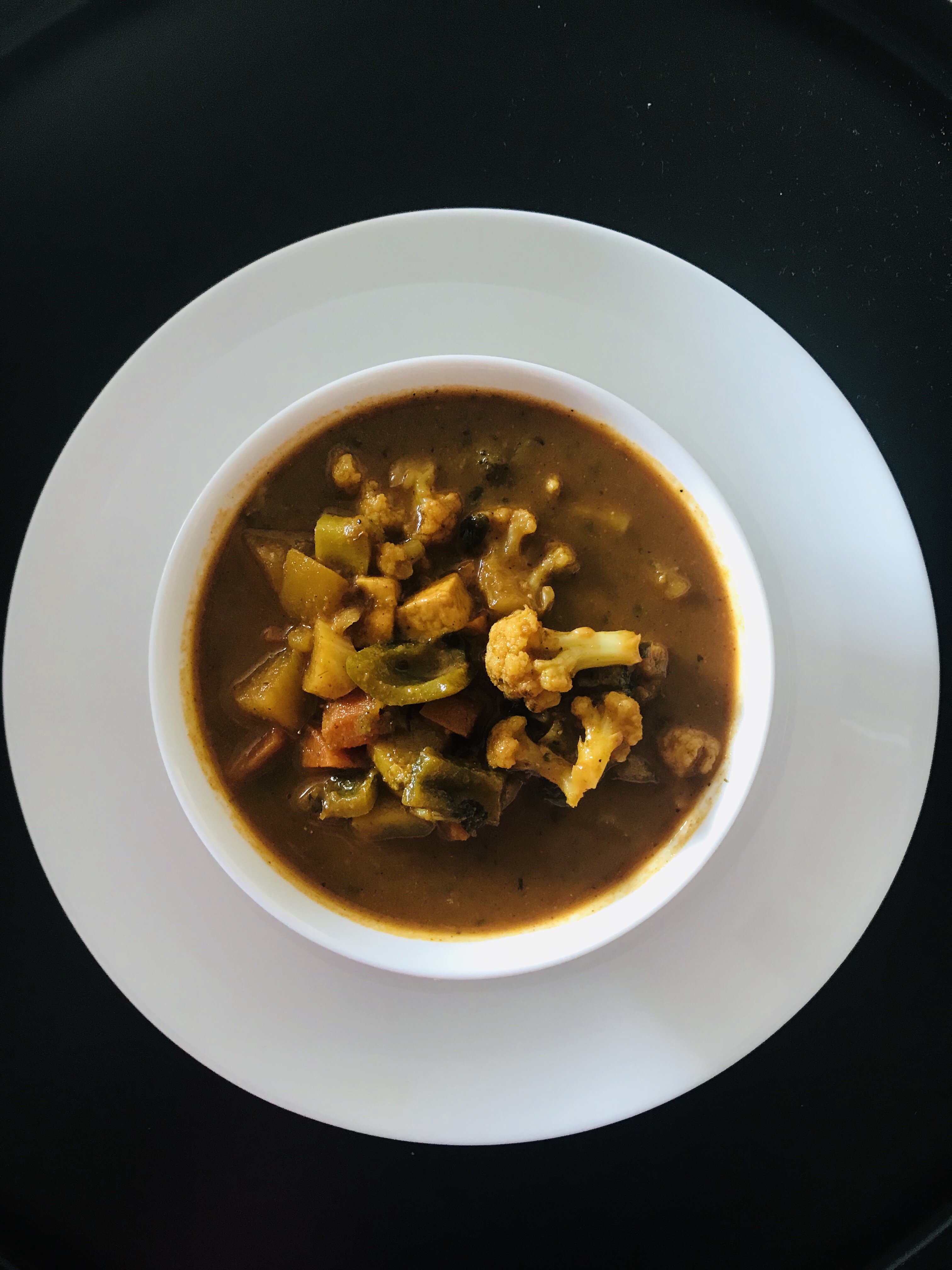
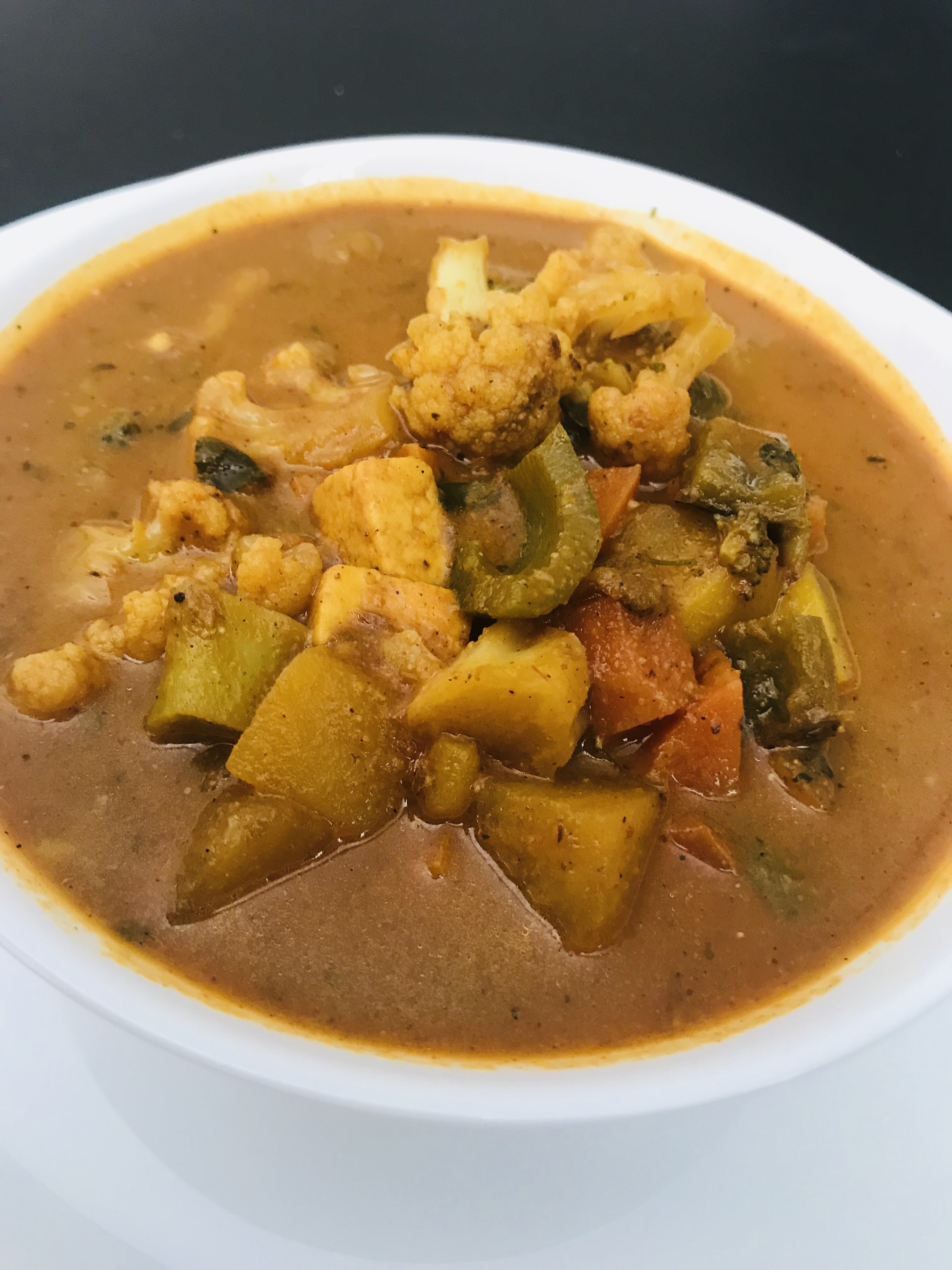
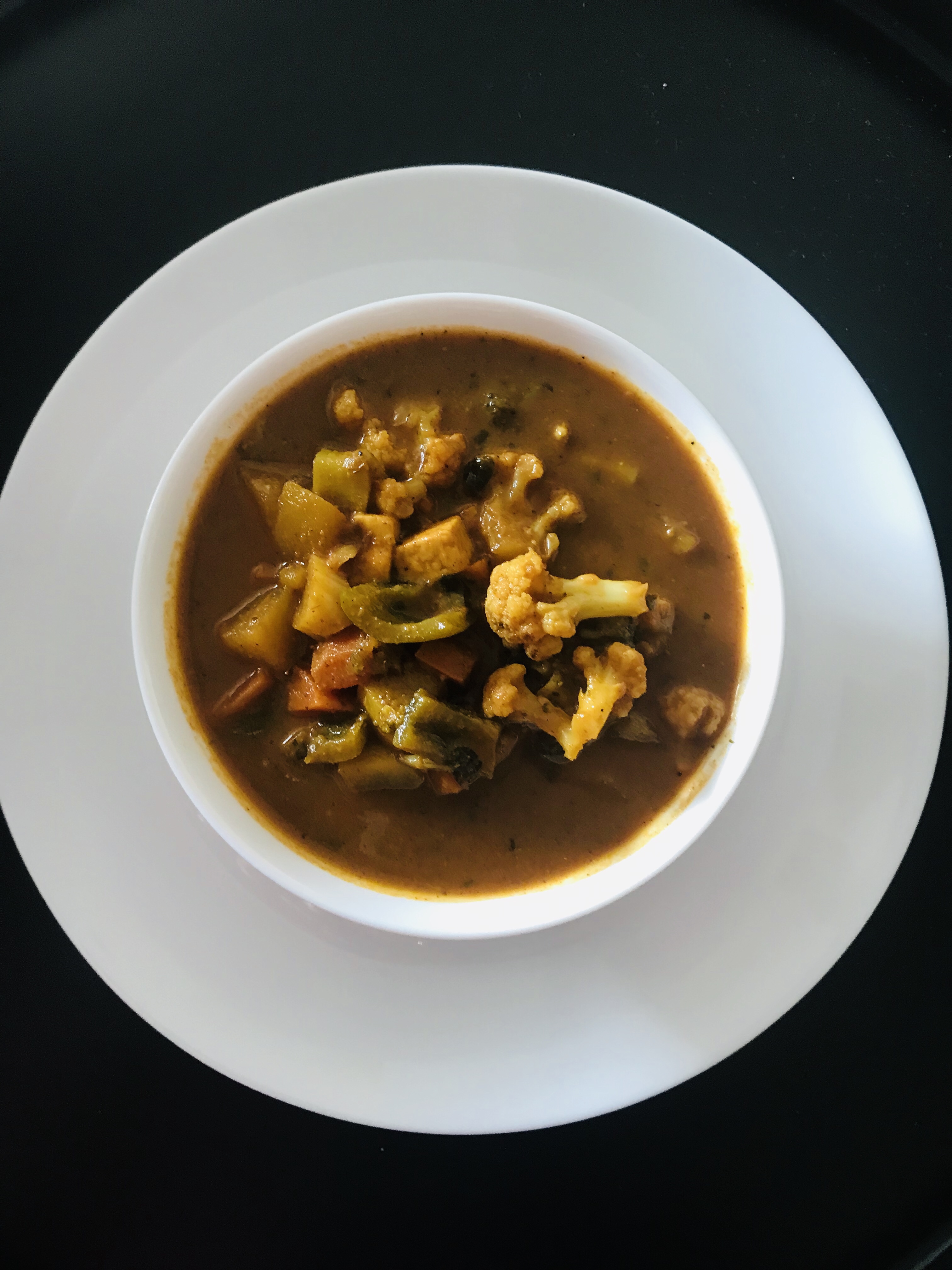
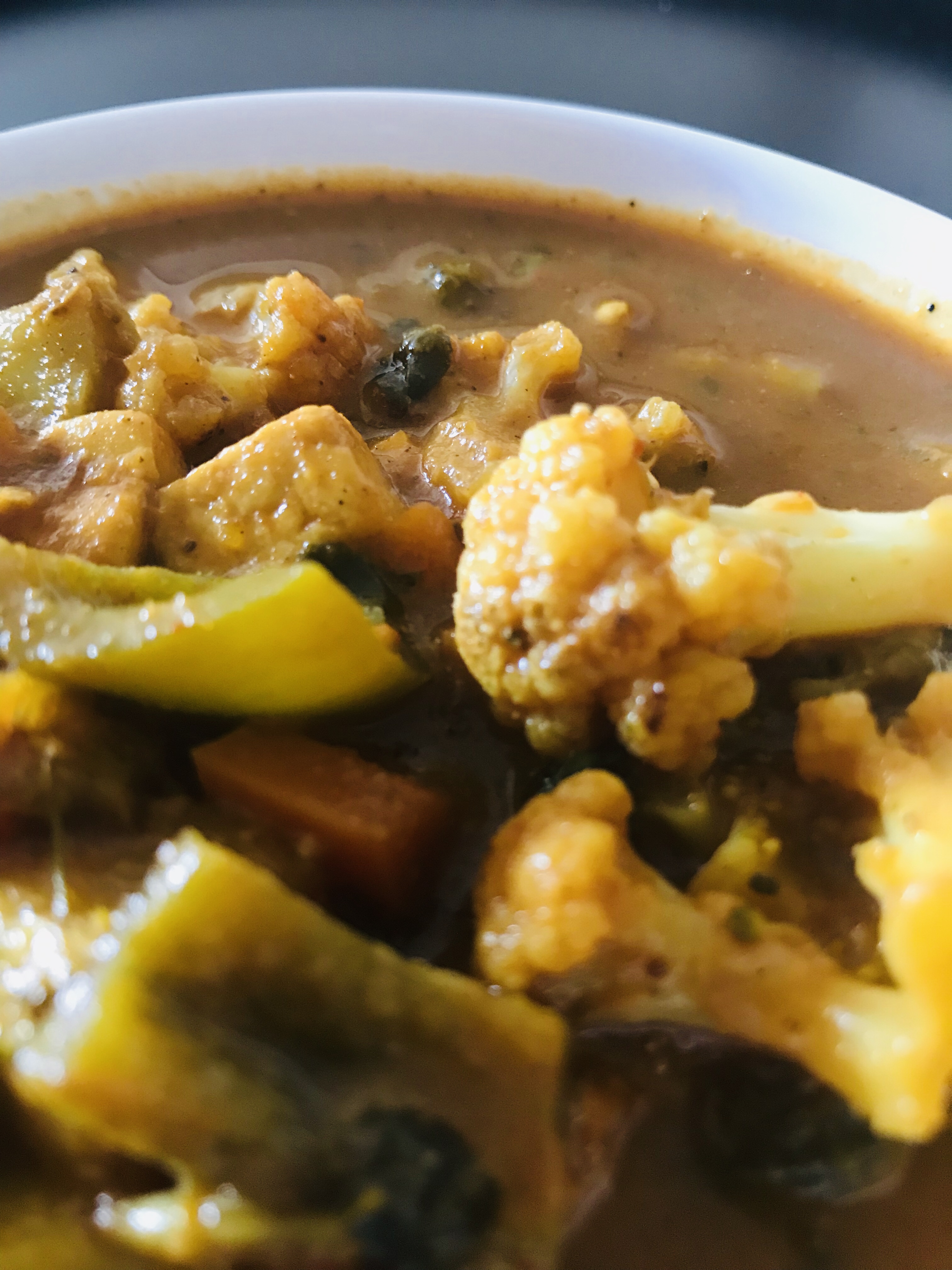
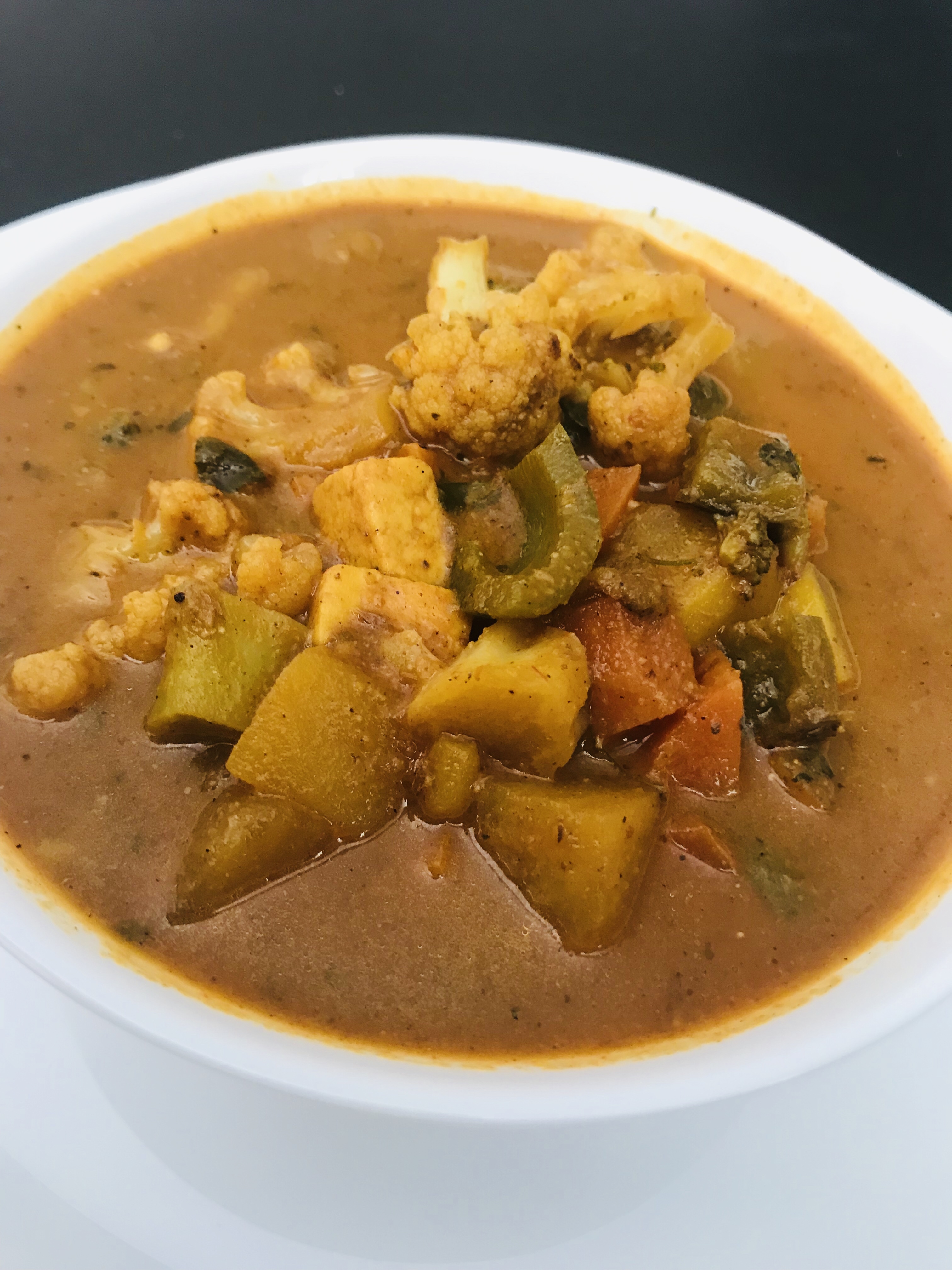
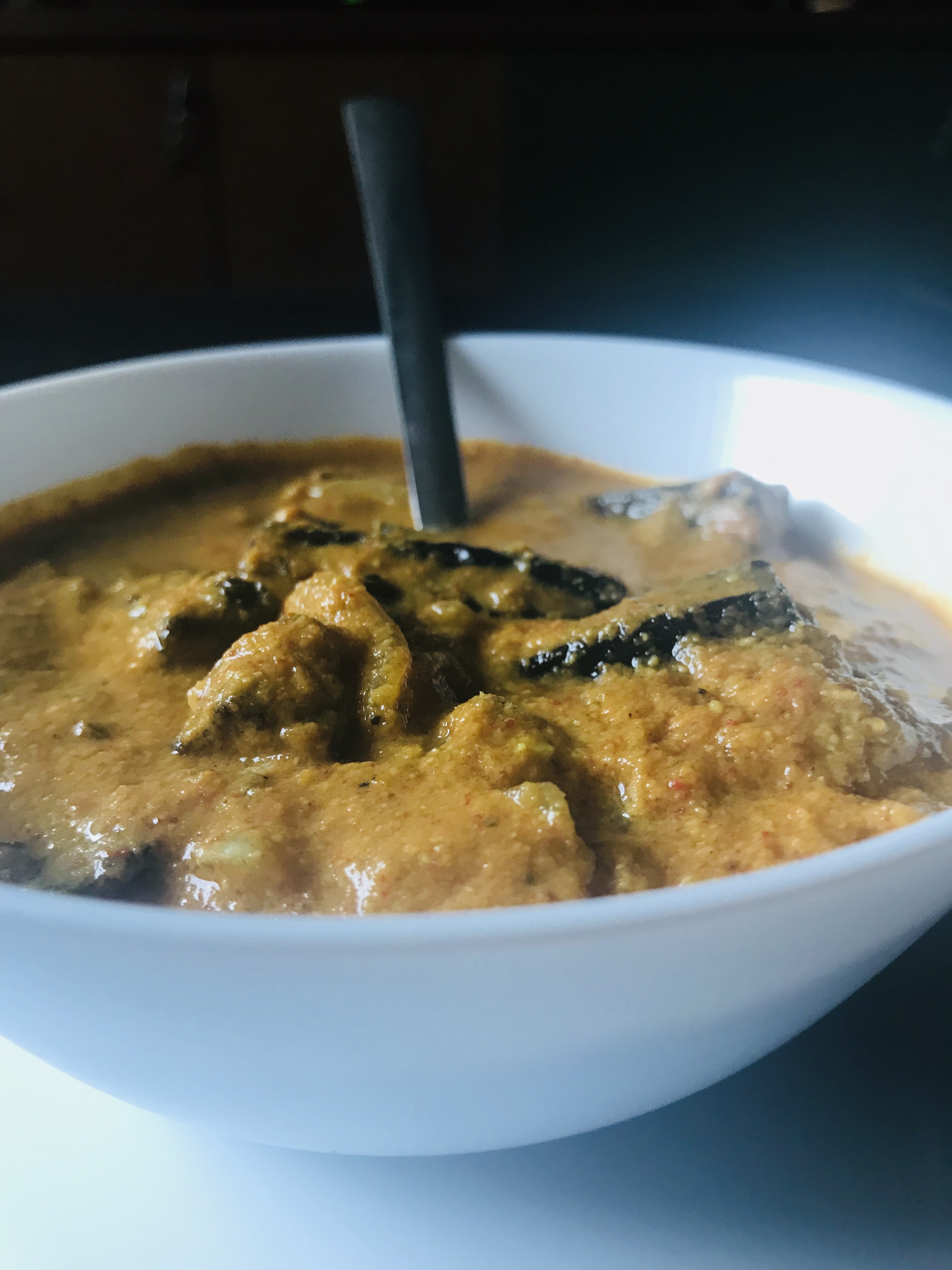
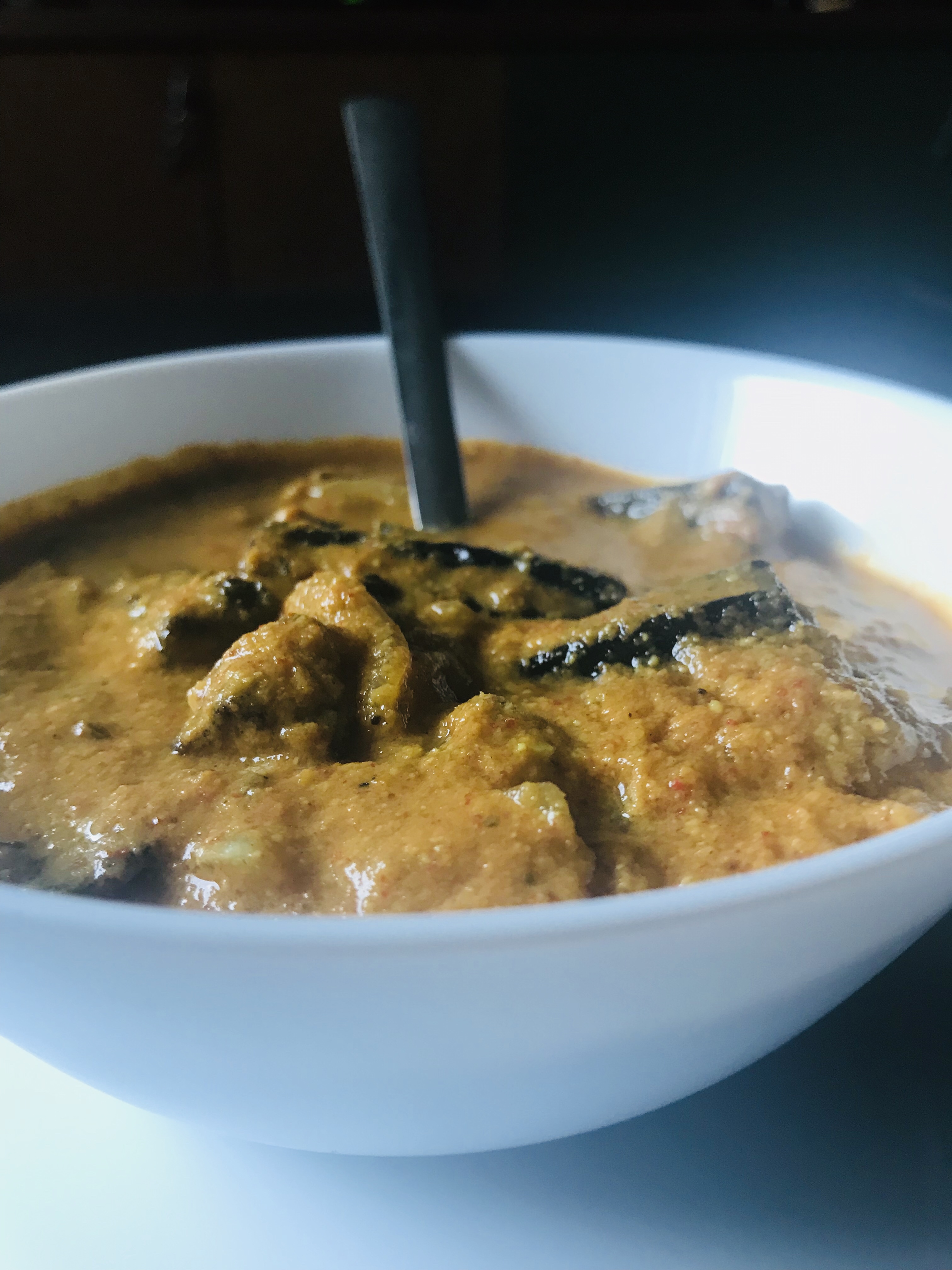
Vegetables in a Caramelised Onion and Saffron Gravy

While thinking of lunch options over the weekend, I thought of a gravy made of caramelised onions and saffron. I googled to see if there was any recipe online with this gravy and realised that there were middle eastern recipes which had something similar. I saw a Moroccon recipe for Onion Mezgueldi as well as Tfaya, which used caramelised onions as a base.

While the middle eastern recipes were not what I was looking for, I experiemented in my kitchen and the result was this slightly creamy with hints of sweetness from the caramelised onions and raisins and an undertone of the saffron. It was a huge it at home and a definite keeper. But note this recipe uses more than the usual amout of oil and butter and takes longer than usual to make.

I used a mixture of carrots, cauliflower, brocolli, potatoes, green bell peppers and paneer to make the recipe, but you can play around with vegetables of your choice. The recipe is also not very thick, so you could possibly add some thickening agent if you want it thicker.

Vegetables in a Caramelised Onion and Saffron Gravy

Ingredients:

  • 2 cups mixed vegetables chopped into bite sized pieces (I used carrots, cauliflower, brocolli, potatoes and green bell peppers)
  • 1 cup paneer, soaked in hot water for 30 minutes
  • 2 tsp raisins, soaked in hot water for 15-20 minutes
  • 3 large onions, sliced
  • 1 bulb garlic, peeled
  • 1 inch piece of ginger, peeled
  • 2 tsp white sesame seeds
  • 1 tsp red chilli powder
  • 1/4 tsp turmeric powder
  • 1 tsp coriander powder
  • 1 tsp cumin powder
  • 1 tsp garam masala powder
  • 1 tbsp kasuri methi
  • 2 generous pinches of saffron
  • Salt to taste
  • 3 – 5 tbsp oil
  • 1 tbsp butter

Method:

  • Slice the onions and keep aside.
  • Chop the vegetables into bite sized pieces and keep aside
  • Heat 2 tbsp oil and the butter in a large pan and when the oil heats up, fry the onions in batches until it is crispy and caramelised. Add more oil if needed. Remove, drain and keep aside.
  • In the same oil (adding slightly more if needed), fry the garlic and ginger until golden. Drain and keep aside.
  • Drain the raisins and in a blender, blend together the crispy onions and the raisins with some water to a smooth paste. Remove into a container and keep aside.
  • In the same blender, blend the fried ginger, garlic and sesame seeds into a fine and smooth paste. Keep aside.
  • Heat another tbsp oil in a pan and when it warms up, add in the chopped vegetables and cook until the vegetables are about 70% cooked. Remove and keep aside.
  • In the same pan, heat 1 tsp oil and when the oil warms up, add in the ginger, garlic and sesame seed paste. Let the paste come to a boil and then add the caramelised onion paste.
  • When the pastes start bubbling, add the dry spices – turmeric powder, chilli powder, cumin powder, coriander powder and garam masala and stir well. Crush the saffron strands in your palms and add it to the gravy.
  • Add water to thin the gravy to suit your taste and when the gravy has simmered for around 10 minutes, add in the half cooked vegetables.
  • Chop the paneer into bite sized pieced and add it to the gravy.
  • Stir well and then crush the kasuri methi in your palms and add to the gravy. Let it simmer for another 5 minutes, then garnish with coriander leaves and serve hot with any Indian bread or rice.

I served this with a peas pulao

Recipes: Kadhai Vegetable

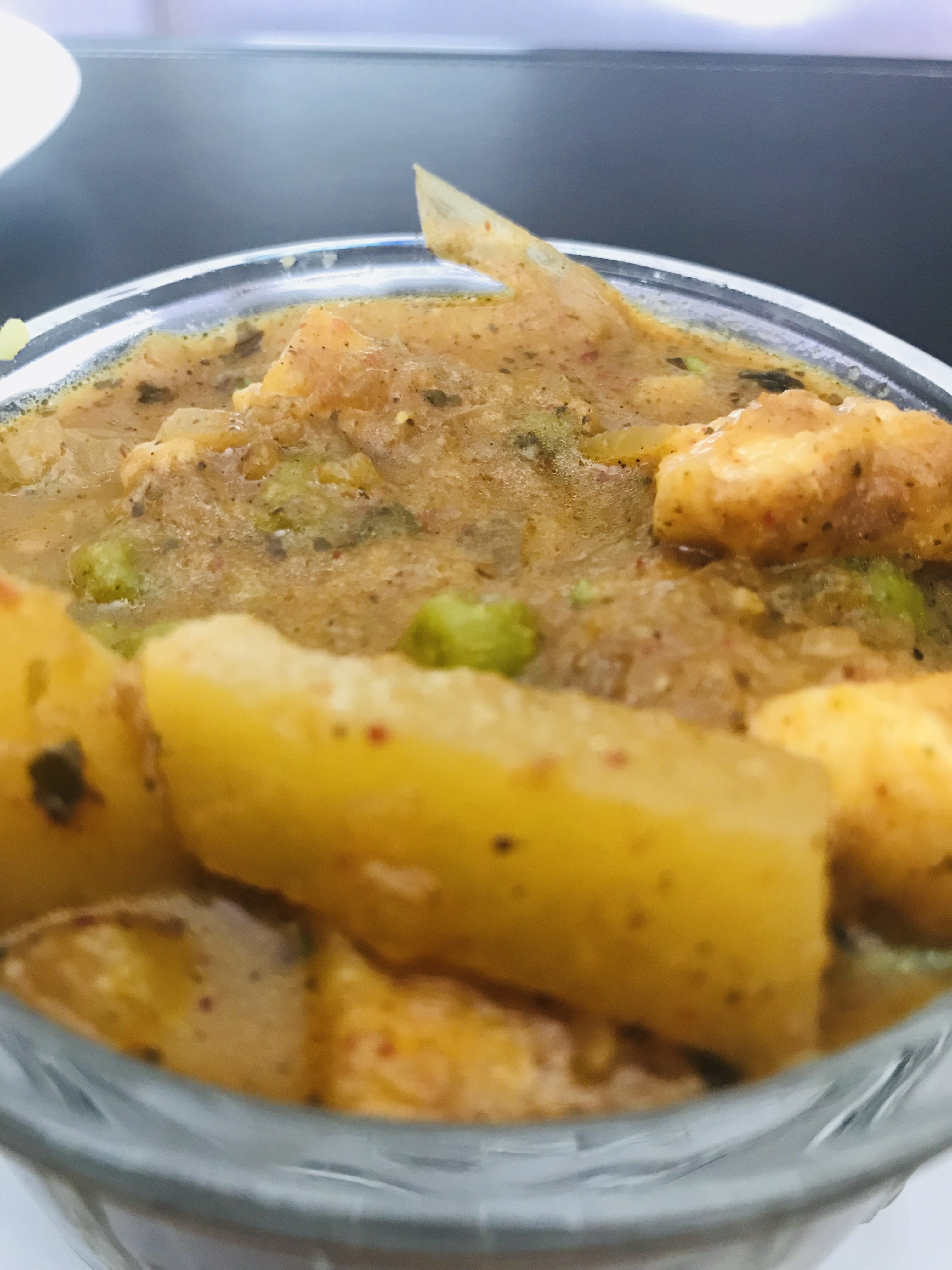
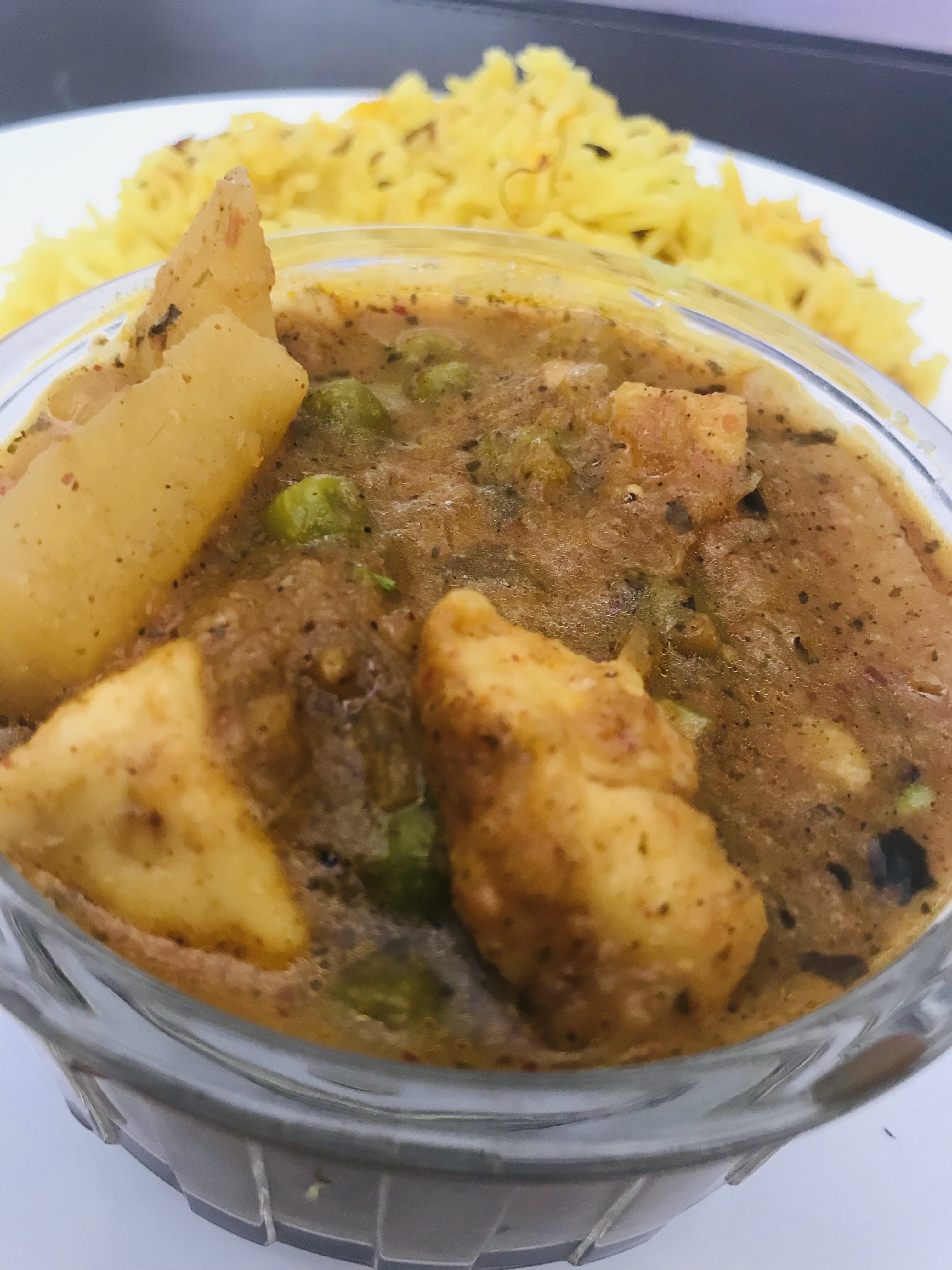
Another Sunday and another recipe. While browsing online for something to pair with my Saffron Cumin Rice, I found a few kadhai vegetable recipes which I modified to make this delicious recipe for our Sunday lunch. It was super yummy and a definite keeper.

Kadhai Vegetables

Ingredients:

For the masala powder:

  • 1 tbsp coriander seeds
  • 1 tsp cumin seeds
  • 2-3 cloves
  • 2-3 green cardamom
  • 1/2 inch piece of cinammon
  • 4-5 dried red chillies
  • 5-7 black peppercorns
  • 8-10 raw cashewnuts
  • 1 tbsp kasuri methi

For the vegetables:

  • 1 carrot
  • 1 medium-sized potato
  • 1/2 cup frozen green peas
  • 1 large sized green bell pepper
  • 2 medium sized onions
  • 1 cup frozen paneer
  • 2-3 tbsp oil

For the Gravy:

  • 1 tbsp oil
  • 1 medium-sized onion
  • 1 inch ginger
  • 4-5 garlic cloves
  • 3 tomatoes
  • 1/4 tsp turmeric powder
  • 1 tsp red chilli powder (or to taste)
  • Salt to taste
  • Coriander leaves to garnish

Method:

  • In a dry pan, dry roast the ingredients for the masala – coriander seeds, cumin seeds, cloves, green cardamom, cinammon, dried red chillies, peppercorns, cashewnuts and kasuri methi – until it becomes fragrant and starts to brown.
  • Remove and keep aside until it is cooled. Then blend using a spice grinder into a fine and smooth powder. Keep aside.
  • In a blender, blend the ginger and garlic and make into a fine paste and keep aside.
  • Soak the frozen paneer in hot water for 20-30 minutes, then drain and keep aside.
  • Chop the carrot, potato and green bell pepper into 1 inch sticks and keep aside.
  • Slice 2 onions and keep aside.
  • In the same pan, heat 2 tbsp oil and one by one, fry the carrot, potato and peas until they are half cooked and start to slightly char. Remove and keep aside.
  • In the same pan, add another tbsp oil and fry the sliced onions until they start caramelising and keep aside. Fry the bell pepper until it is half cooked (it shuld have a bit of crunch in it) and keep aside.
  • Chop the remaining onion finely and keep aside.
  • In thr same blender, blend the tomatoes into a fine puree and keep aside.
  • Heat the balance oil in the pan and when the oil warms up, put in the ginger-garlic paste and saute the paste till the raw smell goes away.
  • Then add the finely chopped onions and saute till it turns translucent.
  • At this point, add the pureed tomatoes and stir well.
  • Add the dried spices (turmeric and red chilli powders) and stir well. Keep stirring occassionally until the gravy starts to thicken and you can see the oil leaving the sides of the pan.
  • Add in the fried carrot, potato and peas and let the vegetables finish cooking completely.
  • Then add the ground masala powder, salt, and about one cup of water and let the gravy simmer on a low to medium heat, covered, for about 5-6 minutes.
  • Then add the paneer, fried onions and capsicum and contine simmering for another 5 minutes. Add more water if needed.
  • Check for seasoning and garnish with coriander leaves and serve hot with rice or rotis.

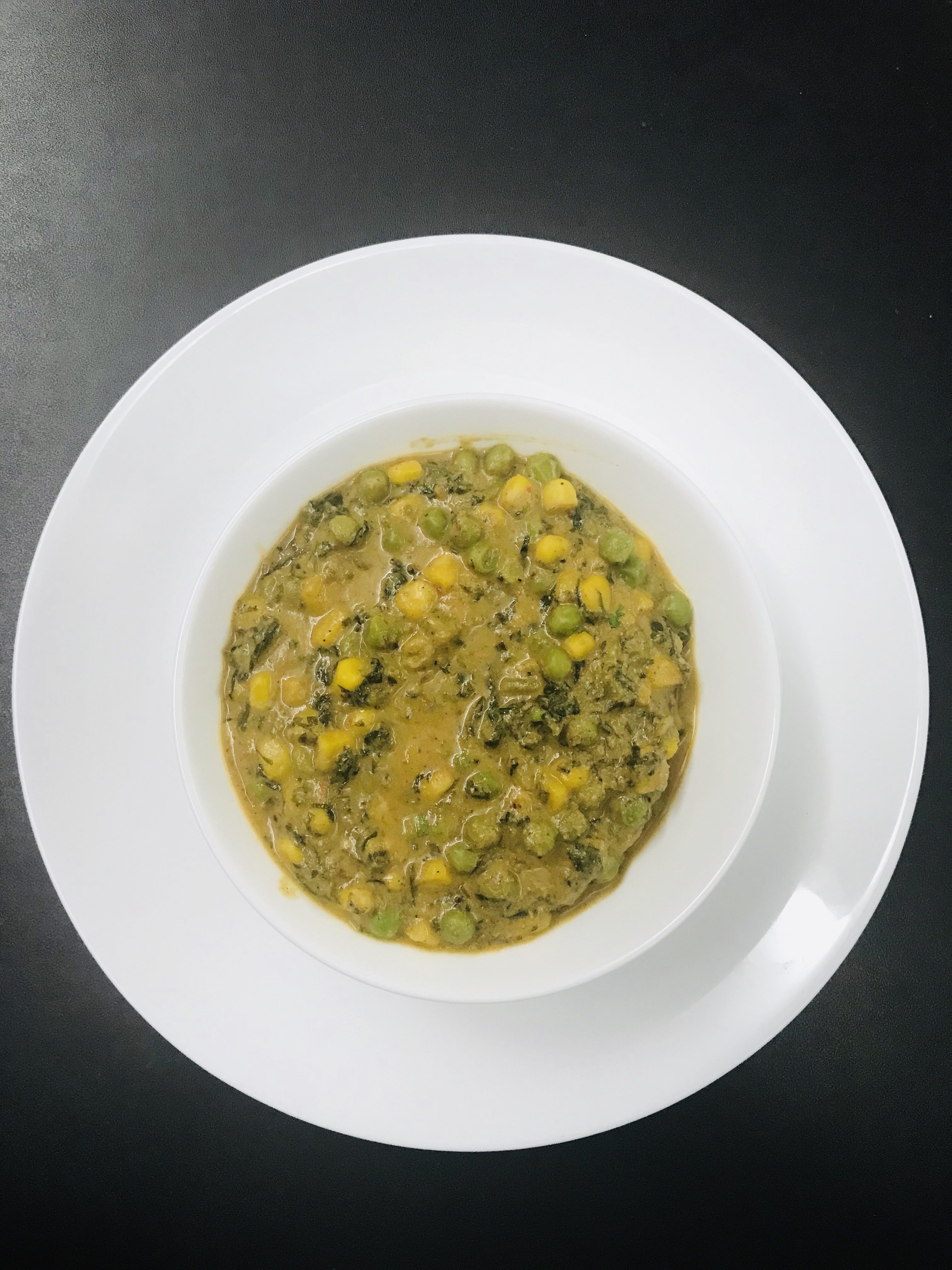
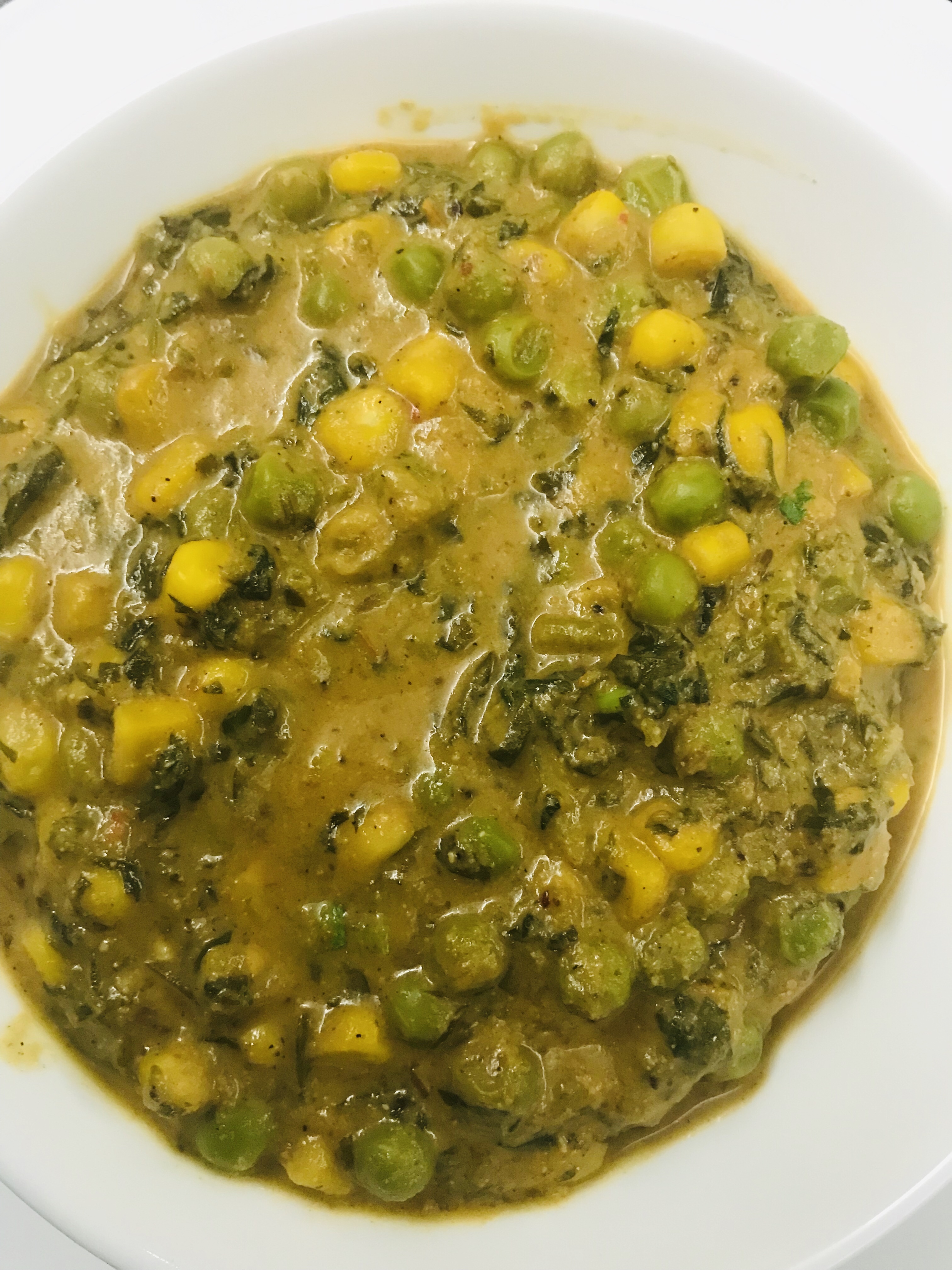
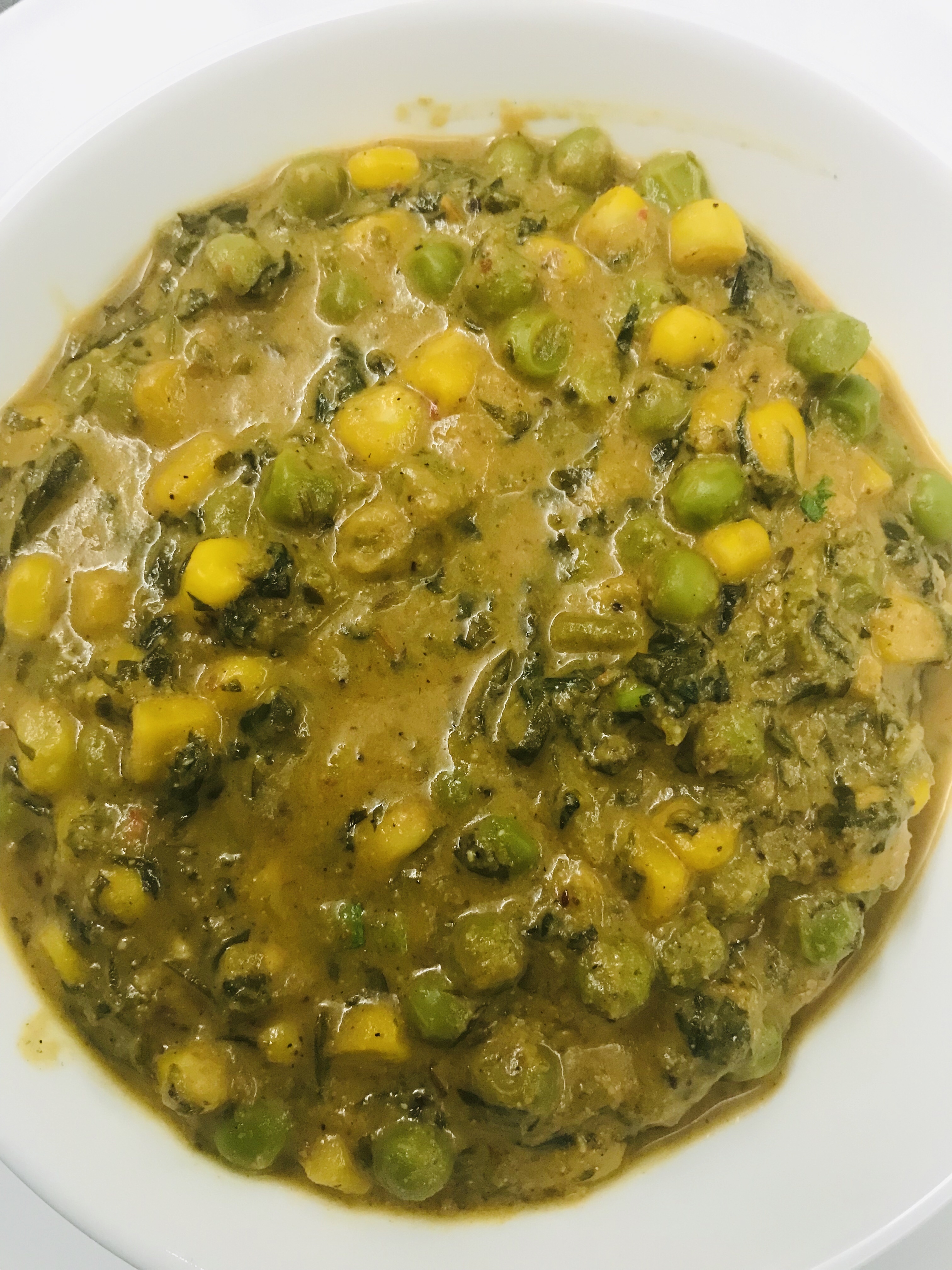
Methi Makkai Mattar or Fenugreek Leaves, Sweet Corn and Peas in Gravy

I had some frozen Methi lying in my fridge and was thinking about how to use it when am idea popped into my head and would not leave. So last week, I decided to try something and just hoped for the best. Luckily for me, the recipe turned out fine and was actually quite good, if I may say so. So here’s the latest experiment from my kitchen.

Methi Makkai Matar or Fenugreek leaves, Sweet Corn and Peas in a Gravy

Ingredients:

  • 1 small cup frozen or fresh methi leaves
  • 1 cup frozen or fresh sweet corn
  • 1 cup frozen or fresh green peas
  • 2 medium sized onions
  • 2 medium sized tomatoes, chppped
  • 5-6 pods of garlic, peeled
  • 1 inch piece of ginger, peeled
  • 3-4 red chillies (I used the small ones, you can also use green chillies)
  • 10 pieces of whole cashew nuts
  • 10 pieces of almonds
  • 4-6 tbsp yoghurt
  • 4 pieces of clove
  • 4 pieces of cardamom
  • 1.5 tsp cumin seeds
  • 1 tsp coriander seeds
  • 1/2 tsp ajwain or carom seeds
  • 1/4 tsp turmeric powder
  • 1 tsp red chilli powder
  • 1/2 tsp coriander powder
  • 1/2 tsp cumin powder
  • 1/2 tsp garam masala powder
  • Salt to taste
  • 2 tbsp finely chopped coriander leaves
  • 4-5 tsp oil

Method:

  • Defrost the frozen vegetables (if using) and lightly cook them in a microwave till they are soft.
  • If you don’t have access to a microwave, then pour boiling water over the frozen corn and peas for 20 minutes, drain and keep aside. Let the frozen methi defrost and keep aside.
  • If you are using fresh methi, pluck and chop the leaves and keep aside.
  • Slice the onions and keep aside. Roughly chop the tomatoes and keep aside. Peel the ginger and garlic and keep aside.
  • In a pan, heat about 3-4 tsp of oil and when the oil warms, add the sliced onions and let it brown. We want the onions to caramelise and become brown.
  • When the onions are about 80% brown, move the onions to the sides of the pan and in the same oil, add the whole spices – 1 tsp cumin seeds, coriander seeds, carom seeds, cloves and cardamom and let them pop.
  • Then add the garlic and ginger and sauté for a minute. Then add the chopped onions and let the tomatoes cook and become pulpy. Switch off the gas and let it cool. Move this to a blender and when fully cool, blend to a smooth paste, adding water if needed.
  • In the same pan, add the balance oil and heat it. When the oil warms, add the remaining cumin seeds and let it pop.
  • Then add the methi leaves and stir for a few minutes. After that, add the corn and peas and salt to taste.
  • Cover and cook until the vegetables are almost done, stirring often.
  • When the vegetables are almost done, add the blended paste and stir.
  • Add some water to thin (but not too much) and then the spice powders – turmeric powder, red chilli powder, cumin powder and coriander powder.
  • In the same blender, whisk the yoghurt well and add it to the gravy.
  • Check for seasoning and add what’s missing.
  • Add the garam masala powder and let it boil on a low to medium flame for 5 minutes
  • Garnish with coriander leaves and serve hot with an Indian bread or even plain rice.

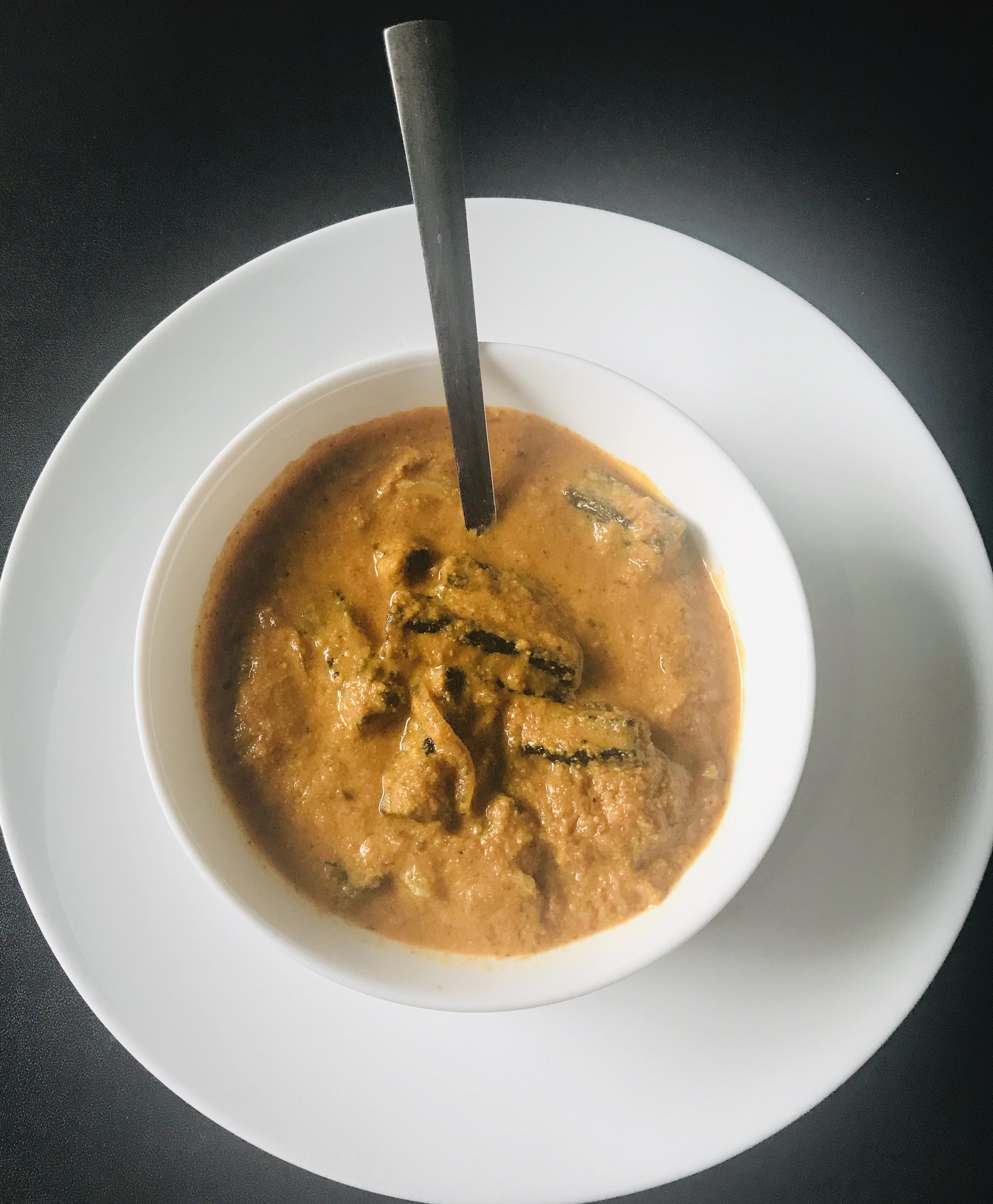
Recipes: Bhindi Masala or Okra (Ladies Finger) in a Tomato Gravy

Bhindi or Ladies Finger is one of my favourite vegetables. When fried right, it is crisp and super yummy. I remember my grandmother’s telling us to eat this vegetable when we were young saying that eating this vegetable will improve your brain. Though I have no idea if this is true or just an old wives tale, it did ensure that this became one of my favourite vegetables ever.

Okra is scientifically known as Abelmoschus esculentus, and it might have originated in parts of Western Africa and Asia. It has been cultivated since the 12th century BC. While researching on the benefits of Ladies Finger for this post, I realised that this unassuming vegetable actually has many benefits. Bhindi has one of the richest sources of potassium, folic acid, vitamins B and C, calcium, and fibre. Okra alleviates asthma, lowers cholesterol, protects the heart, manages diabetes, boosts your immune system, improves vision, prevents kidney diseases and is a very good addition for pregnant women to eat.

A note of warning though, this recipe does use more oil than usual, so keep that in mind while making it. If you are on a diet, this recipe is probably not for you. This version of bhindi masala is made using a modified basic Punjabi gravy.

Bhindi Masala

Ingredients:

  • 20-25 ladies fingers, washed and completely dried
  • 1 large and 1 medium sized onion
  • 3 medium sized tomatoes
  • 8-10 garlic pods
  • 1 inch piece of ginger
  • 6-8 pieces of cashewnuts
  • 1 tsp cumin seeds
  • 1-2 tsp red chilli powder
  • ½ tsp turmeric powder
  • 1 tsp cumin powder
  • 1 tsp coriander powder
  • 1 tsp dry mango powder
  • 1 tsp garam masala powder
  • 3-4 tbsp oil
  • Salt to taste
  • 1 tbsp finely chopped coriander leaves to garnish

Method:

  • Make sure the ladies fingers are completely dry. Then top and tail them and cut them into one inch pieces. Keep wiping your knife with a kitchen towel to remove all the slime from the seeds of the okra. Keep aside.
  • Chop the large onion vertically into long thin slices and keep aside.
  • In a blender, blend the ginger, garlic, the medium sized onion, tomatoes and cashewnuts into a fio a fine paste. Keep aside.
  • Heat the oil in a pan and when it is hot, add the okra in batches along with a pinch of salt and let it cook. The okra should turn dark green and crisp. Remove from the pan and keep aside.
  • In the same pan, with the balance oil, add the cumin seeds and when the seeds pop, add the sliced onions. Stir and let the onions become translucent.
  • When the onions become translucent, add in the blended gravy and let it come to a rolling boil. Add in the spices – salt, red chilli powder, turmeric powder, cumin powder, coriander powder and raw mango powder and let it simmer for around 5-10 minutes.
  • Add water to thin the gravy to the consistency you want. Add in the garam masala powder and check for seasoning and add what seems to be missing.
  • Add in the fried ladies finger and give it a simmer and switch off the flame after garnishing with the finely chopped coriander leaves.
  • If you don’t have access to dry mango powder, you can substitute it with 1 tsp lemon juice. Add the lemon juice at the very end, just after you switch off the flame.

This goes very well with both Indian flatbreads and even rice.

Recipes: Chettinad Style Shallots and Baby Potatoes Curry

Chettinad is a region located mainly in the Sivaganga district ruled by Ramnad kingdom of Pandya Nadu and has a small portion extending into the Pudukottai District of Chola Nadu in Tamil Nadu, India. This region is also home to the Nattukottai Chettiars or Nagarathar who are a prosperous prosperous banking and business community and many in this community have migrated to various parts of south and southeast Asia in the 19th and early 20th centuries. The region is associated with gorgeous and palatial homes as well as a lip-smacking spicy cuisine.

I used to make a shallots and baby potatoes curry from Sanjeev Kapoor many years back, so last week when I found myself with both shallots and baby potatoes in the house, I decided to try to make this curry, but this time tried a spin on the classic chettinad masala. Now this is not an authentic masala as I only used a fraction of the ingredients usually used, but the result was equally yummy and the whole curry disappeared in no time!

This recipe can also be made with normal onions and potatoes, just cut them up to the size of shallots and baby potatoes and you can continue to make it the same way.

Chettinad Style Shallots and Baby Potatoes Curry

Ingredients:

  • 1 cup shallots, peeled
  • 1 cup baby potatoes, washed and scrubbed
  • 1 green capsicum, cut into 1 inch squares
  • ¼ tsp black peppercorns
  • ½ tsp fennel seeds
  • ½ tsp coriander seeds
  • ¼ tsp cumin seeds
  • ¼ tsp fenugreek seeds
  • 4-6 dried red chillies
  • 4-6 curry leaves
  • 1 tsp mustard seeds
  • ¼ tsp turmeric powder
  • 1 tbsp oil
  • Salt to taste

Method:

  • Heat a pan on low-medium flame and when the pan becomes warm, add all the whole spices – pepper corns, fennel seeds, coriander seeds, cumin seeds, fenugreek seeds and the dried red chillies and dry roast them till they are crisp, but not burnt. You should be able to smell the fragrance of the spices. Switch off the gas and when cool, transfer to a spice blender and blend to a fine powder.
  • Cut those shallots which are big into half or quarters and keep the others as they are. Do the same with the scrubbed potatoes. Those which are big can be halved or quartered. Cut the green bell pepper or capsicum also into the same size pieces. The intention is to keep all pieces roughly the same size so they cook at the same time. Keep everything aside.
  • In the same pan, heat the oil and when the oil is warm, add the mustard seeds. When the mustard seeds start to pop, tear the curry leaves and add it to the oil. Stir for a couple of seconds and then add the turmeric powder.
  • Now add the shallots and stir for a few minutes. When the shallots start to turn translucent, add the capsicum and baby potatoes and cook covered until they are 50% done.
  • At that point, add salt and the ground masala and stir well, making sure to coat all pieces of shallots, baby potatoes and capsicum with the masala.
  • Let the vegetables cook completely and when done, serve hot as part of any south Indian meal.

Enjoy a delicious and yummy curry!