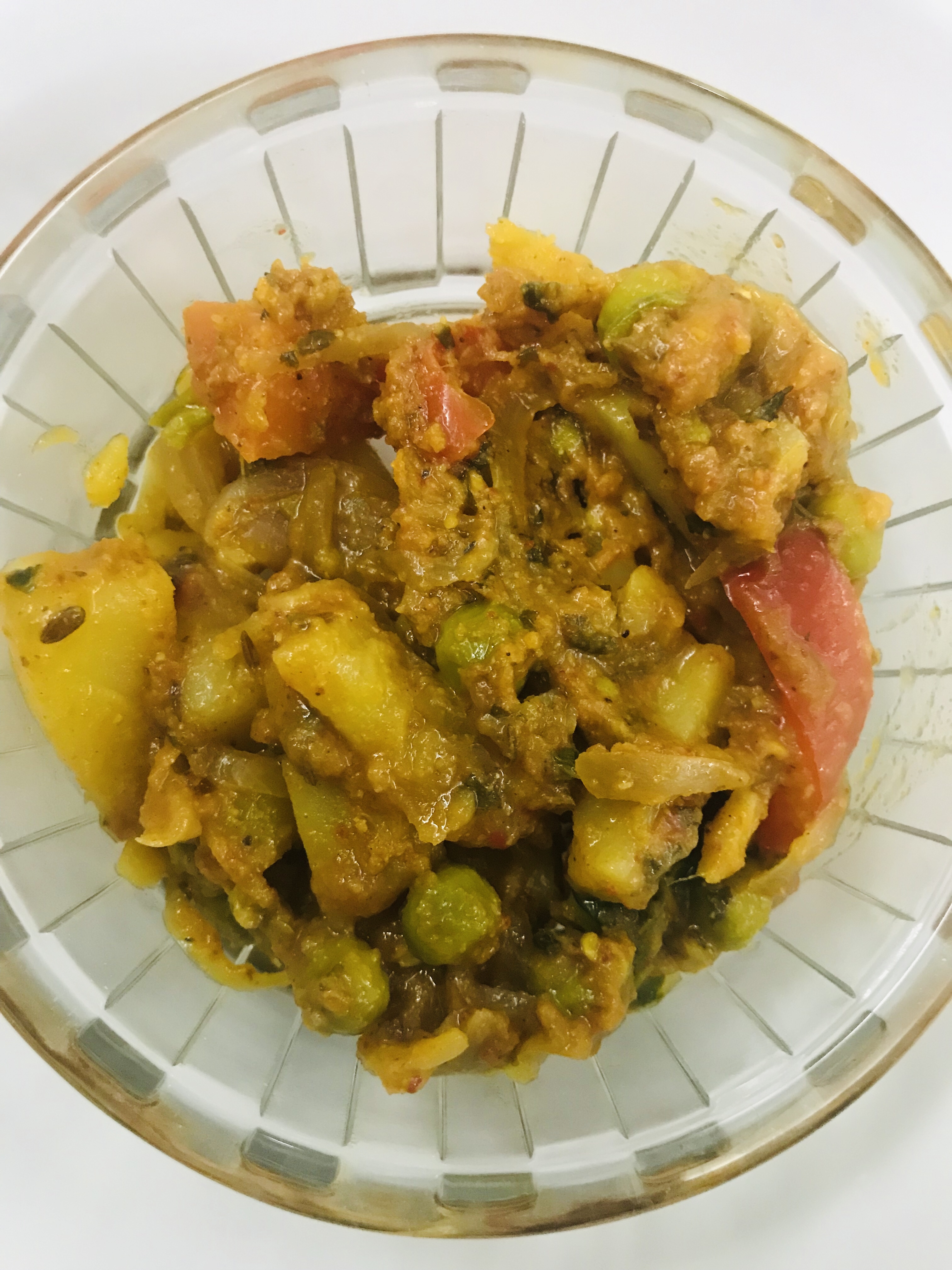
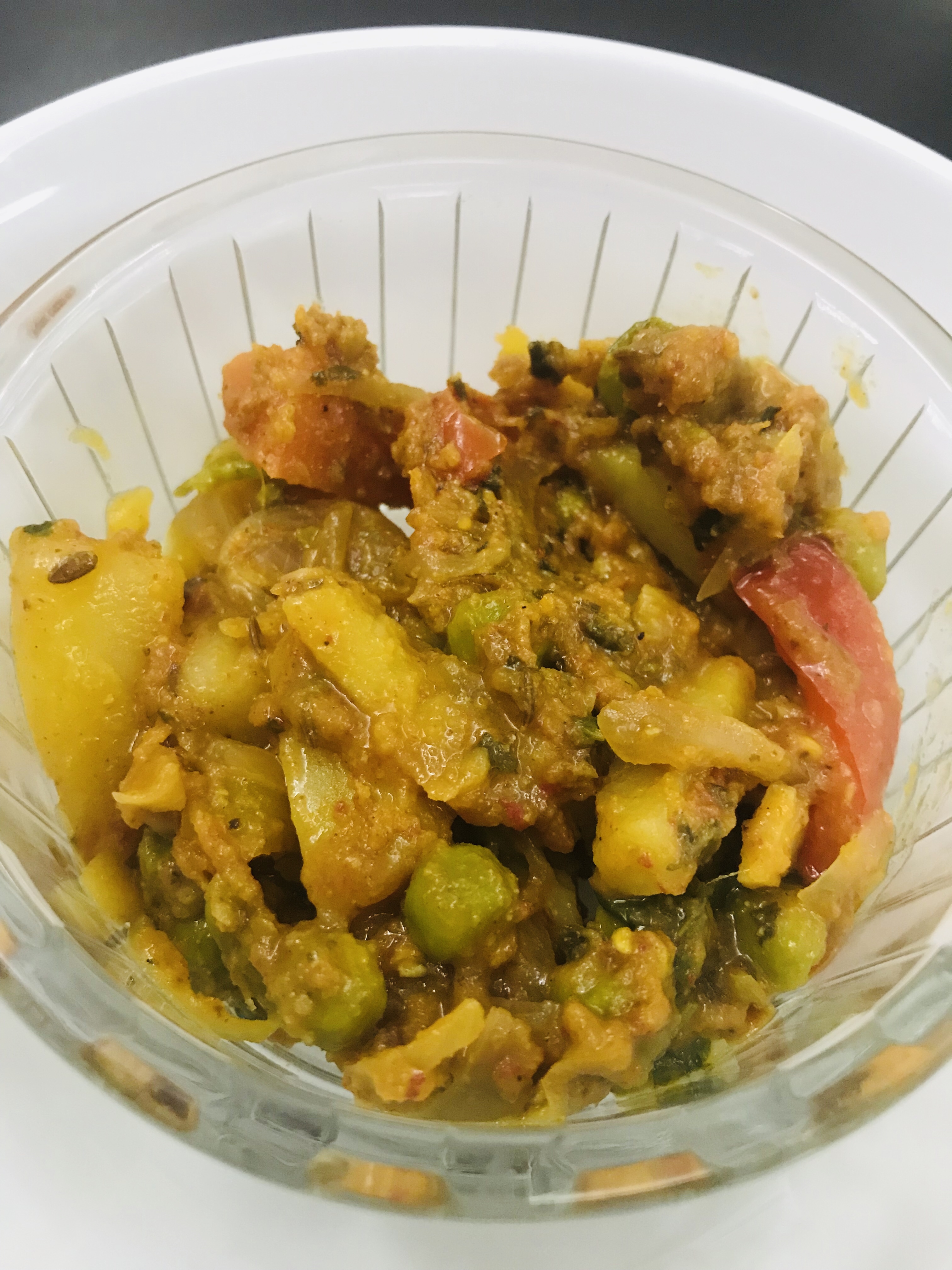
Recipes: Chettinad Style Shallots and Baby Potatoes Curry

Chettinad is a region located mainly in the Sivaganga district ruled by Ramnad kingdom of Pandya Nadu and has a small portion extending into the Pudukottai District of Chola Nadu in Tamil Nadu, India. This region is also home to the Nattukottai Chettiars or Nagarathar who are a prosperous prosperous banking and business community and many in this community have migrated to various parts of south and southeast Asia in the 19th and early 20th centuries. The region is associated with gorgeous and palatial homes as well as a lip-smacking spicy cuisine.

I used to make a shallots and baby potatoes curry from Sanjeev Kapoor many years back, so last week when I found myself with both shallots and baby potatoes in the house, I decided to try to make this curry, but this time tried a spin on the classic chettinad masala. Now this is not an authentic masala as I only used a fraction of the ingredients usually used, but the result was equally yummy and the whole curry disappeared in no time!

This recipe can also be made with normal onions and potatoes, just cut them up to the size of shallots and baby potatoes and you can continue to make it the same way.

Chettinad Style Shallots and Baby Potatoes Curry

Ingredients:

  • 1 cup shallots, peeled
  • 1 cup baby potatoes, washed and scrubbed
  • 1 green capsicum, cut into 1 inch squares
  • ¼ tsp black peppercorns
  • ½ tsp fennel seeds
  • ½ tsp coriander seeds
  • ¼ tsp cumin seeds
  • ¼ tsp fenugreek seeds
  • 4-6 dried red chillies
  • 4-6 curry leaves
  • 1 tsp mustard seeds
  • ¼ tsp turmeric powder
  • 1 tbsp oil
  • Salt to taste

Method:

  • Heat a pan on low-medium flame and when the pan becomes warm, add all the whole spices – pepper corns, fennel seeds, coriander seeds, cumin seeds, fenugreek seeds and the dried red chillies and dry roast them till they are crisp, but not burnt. You should be able to smell the fragrance of the spices. Switch off the gas and when cool, transfer to a spice blender and blend to a fine powder.
  • Cut those shallots which are big into half or quarters and keep the others as they are. Do the same with the scrubbed potatoes. Those which are big can be halved or quartered. Cut the green bell pepper or capsicum also into the same size pieces. The intention is to keep all pieces roughly the same size so they cook at the same time. Keep everything aside.
  • In the same pan, heat the oil and when the oil is warm, add the mustard seeds. When the mustard seeds start to pop, tear the curry leaves and add it to the oil. Stir for a couple of seconds and then add the turmeric powder.
  • Now add the shallots and stir for a few minutes. When the shallots start to turn translucent, add the capsicum and baby potatoes and cook covered until they are 50% done.
  • At that point, add salt and the ground masala and stir well, making sure to coat all pieces of shallots, baby potatoes and capsicum with the masala.
  • Let the vegetables cook completely and when done, serve hot as part of any south Indian meal.

Enjoy a delicious and yummy curry!

Recipes: Veg Jaipuri

I have been wanting to make this recipe for a while now and was searching for a good recipe to play with when I came across this recipe from Sanjeev Kapoor’s website. I mostly adhered to his recipe, but to make it healthier, omited khoya or dried evaporated milk solids and fresh cream, but instead used a low fat home made yoghurt to replace the cream.

Veg Jaipuri

Ingredients:

  • 2 cup chopped mixed vegetables (I used cauliflowers, potatoes, frozen peas, french beans and green bell peppers, but you can use others also to give it more colour)
  • 1 cup frozen paneer
  • 3 tbsp ghee
  • 1 tbsp coriander seeds
  • 6-8 cashew nuts
  • 4 green chillies
  • a few strands saffron
  • 3 medium sized onions, chopped finely
  • 5-6 pods garlic
  • 1 inch piece of ginger
  • 2-3 large tomatoes, chopped finely
  • 1/2 cup beaten plain yoghurt
  • 1/2 tsp garam masala powder
  • 1 tbsp raisins
  • Salt to taste
  • 2 tbsp finely chopped coriander leaves

Method:

  • Chop the vegetables into bit sized pieces. Soak the paneer in hot water for 20-30 minutes, then chop them into bit sized pieces and keep aside.
  • Heat a pan and when warm, add one tbsp ghee and sauté the coriander seeds, cashewnuts and green chilliesfor two minutes. Grind all of this with saffron into a smooth paste.
  • In another smaller blender, blend together the ginger and garlic into a smooth paste and keep aside.
  • Heat the remaining ghee in a pan. Sauté the onions till they turn translucent. Add the the ginger-garlic paste and stir for a few minutes till they turn light golden in colour. Add tomatoes and garam masala powder and cook till the tomatoes are pulpy.
  • Add the chopped vegetables, salt, the ground paste, raisins and one cup of water and simmer for five to seven minutes.
  • When almost done, add the beaten yoghurt and the paneer and let it come to a slow simmer. Simmer for 2 minutes and switch off the gas.
  • Garnish with coriander leaves and serve hot with any Indian bread or rice.

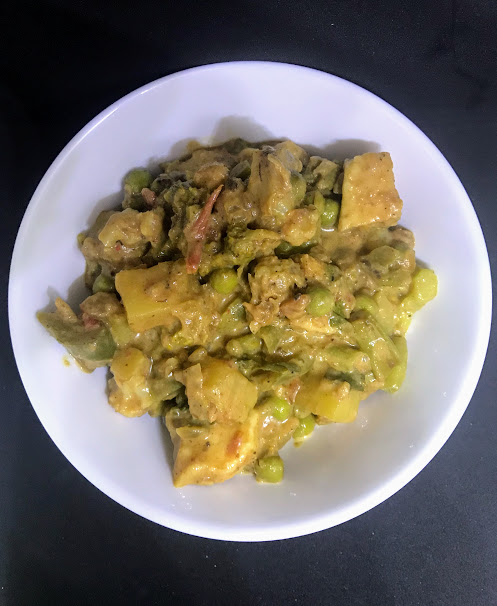
Mixed Vegetables in a Creamy Tomato Yoghurt Sauce

Last weekend, I was desperate to find something to make, but all ideas seemed to have dried up. So I started cooking, thinking inspiration will come along the way. I started making my gravy dish with zero idea of how it will turn out. This was literally my kitchen experiment. And I must say, this dish exceeded all expectations (which was fairly low to begin with, actually!). It was this mild but creamy dish which was at the same time, slightly tart with a hint of spiciness at the back of the throat. All in all, this recipe is a definte keeper. And the best part, it’s fairly easy (for an Indian dish) to put together.

Mixed Vegetables in a Creamy Tomato Yoghurt Sauce

Ingredients:

  • 2 cups mixed vegetables, chopped into small bite-sized pieces (I used broccoli, cauliflower, carrots, potatoes and green peas, but you could play around with what you have in the fridge)
  • 1/2 cup paneer, chopped to same size as the vegetables
  • 2 medium sized onions
  • 2 medium sized tomatoes
  • 1 tsp white sesame seeds
  • 1/2 tsp carom seeds
  • 1 tsp fennel seeds
  • 1 tbsp kasuri methi
  • 10 pieces of cashewnuts
  • 5-6 fresh red chillies
  • 1.5 inch piece of ginger, peeled and chopped
  • 1 bulb garlic, peeled
  • 1/2 cup plain yoghurt
  • 1 tsp cumin seeds
  • 1/4 tsp turmeric powder
  • 1/2 to 1 tsp garam masala powder
  • 1 tbsp oil
  • Salt to taste
  • 3 tbsp Coriander leaves, chopped to garnish

Method:

  • Heat the oil in a pan and when warm, add the cumin seeds. When the seeds pop, add the turmeric powder and stir for a couple of seconds.
  • Then add the chopped vegetables and cook covered, until almost cooked.
  • In the meantime, blend the ginger, garlic, red chillies, onions, tomatoes, cashewnuts, sesame seeds, carom seeds and fennel seeds into a smooth paste.
  • When the vegetables are almost cooked, add in the chopped paneer and stir to cover. Add salt to taste.
  • Then add the blended paste and mix well.
  • In the same blender, blend the yoghurt smoothly with water if needed and add this to the gravy.
  • Add water if needed to thin the gravy to the consistency you want.
  • Add the garam masala powder and stir well.
  • Crush the kasuri methi in your palms and sprinkle in the gravy.
  • Let it simmer on a medium-low flame for about five minutes.
  • Garnish with coriander leaves and serve hot with rice or any Indian flatbread of your choice
  • You could also add fresh cream along with the beaten yoghurt to increase the creaminess and richness to this recipe, especially if you are planning to make this for a dinner party.

Recipes: Dal Akbari

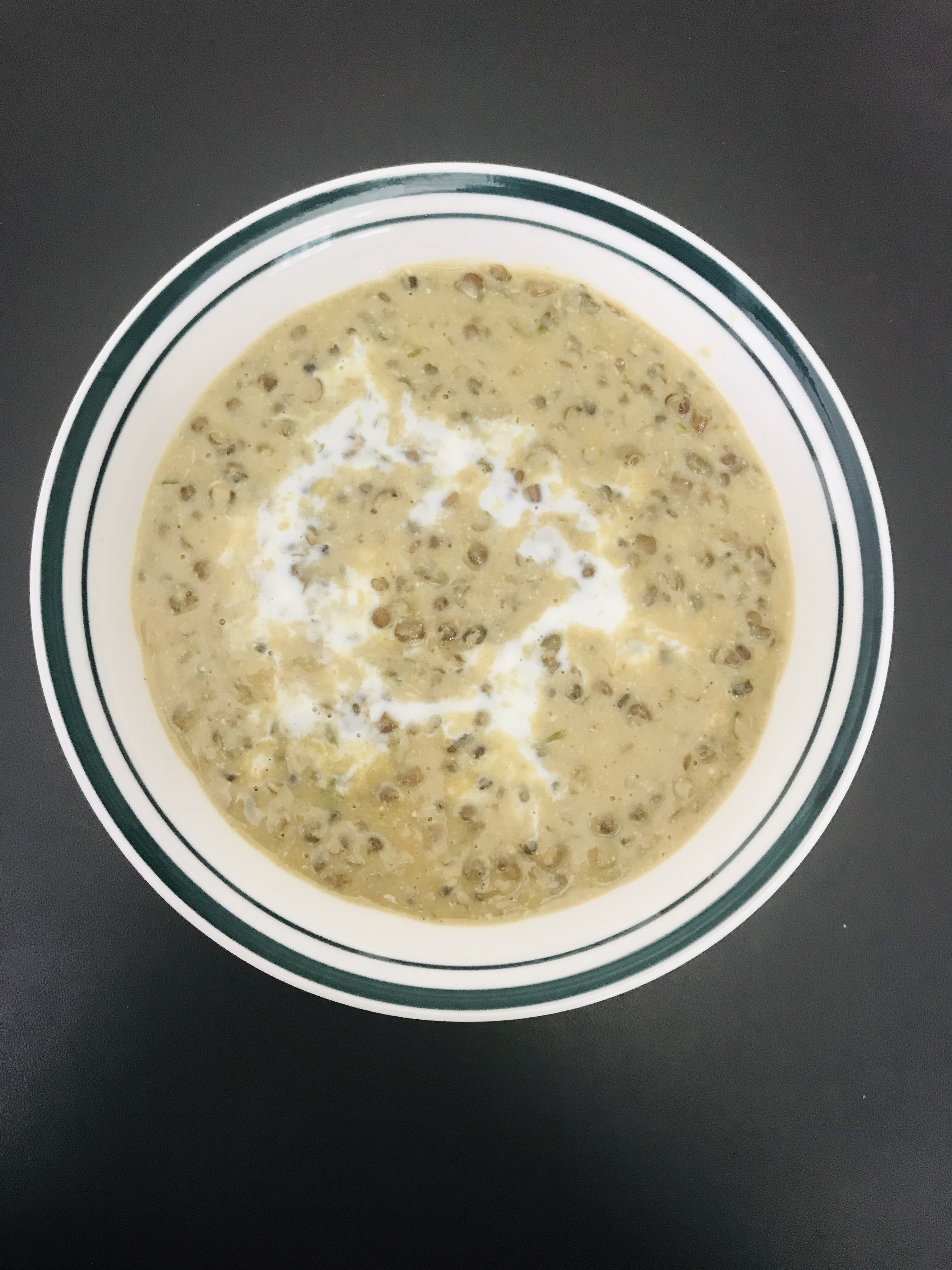
I first heard of this dish in a television drama where one character cooks a feast and one of the dishes was Dal Akbari. The name really intrigued me and I went online searching for the recipe. I found a recipe, which I bookmarked to make one day. This dish is most likely from the Mughal courts.

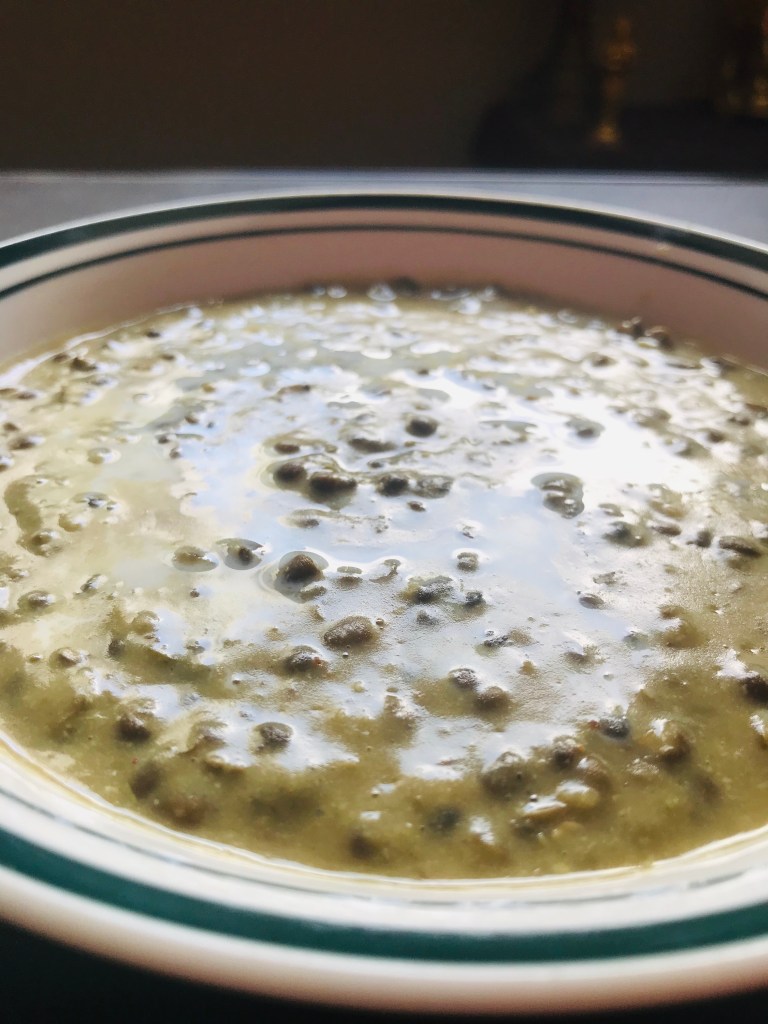
That one day came last week when I tried this dish. The dish didn’t look very appealing, but was very tasty. It didn’t take very long to cook, just the soaking time for the dal is quite long.

Dal Akbari

Ingredients:

  • 1 cup whole black urad dal (black lentils), soaked in water for 8 hours or overnight
  • 1/2 cup yoghurt, well beaten
  • 1 tsp cumin seeds
  • 1 tsp grated ginger
  • 1 tbsp dry mango powder (amchur powder)
  • 1 -2 tsp garam masala powder
  • 2 dashes nutmeg powder
  • 2 tbsp ghee or oil
  • Salt to taste
  • 2 tbsp finely chopped Coriander leaves to garnish

Method:

  • Wash the soaked urad dal and cook it in a pressure cooker till it is soft and mushy. Beat well and keep aside.
  • If using the stove to cook it, then cook it, stirring occasionally till it is soft and mushy. Keep aside.
  • Heat the ghee or oil in a pan and when the fat warms, add the cumin seeds and let them splutter.
  • Next, add the grated ginger and stir for a few seconds.
  • Then quickly add the well beaten yoghurt and some salt to stabilse the yoghurt and on a medium low flame, let the yoghurt come to a nice rolling boil. Keep stirring constantly to ensure that the yoghurt does not curdle.
  • When the yoghurt starts to leave the sides of the pan, add the dry spices – dry mango powder, nutmeg powder, salt and garam masala powder. You can also add red chilli powder if you like your dal spicy.
  • Pour the cooked dal over this and stir well to mix. Check for seasoning and add what is missing.
  • Garmish with coriander leaves and serve hot with rice or Indian flatbread.

Note: This recipe will also work well with the addition of fresh cooking cream. If you plan to add it, add it just before you add the yoghurt.

Recipes: Vegetable Jalfrezi

This ubiquitous dish found in most restaurant menus has its origin in colonial British India. The word Jalfrezi comes from the Bengali word jhālpharezī, which can be broken down jhāl meaning spicy food in Bengali and parhezī means suitable for a diet in Persian. Jalfrezi is usually prepared by stir-frying ingredients, a technique introduced to the region by Chinese cuisine.

I’ve never made Jalfrezi before and tried it one evening for dinner. This dish is not in a gravy form and could be best described as semi-wet. Since this is not a gravy dish, I decided to have rotis or Indian flatbread to go with it. If you want to have it with rice, either make it slightly more watery or pair it with any dal.

Vegetable Jalfrezi

Ingredients:

  • 1/4 cup cauliflower florets
  • 1/4 cup carrots, chopped lengthwise into 1.5-inch sticks
  • 1/4 cup potatoes, chopped lengthwise into 1.5-inch sticks
  • 1/4 cup frozen peas
  • 1/2 cup paneer, chopped lengthwise into 1.5-inch sticks
  • 1 large green bell pepper sliced lengthwise into 1.5-inch sticks
  • 1 garlic
  • 1-inch piece of ginger
  • 2 medium sized tomatoes, chopped roughly
  • 2-3 green or red chillies
  • 3 medium-sized onions
  • 1/4 tsp turmeric powder
  • 1 tsp red chilli powder
  • 1 tsp cumin powder
  • 1 tsp coriander powder
  • 1 tsp kasuri methi
  • 1 tbsp butter
  • 1 tbsp oil
  • Salt to taste

Method:

  • Chop two onions roughly and keep aside. Cut the balance onion into two and slice the two halves into thin slices and keep aside.
  • In a blender, blend together the chopped onions, tomatoes, ginger, garlic and chillies into a fine and smooth paste and keep aside.
  • Heat the oil in a pan and lightly fry the paneer till they become slightly brown. Remove with a slotted spoon and drain on a kitchen tissue and keep aside.
  • In the same pan, add the butter and add the chopped vegetables and stir fry on high heat for around 5 minutes, stirring continuously till the vegetables are almost cooked, but still crunchy. Remove from the pan using a slotted spoon and keep aside.
  • Now add the sliced onions and stir fry till the onions become translucent. Then pour in the blended paste and stir well. Let it come to a rolling boil.
  • Add the spices – turmeric powder, red chilli powder, cumin powder and coriander powder plus salt and mix well. Let it boil until the oil separates. We don’t want the gravy to be thin, so let it boil down until you can just coat the vegetables.
  • Then add the stir-fried vegetables and the paneer and give it a quick stir to coat the vegetables with the gravy evenly. At this point, you need to have a semi-wet kind of gravy, more dry than wet actually.
  • Check for seasoning and add the kasuri methi after crushing it with your palms to release the oils.
  • Garnish with coriander leaves and serve hot with rotis or any kind of Indian flatbread.

We really loved this dish and this is a keeper for sure! I would also use beans, baby corn and even mushrooms in the future.