Recipes: Shahi Aloo Matar

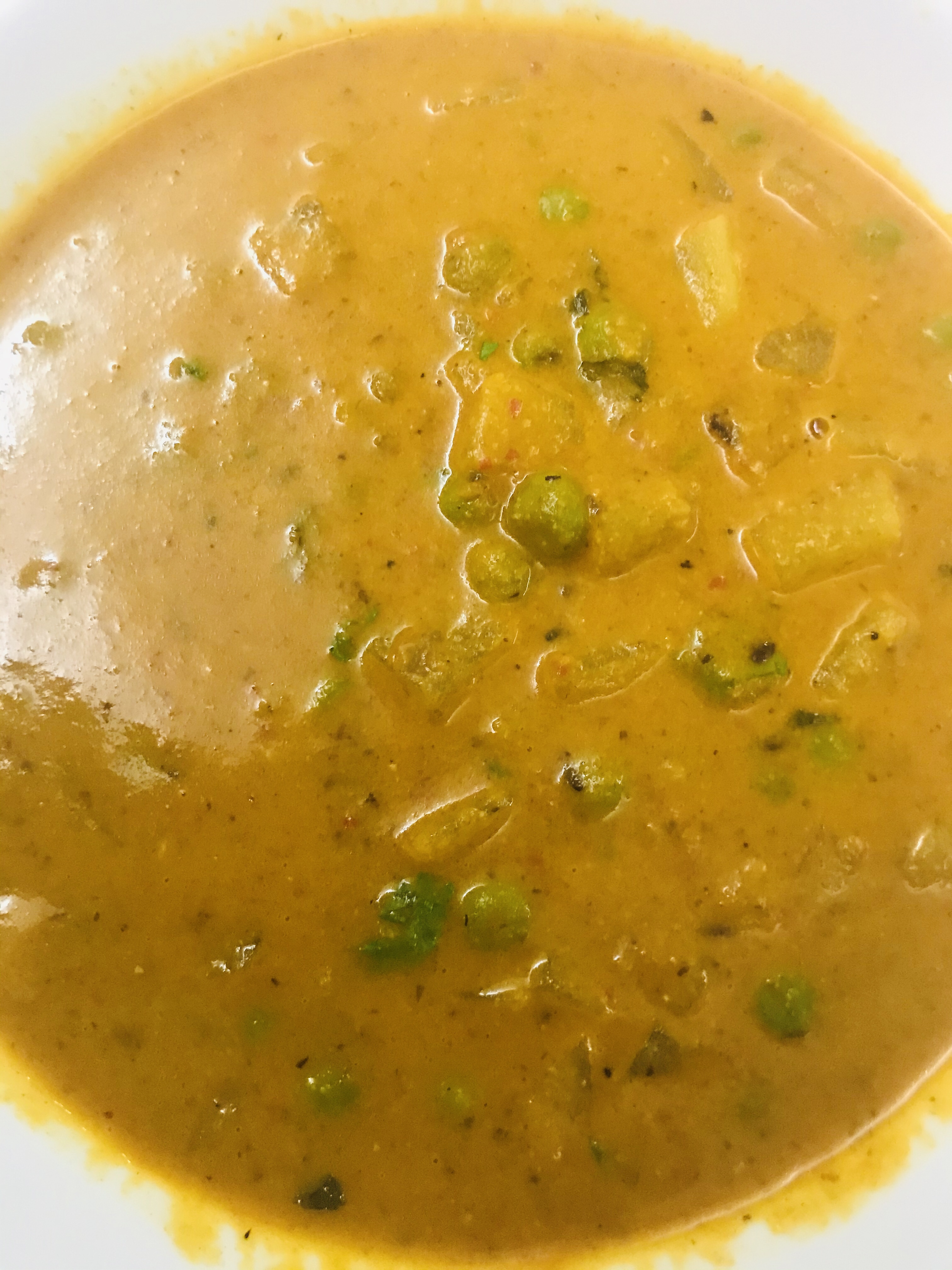
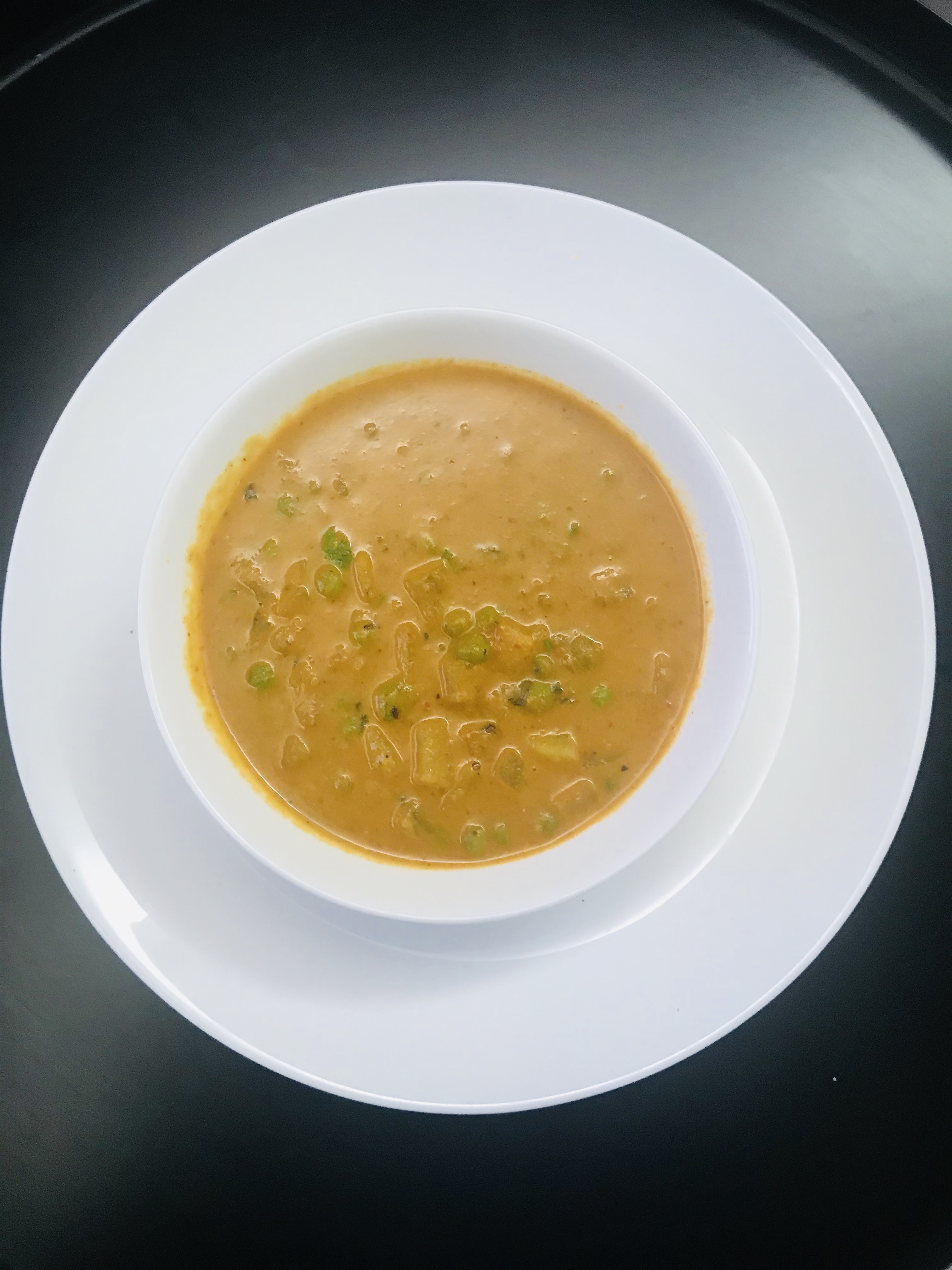
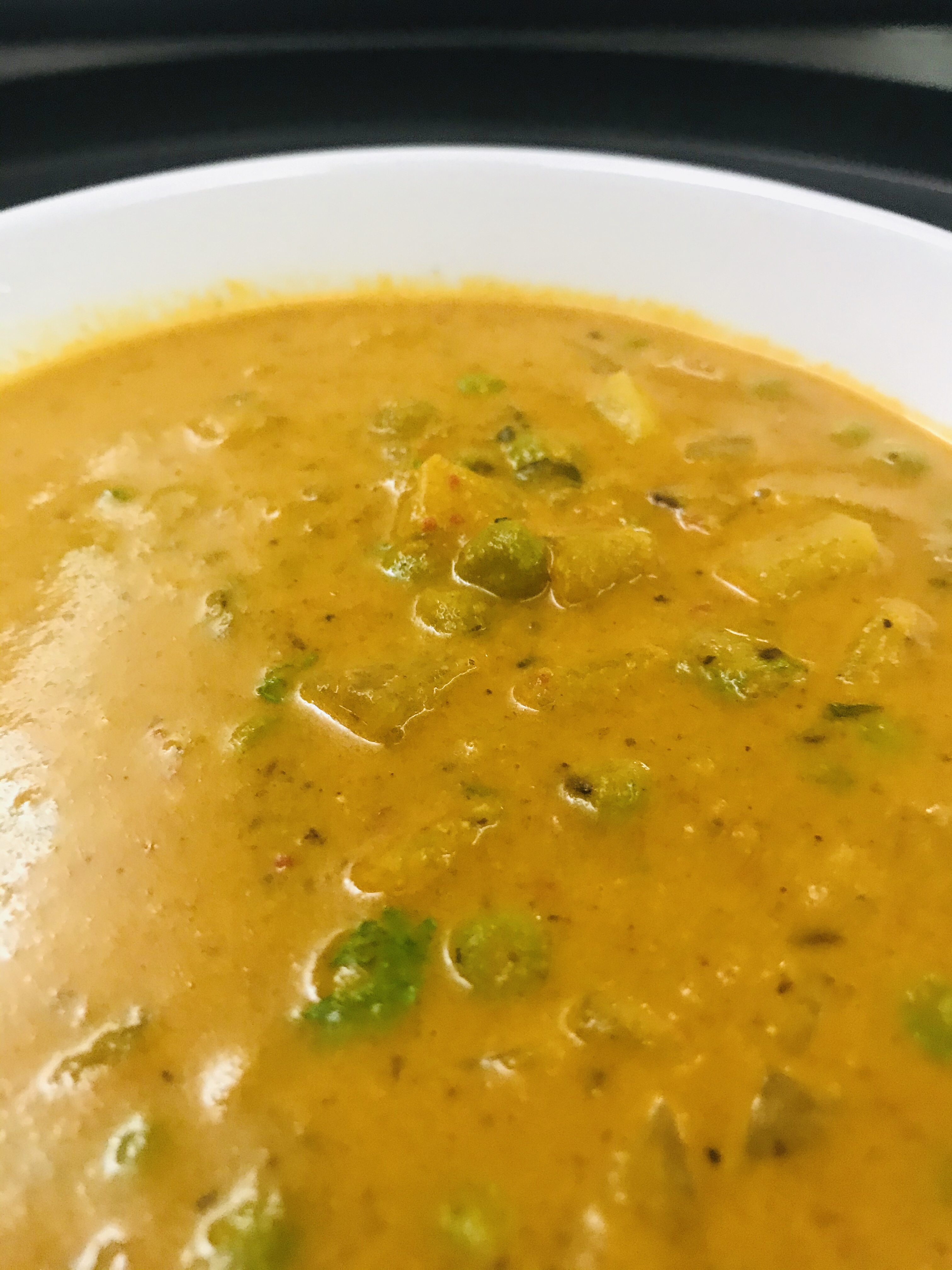
Another no onion, no garlic recipe, this time the classic aloo matar (potato and peas) curry reimagined without onions or garlic and made royal with the addition of some dry fruits and sesame seeds. It was super yummy and the addition of milk and yoghurt balanced the tartness of the tomatoes and also gives a slight sweetness to the recipe.
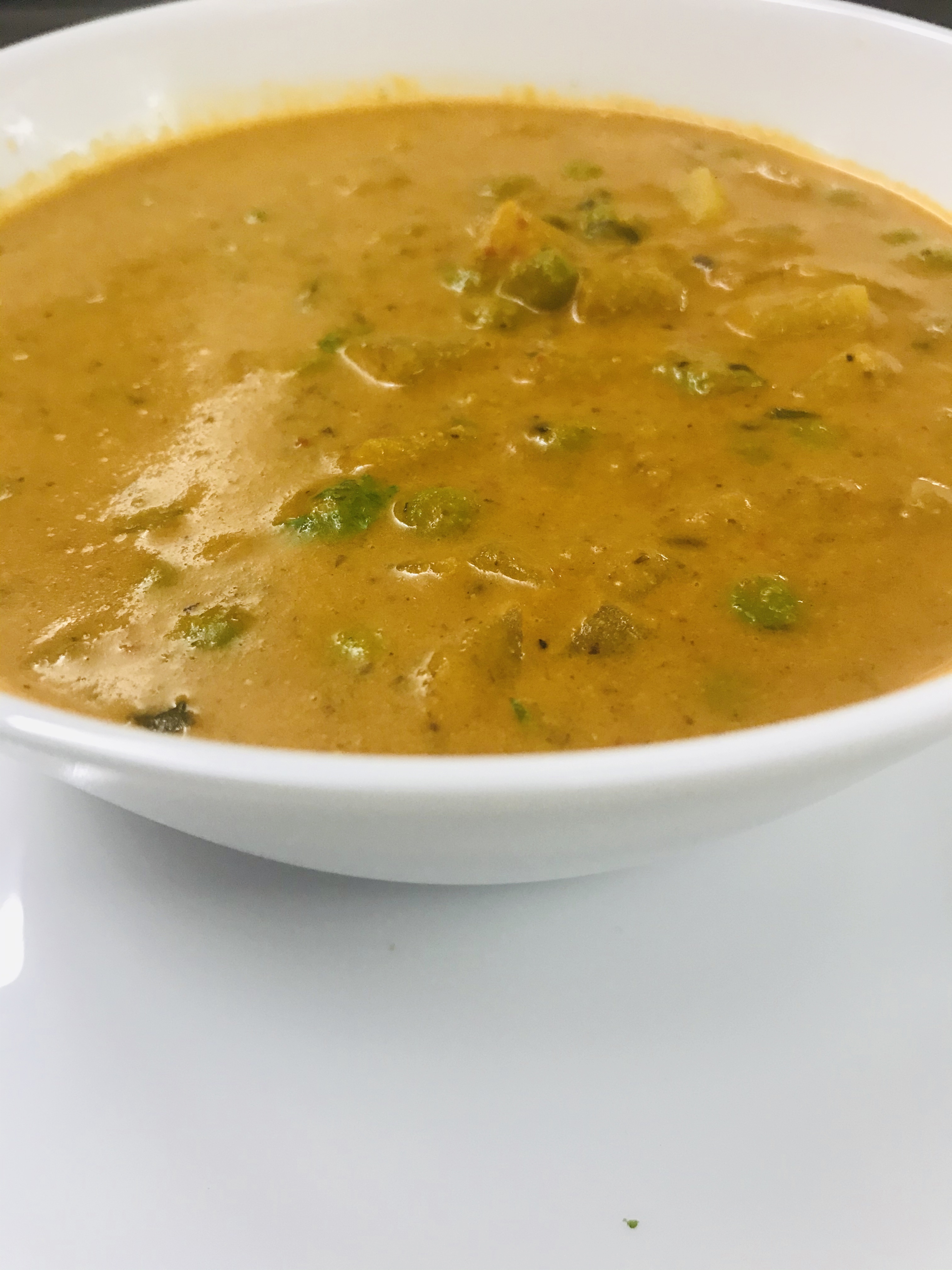
Shahi Aloo Matar

Ingredients:

  • 3 large potatoes, peeled and chopped into bite sized pieces
  • 1 cup frozen or fresh green peas
  • 3 large tomatoes, chopped roughly
  • 1/2 cup skimmed milk
  • 1/2 cup plain yoghurt
  • 6 cashew nuts
  • 6 almonds
  • 1 inch piece of cinnamon
  • 3-4 cardamom pods
  • 3-4 cloves
  • 1 inch piece of ginger, peeled
  • 1 tsp white sesame seeds
  • 1 tsp chilli powder
  • 1 tsp cumin powder
  • 1 tsp coriander powder
  • 1/8 tsp asafoetida powder
  • 1 tsp garam masala powder
  • 2 tsp cumin seeds
  • 1 tsp fennel seeds
  • 1 bay leaf
  • 2 tbsp oil
  • Salt to taste
  • Coriander leaves to garnish

Method:

  • Peel and chop the potatoes into bite-sized pieces and keep aside.
  • Heat 1 tbsp oil in a pan and add 1 tsp cumin seeds and let them pop. Then add the fennel seeds. Next add the sesame seeds, cloves, cardamon, bay leaf and cinamon one at a time and stir for a few seconds before adding the next ingredient.
  • Next add the cashewnuts and almonds and stir till the nuts are slightly brown. Now add the chopped tomatoes and a pinch of salt and let the tomatoes cook and become mushy. Remove, let it cool completely and grind it to a smooth paste with the yoghurt.
  • Heat the balance oil and add the balance cumin seeds. When the seeds splutter, add the asafoetida and turmeric powder and stir for 2 seconds.
  • Then add the chopped potatoes and let them cook for about 5 mins, or until they are half cooked.
  • At this point, add the frozen peas and salt and let the potatoes and peas cook till they are around 75-80% cooked. Remove from the flame and keep aside.
  • In a new pan, add the ground paste and stir well. Add the dry spice powders – chilli powder, cumin powder, coriander powder and garam masala powder and cook covered till the oil leaves the sides of the pan and the raw smell disappears. This should take around 7-10 minutes.
  • Now add the cooked potaotes and peas to this paste and stir well. Add the milk and let it come to the consistency you need. You can also add some water or more milk if it is still thick. Simmer for about 10 minutes to allow the flavours to mix together. Check for seasoning and garnish with coriander leaves and serve hot.
  • This goes very well with any Indian flatbread or even a jeera rice or pulao.
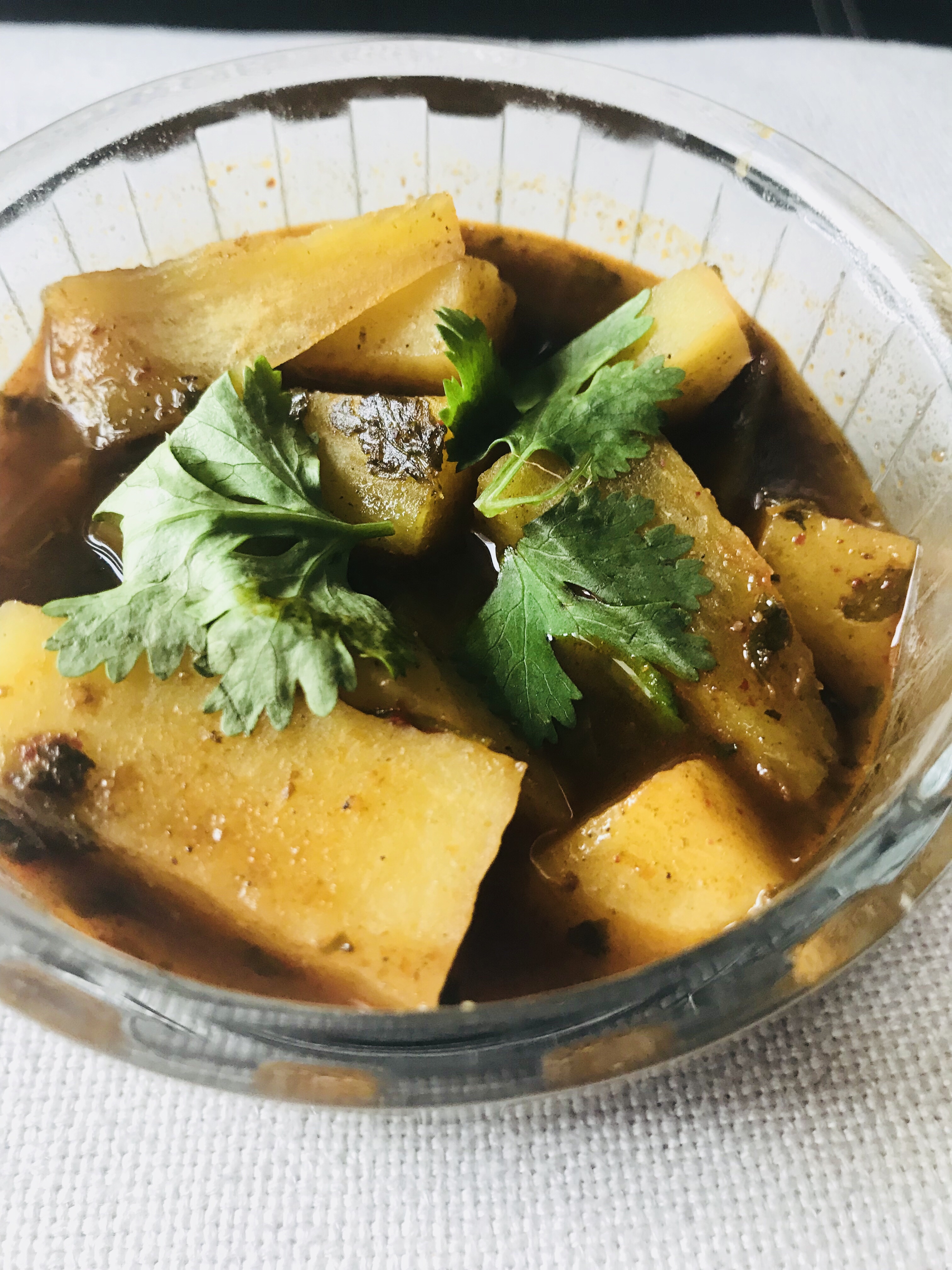
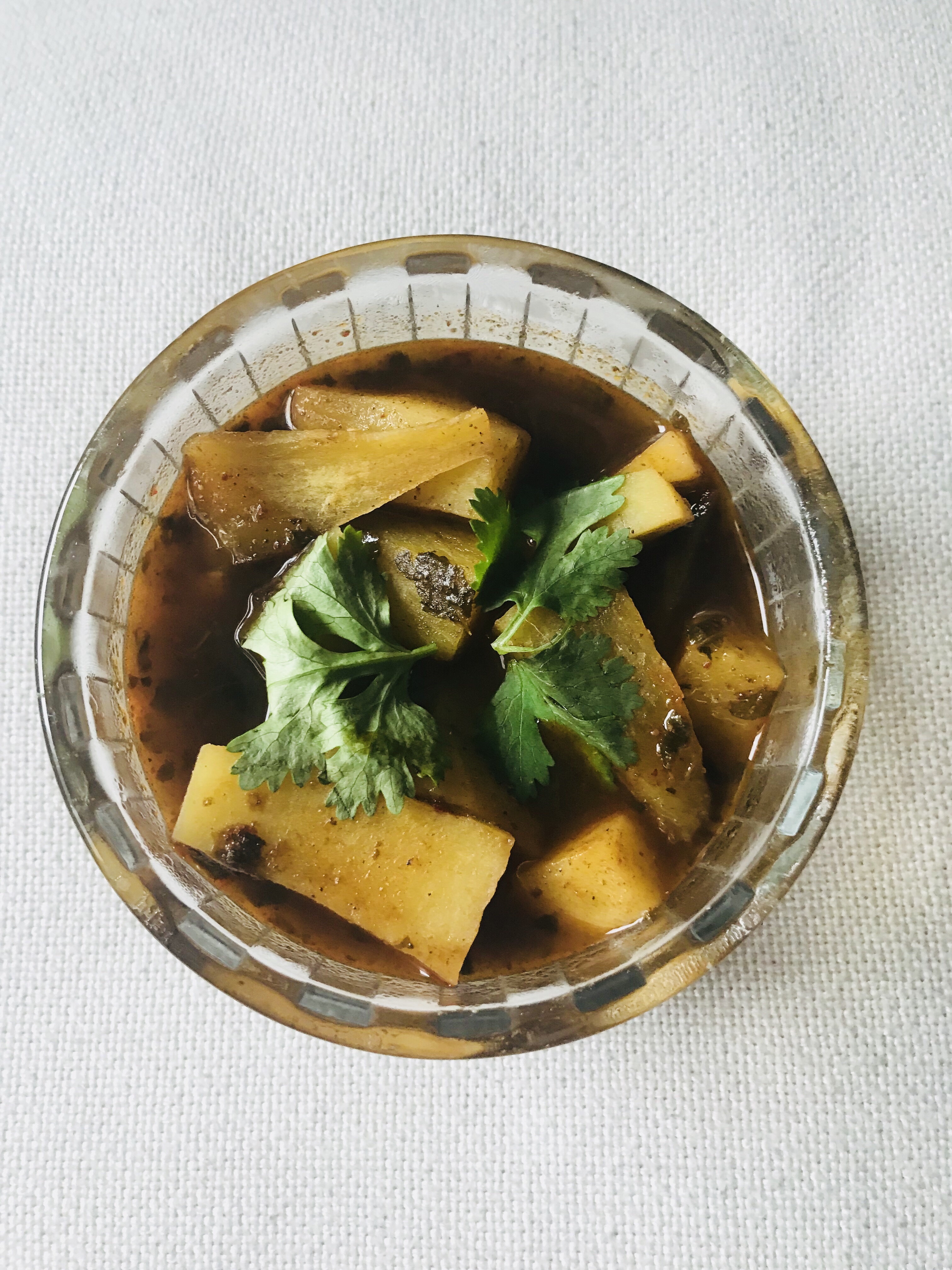
Recipes: Kashmiri Potato Yakhni

“Gar Firdaus bar-rue zamin ast, hami asto, hamin asto, hamin ast.”

This quote, attributed to the Mughal Emperor Jahangir in the 17th century when he first visited Kashmir can be translated as, “If there is a heaven on Earth, it is here, it is here, it is here”. The Mughal Emperor was so impressed by the beauty in Kashmir that he would often say, if one has not visited this beautiful paradise, they are missing out on something worthwhile.

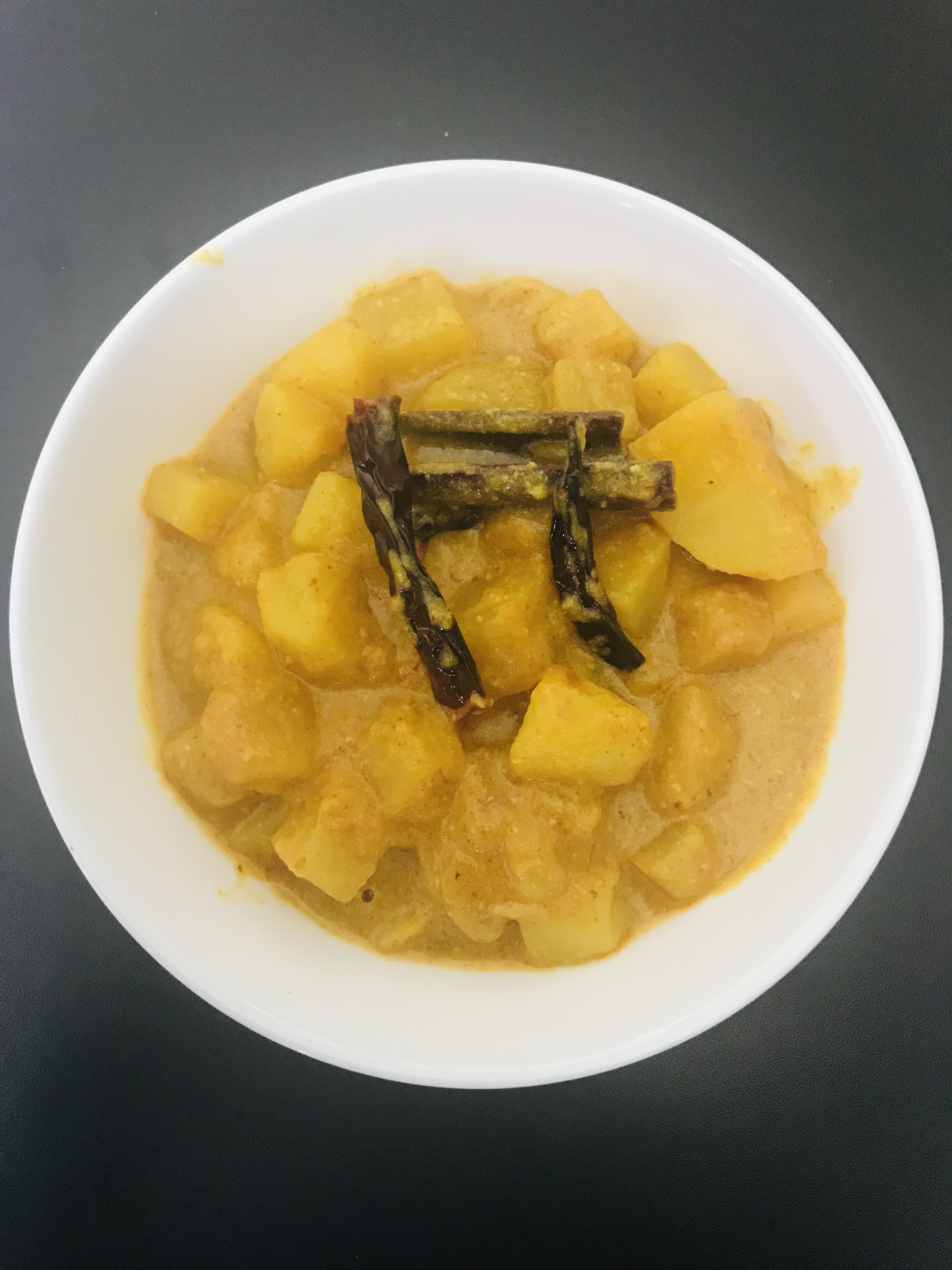
When I made my Kashmiri Pulao, I wanted it to be accompanied by a gravy dish from the same region. But as I discovered, since vegetables are scarce in the region, it is difficult to find vegetarian dishes here. So I adapted a mutton dish which I found online and created a potato yakhni. This may not be absolutely 100% authentic, but I was impressed with the taste.

Yakhni essentially means a gravy based dish and is a light curry or broth which has to include two main ingredients other than the meat – yoghurt and saffron. Yakhni came to be known in Kashmir during the Mughal emperor Akbar’s rule. Yoghurt-based meat curries were part of Persian cuisine, and the Emperor introduced this style of cooking to his new state when he annexed it in 1586. Yakhni dishes are also seen in Greek and Turkish cuisines, but what sets the Kashmiri Yakhni apart is the absence of tomatoes. Certain recipes also avoid onions and garlic since the Kashmiri pundits didn’t use those ingredients in their cooking.

So after this short lesson on the Kashmiri cuisine, let’s go on to the dish!

Potato Yakhni

Ingredients:

  • 1 kg potatoes, boiled, peeled and chopped into bite-sized pieces
  • 5 green cardamoms
  • 1-inch cinnamon stick
  • 1 bay leaf
  • 3 cloves
  • 1 tsp red chilli powder
  • 1 tsp turmeric
  • 2 tsp warm milk
  • 1 tsp dried ginger powder (saunth)
  • 2 tsp fennel powder
  • 2 dried red chillies
  • 1 cup yoghurt
  • 2 tbsp ghee
  • 2 pinches saffron
  • Salt to taste

Method:

  • Chop the potatoes into bite-sized pieces and keep aside.
  • Dissolve the saffron in the warm milk and stir a bit. Keep aside till needed.
  • Heat ghee in a deep bottomed pan. Add bay leaf, cinnamon, cardamom, clove, whole red chilli and cook on low flame till the spices begin to crackle.
  • Now add the chopped potatoes, turmeric powder, salt and saute for about five minutes on a medium flame.
  • Whisk the yoghurt well and add it to the potatoes. Make sure your flame is on low so that the yoghurt does not curdle.
  • Mix together the fennel and ginger powders and add it to the gravy.
  • Then add the red chilli powder and cook till the mixture thickens slightly.
  • Next, add the dissolved saffron along with the milk and stir for a couple of minutes. Check for seasoning and remove from the gas.
  • Serve hot with Kashmiri Pulao.

Notes:

  • If you want to make this with mutton, wash the mutton well and just replace the potatoes with the mutton.
  • To make fennel powder, simply grind 2 tbsp of fennel seeds into a fine powder. You can also find this readymade in Indian grocery stores. The same store will also have dried ginger powder available.

Recipes: Masala Potatoes

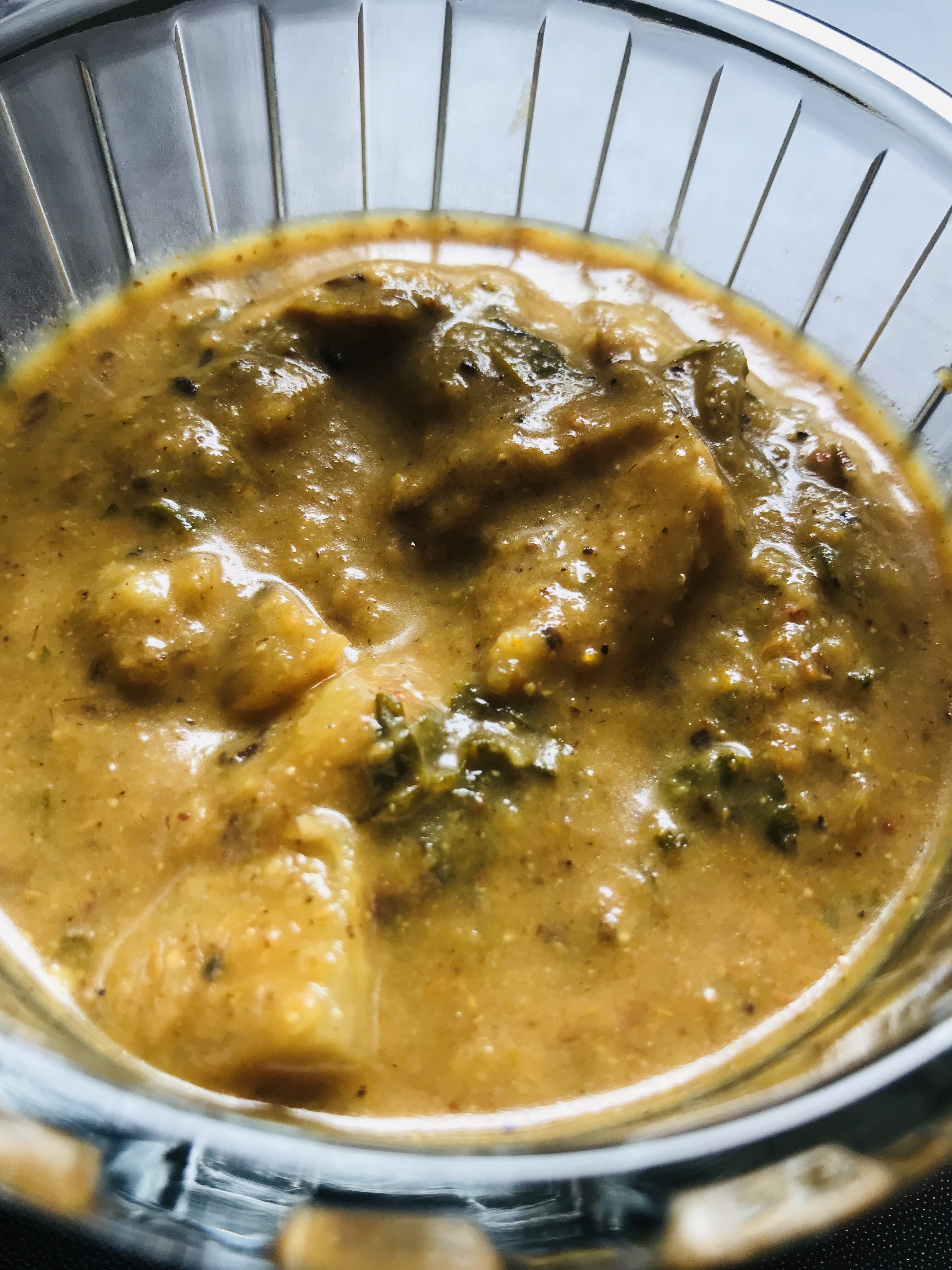
A very basic recipe, which can be modified to make it slightly richer as well as made with other vegetables and probably even meat, this gravy can also be made in advance and be frozen for when you need to make something in a hurry.

Masala Potatoes

Ingredients:

  • 4-5 medium-sized potatoes, peeled and chopped
  • 3 medium-sized onions, chopped roughly
  • 3 medium sized tomatoes, chopped roughly
  • 5-6 cloves of garlic, peeled
  • 1 inch piece of ginger, peeled
  • 2 tsp cumin seeds
  • 1 tsp fennel seeds
  • 1/2 tsp Carom seeds
  • 1 tbsp coriander seeds
  • 4-5 almonds
  • 1 tsp red chilli powder
  • 1/4 tsp turmeric powder
  • 1 tbsp cumin powder
  • 1 tbsp coriander powder
  • 1-2 tbsp garam masala powder
  • 1-2 tbsp Kasuri Methi (dried fenugreek leaves)
  • Salt to taste
  • 2 tbsp oil

Method:

  • Keep the chopped potatoes in a pan of water so that it does not oxidise while you make the gravy.
  • In a pan, heat 1 tbsp oil and then add 1 tsp cumin seeds and let it splutter. Then add the fennel and carom seeds and stir for a few seconds each before adding the next spice.
  • When the spices splutter, add the garlic and ginger and saute it for a few seconds.
  • Then add the almonds and stir for a minute or so.
  • Now add the onions and saute till it turns translucent. When the onions turn translucent, add the chopped tomatoes and give it a good stir.
  • Add around a tsp of salt to let the onion and tomato become mushy. At the same time, add the red chilli powder, cumin powder and coriander powder and stir well.
  • Once the tomatoes are completely cooked and mushy, remove from the flame, let it cool down completely and then blend to a fine paste. You can add water as needed to thin it down while blending.
  • Drain the potatoes and keep aside.
  • In the same pan, use the balance oil and when it becomes warm, add the remaining cumin seeds. When the seeds start to splutter, add the turmeric powder and the asafoetida and then quickly add in the drained potatoes. Add a bit of salt, cover and cook on a low to medium flame till the potatoes are almost cooked.
  • At this point, pour in the prepared gravy and stir well, letting it come to a boil. Check the seasoning at this point and add what is missing.
  • Add the garam masala and crush the Kasuri Methi in the palms of your hands before sprinkling it over the gravy.
  • Let the gravy come to a nice rolling boil, reduce the flame and continue to boil for another five minutes.
  • Remove from the flame, garnish with coriander leaves and serve hot with any rice or Indian flatbread.

Notes:

  • This is a very basic gravy and if you want to make it richer, you can add cashew nuts along with almonds when cooking. Also adding cooking cream while the gravy is boiling (towards the end) will make it more rich and creamy.
  • I made this with only potatoes, but you can add any combination of vegetables, including paneer (or tofu), cauliflower, peas, carrots etc to make it more wholesome.

Recipes: Sweet Sour Potatoes

When I was in college, I used to make a potato recipe in a tamarind sauce a lot. That was a signature dish I had discovered in a magazine, most likely Women’s Era and had written it down. I did not bring that notebook with me when I moved to Singapore and now that recipe is lost.

The other day I suddenly started thinking of that recipe and turned to Google to see if I can find it somewhere in the world wide web. Unfortunately, I could not remember most of the ingredients and hence could not verify if any of the recipes were the same.

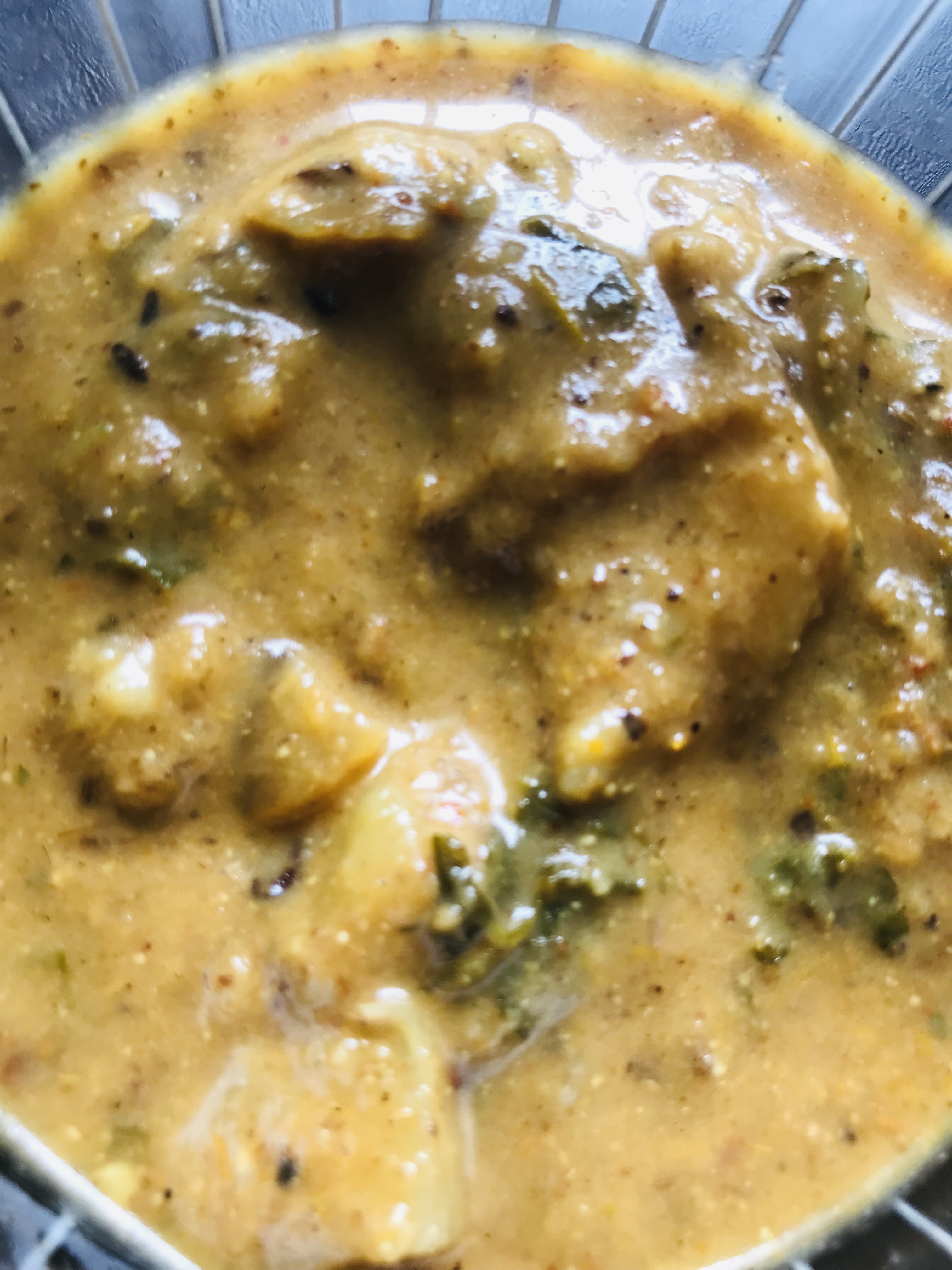
I did read a recipe from Sanjeev Kapoor which I felt was the closest to what I remembered and so adapted this recipe to my own. So here’s my version of tangy and sweet-sour potatoes.

Sweet Sour Potatoes

Ingredients:

  • 1 cup potatoes, scrubbed well and cut into long fingers with the jacket on
  • 1 lemon-sized ball of tamarind, soaked in hot water for 20 minutes and pulped and make it into 2 cups of tamarind water (or if you are using tamarind paste, use 2-3 tsp of the same)
  • 2 tbsp (more or less) Jaggery (you can alternate this with brown sugar if you don’t have access to jaggery)
  • 1 tsp cumin seeds
  • 1 tsp fennel seeds
  • 1 tsp mustard seeds
  • 1 tsp coriander seeds
  • 3-4 dried red chillies
  • 1/8 tsp asafoetida
  • 1 tsp kasuri methi (dried fenugreek leaves)
  • 1 tsp oil
  • Salt to taste

Method:

  • In a dry pan, dry roast the cumin seeds, fennel seeds, coriander seeds and chillies separately till they start to emit a nice aroma. Make sure you don’t burn the spices. Keep aside, cool and blend into a fine powder.
  • Heat oil in a largish pan and when the oil heats up, add the mustard seeds and let them pop. When they pop, add the asafoetida and stir for a couple of seconds. Then add in the powdered spice mix and stir for a couple of seconds.
  • Then pour in the tamarind water and jaggery and some salt and let it come to a nice rolling boil.
  • After about five minutes, when the raw smell of the tamarind goes away, add the potatoes and let them cook. Cook the potatoes till a knife pierced through one, goes in cleanly. Don’t overcook them. Check for salt at this point and add more if needed.
  • Finish off with taking the kasuri methi in the palms of your hands and crush it to release the oils and aroma and sprinkle it over the potatoes and gravy.
  • Switch off the gas and garnish with chopped coriander. Serve with rice or rotis (Indian flatbreads)
  • Recipe: Aloo Matar Paneer

    Another simple, rustic recipe, straight from the Punjabi heartland, this recipe is also courtesy of my helper R. According to her, this version is what is made in weddings in her village and is a super yummy dish which goes very well with any Indian flatbread. A version of this recipe was what I also made when I cooked a non-South Indian dish for the first time. This recipe was taught to me by a neighbour.

    Aloo Matar Paneer

    Ingredients:

    • 2 medium-sized potatoes, peeled and chopped
    • 1 cup frozen green peas
    • 1/2 pack frozen paneer, refreshed in a pan with hot water for 30 minutes
    • 2 medium-sized onions, chopped roughly
    • 4 medium-sized tomatoes, chopped roughly
    • 1-inch piece of ginger, chopped roughly
    • 8-10 cloves of garlic
    • 2 tbsps oil (I use a canola-olive blend)
    • 2 tsp cumin seeds
    • 1/4 tsp turmeric powder
    • 2 tsp coriander seeds powder
    • 2 tsp red chilli powder
    • 2 dried red chillies
    • 2 tsp cumin seed powder
    • a handful of cashew nuts
    • 1 tsp garam masala powder
    • Salt to taste
    • Coriander leaves to garnish

    Method:

    • Pour hot water over the cashew nuts in a dish and keep aside for 30 minutes till the nuts are soft.
    • Grind together onion, tomatoes, ginger, dried red chillies, garlic and cashew nuts and keep aside. Try not to use any water to make the paste and keep the paste smooth.
    • Chop the potatoes into 1-inch pieces and wash and keep aside.
    • Heat oil in a pan and add cumin seeds and saute for a few seconds.
    • Add the ground tomato-onion paste and saute till it is browned. Keep stirring so it does not burn. Keep stirring till the oil starts leaving the pan.
    • Add the dry spices now – salt, turmeric powder, red chilli powder, coriander powder and cumin powder and stir well.
    • Next, add potatoes and mix well.
    • Add around a quarter cup of water and mix well and cover and cook till the potatoes are almost done.
    • Now add the frozen green peas and mix. Cover and cook till the vegetables are done.
    • If the gravy appears to be thick, add some water to thin it.
    • Now add the paneer pieces and sprinkle the garam masala powder and let it simmer for five minutes.
    • Remove from the flame, garnish with coriander leaves and serve hot with any rotis or Indian flatbread.