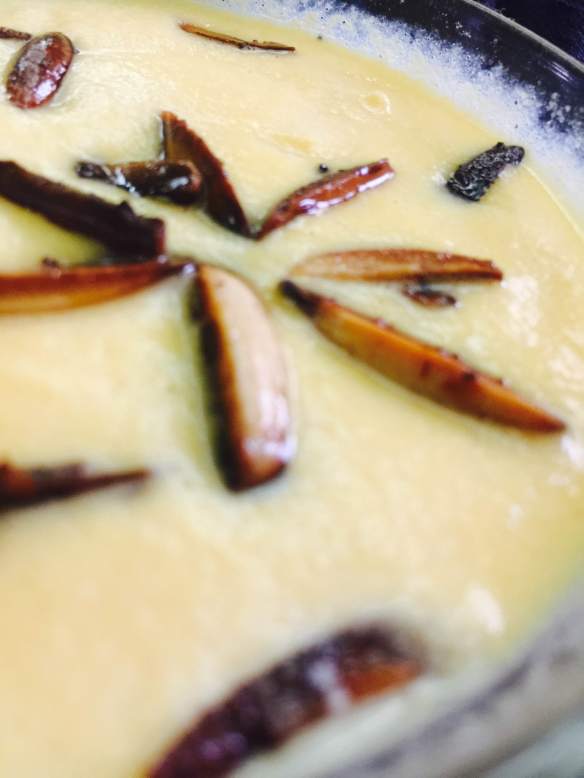
Recipe: Chow Chow Ginger Chutney

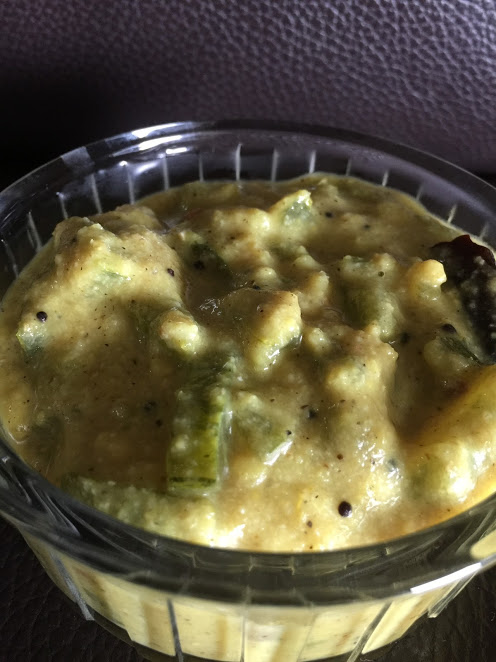
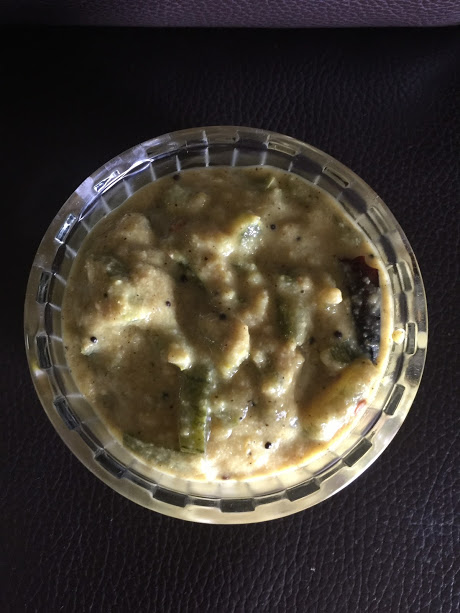
Chow chow or Chayote is a very versatile vegetable, one which takes on the flavour of the ingredients that you use to enhance it. I make a chow chow chutney which BB loves, but this time I added some ginger to it, to add some kick to the chutney. This went very well with rava idlis which I made and will go well with other south Indian dishes like idlis and dosai.
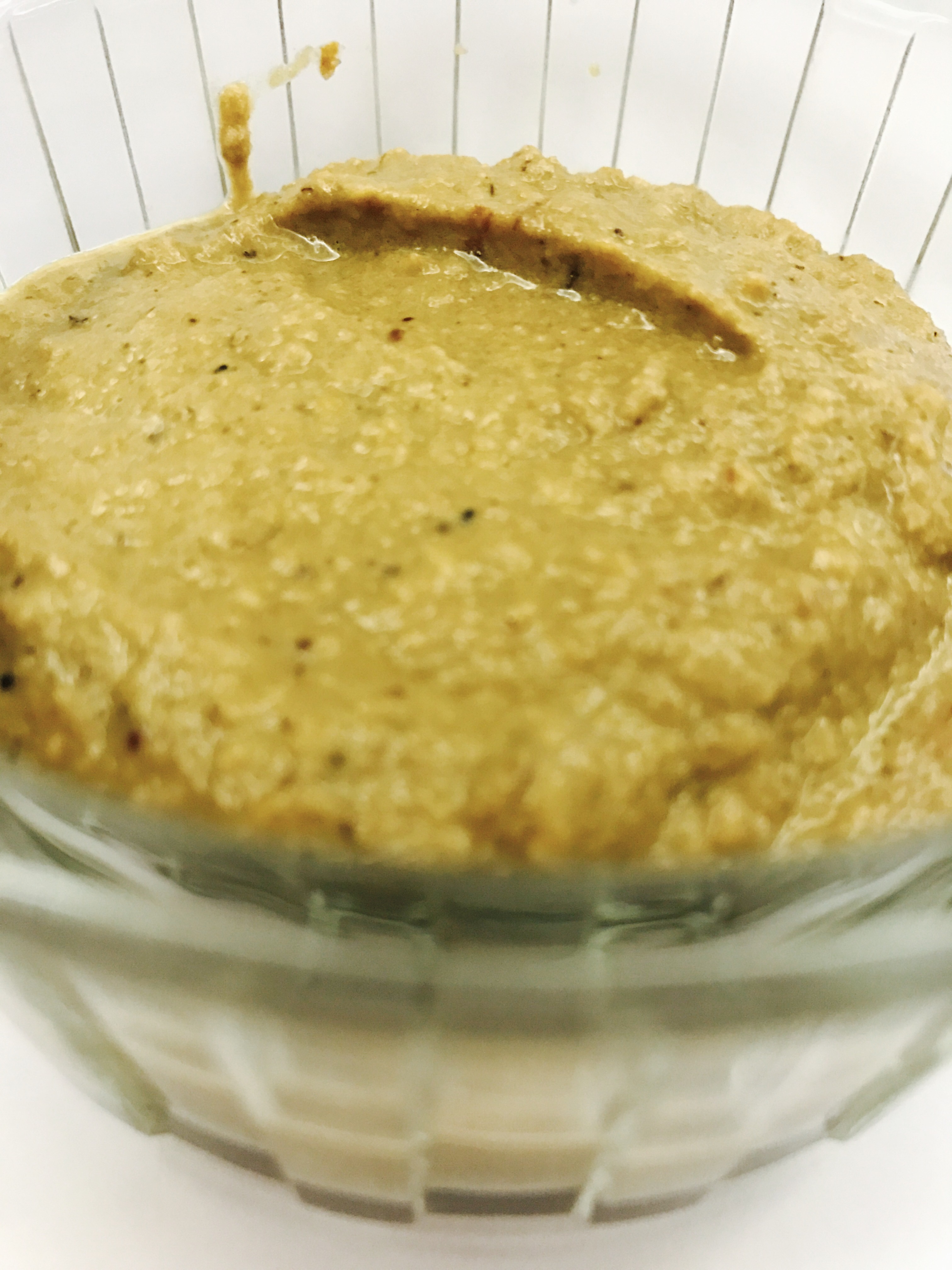
Chow Chow Ginger Chutney

Ingredients:

  • 1 chow chow or chayote
  • 1 cup grated coconut
  • 1-2 inch piece of ginger, for peeled
  • 1 tsp urad dal
  • 1 tsp chana dal
  • 1 tsp mustard seeds
  • 6-7 dried red chillies
  • 1 small lime sized ball of tamarind
  • 1 tsp oil
  • Salt to taste

Method:

  • Peel the chayote and remove the inner seeds. Chop them into small bite-sized pieces and keep aside
  • In a pan heat oil and when warm, add the mustard seeds. When the mustard seeds splutter, add the urad dal and chana dal.
  • Add the dried red chillies and let it brown slightly. Add the ginger and let it brown for a few seconds. Add the tamarind and let it cook for a couple of seconds.
  • Now add the chopped chayote and a bit of salt and let it cook till the chayote has completely cooked.
  • Remove from the flame and keep aside and let it cool completely.
  • In a blender, blend the chayote with the coconut and blend well till it becomes a smooth paste. Add salt if needed.
  • Serve with any bread, flatbread or idli, dosai etc.


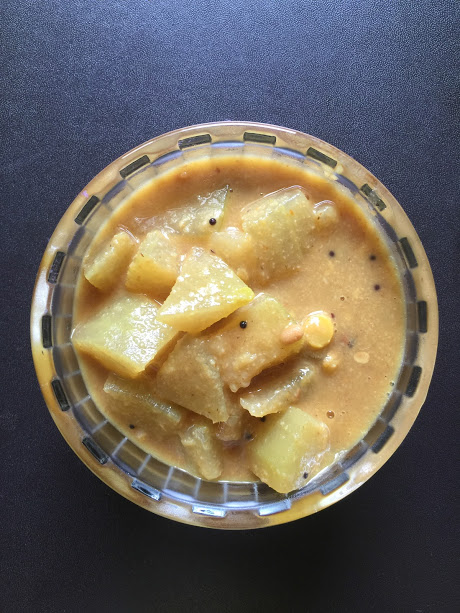
Recipe: Pooshnikai Kootu aka Ash Gourd Stew

img_6193

Another typical tambram food, which I made for the first time for the sumangali pooja. This was really good with a medley of tastes. A keeper which I plan to make often.

Pooshnikai Kootu aka Ash Gourd Stew

img_6195

Ingredients:

  • 1 medium sized pooshnikai or as gourd, chopped into small pieces with the seeds and fibres removed
  • 3/4 cup toor dal or red gram dal, cooked with a pinch of turmeric till mushy
  • 1/3 cup chana dal or bengal gram dal, cooked with a pinch of turmeric
  • 2 tsps coriander seeds
  • 1.5 tsps bengal gram dal
  • 6-8 dried red chillies
  • 4-5 tbsps grated coconut
  • a lime sized ball of tamarind, soaked in hot water for 30 minutes and the pulp squeezed and the juice removed and kept aside. Alternatively use 2-3 tsps of tamarind paste
  • 2 tsps oil
  • 1 tsp mustard seeds
  • 1 tsp urad dal or black gram dal
  • 4-5 curry leaves
  • 1/4 tsp asafoetida
  • 1/4 tsp turmeric powder
  • Salt to taste

Method:

  • In a large pan, take the chopped ash gourd and cook it with just enough water to cover the vegetable. Add some salt and turmeric powder.
  • When the ash gourd is half cooked, add the juice of the tamarind and let it cook till the raw smell of the tamarind goes away.
  • In the meantime, in another pan, with 1 tsp oil, fry the bengal gram dal,  coriander seeds, dried red chillies and the coconut until the coconut looses all it’s moisture and becomes dry. Blend this coconut mixture into a smooth paste. Add a bit of water if needed to do this.
  • When the ash gourd is cooked, add the cooked toor dal to the ash gourd and let it mix well. Bring it to a boil and then add the blended coconut paste and let it boil for around 5 minutes
  • In a seperate pan, heat the balance oil and when warm, add the mustard seeds, urad dal, asafoetida, curry leaves and red chillies and stir for a few seconds till the urad dal is brown the curry leaves are crisp.
  • Season the kootu with this and remove from the gas. Serve hot with a rice of your choice or any flatbread.

img_6194

Recipe: Pudalangai Kootu aka Snake Gourd Stew

img_6189

This is a typical tambram recipe which is made in perhaps every household at some point or the other. But surprisingly I had never made it before and so when I had to make it for the Sumangali pooja, I had to rely on my tambram cooking bible – Cook and See by Meenakshi Ammal. I am reproducing the recipe as it is published. Even though I was cooking it for the first time, it was yummy and I realised, I actually liked it a lot.

This recipe is pretty standard for a kootu, in that it has the vegetable, some dal and a coconut spice blend. What was different was that instead of chillies, the coconut was blended with black peppercorn, which made the difference in taste.

img_6192

Pudalangai Kootu or Snakegourd Stew

Ingredients:

  • 2 snake gourds
  • 1 cup moong dal, washed and cooked with a pinch of turmeric powder till it is mushy
  • 4-5 tbsps grated coconut
  • 1.5 tsps peppercorns
  • 1 tsp cumin seeds
  • 1/4 tsp turmeric powder
  • 1 tsp oil
  • 1 tsp mustard seeds
  • 1 tsp split urad dal
  • 2-3 dried red chillies
  • 4-5 curry leaves
  • salt to taste

Method:

  • To chop the snake gourd, slit it lengthwise first and remove all the seeds and fibre from inside. Then cut it in half lengthwise and then into thin slices horizontally.
  • In a pan cook the snake gourd with minimum water, 1/4 tsp turmeric powder and some salt.
  • While the snake gourd is cooking, in a blender, blend the coconut, peppercorns and cumin seeds to a fine paste and keep aside.
  • When the snake gourd is cooked, but still keeping its shape, add the cooked dal to it and mix gently. Now add the coconut paste and add a bit of water if needed. Kootus are generally thick, but you can adjust the thickness of the dish as you like.
  • Check for salt and when it comes to a rolling boil, let it boil for five minutes and switch off the gas.
  • In a smaller pan, heat the oil and when it becomes warm, add the mustard seeds. When the seeds crackle, add the urad dal, asafoetida, curry leaves and dried red chillies and let the dal brown and the curry leaves become crisp. Pour this seasoning into the kootu and serve hot as an accompaniment to rice.

img_6190

img_6191

Recipe: Gulkand Dry Fruit Barfi

img_6184

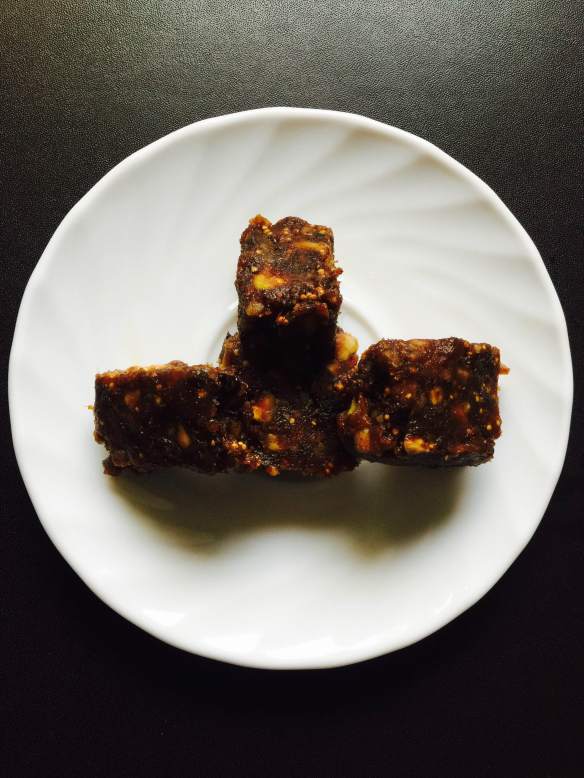
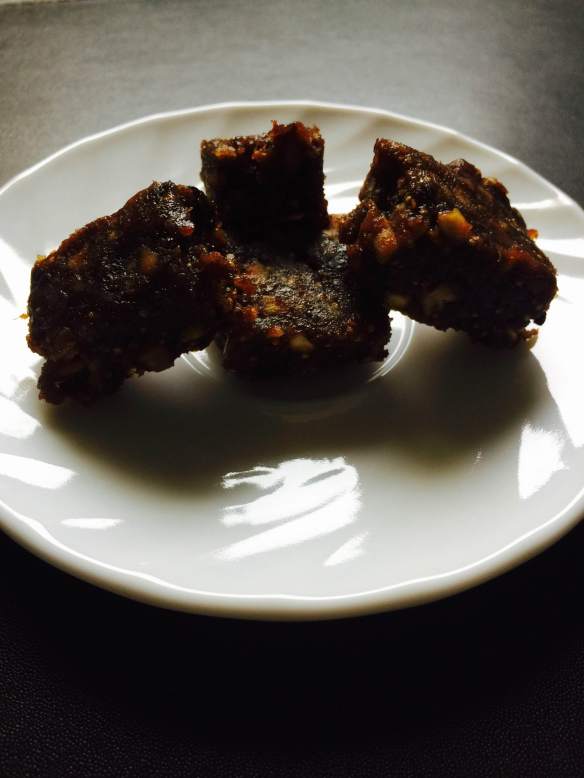
Around six months back, I brought a tub of Gulkand which is a kind of rose jam. To be honest, I was intrigued by its smell and texture and so decided to buy it. It was lying in my fridge all this time and I was wondering if I could do something with it for Diwali when I chanced upon this recipe from Archana’s Kitchen.

I made this recipe almost as it is mentioned on the page and it turned out more like a fudge rather than a barfi.It does not have any added sugars to it, with all the sugars coming from the dry fruit and the gulkand.

img_6188

Gulkand Dry Fruit Barfi

Ingredients:

  • 2 cups dry figs (anjeer), chopped
  • 2 cups dates, chopped
  • 1/2 cup almonds
  • 1/2 cups cashew nuts
  • 1/2 cups walnuts
  • 1/4 cup pistachios
  • 1/2 cup raisins
  • 2-3 tbsps gulkand
  • 1/4 tsp nutmeg powder
  • 1 tbsp ghee

Method:

  • Soak the chopped figs, dates and raisins separately in bowls of water and let them soak for around 30 minutes.
  • Strain the water from the dates, figs and raisins and grind them to a smooth paste. I added some water as my mixer was not a very strong one, but if you can do this without adding water, that is better.
  • In a food chopper, chop the cashew nuts, almonds, walnuts and pistachios into small pieces and keep aside.
  • Grease a tray with some ghee or butter and keep aside.
  • In a non-stick pan, heat the ghee and when the ghee gets warm, add the fig, dates and raisins paste and mix well and saute it for a while.
  • Now add the chopped nuts, gulkand and nutmeg powder and combine well.
  • Stir well for a couple of minutes until the mixture starts to leave the sides of the pan.
  • Once this happens, pour the mixture into the greased tray and level it well.
  • Cover the tray and when the mixture is cool, keep it in the fridge for around 30-45 minutes to firm up.
  • Cut it into smaller pieces and serve.

img_6182

img_6185

img_6183


Recipe: Carrot Almond Kheer

img_6163

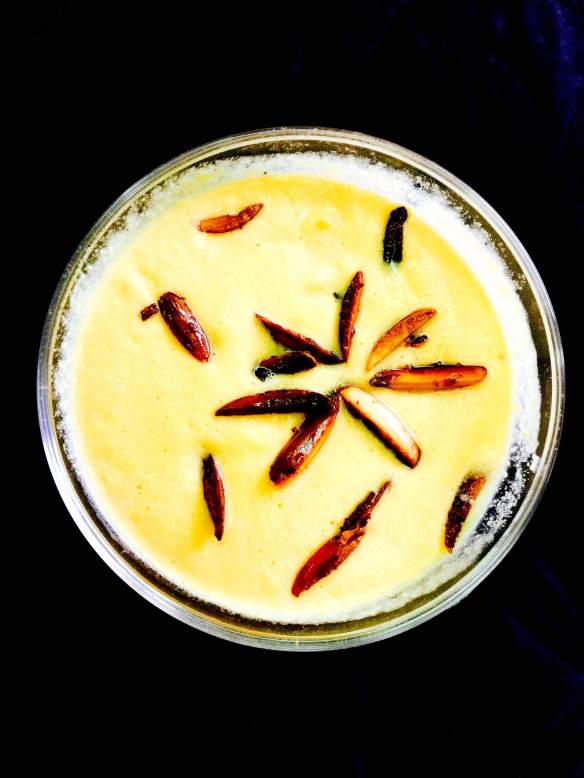
During Navratri and especially on the last two days, I had to make sweets back to back. On the first day, I made my Vermicelli Payasam and was wondering what to do for the next day when I decided to make this carrot almond kheer. It’s a fairly easy recipe to make too.

img_6149

Carrot Almond Kheer

Ingredients:

  • 1 cup almonds
  • 3 carrots
  • 1-litre full cream milk plus some extra
  • 1 cup sugar
  • A few pinches saffron
  • 1 tsp ghee

Method:

  • In a small bowl, soak the almonds for around 15-20 minutes and when cool, remove the skin and keep aside. Reserve around 10-15 to garnish.
  • Peel and cut the carrots into small pieces and cook them in a pan with the extra milk till they are completely cooked.
  • In a small cup put the saffron strands and add a tsp of milk and warm it in a microwave for around 30 seconds. You may need to do this a couple of times till the saffron starts to disintegrate. Keep this aside and stir well to make sure the saffron mixes well with the milk.
  • When the carrots are cooled, blend them well along with the almonds into a smooth paste.
  • In a pan, take the carrot almond mixture and add 1 litre of milk to it and bring it to a boil. When the milk comes to a rolling boil, add the sugar and saffron mixture and let it boil well.
  • Slice the remaining almonds finely into flakes
  • In a smaller pan, heat the ghee and when warm, fry the almond flakes till they are golden brown.
  • Use the browned almonds to garnish the kheer.
  • The kheer can be eaten hot or cold. We prefer to eat it cold as I believe this brings out the full flavour and so we usually keep it in the fridge for a couple of hours before eating it.

img_6148

img_6150