Recipes: Amritsari Dal or Langarwali Dal

I have been curious about this dal for a few months now, but the couple of times I wanted to make it, I didn’t have the whole urad dal on hand. So a couple of months back, when I had some on hand, I decided it was time to finally make this.

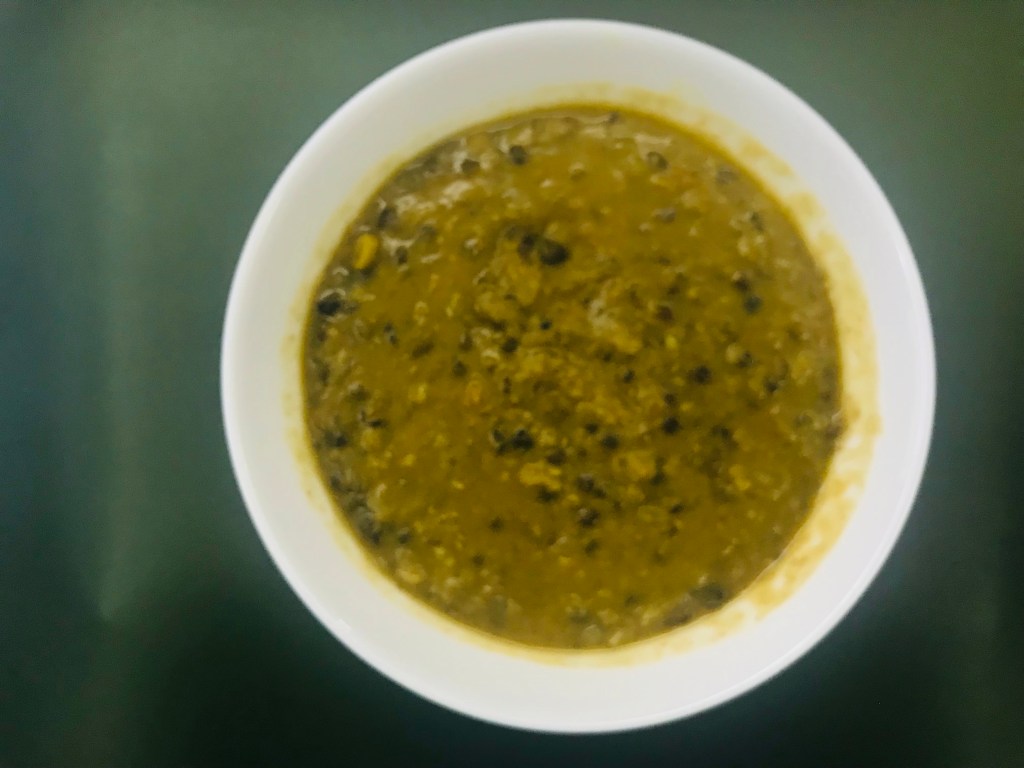
This dal is rustic and comes from the homes of Punjab and is also called Langarwali Dal as it is often served at Sikh Gurudwaras, especially the Harmandir Saheb in Amritsar. Made from two types of dals, urad and chana, this dal does not have too many spices and is usually slow cooked, sometimes overnight to make a creamy, soft dal that just melts in the mouth. But because we don’t have the time these days to slow cook it, it’s made in the pressure cooker.

Amritsari Dal or Langarwali Dal

Ingredients:

  • 1 cup whole black urad dal
  • ¼ cup chana dal
  • ¼ tsp turmeric powder
  • 2 tbsp finely minced ginger
  • 2 tbsp finely mined garlic
  • 2-3 tbsp ghee, oil or butter
  • 1 tsp minced green chillies
  • 1 medium sized onion, finely chopped
  • 2 medium sized tomotoes, finely chopped
  • ½ tsp red chilli powder
  • 2 tbsp finely chopped coriander leaves
  • 1 tbsp finely chopped mint leaves (optional)

Method:

  • Soak the urad dal and chana dal in water for at least 5-6 hours until the urad dal is soft to touch.
  • Wash the dal well and put inside the pressure cooker with enough water to cover it, add turmeric powder, 1 tbsp each of ginger and garlic and about 1 tsp salt and cook for about five to six whistles. Open the cooker when the pressure goes away and slightly mash the dals with the back of a spoon or a whisk.
  • In a separate pan, heat the ghee, oil or butter and when it heats up, add in the finely chopped onion, stir until the onions turn translucent.
  • Then add in the balance minced ginger and garlic and stir well.
  • Add the mined green chillies and stir.
  • Saute until the onions become a nice golden colour.
  • When the onions turn golden, add In the finely chopped tomatoes. Mix well and let the tomatoes cook until they become mushy
  • Let the mixture cook until the oil releases from the sides. At this point, add the red chilli powder
  • Pour the tempering into the dal mixture and mix well
  • Add salt and water if needed and mix well
  • Let the dal come to a nice rolling boil.
  • Lower the flame and let the dal simmer for about 5 minutes. You can simmer for longer if you want, and the results will be better.
  • Garnish with coriander leaves and mint leaves, if you are using them and serve hot with rice, rotis or nan.

Note that the dal will thicken as it cools, so you may need to thin it a bit before serving if you plan on cooking it ahead of time. Also the dal tastes much better if eaten the next day, so it may be a good idea to cook it ahead of time.

Recipes: Coriander Mint Pulao

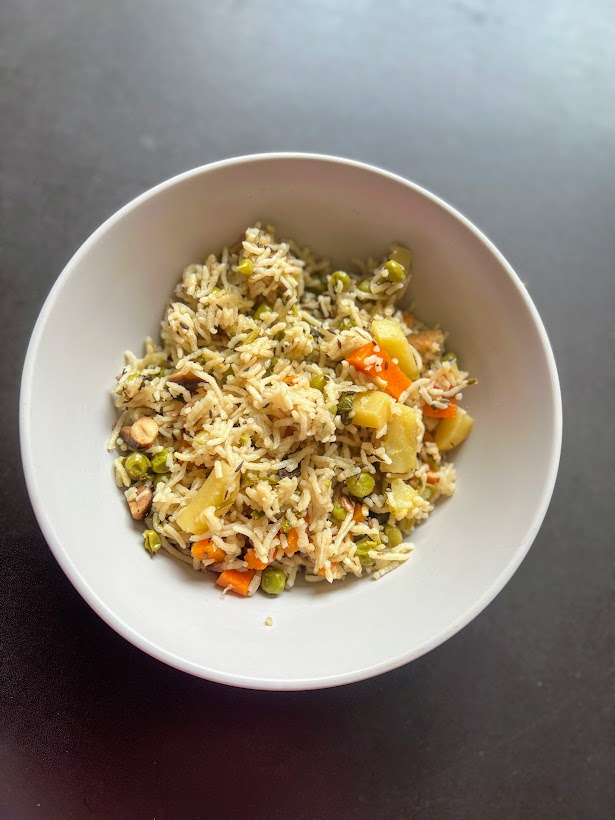
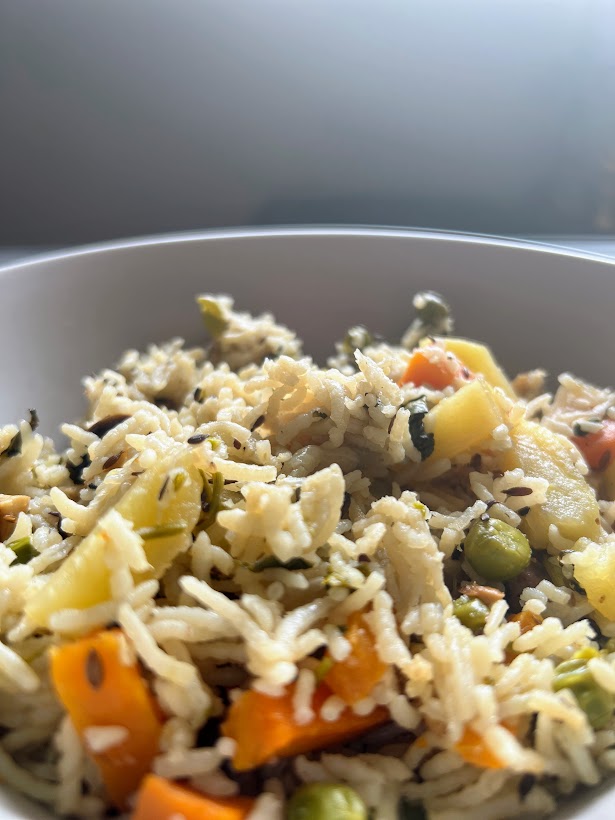
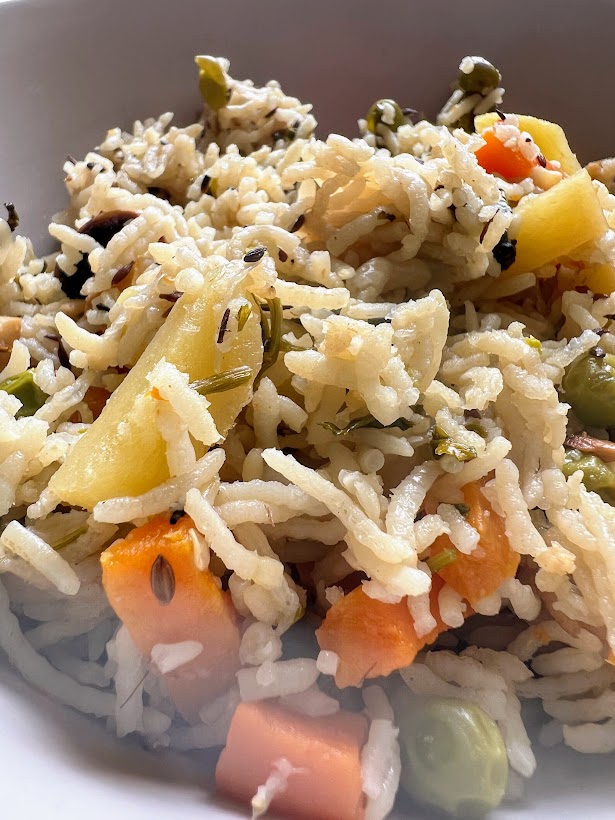
During GG’s internship, she used to take her lunch when she had to work in the office and this meant I made one pot meals more than usual. When I got bored of making the usual pulaos, I tried this coriander and mint pulao as I had some mint leaves which was getting spoilt. The recipe is different from my usual mint pulao where I grind the mint leaves to a paste and this one had a very subtle smell and taste of mint and coriander and was very tasty. It is a definite keeper and I will be making this again soon.

Coriander Mint Pulao

Ingredients:

  • 2 cups basmati rice, soaked in water for about 20-30 minutes
  • 2 tbsp ghee
  • 1 large onion, finely sliced
  • 1 carrot, peeled and cut into 2-inch sticks
  • 1 potato, peeled and cut into 2-inch sticks
  • ¼ cup green peas
  • 1 green chilli, slit
  • A one-inch piece of ginger, julienned
  • 10-12 pieces of cashew nut
  • 1 tsp cumin seeds
  • 3 cloves
  • 3 cardamom
  • 1 bay leaf
  • A one-inch piece of cinnamon
  • 2 tbsp mint leaves, chopped
  • 2 tbsp coriander leaves, chopped
  • Salt to taste

Method:

  • Wash the basmati rice well and drain keep aside.
  • In a pan, heat the ghee and when the ghee heats up, add in the cumin seeds and let them splutter.
  • Then add the cloves, cardamom, cinnamon and bay leaf and saute for a few seconds.
  • Next, add in the green chilli and ginger and saute for a few seconds.
  • Now add in the cashew nuts and saute till the cashew nuts turn golden brown.
  • At this point, add in the sliced onions and saute till the onions become translucent.
  • When the onions are translucent, add in the chopped vegetables and saute for a few minutes.
  • Add in the chopped coriander and mint leaves and saute for a few seconds. We don’t need to cook them, just let them wilt.
  • Lastly, add in the rice and salt and saute for a minute or two.
  • Transfer everything to a rice cooker and add water. I usually add 2 cups of water for every cup of rice, but please use your discretion and the instructions in the packet of rice.
  • Cook the rice either in the rice cooker or on the stovetop and once the rice is done, let the pan stand for about 5 minutes before opening it.
  • Fluff the rice with a fork before serving. Serve hot with a raita of your choice.

Recipe: Orange Kozambu

During the Chinese New Year period, here in Singapore, you get lots of different types of Mandarin oranges. I love Mandarin oranges and during that time, on a call with my mum and sister, we started talking about the Orange Kozambu my mum used to make. Inspired by that call and the two cartons of Mandarin oranges I had in the house, I made some of this delicious kozambu. I made it slightly different from how my mother makes it, making it more like my Milagu Kozambu and I felt this was a better way to make it as it kept for more than a week in the fridge. This is perfect with some rice and any stir-fried curry on a cold or rainy day. You can increase the number of peppercorns depending on your spice tolerance.

Orange Kozambu

Ingredients:

  • 2 mandarin oranges
  • 2 tsp Peppercorns
  • 7-8 Red Chillies
  • 2 tsp Urad Dal
  • 3 tsp Chana Dal
  • 1 tsp Cumin Seeds
  • 3 tsp Coriander Seeds
  • 1 tsp Mustard Seeds
  • Tamarind piece as big as a piece of lime (make sure you remove all fibre from the tamarind as well as any seeds which may be there). Alternatively, you can use 1-2 tbsp tamarind paste
  • Salt to taste
  • 2-3 tbsp jaggery powder
  • ¼ tsp Asafoetida
  • 2 tbsp Gingelly Oil (if this oil is not available, then use the oil you use for your daily cooking)

Method:

  • Peel the oranges and remove any fibre from the peel as well as the segments.
  • Chop the orange peel into fine pieces and remove the seeds from the segments and chop them also finely.
  • Wash the peel and the segments and keep them aside.
  • In a pan, heat about 1 tbsp gingelly oil and after the oil warms up, add the tamarind piece, peppercorns, red chillies, urad dal, chana dal, asafoetida, cumin seeds and coriander seeds and fry them until the urad dal turns a golden brown colour.
  • If you are using tamarind paste, don’t add the paste to the oil, instead, you can use it while cooking the kozambu.
  • Once the spices cool down, blend them to a fine paste and keep aside.
  • Heat the balance gingelly oil and when the oil warms up, add the mustard seeds and let them splutter.
  • Then add the chopped mandarin orange peel and segments and fry for about 5-7 minutes, until the peel is fully cooked.
  • Then add the blended paste and enough water to make the kozambu to the consistency you require. This kozambu will thicken slightly when cool, so thin it accordingly.
  • Add salt to taste as well as some jaggery if you find it spicy and let it cook till the orange peel and segments are fully cooked and the mixture becomes thick and reduces.
  • Check for seasoning and switch off the gas.
  • Serve hot with rice and any curry. Potatoes go very well with this kozambu.

Recipes: Sweet Aval or Poha

During the last Krishna Jayanthi festival, while I was speaking with my mum, she told me that Lord Krishna loves aval or poha which are flattened rice flakes and that I should include this dish when I make my neividhyam to the Lord. I had not made this recipe before so I asked her the recipe and this is what she told me. The result was a sweet dish which was not too rich and once that took me barely 15 minutes to make. All the ingredients are usually pantry staples, so if you are in a hurry and have these ingredients on hand, you can make a quick offering to God in 15 minutes or less. The colour of your dish will depend on your jaggery, so try and get the darkest jaggery you can find.

Sweet Aval or Poha

Ingredients:

  • 1 cup aval or poha
  • ½ cup powdered jaggery
  • ¼ tsp cardamom powder
  • 1 tbsp grated coconut
  • 1 tbsp ghee
  • 5-10 cashew nuts

Method:

  • Wash the poha well, drain and keep it aside
  • In a pan, heat the ghee and when the ghee heats up, fry the cashew nuts to a golden brown colour. Drain into a kitchen towel and keep aside.
  • In the same pan, add the powdered jaggery and 1 tbsp of water and bring the jaggery to a nice rolling boil.
  • When the jaggery has completely melted, add in the washed and drained poha and mix well.
  • Add the cardamom powder and coconut and mix well.
  • Add in the fried cashew nuts, mix well and switch off the gas.
  • Remove to a serving dish and serve hot.

Note: I used organic powdered jaggery, so I didn’t have to strain it. If you are using the lump jaggery, chop enough to make ½ a cup and heat it with a tablespoon of water. Once the jaggery syrup has cooled down, strain it to remove any impurities and continue with the recipe.

Recipes: Dal Darbari

In a vegetarian diet, lentils or dals are a very important source of protein and most Indian households, especially those who follow a vegetarian diet try to incorporate some lentils in their diet daily. But then the problem comes that we end up eating the same three or four types of lentils daily. Fed up, a couple of weeks back, I tried a new recipe which was surprisingly easy to make and very yummy to boot. The addition of yoghurt and milk elevated the recipe and make it special.

Dal Darbari

Ingredients:

  • ½ cup Yellow Moong Dal
  • ½ cup Masoor Dal or Orange Dal
  • 2 medium-sized onions, finely chopped
  • 2 medium-sized tomatoes, finely chopped
  • 1 tsp cumin seeds
  • 1 tbsp ghee
  • ½ tsp green chilli paste or 1 finely chopped green chilli
  • ¼ tsp ginger paste or 1 inch finely chopped ginger
  • ½ tsp turmeric powder
  • 2 to 3 tsp red chilli powder
  • ½ tsp garam masala Powder
  • 1 tbsp kasuri methi
  • 3 tbsp beaten yoghurt
  • 3 tbsp milk (either skimmed or full cream)
  • Salt to taste
  • 1-2 tbsp finely chopped coriander leaves

Method:

  • Wash and soak masoor and moong dal in warm water for about 20 minutes.
  • After that, add half the turmeric powder and pressure cook the dals for about 3-5 whistles until the dals are very soft and mushy. This can also be done on the stovetop.
  • When the cooker has cooled down, open it and whisk the dals until they become a homogenous mass.
  • In a pan, heat half the ghee and add in the cumin seeds and let them splutter a bit.
  • Now add the green chillies and ginger and saute for a few seconds.
  • Then add the onions and saute till the onions become translucent in colour.
  • Once the onions are translucent, add in the tomatoes and saute till the tomatoes become soft and mushy.
  • At this point, add ½ the red chill powder, the balance turmeric powder, salt and garam masala and saute till the masalas are incorporated.
  • Pour this masala over the cooked and whisked dals and mix well.
  • Add the yoghurt and milk and water to bring it to the desired consistency. Keep it on a slow to medium flame until the dal comes to a rolling boil.
  • In the same pan that you made the masala, heat the balance ghee and once it heats up, crush the kasoori methi in the palms of your hands and add it as well as the remaining red chilli powder and saute for a few seconds before pouring it over the dal.
  • Cover for about 10 minutes before serving so that the flavours get time to infuse.
  • Enjoy with rice or any flatbread

Notes: The recipe called for fresh cream which I substituted with skim milk. It didn’t detract from the taste and you can add in 1-2 tbsp of cream instead of milk.