Recipes: Dal Darbari

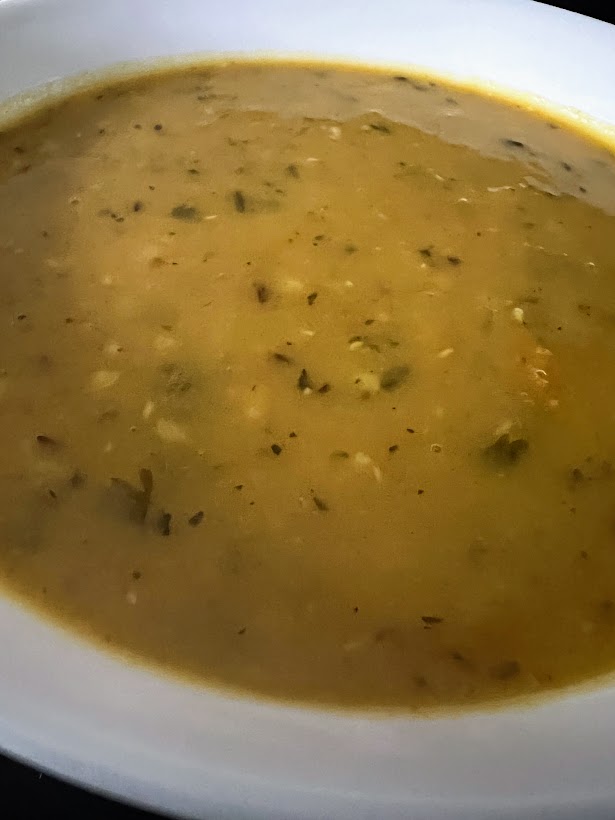
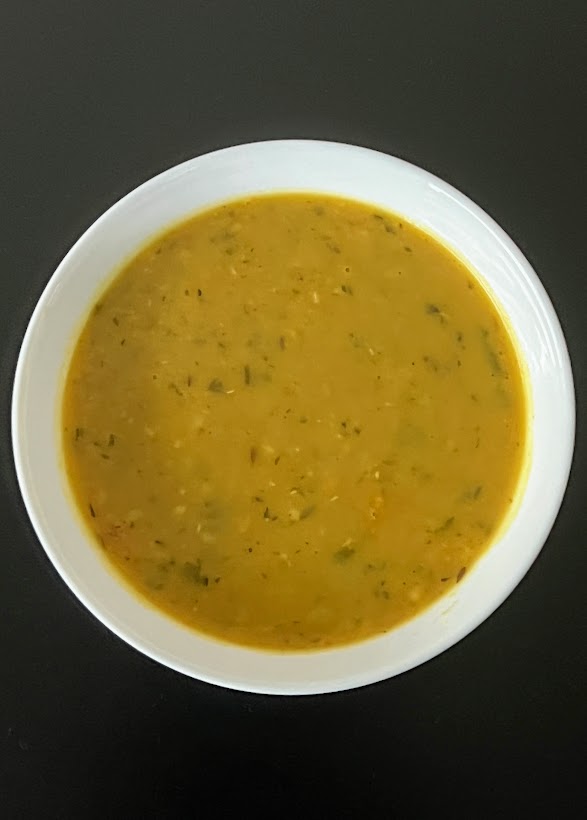
In a vegetarian diet, lentils or dals are a very important source of protein and most Indian households, especially those who follow a vegetarian diet try to incorporate some lentils in their diet daily. But then the problem comes that we end up eating the same three or four types of lentils daily. Fed up, a couple of weeks back, I tried a new recipe which was surprisingly easy to make and very yummy to boot. The addition of yoghurt and milk elevated the recipe and make it special.
Dal Darbari

Ingredients:

  • ½ cup Yellow Moong Dal
  • ½ cup Masoor Dal or Orange Dal
  • 2 medium-sized onions, finely chopped
  • 2 medium-sized tomatoes, finely chopped
  • 1 tsp cumin seeds
  • 1 tbsp ghee
  • ½ tsp green chilli paste or 1 finely chopped green chilli
  • ¼ tsp ginger paste or 1 inch finely chopped ginger
  • ½ tsp turmeric powder
  • 2 to 3 tsp red chilli powder
  • ½ tsp garam masala Powder
  • 1 tbsp kasuri methi
  • 3 tbsp beaten yoghurt
  • 3 tbsp milk (either skimmed or full cream)
  • Salt to taste
  • 1-2 tbsp finely chopped coriander leaves

Method:

  • Wash and soak masoor and moong dal in warm water for about 20 minutes.
  • After that, add half the turmeric powder and pressure cook the dals for about 3-5 whistles until the dals are very soft and mushy. This can also be done on the stovetop.
  • When the cooker has cooled down, open it and whisk the dals until they become a homogenous mass.
  • In a pan, heat half the ghee and add in the cumin seeds and let them splutter a bit.
  • Now add the green chillies and ginger and saute for a few seconds.
  • Then add the onions and saute till the onions become translucent in colour.
  • Once the onions are translucent, add in the tomatoes and saute till the tomatoes become soft and mushy.
  • At this point, add ½ the red chill powder, the balance turmeric powder, salt and garam masala and saute till the masalas are incorporated.
  • Pour this masala over the cooked and whisked dals and mix well.
  • Add the yoghurt and milk and water to bring it to the desired consistency. Keep it on a slow to medium flame until the dal comes to a rolling boil.
  • In the same pan that you made the masala, heat the balance ghee and once it heats up, crush the kasoori methi in the palms of your hands and add it as well as the remaining red chilli powder and saute for a few seconds before pouring it over the dal.
  • Cover for about 10 minutes before serving so that the flavours get time to infuse.
  • Enjoy with rice or any flatbread

Notes: The recipe called for fresh cream which I substituted with skim milk. It didn’t detract from the taste and you can add in 1-2 tbsp of cream instead of milk.

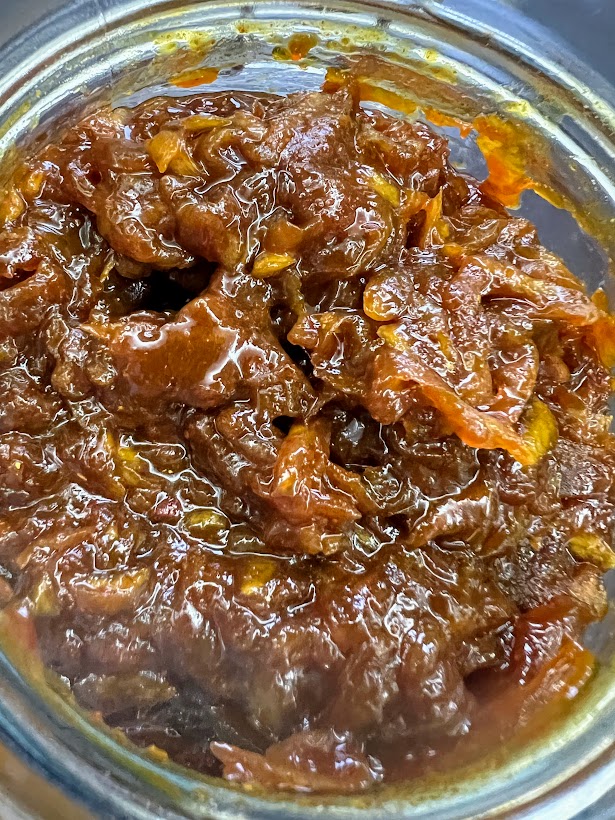
Recipes: Instant Mango Chunda

If it’s summer, then it’s time for pickles. Everyone has their favourite type of pickle and while I enjoy a good lemon or mixed pickle, any mango pickle is by far my favourite. If given a choice, I would pick mango over any other pickle. The Mango Chunda is also one I enjoy, but it is S’ favourite pickle. Every trip from India, whether it is us or my parents, had to involve at least a few bottles of the chunda.

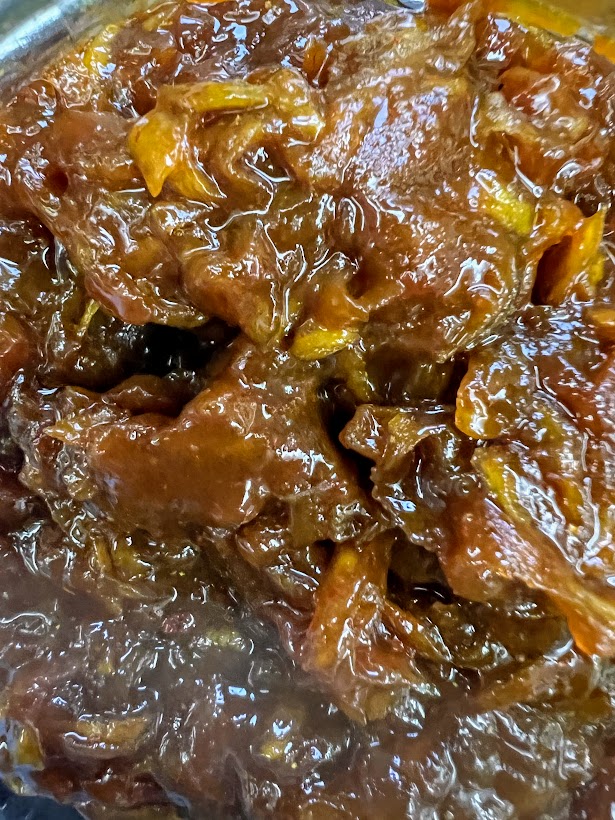
This pickle is from the western state of Gujarat and does not involve any cooking. The pickle is made from shredded mangoes and is sweet and sour, with a hint of spice and is made by keeping all the ingredients in the sun for up to a month until the sun cooks the pickle. But because we had not been to India for a while, one day, I found the instant version of the pickle and decided to make it.  It was an instant hit, so I decided to post it here, so I can reference it later.

Instant Mango Chunda

Ingredients:

  • 2 large green mangoes
  • 2 cups sugar
  • 1 tsp salt
  • ½ tsp turmeric powder
  • 2 tsp red chilli powder
  • 2 tsp roasted cumin powder

Method:

  • Rinse, dry and peel the mangoes. Grate them and keep them aside.
  • Measure the grated mangoes and put them in a large pan
  • In the same pan, for 2 cups of grated mangoes, add 2 cups of sugar
  • Add the salt and turmeric powder and mix well.
  • Switch on the gas and let the sugar dissolve. Once the sugar dissolves, reduce the flame to low and let the sugar syrup cook to single string consistency. This should usually take about 6-8 minutes and you will know when it reaches one string consistency when you take a drop of the syrup and your index finger and thumb and move the fingers apart and you can see a string forming.
  • At this point, and this is very important, switch off the flame and immediately transfer the mixture to another bowl. Don’t forget to do this step. If you don’t transfer it immediately, the chunda will become hard. I did this the first time I made this recipe and since then have learnt my lesson.
  • Let the mango sugar mixture cool down completely.
  • Once it is cooled down, add the chilli powder and cumin powder and mix thoroughly.
  • Store in a dry glass or ceramic container and it will remain fresh for up to a year. Though if your family is like mine, it won’t last that long.

Notes: I used country sugar instead of white sugar, hence the dark colour. You can also substitute brown sugar or jaggery. Also I used the same quantity of sugar to mangoes, but if your mangoes are especially sour, you may need to increase the sugar to compensate for the sourness. You can also increase the chilli powder according to taste.

Recipes: Gazpacho Inspired Tomato Corn Soup

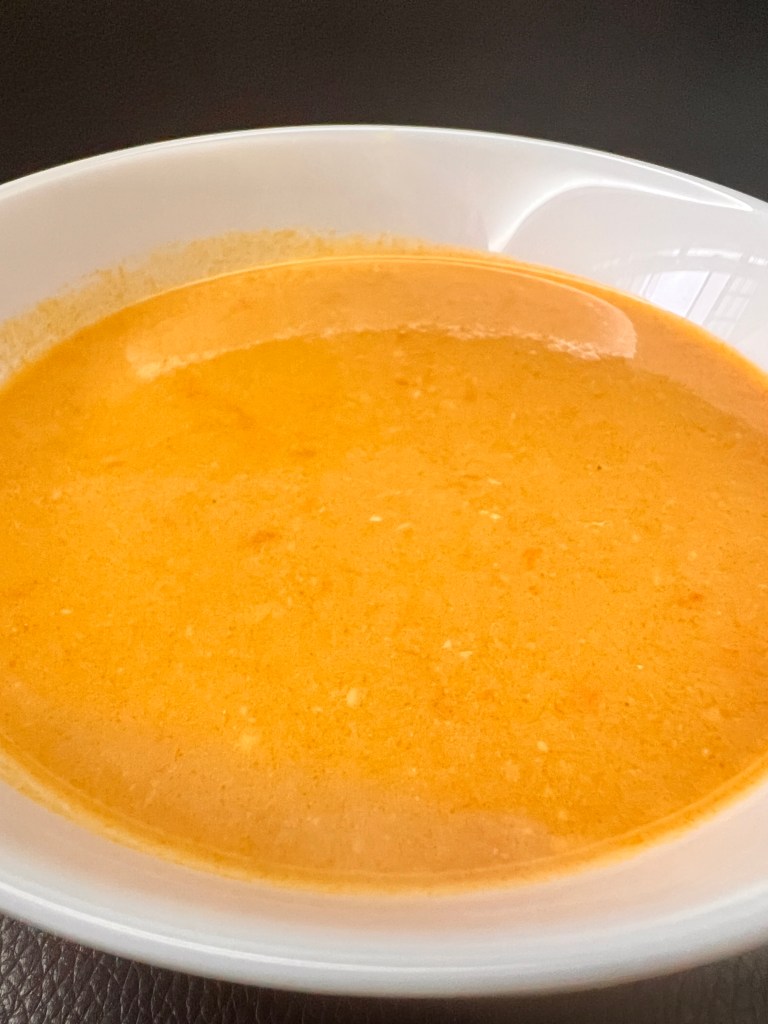
It had been so hot in Singapore in summer that anything hot was anathema and so I was looking for some cold soups I could make ahead of time. I wanted to make a cold Gazpacho soup, but then realised I didn’t have all the ingredients with me. So I improvised and made this soup. It was well-received, though S didn’t like it. I also realised that BB didn’t like it cold, so I heated it and he liked it then. But this can be made and served both cold and warm.

Gazpacho Inspired Tomato Corn Soup

Ingredients:

  • 8-10 medium-sized red tomatoes
  • 1 small cup of frozen sweet corn
  • 4-5 cloves of garlic
  • inch piece ginger
  • 1 medium-sized onion
  • 2-3 green chillies
  • 2 tbsp (or more) extra virgin olive oil
  • Salt to taste
  • Pepper to taste

Method:

  • Defrost the corn and cook it in the microwave for about 6-8 minutes, or until it becomes tender
  • Chop the tomatoes and keep them aside
  • Peel the garlic and the ginger and keep aside. Chop the green chillies and keep them aside.
  • Peel and chop the onions and keep them aside.
  • Drain the sweet corn and in a blender, blend the tomatoes, sweet corn, onion, green chillies, ginger, and garlic. Blend first into a chunky paste and then add in the olive oil and blend to a fine paste. You may add some water if you need it while blending.
  • Using a strainer, strain the soup into a pan and reblend till everything is a fine paste.
  • Add salt and pepper and if you want, you can pop this in the fridge and have it as a cold soup.
  • If you like BB didn’t like the raw taste, add some water and boil the soup till it starts to come to a nice rolling boil and let it boil for about 5-8 minutes or until the raw taste goes away.
  • Drink it hot or cold, either way, it is delicious!

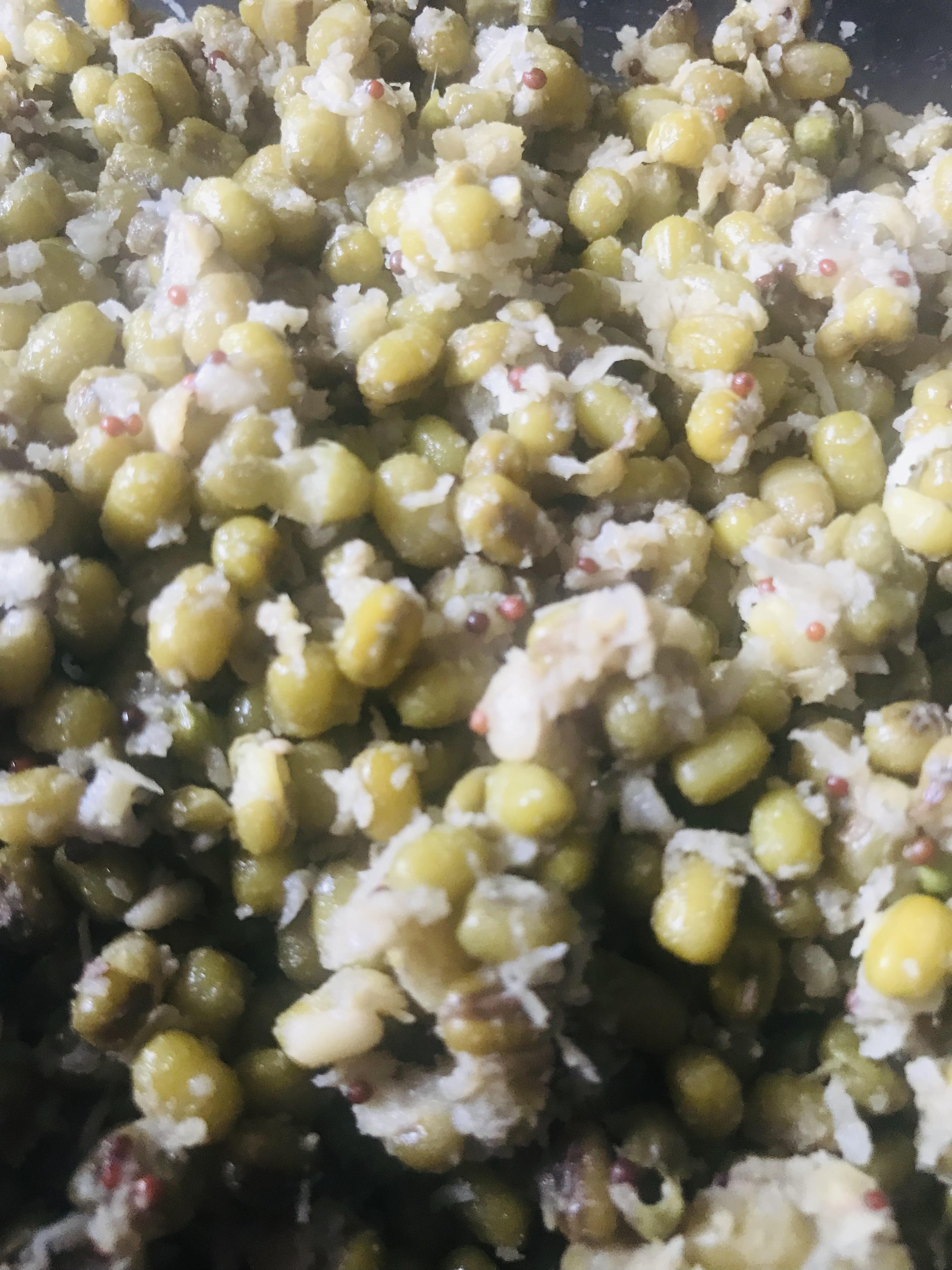
Recipe: Green Moong Sundal

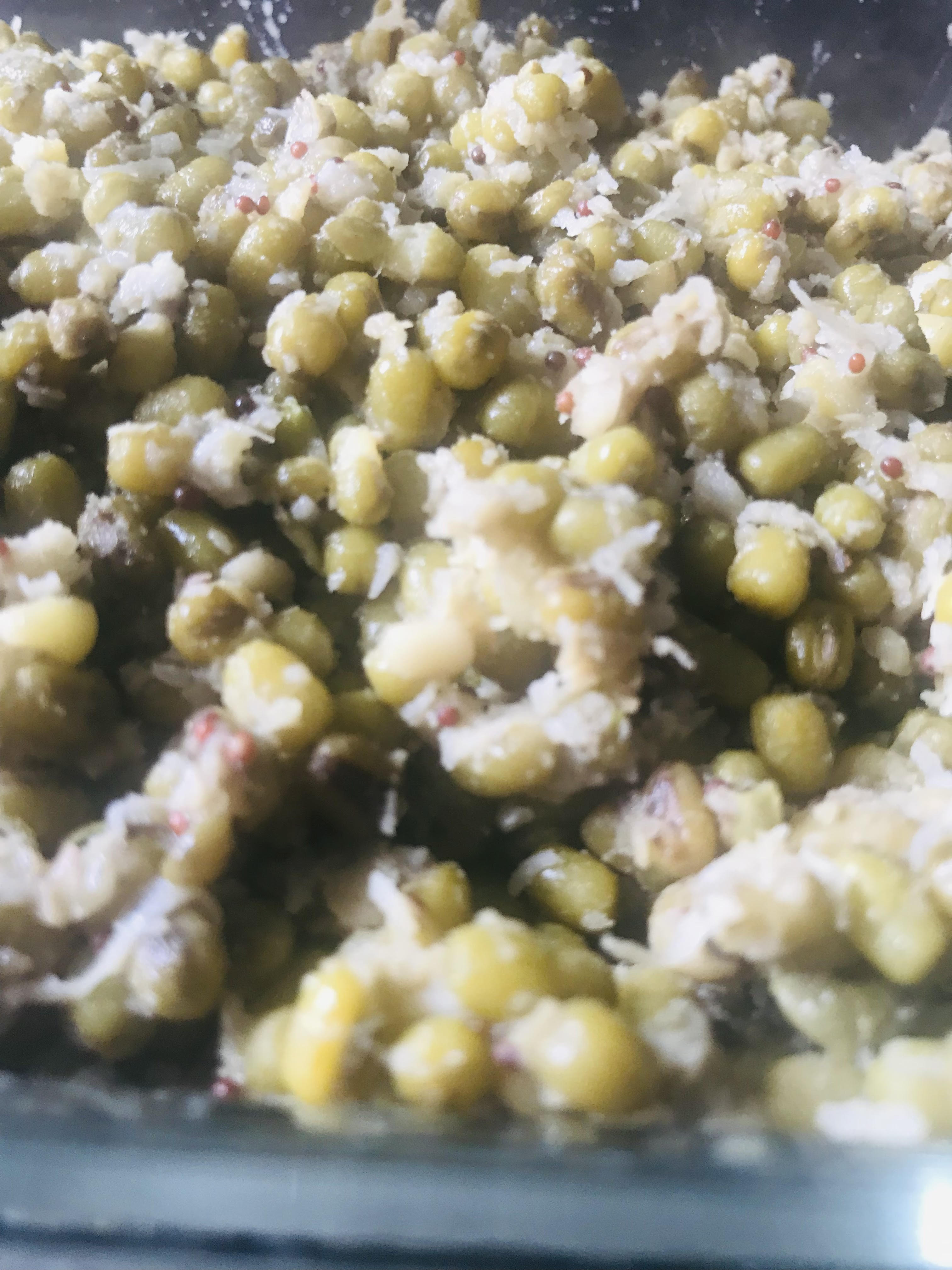
Continuing on my Navaratri Sundal recipes, this is a super easy recipe that barely took any time to make. And because there is no soaking involved, this is perfect for those times when we need to make something quickly. It is also a good evening snack.

Green Moong Sundal

Ingredients:

  • ½ cup green moong dal
  • 1 green chilli, finely chopped
  • 1 tbsp grated coconut
  • 2 tsp oil
  • 1 tsp mustard seeds
  • 5-6 curry leaves
  • 1/8 tsp asafoetida
  • Lemon juice to drizzle to taste
  • Salt to taste
  • Finely chopped coriander leaves to garnish

Method:

  • Soak the green moong dal for about an hour in warm water.
  • After an hour, wash the dal well and keep aside. Heat water in a pan and add a tsp of oil and a bit of salt and add the moong dal. When the water starts to boil, reduce the flame to a low medium and keep stirring in between so that water does not overflow the pan.
  • Keep checking the consistency of the dal being cooked. The dal should be al-dente and neither under not overcooked. To know when the dal is perfectly cooked, take one small piece of the dal and press it with your fingers, if it’s able to be mashed, it’s cooked just right. Once the dal is cooked just right, remove it from the gas and strain it, removing all excess water.
  • Heat another pan and add the balance oil. When the oil heats up, add in the mustard seeds. When the mustard seeds pop, add in the asafoetida. After a couple of seconds, add in the finely chopped green chilli and stir.
  • Add in the drained dal and stir. Add salt and the grated coconut and stir well. Drizzle with lemon juice and garnish with coriander leaves and serve warm or cold.

For more sundal recipes:

Recipes: Potato Halwa

Happy Navratri! Today is the first day of the nine days that are spent in prayer, contemplation, and celebrating women.

Last year during Navratri, I wanted to make a different sweet each day as an offering to the Goddess. One of the days, when I didn’t know what to make and had some boiled potatoes and sweet potatoes in the fridge, I made this recipe which I found online. Usually only made from potatoes, I added sweet potatoes to the mix and the result was a super delicious halwa, which nobody could believe was made from potatoes!

This recipe is slightly heavier during the summer months because of the carb and starch content in the potatoes and so is apt for winters. Also, because it is heavy, you can make it if you are fasting as potatoes are the quintessential fasting vegetable.

Potato Halwa

Ingredients:

  • 3 medium-sized potatoes, boiled, peeled, and mashed
  • 1 medium-sized sweet potato, boiled, peeled, and mashed
  • ½ cup milk
  • 1/3 to ½ cup sugar according to taste
  • ½ teaspoon cardamom powder
  • 4 tbsp ghee
  • A generous pinch of saffron
  • 2 tbsp chopped mixed nuts like cashews, almonds, and pistachios
  • 1 tsp raisins

Method:

  • Take the saffron in a small bowl and add 1 tbsp warm milk to it let the saffron dissolve. You may need to stir it a bit or even cook it in the microwave in 30-second increments.
  • In a small pan, with 1 tsp ghee, fry the mixed nuts and raisins and keep aside. You can also dry roast them as I did to make the recipe slightly healthy. Keep aside.
  • Heat ghee in a pan and when the ghee heats up, add the mashed potatoes.
  • Sauté on low heat for about 5-6 minutes until the potatoes start to change in colour and start becoming golden brown.
  • Add in the milk, sugar, cardamom powder and saffron and mix well to combine. The sugar will start to melt and the mixture becomes watery. Make sure you stir well that there are no lumps in this mixture.
  • Stir continuously until the halwa turns dry again and the ghee starts oozing out.
  • Add half the chopped nuts and raisins and mix well.
  • Cook for another minute and switch off the flame.
  • Serve warm garnished with the remaining nuts and raisins.
  • This dish is best served warm, so if you are planning to make it ahead of time, just warm it in the microwave or the stove and serve.