Recipes: Black Chana Chaat

Also known as Kala Chana Chaat, Black Chana Chaat is a nutritious and flavourful salad made from black chickpeas, fresh vegetables, and spices. Incorporating black chana into one’s diet offers several health benefits. Black chana is an excellent source of plant-based protein, making it a great option for vegetarians and vegans looking to meet their protein needs. The high fiber content in black chana aids digestion, helps maintain bowel health, and can contribute to weight management by promoting a feeling of fullness. Black chickpeas are rich in essential nutrients such as iron, magnesium, folate, and antioxidants. These nutrients support overall health and help prevent deficiencies. The fibre and potassium in black chana can help regulate blood pressure levels and lower cholesterol levels, contributing to heart health. Black chana’s low glycemic index helps regulate blood sugar levels, making it beneficial for those with diabetes or looking to manage their blood sugar. 

Ingredients:

  • 1 cup dry black chana or kala chana
  • ½ cup chopped cucumber
  • 1 medium tomato, chopped
  • ½ cup chopped onion
  • 1 medium-sized carrot, grated
  • 1 tbsp chopped coriander leaves
  • ¾ tsp black salt or regular salt to taste
  • ½ tsp chaat masala
  • ½ tsp red chilli powder as per taste
  • 2 tsp lemon juice 
  • ¼ tsp amchur or dried mango powder
  • ¼ tsp roasted cumin powder 
  • 2 tbsp extra virgin olive oil

Method:

  • Rinse the black chana under tap water well and soak them in 3 cups water for at least 6-8 hours or overnight. This helps soften them and reduces cooking time.
  • Drain the soaked chana and place them in a pressure cooker. Add 2.5 cups of water and cook for about 7-8 whistles or until tender. If using an Instant Pot, cook on high pressure for about 25 minutes with natural pressure release.
  • While the chana is cooking, chop the cucumber, tomato, onion, and grate the carrots. 
  • Finely chop the coriander leaves as well.
  • Combine the cooked black chana and chopped vegetables in a large mixing bowl. Add the finely chopped coriander leaves. 
  • In another smaller bowl, thoroughly mix the black salt, chaat masala, red chilli powder, amchur powder, cumin powder, lemon juice, and olive oil. 
  • Gently toss all the ingredients together until well-mixed. Taste and adjust seasoning if necessary.
  • Serve immediately as a refreshing snack or as a salad.
Recipes: Kosamali Salad

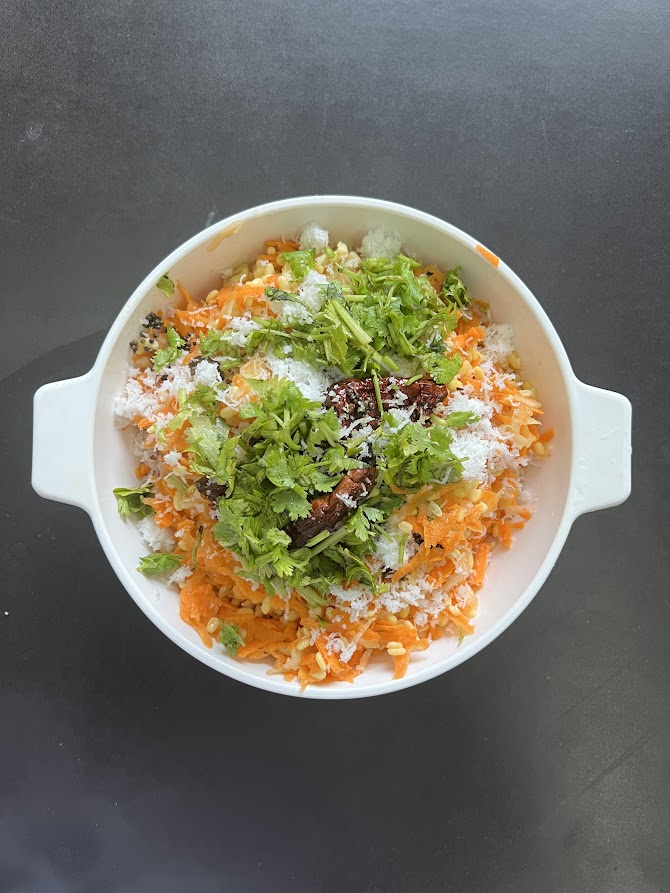
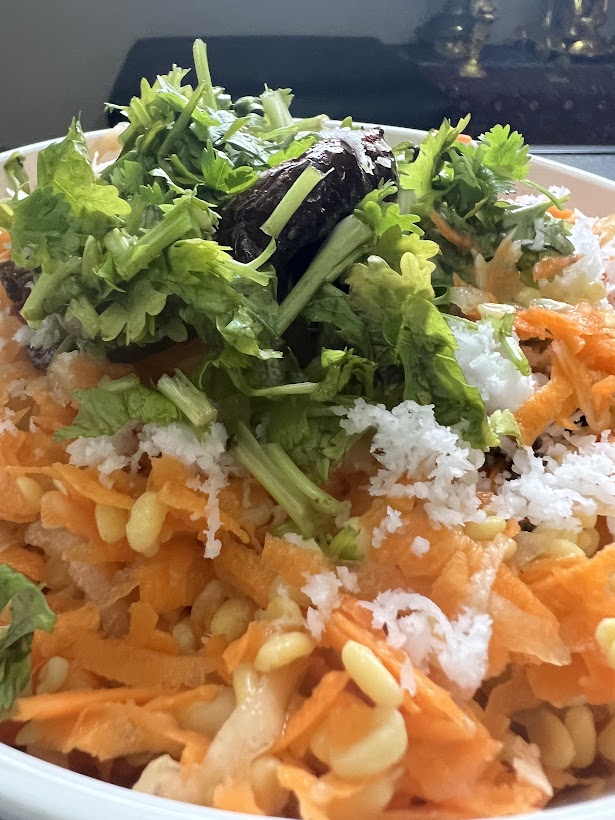
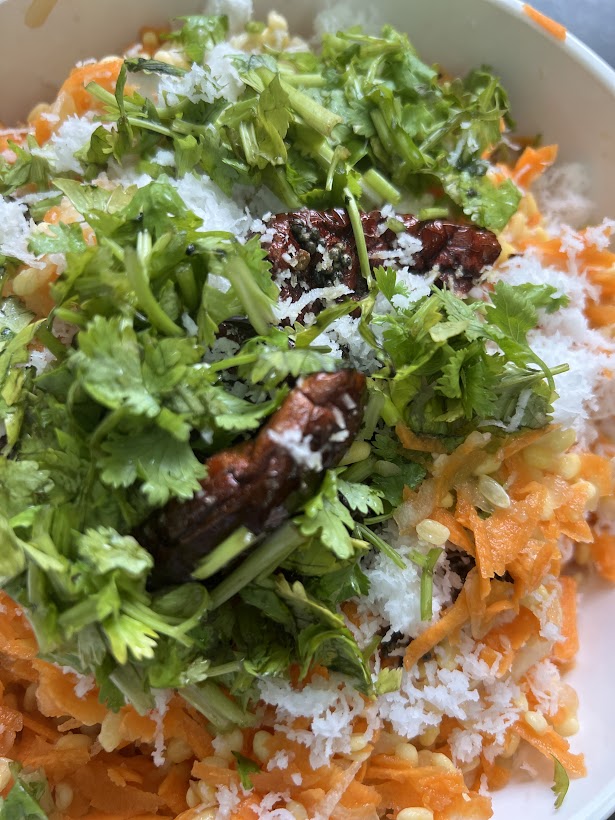
Also known as Koshambari, Kosamalli is a no-cook protein-rich salad that is made as a neividhyam for Rama Navami and also served in certain Tamil Brahmin weddings. It’s a super easy recipe to make, but one which I have never made. So in April, during the Tamil New Year, since I had my mother with me, I learned how to make it from her. And since it has been super hot in Singapore (no surprise there, right?), I also added in some raw mangoes which added a nice tinge of sourness to the salad.

Kosamali Salad

Ingredients:

  • ½ cup grated carrots
  • ½ cup grated cucumber
  • ¼ cup grated raw mango
  • ¼ cup yellow moong dal
  • 6-7 tbsp fresh grated coconut
  • 1 tsp oil or ghee
  • ½ tsp mustard seeds
  • 1/8 tsp asafoetida
  • 2 dried red chillies, broken
  • 4-6 curry leaves
  • 1 tbsp chopped coriander leaves
  • Salt as required
  • 1 tsp lemon juice

Method:

  • Soak the yellow moong dal in a pan in hot water for about 30 mins, then drain completely and keep aside. You can also soak it in normal tap water for about 2 hours and then drain and keep aside. Just make sure when you drain it, all the water is completely drained.
  • In a large bowl, add the drained moong dal, grated carrots, grated mangoes and grated cucumbers and lemon juice and mix well.
  • In a small skillet, add the oil or ghee and when the oil or ghee warms up, add in the mustard seeds and let them pop. Then add the curry leaves and let them splutter for a bit.
  • Then add the dried red chillies, and asafoetida and let it cook for a couple of seconds.
  • Switch off the flame and add the tempering to the mixed dal and vegetables.
  • Now add in the grated coconut and the finely chopped coriander leaves to the salad and cover and keep aside for at least 10 minutes.
  • If you are eating the salad immediately, then add in the salt and mix well and serve.
  • If this salad is meant to be eaten later, or you plan to chill it for a while, add the salt just before serving otherwise the cucumber will start to ooze water.

This was a super delicious salad and will make a good addition to our salad repertoire.

Recipes: Roasted Root Vegetables and Couscous Salad with Feta Cheese

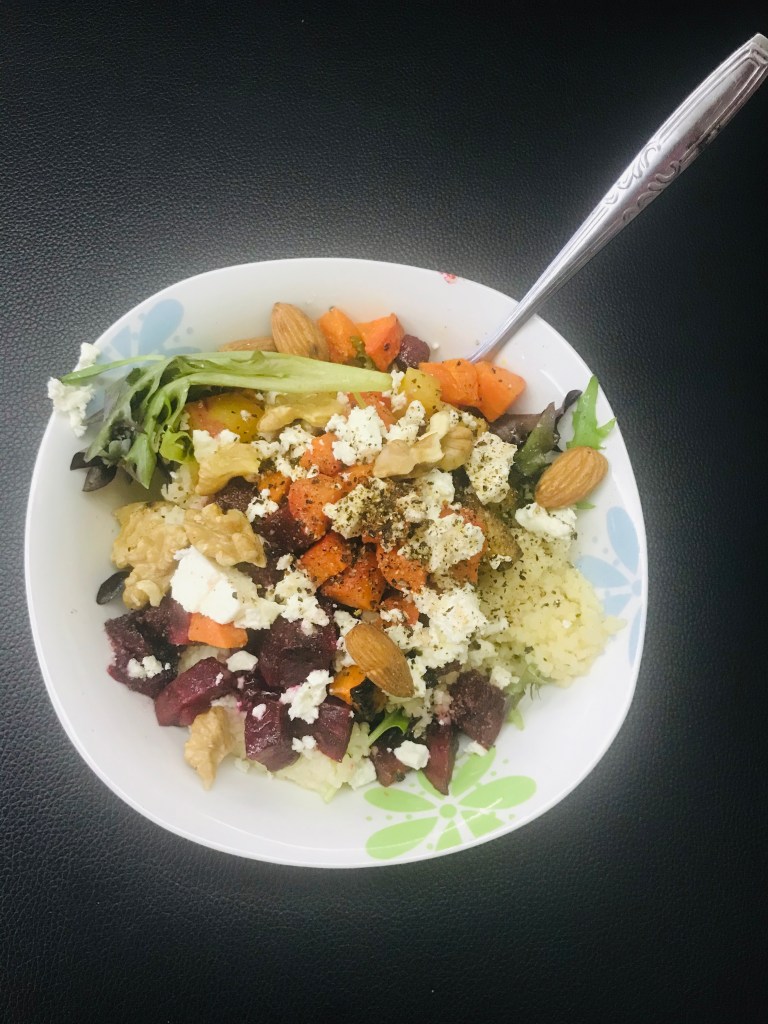
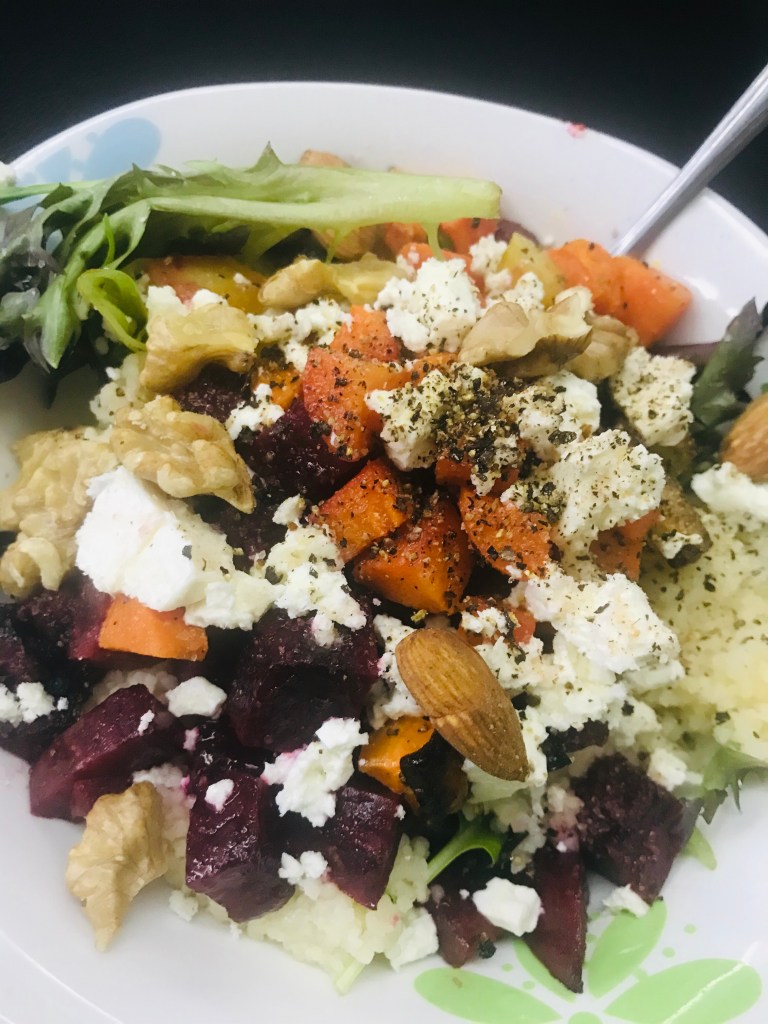
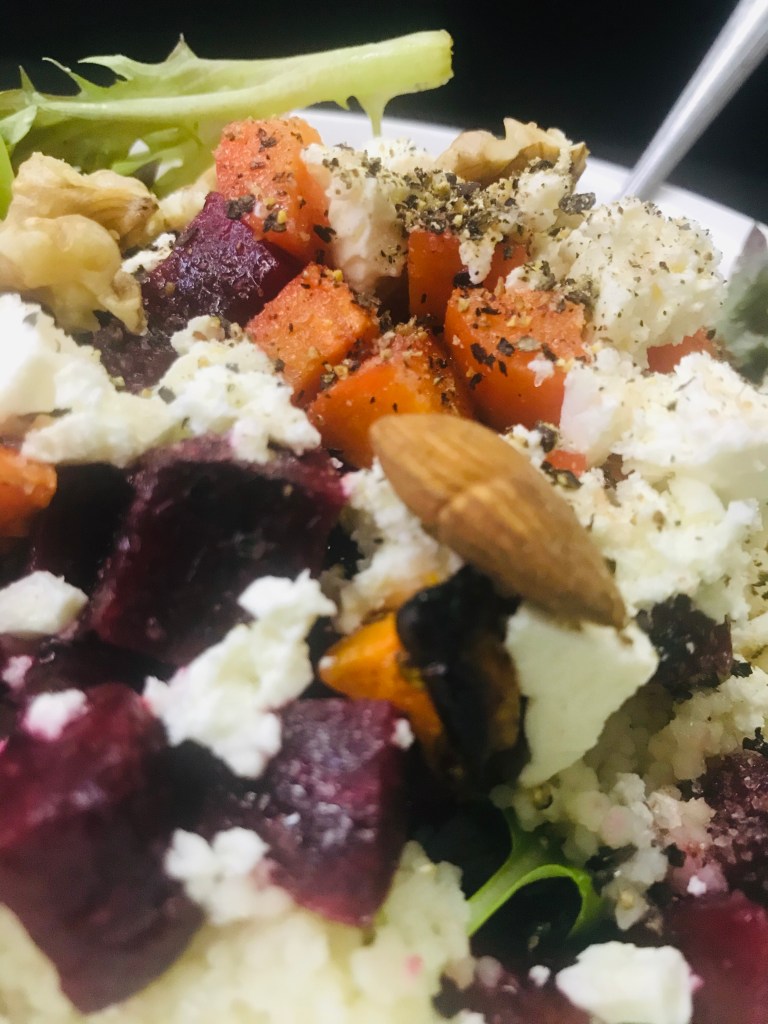
A few weeks back, fed up with making the same type of food all the time, I decided to look around to see if there was something I could make. Even if S and the children didn’t mind eating the same kind of food, I was not interested in making the food! I had some beetroots in my fridge plus some couscous and thought of roasting them and combining them together. I looked around and found this recipe by Blondelish which I liked and so decided to adapt. I decided to use more than beets and make this into a root vegetable salad. It was super yummy and exceeded my expectations and this is something I will definitely make it again. The addition of the feta cheese elevated the salad and was quite filling because of the couscous.

Roasted Root Vegetables and Couscous Salad with Feta Cheese

Ingredients:
½ cup couscous
2 medium sized beetroots, peeled and chopped into bite-sized pieces
2 medium sized carrots, peeled and chopped into bite-sized pieces
3 medium sized potatoes, peeled and chopped into bite-sized pieces
1 small bag of baby greens
1 small feta cheese package
Salt to taste
Pepper to taste
3-4 tbsp lemon juice
2-3 tbsp honey
2-3 tbsp extra virgin olive oil
10-12 raw almonds
10-12 raw walnuts

Method:
Pour the couscous in a large pot and heat water in a kettle and when the water is boiling, cover the couscous with the boiling water, cover and keep for about 20-30 minutes. After the couscous has absorbed all the water, fluff it with a fork and lightly salt and pepper to it. I would also recommend pouring water which has salt already added to it so the couscous gets lightly salted.
In an oven-safe tray, make sections with aluminium foil, so that the beetroot does not stain the other vegetables.
In a small bowl, combine the salt, pepper, honey, olive oil and lemon juice and whisk until smooth to make the dressing. Pour the dressing over the vegetables individually and spread them evenly in the tray.
Roast the vegetables for about 30 minutes at 220 degrees celcius, stirring inbetween to make sure the vegetables are evenly cooked.
Wash and dry the salad greens and keep aside. Chop the feta cheese Into small pieces or crumble them in a plate and keep aside.
In a small dry pan, dry roast some walnuts and almonds and keep aside.
In a large serving bowl, layer the salad greens as the bottommost layer. On top of this, layer the couscous and then the roasted vegetables.
Pour any leftover dressing on top of this and check for seasoning.
Either crumble the feta cheese over the vegetables or cut the cheese into tiny pieces and sprinkle over the salad. Add the almonds and walnuts and serve.

This was seriously yummy and the children also loved it. I have already started getting requests to make this again.

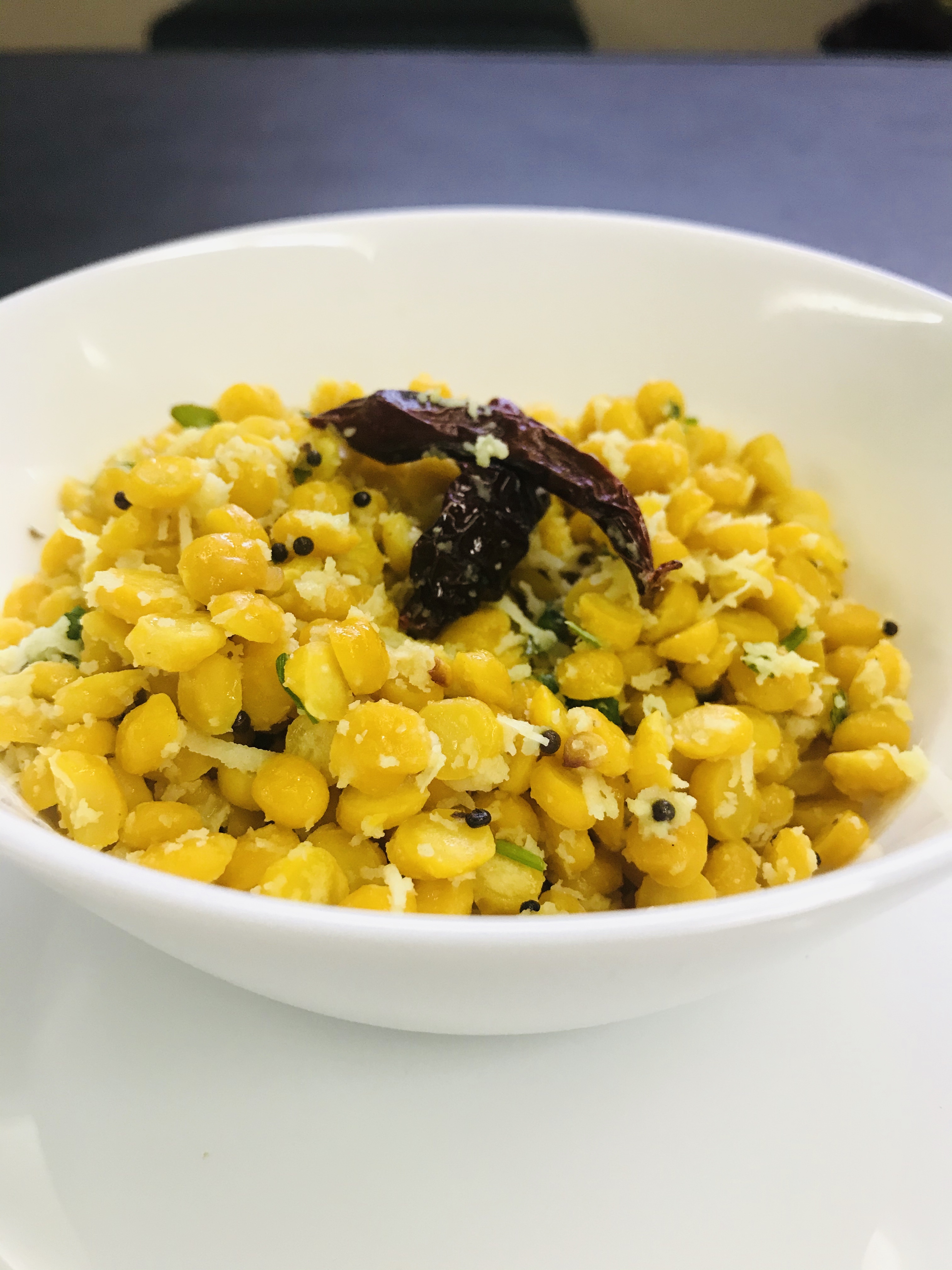
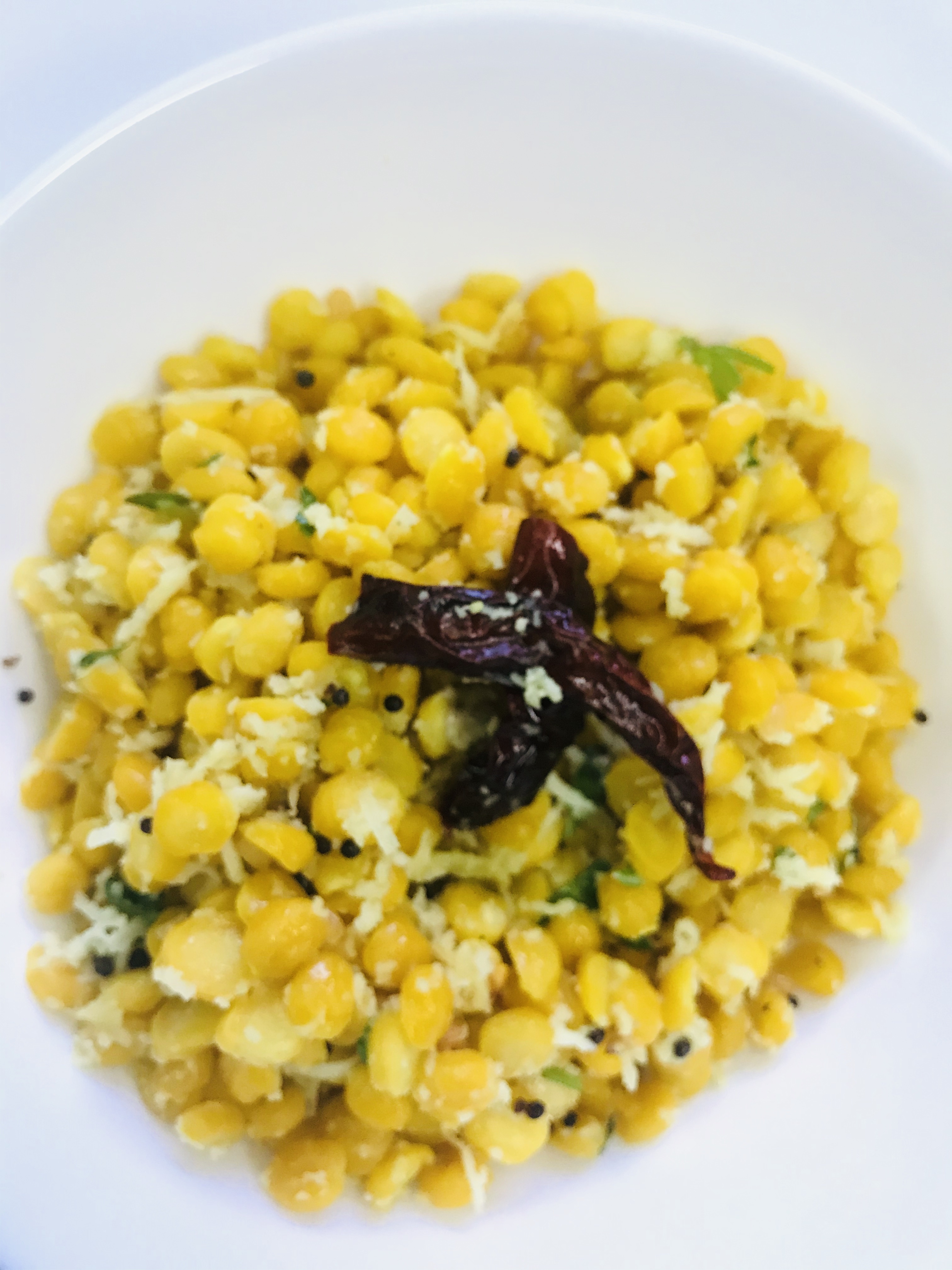
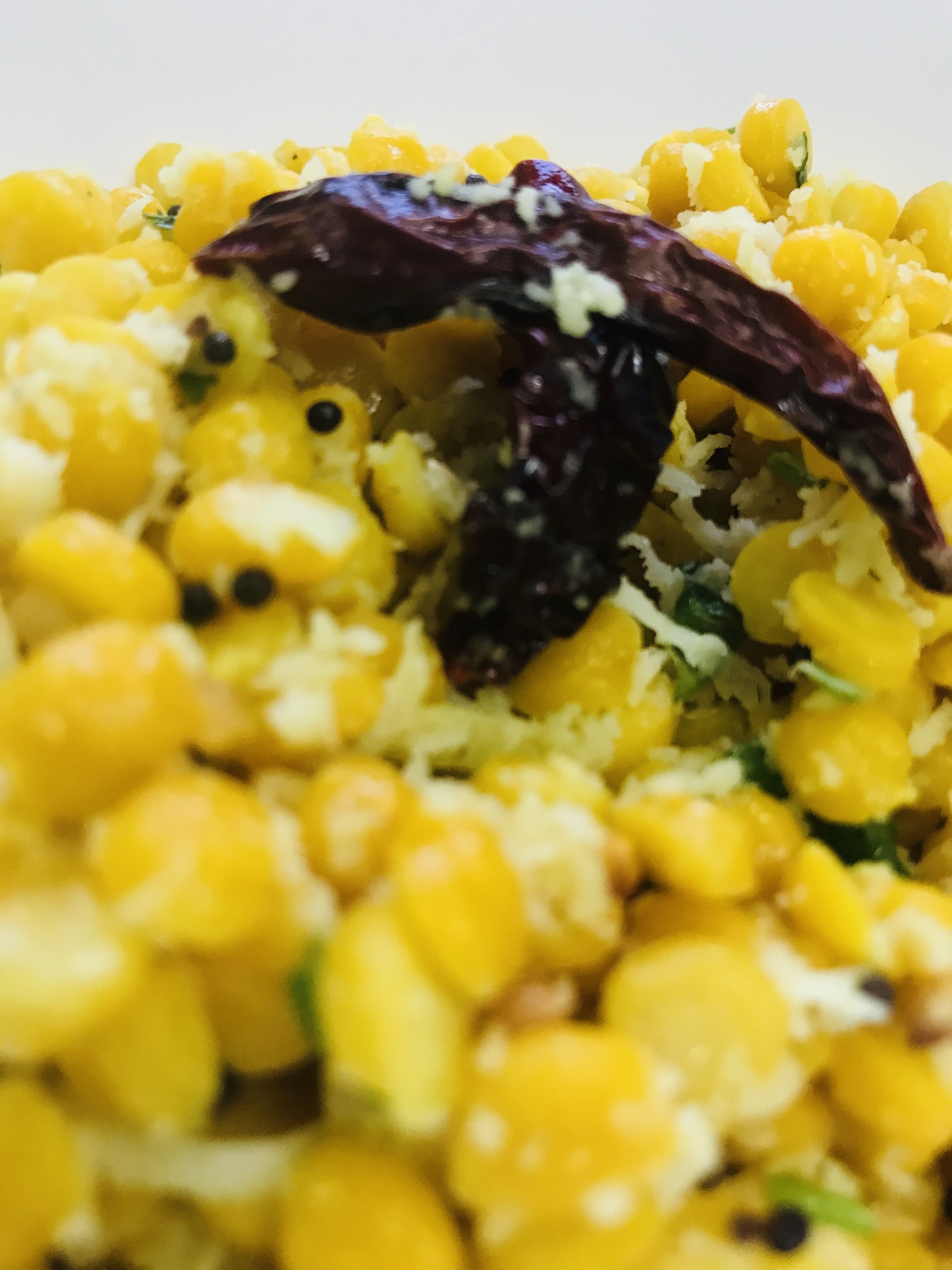
Navratri Recipes: Chana Dal Sundal

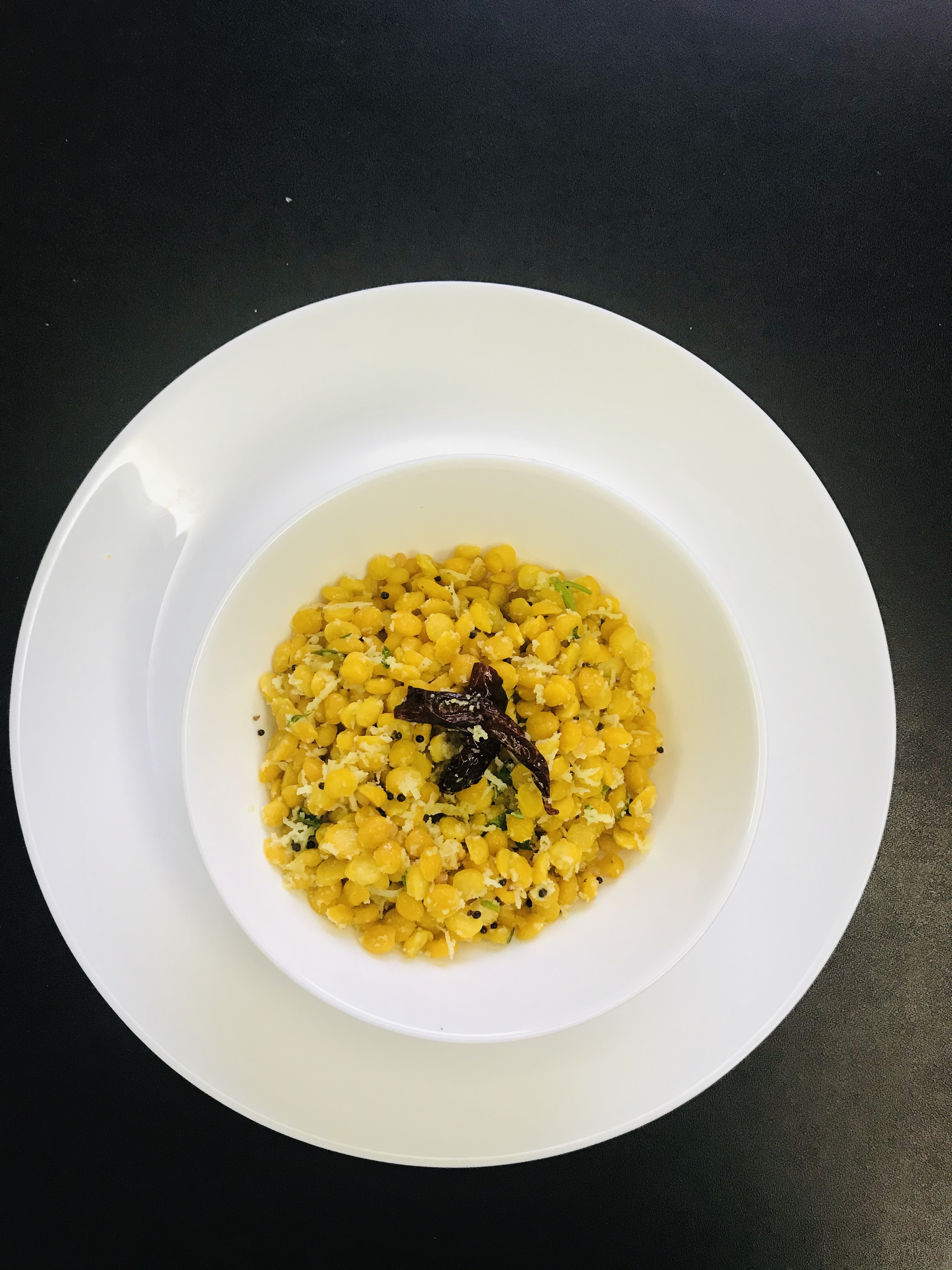
Since it’s the festival of Navratri going on, I am making some kind of Sundal every day as an offering or neividhyam to the Goddess. Today’s Sundal is a simple and delicious Sundal made out of Chana Dal. This is easy to make and took me less than 10 minutes to make (without taking into account the soak time). This is a definite keeper for me.

Chana Dal Sundal

Ingredients:

  • 2 cups chana dal
  • 2-3 tbsp grated coconut
  • 1 tbsp oil
  • 1 tsp mustard seeds
  • 1 tsp split urad dal
  • 4-5 curry leaves
  • 3-4 dried red chillies, broken
  • 1/4 tsp turmeric powder
  • 1/4 tsp asafoetida powder
  • 2 tbsp lemon juice
  • 1 tsp grated ginger
  • Salt to taste
  • Coriander leaves to garnish

Method:

  • Soak the chana dal in hot water for 1-2 hours.
  • Cook the chana dal in the same pan it was soaked in with 1/4 tsp turmeric powder, salt and 1/8 tsp asafoetida in enough water on the stove till it gets cooked, but still retains it’s shape. Remove from the flame and drain and cool the chana dal.
  • If you plan to use the pressure cooker, just cook it for a max of 2 whistles. Remove from the cooker when the pressure goes down and drain the chana dal.
  • In another pan, heat the oil and when it warms up, add the mustard seeds and let the seeds pop.
  • Then add the urad dal, remaining asafoetida, curry leaves, grated ginger and broken dried red chillies and stir for a few seconds.
  • Now pour in the drained chana dal and stir well to mix everything for a few minutes.
  • Switch off the flame and add the lemon juice and grated coconut. Garnish with coriander leaves and serve as a salad or side with a south indian meal.

For more Navratri Sundal recipes, here are some other recipes:

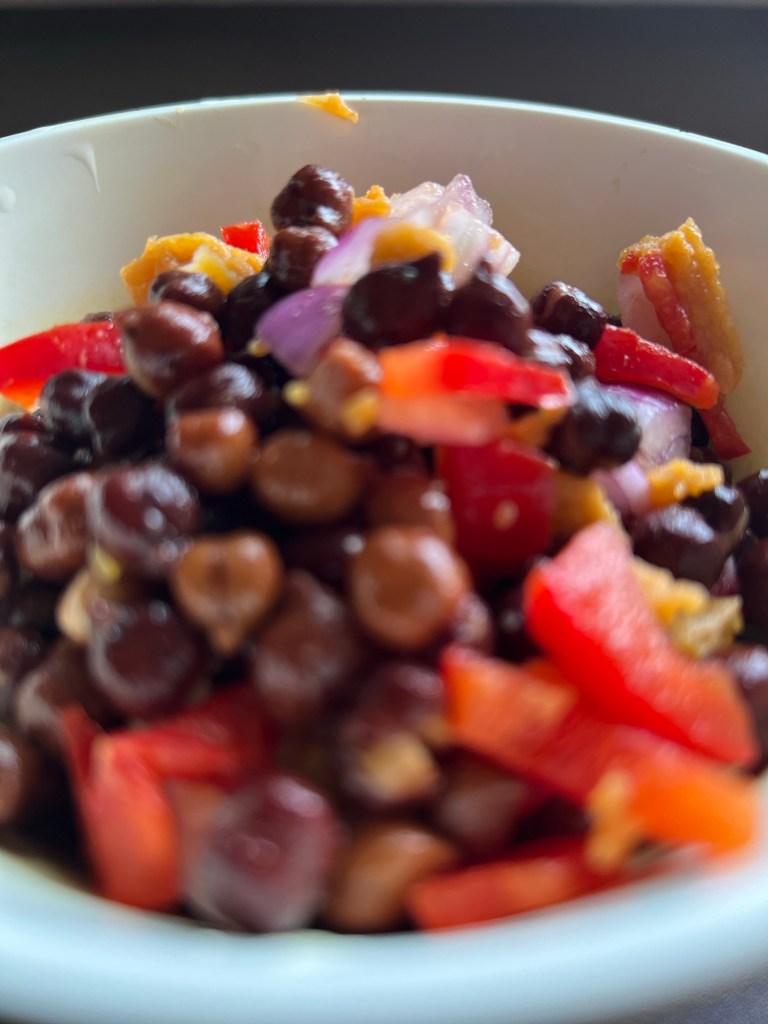
Recipes: Chickpea Salad

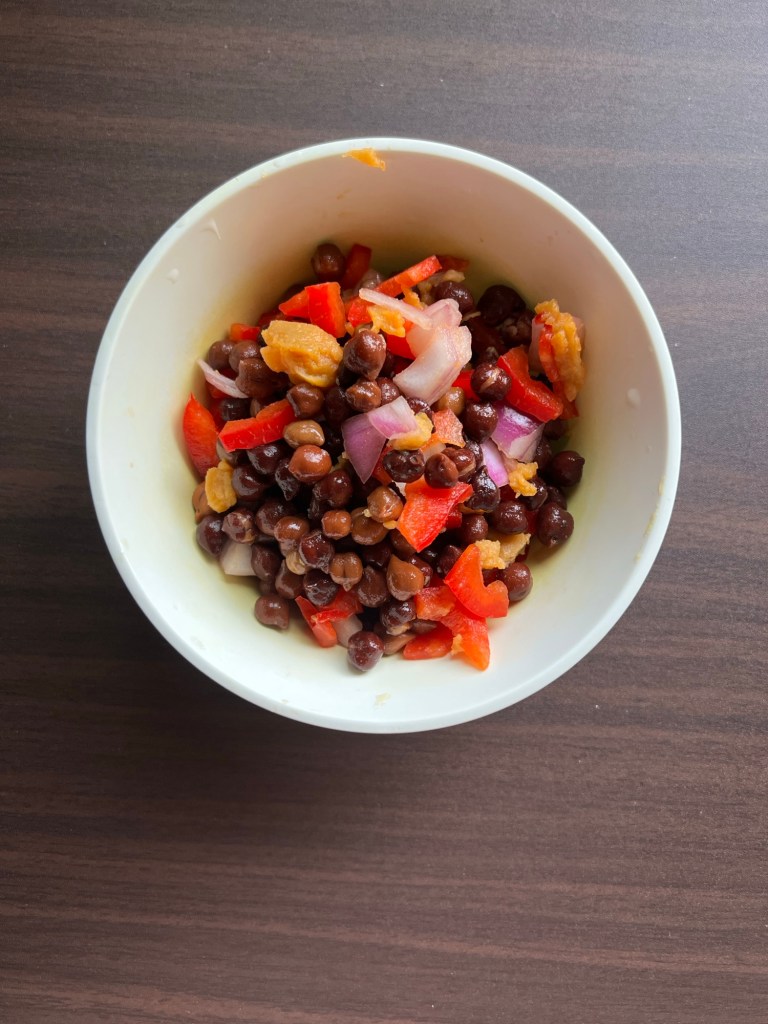
Another salad which was a huge hit at home. Again, a super easy salad which can be put together in less than 10 minutes.

I used black chickpeas in this recipe, but you can use the normal chickpeas. I used the dried chickpeas which I cooked after soaking, but you can use the canned version if that is easier.

Chickpea Salad

Ingredients:

  • 1 cup dried chickpeas (I used black chickpeas in this recipe)
  • 2 medium sized onions, finely chopped
  • 2 medium sized tomatoes, finely chopped
  • 1 medium sized potato, boiled, peeled and finely chopped
  • 1 medium sized red bell pepper, finely chopped
  • 2 tsp lemon juice
  • 2 tbsp finely chopped coriander leaves
  • Salt and pepper to taste

Method:

  • Soak the dried chickpeas in water for 6-8 hours (or overnight), drain and cook in a pressure cooker till the chickpeas are soft and mash when pressed.
  • Drain the chickpeas and let it cool.
  • In a large serving dish, mix together the chickpeas, all the chopped vegetables and coriander leaves and mix well.
  • Add the lemon juice, salt and pepper just before serving, mix well and serve.
  • This is a yummy dish when you eat it cold and is wonderful in warm summer days.