

This is a typical tambram recipe which is made in perhaps every household at some point or the other. But surprisingly I had never made it before and so when I had to make it for the Sumangali pooja, I had to rely on my tambram cooking bible – Cook and See by Meenakshi Ammal. I am reproducing the recipe as it is published. Even though I was cooking it for the first time, it was yummy and I realised, I actually liked it a lot.
This recipe is pretty standard for a kootu, in that it has the vegetable, some dal and a coconut spice blend. What was different was that instead of chillies, the coconut was blended with black peppercorn, which made the difference in taste.
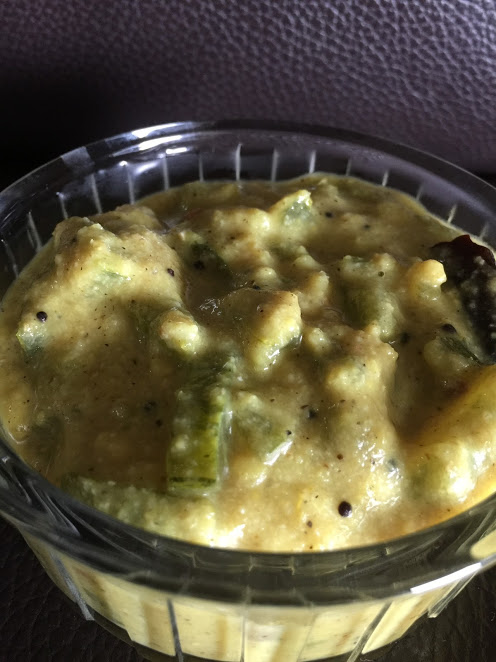
Pudalangai Kootu or Snakegourd Stew
Ingredients:
- 2 snake gourds
- 1 cup moong dal, washed and cooked with a pinch of turmeric powder till it is mushy
- 4-5 tbsps grated coconut
- 1.5 tsps peppercorns
- 1 tsp cumin seeds
- 1/4 tsp turmeric powder
- 1 tsp oil
- 1 tsp mustard seeds
- 1 tsp split urad dal
- 2-3 dried red chillies
- 4-5 curry leaves
- salt to taste
Method:
- To chop the snake gourd, slit it lengthwise first and remove all the seeds and fibre from inside. Then cut it in half lengthwise and then into thin slices horizontally.
- In a pan cook the snake gourd with minimum water, 1/4 tsp turmeric powder and some salt.
- While the snake gourd is cooking, in a blender, blend the coconut, peppercorns and cumin seeds to a fine paste and keep aside.
- When the snake gourd is cooked, but still keeping its shape, add the cooked dal to it and mix gently. Now add the coconut paste and add a bit of water if needed. Kootus are generally thick, but you can adjust the thickness of the dish as you like.
- Check for salt and when it comes to a rolling boil, let it boil for five minutes and switch off the gas.
- In a smaller pan, heat the oil and when it becomes warm, add the mustard seeds. When the seeds crackle, add the urad dal, asafoetida, curry leaves and dried red chillies and let the dal brown and the curry leaves become crisp. Pour this seasoning into the kootu and serve hot as an accompaniment to rice.
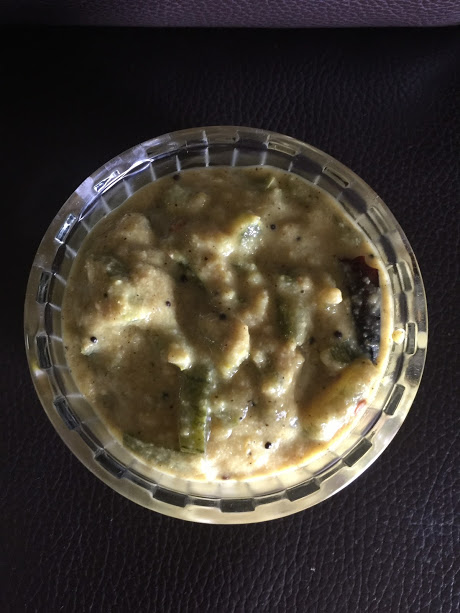

 Indian vegetables are a staple in my house, especially when we have done shopping in the Little India district. And Snake Gourd somehow makes it home every time this happens. Normally I make a stir-fry with this vegetable and honestly, even I was bored with that every single time. I decided to search and see if anything else can be made and found people had experimented with dal with this vegetable. So I also decided to make a dal and did a very simple dal with hardly any seasoning. The result was a delicious dal which would go very well with both rice as well as rotis and flatbreads.
 This is a common vegetable in India and because it’s long and slim (like a snake, it is called Snake Gourd). The vegetable has many health benefits too, including its ability to improve the strength of the immune system, reduce fevers, detoxify the body, improve the digestive processes of the body, increase hydration in the body, treat diabetes, boost the strength and quality of the hair, and aid in weight loss. More information on this vegetable on
  Ingredients:
 Memories and Such