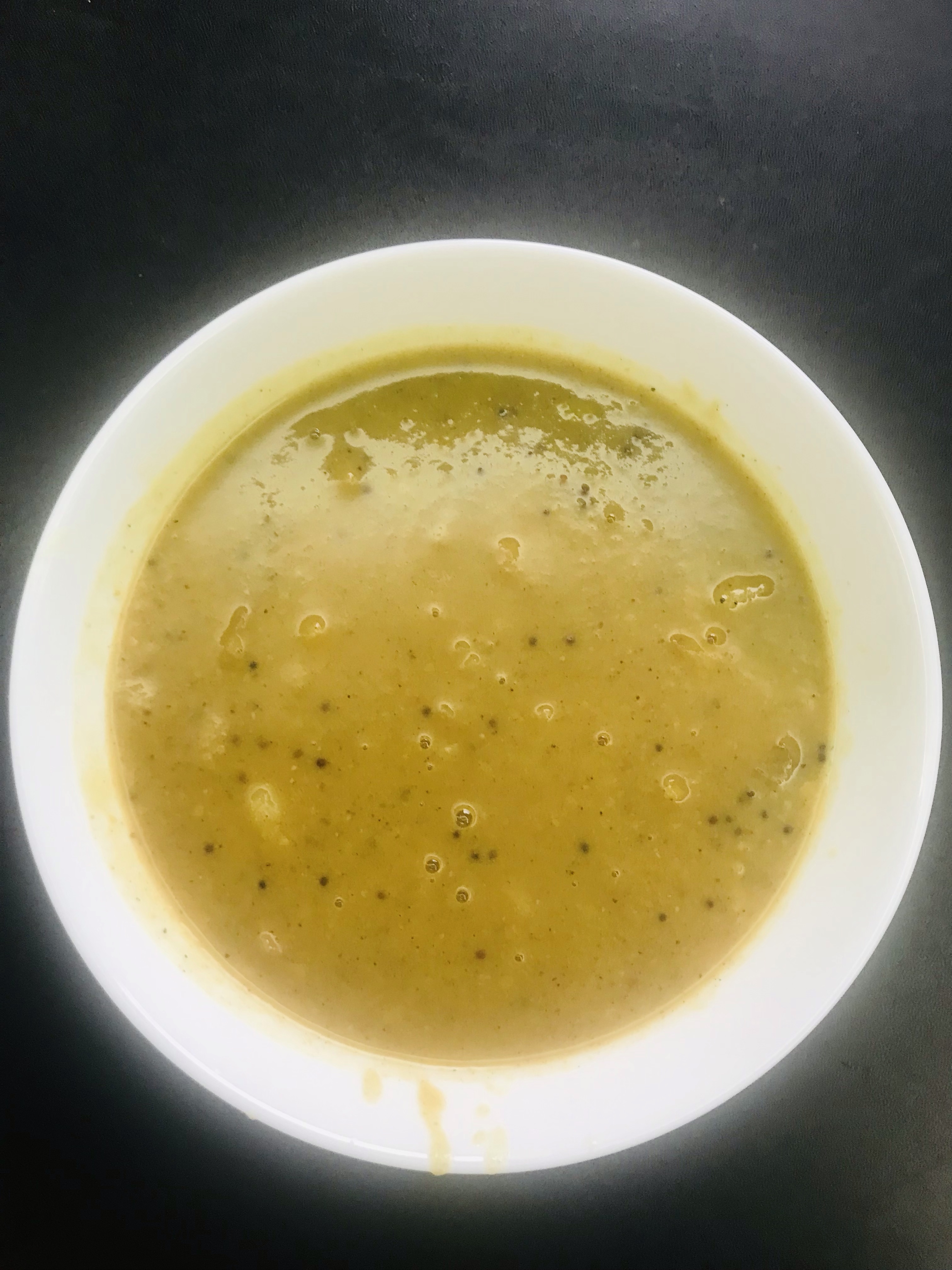
Recipe: Green Moong Sundal

Continuing on my Navaratri Sundal recipes, this is a super easy recipe that barely took any time to make. And because there is no soaking involved, this is perfect for those times when we need to make something quickly. It is also a good evening snack.
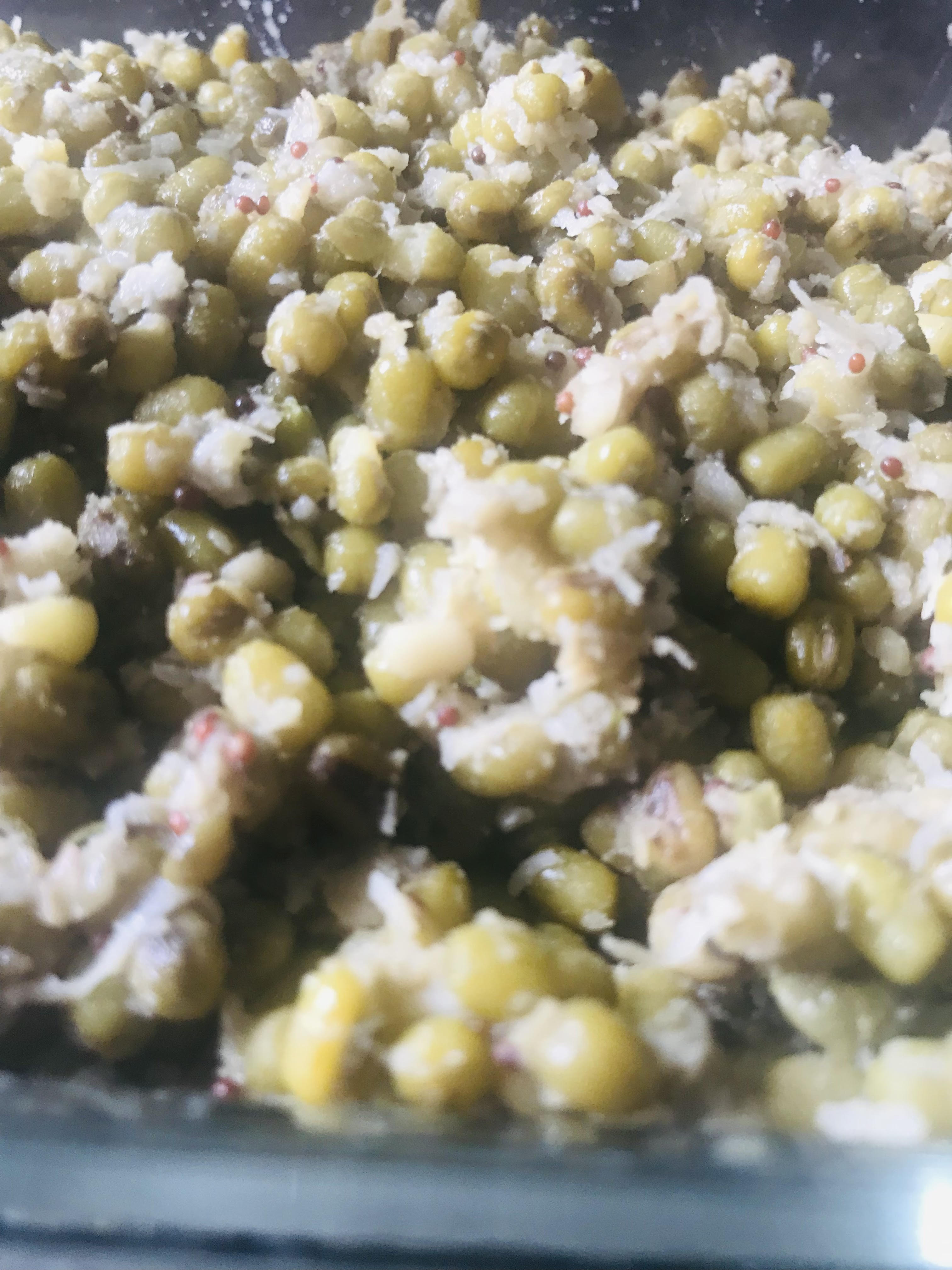
Green Moong Sundal

Ingredients:

  • ½ cup green moong dal
  • 1 green chilli, finely chopped
  • 1 tbsp grated coconut
  • 2 tsp oil
  • 1 tsp mustard seeds
  • 5-6 curry leaves
  • 1/8 tsp asafoetida
  • Lemon juice to drizzle to taste
  • Salt to taste
  • Finely chopped coriander leaves to garnish

Method:

  • Soak the green moong dal for about an hour in warm water.
  • After an hour, wash the dal well and keep aside. Heat water in a pan and add a tsp of oil and a bit of salt and add the moong dal. When the water starts to boil, reduce the flame to a low medium and keep stirring in between so that water does not overflow the pan.
  • Keep checking the consistency of the dal being cooked. The dal should be al-dente and neither under not overcooked. To know when the dal is perfectly cooked, take one small piece of the dal and press it with your fingers, if it’s able to be mashed, it’s cooked just right. Once the dal is cooked just right, remove it from the gas and strain it, removing all excess water.
  • Heat another pan and add the balance oil. When the oil heats up, add in the mustard seeds. When the mustard seeds pop, add in the asafoetida. After a couple of seconds, add in the finely chopped green chilli and stir.
  • Add in the drained dal and stir. Add salt and the grated coconut and stir well. Drizzle with lemon juice and garnish with coriander leaves and serve warm or cold.
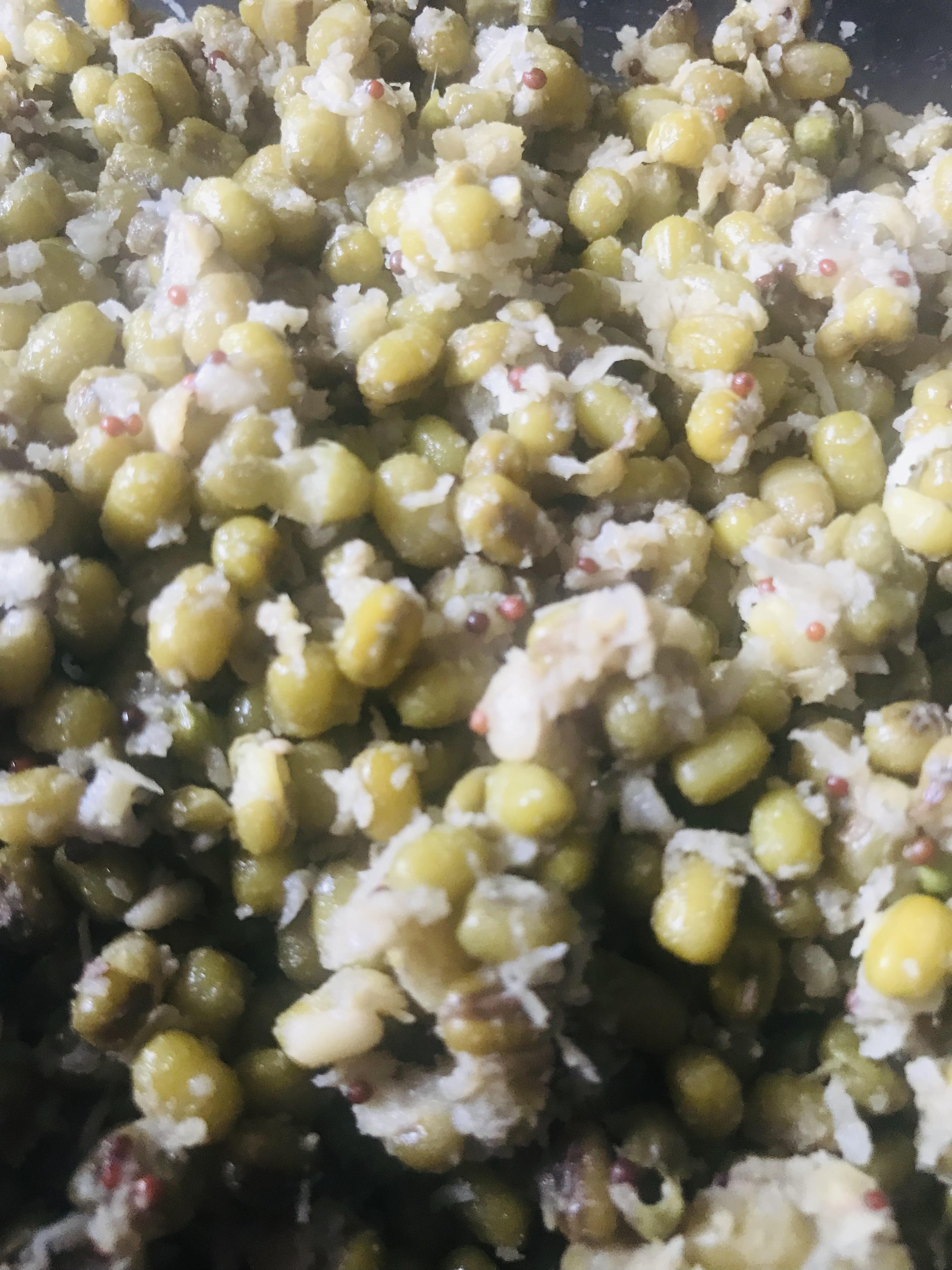
For more sundal recipes:
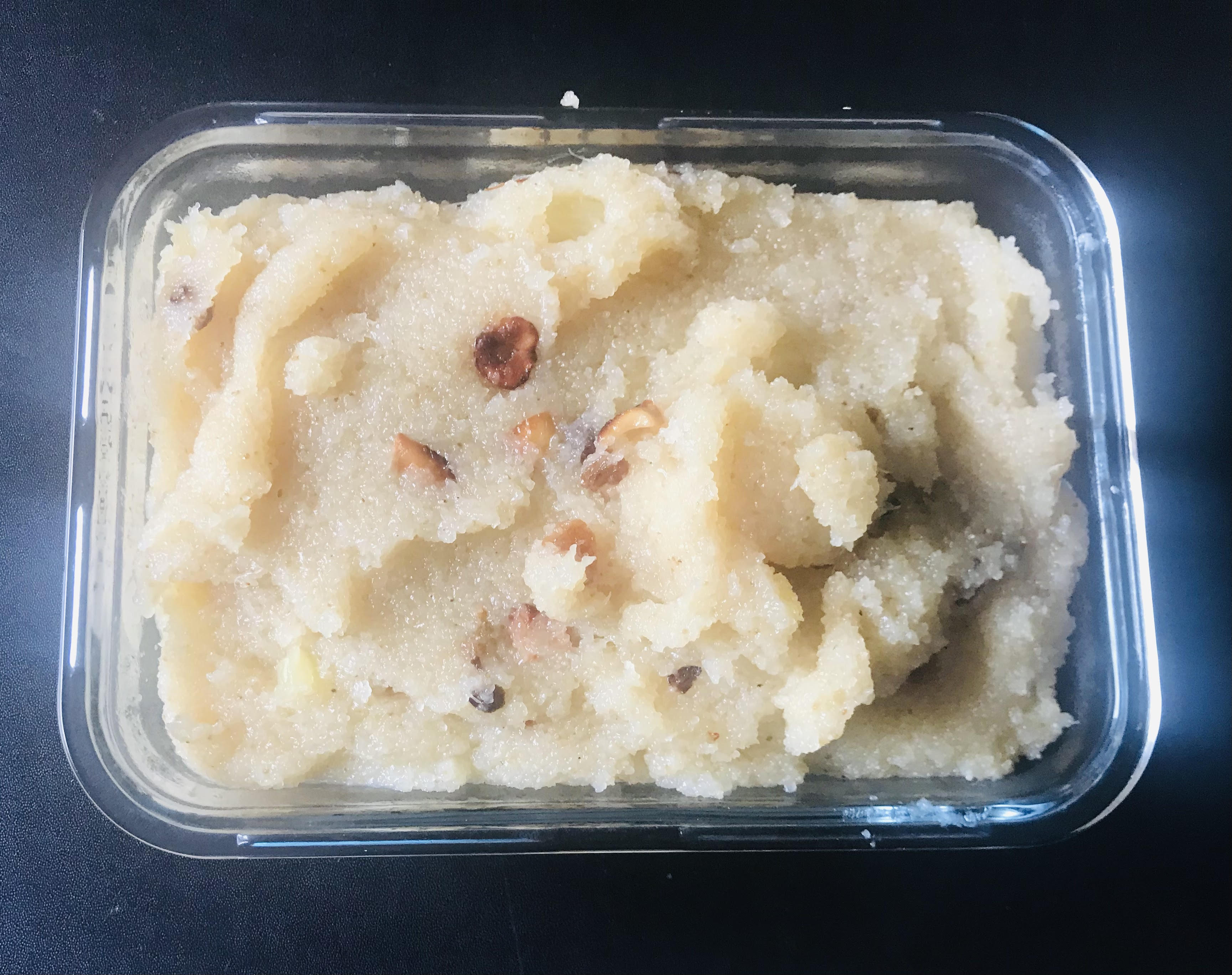
Recipe: Pineapple Halwa or Pineapple Kesari

One of the simplest sweets, a kesari or Halwa is made of semolina or rava and is usually the go-to sweet in many South Indian households. Very simply put, a kesari is a sweet sweet upma.

The usual way to make a Kesari is to make it exactly like a plain upma and substitute salt with sugar. Most people add a bit of orange colour to get the distinctive orange hue. During Navaratri last year, I decided to make this on one of the days and added pineapple to it to make Pineapple Kesari. Because I didn’t have any colour on hand, I used a bit of saffron which is why my Kesari is pale cream or yellow. If orange or yellow colour is used, it would have a bright yellow colour.

Pineapple Kesari

Ingredients:

  • 1 cup semolina or rava, roasted
  • 1 cup sugar
  • 3 cups water
  • 4 tbsp ghee
  • 12-15 cashewnuts
  • 1 tbsp raisins
  • ¼ tsp cardamom powder
  • 1 tin canned pineapple
  • 1-2 drops natural yellow or orange colour
  • 1 large pinch saffron

Method:

  • Dry roast the semolina until it starts to emit an aroma. If it is already pre-roasted, you just need to dry roast it for a couple of minutes.
  • Boil the water in a kettle or pot and keep aside, letting it be boiling until needed.
  • Heat 2 tbsp ghee in the same pan in which the semolina was roasted and when the ghee becomes warm and fry the cashew nuts until they are golden brown. Drain the ghee and remove to a kitchen towel and keep aside.
  • Fry the raisins for a couple of seconds and remove and keep aside.
  • Keep aside some of the pineapple and chop it into tiny pieces and keep aside. Blend the balance pineapple into a fine puree and keep aside.
  • Heat 2 tbsp ghee and fry the pineapple pieces for a few minutes. Add in the puree and saute covered for about two minutes.
  • Now add the sugar and stir well. Add in the water and let the water come to a rolling boil. Add in any colour if you are using as well as the saffron.
  • Now add the roasted semolina and quickly stir so that there no lumps form. Add in the cardamom powder as well as the fried cashew nuts and raisins and stir constantly so that lumps are avoided. A rule of thumb I use is that to make the kesari slightly watery so that it does not harden as it cools. Once the water has been absorbed, cover and serve hot.

Notes:

  • If the kesari is cold, you can warm it slightly before serving as this sweet tastes better warm rather than cold.
  • If you are not using tinned pineapple, you will need to cook the pineapple pieces for a bit and soften it before adding the semolina.

Recipes: Coconut Moong Dal Payasam

Happy New Year!! Here’s wishing you all loads of good fortune, luck and blessings in 2022. May this year bring back all the joy and happiness that we missed over the last two years.

And to start the new year here’s a sweet recipe to start the year on a sweet note.

Sometime back, during the festive season, I was on a call with my mother and we were discussing sweets, specifically the payasam we make during most festivals. I was telling her I was looking to make something new and different from the usual vermicelli or Dal payasam I usually made. She shared with me this recipe, which is simple, does not use milk and is really rich. I made it and it was a huge hit at home with requests to make it again. So I am sharing this with you too.

Coconut Moong Dal Payasam

Ingredients:

  • 1 cup grated coconut
  • 1 tbsp rice
  • 2 tbsp Moong Dal
  • 2 cups Jaggery
  • Water as required
  • 1 tbsp ghee
  • 10-15 cashewnuts
  • 10-15 raisins
  • A pinch of cardamom powder

Method:

  • Dry roast the rice and moong dal until the dal starts to become a golden brown. At this point, remove from the fire and keep aside to cool down.
  • When cool, blend it to a powder and in the same blend, add the grated coconut and with a bit of water, blend it to a smooth paste. Make sure the paste is as smooth as possible.
  • Halve the cashewnuts and Keep aside.
  • In a pan, heat the ghee and fry the cashewnuts to a golden brown colour. Keep aside.
  • In the same pan, fry the raisins till they plump up and keep aside.
  • In the same pan, mix the coconut paste with 3 times as much water and boil the mixture in a low to medium flame.
  • In the meantime, finely chop the jaggery till it comes to about twice as much as the coconut paste. When the coconut water mixture is at a nice rolling boil, add the jaggery and continue to stir so that it does not stick to the bottom of the pan.
  • Continue boiling for about 5 minutes after it reaching a rolling boil and at this point add in the cardamom powder, raisins and cashew nuts.
  • Switch off the flame, let it cool slightly and serve.

It is delicious served hot and cold. Also note that as the payasam cools down, it will also thicken a bit more, so don’t be too worried if it’s thinner than what you expected.

Recipes: Mor Chaar

This recipe is from my memories. My mother used to go to the market and do her rounds of the temple in Matunga about thrice a week from time I can remember. It has stopped now because of COVID, and had reduced to about twice a week a couple of years back, but this used to be the routine all through my growing up years. On those days, she would have to come back home and then make dinner for us. Some days, when time was short, she used to rustle this dish up to go with rice and any leftover stir fry vegetable. An extremely quick recipe, this can be made in less than 10 minutes start to finish. My mother used to add tomatoes to it, which, because of the quick cooking time would be slightly raw and which I hated at that time. So I would make sure I avoided getting any tomatoes in my plate. My sister, on the other hand, loved the tomatoes, so to us, it was a win-win situation. My version does not have any tomatoes, but you can add them if you want. This can also be a version of Kadhi, albeit one without any thickening agent like coconut or chickpea flour.

This dish is prepared across Tamil households and made when you need to make something very quickly. It can also be drunk as a cooling yoghurt based dish when it is hot outside as it will cool the body down. I served this with a carrot thogayal and a vegetable stir-fry for lunch with brown rice.

Mor Chaar

Ingredients:

  • 1 cup yoghurt, thinned to about 2 cups and beaten well
  • Salt to taste
  • 1 tsp oil
  • 1 tsp mustard seeds
  • ¼ tsp fenugreek seeds
  • ¼ tsp asafoetida
  • 5-6 curry leaves
  • ¼ tsp turmeric powder
  • 2-3 dried red chillies
  • Finely chopped coriander leaves to garnish

Method:

  • Whisk the yoghurt to thin it, add salt to taste and keep aside.
  • Heat the oil in a pan and when the oil warms, add the mustard seeds
  • When the mustard seeds pop, add the fenugreek seeds, dried red chillies, asafoetida and curry leaves and let the curry leaves crackle.
  • Add the turmeric powder and stir for a couple of seconds.
  • Now reduce the flame of the gas and pour in the whisked yoghurt, continuously stirring so the yoghurt does not curdle.
  • Keep stirring and whisking the buttermilk and on a low to medium flame, let this come to a nice rolling boil.
  • Boil for a few minutes and switch off. Garnish with coriander leaves and serve hot with rice and a vegetable.

Recipes: Sambar without using Sambar Powder

I usually get my stash of Sambar Powder from my mum who makes it at home, either when we go down to India or she comes to Singapore. But because of travel restrictions in the past 18 months and no travel happening, as expected, my stock of Sambar powder finally finished. I then asked my mother for the recipe to make the powder, but because she told me it was a tedious process, I kept putting it off. And then last month, I needed to make Sambar and with no powder available, I decided to use the recipe that mother gave me and tweaked it slightly to make a paste which I used to make the Sambar. It was super tasty and I thought it’s a good alternative to those who don’t have access to a good quality powder.

For this recipe, I used raw bananas, but you can use any other vegetable you like including potatoes, carrots, pumpkins, bell peppers etc.

Sambar without using Sambar Powder

Ingredients:

  • 1 lemon sized ball of tamarind, soaked in hot water for 20-30 minutes
  • 1 cup tuvar dal, soaked in warm water for 20 minutes
  • 1 cup peeled and chopped raw bananas, cut in bite sized pieces which are then soaked in a bowl of water to prevent oxidation
  • ¾ tsp chana dal
  • 1 tsp tuvar dal
  • 1 tsp coriander seeds
  • 4-5 dried red chillies (reduce this amount if you want it less spicy)
  • 2 tbsp desiccated coconut
  • ½ tsp peppercorns
  • ¼ tsp fenugreek seeds
  • 1 tbsp jaggery powder (You can use brown sugar instead, but the taste would not be the same)
  • 1 tsp mustard seeds
  • 1/8 tsp asafoetida
  • 2 tsp oil
  • Salt to taste

Method:

  • Heat 1 tsp oil in a pan and in the following order fry the spices for the sambar paste, making sure you fry each ingredient for about 30 seconds before adding the next ingredient. Fry the tuvar dal, chana dal, coriander seeds, dried red chillies, coconut, peppercorns and fenugreek seeds and let the dal become brown and the coconut become brown and crisp and loses all water. Do not let them burn. Take off from the flame and let it cool.
  • Once cool, blend with some water to a fine paste. You can also powder this and use it as a powder.
  • Cook the tuvar dal in a pressure cooker or on the stovetop and whisk it to a fine paste and keep aside.
  • Mash the tamarind and strain it to get just the water and thin it to get the preferred sourness.
  • In the same pan, heat the balance 1 tsp oil and when the oil warms up, add the mustard seeds and let them pop. Then add the asafoetida and the turmeric powder and stir for a couple of seconds.
  • Now add the peeled, chopped and soaked raw banana pieces and stir for a few minutes.
  • Add half a cup of water, just enough to cover the bananas (or any of the vegetables used) and let it cook covered for about 5-10 minutes, until the vegetables are about half cooked.
  • Now add the sambar powder or paste, depending on how you have blended it and the tamarind water as well as the jaggery powder and salt and cook until the vegetables are almost cooked, like about 90%.
  • At this point, add the cooked dal and check for seasoning and add what seems to be missing.
  • Let it boil together in a medium boil for another 5 minutes, garnish with coriander leaves and serve hot with rice and as an accompaniment to a South Indian meal.