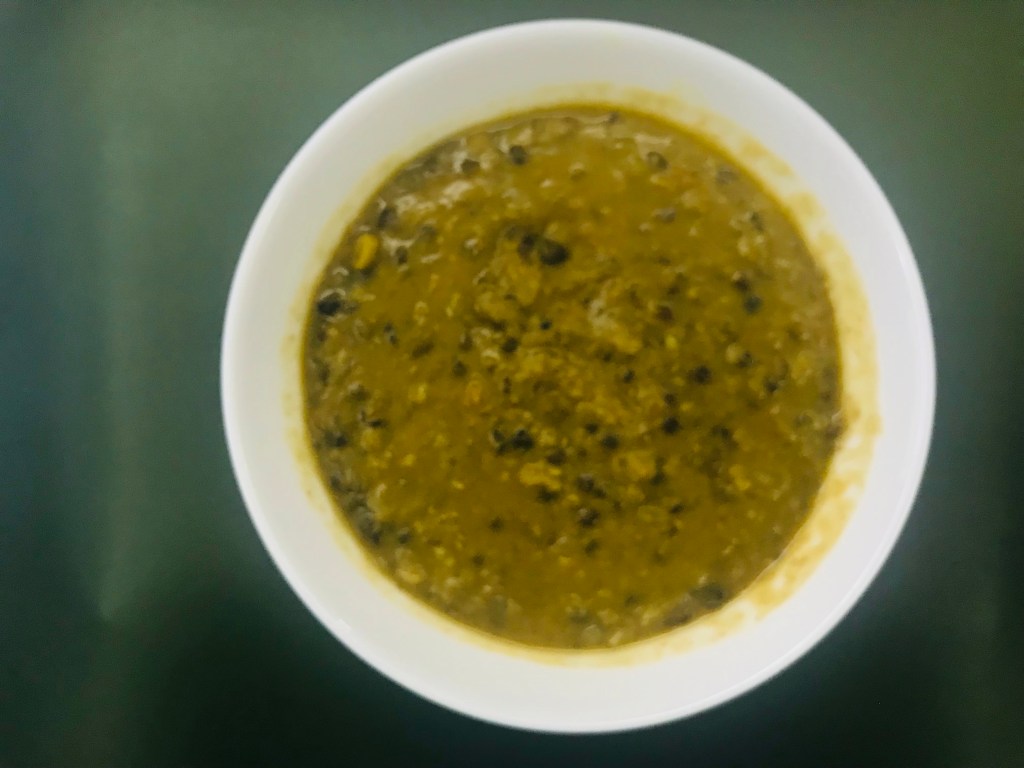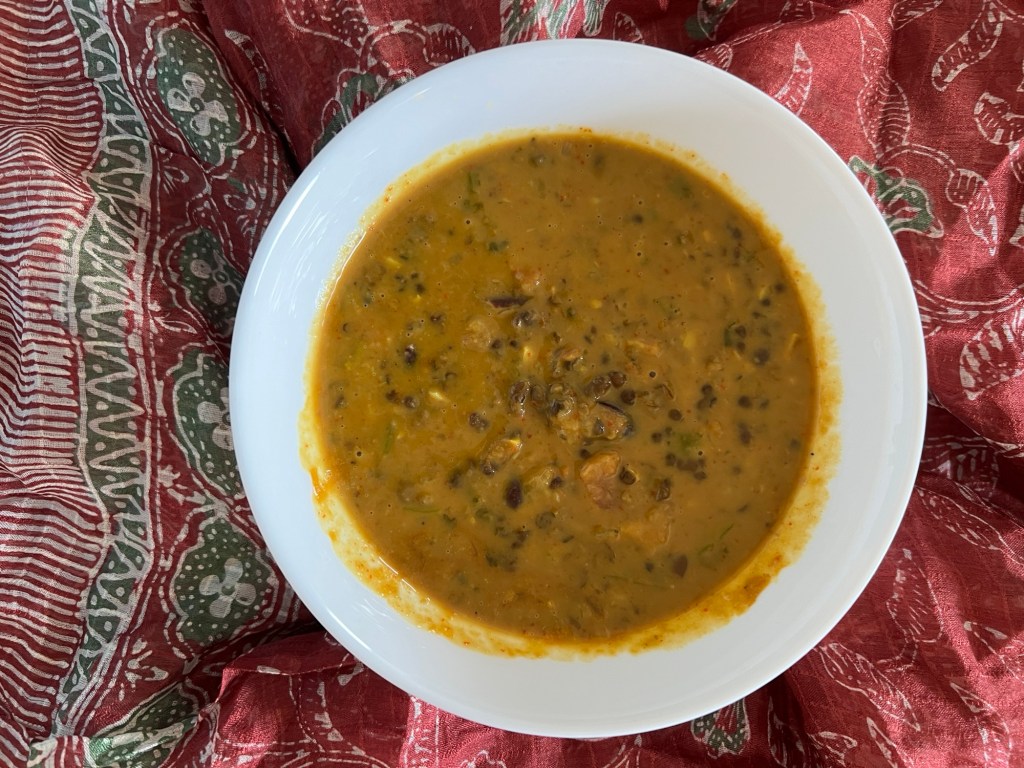
Recipes: Dal Makhni

A quintessential staple in every Punjabi restaurant, Dal Makhani is known for its rich and creamy texture. The dish has its roots in the Punjab region of the Indian subcontinent and was created by Kundan Lal Gujral and Kundan Lal Jaggi, who were Punjabi Hindu migrants from Peshawar. They are also credited with inventing the famous butter chicken.

The dish is a modern variation of traditional lentil dishes, made with urad dal or black lentils and other pulses, and is known for its rich buttery and creamy content. The name Dal Makhni comes from Dal, meaning lentils, and Makhni, meaning buttery. It’s a testament to the culinary innovation that occurred during the post-partition era, as these chefs sought to create a vegetarian dish that would complement their already popular Butter Chicken. This recipe comes from my helper, R, who comes from Punjab.

Dal Makhni

Ingredients:

  • 1 cup whole black lentils or urad dal
  • ¼ cup kidney beans or rajma
  • 4 cups water for pressure cooking
  • 2 tbsp ghee or butter
  • 1 tbsp oil
  • 1 tsp cumin seeds
  • 1 large onion, finely chopped
  • 2 large tomatoes, pureed
  • 1 tbsp ginger-garlic paste
  • 2 green chillies, slit lengthwise
  • ½ tsp turmeric powder
  • 1 tsp Kashmiri red chilli powder
  • 1 tsp coriander powder
  • ½ tsp garam masala
  • ½ cup fresh cream
  • Salt to taste
  • Finely chopped fresh coriander leaves for garnish

Method:

  • Rinse the whole urad dal and rajma thoroughly under running water. Soak them together in enough water for at least 6–8 hours or overnight.
  • Drain the soaked lentils and beans and transfer them to a pressure cooker. Add 4 cups of water and a pinch of salt. Pressure cook for about 6-7 whistles on medium-high heat, or until the lentils and beans are soft and well cooked.
  • Once cooked, mash the lentils and beans slightly using the back of a spoon or a potato masher. Set aside.
  • Heat ghee or butter along with oil in a deep pan or kadai over medium heat. Add cumin seeds and let them splutter.
  • Add finely chopped onions and sauté until they turn golden brown.
  • Stir in ginger-garlic paste and green chillies. Sauté for a couple of minutes until the raw aroma disappears.
  • Add the tomato puree and cook until the mixture thickens and the oil starts to separate from the sides.
  • Add turmeric powder, red chilli powder, coriander powder, and garam masala. Mix well and cook for a few more minutes.
  • Pour in the cooked lentils and beans, along with any remaining water from the pressure cooker. Mix everything.
  • Adjust the consistency by adding water if necessary. Bring the mixture to a gentle simmer.
  • Add fresh cream and salt to taste. Stir well to combine.
  • Let the Dal Makhani simmer on low heat for about 20–30 minutes, stirring occasionally. This helps to blend the flavours and thicken the gravy.
  • Once the desired consistency is achieved, garnish with fresh coriander leaves.

Serve hot with steamed rice, naan, or roti for a delicious and comforting meal.

Recipes: Amritsari Dal or Langarwali Dal

I have been curious about this dal for a few months now, but the couple of times I wanted to make it, I didn’t have the whole urad dal on hand. So a couple of months back, when I had some on hand, I decided it was time to finally make this.

This dal is rustic and comes from the homes of Punjab and is also called Langarwali Dal as it is often served at Sikh Gurudwaras, especially the Harmandir Saheb in Amritsar. Made from two types of dals, urad and chana, this dal does not have too many spices and is usually slow cooked, sometimes overnight to make a creamy, soft dal that just melts in the mouth. But because we don’t have the time these days to slow cook it, it’s made in the pressure cooker.

Amritsari Dal or Langarwali Dal

Ingredients:

  • 1 cup whole black urad dal
  • ¼ cup chana dal
  • ¼ tsp turmeric powder
  • 2 tbsp finely minced ginger
  • 2 tbsp finely mined garlic
  • 2-3 tbsp ghee, oil or butter
  • 1 tsp minced green chillies
  • 1 medium sized onion, finely chopped
  • 2 medium sized tomotoes, finely chopped
  • ½ tsp red chilli powder
  • 2 tbsp finely chopped coriander leaves
  • 1 tbsp finely chopped mint leaves (optional)

Method:

  • Soak the urad dal and chana dal in water for at least 5-6 hours until the urad dal is soft to touch.
  • Wash the dal well and put inside the pressure cooker with enough water to cover it, add turmeric powder, 1 tbsp each of ginger and garlic and about 1 tsp salt and cook for about five to six whistles. Open the cooker when the pressure goes away and slightly mash the dals with the back of a spoon or a whisk.
  • In a separate pan, heat the ghee, oil or butter and when it heats up, add in the finely chopped onion, stir until the onions turn translucent.
  • Then add in the balance minced ginger and garlic and stir well.
  • Add the mined green chillies and stir.
  • Saute until the onions become a nice golden colour.
  • When the onions turn golden, add In the finely chopped tomatoes. Mix well and let the tomatoes cook until they become mushy
  • Let the mixture cook until the oil releases from the sides. At this point, add the red chilli powder
  • Pour the tempering into the dal mixture and mix well
  • Add salt and water if needed and mix well
  • Let the dal come to a nice rolling boil.
  • Lower the flame and let the dal simmer for about 5 minutes. You can simmer for longer if you want, and the results will be better.
  • Garnish with coriander leaves and mint leaves, if you are using them and serve hot with rice, rotis or nan.

Note that the dal will thicken as it cools, so you may need to thin it a bit before serving if you plan on cooking it ahead of time. Also the dal tastes much better if eaten the next day, so it may be a good idea to cook it ahead of time.

Chow Chow (aka Chayote) Kootu

A kootu is another traditional South Indian food item. Kootus are generally vegetables mixed with a lentil or dal (usually moong, but can be others also) with a coconut/chilli gravy all mixed together. This is another example of Indian meals being complete meals as this kootu will have proteins from the lentils, plus fibre from the vegetables. This is usually eaten with a carbohydrate like rice or roti and you have all the important parts of a meal together.

Today’s recipe is Chayote or Chow Chow Kootu

Chayote is an edible plant belonging to the gourd family, being roughly pear-shaped and light green in colour. The skin is not used in Indian cooking and the flesh has a bland taste. This means it takes on any flavouring that is added to it. The seeds are generally not used in cooking.

Chow Chow Kootu

Ingredients:

  • 3 Chayotes (peeled, seeds removed and diced)
  • ½ cup Moong Dal
  • 3 tbsps Channa Dal
  • ½ tsp turmeric powder
  • salt to taste
  • ½ cup freshly grated cocounut (you can use frozen coconut if you don’t have access to fresh coconut. I have used frozen coconut in this recipe)
  • 4-5 fresh green chillies (this is what I used, but please adjust according to the intensity of the chillies and your spice tolerance level)
  • ½ tsp cumin seeds
  • ¼ tsp mustard seeds
  • 1 tsp oil
  • ¼ tsp urad dal
  • A small sprig of curry leaves
  • A pinch of asafetida

Method:

In a pressure cooker, cook the moong dal and 2 tbsps of the chana dal with ¼ tsp of turmeric powder. While the dals are cooking, peel the chow chow, remove the seeds and chop into small, bite-sized cubes. Cook the chow chow in a pan with very little water, ¼ tsp of turmeric powder and some salt.

In a mixer, add the coconut, cumin seeds and chillies and grind it to a fine paste without adding too much water. Some people prefer to add yoghurt here, but I don’t, preferiing to add water to provide the moisture to grind it.

Once the Chayote is cooked but firm, add the dal to it along with the coconut mixture. Adjust the salt and let it boil for a while, around 5-7 minutes. Then turn off the gas and start the tempering to finish the dish.

In a smaller skillet, pour 1 tsp oil oil and wait for it to heat up. Once heated up, put the mustard seeds and wait for it to pop. Once it pops, add the urad dal, curry leaves and asafetida and lightly stir. When the urad dal starts to brown remove from flame and add it to the kootu. Mix well and serve with rice or rotis.