
In Spain, giant effigies are set alight. In China, molten iron is sprayed on city walls. And in Scotland, a replica Viking ship is lit by a thousand torches. All over the world – and despite the obvious dangers – fire means festivities. But in South India, there’s a fire festival that might just be the wildest of the lot.
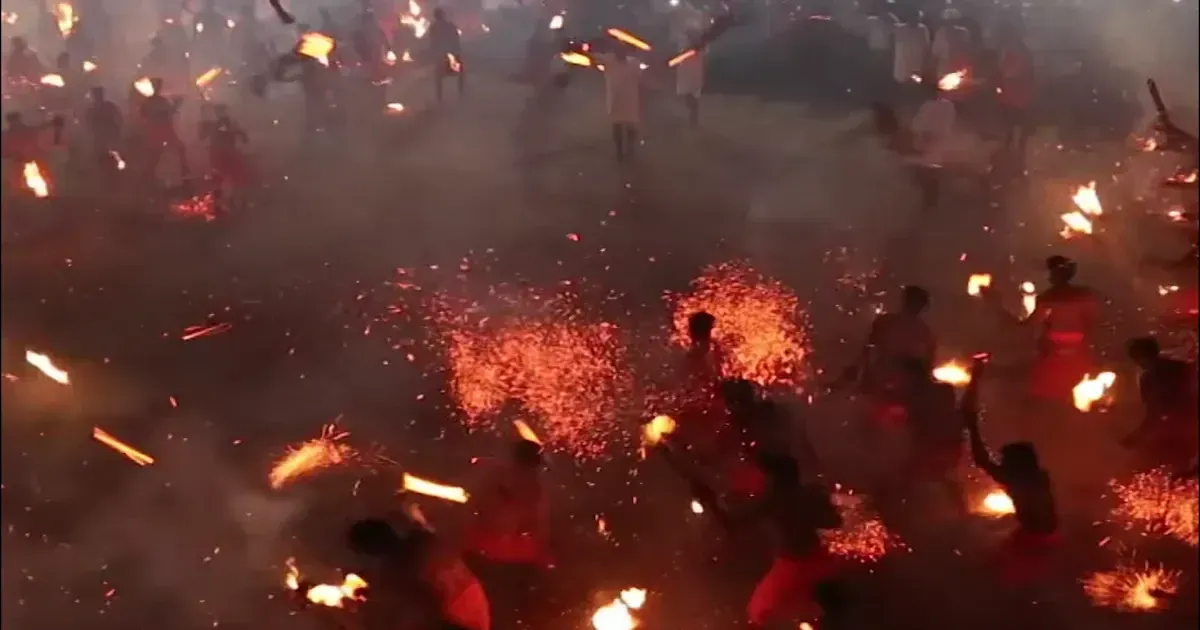
Agni Keli, also known as Agni Khela, is an eight-day-long event held every April in Mangalore, Karnataka. It features an all-out fire brawl, in which participants fling flaming branches straight at each other. Imagine a genuine battle – branches flying through the night sky, sparks falling around the participants, who pick up more branches and throw again. The neat line of men breaks up into chaos, creating a mesmerising spectacle.
It takes part as part of the grand festival of Thoothedhara at the Kateel Durga Parameswari Temple. This temple, also known as Kateelu, lies in Dakshin Kannada on an islet formed naturally in the middle of the sacred Nandini River. The surroundings are adorned with lush greenery and panoramic views, creating a serene and spiritual atmosphere. The temple is dedicated to Goddess Durga Parameswari, who manifests as a Udbhava Moorthi or a naturally formed deity. The goddess is also known as Bhramare, which translates to a big, furious bee. Kateel is considered one of the holiest Hindu temple towns in India.
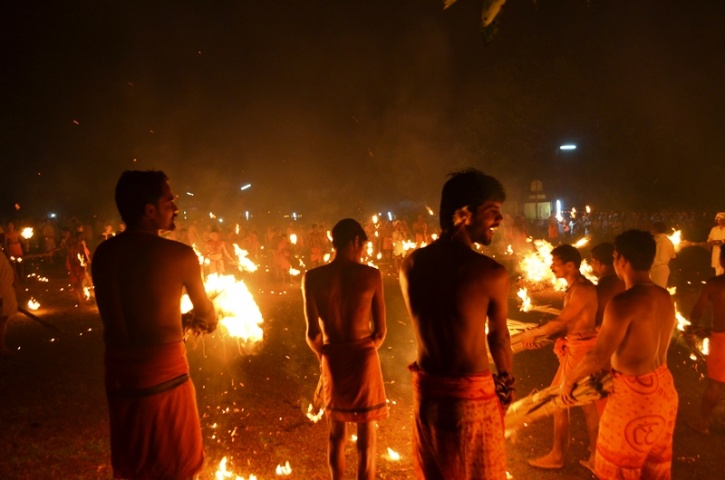
Agni Keli is a fire-throwing festival in honour of Goddess Durga, the Hindu goddess of war. She is often pictured riding a lion or tiger, bearing weapons in her many arms as she fights demons. Followers believe that Durga is appeased by wild and adventurous rituals like Agni Keli. She is also honoured during the Durga Puja festivities, which take place across South Asia in September and October.
The Agni Keli festival runs over eight days every April. The fire-throwing itself takes place by the Kateel Durga Parameswari Temple, just outside Mangalore. During Agni Keli, participants are divided into two groups, facing each other. They engage in an all-out fire brawl, throwing burning palm fronds at each other from a distance. This fiery exchange symbolises devotion, courage, and the triumph of good over evil.
Agni Keli brings together devotees from various backgrounds. Regardless of caste, creed, or social status, participants engage in this fiery battle with fervour. The shared experience fosters unity and a sense of community. Participants believe that engaging in Agni Keli cleanses them of impurities and negative energies. Agni Keli is a spiritual journey through flames, akin to a baptism by fire, with the fire symbolising purification and renewal.
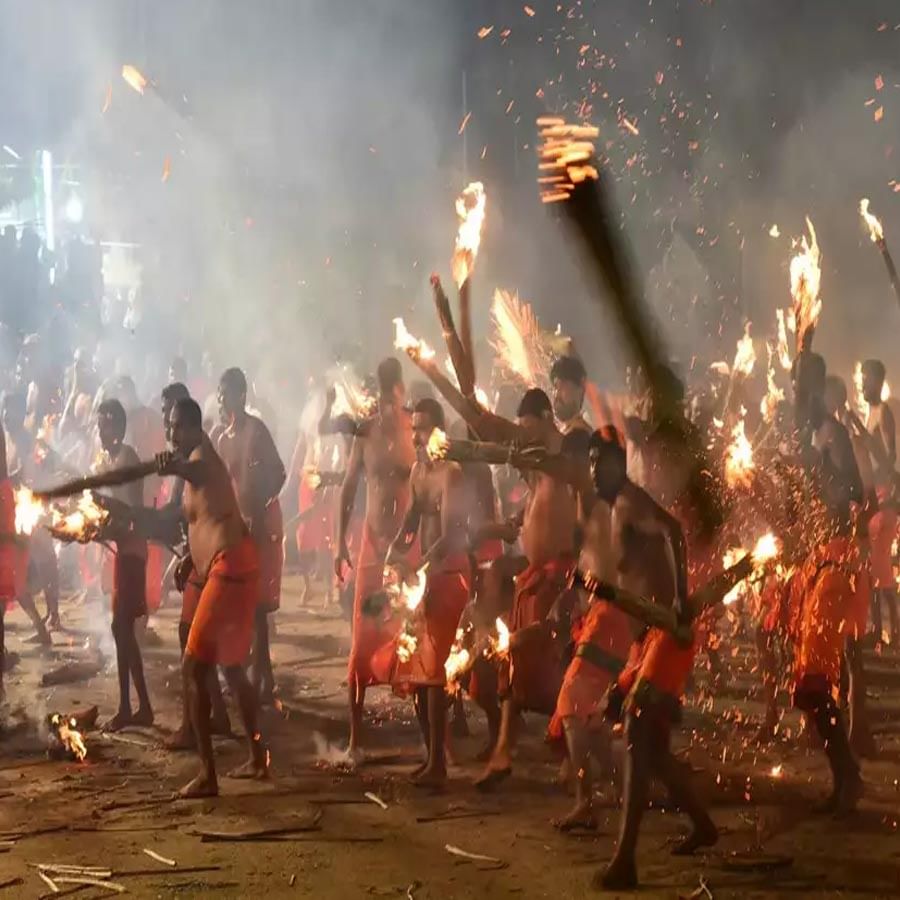
Agni Keli requires courage and trust in the divine. Participants surrender to the flames, knowing that they are part of a sacred tradition, with their devotion to Goddess Durga fueling their determination. Despite the risks, Agni Keli continues to thrive, preserving its cultural heritage and ancient traditions. The festival ignites the flames of tradition, reminding us of our roots and shared humanity.
Despite the risks, Agni Keli continues to thrive. It reminds us of our ancient roots, our connection to the divine, and the power of collective rituals. In a rapidly changing world, festivals like Agni Keli preserve cultural heritage and ignite the flames of tradition. Agni Keli is not just a fire festival; it is a testament to human resilience, faith, and the enduring spirit of celebration. As the flames dance, they carry the echoes of centuries, reminding us that sometimes, the wildest celebrations are the ones that warm our souls.
 Memories and Such