

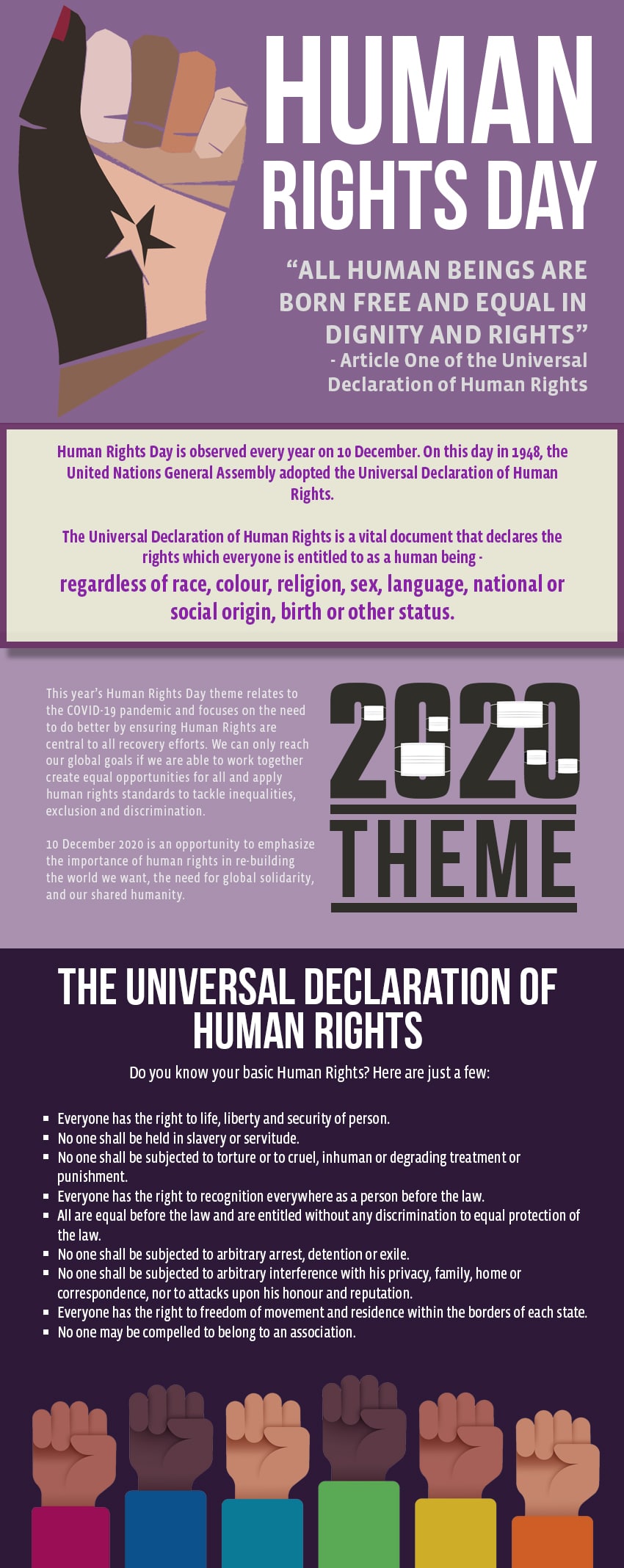
Held annually on December 10th to commemorate the adoption of the Universal Declaration of Human Rights (UDHR) by the United Nations General Assembly in 1948, Human Rights Day was established to mark the adoption of the landmark document, drafted in the aftermath of World War II, set out for the first time the fundamental human rights to be universally protected.
The horrors of World War II, including the Holocaust and other atrocities, highlighted the need for a universal framework to protect human rights. The Universal Declaration of Human Rights set out, for the first time, fundamental human rights to be universally protected.
The UDHR consists of 30 articles affirming an individual’s rights. These include the right to life, liberty, and security of person; freedom from torture and degrading treatment; the right to equality before the law; freedom of belief and religion; freedom of opinion and expression; the right to work and education; and the right to health and well-being. The declaration has been translated into over 500 languages, making it the most translated document in the world.
Human Rights Day serves several important purposes. The day helps educate the public about human rights issues and challenges around the world. It provides a platform for human rights advocates to push for policy changes and improved protections. Human Rights Day celebrates the progress made in advancing human rights globally. It encourages reflection on the state of human rights and areas where improvement is needed. The day unites people worldwide in the cause of promoting and protecting human rights.
Understanding the current state of human rights globally provides context for the importance of Human Rights Day. While progress has been made since the adoption of the UDHR, significant challenges remain. Many countries still struggle with issues such as freedom of expression, assembly, and fair trials. Poverty, lack of access to education and healthcare, and cultural discrimination persist in many parts of the world. Gender inequality, violence against women, and discrimination continue to be global issues. Child labour, lack of access to education, and child marriage remain significant problems in many regions. Many countries still criminalise same-sex relationships, and discrimination against LGBTQ+ individuals is widespread. The global refugee crisis and treatment of migrants continue to pose human rights challenges. Indigenous peoples often face discrimination and struggle to protect their lands and cultures. Issues of privacy, surveillance, and online freedom of expression are growing concerns. Climate change and environmental degradation increasingly impact human rights, particularly for vulnerable populations.
The United Nations plays a crucial role in promoting and protecting human rights globally. Established in 1993, the Office of the High Commissioner for Human Rights (OHCHR) is the leading UN entity on human rights. It supports the work of UN human rights mechanisms, including the Human Rights Council and the core treaty bodies. Created in 2006, the Human Rights Council is an inter-governmental body responsible for strengthening the promotion and protection of human rights around the world.
Despite progress, numerous challenges to human rights persist globally. The rise of authoritarian regimes in various parts of the world threatens civil and political rights. Economic inequality continues to undermine social and economic rights. Various forms of discrimination based on race, gender, sexual orientation, and other factors persist. Ongoing conflicts in various regions lead to severe human rights violations. Environmental degradation and climate change increasingly impact human rights, particularly for vulnerable populations. The misuse of technology for surveillance and control threatens privacy and freedom of expression. The spread of misinformation and hate speech online poses challenges to human rights. The COVID-19 pandemic has highlighted and exacerbated existing human rights issues.
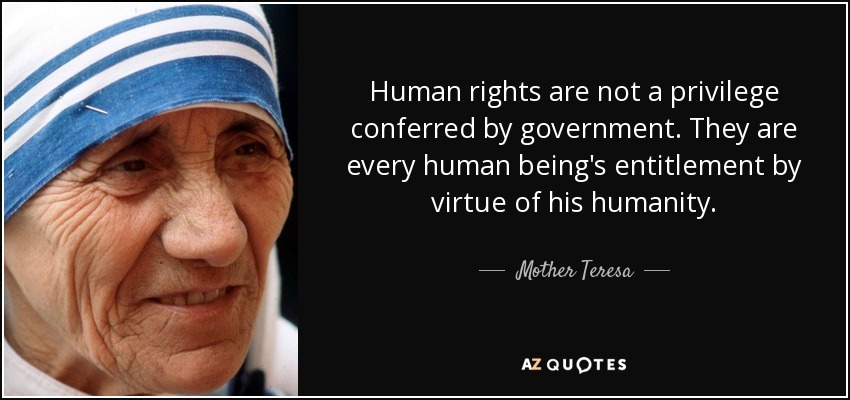
Human rights education is crucial for creating a culture that respects and promotes human rights. These include integrating human rights education into school curricula at all levels, providing human rights training for professionals such as law enforcement officers, healthcare workers, and educators, conducting campaigns to educate the general public about human rights, implementing community-based programs that promote human rights awareness and activism, and developing and disseminating online resources for human rights education.
Human Rights Day serves as a powerful reminder of the universal values enshrined in the Universal Declaration of Human Rights and the ongoing struggle to realise these rights for all people. As we face complex global challenges, from climate change to technological disruption, the principles outlined in the Universal Declaration of Human Rights remain as relevant as ever. Human Rights Day reminds us that respect for human dignity, equality, and justice must be at the core of our responses to these challenges. By promoting human rights education, supporting civil society organizations, engaging businesses in human rights responsibilities, and leveraging technology for positive change, we can work towards a world where the rights of all individuals are respected and protected.
Human Rights Day is not just a day of commemoration, but a call to action. It challenges each of us to stand up for our rights and the rights of others, to speak out against injustice, and to work towards a world where the principles of the Universal Declaration of Human Rights are realized for everyone, everywhere.
 Memories and Such