

Danteshwari Temple, Dantewada, Chhattisgarh
Dedicated to Goddess Danteshwari, the Danteshwari Temple located in the heart of Dantewada in Chhattisgarh is not just a place of worship but a powerful symbol of divine feminine energy and a crucial component of the spiritual landscape of the region.
The Danteshwari Temple was established in the 14th century, though this location has been a place for millennia according to archaeological evidence and ancient texts. The temple’s construction is attributed to the lords of Chindak Nagvanshi of Bastar. An inscription discovered in an archaeological site called Jatanpal reveals that in 1224 Devi Manikeswari was the tutelary deity of King Narsingh Jagdek Bhushan of the Chindak Nagvanshi dynasty. The Bhairamgarh inscription further indicates that the Goddess Danteswari was known as Manikeswari Devi at that time. The temple underwent significant repairs and renovations in the 14th century by Annamdev, the brother of Prataprudra of Warangal.
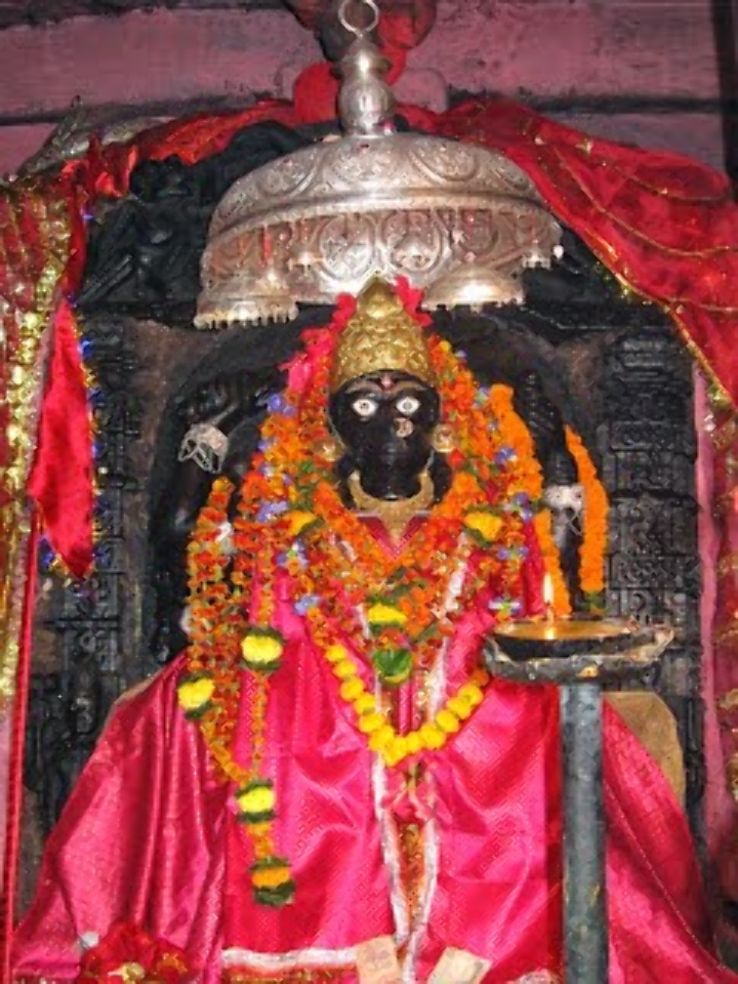
According to tradition, the temple marks the spot where the tooth or Daanth of Goddess Sati fell after her body was dismembered. At the Danteshwari Temple, the Bhairava presence is unique and intriguing. There is a Bhairav Temple located within the larger Danteshwari Temple complex. Initially, this Bhairav Temple was separate from the main shrine. However, with the construction of the Natamandap, the Bhairav Temple was incorporated into the main structure and still stands today.
Interestingly, two large idols of Bhairo Baba are installed on both sides outside the sanctum. These four-armed idols represent Bhairav Baba, who is considered the bodyguard of Maa Danteshwari. According to Vijendra Jiya, the nephew of the head priest, it is customary for devotees to visit Bhairav Baba after having the darshan of the goddess. It is believed that if devotees please Bhairav Baba, he conveys their wishes to the mother, leading to the swift fulfilment of their desires.
The temple is divided into four parts: the Garbh Griha or the sanctum sanctorum, the Maha Mandap, the Mukhya Mandap, and the Sabha Mandap. The Garbha Griha and Maha Mandap were constructed with stone pieces. The main idol of Goddess Danteshwari is chiselled out of black stone, and a Garuda Pillar stands prominently in front of the temple entrance, serving as a distinctive architectural element. The temple is located in a spacious courtyard surrounded by massive walls with the temple spire or shikhara adorned with intricate sculptural work. There are two Danteshwari temples – one in Dantewada and another in Jagdalpur. While the idol in Dantewada is black, the one in Jagdalpur is white, offering a unique duality in the goddess’s representation.
Throughout the day, multiple pujas are offered to the deity at specific times, accompanied by the chanting of hymns and recitation of sacred texts. These rituals are conducted with precision and adherence to traditional practices. The nine-night Navratri festival is celebrated with great fervour. Devotees participate in elaborate rituals, and the temple sees a surge in visitors seeking the goddess’s blessings.

The Danteshwari Temple is at the heart of the famous Bastar Dussehra celebrations. Unlike the traditional 10-day festival, Bastar Dussehra is a unique 75-day celebration. During this time, the idol of Goddess Danteshwari is taken out of the ancient temple and carried around the city in an elaborate procession, attracting thousands of devotees and tourists. During Navaratri, devotees participate in the Jyoti Kalash Sthapana ritual. This paid process involves lighting lamps in the name of family members and loved ones. In recent years, the temple has hosted over 5,500 Kalash Sthapanas.
Jogi Baithai is a unique ritual involving members of the Halda caste from specific villages becoming jogis or ascetics. The Maharaja himself initiates this ritual, which includes the sacrifice of seven Mangur fish. The jogi observes a strict fast for nine days, neither eating, drinking, nor attending to bodily functions. The temple conducts special worship three times a year – during Shardiya Navratri, Chaitra Navratri, and Phagun Madai, also known as the third Navratri. Every year, more than 7,000 ghee and oil lamps are lit in the temple. Devotees from abroad also participate in this ritual, lighting lamps for nine days.
According to legend, this temple marks the spot where the tooth of Goddess Sati fell during Lord Shiva’s cosmic dance of destruction. This event is said to have occurred in the Satya Yuga, the first of the four yugas in Hindu cosmology. Goddess Danteshwari is traditionally revered as the Kuldevi or family goddess of the Bastar state. The town of Dantewada itself is named after Goddess Danteshwari. Ancient inscriptions suggest that the goddess was initially known as Manikeswari Devi before being recognised as Danteshwari.
Another fascinating story ties the temple to King Annamdev, a 14th-century ruler who is credited with establishing the Bastar kingdom. According to legend, Annamdev was blessed by Goddess Danteshwari with a boon that allowed him to define his kingdom’s boundaries. The goddess instructed him that the territory he could cover while walking with his head held high would become his domain. During his journey, Goddess Danteshwari followed him to protect him, and he could hear her anklets as she walked behind him. However, when he reached a riverbed filled with sand, he could no longer hear her anklets and doubted whether she was still accompanying him. Overcome by curiosity, he turned around—breaking the condition set by the goddess. At that moment, Danteshwari stopped following him but blessed him and vowed to protect his descendants for 22 generations. She also gifted him a piece of fine cloth and declared that the area covered by it would mark his kingdom’s borders.

The Danteshwari Temple is uniquely situated at the confluence of two rivers: Shankini and Dhankini, which are considered sacred by devotees. According to local lore, these rivers were created from two streams of divine energy emanating from Goddess Danteshwari herself. They represent her nurturing and protective aspects. A lesser-known legend states that during ancient times, these rivers were believed to have healing properties due to their divine origin. Devotees who bathed in their waters or drank from them were said to be cured of ailments and cleansed of sins. Even today, pilgrims consider this confluence a sacred spot for purification rituals before entering the temple.
As one stands in the temple courtyard, surrounded by centuries of devotion and the echoes of ancient rituals, one can’t help but feel a connection to the spiritual heritage that has shaped this land for millennia.
Arasuri Ambaji Temple, Ambaji, Gujarat
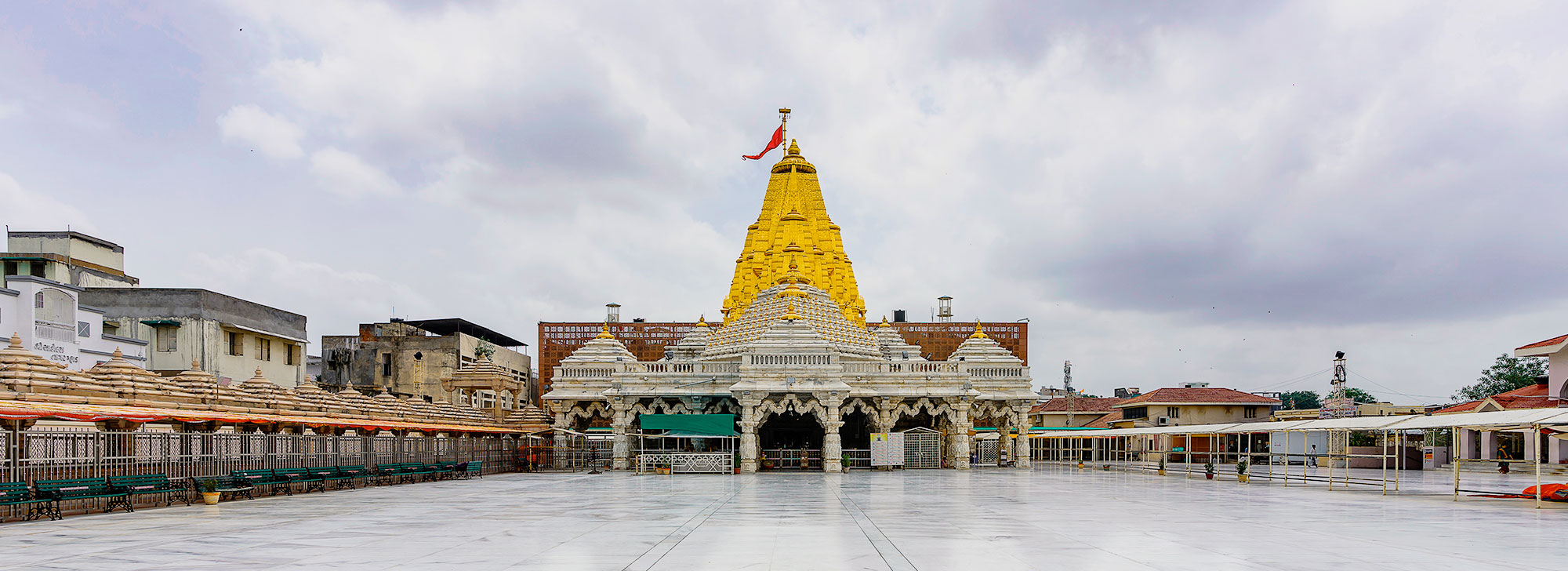
Nestled in the Arasur hills of Gujarat’s Banaskantha district, the Arasuri Ambaji Temple is dedicated to Goddess Ambaji. Archaeological evidence and ancient texts suggest that this location has been a place of worship since the pre-Vedic period. The temple’s antiquity is so profound that its exact date of establishment remains unknown. The original temple is believed to have been built atop the Gabbar Hillock, which is considered the true seat of the goddess. This hilltop shrine continues to be maintained, with a lamp burning continuously, day and night. According to tradition, this site marks the spot where the heart of Goddess Sati fell.
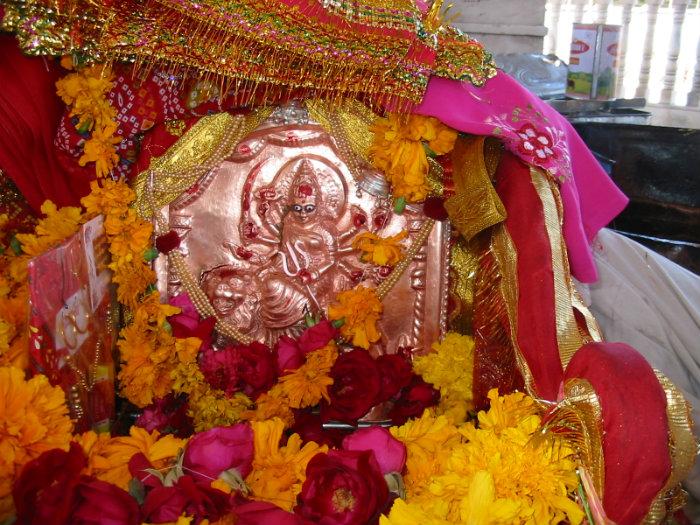
Unlike most Hindu temples, the Arasuri Ambaji Temple does not house an idol of the goddess in its sanctum sanctorum. Instead, a sacred geometric diagram known as the Shree Visa Yantra is the main object of worship. This Vedic text on sacred geometry is fixed on a gold-plated marble inscription in a niche or gokh within the inner sanctum. It is believed to be so powerful that it cannot be photographed and is only worshipped after bandaging the eyes.
The temple, made of white marble with gold cones, was originally built by Nagar Brahmins. It features a main entrance in the front and only a small side door, as it is believed that the goddess has forbidden the addition of any other door. The temple is surrounded by an open square called Chachar Chowk, where ceremonial sacrifices known as havans are performed. The temple complex includes two shrines – the main temple in Ambaji town and the original hilltop shrine on Gabbar Hill.
The temple follows a strict schedule, opening its doors to devotees from 7 to 11:30 am, then from 12:30 to 4:30 pm, and again between 6:30 to 9 pm every day of the week. A grand fair, Bhadarvi Purnima Mela, is held on the full moon day of Bhadrapada month, attracting devotees from all over the country. The nine-night festival of Navratri is celebrated with great fervour, featuring garba dances and bhavai theatre performances by the Nayak and Bhojok communities. Every full moon day, a large number of devotees throng the temple to offer worship and attend the fair held outside. During Navaratri, devotees participate in the Jyoti Kalash Sthapana, a ritual where they light lamps in the name of family members and loved ones.
A fascinating local legend tells of a king from Danta who fervently prayed to Goddess Ambaji, requesting her to move from her original abode on Gabbar Hill to his town. The goddess agreed to his request on one condition: he must lead her down the hill without looking back even once. As he descended the hill, he could hear the sound of her anklets following him, reassuring him of her presence. Unable to resist his curiosity, the king peeped back, causing the goddess to stop at the current temple site. To this day, devotees consider their pilgrimage incomplete without visiting both the temple in Ambaji town and Gabbar Hill, where a sacred lamp burns perpetually.
It is said that Lord Rama and Lakshmana visited the ashram of Shrungi Rishi during their search for Sita. They were advised to worship Devi Ambaji at Gabbar, where the goddess bestowed upon Rama a miraculous arrow named Ajay, which helped him defeat Ravana. Legend also has it that the hair-removal ceremony or mundan of the infant Krishna was performed on Gabbar Hill in the presence of his foster parents, Nand and Yashoda.

The renowned Rajput king Maharana Pratap was a devoted follower of Arasuri Amba Bhawani. Once saved by the goddess, he gifted his famous sword to her holy feet. According to the Mahabharata, Princess Rukmini worshipped Mata Ambica on Gabbar Hill to invite Lord Krishna to abduct her from her swayamvar. The goddess granted her wish, allowing her to marry Krishna against her family’s wishes.
The Arasuri Ambaji Temple, with its blend of myth, history, and living faith, continues to be a powerful force in Gujarat’s religious landscape, inviting all who visit to partake in its timeless spiritual journey.
Kaali Mandir, Champaner Pavagadh Archaeological Park, Gujarat
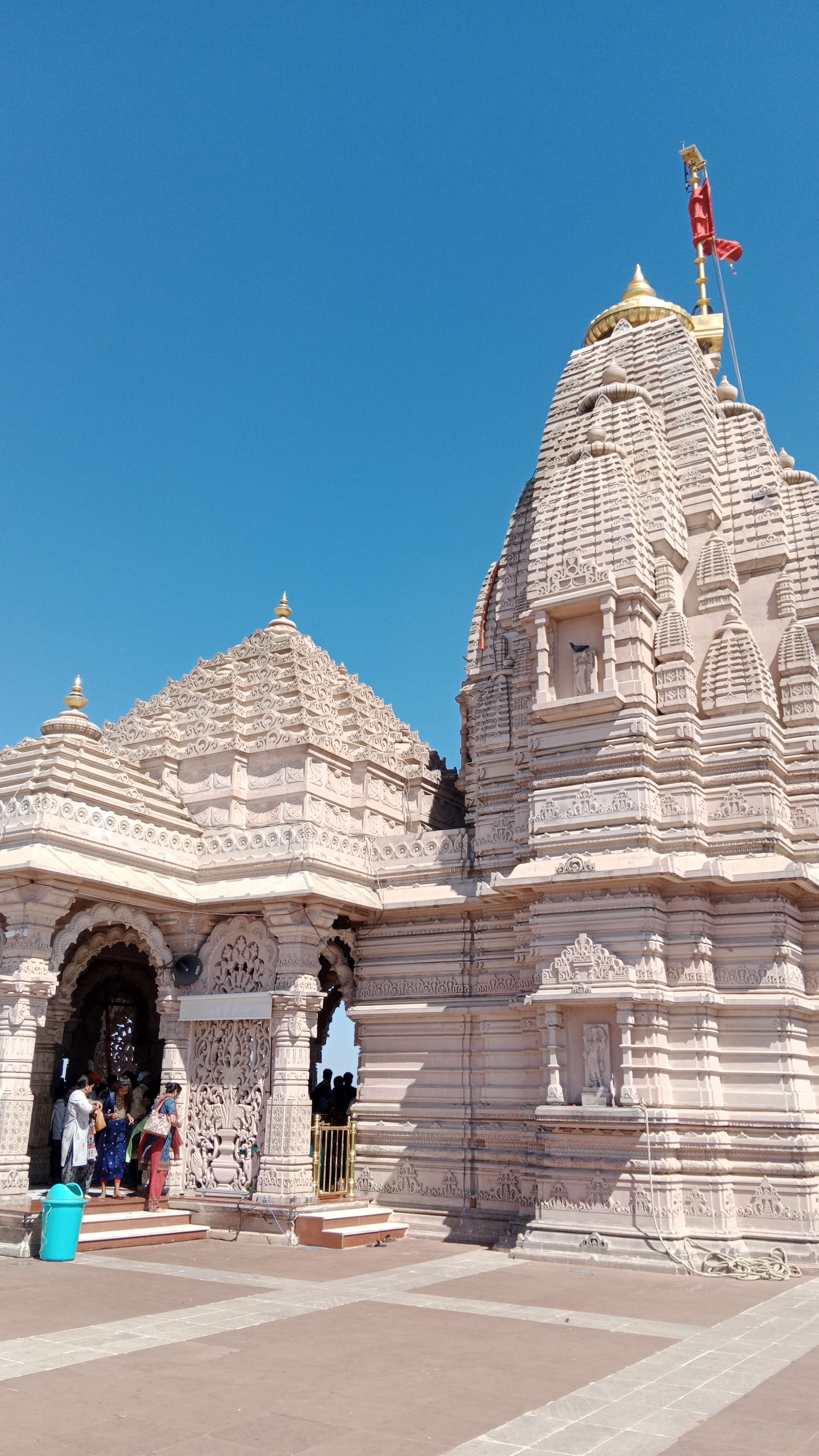
Located in the Champaner-Pavagadh Archaeological Park, the Kalika Mata Temple is dedicated to Goddess Kali. Archaeological evidence and ancient texts suggest that this location has been a place of worship since the 10th or 11th centuries. The temple’s antiquity is so profound that it is considered the oldest in the area, predating many of the other structures in the Champaner-Pavagadh complex.
Initially, the Goddess Kalika Mata was worshipped by the local Bhil and Koli people, indigenous tribes of the region. The temple’s significance grew over time, and it was mentioned in the Gangadas Pratap Vilasa Natakam, a 15th-century drama. According to tradition, this site marks the spot where the right toe of Goddess Sati fell.

The temple houses a Kali yantra, a sacred geometric diagram used for worship. This yantra is considered a powerful representation of the goddess. The temple showcases a blend of architectural styles, reflecting its long history and the various influences it has absorbed over time. Situated at the summit of Pavagadh Hill, the temple offers breathtaking views of the surrounding landscape. The temple contains three goddess images: Mahakali Mata in the centre, Kali on the right, and another form on the left. The path to the temple, known as the Patha, is considered the soul of Champaner. It consists of thousands of steps and various decorative and functional structures along the way. One unique aspect of worship here is the tradition of devotees worshipping by beating bell-metal symbols. This practice adds a distinctive auditory element to the devotional atmosphere of the temple.
The temple comes alive during its numerous festivals and special occasions. Navaratri, the nine-night festival is celebrated with great fervour at the temple. It attracts lakhs of devotees from across Gujarat. The temple becomes a hub of activity, with special pujas performed each day to honor the nine forms of the goddess. The Chaitra Purnima Fair is held each year on the full moon of Chaitra, usually in April. Durga Puja which is celebrated in the month of Ashwin or September-October, during the Navaratri festivities, commemorates the triumph of Goddess Durga over the buffalo demon Mahishasura. Mahashivaratri is celebrated in the last week of February, is reminiscent of Lord Shiva bringing Goddess Parvati with him. A grand celebration is arranged by priests and the temple committee.
According to local legend, Sage Vishwamitra constructed an idol of Maa Kalika at the Pavagadh Temple. Locals believe that Vishwamitra’s power brought abundant blessings to the region. Faith-based legend suggests that Pavagadh Hill was formed when God sent a large hill to fill a deep valley created by the falling of Sati’s foot. This was done at the request of Rishi Vishwamitra to prevent his sacred cows from falling into the valley.

The temple has faced its share of historical challenges. In the 15th century, Mahmood Begda captured Pavagadh and damaged the temple, destroying its shikhara or temple spire. As an act of further insult, a Dargah was built directly next to the shikhara in the garbhagrih, the sanctum sanctorum. In recent times, the dargah was peacefully relocated nearby and in 2022, the temple underwent renovations, including the construction of a new shikhara.
The Kalika Mata Temple, with its blend of myth, history, and living faith, continues to be a powerful force, inviting all who visit to partake in its timeless spiritual journey.
 Memories and Such