

Chandrabhaga Temple, Somnath, Gujarat
Located within the sacred complex of the Somnath Temple, the Chandrabhaga Temple stands as a unique and enigmatic Shakti Peetha. Unlike many other elaborate temples, this sacred site presents itself in a surprisingly modest form, challenging our conventional notions of what constitutes a temple.
The origins of the Chandrabhaga Temple are shrouded in antiquity, intertwined with the rich tapestry of myths and legends that surround the Somnath complex. While the exact date of its establishment remains elusive, its spiritual significance stretches back millennia, predating many of the structures in the area.
The temple’s name, Chandrabhaga, carries deep meaning. Chandra refers to the moon, while bhaga can be interpreted as a part or portion. This name is intimately connected to the legend of Chandra Dev, the Moon God and his interactions with Lord Shiva at Somnath.
According to tradition, the temple marks the spot where Sati’s Udara or stomach fell. What sets this Shakti Peetha apart is its unique form. Unlike most temples that house elaborate structures and idols, the Chandrabhaga Shakti Peetha is essentially the confluence of three rivers – Hiran, Kapila, and Saraswati. This Triveni Sangam or meeting point of three rivers, is considered the actual Shakti Peetha. At Chandrabhaga, the Bhairava is known as Vakratunda. The name Vakratunda, meaning one with a curved trunk, is intriguing, as it’s more commonly associated with Lord Ganesha. The goddess here is worshipped as Chandrabhaga, embodying the divine feminine energy in its cosmic form. However, it’s important to note that there is no specific idol or structure dedicated to the goddess at this site.
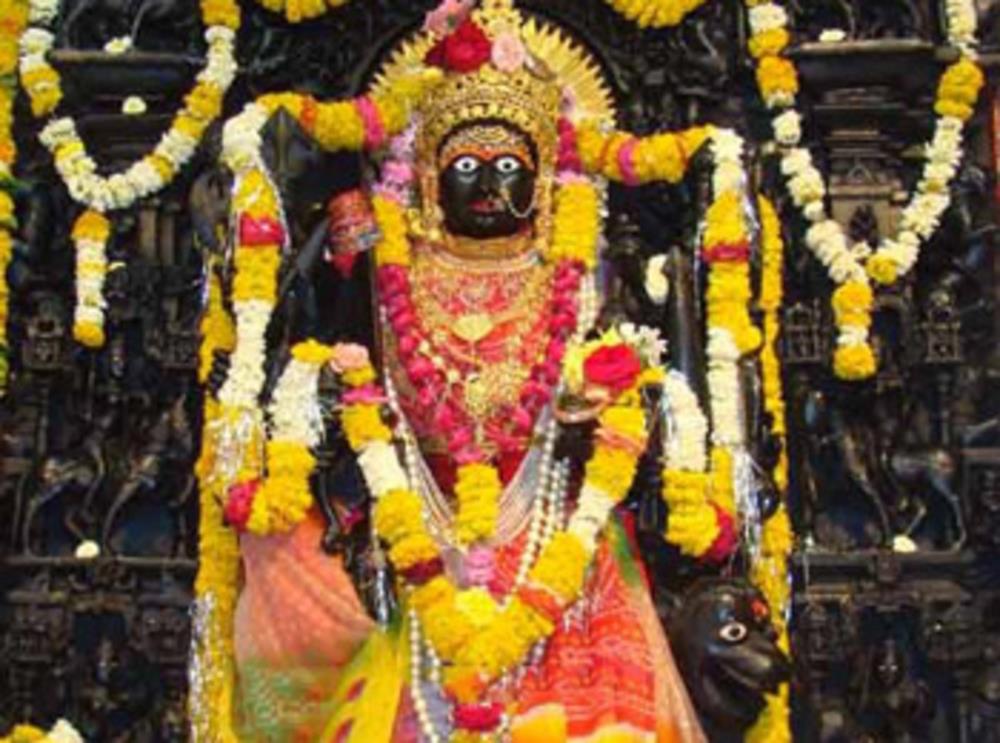
Unlike most Shakti Peethas, there is no dedicated temple structure for Goddess Chandrabhaga. The confluence of rivers itself is considered the sacred site. While the main shrine is absent, there are remnants of old temples in the vicinity. These include the Sitaleshwar Temple, Shiva Temple, Vishnu Temple, Kalika Devi Temple, also known as Navadurga Temple, and a Ganesha Mandapa. A banyan tree at the site is considered highly auspicious. It’s believed to symbolise the Trimurti of Lord Vishnu, Lord Shiva, and Lord Brahma, and is associated with life, fertility, and wish-fulfillment. The focus of devotion here is the river itself, with devotees considering the act of bathing in the Chandrabhaga as a sacred ritual. During the reconstruction of the Somnath Jyotirlinga, the trustees reportedly overlooked or chose not to rebuild the Devi shrine, leaving it in its current state. The month of Kartik sees a surge in devotees who come to bathe in the river and light lamps, following an ancient tradition.
The most prominent legend associated with this site is that of Chandra Dev or the Moon God. Cursed by his father-in-law Daksha Prajapati to lose his luster, Chandra came to Somnath and prayed to Lord Shiva. Pleased with his devotion, Shiva partially lifted the curse, allowing Chandra to wax and wane rather than remain permanently dimmed. In gratitude, Chandra built the first temple to Shiva at Somnath. The name Chandrabhaga is believed to have originated from this legend, representing the portion or bhaga of the moon or Chandra that was saved by Lord Shiva’s grace. One intriguing tale speaks of a Nataraja idol in the temple complex that supposedly floated in a hall with the help of magnetic walls. This was said to be part of the temple’s reconstruction in 1169 by King Kumarapala. The confluence of the three rivers – Hiran, Kapila, and Saraswati – at this spot is considered highly sacred. Each river is associated with different aspects of spirituality and purification.

The absence of a grand temple at the Chandrabhaga Shakti Peetha might initially seem perplexing, but it is this very absence that invites a deeper contemplation of the nature of divinity and worship. The sacred rivers flowing into each other, the ancient banyan tree standing sentinel, and the echoes of centuries of devotion create an atmosphere that transcends the need for man-made structures.

Bhadrakali Temple, Kurukshetra, Haryana
Located in the historic city of Kurukshetra, the Bhadrakali Temple, also known as Shri Devi Koop Temple, is dedicated to Goddess Bhadrakali, one of the eight forms of the Goddess Kali. The origins of the temple and its spiritual significance stretch back into unrecorded times. Archaeological evidence and ancient texts suggest that this location has been a place of worship since the times of the Mahabharata, making it one of India’s ancient temples.
The temple’s history is deeply intertwined with the epic Mahabharata. It is said that the Pandavas, the heroes of the epic, sought the blessings of Goddess Bhadrakali here before the great battle of Kurukshetra. According to tradition, it is believed that the right heel or ankle of Goddess Sati fell here.
The temple is also known by several other names, each highlighting its significance in the pantheon of Shakti worship. It is referred to as Savitri Peeth, Devi Peeth, Kalika Peeth, or Aadi Peeth. These various appellations underscore the temple’s importance in different traditions of goddess worship.

The temple is built around a well, known as Devi Koop, which is believed to be the exact spot where Sati’s ankle fell. A marble representation of the goddess’s ankle is installed in the temple, serving as a tangible reminder of the site’s Shakti Peetha status. One of the most unique aspects of this temple is the tradition of offering miniature horses. Devotees who have their wishes fulfilled offer terracotta or metal horses to the deity. The temple houses terracotta and metal horses offered by the Pandavas after their victory in the Mahabharata battle, adding to its historical significance.
The temple is open daily from 5 am to 1 pm and then again between 4 and 9 pm. One of the most significant daily rituals is the aarti, which is performed twice a day, the morning aarti between 6 and 6:40 am and the evening aarti between 7 and 7:40 pm.
The temple comes alive during its numerous festivals and special occasions. The Navratri festival sees a surge in devotees, and special pujas are performed, especially on the day of Durga Puja. The temple hosts special celebrations during Raksha Bandhan and it is believed that visiting the temple on Saturdays and worshipping the Goddess is particularly auspicious and fulfils the wishes of devotees. The temple is popular for the hair-removing ceremony of young children, believed to be connected to a similar ceremony performed for Lord Krishna and Balram at this site.
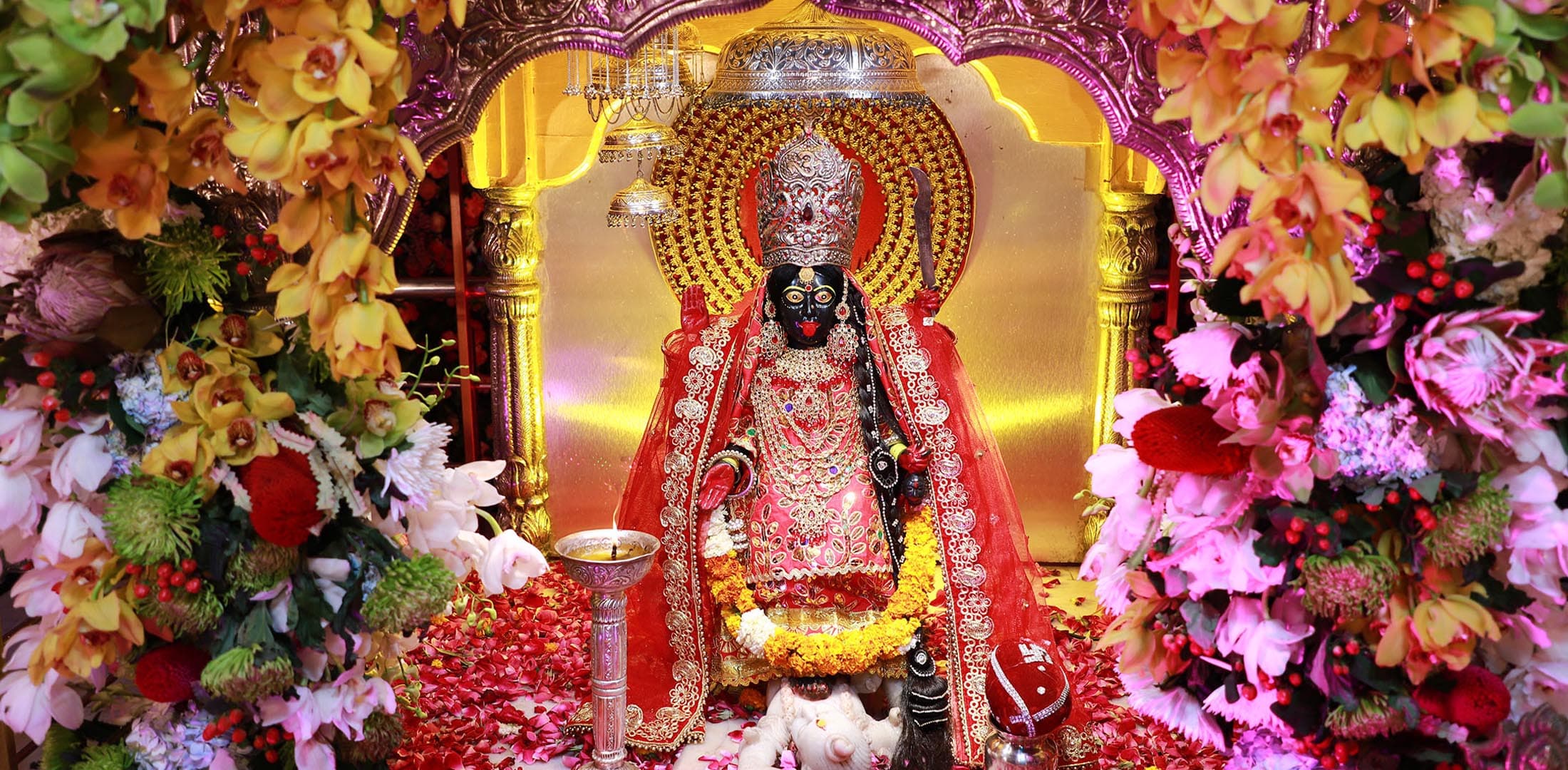
According to local lore, the Pandavas sought the blessings of Goddess Bhadrakali before the Kurukshetra War. After their victory, they returned to offer thanks and presented terracotta and metal horses to the deity. This story is the origin of the unique tradition of offering miniature horses at the temple. It is believed that the mundan or hair removal ceremony of Lord Krishna and his brother Balram was performed at this temple. This legend has made the temple a popular site for similar ceremonies for young children. A tale from the Dvapara Yuga speaks of King Mayurdhwaj, who ruled this area. Lord Krishna and Arjuna visited the king to test his charity. Krishna asked for the meat from the right side of the king’s son to feed his lion. As the king and queen prepared to fulfil this request, the Goddess appeared, blessing them with their devotion.
The temple’s significance extends beyond its religious importance. It serves as a cultural centre, preserving ancient traditions and fostering community bonds. The Bhadrakali Temple of Kurukshetra stands not just as a place of worship, but as a living link to India’s rich mythological past and a vibrant centre of contemporary devotion.

Jwaliji Temple, Kangra, Himachal Pradesh
Nestled in the picturesque Kangra valley of Himachal Pradesh, the Jwalaji Temple, dedicated to the Goddess of Light, is not just a place of worship but a powerful symbol of divine feminine energy.
Also known as the Jwala Devi Temple or Jwalamukhi Temple, the Jwalaji Temple is located on Kalidhar hill in the Kangra district. The temple’s exact date of establishment remains unknown, with legends tracing its origins to various eras of Hindu mythology. The temple’s construction is attributed to Raja Bhumi Chand, the Katoch ruler of Kangra, who was a great devotee of Goddess Durga. However, the present structure of the temple was completed in 1835 by Maharaja Ranjit Singh and Raja Sansar Chand. According to tradition, it is believed that the tongue of Goddess Sati fell here, making it a powerful centre of Shakti worship.
The most unique aspect of this temple is the presence of nine natural flames that have been burning continuously for centuries. These flames emerge from the earth through fissures in the rock and are considered manifestations of the goddess. Unlike most Hindu temples, no deity or idol is worshipped here. The eternal flames themselves are considered the embodiment of the goddess. The nine flames are known by different names: Annapurna, Chandi, Hinglaj, Vindhyavasani, Mahalakshmi, Saraswati, Ambika, Anjidevi, and Mahakali. The temple features a series of domes covered with gold, creating a striking visual against the backdrop of green hills.
Navaratri is celebrated with great fervour at the temple. It attracts thousands of devotees from across India. During Navaratri, Ashtami and Navami are considered particularly auspicious for worship at the temple. Ceremonial fire sacrifices known as havans are performed in the Chachar Chowk, an open square surrounding the temple.
According to local lore, a cowherd noticed that one of his cows always returned without milk. Upon following the cow, he saw a girl emerging from the forest to drink its milk before disappearing in a flash of light. This led to the discovery of the sacred site. The Mughal Emperor Akbar, skeptical of the temple’s miraculous flames, attempted to extinguish them. He tried covering them with an iron disk and even channeling water towards them, but all attempts failed. Impressed by this divine display, Akbar presented a golden parasol or chattar to the shrine, which is said to have transformed into an unknown metal due to his initial skepticism. The mystery of the eternal flames has attracted scientific attention. Despite digging nine kilometers deep, researchers have been unable to locate the source of the natural gas fueling these flames.

Some legends associate the temple with the Pandavas, heroes of the Mahabharata epic. It is said that they renovated the temple, as evidenced by the folk song Panjan Panjan Pandavan Tera Bhawan Banaya. The temple has been mentioned in various historical accounts. Firoz Shah Tughlaq is said to have translated a book from the temple’s library of 1300 volumes. Emperor Jahangir, after capturing Kangra fort in 1620 AD, also visited and mentioned this temple.
As one stands in the temple courtyard, surrounded by centuries of devotion and the mesmerising sight of the eternal flames, one can’t help but feel a connection to the spiritual heritage.
Vajreshwari Temple, Nagarkot, Himachal Pradesh
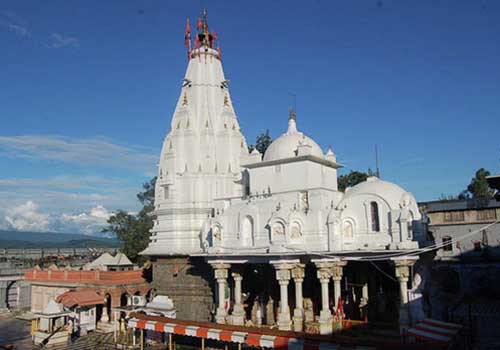
Located in the picturesque town of Nagarkot in Kangra district, the Vajreshwari Temple, dedicated to Goddess Vajreshwari is also known as Kangra Devi Mandir or Nagarkot Devi Temple. While the exact date of the temple’s establishment remains unknown, legends trace its roots to the epic era of the Mahabharata.
According to tradition, the original temple was built by the Pandavas. As the legend goes, the Goddess appeared to the Pandavas in a dream, revealing her presence in Nagarkot and instructing them to construct a temple for her protection. The Pandavas promptly built a magnificent shrine on the site, establishing what would become one of the most revered temples in the region.
However, the temple’s history is not one of uninterrupted peace. Over the centuries, it faced numerous challenges and destructions. Most notably, the infamous ruler Mohammed Ghazni is said to have looted the temple at least five times, drawn by its immense wealth of gold and silver. Despite these setbacks, the temple’s spiritual significance never waned, and it was always rebuilt and restored.
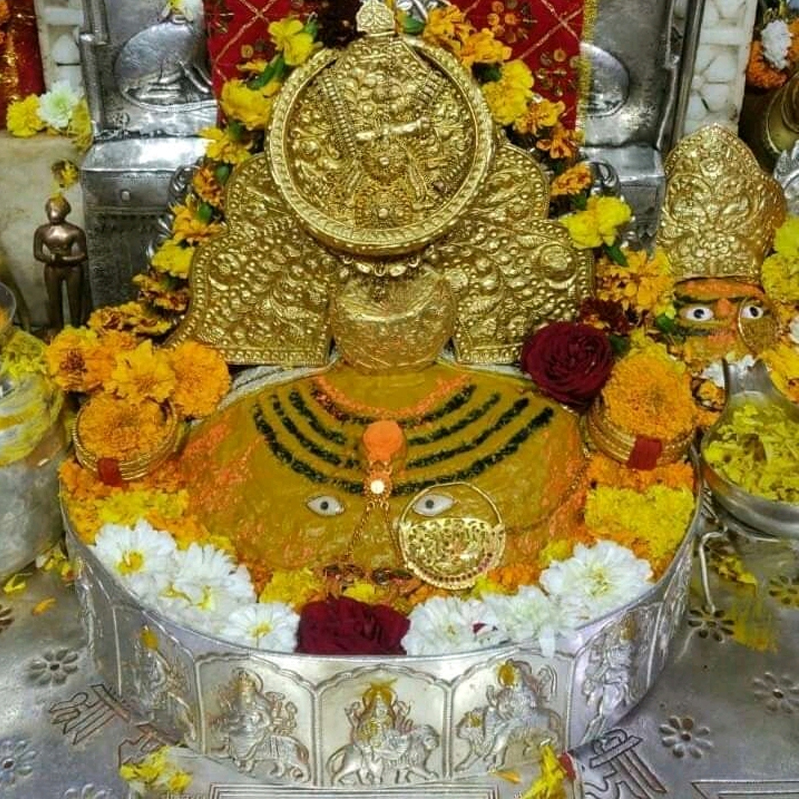
The present structure of the temple dates back to 1920. In 1905, a powerful earthquake had reduced the previous temple to ruins. However, it was reconstructed and restored to its former glory. According to tradition, this site marks the spot where the right breast of Goddess Sati fell. The name Vajreshwari is significant, literally meaning the lady of the thunderbolt, hinting at the goddess’s fierce and protective nature. The bhairava associated with the temple is Abhirunatheshwar, while the Shakti is Jayadurga Devi.
The temple is surrounded by a stone wall, reminiscent of a fort. This unique architectural feature not only adds to the temple’s grandeur but also speaks to its historical importance and the need for protection in turbulent times. Unlike many Hindu temples with elaborate idols, the main deity in the Vajreshwari Temple is present in the form of a Pindi. This abstract representation of the goddess adds to the mystical atmosphere of the shrine. Within the temple complex, there is a small shrine dedicated to Bhairav. This presence of Bhairav, a fierce manifestation of Lord Shiva, is typical of Shakti Peethas and symbolises the union of Shiva and Shakti energies.
In front of the main temple, an idol of Dhayanu Bhagat stands. According to local lore, Dhayanu Bhagat offered his head to the Goddess during the time of Akbar. Uniquely, the temple compound houses three tombs. While the significance of these tombs is not explicitly mentioned in the available sources, their presence adds an intriguing historical element to the temple complex.

One unique ritual associated with this temple occurs during Makar Sankranti, which falls in the second week of January. According to legend, after slaying the demon Mahishasura in battle, the Goddess sustained some injuries. To heal these wounds, she applied butter to her body in Nagarkot. To commemorate this event, the Pindi of the Goddess is covered with butter during Makar Sankranti, and the festival is celebrated for a week in the temple.
As mentioned earlier, the temple’s origin is linked to a divine dream of the Pandavas. This connection to the heroes of the Mahabharata adds a layer of epic significance to the shrine. Another legend speaks of a demon named Kalikala or Kalikut who terrorised humans, saints, and even gods in the region. The gods and sages, led by sage Vashista, performed a Chandi yajna to please Goddess Parvati. During this yajna, an offering was not given to Indra, enraging him. Indra hurled his Vajra or thunderbolt at the yajna, terrifying everyone. The Goddess then appeared, swallowed Indra’s weapon, and killed the demon. From this event, she came to be known as Vajreshwari Devi.
In a variation of the above legend, it’s said that when Indra hurled his Vajra at the demon Kalikala, the demon broke it into pieces. From these pieces, Vajra Devi appeared and slew the demon, hence earning the name Vajreshwari. The temple’s history of being looted multiple times by Mohammed Ghazni speaks to its immense wealth and importance. Despite these setbacks, the temple’s spiritual significance never diminished, and it was always restored. The presence of Dhayanu Bhagat’s idol in the temple complex hints at another intriguing story. It’s said that Dhayanu Bhagat offered his head to the Goddess during the time of Mughal Emperor Akbar.
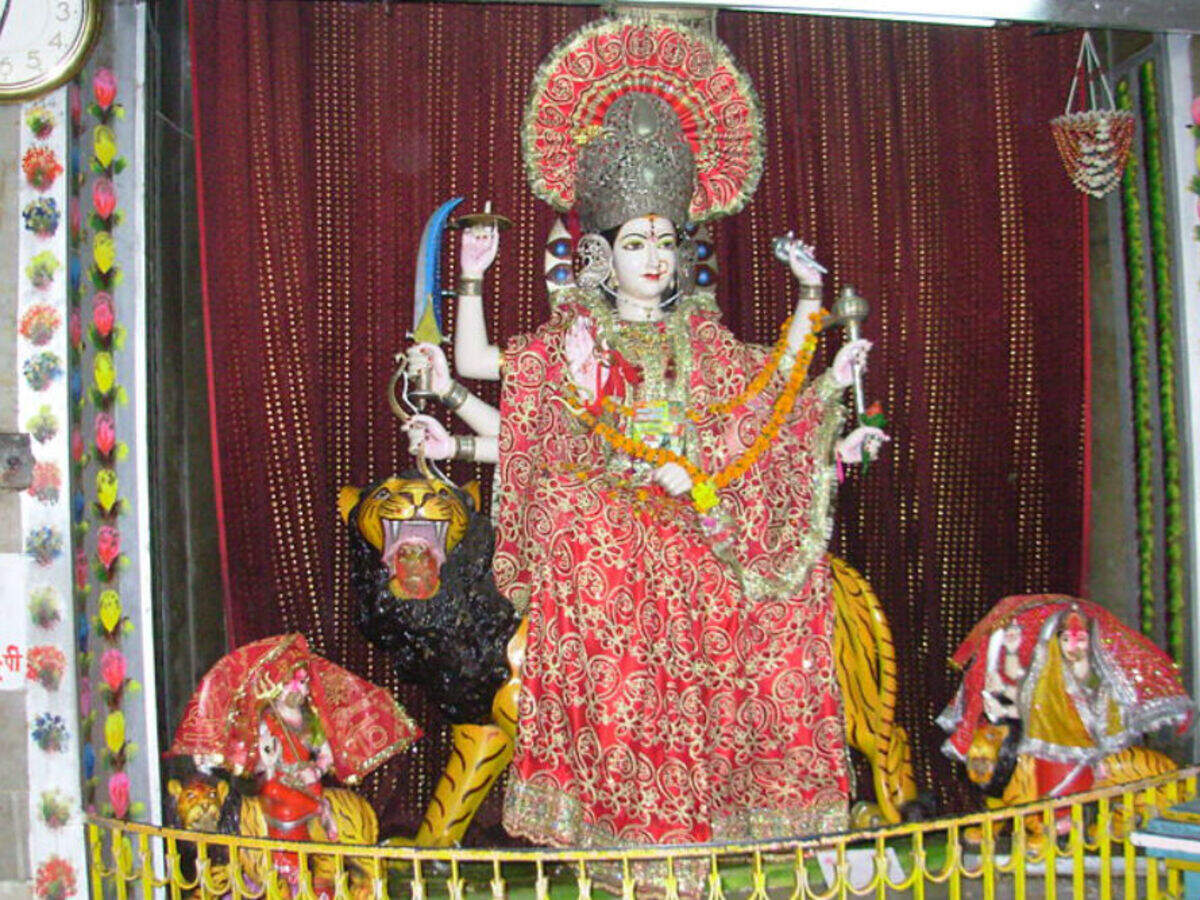
As one stands in the temple courtyard, surrounded by centuries of devotion and the echoes of ancient rituals, one can’t help but feel a connection to the spiritual heritage that has shaped this land for millennia. The temple’s resilience in the face of natural disasters and human invasions is a testament to the enduring power of faith.
 Memories and Such