
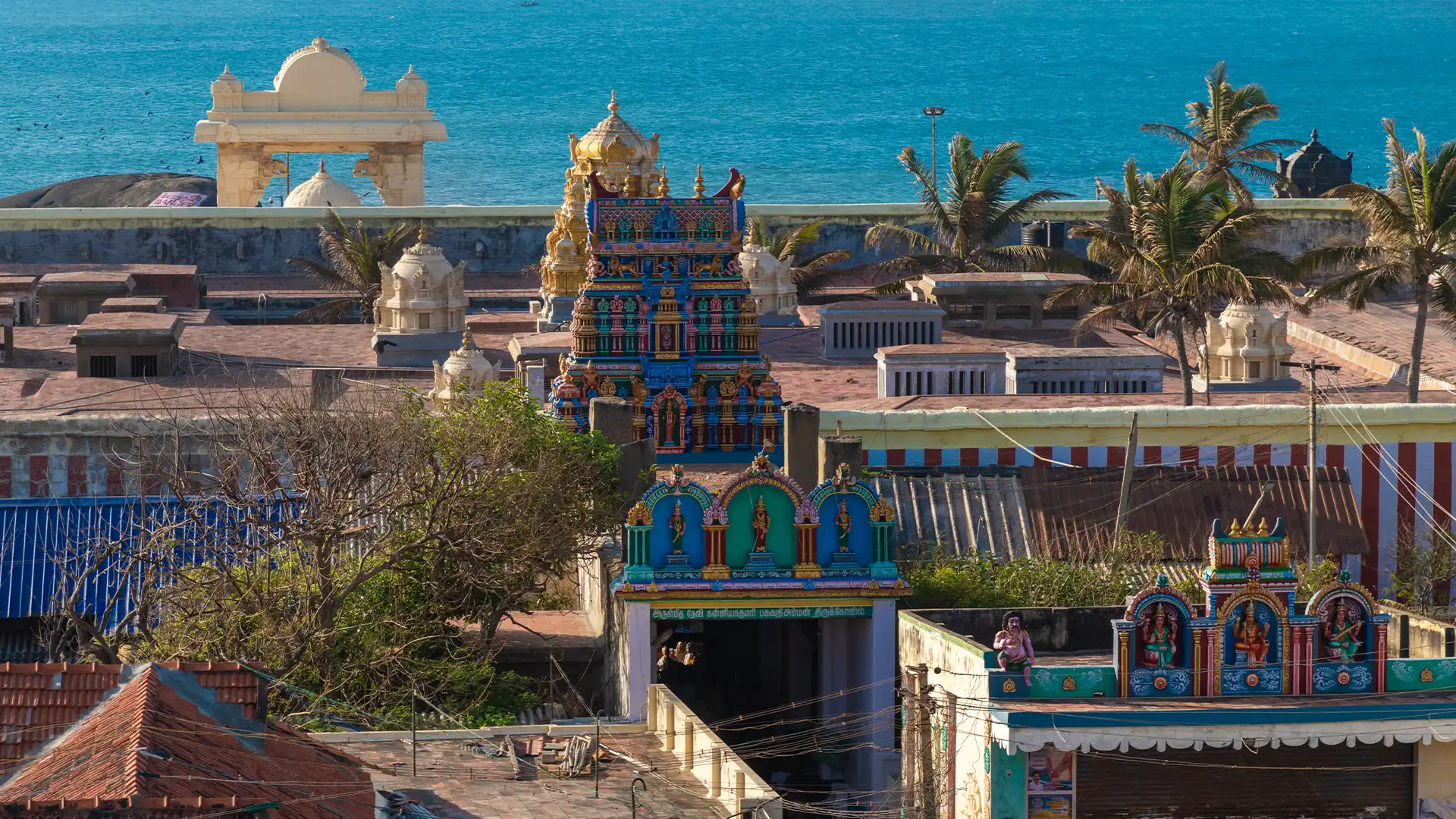
Bhagavathy Temple, Kanyakumari, Tamil Nadu
Nestled at the southernmost tip of mainland India, the Bhagavathy Amman Temple in Kanyakumari is dedicated to Goddess Kanya Kumari. Historical records and legends suggest that the temple’s roots may reach back to the early Sangam period between 300 BC and 300 CE.
The temple is believed to be over 3000 years old, with its original sanctum possibly dating back to this era. Over the centuries, the temple has undergone numerous renovations and expansions by various ruling dynasties. The Pandyas are credited with the initial construction, while subsequent contributions and enhancements were made by the Cholas, the Vijayanagara Empire, and the Travancore royalty. Sage Parashurama, the sixth avatar of Lord Vishnu, is said to have performed the consecration of the temple and installed the main idol of Devi Bhagavathy. This blue stone image, facing east, is believed to have been consecrated by the sage himself.
According to tradition, it is believed that the right shoulder and the area around the spine of Goddess Sati here. The Shakti Peetha here is known as Sarvani, and the temple is often referred to as the Sarvani Shaktipeeth. The presence of Kundalini Shakti in the region is attributed to the falling of these parts of Sati’s body. At the Bhagavathy Amman Temple, the goddess is worshipped as Devi Kanya Kumari, an incarnation of Parvati, the divine consort of Shiva. The name Kanyakumari itself is significant, with Kanya meaning Virgin and Kumari meaning Girl. The Bhairava, the fierce manifestation of Lord Shiva who accompanies the goddess at each Shakti Peetha, is known here as Nimish.
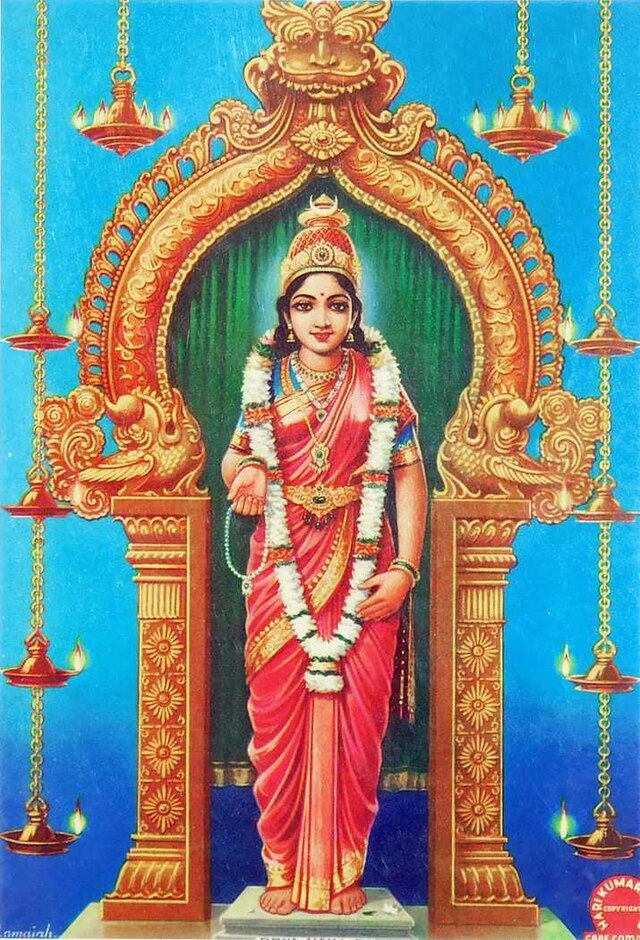
The temple showcases the magnificent Dravidian style of architecture, characterised by its impressive gopuram or gateway tower, intricate carvings, and grand mandapams or pillared halls. Situated at the confluence of three great water bodies: the Indian Ocean, Arabian Sea, and the Bay of Bengal, the temple offers a unique spiritual and geographical setting. Perhaps the most famous feature of the temple is the diamond nose ring worn by the goddess. This nose ring is believed to be so dazzling that it once caused a merchant ship to crash on nearby rocks, mistaking its sparkle for a lighthouse beacon.
Due to the incident with the nose ring, the eastern door of the temple is kept permanently closed, only to be opened on special occasions like Chitra Pournami. The temple complex houses several other shrines dedicated to various deities including Lord Surya Deva, Lord Ganesha, Lord Ayyappa, Goddess Bala Sundari, and Goddess Vijaya Sundari. An ancient well within the temple premises is believed to be connected to its Shakti Peetha status.
Every day, sacred texts are read from 8 to 9:30 am, organised by the temple trust. Women gather daily in the afternoon to sing devotional songs. Every evening, there is a recitation of the Devi Purana, followed by storytelling and kirtana. Puja is performed in the morning, with aarti conducted both in the morning and evening.
Navratri is celebrated with great fervour. Daily mantras are recited by learned Brahmins, and women perform havan on Ashtami, the eighth day. The Vaisakha Festival is a significant celebration at the temple. On Chitra Pournami, the eastern door of the temple is opened, a rare occurrence. The best time to visit the temple is believed to be during the Brahma Muhurta, from 4:30 to 5:30 am.
According to Hindu mythology, the demon Banasura gained a blessing that he could only be killed by a virgin girl. To eliminate this threat, Goddess Parasakthi took the form of Kumari, a virgin girl. The goddess eventually defeated Banasura. Saint Narada and Lord Parasurama then requested the goddess to exist on earth until the end of Kaliyuga, which she accepted. Another popular legend tells of how Goddess Kanya Kumari was set to marry Lord Shiva. However, on the wedding day, as Lord Shiva was on his way from Suchindram, Narada assumed the form of a rooster and crowed prematurely. Hearing this, Shiva believed he had missed the auspicious hour and returned, leaving Kanya Kumari unwed. It is said that when the devastating tsunami struck the region in 2004, the Bhagavathy Amman Temple was one of the few structures that escaped destruction, believed to be due to the divine protection of the goddess.
The Bhagavathy Amman Temple is a living link to India’s rich spiritual traditions, inviting all who visit to experience the divine presence of the Mother Goddess in her manifestation as Kanya Kumari.

Shuchi Temple, Suchindrum, Tamil Nadu
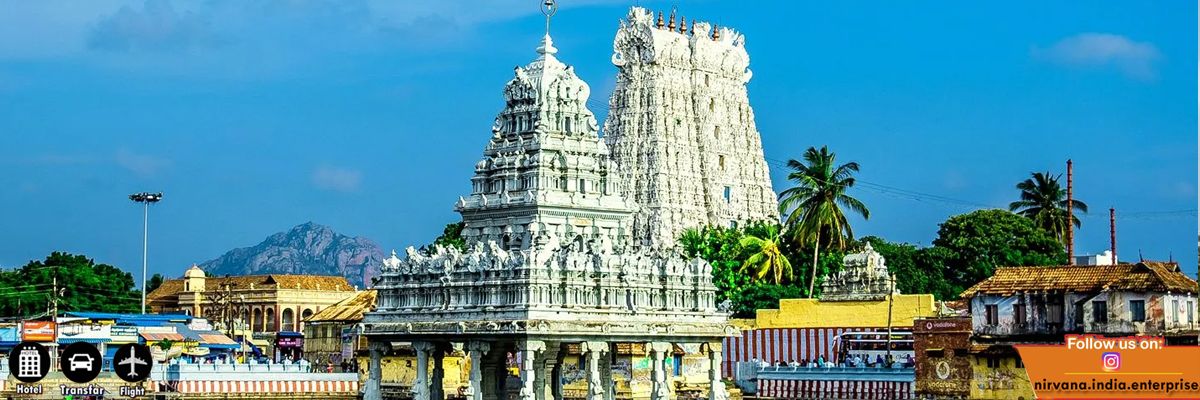
Nestled in the southernmost district of Kanyakumari in Tamil Nadu, the Shuchi Temple in Suchindrum is dedicated to the trinity of Shiva, Vishnu, and Brahma. The exact date of the temple’s establishment remains uncertain, but historical records and legends suggest that the temple’s roots may reach back over 3000 years. The temple is said to have been built by Parashurama, the sixth avatar of Lord Vishnu.
Over the centuries, the temple has undergone numerous renovations and expansions by various ruling dynasties. The earliest lithic records of Suchindram belong to the 9th century. The present masonry structure was built during the Chola dynasty in the 9th century, while later expansions are attributed to Thirumalai Nayak and the Travancore Maharajas. The temple’s construction took place over an extended period of at least six hundred years, with parts of the temple dating back to the late 8th century, while others are from the 15th century. Until Kanyakumari became part of Tamil Nadu, the Suchindram Temple was under the administration of the Travancore Kings.
According to tradition, it is believed that the upper teeth of Goddess Sati fell here. The Shakti Peetha here is known as Shuchi, and the goddess is worshipped as Maa Narayani, wife of Narayan. Suchindrum is the location where Lord Indra achieved Suchi or purification. At the Shuchi Temple, Lord Shiva is worshipped as Sangharor Samhara or the destroyer. The Bhairava, the fierce manifestation of Lord Shiva who accompanies the goddess at each Shakti Peetha, is known here as Samhara Bhairava. He is present in a nearby village, and in Suchindram, he is locally called Sthanu Shiva.
What makes this temple truly unique is the presence of Sri Sthanumalayan, a representation of the combined forces of Shiva, Vishnu, and Brahma. The name Sthanumalayan is derived from Thanu representing Lord Shiva, Mal representing Lord Vishnu, and Ayan representing Lord Brahma. This unified representation is rare in Hindu temples and makes the Shuchi Temple particularly special.
The temple showcases the magnificent Dravidian style of architecture, characterised by its impressive gopuram or gateway tower, intricate carvings, and grand mandapams. The Thousand Pillared Hall is a magnificent hall featuring precisely carved pillars, each telling different stories through their sculptures. The hall serves as an excellent example of Dravidian architecture and artistic excellence. The temple is famous for its musical pillars, a unique architectural feature. There is a huge beautiful idol of Nandi the bull made from a single stone in front of the temple. The temple complex houses several other shrines dedicated to various deities including Lord Surya Deva, Lord Ganesha, Lord Ayyappa, Goddess Bala Sundari, and Goddess Vijaya Sundar. The tallest is the eastern tower, with 11 stories and a height of 44 m.
The temple follows a strict schedule of six daily pujas: Ushakalam at dawn, Kalasanthi in the morning, Uchikalam at noon, Sayarakshai in the evening, Irandam Kalam at night, and Ardha Jamam at midnight. The various festivals celebrated in the temple include Margazhi Thiruvadhirai in December-January, Thai Pongal in January, Panguni Uthiram in March-April, Chithirai festival in April-May, Navaratri celebrated with twice a year, Shivaratri, Suchindram maargali festival and Rath Yatra, Avani in August, and Masi festival in March.
According to the Sthalapurana, Indra suffered a curse from sage Gowthama when he stealthily cast amorous glances at Ahalya, the wife of Gowthama. Unable to bear the mortification brought about by the curse, Indra sought immediate redemption. He came to Gnana Aranya, as this place was then called, and offered worship to Lord Shiva. Relieving Indra of his curse, Lord Shiva granted his wish that the place where he attained purification should henceforth be called Suchindrum.
Another story tells that the Trimurti: Brahma, Vishnu, and Shiva, cajoled by their divine consorts, came down to Earth to test the chastity of Anusuya, wife of sage Athri at Gnana Aranya. The Gods, for this misadventure, had to suffer a curse from the Rishipatni and undergo the purification process before they could be restored to their former glory. One of the legends of Suchindram is related to the chastity of Anasuya, wife of Sage Atri. The legend says that the trimurtis appeared in front of Anasuya as begging brahmins. When she was about to serve them, they imposed a condition that they would eat only if she served them naked. Through the power of her chastity, she converted the three Gods into babies and suckled them.
As you stand in the temple courtyard, surrounded by centuries of devotion and the echoes of ancient rituals, you can’t help but feel a connection to the spiritual heritage that has shaped this land for millennia. The Shuchi Temple, with its blend of myth, history, and living faith, continues to be a powerful force, inviting all who visit to partake in its timeless spiritual journey.
 Memories and Such