
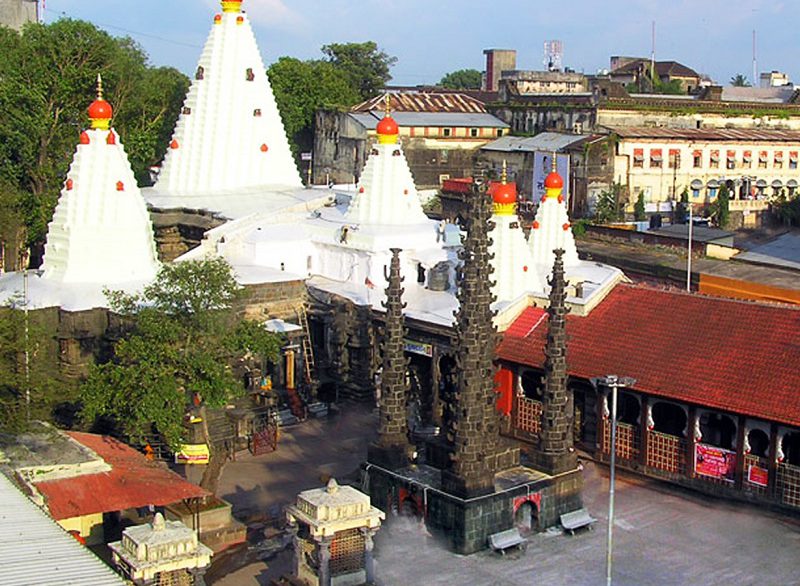
Bakreshwar Temple, Siuri Town, West Bengal
The Bakreshwar Temple, located in the Birbhum district, near Siuri Town, is also known as the Mahishamardini Shakti Peetha. The temple is dedicated to Goddess Mahishamardini, a fierce form of Durga, and Lord Shiva, worshipped here as Vakranath Bhairava. Nestled amidst serene surroundings on the banks of the Paaphra River, Bakreshwar Temple’s origins are deeply rooted in Hindu mythology and history. The name Bakreshwar is derived from two Sanskrit words: Vakra or curve or deformity and Ishwar or Lord, referring to Lord Shiva’s manifestation here as Vakranath. The temple complex is believed to have been established during ancient times, with its current structure dating back to 1761 AD, when it was rebuilt by King Darpanarayan.
It is believed that Sati’s eyebrows, symbolic of her mind fell at this location when Lord Vishnu dismembered her body with his Sudarshan Chakra to pacify Lord Shiva’s grief-stricken Tandava. This sanctified Bakreshwar as a Shakti Peetha. The temple also has historical ties to Sage Ashtavakra, who performed intense penance here for 10,000 years. His devotion led Lord Shiva to bless him and declare Bakreshwar a sacred site. The temple’s construction is attributed to Vishwakarma, the celestial architect, who built it on Shiva’s command.
Goddess Sati is worshipped as Mahishamardini, meaning the slayer of Mahishasura. Lord Shiva is worshipped as Vakranath Bhairava, symbolising his protective and meditative aspects. The portion between Sati’s eyebrows, symbolising her mind is believed to have fallen here.

The temple complex houses two main shrines: one dedicated to Goddess Mahishamardini and another to Lord Vakranath. This dual worship reflects the harmonious convergence of Shaivite and Shakta traditions. Bakreshwar is famous for its ten geothermal hot springs, which are considered sacred by devotees. These springs are believed to have been created by Lord Shiva’s tears when he carried Sati’s body. The most prominent spring is called Agni Kund, with water temperatures reaching up to 93°c. Devotees believe bathing in these springs purifies sins and cures ailments. The temple features intricate carvings and domes inspired by Oriya architectural styles. The sanctum houses a beautiful idol of Mahishamardini with ten hands slaying Mahishasura while seated on a lion. A shrine dedicated to Sage Ashtavakra lies within the temple complex. Devotees traditionally visit this shrine before entering the main sanctum. A unique red platform called Panchamukhi Asana or the seat of five skulls is used for Tantric rituals. It is believed that performing sadhana here enhances spiritual power.
The rituals at Bakreshwar Temple are deeply rooted in Tantric practices and traditional Hindu worship. The day begins with Mangala Aarti, the early morning prayers followed by offerings of flowers, fruits, coconuts, and sweets. Devotees chant hymns like the Mahishasura Mardini Stotram during pujas. Navratri is celebrated grandly with special rituals honoring Mahishamardini. Devotees offer red hibiscus flowers, symbolic of power and victory. Cultural programmes and community feasts are organised during this time. Dedicated to Vakranath Bhairava, Maha Shivratri involves night-long prayers and abhishekam, the ritual bathing with milk, honey, ghee, curd, and holy water. Bathing in the hot springs before entering the temple is considered an essential purification ritual for devotees. Tantriks perform esoteric rituals on the Panchamukhi Asana during auspicious nights like Amavasya or the new moon to invoke divine blessings.
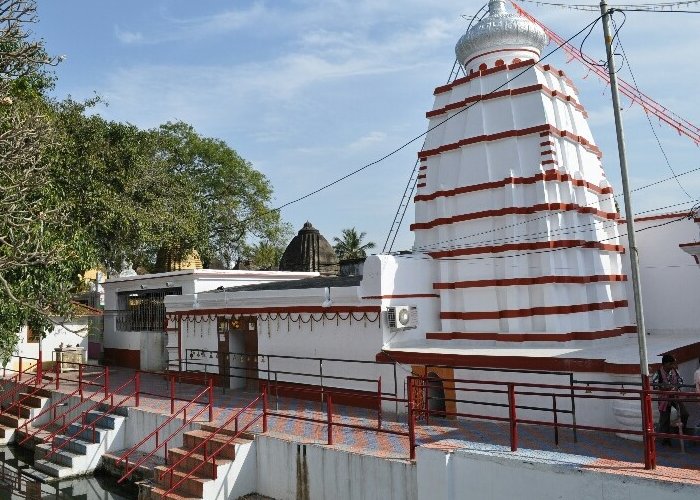
One of the most popular legends associated with Bakreshwar revolves around Goddess Mahishamardini slaying the demon Mahishasura. According to Hindu mythology, Mahishasura terrorised heaven and earth with his tyranny. Unable to defeat him, the gods sought help from Goddess Durga, who manifested as Mahishamardini at this site. A fierce battle ensued between the goddess and Mahishasura at Bakreshwar. Armed with divine weapons in her ten hands and riding her lion mount, she vanquished the demon after days of combat. This victory symbolises the triumph of good over evil and establishes Bakreshwar as a site of immense spiritual power.
Sage Ashtavakra performed rigorous penance at Bakreshwar for 10,000 years after being cursed by Rishi Subrita during Satya Yuga, the age of truth. His body was twisted into eight deformities due to his anger but was healed by Lord Shiva after his intense devotion. Shiva not only cured him but also blessed him with enlightenment at this sacred spot. It is believed that those who worship Ashtavakra first before offering prayers at Vakranath Bhairava receive abundant blessings.
Another legend attributes Bakreshwar’s hot springs to Lord Shiva’s grief over Sati’s death. It is said that his tears fell on this land while carrying Sati’s body during his cosmic dance or Tandava, creating these geothermal springs as manifestations of his sorrowful energy. Devotees believe these springs possess healing properties due to their divine origin.
The Bakreshwar Temple offers a unique blend of spirituality, mythology, natural beauty, and cultural heritage. The convergence of Shaivite and Shakta traditions reflects India’s rich spiritual diversity while rituals like Tantric sadhana on Panchamukhi Asana make it an important center for esoteric practices. Whether you seek spiritual solace or wish to explore ancient traditions, visiting this sacred shrine will leave you enriched in mind and spirit!
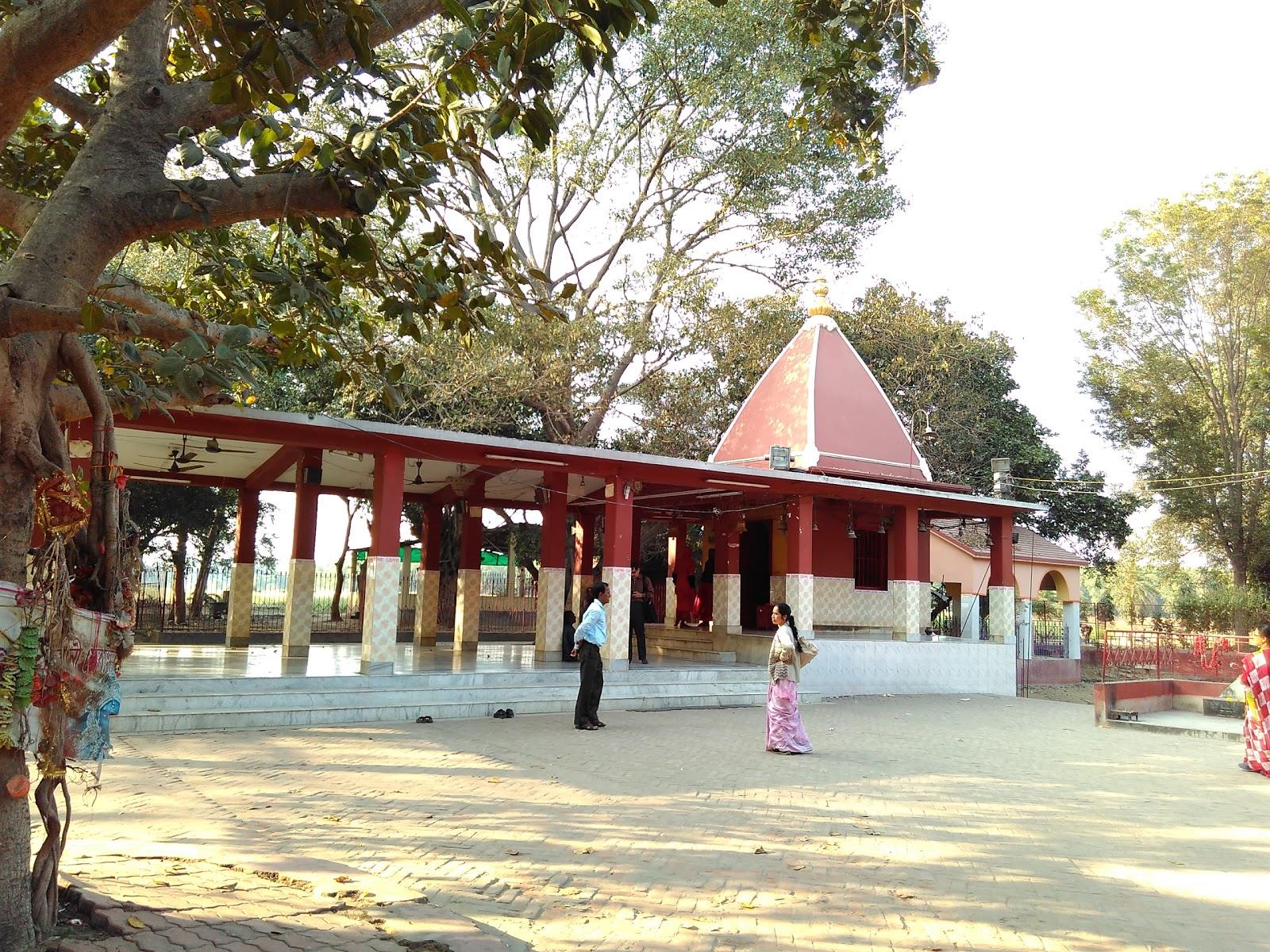
Kankalitala Temple, Bolpur West Bengal
Located in the serene village of Kankalitala near Bolpur in Birbhum district, the Kankalitala Temple is dedicated to Goddess Sati, worshipped here as Kankaleshwari Devi, and Lord Shiva, revered as Ruru Bhairava. The temple holds immense spiritual significance as it is believed to be the site where Sati’s waist or kankal fell, sanctifying the location as a Shakti Peetha. Nestled on the banks of the Kopai River and surrounded by natural beauty, Kankalitala is a destination for devotees seeking divine blessings and spiritual solace.
According to legend, it is believed that Sati’s waist or kankal fell at this site, creating a depression in the earth that later filled with water to form a sacred pond or kund. The temple has been a center of devotion for centuries. Unlike many grand temples in India, Kankalitala stands out for its simplicity and natural surroundings. The sacred kund near the temple is considered the original form of the goddess at this Shakti Peetha and continues to be worshipped by devotees. The temple structure has undergone renovations over time but retains its ancient charm. The garbhagriha or sanctum sanctorum houses no traditional idol but instead features a large framed painting of Goddess Kali in her Dakshina Kali form, standing atop Lord Shiva.
Goddess Sati is worshipped as Kankaleshwari Devi, symbolising nurturing energy and protection. Lord Shiva is revered as Ruru Bhairava, representing his fierce yet meditative aspect. Sati’s waist or kankal is believed to have fallen here. The combination of Kankaleshwari Devi and Ruru Bhairava represents the union of nurturing feminine energy with protective masculine power, making this Shakti Peetha a site of immense spiritual energy.
The most sacred feature of Kankalitala is the kund or the pond, believed to have formed where Sati’s waist fell. Known as Dudh Pukur, this shallow pond is surrounded by protective walls and steps leading down to its waters. Devotees consider this kund to be imbued with divine energy. However, bathing or collecting water from it is strictly prohibited out of reverence for its sanctity. Unlike most temples that house idols made of stone or metal, Kankalitala features a framed painting of Goddess Kali in her Dakshina Kali form. This unique representation underscores the temple’s simplicity and spiritual focus. The garbhagriha or sanctum santorum is capped by a curved pyramidal roof adorned with a metal spire. Connected to it is a raised rectangular platform called the natmandir, which serves as an area for devotees to view the goddess and participate in rituals. The natmandir also provides respite from the sun and serves as a space for meditation and quiet reflection. Situated on the banks of the Kopai River, the temple offers a tranquil environment surrounded by greenery.
The rituals at Kankalitala Temple reflect traditional Hindu practices combined with local customs. The day begins with Mangala Aarti at dawn. Devotees offer flowers (especially hibiscus), coconuts, fruits, sweets, and incense sticks while chanting hymns dedicated to Goddess Kali. Navratri is celebrated grandly over nine days with special pujas honoring Kankaleshwari Devi. Devotees participate in rituals such as Kumari Puja, the worshipping young girls as manifestations of Shakti, and offer bhog made from rice, fruits, and sweets. During Durga Puja, elaborate rituals are performed to honor Mahishamardini Durga’s victory over evil forces. The temple witnesses large gatherings of devotees who come to seek blessings during this auspicious time.

Dedicated to Ruru Bhairava, Shivratri involves night-long prayers and abhishekam with milk, honey, ghee, curd, and holy water. On Sharad Poornima, the full moon night of the Hindu lunar month of Ashvin which falls in September/October and marks the end of the monsoon season, special prayers are held at the kund under moonlight to invoke divine blessings.
According to legend, when Sati’s waist fell at this site, it created a deep indentation in the earth that later filled with water from divine sources. This pond became known as Dudh Pukur due to its milky-white appearance under moonlight. Devotees believe that Sati’s waist bones lie beneath this pond, making it one of the most sacred features of Kankalitala. Another story explains why there is no traditional idol at Kankalitala Temple. It is said that when priests attempted to install an idol of Goddess Kali here, they experienced divine visions instructing them to preserve her presence through a painting instead. This framed image has since become the focal point of worship at this Shakti Peetha. Local lore suggests that Ruru Bhairava once appeared before devotees who were struggling with hardships and granted them boons after they prayed earnestly at his shrine within the temple complex.
The Kankalitala Temple on the banks of the Kopai River provides an ideal setting for meditation and introspection. Its unique features like the sacred kund and absence of traditional idols emphasise simplicity in worship while preserving ancient traditions. Whether one seeks spiritual solace or wishes to explore India’s rich cultural heritage, visiting this ancient shrine will leave one feeling connected to divine feminine energy.

Kiriteswari Temple, Kiritkona West Bengal
The ancient Kiriteswari Temple, located in the tranquil village of Kiritkona near Lalbagh in Murshidabad district is dedicated to Maa Kiriteswari, also known as Mukuteshwari, and Lord Shiva, revered here as Samvarta Bhairava. Known for its simplicity, spiritual energy, and unique rituals, the Kiriteswari Temple is one of Bengal’s oldest and holiest shrines.
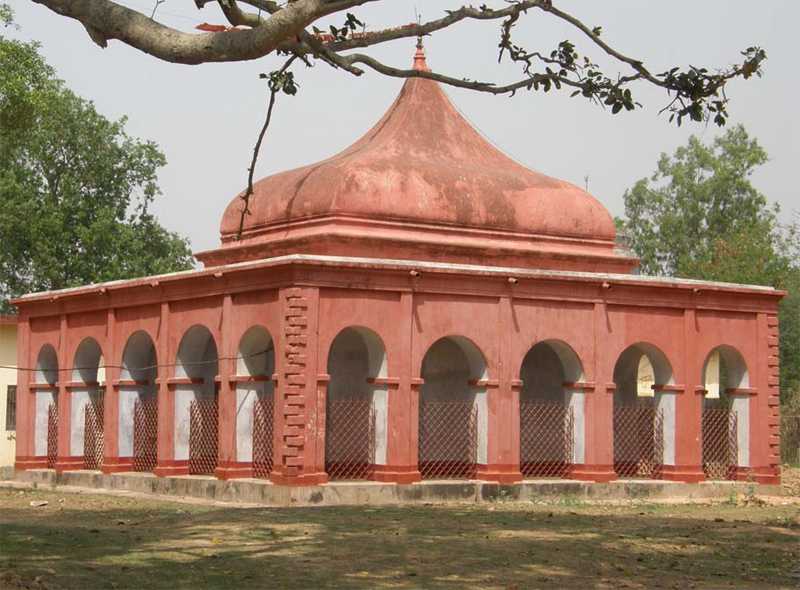
According to legend, it is believed that Sati’s crown or kirit fell at this site in Kiritkona village, sanctifying it as a Shakti Peetha. The temple is one of the oldest in Bengal and has been a centre of devotion for over 1,000 years. Historical records indicate that the original temple was constructed in 1405 but was destroyed by a fire. The present structure was rebuilt in the 19th century by King Darpanarayan Roy of Lalgola. The temple served as the presiding deity for the ruling families of Murshidabad during its golden age. The temple’s architecture reflects a blend of Hindu, Buddhist, and Islamic styles, symbolising harmony and inclusivity. Despite its simplicity, it exudes an aura of divinity that draws devotees from across India.
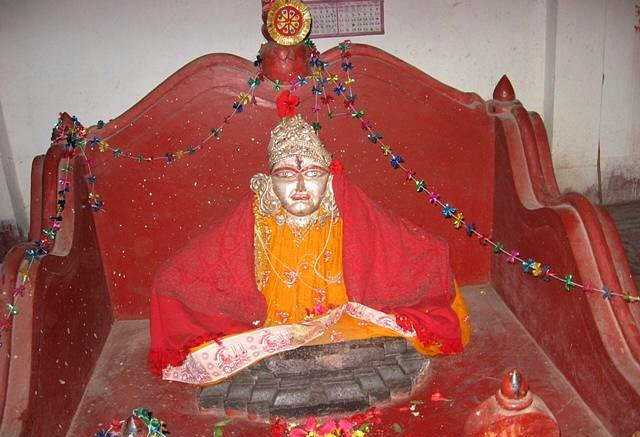
Goddess Sati is worshipped as Vimala or Mukuteshwari, symbolising purity and divine power. Lord Shiva is revered as Samvarta Bhairava, representing his fierce yet protective aspect. Sati’s crown is believed to have fallen here. Unlike other Shakti Peethas where body parts fell, Kiriteswari is considered an Upa Peetha since an ornament, the crown, fell here instead. This makes it unique among the Shakti Peethas.
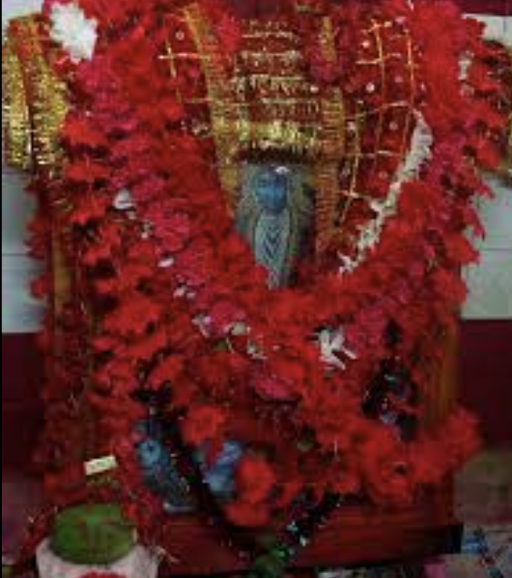
The temple does not house a conventional idol or deity. Instead, Maa Kiriteswari is represented by a red-colored stone placed on a high altar within the sanctum sanctorum. The red stone is veiled and is only unveiled during special occasions like Durga Puja Ashtami when it is given a sacred bath. The temple’s architecture reflects a blend of Hindu, Buddhist, and Islamic influences. Its garbhagriha, the sanctum sanctorum, features intricate carvings and a curved roof adorned with a metal spire. The original crown or kirit of Goddess Sati is preserved at Rani Bhabani’s Guptamath, located opposite the temple. Devotees believe this crown radiates divine energy and blessings.
The temple is often referred to as the sleeping place of Mahamaya due to its serene ambiance and association with Goddess Durga’s nurturing aspect. Local legends suggest that Nawab Mir Jafar sought Maa Kiriteswari’s blessings during his final days while suffering from leprosy. He requested her holy Charanamrita or sacred water, which reportedly alleviated his suffering.
Daily pujas are performed by priests who offer flowers, fruits, incense sticks, and sweets to Maa Kiriteswari. Devotees chant hymns like the Devi Mahatmyam during prayers. Durga Puja is celebrated with great fervour at this Shakti Peetha. On Ashtami, the eighth day of the Navaratri festival, special rituals are conducted where the red stone representing Maa Kiriteswari is bathed with milk, honey, ghee, curd, and holy water. A grand feast is organised on Ashtami that attracts thousands of devotees from nearby villages. On Sharad Poornima, special prayers are held under moonlight to invoke divine blessings. The Mahaprasad prepared in the temple kitchen using traditional methods is considered sacred by devotees who partake in it for spiritual fulfilment. Samvarta Bhairava’s shrine within the temple complex witnesses special pujas during Shivratri when devotees offer abhishekam with milk and water to seek his blessings for protection and prosperity.
According to legend, when Sati’s crown fell at this site, it radiated such immense divine energy that it created an aura visible across Murshidabad. Devotees believe this energy still permeates the area around Kiritkona village. Another intriguing story ties Nawab Mir Jafar to this sacred site. On his deathbed, while suffering from leprosy, he sought Maa Kiriteswari’s blessings through her holy Charanamrita. It is believed that her blessings eased his pain and brought him peace during his final moments. Rani Bhabani of Natore played a significant role in preserving Maa Kiriteswari’s legacy by safeguarding her crown at Guptamath. Her devotion ensured that future generations could continue worshipping the goddess with reverence.
The Kiriteswari Temple with its unique features like the absence of traditional idols emphasises simplicity in worship while preserving ancient traditions. Whether you seek spiritual solace or wish to explore India’s rich cultural heritage, visiting this ancient shrine will leave you feeling connected to the divine feminine energy embodied by Maa Kiriteswari.
 Memories and Such