
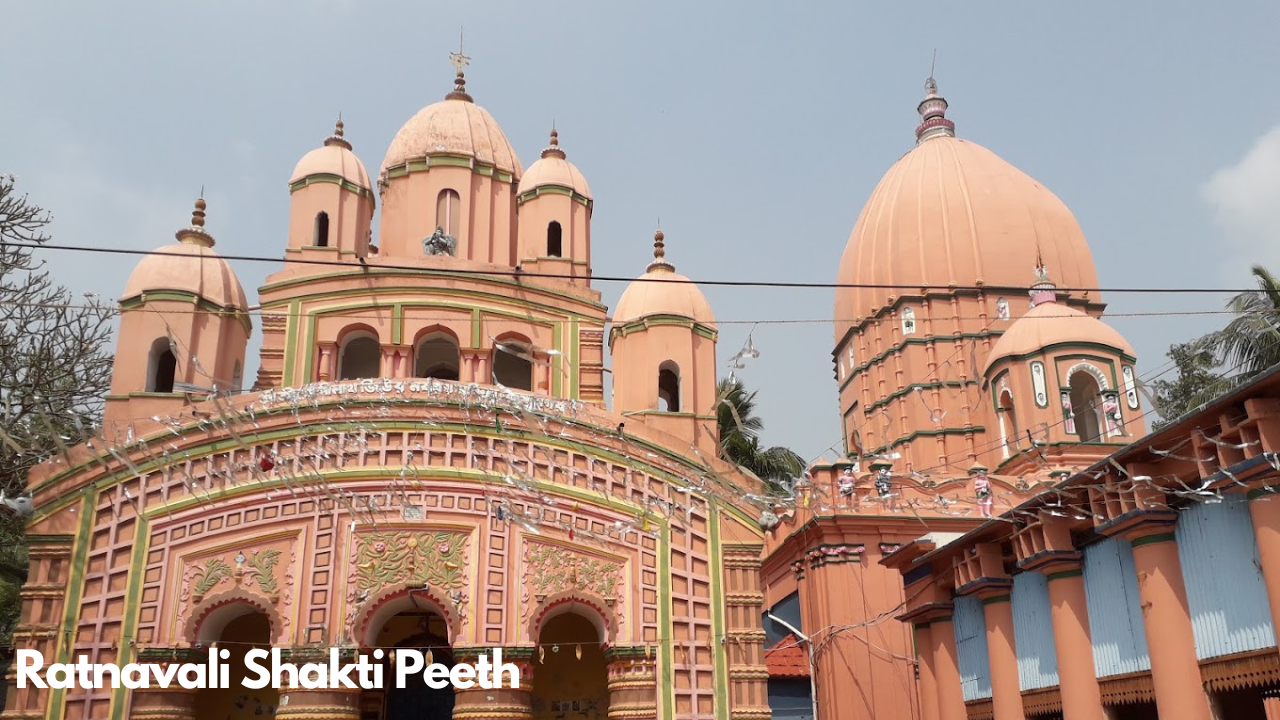
Ratnavali, Khanakul I, West Bengal
Also known as the Anandamayee Shakti Peeth, the Ratnavali Shakti Peeth is a sacred temple located in Khanakul-Krishnanagar, Hooghly district. Nestled on the banks of the Ratnakar River, this ancient shrine is dedicated to Maa Kumari, and Lord Shiva is worshipped as Bhairava.
It is believed that Sati’s right shoulder fell at this location in Khanakul-Krishnanagar. The temple has been a centre of devotion for centuries and is known locally as the Anandamayee Shakti Peeth. The name Ratnavali translates to a string of gems, symbolising the divine radiance and spiritual wealth associated with this sacred site. The current structure reflects traditional Bengali temple architecture and has undergone renovations over time to preserve its sanctity.
Goddess Sati is worshipped here as Maa Kumari, symbolising purity and divine energy. Lord Shiva is revered as Bhairava, representing his protective aspect. The right shoulder or dakshina skandha of Sati fell at this site.

The temple is situated on the tranquil banks of the Ratnakar River, adding to its serene ambiance. Devotees believe that the river’s waters carry divine blessings and often perform purification rituals before entering the temple. The sanctum sanctorum houses an intricately carved idol of Maa Kumari adorned with ornaments and flowers. Adjacent to her shrine is a smaller shrine dedicated to Bhairava, symbolizing Lord Shiva’s presence as her protector. The temple features traditional Bengali architecture with a curved roof or chala and terracotta designs on its walls. Its simplicity emphasizes spiritual connection over material grandeur. During Navratri, the temple becomes a hub of religious activity with grand decorations, cultural performances, and community feasts. Despite being located in a relatively remote area, the temple is well-connected by road and rail. Pilgrims often travel from Howrah or Kolkata to visit this sacred site.
Daily worship includes the morning and evening aartis and devotees offer flowers, especially hibiscus, fruits, sweets, incense sticks, and coconuts to Maa Kumari while chanting hymns like Durga Saptashati. Navratri is celebrated twice a year in March-April and September-October with great fervor. Special pujas are performed over nine days to honor Maa Kumari’s nurturing aspect. Devotees observe fasting during these nine days as an act of devotion. Durga Puja is one of the most vibrant festivals celebrated at Ratnavali Shakti Peeth. Elaborate rituals are conducted to honor Mahishamardini Durga’s victory over evil forces. The deity is adorned with new clothes and jewelry donated by devotees during this time.
Dedicated to Bhairava or Lord Shiva, Maha Shivratri involves night-long prayers and abhishekam with milk, honey, ghee, curd, and holy water. Devotees light oil lamps around the temple premises as part of their offerings. Havan ceremonies are conducted during auspicious occasions like Navratri and Shivratri to invoke divine blessings for prosperity and protection.
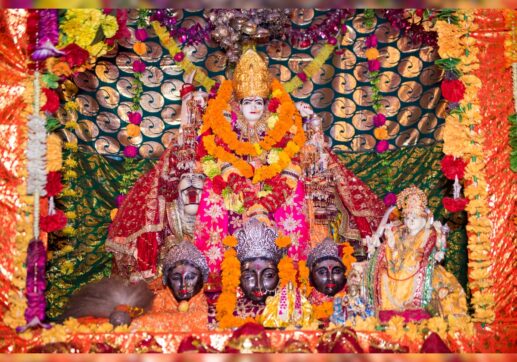
According to legend, when Sati’s right shoulder fell at this site after being dismembered by Vishnu’s Sudarshan Chakra, it radiated immense divine energy that sanctified the surrounding area. Devotees believe that this energy still permeates the temple premises, making it a powerful center for spiritual awakening. Local lore suggests that Bhairava appeared in his fierce form to protect this sacred site from negative energies after Sati’s right shoulder fell here. His presence ensures balance and harmony at Ratnavali Shakti Peeth. It is believed that devotees who pray earnestly at Ratnavali Shakti Peeth experience miraculous healing from ailments. Many pilgrims visit the temple seeking relief from physical and emotional hardships through Maa Kumari’s blessings.
The Ratnavali Shakti Peeth offers visitors a unique spiritual experience rooted in mythology, devotion, and natural beauty. Whether you seek spiritual solace or wish to explore India’s rich cultural heritage, visiting this ancient shrine will leave you feeling connected to the divine feminine energy.
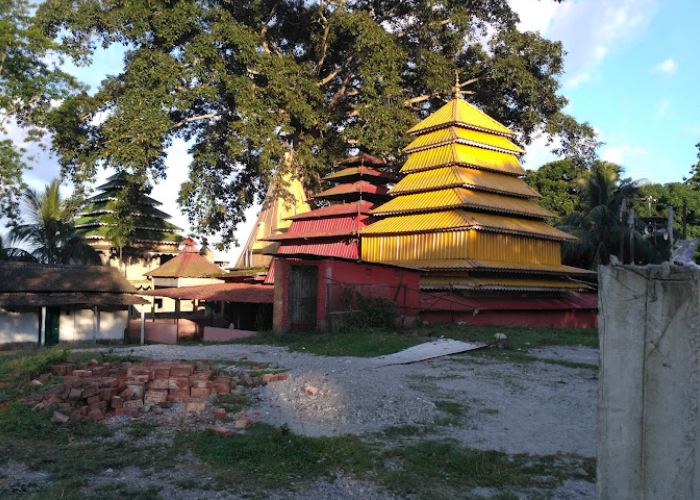
Trishrota/Bhramari Devi, Jalpaiguri, West Bengal
The Bhramari Devi Temple, also known as the Trisrota Shakti Peetha, is a revered Hindu shrine located in Bodaganj village, Jalpaiguri district. Nestled on the banks of the Tista River, this temple is one of the 51 sacred Shakti Peethas, where it is believed that the thumb of Sati’s left leg fell.
The temple is named after Maa Bhramari, an incarnation of Goddess Durga who is associated with bees or bhramara in Sanskrit. According to legend, Maa Bhramari transformed into a swarm of bees to defeat a demon named Arun Asura who had terrorised heaven and earth. Her fierce yet protective nature earned her the title Goddess of Bees. Lord Shiva, worshipped here as Ambar Bhairava.
While the exact date of the temple’s construction remains unknown, it has been a center of devotion for centuries. The temple’s serene location on the banks of the Tista River adds to its spiritual ambiance and makes it an ideal destination for meditation and worship.
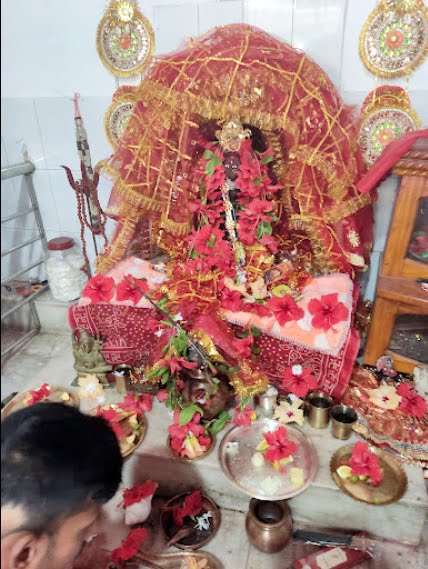
Maa Bhramari is known as the Goddess of Bees. Devotees believe that her divine energy manifests through bees that protect her temple. Honey, associated with bees, is offered as a sacred item during rituals. The temple is located on the banks of the Tista River, also known as Trisrota, meaning three streams. The river’s tranquil flow creates a serene environment that enhances meditation and spiritual practices. Unlike many temples that house stone or metal idols, Maa Bhramari is represented by a symbolic stone structure adorned with flowers and sacred cloths. The temple features traditional Bengali architectural elements with minimal ornamentation. Its natural setting amidst greenery adds to its charm. Devotees believe that Maa Bhramari possesses miraculous powers to heal ailments, bless couples with children, and protect devotees from evil forces.
The rituals at Trisrota Shakti Peetha reflect ancient Hindu traditions combined with local customs. Daily pujas are performed by priests who offer flowers, especially hibiscus, fruits, honey, incense sticks, and coconuts to Maa Bhramari. Morning Aarti begins at sunrise with chanting of hymns like Durga Saptashati. Evening Aarti concludes with lighting oil lamps around the temple premises. Bhramari Puja, a special 10-day festival dedicated to Maa Bhramari takes place annually in July-August. During this time the temple is decorated with flowers and lights, devotees offer honey as a sacred item, and cultural performances and community feasts are organised.
Navratri is celebrated twice a year in March-April and September-October with grand rituals honoring Maa Bhramari’s protective aspect. Devotees observe fasting during these nine days to seek blessings for prosperity and protection. Honey or madhu is considered sacred due to its association with bees and is offered daily at Maa Bhramari’s altar. Yagnas are conducted during auspicious occasions like Navratri to invoke divine blessings for health, wealth, and spiritual growth.
According to legend, Arun Asura was a cruel demon who terrorised heaven and earth after gaining immense power through penance. He drove out gods from their celestial abodes and harassed their families. In desperation, they sought help from Maa Parmeshwari, another form of Goddess Durga, who transformed into Maa Bhramari—a giant bee surrounded by swarms of bees. Maa Bhramari attacked Arun Asura with her swarm, piercing his chest repeatedly until he was defeated. This victory symbolises triumph over evil forces and establishes Maa Bhramari as a fierce protector.

Devotees believe that Maa Bhramari possesses miraculous healing powers. Many pilgrims visit the temple seeking relief from physical ailments or emotional distress after hearing stories of miraculous recoveries attributed to her blessings. It is said that those who offer honey at Maa Bhramari’s altar with sincere devotion often see their wishes fulfilled—whether related to financial stability, fertility, or personal growth.
The Trisrota Shakti Peetha with its unique rituals like honey offerings emphasise simplicity in worship while preserving ancient traditions. Whether you seek spiritual solace or wish to explore India’s rich cultural heritage, visiting this ancient shrine will leave you feeling connected to the divine feminine energy embodied by Maa Bhramari.

Nandikeshwari Temple, Sainthia, West Bengal
Believed to be where the necklace of Sati fell, the Nandikeshwari Temple, located in Sainthia, Birbhum district is dedicated to Maa Nandikeshwari, an incarnation of Goddess Durga. The origins of the Nandikeshwari Temple are deeply rooted in Hindu mythology. After Sati’s self-immolation during Daksha Yajna, Lord Vishnu dismembered her body with his Sudarshan Chakra to pacify Lord Shiva’s grief-stricken Tandava. It is believed that Sati’s necklace fell at this site in what was once known as Nandipur village, now part of Sainthia town. This event sanctified the location as one of the 51 Shakti Peethas.
The temple was constructed in 1913 CE, the year 1320 according to the Bengali calendar on an elevated platform. Over time, it has undergone renovations but retains its ancient charm. The name Nandikeshwari derives from Nandi, the sacred bull and follower of Lord Shiva, and Ishwari, meaning goddess. This etymology reflects the temple’s association with both Shiva and Shakti. Sainthia itself is derived from the Bengali term Sain, meaning Islamic priest, symbolising the region’s history of cultural coexistence. The temple stands on the banks of the Mayurakshi River.
Goddess Sati is worshipped here as Maa Nandikeshwari, symbolising divine protection and nurturing energy. Lord Shiva is revered here as Nandikeshwar Bhairava, representing his role as a guardian and protector. The necklace or mala of Sati is believed to have fallen at this site. The combination of Maa Nandikeshwari and Nandikeshwar Bhairava represents the union of nurturing feminine energy with protective masculine power, making this Shakti Peetha a site of immense spiritual significance.
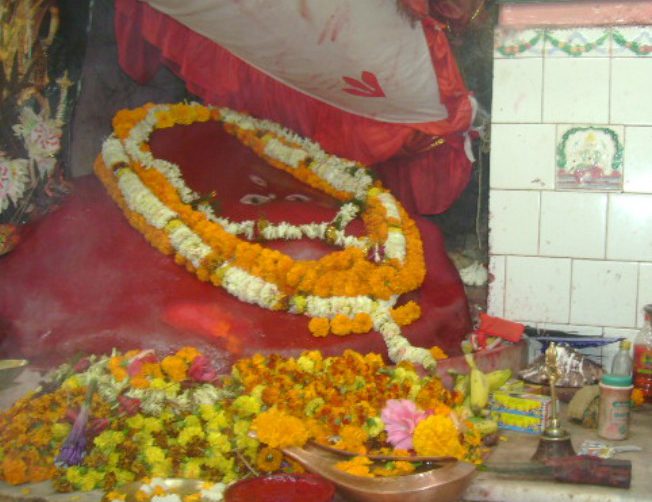
The Nandikeshwari Temple stands out for its distinctive characteristics. The main idol in the temple is a black stone that has turned red over time due to the continuous application of vermilion by devotees. This stone is adorned with a silver crown and three golden eyes symbolizing divine vision. Devotees believe that touching or praying before this sacred stone brings blessings and fulfils wishes.
Adjacent to the temple is an ancient banyan tree where devotees tie red or yellow threads with prayers for wish fulfilment. This practice symbolises their faith in Maa Nandikeshwari’s divine grace. The temple features a pyramidal dome marking Maa Nandikeshwari’s sanctum. Surrounding it are smaller shrines dedicated to other deities like Lord Shiva, Ram-Sita, Radha-Krishna, Saraswati, Lakshmi-Narayana, and Hanuman. The walls overlooking the main temple feature carvings of the Dasa Mahavidya, the ten forms of Goddess Durga, symbolising her diverse manifestations.
The rituals at Nandikeshwari Temple reflect deep-rooted traditions combined with local customs. Daily pujas are performed by priests who offer flowers, fruits, coconuts, rice, incense sticks, and sweets to Maa Nandikeshwari. Morning Aarti begins at sunrise with chanting of hymns like Durga Saptashati, while evening Aarti concludes with lighting oil lamps around the temple premises.

The 10-day Nandikeshwari Utsav is a festival held annually in October-November is one of the most important events at the temple. During this time, the temple is adorned with flowers and lights, special yagnas are conducted to invoke divine blessings, and devotees from across India participate in cultural programs and community feasts. Celebrated on Buddha Purnima, the full moon day commemorating the birth of the Buddha, the festival of Baishakhi Purnima, involves special prayers and offerings at Maa Nandikeshwari’s altar. Devotees light lamps under the banyan tree to seek blessings for prosperity and happiness.
Kali Puja is celebrated with grand rituals honoring Maa Durga’s fierce aspect as Kali. Devotees offer red hibiscus flowers symbolic of power and victory over evil forces. On new moon nights or Amavasya, special Tantric rituals are conducted by priests to invoke Maa Nandikeshwari’s protective energy.
It is believed that when Sati’s necklace fell at this site, it radiated immense divine energy that sanctified not only Sainthia but also its surrounding regions. Devotees claim that this energy can still be felt within the temple premises during meditation or prayer. According to legend, tying threads around the banyan tree adjacent to the temple fulfills devotees’ wishes—whether related to health, prosperity, or personal relationships. Many pilgrims return annually to untie their threads as a gesture of gratitude after their wishes are fulfilled. Devotees believe that Maa Nandikeshwari possesses miraculous healing powers. Many visit the temple seeking relief from physical ailments or emotional distress after hearing stories of miraculous recoveries attributed to her blessings.
The Nandikeshwari Temple, on the banks of the Mayurakshi River provides an ideal setting for meditation and introspection. If one is seeking spiritual solace, visiting this ancient shrine will leave one connected to the divine feminine energy.
 Memories and Such