
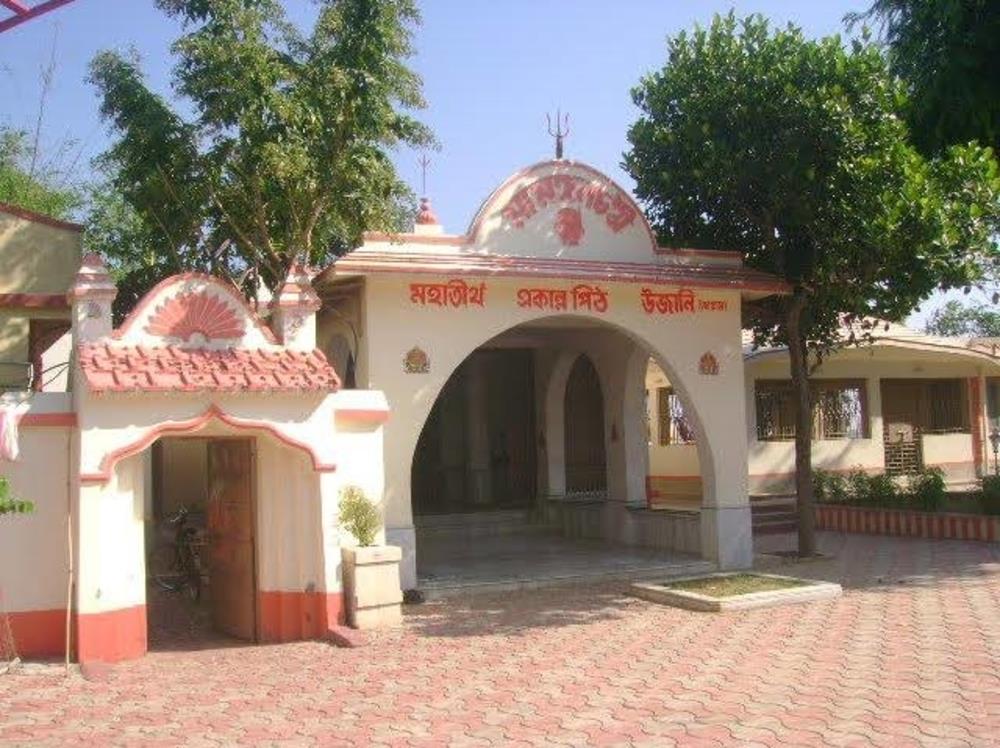
Ujaani Temple, Mangalkot, West Bengal
The Ujani Shakti Peeth, located in the serene village of Ujani near Guskara in Bardhaman district is dedicated to Maa Mangal Chandi, a powerful form of Goddess Durga. It is believed that Sati’s right wrist fell at this location in Ujani village.
The temple has been a centre of devotion for centuries. The name Mangal Chandi reflects the goddess’s role as a protector and benefactor of her devotees. The word Mangal means welfare, while Chandi refers to Goddess Durga’s fierce and protective aspect. The temple’s current structure is simple yet exudes an aura of divinity that draws pilgrims seeking peace and blessings. The temple is located about 16 kilometers from Guskara Railway Station and is easily accessible by road. Surrounded by lush greenery and ancient trees, the temple offers a serene environment for meditation and worship.
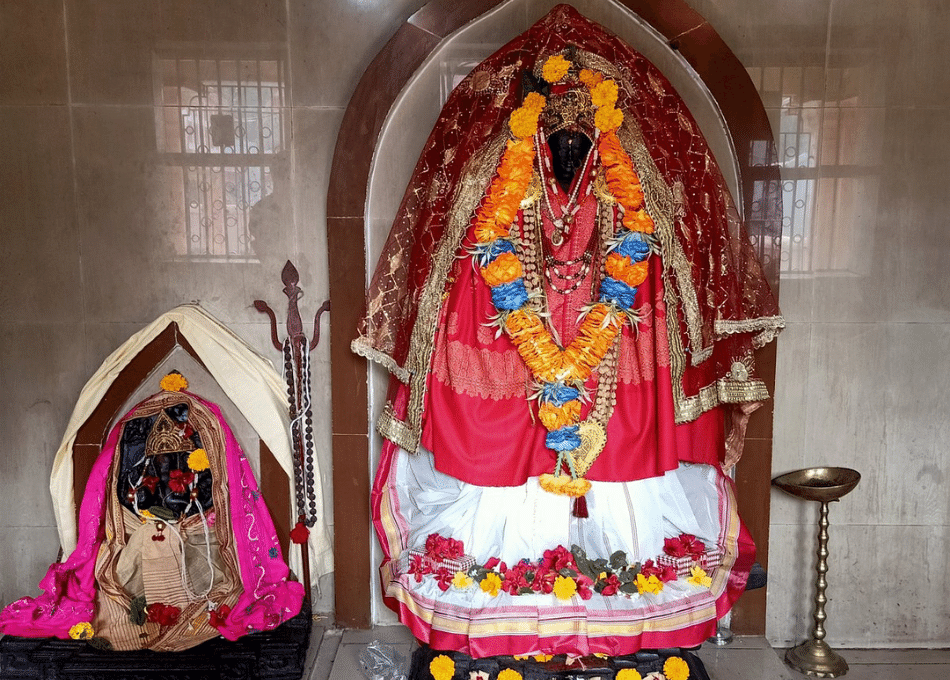
Goddess Sati is worshipped here as Maa Mangal Chandi, symbolising divine protection and nurturing energy. Lord Shiva is revered as Kapilambar Bhairava, representing his role as a guardian and protector. The combination of Maa Mangal Chandi and Kapilambar Bhairava represents the union of nurturing feminine energy with protective masculine power, making this Shakti Peetha a site of immense spiritual significance.
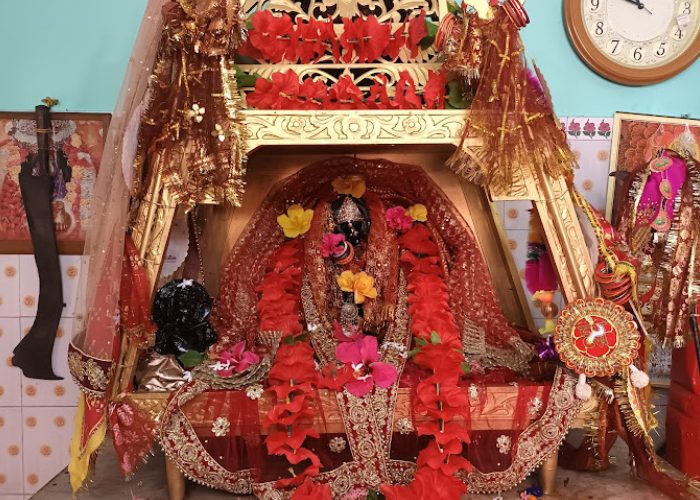
The Ujani Shakti Peeth stands out for its distinctive characteristics. The sanctum sanctorum houses two idols: one of Maa Mangal Chandi and another of Lord Shiva as Kapilambar Bhairava. Maa Mangal Chandi’s idol depicts her in a benevolent yet powerful form, adorned with ornaments and flowers offered by devotees. Kapilambar Bhairava’s idol symbolises Lord Shiva’s meditative yet protective aspect.
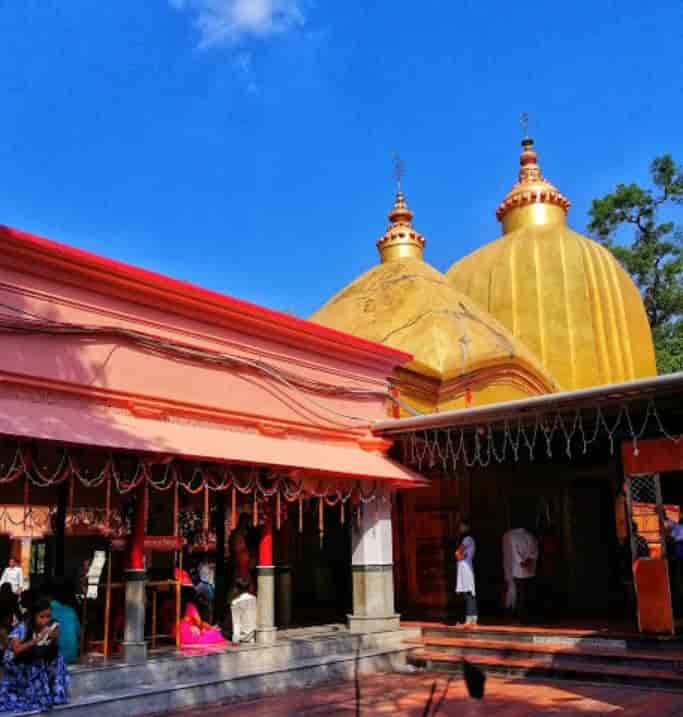
The temple structure is painted yellow and lacks elaborate architectural ornamentation. Its simplicity emphasizes spiritual connection over material grandeur. The courtyard is shaded by ancient trees that add to the temple’s serene ambiance. A pavilion or mandap in front of the deity provides space for devotees to sit and meditate. Pilgrims often describe entering meditative states effortlessly in this peaceful setting. Surrounded by greenery, the temple offers a calm environment ideal for introspection and prayer. Birds chirping in the trees add to its natural charm.
Daily pujas are performed by priests with morning Aarti begining at sunrise with chanting of hymns like Durga Saptashati and evening Aarti concluding with the lighting oil lamps around the temple premises. Durga Puja is celebrated with great fervor at Ujani Shakti Peeth. Elaborate rituals are conducted to honour Maa Mangal Chandi’s victory over evil forces. The deity is adorned with new clothes and jewelry donated by devotees during this time. Navratri is celebrated twice a year with grand rituals honoring Maa Mangal Chandi’s nurturing aspect. Devotees observe fasting during these nine days to seek blessings for prosperity and protection.
Dedicated to Lord Shiva who is worshipped as Kapilambar Bhairava, Mahashivratri involves night-long prayers and abhishekam with milk, honey, ghee, curd, and holy water. Devotees light oil lamps around the temple premises as part of their offerings. Yagnas are conducted during auspicious occasions like Navratri to invoke divine blessings for health, wealth, and spiritual growth.
According to legend, when Sati’s right wrist fell at this site after being dismembered by Vishnu’s Sudarshan Chakra, it radiated immense divine energy that sanctified not only Ujani but also its surrounding regions. Devotees believe that this energy can still be felt within the temple premises during meditation or prayer. Local lore suggests that Kapilambar Bhairava appeared in his fierce form to protect this sacred site from negative energies after Sati’s right wrist fell here. His presence ensures balance and harmony at Ujani Shakti Peeth. Devotees believe that Maa Mangal Chandi possesses miraculous healing powers. Many pilgrims visit the temple seeking relief from physical ailments or emotional distress after hearing stories of miraculous recoveries attributed to her blessings.
The Ujani Shakti Peeth offers visitors a unique spiritual experience rooted in mythology and devotion.
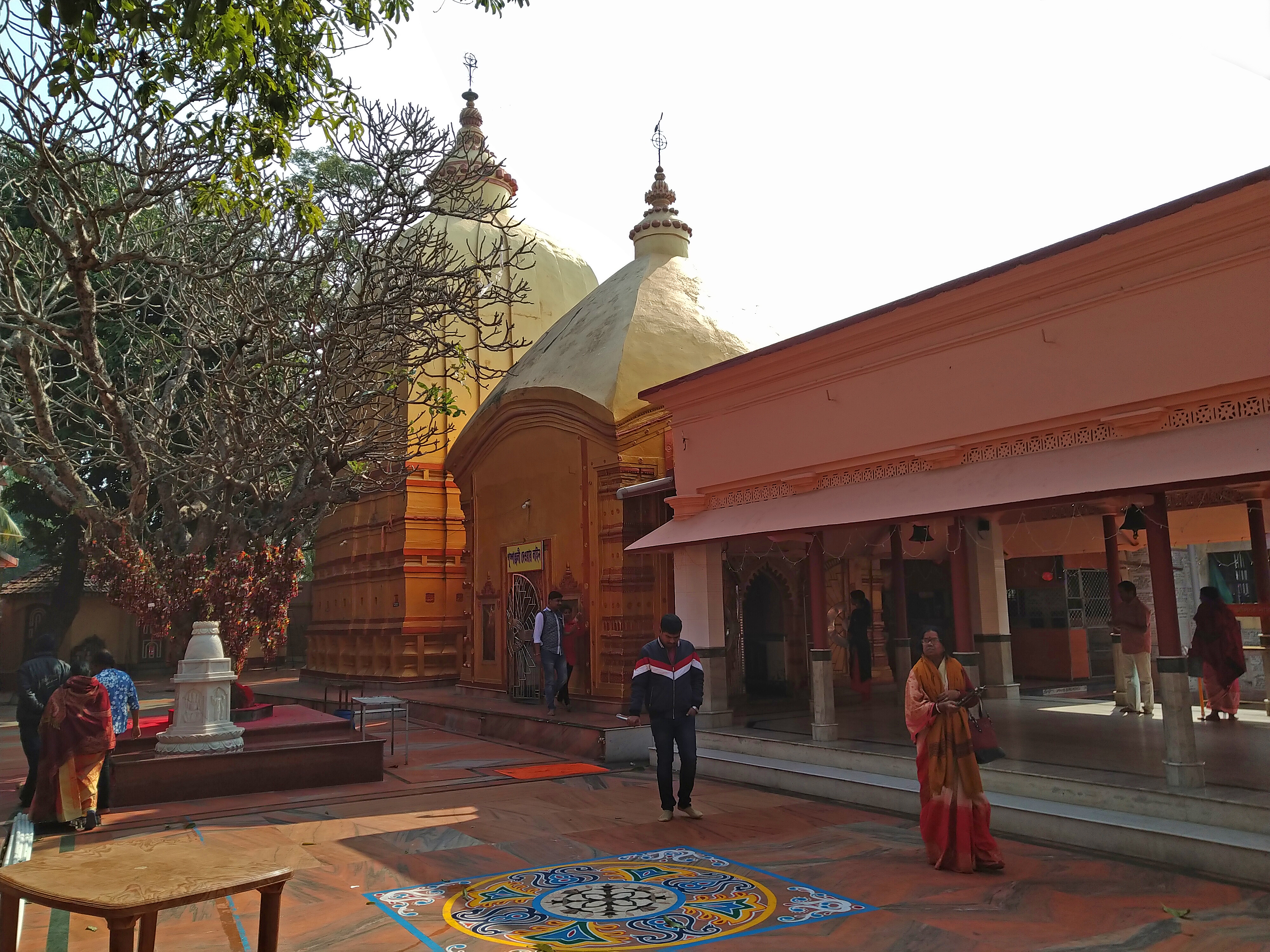
Bargabhima Temple, Tamluk, West Bengal
Located in Tamluk, Purba Medinipur district, the Vibhash Shakti Peeth, also known as the Bargabhima Temple, is dedicated to Maa Kapalini or Bhimarupa, an incarnation of Goddess Durga. As one of the 51 sacred Shakti Peethas, it is believed that the left ankle or heel of Goddess Sati fell at this site. Nestled on the banks of the Roopnarayan River, this ancient temple blends spirituality, history, and cultural heritage. Lord Shiva is worshipped here as Sarvanand Bhairava.
The temple is said to have been constructed during the reign of the Mayur dynasty, which ruled over Tamluk in ancient times. The current structure has undergone several renovations over centuries but retains its spiritual essence. Historical records suggest that the temple has been a centre of devotion for over 1,000 years. Tamluk itself holds special significance as a sacred Vaishnava Tirtha or pilgrimage site. According to the Jaimini Mahabharata and Kashidas Mahabharata, Lord Krishna visited Tamluk to release the divine horse for the Ashwamedha Yajna.
Goddess Sati is worshipped here as Maa Kapalini or Bhimarupa, symbolising power and protection. Lord Shiva is revered as Sarvanand Bhairava, representing his role as a guardian and protector. The left ankle or vama gulpha of Sati is believed to have fallen at this site.

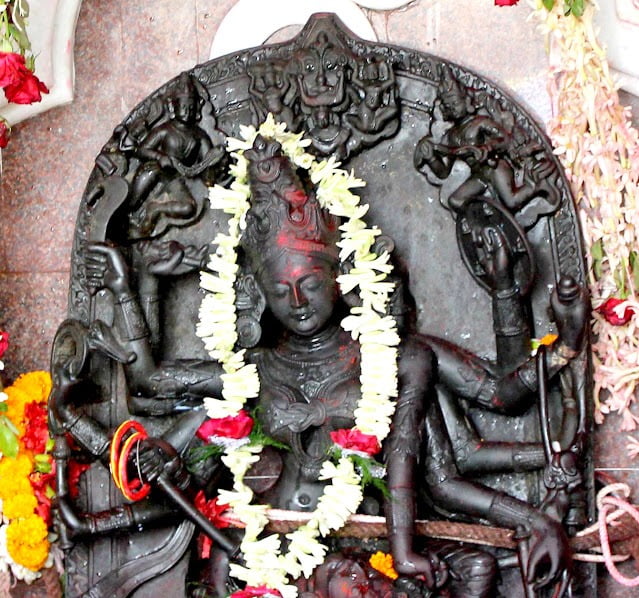
The sanctum sanctorum houses an idol of Maa Kapalini in her fierce form. She is depicted with multiple arms holding weapons and adorned with ornaments offered by devotees. Adjacent to her shrine is a large black stone Shiva Lingam representing Sarvanand Bhairava. The Lingam is surrounded by a circular white marble boundary. The temple architecture reflects a blend of Hindu, Buddhist, and Oriya styles. Its pyramidal dome resembles Kalinga temple tombs, while the natmandir or prayer hall follows the traditional Bengali aatchala style. The intricate carvings on its walls depict scenes from Hindu mythology.
Situated on the banks of the Roopnarayan River amidst lush greenery, the temple offers a serene environment ideal for meditation and prayer. During India’s freedom struggle, revolutionaries like Khudiram Bose visited this temple to seek blessings before embarking on their missions. The temple served as an oath-taking site for many revolutionaries who vowed to free their motherland. Unlike most temples where vegetarian offerings are made, Maa Kapalini’s prasad includes non-vegetarian items such as cooked fish or sol mach. This practice reflects ancient traditions associated with Shakti worship.
The rituals at Vibhash Shakti Peeth reflect deep-rooted traditions combined with local customs. Daily pujas are performed by priests. The morning Aarti begins at sunrise with chanting of hymns like Durga Saptashati, while evening Aarti concludes with lighting oil lamps around the temple premises. Durga Puja is celebrated with grandeur at Vibhash Shakti Peeth. Elaborate rituals are conducted over nine days to honour Maa Kapalini’s victory over evil forces. Devotees participate in cultural programs and community feasts during this time.
Held during Makara Sankranti in January, Barunir Mela is an annual fair that attracts thousands of pilgrims who come to take a holy dip in the Roopnarayan River before offering prayers at the temple. On Sharad Purnima, special prayers are held under moonlight to invoke divine blessings for prosperity and happiness. Dedicated to Sarvanand Bhairava, Mahashivratri involves night-long prayers and abhishekam with milk, honey, ghee, curd, and holy water. Devotees light oil lamps around the Shiva Lingam as part of their offerings.
Tamluk holds special significance due to its association with Lord Krishna. According to local lore recorded in Jaimini Mahabharata and Kashidas Mahabharata, Lord Krishna visited Tamluk during his Ashwamedha Yajna and blessed the region with his divine presence. During India’s freedom struggle, many revolutionaries took oaths at Vibhash Shakti Peeth before embarking on their missions. They believed that Maa Kapalini’s blessings would protect them in their fight for independence.
The Vibhash Shakti Peeth offers visitors a unique spiritual experience rooted in mythology and devotion. Unique features like non-vegetarian prasad emphasise ancient traditions while preserving spiritual heritage. Whether you seek spiritual solace or wish to explore India’s rich cultural heritage, visiting this ancient shrine will leave you feeling connected to divine feminine energy embodied by Maa Kapalini.

Jogadya Temple, Kshirgram, West Bengal
The Jogadya Temple, located in Kshirgram, Purba Bardhaman district s dedicated to Maa Jogadya, a fierce form of Goddess Durga. Lord Shiva is worshipped here as Kshireshwar Bhairava. It is believed that the big toe of Sati’s right leg fell at this site, sanctifying it as a Shakti Peetha. Known for its unique rituals, historical significance, and mystical legends, the Jogadya Temple attracts devotees from across India who come to seek blessings and experience its divine energy.
Historical evidence suggests that the temple dates back to the 11th century CE. It was originally constructed as a brick temple surrounded by a compound wall. Over time, it underwent several phases of destruction and reconstruction. The temple was severely damaged during invasions by Kalapahar but was later restored by local rulers and devotees. The current structure reflects a blend of ancient and modern architecture.
The name Jogadya derives from two Sanskrit words: Jug meaning era and Adya meaning the first, symbolising the goddess as the primordial force who presides over all eras. Locals also refer to the temple as Maa-er Baari or the Mother’s Home, emphasising its importance in their lives. The combination of Maa Jogadya and Kshireshwar Bhairava represents the union of nurturing feminine energy with protective masculine power.
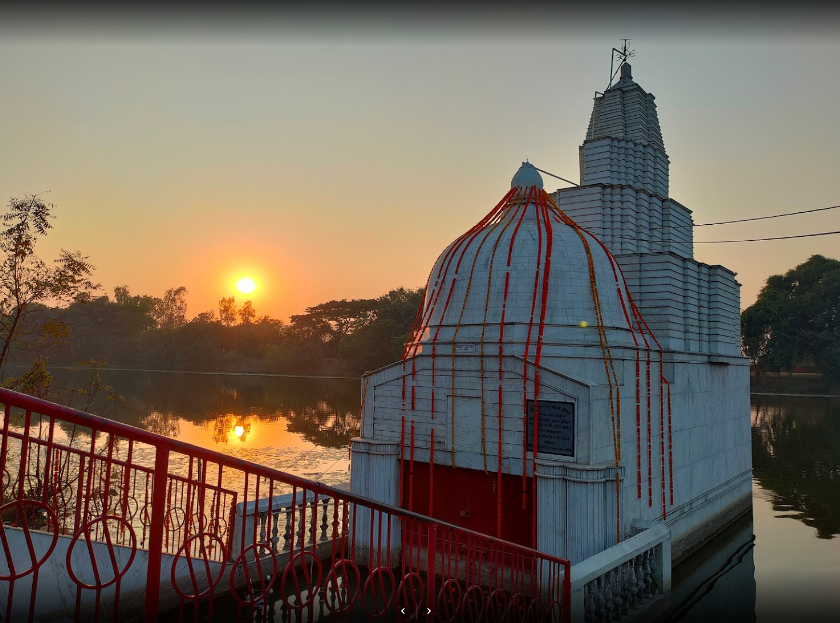
The main sanctum does not house a traditional idol but instead has an altar connected to an underground chamber symbolising Maa Jogadya’s connection to the underworld or Paatalnivasini. Devotees worship this altar as her divine presence. Adjacent to the temple lies a sacred pond known as Kshirdighi. It is believed that Maa Jogadya resides in this water body. The goddess is ceremonially brought out of the water only seven days a year for public worship. Devotees believe that bathing in this pond purifies sins and brings prosperity. A copper pot or kalash filled with water from the sacred pond, Kshirdighi, is placed on the altar during special rituals.
A beautifully carved decagonal statue of Mahishamardini Durga was created by Nabin Chandra Bhaskar in imitation of an older idol lost during invasions. This statue is housed in a new temple built by villagers and remains open for darshan throughout the year. The temple complex includes three main sections: the domed sanctum or the garbhagriha, an entrance hall or the ardhamandap, and a dance hall or the natmandir. Its design reflects traditional Bengali temple architecture with minimal ornamentation. A small shrine dedicated to Lord Shiva as Kshireshwar Bhairava stands near Maa Jogadya’s temple. The idol of Shiva is placed at an elevated height and is accessible via stairs.
Daily pujas are performed by priests with the morning Aarti at sunrise which begins with chanting of hymns like Durga Saptashati, while evening Aarti concludes with lighting oil lamps around the temple premises. On Baishakh Sankranti, the last day of Baishakh, Maa Jogadya is ceremonially brought out of Kshirdighi for public worship. This grand event attracts thousands of devotees who gather to witness her darshan. Buffalo sacrifices are performed during this ritual as part of ancient Shakti worship practices. Apart from Baishakh Sankranti, Maa Jogadya is brought out on select days like Asadh Navami, Vijayadashami or Dussehra, Paush Sankranti, and Makara Sankranti for worship by priests or specific community members. Durga Puja is celebrated with grandeur at Jogadya Temple. Elaborate rituals are conducted over nine days to honor Maa Durga’s victory over evil forces. Devotees participate in cultural programs and community feasts during this time. On new moon nights or Amavasya, special Tantric rituals are conducted by priests to invoke Maa Jogadya’s protective energy.
According to local legend recorded in Chandi Mangal and Jogadya Bandana, Hanuman carried Maa Durga on his back while searching for a suitable place to establish her shrine after rescuing her from Paatal Lok, the underworld. He chose Kshirgram due to its central position on Earth. This story reinforces the belief that Kshirgram is a spiritually significant location. During renovations of Kshirdighi in recent years, villagers discovered an ancient idol believed to be the original statue of Maa Jogadya hidden underwater for centuries to protect it from invaders. In medieval times, human sacrifices were reportedly performed at Jogadya Temple as part of Shakti worship rituals. These were later replaced by buffalo sacrifices under royal decree from the Bardhaman Raj family.
The Jogadya Temple is somewhere one should go if they are seeking spiritual solace or wish to explore India’s rich cultural heritage.
 Memories and Such