
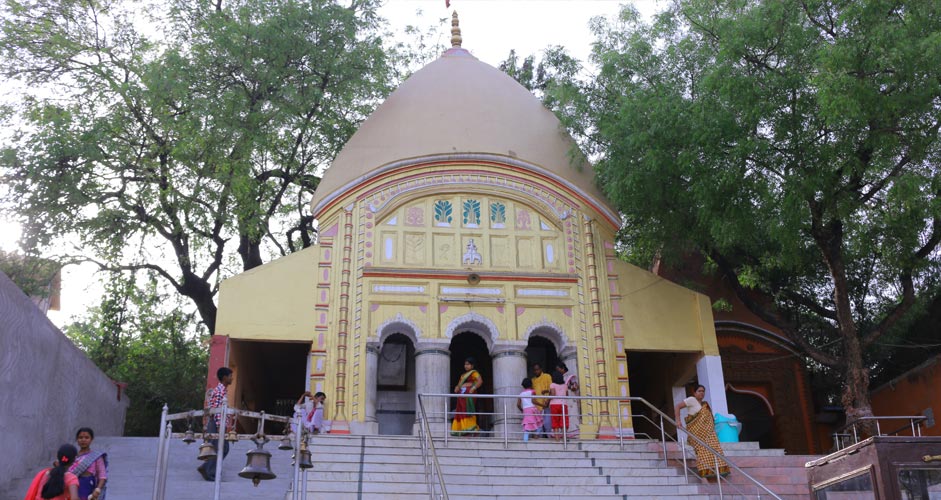
Nalhateswari Temple, Nalhati, West Bengal
The Nalateswari Temple, located in Nalhati, Birbhum district is dedicated to Maa Nalateswari, a form of Goddess Sati, and Lord Shiva is worshipped here as Jogesh Bhairava. It is believed that the larynx or nala of Goddess Sati fell at this site.
The temple’s history dates back to the 16th century, with its construction attributed to the Malla kings. However, local legends suggest that the temple was rediscovered by Ram Sharam Devsharma, a devotee who found the larynx of Maa Sati in the dense forests of Nalhati. Over time, the temple became a centre of devotion and was later renovated by Rani Bhavani and Maharaja Ranajit Singh of Nashipur in the late 19th century. The name Nalateswari derives from Nala or larynx and Ishwari or goddess. The temple also served as a refuge for freedom fighters during India’s independence movement.
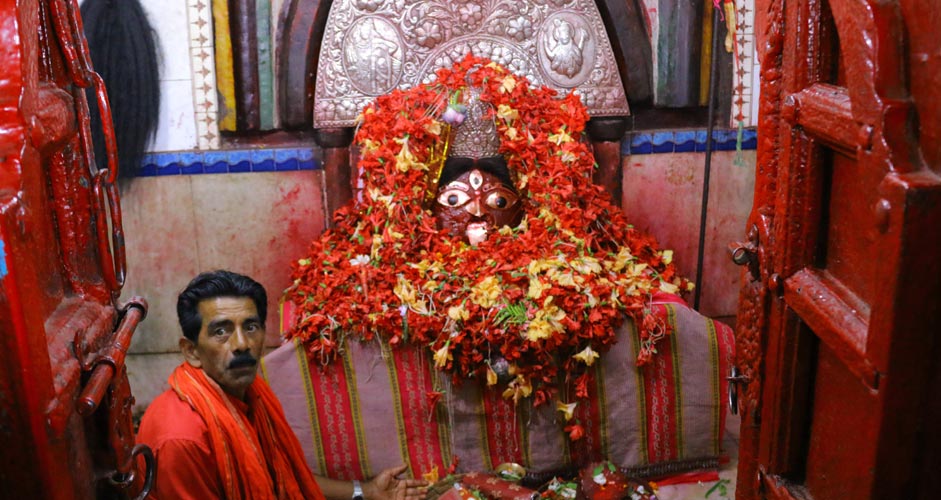
The sanctum sanctorum houses a self-manifested or swayambhu stone idol of Maa Nalateswari adorned with vermilion, sindoor, a silver crown, and three golden eyes or trinayan. Her golden-red tongue symbolizes her fierce aspect. Below her idol lies the sacred nala or throat of Sati. It is believed that no matter how much water is poured on it, it never overflows or dries up. Devotees often hear a gulping sound resembling human swallowing when water flows through it. A sacred pond known as Lalita Kund lies within the temple premises. Pilgrims take a holy dip in this pond before entering the shrine to purify their souls. The temple features traditional Bengali architecture with a raised pinnacle, a shikhara, above its sanctum. Its design includes a natmandir, a prayer hall, and smaller shrines dedicated to Lord Shiva, Lord Ganesha, and Lord Hanuman. A mysterious neem tree near the temple is considered sacred by devotees. It is said to possess healing powers and is often worshipped alongside Maa Nalateswari.
Daily worship at the temple include the morning and evening aartis. Navratri is celebrated twice a year with grand rituals honoring Maa Nalateswari’s nurturing aspect. Devotees observe fasting during these nine days to seek blessings for prosperity and protection. Kali Puja is celebrated with great fervor at Nalateswari Temple. Elaborate rituals are conducted to honor Maa Durga’s fierce aspect as Kali. Devotees offer red hibiscus flowers symbolic of power and victory over evil forces. Every full moon or Purnima, a grand fair is held within the temple grounds. This event includes cultural programs, stalls selling handicrafts, and community feasts. On new moon or Amavasya nights, special Tantric rituals are conducted by priests to invoke Maa Nalateswari’s protective energy.
According to legend, Kamdev, the Hindu god of love, dreamt about the existence of Maa Sati’s larynx in the forests of Nalhati. Guided by his vision, he discovered the sacred spot where her nala lay buried beneath layers of earth. This marked the beginning of worship at this Shakti Peetha. Devotees believe that pouring water on Maa Nalateswari’s throat produces a gulping sound resembling human swallowing—a phenomenon considered miraculous by pilgrims who visit this shrine. During India’s struggle for independence, freedom fighters used the temple premises as a hideout due to its remote location and supportive priests who provided them shelter and food.
The Nalateswari Temple offers visitors a unique spiritual experience rooted in mythology and devotion. It is a must visit for those seeking solace or want to explore India’s rich cultural heritage.
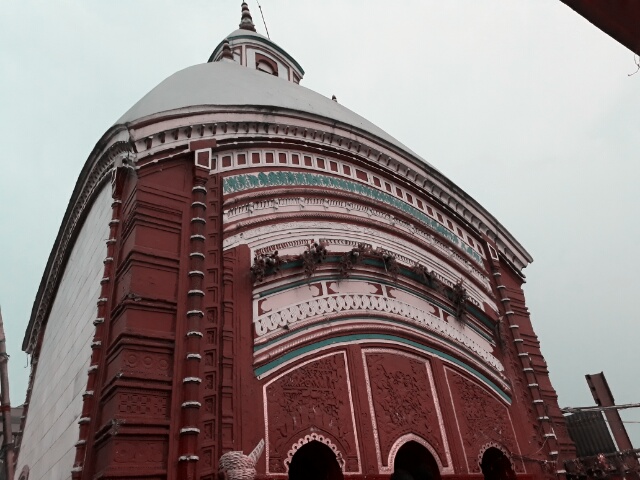
Tarapith, Rampurhat, West Bengal
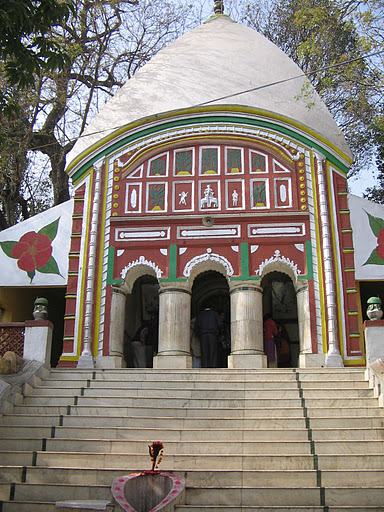
Recognised as one of the Shakti Peethas, the Tarapith Temple, located in Rampurhat is dedicated to Goddess Tara, a fierce and compassionate form of Shakti. At Tarapith, it is said that the third eye of Sati fell, sanctifying the location as a center of immense spiritual energy. The temple is closely associated with tantric practices and the mystic saint Bamakhepa, whose life and devotion to Tara are legendary.
The temple is said to have been established in the 13th century and has undergone several renovations over time. The current structure was built in 1225 by Jagannath Ray of Mallarpur village. The temple’s name derives from Tara which means star or eye in Bengali, symbolizing the divine vision of Goddess Tara. Tarapith has been a centre for tantric practices for centuries and is regarded as a Siddha Pitha, a site where devotees can attain enlightenment and supernatural powers or siddhis. The temple’s proximity to the cremation ground further enhances its significance for tantric practitioners.

Goddess Sati is worshipped here as Maa Tara, symbolising protection, compassion, and divine wisdom. Lord Shiva is revered as Akshobhya Bhairava, representing his role as a guardian and protector. The third eye or netra of Sati is believed to have fallen at this site.
The main idol of Maa Tara depicts her suckling Lord Shiva as a child. This unique form symbolises her nurturing aspect while also embodying her fierce power. The idol is adorned with a silver crown, red vermilion or sindoor, and garlands made from skulls or mundamala, emphasising her tantric association. Tarapith is renowned as one of India’s most important centres for tantric worship. Tantriks perform esoteric rituals in the adjoining cremation ground to invoke Maa Tara’s blessings. Offerings such as liquor and meat are made during specific rituals, reflecting ancient tantric traditions.
The cremation ground near the temple is considered highly sacred and serves as a hub for tantric practices. Devotees believe that Maa Tara resides here in her ferocious form. Many pilgrims visit this site to meditate or perform ancestral rites or tarpan. The temple is closely linked to the mystic saint Bamakhepa, who spent his life worshipping Maa Tara. His ashram near the temple continues to attract devotees seeking spiritual guidance.
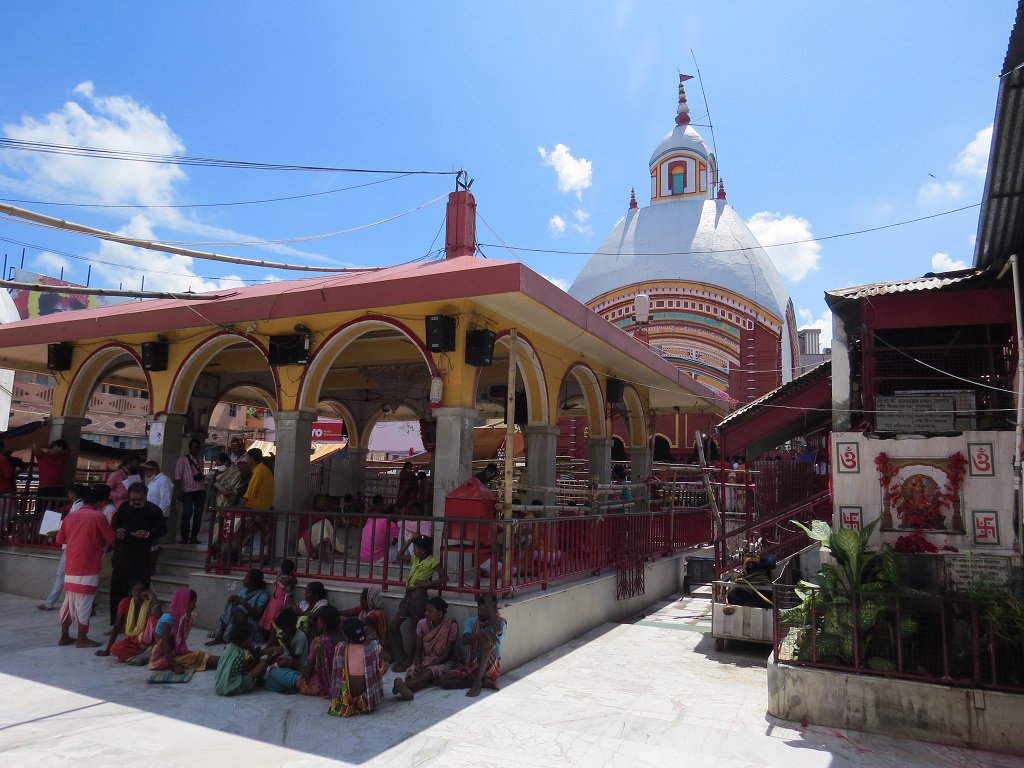
The temple features an eight-roofed structure, an aatchala, with intricate carvings depicting scenes from Hindu epics like the Mahabharata and Ramayana. Its simplicity contrasts with its profound spiritual energy.
Daily pujas are performed by priests who offer flowers, bananas, coconuts, sweets, liquor, and even meat to Maa Tara. Morning Aarti begins at sunrise with chanting of hymns like Durga Saptashati, while evening Aarti concludes with lighting oil lamps around the temple premises. Kamalakanta Kali Puja is the annual festival dedicated to Maa Kali that attracts thousands of devotees who gather for night-long prayers and rituals. Special offerings like red sarees and garlands made from hibiscus flowers are presented to Maa Tara during this time.
Devotees perform tarpan or ancestral rites at the cremation ground near the temple to honor their ancestors and seek their blessings. Tantriks perform esoteric rituals during auspicious nights like Amavasya or the new moon, to invoke Maa Tara’s blessings for spiritual growth or supernatural powers. Devotees often seek healing from ailments by offering prayers at Maa Tara’s shrine or taking a dip in the sacred tank adjacent to the temple.
According to legend, Sage Vashishtha performed intense penance at Tarapith to please Goddess Tara. Despite reciting her mantra 300,000 times, he failed to invoke her presence. On Lord Buddha’s advice, Vashishtha adopted tantric practices, vamachara, and successfully pleased Maa Tara. She appeared before him in her nurturing form—breastfeeding Lord Shiva—and turned into a stone idol that became enshrined in the temple.
Known as the mad saint, Bamakhepa was one of Maa Tara’s most ardent devotees. He spent years meditating in the cremation ground and was said to possess miraculous healing powers granted by Maa Tara herself. Once when priests denied him food before offering it to Maa Tara, she appeared in a queen’s dream demanding that Bamakhepa be fed first as her beloved son. The sacred tank near the temple is believed to have healing properties. Devotees often bathe here before entering the temple premises or collect its water for use in rituals.
The Tarapith Temple offers visitors a unique spiritual experience rooted in mythology and devotion. Its unique features like tantric practices emphasise ancient traditions while preserving spiritual heritage.

Shrinkala Devi Temple, Pandua, West Bengal
The Shrinkala Devi Temple, once located in Pandua, West Bengal, is shrouded in controversy and uncertainty. Unlike many other Shakti Peethas, this sacred site has a complex history that has led to debates about its current location and status.
Originally situated in Pandua, Hooghly district, the Shrinkala Devi Temple was considered one of the 51 Shakti Peethas and was believed to be the spot where Sati’s stomach fell. However, the original temple structure no longer exists. Historical records indicate that it was destroyed by Muslim invaders, likely during the Delhi Sultanate period. A minar was subsequently built at the site, possibly by Zafar Khan Gazi, a general of Sultan Alauddin Khalji in the late 13th century.
The destruction of the original temple has led to several controversies and competing claims about the true location of the Shrinkala Devi Shakti Peetha. Some believe that the original site in Pandua remains the true Shakti Peetha, despite the absence of a temple structure. The Archaeological Survey of India now maintains the site. Another claim suggests that Rishyasringa Maharshi, on the goddess’s command, moved the deity to Sringeri in Karnataka. Some devotees believe the Shakti Peetha is present in the Ganga Sagar region, also known as Adinath Kshetra. There are also claims that the temple might be located in Chotila, Gujarat while some sources suggest the temple might be near the Somnath temple in Prabhas Pattan.
In recent years, there have been efforts by Hindu organisations to reclaim and revive the worship of Shrinkala Devi. The Sanyukta Hindu Front initiated a campaign in 2022 to restore the significance of the Shrinkala Devi temple. They have started performing regular pujas on Amavasya or new moon days and are seeking information from the Archaeological Survey of India about the original site in Pandua.
Despite the absence of a physical temple, devotion to Shrinkala Devi continues. Given the uncertainty of the temple’s location, many devotees worship Shrinkala Devi in a formless aspect. An annual 30-day festival called Mela Tala is celebrated near the original site in Pandua during the month of Magha, around February. The Sanyukta Hindu Front has encouraged devotees to perform small pujas in their homes or offices on Amavasya days.
As efforts continue to reclaim and revive the worship of Shrinkala Devi, this Shakti Peetha serves as a poignant reminder of the complex interplay between faith, history, and cultural preservation in modern India. It challenges us to consider how spiritual traditions can endure and evolve even in the absence of physical structures, and how devotees can maintain connections to sacred sites across vast distances and through centuries of change.
 Memories and Such