
Last week, we completed all the Shakti Peethas located within India’s borders. From this part, let’s look at Shakti Peethas that are in what used to be part of India, pre-independence as well as one which though was probably never a part of India, but is in an area that is revered in Hinduism and symbolism.

Jeshoreshwari Kali Temple, Shyamnagar Upazila, Bangladesh
The Jeshoreshwari Kali Temple, located in Ishwaripur village, Shyamnagar Upazila, Satkhira district in Bangladesh is dedicated to Goddess Kali. Known as the Goddess of Jessore, the Jeshoreshwari Kali Temple blends mythology, devotion, and architectural heritage.
The Jeshoreshwari Kali Temple has a rich history that dates back centuries. It is believed that the temple was originally established by a Brahmin named Anari, who constructed a grand structure with 100 doors to honor Maa Jeshoreshwari. The exact timeline of its construction remains uncertain, but it is widely regarded as one of the oldest temples in Bangladesh. The temple gained prominence during the reign of Maharaja Pratapaditya, a 16th-century ruler of Jessore. According to legend, one of his generals discovered a luminant ray of light emanating from the bushes in Ishwaripur. Upon investigation, they found a stone carved in the shape of a human palm. Recognizing its divine significance, Maharaja Pratapaditya built the Jeshoreshwari Kali Temple at this site and began worshipping Goddess Kali. Later renovations were carried out by rulers such as Lakshman Sen and other local patrons. However, much of the original structure was damaged over time due to invasions and natural decay. Despite this, the temple continues to attract devotees who revere it as a sacred Shakti Peetha.

According to legend, the palm of Sati’s hand fell at this site, sanctifying it as a centre of divine feminine energy. Goddess Sati is worshipped here as Jeshoreshwari, symbolising divine protection and strength. Lord Shiva is revered as Chanda Bhairava, representing his role as a guardian and protector.
The sanctum sanctorum houses a black stone idol of Maa Jeshoreshwari adorned with vermilion, gold ornaments, and garlands. The idol exudes an aura of power and compassion. The palm-shaped stone discovered by Maharaja Pratapaditya is preserved within the temple premises and is considered highly sacred by devotees. A large rectangular platform known as Natmandir was built adjacent to the main temple. This structure allowed devotees to view Maa Jeshoreshwari’s face during rituals. Although much of it crumbled after 1971, remnants such as pillars remain visible today. The temple showcases traditional Bengali architecture with intricate carvings on its walls and domed roofs. Despite its simplicity, the temple’s design emphasises spiritual connection over material grandeur. The name Jeshoreshwari translates to Goddess of Jessore. Historically, Ishwaripur was part of Jessore before administrative boundaries changed.
Daily pujas are performed by priests who offer flowers, fruits, coconuts, sweets, incense sticks, and rice to Maa Jeshoreshwari. Morning Aarti begins at sunrise with chanting of hymns like Durga Saptashati, while evening Aarti concludes with lighting oil lamps around the temple premises. Kali Puja is celebrated with great fervor at Jeshoreshwari Temple. Elaborate rituals are conducted overnight to honor Maa Kali’s fierce aspect. Devotees offer red sarees and garlands made from hibiscus flowers during this festival. An annual fair, a mela is held in the temple compound during Kali Puja or Navratri celebrations. This event includes cultural performances, stalls selling religious items, and community feasts. Navratri is celebrated twice a year and devotees observe fasts during these nine days to seek blessings for prosperity and protection. On new moon nights, special Tantric rituals are conducted by priests to invoke Maa Jeshoreshwari’s protective energy.

One of the most popular legends associated with Jeshoreshwari Temple involves Maharaja Pratapaditya’s general discovering a luminant ray of light emanating from bushes in Ishwaripur village. Upon investigating further, they found a stone carved in the shape of a human palm. Recognizing its divine significance, Maharaja Pratapaditya built the temple at this site and began worshipping Goddess Kali. Devotees believe that touching or praying before the palm-shaped stone brings blessings and fulfills wishes. Many pilgrims visit specifically to seek Maa Jeshoreshwari’s intervention in resolving personal or familial issues. It is said that Maa Jeshoreshwari possesses miraculous healing powers. Many devotees claim to have been cured of ailments after offering prayers or participating in rituals at this sacred shrine.
The Jeshoreshwari Kali Temple offers visitors a unique spiritual experience rooted in mythology and devotion.
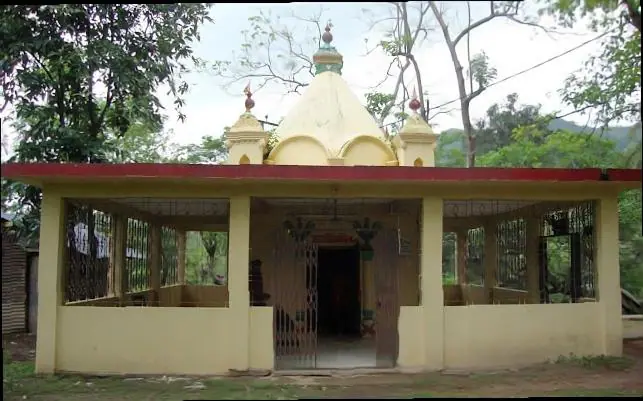
Chattal Bhawani Shaktipeeth/Chandranath Temple, Chittagong, Bangladesh
The Chattal Bhawani Shaktipeeth, also known as the Chandranath Temple, is a revered Hindu shrine located atop Chandranath Hill in Sitakunda, Chittagong. According to legend, the right arm of Goddess Sati fell at this sacred site. The temple is dedicated to Maa Bhawani, a form of Goddess Sati, and Lord Shiva, is worshipped here as Chandrasekhar Bhairava.
The exact date of the temple’s construction remains uncertain, but historical records suggest that it has existed for several centuries. According to local legends, the temple was originally established by a king who received divine instructions in a dream to build a shrine atop Chandranath Hill. Over time, the temple gained prominence as a centre for Shaktism and received patronage from various rulers and devotees. The name Chattal Bhawani derives from Chattal, an ancient name for Chittagong, and Bhawani, a form of Goddess Sati symbolising protection and strength.

The sanctum sanctorum houses two main idols: one of Maa Bhawani and another of Lord Shiva as Chandrasekhar. Maa Bhawani’s idol exudes an aura of power and compassion, while Lord Shiva’s idol depicts him with a crescent moon on his head. Devotees believe that these idols radiate divine energy that fulfils wishes and grants blessings. The temple is situated at an altitude of approximately 1,020 feet above sea level on Chandranath Hill. Pilgrims must climb around 3,500 steps to reach the summit, making their journey both physically challenging and spiritually rewarding. The hill offers panoramic views of the surrounding landscape, including lush greenery and distant rivers.
The temple complex features a medieval chariot known for its intricate wood carvings. This chariot is used during special festivals and processions. The area around Chandranath Hill is rich in natural beauty, with attractions such as waterfalls, the Sohosrodhara Jorna and scenic trails that enhance the spiritual ambience. The temple has received patronage from various rulers over centuries. Notably, King Dhanya Manikya of Tripura attempted to relocate the Shiva idol to his kingdom but failed due to divine intervention.
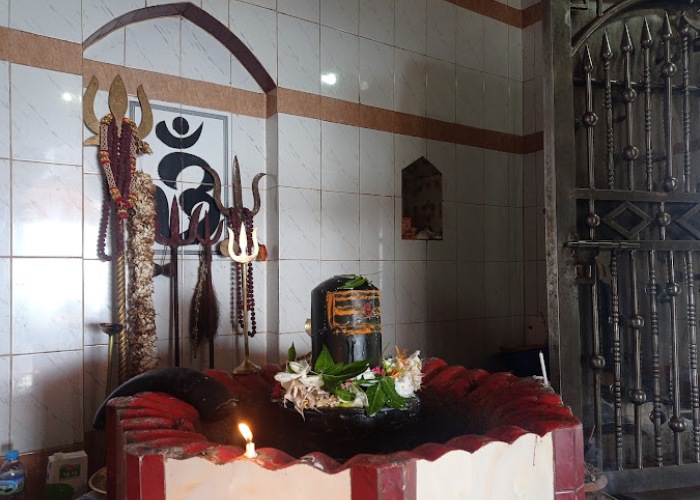
Daily pujas are performed by priests. Morning Aarti begins at sunrise with chanting of hymns while the evening Aarti concludes with lighting oil lamps around the temple premises. Shivratri is celebrated with great fervour at Chandranath Temple. Devotees observe fasting and perform night-long prayers dedicated to Lord Shiva. Special yagnas are conducted during this festival to invoke divine blessings. An annual fair known as the Sitakund Mela is held during Shivratri celebrations in February-March. This event attracts thousands of pilgrims who gather for rituals, cultural performances, and community feasts. On new moon nights, special Tantric rituals are conducted by priests to invoke Maa Bhawani’s protective energy. The trek up Chandranath Hill is considered an act of devotion. Pilgrims often chant mantras or sing devotional songs during their ascent.
According to legend, King Dhanya Manikya of Tripura attempted to relocate the Shiva idol from Chandranath Temple to his kingdom but failed despite multiple efforts. It is believed that divine forces intervened to protect the sanctity of the temple. In the late medieval period, Gangaram Biswas from West Bengal built the first set of stairs leading up to Chandranath Hill after his elderly mother expressed her desire to visit the temple but was unable to climb due to her age. These steps were later renovated by zamindars from Bengal. Devotees believe that praying at Chandranath Temple cures ailments and grants peace of mind. Many pilgrims visit specifically seeking Maa Bhawani’s intervention in resolving personal or familial issues.
The Chattal Bhawani Shaktipeeth with its hilltop location emphasises ancient traditions while preserving spiritual heritage. Whether you seek spiritual solace or wish to explore India’s rich cultural heritage, visiting this ancient shrine will leave you feeling connected to divine feminine energy.

Dhakeshwari Temple, Dhaka, Bangladesh
The Dhakeshwari Temple, located in Dhaka is one of the most revered Hindu shrines in the Indian subcontinent. Known as the Dhakeshwari Jatiya Mandir or National Temple, it is not only the largest Hindu temple in Bangladesh but also one of the 51 Shakti Peethas, where parts of Goddess Sati’s body are believed to have fallen.
It is said that a gem from Sati’s crown fell here. The temple is dedicated to Maa Dhakeshwari, a form of Goddess Durga or Adi Shakti, and Lord Shiva is worshipped here as Vishwesh Bhairava. According to legend, King Ballal Sen of the Sena dynasty who ruled in the 12th century discovered a hidden idol of Goddess Durga under a tree in Dhaka after being guided by a divine dream. The goddess revealed herself as Dhakeshwari, meaning Goddess of Dhaka, and instructed the king to establish her temple at this site. Ballal Sen built the temple to honour her and named it after her divine form. The temple is believed to have given Dhaka its name.
Another legend ties the temple’s origin to King Bijoy Sen’s wife, who prayed for a safe childbirth at Langolbond while on a pilgrimage. Her son Ballal Sen later fulfilled her vow by constructing this temple as an offering to Maa Dhakeshwari. Over centuries, the temple underwent several renovations and reconstructions due to natural decay and destruction during invasions. During the 17th century, Raja Man Singh is said to have rebuilt parts of the temple. However, much of its original structure was lost during political upheavals in modern history.

The original idol of Maa Dhakeshwari was relocated during Partition in 1947 to Kumortuli in Kolkata due to safety concerns. Today, two temples—one in Kolkata known as the Dhakeswari Mata Temple housing the original idol and one in Dhaka with a replica—serve as spiritual centres for devotees. The main temple follows the traditional Pancharatna or five-spired architecture with intricate carvings depicting scenes from Hindu mythology. Within the complex are four smaller Shiva temples arranged in a row, each housing a Shiva Lingam.
A large pond within the temple premises adds serenity to the environment and is used for ritualistic purification by devotees before entering the sanctum. A spacious Natya Mandir or prayer hall stands adjacent to the main shrine for devotional performances during festivals. One popular belief suggests that drums or dhaks were played from an elevated stage at this temple to demarcate the city’s boundaries during its early settlement period. The sound of these drums gave rise to the name Dhaka.
Daily pujas are performed by priests. Morning Aarti begins at sunrise with chanting of hymns like Durga Saptashati, while evening Aarti concludes with lighting oil lamps around the sanctum. Like all Shakti Peethas, Durga Puja is celebrated with great fervour with elaborate rituals conducted over nine days. The deity is adorned with new clothes and jewelry donated by devotees during this festival. Navratri is celebrated twice a year with devotees observing fasts during these nine days as an act of devotion. Devotees participate in mass bathing rituals at Langolbond on Sukla Ashtami, the eighth day of the Chaitra month before visiting Dhakeshwari Temple for blessings. On new moon nights, special Tantric rituals are conducted by priests.

According to legend, King Ballal Sen dreamt of Maa Durga instructing him to find her idol buried beneath a tree near present-day Old Dhaka. Upon excavation, he discovered her statue under what became known as the Dhakka tree and established her shrine there. It is believed that pilgrims who meditate at this Shakti Peetha receive blessings equivalent to wearing divine gemstones that protect them from misfortune.
During Partition in 1947, priests relocated Maa Dhakeshwari’s original idol to Kumortuli in Kolkata due to concerns over communal violence targeting Hindu temples in East Pakistan, now Bangladesh.
The Dhakeshwari Temple offers visitors a unique spiritual experience. The Pancharatna architecture which emphasises ancient traditions amid bustling Old Dhaka provides a unique experience.
 Memories and Such