
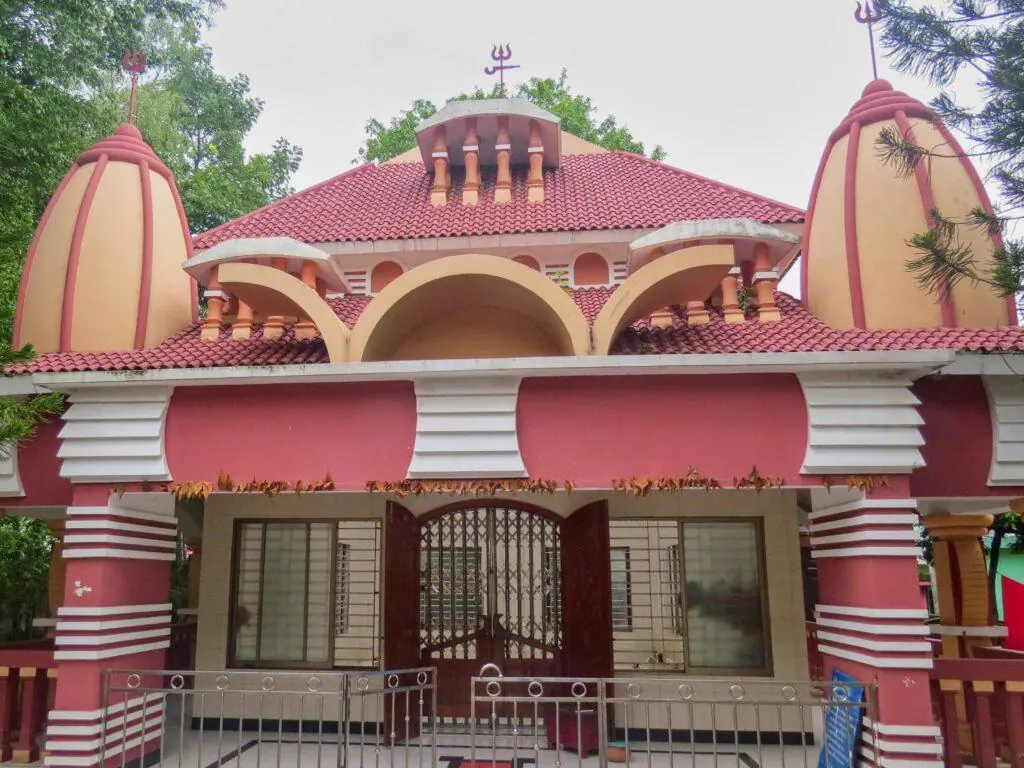
Shri Mahalakshmi Griva Peeth, Dakshin Surma Upazila, Sylhet, Bangladesh
Also known as the Chandreshwar Bhairavi Griva Shakti Peetha, the Shri Mahalakshmi Griva Peeth is located in Gotatikar village, near Kalagul Tea Estate in Dakshin Surma Upazila, Sylhet. It is said that this is where the neck or griva of Goddess Sati is believed to have fallen. The temple is dedicated to Mahalakshmi, a form of Goddess Durga, and Lord Shiva, worshipped here as Sambaranand Bhairava. Nestled amidst lush tea gardens and serene landscapes, the Shri Mahalakshmi Griva Peeth is a sacred destination for devotees seeking divine blessings and spiritual solace.
The origins of the Shri Mahalakshmi Griva Peeth are deeply rooted in Hindu mythology. The temple has been a centre of devotion for centuries. According to local legends, the sacred neck of Goddess Sati fell on a black rock in this region, which remained hidden for many years. During the 12th or 13th century, while constructing a road in the area, labourers unearthed this rock but were unable to move it despite repeated attempts. It was then that a divine vision instructed the local zamindar, Deviprasad Das Munshi, to establish a shrine at this location. The temple was built without a roof as per Maa Mahalakshmi’s wish conveyed through dreams to Deviprasad. Even today, the temple remains open to the sky, symbolising the goddess’s desire to be worshipped under natural light.

The temple does not have a roof over its sanctum sanctorum. This unique feature reflects Maa Mahalakshmi’s wish to remain open to natural light and air. Devotees believe that this open-air design enhances their connection with the goddess and nature. The sanctum houses a large black rock believed to be imbued with divine energy from Sati’s neck. This rock is adorned with vermilion or sindoor, flowers, and other offerings made by devotees. The rock emits an aura of sanctity that draws pilgrims from far and wide. A separate shrine dedicated to Sambaranand Bhairava or Lord Shiva is located within the temple complex. His idol is depicted in meditative form, symbolising his role as protector of this sacred site.
The temple’s location amidst sprawling tea gardens adds to its tranquil ambiance. Pilgrims often describe their journey through these lush landscapes as spiritually uplifting. The temple was established by Deviprasad Das Munshi during British rule and has been maintained by his descendants over generations. Despite challenges like land encroachments and invasions, it remains a vital center for Shaktism.
Daily pujas are performed with the morning Aarti at sunrise which begins with the chanting of hymns like Lakshmi Ashtottara Shatanamavali, while evening Aarti concludes with lighting oil lamps around the temple premises. Navratri is celebrated twice a year when devotees observe fasting during these nine days to seek blessings for prosperity and protection. Lakshmi Puja is celebrated during Diwali. Special offerings like gold ornaments and silk sarees are presented to Maa Mahalakshmi during this festival. An annual fair is held within the temple grounds during Navratri or Lakshmi Puja celebrations. This event includes cultural performances, stalls selling religious items, and community feasts.
According to legend, Deviprasad Das Munshi had recurring dreams in which Maa Mahalakshmi appeared and instructed him to build an open-air shrine at Gotatikar where her neck had fallen. Despite initial resistance from locals who feared divine wrath if disturbed, Deviprasad followed her instructions and established the temple as it stands today. During road construction in the area centuries ago, labourers discovered a massive black rock but were unable to move it despite their best efforts. It was only after divine intervention through dreams that they realized its sacred significance as part of Sati’s body. Devotees believe that praying at Shri Mahalakshmi Griva Peeth cures ailments and grants peace of mind. Many pilgrims visit specifically seeking Maa Mahalakshmi’s intervention in resolving personal or familial issues.
The Shri Mahalakshmi Griva Peeth with its open-air sanctum and legends amidst the tea gardens provides an ideal setting for meditation and introspection.

Bhabanipur, Sherpur Upazila, Bogra, Bangladesh
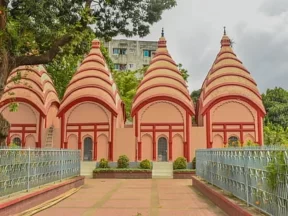
The Bhabanipur Shaktipeeth, located in Sherpur Upazila, Bogra District is an ancient temple complex dedicated to Maa Aparna, a form of Goddess Sati. Lord Shiva is worshipped here as Baba Vaman Bhairava. According to legend, it is the site where the left anklet, an ornament of Goddess Sati fell.
The temple complex has existed for centuries, though its exact date of establishment remains unknown. Historical evidence suggests that it was an important centre of worship during the rule of local kings and zamindars who contributed to its development. The temple gained prominence under the patronage of Rani Bhabani, a devout queen from Natore who played a significant role in restoring and maintaining the temple. The name Bhabanipur derives from Bhabani, another name for Goddess Durga or Sati. The temple is located near the now-defunct Kartoa River, which was once considered a holy river by devotees.
The sanctum sanctorum houses an idol of Maa Aparna adorned with vermilion or sindoor, gold ornaments, and garlands. The idol exudes an aura of serenity and divine power. A symbolic stone representing Sati’s anklet is also worshipped within the temple premises. A sacred pond called Shakha Pukur lies within the temple complex. According to legend, Maa Aparna revealed herself here wearing conch bangles or shakha, making this pond highly revered by devotees. Pilgrims take ritual baths in this pond before entering the temple to purify themselves.

The sprawling complex covers an area of approximately four acres and includes several temples. The main shrine is dedicated to Maa Aparna. There are four Shiva temples with the Patal Bhairava Temple dedicated to Baba Vaman Bhairava. There are temples dedicated to Lord Gopal, another name for Lord Krishna and Vasudev. There is also a Nat Mandir for devotional performances. A rare Panchamunda Asana or an altar made from five skulls is located within the complex. It is used for Tantric rituals performed by priests on auspicious occasions. A sacred tree known as Belbaran Tala stands near the temple. Devotees tie red or yellow threads around its branches while making wishes.
The rituals at Bhabanipur Shaktipeeth reflect ancient traditions combined with local customs. Daily pujas are performed by priests who offer flowers , fruits, coconuts, rice, incense sticks, and sweets to the goddess. Morning Aarti begins at sunrise with chanting of hymns like Durga Saptashati, while evening Aarti concludes with lighting oil lamps around the temple premises. Maghi Purnima on the full moon in February, is one of the most important festivals celebrated at Bhabanipur Shaktipeeth. Thousands of devotees gather for special prayers and rituals during this time.
Ram Navami is another major festival celebrated here with devotees participating in processions, kirtans or devotional songs, and community feasts. Pilgrims take holy baths in Shakha Pukur before offering prayers at the temple. This ritual is believed to cleanse sins and bring prosperity. On new moon nights, special Tantric rituals are conducted by priests at the Panchamunda Asana to invoke Maa Aparna’s blessings for protection and spiritual growth.
According to legend, a conch-bangle dealer passing by Shakha Pukur encountered a little girl wearing vermilion on her forehead who claimed to be the daughter of Natore Palace. She purchased bangles from him and instructed him to collect payment from Rani Bhabani’s palace. When he relayed this story to Rani Bhabani, she rushed to Shakha Pukur, where Maa Aparna emerged from the water wearing bangles on her wrists. This miraculous event spread her divinity throughout the region.
Another legend tells of a black stone discovered during excavation near Shakha Pukur. Despite multiple attempts, workers were unable to move it until they realised it was imbued with divine energy from Maa Aparna’s anklet. Devotees believe that praying at Bhabanipur Shaktipeeth cures ailments and grants peace of mind. Many pilgrims visit specifically seeking Maa Aparna’s intervention in resolving personal or familial issues.
The Bhabanipur Shaktipeeth offers visitors a unique spiritual experience rooted in mythology and devotion. Whether one seeks spiritual solace or wishes to explore India’s rich cultural heritage, visiting this ancient shrine will leave one feeling connected to the divine feminine energy.
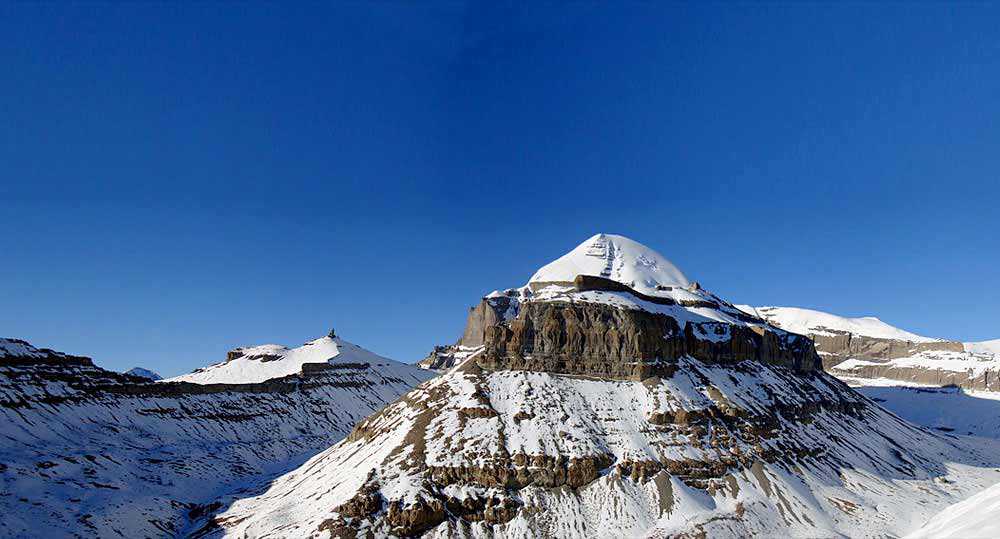
Manas Shakt Peetha, Lake Manasarovar, Mount Kailash, Tibet, China
Located near Lake Manasarovar, the Mansarovar Shakti Peeth at the base of Mount Kailash in Tibet is revered as one of the 51 Shakti Peethas. It is believed to be where the right hand of Goddess Sati fell. The temple is dedicated to Maa Dakshayani, a form of Goddess Sati, and Lord Shiva is worshipped here as Amar Bhairava. Nestled amidst the breathtaking landscapes of the Himalayas, this Shakti Peetha is not only a spiritual destination but also a symbol of divine connection and cosmic balance.
Lake Manasarovar itself holds immense spiritual significance and is often referred to as the Lake of Consciousness. According to Hindu belief, it was first formed in the mind of Lord Brahma before manifesting on Earth. The lake’s proximity to Mount Kailash—the celestial abode of Lord Shiva—further enhances its sanctity. The Mansarovar region has been a centre for pilgrimage for thousands of years. The temple dedicated to Maa Dakshayani is believed to have been established by sages who meditated in the region to seek divine blessings. Over time, it became an important destination for devotees undertaking the arduous Kailash Mansarovar Yatra.
The temple is located near Mount Kailash, which is considered the cosmic axis connecting heaven and Earth. This proximity enhances its spiritual importance as pilgrims believe that visiting both Mount Kailash and Lake Manasarovar completes their journey toward liberation or moksha. Known as one of the highest freshwater lakes in the world, Lake Manasarovar symbolises purity and enlightenment. Its emerald-blue waters are believed to cleanse sins and grant spiritual renewal. Pilgrims often perform circumambulation or a parikrama around the lake as part of their rituals.
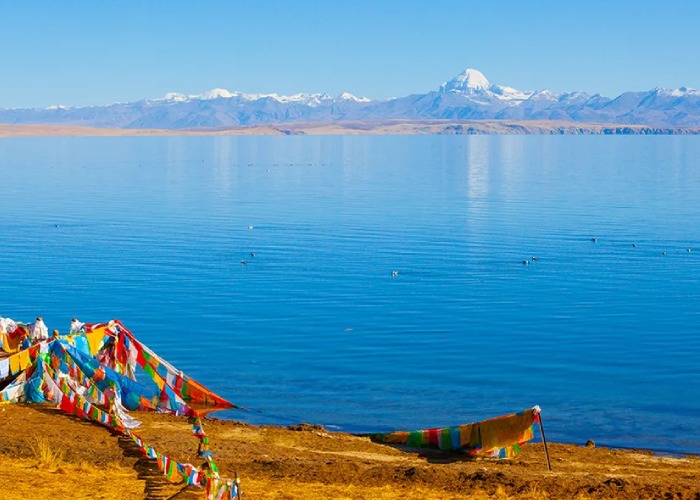
Unlike traditional temples with elaborate structures, the Mansarovar Shakti Peeth features an open-air shrine where devotees worship a sacred stone believed to embody Maa Dakshayani’s energy. A small shrine dedicated to Amar Bhairava or Lord Shiva stands near the main temple. His idol depicts him in a meditative posture symbolising eternal peace and protection. Surrounded by snow-capped peaks, pristine waters, and serene landscapes, the temple offers a tranquil environment ideal for meditation and introspection.
Taking a dip in Lake Manasarovar is considered one of the most sacred acts for pilgrims. It symbolises washing away past sins and attaining spiritual purity. Although direct bathing in the lake is now restricted due to environmental concerns, pilgrims collect water in containers for rituals. Pilgrims perform circumambulation or parikramas around both Lake Manasarovar and Mount Kailash as an act of devotion. The lake’s parikrama spans approximately 105 kilometers and is often completed by bus or on foot. Special fire rituals or hawans are conducted on the banks of Lake Manasarovar during auspicious occasions. Devotees offer ghee, rice, and herbs into the sacred fire while chanting Vedic mantras. Maha Shivratri is celebrated with great fervour at Mansarovar Shakti Peeth. Devotees observe fasting and perform night-long prayers dedicated to Amar Bhairava or Lord Shiva.
According to legend, Lake Manasarovar was first formed in the mind or manas of Lord Brahma before manifesting on Earth. It was created as a celestial bathing place for his sons after their journey through creation. Another legend states that celestial swans or hamsas reside on Lake Manasarovar during summer months. These swans symbolise wisdom and enlightenment in Hinduism and are believed to be manifestations of divine energy. Local lore suggests that Amar Bhairava grants immortality or amaratva to those who pray earnestly at his shrine near Mansarovar Shakti Peeth. Many pilgrims visit specifically seeking his blessings for protection and longevity.
The Mansarovar Shakti Peeth, with its open-air shrine and rituals like the parikrama around Lake Manasarovar provide opportunities for deep introspection and renewal.
 Memories and Such