Adulting 101: Navigating the Job Market – Resume Writing, Interviews, and Networking

The job market can be intimidating, especially for young adults entering the workforce for the first time. Whether fresh out of university or looking for a new role, knowing how to craft a standout resume, ace interviews, and network effectively are critical skills for landing the right job.

Why is navigating the job market important? Entering the job market can be overwhelming, but it’s also an opportunity for growth, exploration, and building your dream career. Here’s why mastering the process is vital. Understanding what employers look for and presenting yourself effectively can set you apart from other candidates. Securing the right job opens doors to new opportunities, mentorships, and long-term career development. Navigating the job market successfully helps you gain confidence in your abilities and value as a professional. Equipped with the right skills, you can make the transition into the workforce more manageable and rewarding. Let’s start by focusing on the first element: creating a powerful resume.

Part 1: Resume Writing – Crafting a Standout Application
Your resume is your first point of contact with potential employers. It’s a snapshot of your professional story that showcases your skills, accomplishments, and experiences. Here’s how to craft a winning resume:

  • The purpose of a resume: The resume’s purpose is to summarise your qualifications and convince hiring managers to invite you for an interview. It should be tailored to highlight the skills and experiences that are relevant to the specific role you’re applying for.
  • Key components of a resume: A well-structured resume typically includes contact information like name, phone number, email address, and LinkedIn profile. Ensure your email is professional. It should also include a brief overview of your qualifications and career goals. Highlight relevant technical and soft skills that align with the job description. List your work experience in reverse chronological order, focusing on accomplishments rather than duties. Mention your degrees, institutions, and graduation dates and include any certifications, awards, or recognitions that boost your credibility for the role.
  • Resume writing tips: Follow these tips for a polished and impactful resume. Customise your resume for each job application by emphasising skills and experience relevant to the role. Start bullet points with strong action verbs like “implemented,” “led,” “optimised,” or “achieved.” Use numbers to quantify achievements (e.g., “Improved sales by 20%” or “Managed a team of 5”). Limit your resume to one page unless you have extensive experience. Check for spelling or grammar mistakes. Errors can make a bad impression.
  • Avoid common resume mistakes: Be mindful of these pitfalls: Avoid cluttering your resume with irrelevant details. Focus on what’s important. Use a clean, professional layout with clearly labeled sections. Replace vague objectives with a professional summary showcasing your value.
Part 2: Interview Preparation – How to Shine in the Spotlight
Securing an interview means that your resume has done its job. Now, it’s time to shine in person (or virtually) by showcasing your skills, personality, and enthusiasm for the role.

  • Types of job interviews: Understanding the types of interviews can help you prepare better. Traditional interviews are one-on-one conversations with hiring managers, while in panel interviews, multiple interviewers ask questions in a formal setting. Behavioural interviews focus on past experiences and how you’ve handled specific situations. Virtual interviews are conducted via video platforms like Zoom or Teams, while group interviews involve interaction with other candidates and assessing your teamwork skills.
  • Preparing for the interview: Preparation is the key to interview success. Study the company and research its mission, values, products, and services to familiarise yourself with the industry and competitors. Understand the role. analyse the job description to identify key responsibilities and required qualifications, and prepare to discuss how your skills align with the role. Practice common interview questions, including “tell me about yourself”, “what are your strengths and weaknesses”, “why do you want to work here”, and “describe a challenge you’ve faced and how you overcame it.”
  • Prepare STAR responses: Use the STAR method when answering behavioral questions. S stands for Situation, where you describe the context of the example. T stands for Task, where you explain the goal or challenge. A stands for Action, which details the steps you took to address the situation. R stands for Result, or the outcome and what you learned. Dress professionally and choose attire appropriate for the company culture (business formal or smart casual). Avoid noisy jewelry or overly casual clothing. Practice mock interviews and practice interviews with friends or mentors to refine your answers and boost your confidence.
  • Performing well during the interview: Make a lasting impression by showcasing professionalism and enthusiasm. Arrive on time. If it’s virtual, test your tech setup and video connection beforehand. For in-person interviews, arrive early. Be engaged and actively listen to questions and respond thoughtfully.
  • Highlight your value and focus on how you can contribute to the company rather than just describing your skills. Ask questions and prepare thoughtful questions about the role or company to show genuine interest. Express gratitude and thank the interviewer for their time and opportunity.

Part 3: Networking – Building and Leveraging Connections
Networking is one of the most powerful tools for career advancement. Building professional relationships and tapping into your network can lead to job opportunities, mentorships, and collaboration.

Networking is crucial for several reasons. Many jobs are not publicly listed but filled through referrals. Networking allows you to learn about industries, roles, and companies from experienced professionals. Consistently connecting with others helps you establish your reputation in your field.

Networking doesn’t mean randomly handing out business cards. It’s about building meaningful connections. Start with your existing network and inform friends and family about your career goals; they may have valuable connections. Reach out to former professors or alumni networks for advice and introductions. Attend conferences, workshops, or seminars in your field. Participate in job fairs to connect with recruiters and learn about opportunities.

Leverage online platforms like LinkedIn by optimising your profile and engaging with professionals by commenting on posts, joining groups, and messaging connections. Build connections at work by connecting with colleagues and building relationships with coworkers by collaborating effectively and supporting team efforts. Seek mentorship by finding experienced colleagues who can share insights and guidance. Practice professional communication and be genuine when networking authentically rather than self-promotion. Follow up and send thank-you emails or messages after meetings or introductions.

Introverted individuals can excel at networking by leveraging their strengths. Focus on one-on-one interactions rather than large groups, and prepare talking points to ease conversations. Use written communication (emails or LinkedIn messages) to connect thoughtfully.

Putting It All Together
Navigating the job market takes effort, strategy, and resilience. By mastering the three pillars—resume writing, interviews, and networking—you can position yourself for success. Here’s how to integrate these strategies:

  • Build a strong foundation by crafting a polished resume and tailoring it for each job application.
  • Prepare for opportunities and practice for interviews thoroughly to showcase your skills confidently.
  • Cultivate relationships and dedicate time to build a network that supports your career goals.
  • Stay persistent because rejections are inevitable in any job search, but persistence is key. Learn from setbacks and keep improving.

Navigating the job market as a young adult is a vital step in personal and professional growth. By focusing on writing a standout resume, preparing thoroughly for interviews, and building a strong network, you can create the foundation for a successful career. Remember, each step in your journey is an opportunity to learn, connect, and grow. With dedication and the strategies outlined here, you’ll be ready to tackle the job market and achieve your goals!

Adulting 101: How to Become More Visible at Work

In the modern workplace, visibility is key to career advancement. Being noticed for your contributions, ideas, and efforts can open doors to new opportunities, promotions, and recognition. However, many young adults entering the workforce struggle with making themselves visible, especially in environments where competition is high or where they feel overshadowed by more experienced colleagues.

Why is workplace visibility important? Visibility ensures that your efforts are acknowledged. When you’re visible at work, managers and colleagues recognise your value to the team. This recognition can lead to rewards such as promotions, bonuses, or leadership opportunities. Being visible can fast-track your career growth. Employers are more likely to consider individuals who consistently demonstrate their skills and make an impact when assigning high-profile projects or leadership roles. Visibility fosters stronger relationships with colleagues and supervisors. When people know who you are and what you contribute, they’re more likely to collaborate with you and advocate for your success. Visibility helps establish your credibility and expertise in your field. By showcasing your knowledge and skills, you position yourself as a reliable and valuable team member. Lastly, when you’re visible at work, opportunities often come your way organically, whether it’s being invited to join important projects, representing the company at events, or taking on new responsibilities.

What challenges do young adults face on the way to becoming visible?

  • Lack of confidence: Entering the workforce can be intimidating, especially when surrounded by more experienced colleagues. Young professionals may doubt their abilities or hesitate to speak up.
  • Fear of rejection: The fear of being judged or rejected can prevent young adults from sharing ideas or seeking recognition.
  • Workplace hierarchies: In hierarchical workplaces, junior employees may feel overshadowed by senior staff or believe their contributions are less valued.
  • Introversion: Introverted individuals may find it challenging to assert themselves in group settings or actively seek visibility.
  • Unclear goals: Without clear career goals, young adults may struggle to identify how they want to be seen or recognised at work.

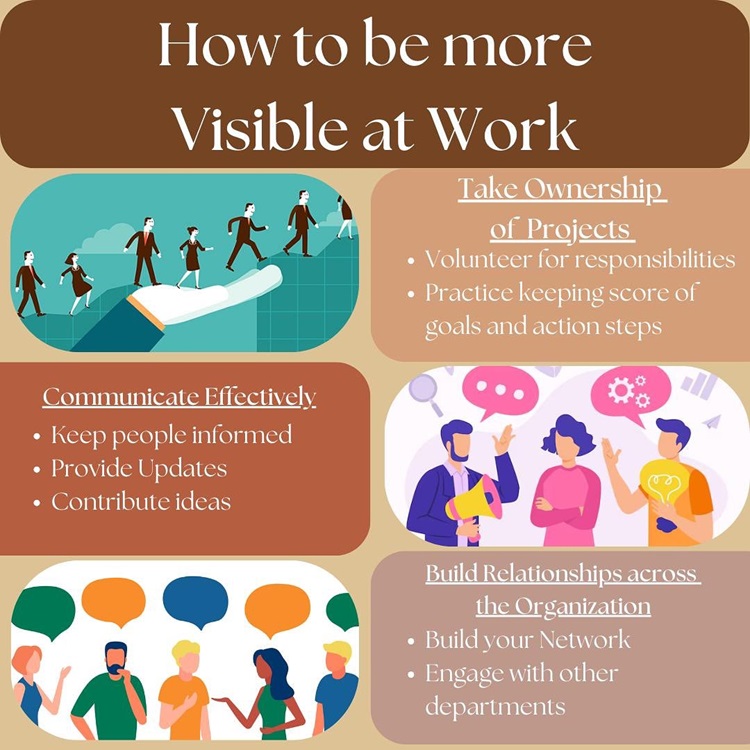
So how can you become more visible at work? Becoming visible at work doesn’t mean being loud or attention-seeking; it’s about demonstrating value and building meaningful connections within your organisation. Here are strategies young professionals can use:

Excel in your role: The foundation of workplace visibility is performing well in your job. Consistently delivering high-quality work ensures that people notice your contributions. Meet deadlines and always complete tasks on time, and exceed expectations when possible. Take the initiative and volunteer for projects or responsibilities that align with your skills and interests. Pay attention to detail and ensure accuracy and thoroughness in everything you do, whether it’s crafting a report or organising a presentation.

Communicate effectively: Effective communication is crucial for making yourself known at work. Speak up in meetings and share ideas confidently during discussions or brainstorming sessions. Ask questions, show curiosity, and be engaged by asking thoughtful questions about projects or company goals. Provide updates and keep supervisors informed about your progress on tasks or projects without waiting for them to ask.

Build relationships: Networking within your organisation is essential for visibility. Connect with colleagues by building rapport with coworkers across departments. Engage with supervisors and schedule one-on-one meetings with your manager to discuss goals, feedback, and career development. Participate in social events by attending company gatherings or team-building activities to strengthen relationships outside work tasks.

Showcase your expertise: Demonstrating your knowledge and skills helps establish credibility. Share knowledge and offer insights during meetings or discussions based on your expertise. Volunteer for training sessions by leading workshops or training sessions on topics you’re skilled in. Contribute ideas by suggesting innovative solutions or improvements that add value to the organisation.

Take ownership: Taking ownership of tasks shows initiative and accountability. Lead projects and volunteer to take charge of small projects or assignments. Solve problems by identifying challenges within the workplace and propose actionable solutions. Follow through and ensure that any task you take is completed successfully and professionally.

Develop a personal brand: Creating a personal brand helps distinguish yourself from others in the workplace. Identify your strengths and reflect on what makes you unique, whether it’s creativity, technical skills, or problem-solving abilities. Be consistent and ensure that your actions align with the values and strengths you want to be known for. Leverage social media by using professional platforms like LinkedIn to share achievements, articles, or insights related to your field.

Seek feedback: Feedback provides valuable insights into how others perceive you and where you can improve. Ask for constructive criticism by regularly seeking feedback from supervisors about your performance. Implement suggestions and show that you value feedback by acting on recommendations for improvement. Request recognition and if appropriate, ask managers for public acknowledgment of successful projects or contributions.

Network beyond your team: Visibility isn’t limited to your immediate team; building connections across the organisation broadens your reach. Collaborate across departments and volunteer for cross-departmental projects that expose you to new teams. Attend company-wide meetings and participate actively in meetings involving multiple teams or divisions. Introduce yourself, and don’t hesitate to introduce yourself to senior leaders during events or casual interactions.

Stay positive: A positive attitude contributes significantly to workplace visibility. Be approachable and maintain an optimistic demeanor that encourages colleagues to engage with you. Support others and celebrate coworkers’ successes, and offer help when needed. Handle criticism gracefully and accept constructive criticism with humility, using it as an opportunity for growth.

Document your achievements: Keeping track of accomplishments ensures that they don’t go unnoticed during performance reviews or promotions discussions. Maintain a portfolio by creating a portfolio showcasing successful projects, reports, presentations, or other contributions. Highlight results and quantify achievements where possible (e.g., “Increased sales by 20%”). Share success stories so you can discuss accomplishments during one-on-one meetings with supervisors.

Introverted individuals often face unique challenges in becoming visible at work but can leverage their strengths effectively. Focus on one-on-one interactions and build relationships through individual conversations rather than large group settings. Prepare ahead of time and plan talking points before meetings so you feel confident sharing ideas when opportunities arise. Leverage written communication by using emails or reports as tools for showcasing ideas clearly without needing verbal presentations. Play to your strengths and highlight qualities like active listening, thoughtfulness, and analytical thinking during discussions or problem-solving sessions. Choose strategic opportunities and participate selectively in activities where visibility aligns with comfort levels such as leading small projects rather than public speaking engagements.

While striving for visibility is important, certain behaviours can undermine efforts. Don’t overpromise with delivering, and avoid taking on too many tasks if it compromises quality; focus on delivering consistent results instead of spreading yourself thin. Don’t seek attention excessively because visibility should stem from genuine contributions rather than attention-seeking behavior that detracts from professionalism. Don’t ignore feedback by dismissing constructive criticism, as your growth can be hindered; embrace feedback as an opportunity for improvement instead. Don’t neglect relationships by focusing solely on tasks while ignoring interpersonal connections limits long-term visibility potential within organisations.

Becoming more visible at work is not about shouting louder than everyone else: it’s about consistently demonstrating value while building meaningful relationships! By excelling in their roles, communicating effectively, showcasing their expertise, and developing personal brands, young adults will position themselves favorably within competitive workplaces. Remember, it’s not merely about being seen; it’s about ensuring that what others see reflects authenticity and professionalism. Embrace these strategies today and watch as new opportunities unfold tomorrow!

Dry Promotions: A Nuanced Balancing Act

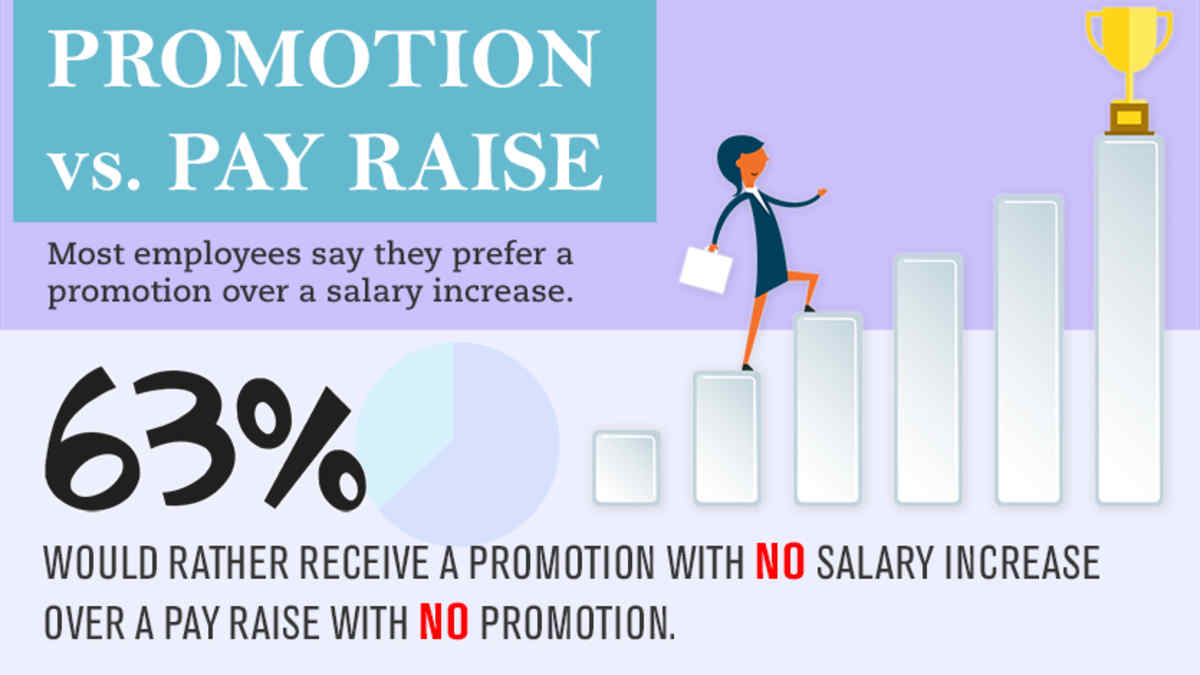
In the last few weeks, we have been hearing about this phenomenon on various platforms. In the intricate ballet of the corporate world, few manoeuvres spark as much debate as dry promotion. Unlike traditional promotions that come hand-in-hand with a salary increase, dry promotions denote an elevation in job title, responsibilities, or status without a corresponding financial reward.

Dry promotions present a seemingly paradoxical situation: recognition without reward. While some dismiss it as a disingenuous tactic, others argue its potential as a valuable stepping stone or strategic tool. So, is the dry promotion a demotivating dead end or a gateway to greater opportunities? The answer, as with most things in life, lies in the intricate dance of understanding its complexities and navigating its challenges effectively.

So why is dry promotion being discussed so much these days? Several factors contribute to this phenomenon. In competitive economic landscapes, budget constraints can limit salary increases. Companies may prioritise hiring top talent or investing in other areas, temporarily putting salary hikes on hold. Dry promotions can be strategic tools for talent development. They offer opportunities for individuals to take on new responsibilities, acquire skills, and demonstrate leadership potential, paving the way for future financial rewards. Dry promotions can act as stepping stones within the organisational hierarchy. By assigning increased responsibilities without immediate salary bumps, companies can groom promising individuals for senior positions while ensuring existing salaries remain competitive. Some dry promotions arise from temporary situations like restructuring or mergers. Companies may delay financial adjustments until the dust settles, offering recognition and new roles in the meantime.

While the concept of a promotion without a raise might raise eyebrows, it’s important to approach it with nuance. There are both potential benefits and drawbacks to consider. Dry promotions offer valuable opportunities for learning and growth. Taking on new challenges expands skillsets, enhances leadership qualities, and builds an impressive resume. Stepping into a bigger role increases visibility within the organisation, leading to greater recognition and potentially paving the way for future promotions with financial rewards. Employers may opt for dry promotions as a strategic move to contain costs while recognising and rewarding employees for their contributions. In times of budget constraints, offering non-monetary advancements allows organizations to acknowledge exceptional performance without immediately impacting the bottom line.

For individuals seeking specific career changes or advancement within a particular department, a dry promotion can serve as a strategic foot in the door, positioning them for future opportunities within that area. In some cases, the recognition and increased responsibility associated with a dry promotion can boost morale and employee engagement, especially when paired with clear communication and future advancement plans. Dry promotions can serve as a tool for professional development, providing employees with opportunities to enhance their skills, broaden their experience, and prepare for higher-level roles. This approach aligns with the philosophy that career progression is not solely defined by financial gains but also by the acquisition of diverse skills and experiences. The elevation in job titles and responsibilities can enhance their marketability and open doors to future career opportunities, even if the immediate financial gains are not realized.

However, if poorly handled, dry promotions can create feelings of resentment and demotivation. Employees may view it as a broken promise or a lack of appreciation, leading to decreased productivity and increased turnover. Offering dry promotions without a corresponding salary increase may pose a risk to employee retention. Talented individuals, especially those with sought-after skills, may be enticed by external opportunities that offer both professional growth and financial rewards. Depending on individual financial situations, the lack of a salary increase can create significant financial strain. This can be particularly detrimental for lower-income employees, potentially leading to decreased job satisfaction and increased stress. Companies must manage expectations effectively. Offering a dry promotion without a clear roadmap for future financial rewards can fuel frustration and resentment if those expectations aren’t met. The market value of an employee’s skills and experience may not be adequately reflected in their compensation package, potentially hindering their ability to negotiate competitive salaries in the job market. This consideration is particularly relevant when employees explore external career opportunities. This can be a costly loss for companies that have invested in their development.

The success of a dry promotion hinges on effective communication, strategic implementation, and transparency. Here are some key factors for navigating this nuanced concept:

  • Clear Communication: Companies must be transparent about the reasons behind the dry promotion, outlining the rationale, potential benefits, and future salary adjustment plans. Employers should emphasise the value placed on professional growth and the organisation’s commitment to long-term employee development. Open communication fosters trust and prevents misunderstandings.
  • Focus on Development: Dry promotions should be presented as opportunities for learning and growth, not just additional workload. Companies should provide support and resources for skill development and career advancement.
  • Setting Expectations: A clear timeline for future salary adjustments or promotion possibilities is crucial to managing expectations and maintaining employee morale. Ambiguity breeds frustration, so be forthright in your communication.
  • Individual Considerations: Not all employees react to dry promotions the same way. Companies should be sensitive to individual situations and financial constraints, potentially offering alternative forms of compensation or support in the interim. Understanding the diverse needs of the workforce is essential.
  • Performance Metrics: Linking dry promotions to clear performance metrics helps in objectively assessing employee contributions. By establishing transparent criteria, employers can ensure that promotions are merit-based and aligned with organizational goals.
  • Career Path Planning: Organisations should actively engage in career path planning with employees, providing a roadmap for future progression. This involves outlining the steps required for transitioning from a dry promotion to a role with increased financial compensation.
  • Monitoring and Feedback: The impact of dry promotions should be monitored and feedback should be actively sought. This allows companies to identify potential concerns and adjust their approach for future instances.

A dry promotion is not inherently good or bad; it’s a nuanced tool that requires careful consideration and thoughtful implementation. While this practice can be a strategic tool for employers to acknowledge and reward excellence, it also necessitates a thoughtful and transparent approach.

Companies must understand the motivations behind them, employ transparent communication, prioritize employee development, and manage expectations effectively. For employees, understanding the potential benefits and navigating the challenges while advocating for their needs is crucial. By fostering open communication, aligning promotions with performance metrics, and maintaining a comprehensive approach to compensation and benefits, both employers and employees can navigate the intricacies of dry promotions effectively. Ultimately, the success of dry promotions hinges on the ability of organisations to create a work environment that values both the professional and financial dimensions of employee growth. As the business landscape continues to evolve, the judicious use of dry promotions may well become a strategic lever for organisations seeking to balance fiscal responsibility with the imperatives of talent retention and development.

Are you a Fox or a Hedgehog?

The ancient Greek poet Archilochus wrote a now-lost parable with the following moral: “The fox knows many things, but the hedgehog knows one big thing.” The general gist of the line is this: Some people see the details in everything they do, like the fox, while others are great at having one singular vision, like the hedgehog. This animal-centric adage is at the heart of a lesson in “On Grand Strategy,” an instruction manual for would-be leaders based on popular seminars by Yale professor John Lewis Gaddis. Taking a cue from a 1953 essay by British-American philosopher Isaiah Berlin, Gaddis discusses how great leaders and thinkers can be categorized as either hedgehogs or foxes. Berlin went so far as to say that this split is “one of the deepest differences [that] divide writers and thinkers, and, it may be, human beings in general.”

Source

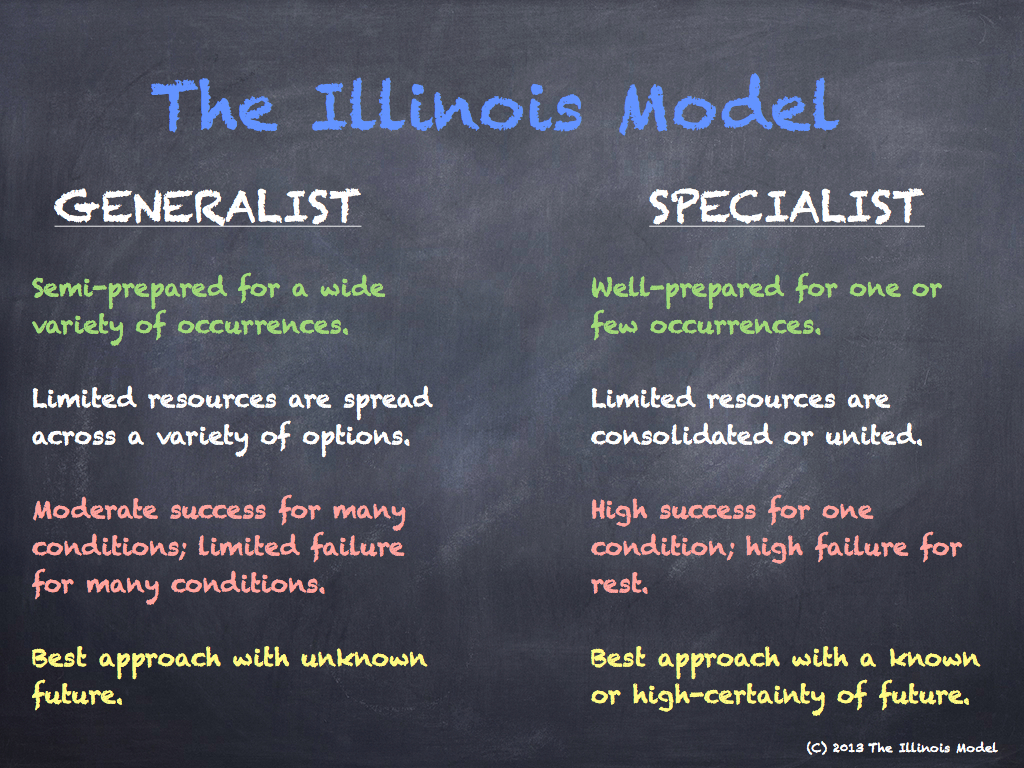
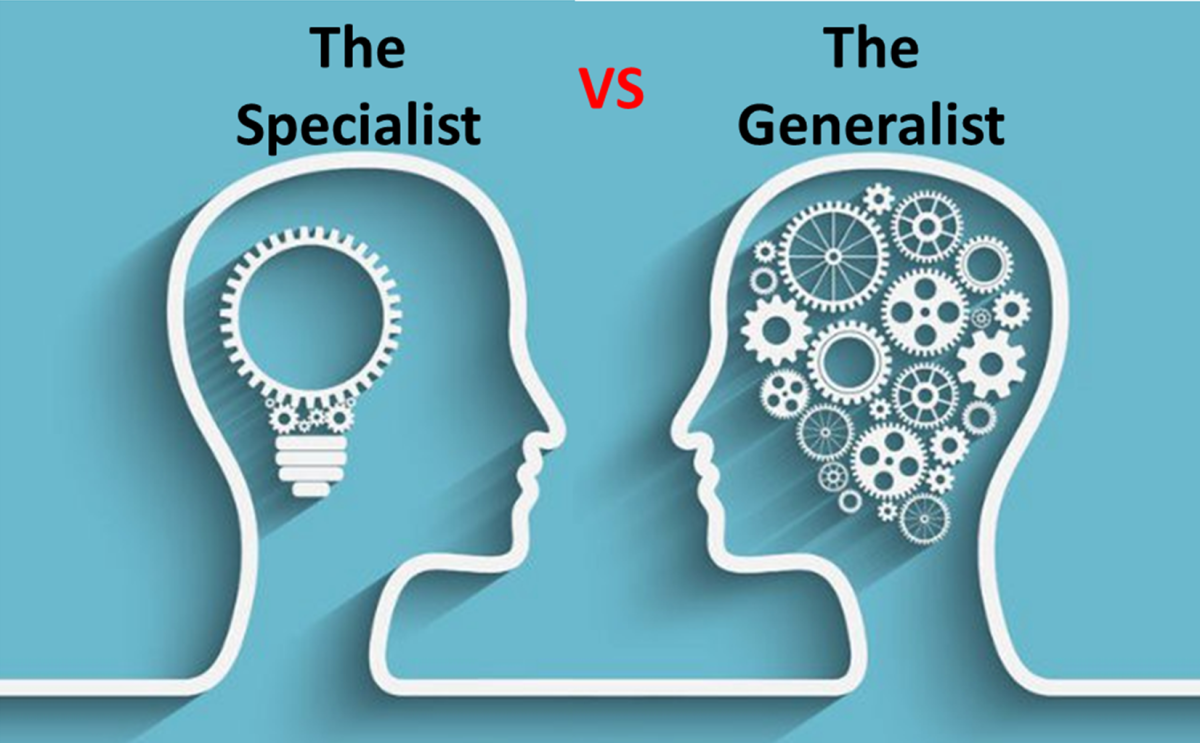
Typically, a generalist is someone who has a broad range of knowledge and skills across multiple fields, while a specialist is someone who has deep knowledge and expertise in a specific field or area. Generalists tend to have a wider range of job opportunities and can adapt to new situations and changing circumstances more easily than specialists. They also tend to have a better understanding of how different fields and disciplines are interconnected and can often see connections and opportunities that specialists might miss. Specialists, on the other hand, tend to have a more in-depth understanding of their field of expertise and can contribute more to projects and teams that require specialized knowledge and skills. They also tend to be more sought after and command higher salaries in their field of expertise. Generalists can understand and see connections between different subjects, while specialists can focus on and solve complex problems within their area of expertise. Generalists are often more adaptable and can work on a wider range of tasks, while specialists have a deeper understanding of their field and can contribute significantly to its advancement.

While a specialist systematically hones skills related to their domain, a generalist seeks to sharpen a wide range of related skills that will prove useful in multiple domains. The proliferation of startups and small businesses has surged the demand for generalists who come with a vast spectrum of knowledge and experience. However, when the requirement is for deep technical knowledge in critical fields, the skills of a specialist are much more marketable. When a company is looking at upscaling operations within its domain, the specialist is more progressive when it comes to creative ideas. Generalists are progressive when it comes to accepting a varied number of clients with different needs and expectations. Owing to their interpersonal skills and a broad-based learning curve, generalists can handle uncertainties efficiently. In terms of transferability, generalists fare better than specialists as their wide range of specialities is easily transferable to different domains. Specialists aren’t able to transfer their domain-related expertise to another field or even to another discipline within the same domain.

Both generalists and specialists have their own advantages and disadvantages, depending on the particular situation and the needs of the employer or organization. It’s also worth mentioning that, while some people may naturally lean towards being a generalist or a specialist, it is also possible to develop skills in both areas through continuous learning and development.

Specialists have expertise in their area of specialisation because they are focused on one domain, which attracts high-paying clients since subject-specific expertise gaps are more difficult to fill. The ability to undertake extensive targeted research and a quality understanding of the domain earn specialists attractive remuneration. Specialists are also more equipped to handle any new technological complexity in the field as they dedicate years to exploring the different facets of the domain. On the other hand, because they are focused on one area of expertise, the lack of diversity within the job profile hinders growth. A specialized portfolio has limited scope for independent expansion. With rapid technological advancements, specialists risk falling behind if they don’t update their skill sets frequently. Specialists usually perform within a narrower domain than generalists. As they dive deeper into their domain, the relevant working fields surrounding them gradually shrink.

Generalists cover several domains and envision the bigger picture as they combine multiple perspectives from different departments. A direct result of being open to a lot of unique challenges is acquiring strong critical thinking skills and this enables generalists to offer actionable insights into their areas of expertise. Their ability to explore various domains and a high multitasking quotient make generalists excel in leadership roles. A large number of skills arm generalists with the capacity to diversify their services which helps them swap career paths easily and give their clients a lot of alternatives to work with. But a lack of specific expertise in any domain puts them on a back foot as they aren’t that competent in niche projects. A high percentage of generalists work across multiple teams and tackle a host of responsibilities, especially if they are in leadership roles. This often leads to psychological burnout. Generalists are also easier to replace owing to their overlapping or vaguely defined work responsibilities and so these positions are prone to lower pay scales as compared to a specialist.

Whether it is better to be a generalist or a specialist depends on the individual’s goals, interests, and circumstances. For some careers, such as medicine or law, specialisation is required to achieve a high level of expertise and be successful in the field. In other fields, a generalist approach can be beneficial, as it allows individuals to have a wider range of skills and knowledge, making them more versatile and adaptable in the face of changing circumstances. In many cases, a combination of both generalist and specialist skills can be advantageous, allowing individuals to understand the broader context of their area of expertise and effectively communicate and apply their knowledge. Ultimately, the choice between being a generalist or a specialist is a personal one and should be based on individual strengths, interests, and career goals.

Some of the questions one needs to ask themselves are if one seeks a diverse breadth of knowledge or if one prefers deep research on any specific topic. Do they change their career perspective often and prefer taking time to find the niche they are interested in? Or have they already determined their career trajectory? One also needs to work out what kind of work ignites their interests and passions and if it requires them to hone different skills or demands specific subject-matter expertise. The ideal workforce of today is a carefully balanced group of specialised generalists who recognise their varied strengths but rely on others’ domain-specific expertise, and generalised specialists who are people with core competencies who also delve into other related areas.

So would you rather be a fox or a hedgehog? I am going to ask BB and GG this question after making them read this article.

Friends in the workplace – Yes or No

Friendships are beautiful and a good friend with whom you can vent and share problems and who listens without judging is invaluable. A workplace on the other hand is one which for many is fraught with pitfalls and because it’s a place where we spend the majority of our time, having a friend there may be good. But is having a work buddy something that one cultivates? Given the time we spend at work, it is inevitable that some sort of friendships at work will be formed.

It’s very natural to look for friends at work, and it’s necessary for professional success. Since we spend most of our time at work, and if we don’t like the people we work with, getting through the day becomes even more difficult. Happier and more productive days will happen if we enjoy the company of our colleagues. Workplace friends improve the good days and make the poor ones bearable. While being social at work will help raise morale and satisfaction, one must also set limits with friendly colleagues.

There’s a lot of evidence that workplace friendships fulfil a basic human need for companionship, and are necessary to some degree. Research has found that it can even fuel greater job satisfaction: In a survey of more than 195,600 employees in the U.S., Gallup found that 20% of them said they had a best friend at work. This was also the group that reported being most engaged and committed to their jobs. But workplace friendships can be tricky, especially between managers and employees, or senior and junior employees. In that scenario, there’s always going to be a power dynamic in play.

While being social can help boost morale and happiness on the job, one needs to set boundaries. Instead of striving for friendships at work, it’s better to be friendly with coworkers, according to some experts who say that ith professional relationships, one can grab coffee or lunch, but not necessarily invite them home for a barbecue or special family events.

Today’s workplace is different from a few years ago with remote work and social distancing making workplace interactions more difficult. Without meeting colleagues and co-working face-to-face, having close friendships will be slim and making work friends will mean an extra effort.

Having a good friend at work one can confide in and commiserate with can be a blessing and while work friendships can be a boon, they can also be a bust. The truth is that many of the work friends we have will end when the job ends. You may keep in touch for a couple of years or so, but over time, you tend to drift apart, because the biggest binder between the two, the company or organisation no longer exists. But there may be a few work friends who transcend the organisation to become true friends, but this is rare and quite far between.

A 2014 Globoforce survey found that people with workplace friendships are nearly three times more likely to say that they love their companies and two times less likely to be poached by another company. But in the throes of a new work friendship, sometimes it’s easier to forget that a work friend is a colleague first and a friend second. So one has to be a bit more careful about what is shared with them as it may come to bite you from behind.

So if you are making work friends or have friends in the workplace, here are some tips on how to deal with them.

Be mindful of oversharing – You may have to share personal information to make friends at work, but you should proceed with more caution than you would for non-work friendships. Remember to always keep it professional and respectful. Share on a need to know basis and be vague. Don’t be dismissive also but keep it professional. Sharing needs to be very nuanced and balanced because on one hand, forging deeper, more intimate relationships requires self-disclosure and vulnerability; on the other hand, if a work friendship spirals downward, the person can use personal or sensitive information against you. Whatever one shares with work friends, make sure you never dislose information that can create animosity, that is stigmatized, or that could get you fired.

Be mindful of the office hierarchy – Be very careful and know that at the end of the day, your boss or your manager is still in charge. Even if your workplace is very laid-back and your manager your age or even younger, they are still the boss and enforce workplace standards. You can be friendly with your manager or someone who manages but be careful about how your friendship affects your professional relationship and how it may be perceived by coworkers. Make sure that others don’t worry that there’s favouritism at play no matter how equitable things are.

Be mindful about confidentiality – You need to be careful about sharing anything with work friends that you’d like to keep secret from your boss. Even if a colleague assures you of their confidentiality, they may and in most cases will reveal your information if someone asks them or if they have a bone to pick with you at a later stage. Before sharing something with a coworker, ask yourself how much would you want others to know and only share what can be freely shared with everyone. And don’t ever write down anything that you don’t want to be saved for posterity. Remember, what happens on the internet, stays in the internet.

Be mindful about resolving disagreements – In every friendship, disagreements happen, but one should not let personal disagreement mess up professional relationships. Having negative relationships with co-workers is a huge predictor of quitting a job and these relationships can be distracting and de-motivating. So if a work friendship is on the rocks, handle it as calmly and professionally as possible, so you can either salvage the friendship or move on calmly, so it doesn’t impact your work life. Identify the source of the conflict and resolve it professionally. Do not spread gossip or rumors, do not try to get coworkers on your side, or cast your friend in a negative light with a supervisor.

Now that we’ve established how to deal with workplace friendships, let’s see what are their benefits. The benefits of work friends go far beyond having someone who is always willing to loan you their stapler. Research shows that employees who get super close with their co-workers are happier at work, more engaged, better with clients, do better work, and are less injury-prone. A Gallup reports that those without a best friend in the workplace have just a 1-in-12 chance of being engaged. When you find the right balance between personal and professional, you reap the rewards of friendships at work.

Finding a colleague you can be close with means having a go-to person to ask for advice and help. It can be less intimidating to ask a colleague for assistance than to run to your boss every time a minor issue crops up. This is an easy way to reduce the learning curve and get up to speed quickly in a new role. It also means having someone to chat with during the day. Companionship makes the work day pass faster. Having a friend you can gab with means you’ll even look forward to coming to the office. A work friend also increases a greater knowledge of the business and opportunities. If either of you leaves your job, you can be a reference to the other. Also, when both of you move on to different roles, your friendship can progress like a natural friendship, and/or you can keep an eye out for opportunities for one another.

Having friends at work can increase job satisfaction, performance, and productivity, research shows. But it should be treated with care and not become too close with colleagues. According to Gallup, getting a job BFF is one of the most significant factors in employee engagement and satisfaction. There is a concrete link between having a best friend at work, and the effort employees expend in their job. Those who have a best friend at work are seven times as likely to be engaged in their jobs, are better at engaging customers, produce higher quality work, have higher well-being, and are less likely to get injured on the job. Women who strongly agree they have a best friend at work are more than twice as likely to be engaged compared with the women who say otherwise.

According to Gallup, women who firmly believe they have a best friend at work are less likely to be actively searching for or monitoring job openings, are more associated with their colleagues, respect what is expected of them, and trust their honesty and ethics and are less likely to record a negative daytime experience, such as workplace stress or feeling tired.

Linkedin said having a friend at work boosts employee satisfaction, employee motivation, and productivity, particularly among your younger employees the ages between 18 and 24 as socialising and friendships are critical for moving up the career ladder, according to 1/3 of Millennials. They also found out that 51% of staff maintain contact with former coworkers, resulting in boomerang employees or increased turnover in poor environments.

When you form friendships with colleagues outside of your immediate teams or department, it pens up to sides of the business you wouldn’t normally be able to access. This can help create a more comprehensive understanding of what the company is working towards, and how other departments operate, reveal some of the organisation’s pain points, and help an organisation’s people grow by learning about and appreciating each other’s experiences.

Unfortunately, not everyone wants to be friends with their coworkers, especially in super-competitive work environments. Some people will use even the slightest tidbit of information to get ahead, so before you begin to share important or personal details with someone, make sure you trust them implicitly. Similarly, social media is not an aspect of your life that you should share with everyone. While in the beginning stages of any work relationship or collaboration, you may not want to give a person access to your Facebook or Twitter pages. You should connect with colleagues on LinkedIn, however. The site was built for professional affiliations, so it would be more than wise to add a colleague, but hold off on giving colleagues access to any site that may house personal or social information. Oversharing details of your personal life and finances can come back to haunt you. Sharing personal details with a colleague who you thought had your back can also damage your career prospects if those details are used against you. Many companies are hierarchical, and when it comes to promotions or project assignments, close friendships can sometimes cause friction.

Friendships at work get even trickier for managers and their subordinates. Managers would not want to make it seem like they are giving one person an advantage or a pass for bad behaviour. Being considered too close with a coworker can reflect negatively on you if your friend isn’t viewed in high regard. You may be tarred by association and hurt assignment and project prospects, or prevent you from being included in confidential news if your peers fear it might be leaked to an untrusted colleague. When a work friend starts venting out too much, you run the risk of getting stuck in a negative cycle. Co-ruminating is the process by which friends repeatedly go over a difficult event or emotion. It brings us together and increases friendship satisfaction, but also decreases well being, kicks up a level of depression and anxiety. You need to watch out for that.”

Employee retention is more critical than ever. Another pandemic side effect has been what analysts call the Great Resignation, which in August 2021 saw 4.3 million workers quit their jobs. Even as the unemployment rate starts to even out, worker attitudes have shifted, and money isn’t enough to keep employees anymore.

Having friends at work can be the bright spot of your workday—as long as you take the proper precautions. Making friends at work is easy, and mostly good for you. Compartmentalising life into work and not-work is stressful and potentially unhealthy in the long term. By managing friendships in a professional setting properly, one can have more fun at work, learn to relax a little, and begin to learn things about themselves and the organisation they’re a part of.

What are your thoughts on having friends at work? Is it a yay or a nay? I’d love to hear from you, so please comment below.