Mondays: Dread or Look forward to?

Source

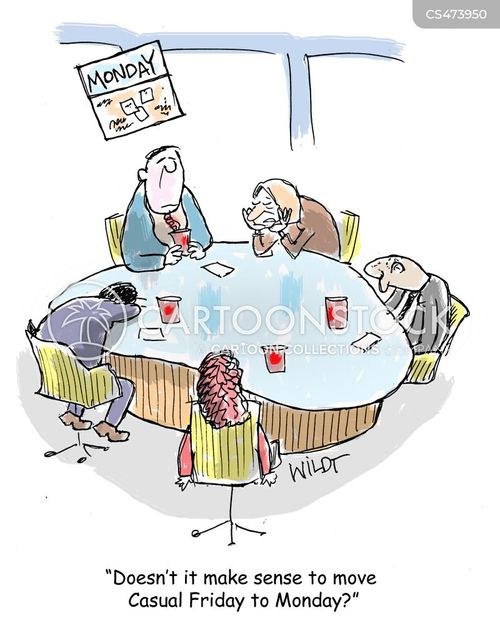
Every Monday morning, across the world, scores of people wake up with a sense of dread. The Monday morning blues refer to a kind of mild depression people feel when it’s time to go back to work or school. They wake up with no enthusiasm for the day and in fact, dread the day.

The term Monday Blues describe a set of negative emotions that many people get at the beginning of the workweek if they’re not happy at work. It contains elements of depression, tiredness, hopelessness and a sense that work is unpleasant but unavoidable. Monday morning blues need not only happen on a Monday, but can happen any time of the week

A 2018 LinkedIn survey found that 80% of professionals experience what they called the Sunday Scaries, a prelude to the Monday morning blues. The Monday Blues are so prevalent that they have become a cultural phenomenon, but they can be much more than just passing tiredness; they are often a serious warning sign that something is not right at work. If you were happy, you’d be excited and energised on Mondays, not tired and depressed. If one is feeling under-appreciated or unsatisfied with their job, it can be especially difficult to start another seemingly endless workweek. And the case of the Monday Blues can have a negative impact on performance and productivity, as well as the people around us.

Countless studies in psychology and neurology have shown that a person’s current emotional state has a huge effect on the quality of their work and when they’re feeling blue they are less productive, less motivated, more pessimistic, less creative, less engaged and learn more slowly. The Monday Blues are contagious and one’s stress or bad mood can drastically change the overall work environment. When one is unhappy at work, it makes it very difficult for those around them to be happy, and oftentimes just one worker with a case of the Mondays can spread the doldrums to the whole team.

So what can one do to help overcome the Monday blues? Read on.

Identify the problem. If you have the Monday Blues most weeks, then this is not something you should laugh off or just live with. It’s a significant sign that you are unhappy at work and you need to fix it or move on and find another job. You need to ask yourself what is wrong and start with making a list of the things that are causing this stress and clarifying what is bothering you can help in trying to be active in finding solutions. It’s a way of empowering one to take charge and try to improve the situation.

Continue with your normal routine over the weekend. One of the reasons why Mondays are so hard is because we often leave all of our normal eating, sleeping, and exercise habits over the weekend. When we eat more, richer food and eat late drink and sleep and wake up late over the weekend, then when Monday morning comes, this catches up and we feel out of sorts. Not to say that this should not be done, but a balance should be found which lets us unwind while still keeping up with major routines.

Disconnect over the weekend. If you are constantly thinking of work and checking work emails when you should be using the weekend to relax, it’s a sign we are setting ourselves up for burnout sooner or later. When we feel stressed just thinking of work on Sunday, it’s a clear indication that we need to have stricter boundaries between work and play. One way to break the habit is to try turning off email notifications on Friday evening and unplugging from any work-related problems to focus on personal time over the weekend. Drawing clearly defined boundaries between work and personal time can help keep things in check.

As a piece of contrary advice to the above one, sometimes, when you know you have a big week ahead of you, you can get a head start on important tasks, but only if it is absolutely necessary. Maybe an hour or so on Sunday to plan the week and get some work done to take some of the pressure off come Monday. If this is something you would do once a while, make sure you spend one day relaxing and then work a bit the other day. You can also prepare for the next week on Friday evenings, by taking five or 10 minutes to prepare for the next week by straightening up the workspace, tying up loose ends and making a to-do list. Investing this time will help ease the mind for the next 48 hours.

If Monday mornings or Sunday evenings are usually scary and full of anxiety, then take some time to really think about what’s causing this anxiety. When you are able to figure that out, it’s easier to focus on what’s within your control, not on what’s beyond it and certainly not on that which might be based merely on fiction. Although it might seem counter-intuitive, waking up an extra 15 to 30 minutes early on Monday morning can actually make going back to the office easier. Having a little more ‘me time’ instead of feeling like you’re trapped in a time crunch can make that transition a little easier.

Another way to help combat that Monday morning anxiety is to be sure to leave as few dreadful tasks as possible on Friday afternoon so by taking care of the things you least want to handle at the end of one workweek, you’re making the start of the next that much better.

Don’t mess with your sleep cycle. An obvious thing, but not feeling well-rested can have a huge impact on how you feel come Monday morning. Experts advise keeping the sleep and wake schedule close to what it is during the week to avoid messing up your internal clock. Also, it is recommended that you wake up at the same time each day, even over weekends, so your body internal clock is still in sync. Even if you are unable to stick to the exact same routine, avoid going to bed more than an hour or two later than you would during the week.

Avoid overscheduling on Monday. It’s normal to feel overwhelmed when you’re flooded with meetings after coming back from a relaxing weekend, so whenever possible, try to avoid scheduling meetings or big tasks on Monday. It is also a good idea to make sure all the tasks scheduled for the week are completed before you start enjoying your weekend. If this is an issue, then using time management tools may help track activities and schedule events easily. This will help you to come into Monday with more ease from the weekend. Instead of tackling the biggest and most complicated tasks early on Monday, take some time for easier, more routine stuf. This might get you up and running and give you the energy for the more difficult or unpleasant tasks. But if you do have any unpleasant tasks awaiting your attention Monday morning, get them done as early as possible so that you don’t spend the rest of the day procrastinating or feeling as if there’s a black cloud hanging over your head. You’ll feel a lot better once it’s over.

Have fun at work. Take it upon yourself to do things that you enjoy in the office on Monday. Create an event that you will look forward to on Mondays as a way to break up the day with some known positivity. At the very least, it gives you a chance to take a deep breath, talk with a friend, and regroup for the rest of the day.

Write down your feelings. When our minds are overactive and we start overthinking, we can’t relax and destress, especially over the weekend. In such cases, jotting down your worries, can calm the mind and even make you more productive. I generally use Google Docs for this, but you can use the good old pen and paper or any other way to write down your thoughts and once you do that, the concerns and anxieties will feel much smaller and more manageable and the mind is clearer and calmer. According to the University of Rochester Medical Center, the simple act of journaling can help to manage anxiety, reduce stress and cope with depression.

Another way to beat the Monday Blues is to make a list of the things you’re excited about. We often look at the week ahead of us and think of all the tough stuff we have to do and the difficult tasks ahead of us, so we can just turn that around. On Sunday evening, make a list of three things you look forward to at work that week and this might put you in a more positive mood. If you can’t think of three things you look forward to, that might be an indication that you need to make some changes.
Dress for success. Mondays are when you should wear your favourite or a new outfit. It will perks you up and lets you be positive and also help others be positive. This can also help build your confidence because when you look good, you feel good and feeling good about yourself is half of the battle on Monday mornings, because rather than being deflated by work you want to face it with confidence.

Start the week out with an attitude of gratitude and take time to recognise and appreciate the things that you enjoy about work. Be positive and start even before you get into work. Try listening to favourite songs, with some upbeat, high-energy music into your morning preparation or commute to pump yourself up. And when you get into office, don’t listen to other people’s Monday gripes because creating or contributing to a culture of complaining is no way to improve your attitude. Make someone else happy and do something nice for someone else as soon as you get to work on Monday. This will definitely can lift the spirits and could actually help shift the overall mood. Research shows that according to positive psychology one of the best ways to cheer yourself up is to make someone else happy.

Have a post-work plan. Your day shouldn’t just be about trudging through Monday to get it over with, but about looking forward to something. By making Monday a special day where you get to go out with friends, make your favourite dinner, or eat a bowl of popcorn and catch up on a TV show you recorded, the day doesn’t have to be all about getting up to go into the office.

So here are some things you can do to get out the funk of the Monday Blues and have a great week.

The Good and the Bad: Boss Edition

It is often said people don’t leave bad organisations, but leave bad bosses. And this is so true. When coworkers get together, stories are bandied about bosses and rarely are good managers discussed, but the spotlight is mostly on bad bosses. Many bosses fall into the bad boss category because they fail to provide clear direction, regular feedback, recognition for contributions, and a strategic framework of goals that enable their employees to see their progress. These kinds of bad bosses are what are called generic bad bosses because all employees need these types of support and feedback, and they suffer when they don’t receive it.

I’ve had my fair share of bosses, both good and bad. In my first job, we were a very young team, all of us fresh out of school and in our first jobs. The company was also a fairly young one, but the management were not very young, they had about a decade plus experience and you could probably call them middle management. While we didn’t really really report to them, they oversaw our work. My expectations with managers and bosses are most likely influenced by how they interacted with us. They were friendly and fair and had an open office policy. But one thing really stands out for me and is something that has been a sort of guiding principle for me all these years.

The office was a split office, with us in the ground floor and the managers and finance people in level 2. Officially the office would end at 5:30 pm and at 6 pm, one of the bosses, lets call him D would come down to go back home and if he saw us around, we would have to have a good reason why we were still around. 90% of the time, we were around, because we were hanging out with each other. Except for one, none of us were married and had no responsibilities, so there was no pressure to get out of the office and go home.

When D saw us hanging around, not leaving the office, he would ask us why were still there and used to say something like this. I am paraphrasing this, but he would say that if you are staying late because you have too much work, then there could be two reasons for this. One because you have too much on your plate or two because you have not finished your work in the scheduled hours of work. In both cases, we should have a talk, because if you have too much work, then we need to figure out how to reduce your workload and if it’s the second reason, then we also need to talk about why you are not able to finish your work on time. This is something that has always resonated with me and I have always tried to be as productive as possible while at work and leave on time as much as possible.

Another manager who made an impact in my life was someone who was my manager for the longest period of time. I was also in this organisation the longest, for almost a decade and of the multiple managers whom I reported to, this one was the one I reported to the longest. He was fair, but had his faults, the biggest of which was playing favourites. While I was not a favourite, I was also on his dislike list and so I escaped some of the worst things he said to others. From him I learnt how not to play favourites, especially when hiring people for the organisation and to not enable them so much they they believed to be above all others. He used to catch up with us every time he passed through Singapore but died a few years back.  

The third manager was someone whom I reported to for less than a couple of years, but he was a peer in terms of age. A very supportive manager, he gave me more responsibilities when he saw I could handle them and also credit where it is due. I learnt a lot from him, especially on how to manage people as he was someone who was friendly with everyone and even learnt some of the finer points of office politics from him. Unfortunately after about two years of reporting to him, he was transferred to a different country, but we are still in touch.

The last manager I was to talk about was the most toxic one. I have written about this person previously and even today, years after I left the organisation, I still have nightmares about how they used to literally torture me there. I can now think about them without my heart palpitating and getting stressed out, but it took me many years to get there.

Bosses are just like people, there are good ones and bad ones. A good boss or manager will set clear expectations from their subordinates, coach and give feedback, is inclusive and recognises efforts made by those reporting to him, knows his reportees, especially their talents and what they are good at and most importantly is there for them and takes a stand when it is needed.

A bad boss on the other hand, is everthing but what a good boss is. A boss is the umbilical cord that connects employees to an organisation, and if that cord is damaged, the employees will eventually leave. So if you are one of the lucky employees who has a great boss, don’t take that relationship for granted and show your boss how much you appreciate them.

Lessons I learnt from the Corporate World

We have been spending some time recently talking about work and the working life, especially since GG & BB will start their six-month industrial attachment next year and I thought that some of what we discussed could be of use to others, especially someone who is either just entering the corporate space or are a few years in and want to succeed in their careers.

In no particular order, here’s what I have learnt:

  • Be good to those below you more than those above you. Treat everyone with the respect you expect from them for yourself. Be nice to everyone, you never know when you are being judged.
  • Be careful when you work with friends, it may sometimes end badly
  • Keep your opinions about others to yourself and never share it with anyone else at work
  • Don’t Gossip! Especially in the pantry and public spaces, you never know who could be listening
  • Office politics is a fact of life and you can’t escape it. Learn to play the game
  • Network, network and then network some more. As you grow in your career, your networks will become more and more useful and informative.
  • Make your boss look good. That’s the key to success because they are the only ones who will battle for you and promote you. Make sure you know what your boss needs to accomplish and do your best to help them accomplish it.
  • Document everything! Your wins, commendations, compliments and learnings.
  • Train someone else to do your job and do it well. Because if you are irreplaceable in your position, you will never move up because there is nobody else to do what you are doing and doing best.
  • Any organisation you work for is not running a charity, they are here to make money and you have also been hired for that reason. You are hired because you have something that the organisation needs and any employment is a two-way process, one where both parties benefit.
  • Be reliable, be punctual and if you give someone a deadline, make sure you stick to it and in fact try to finish your work before the deadline.
  • Under promise and over deliver. It’s very simple actually. If you think you need 2 days to get a task done, ask for three days. This way, you have an extra day for any unforeseen circumstances that may come up and you are prepared and if all goes well, you get the task done ahead of your deadline, making you look super-efficient.
  • Become friends with all the secretaries, PAs and other co-ordinators. They will help you in tight spots and are also a good source of information that may not be found elsewhere.
  • Stay calm, cool and collected even if you are a withering mass inside. Be like the swan who looks calm and placid above the water, but is furiously paddling below it.
  • Leave your emotions at the door when you enter your place of work. Always think twice when you send emails or make phone calls when you are angry or upset. One tip I use during these times is to type your email first without typing in the email address and keep it aside for a while. Then when you are in a better frame of mind, edit the email, add the email address and send it.
  • Be well-dressed at work. Stand out, but not in the wrong way. If your work environment is conservative, then don’t wear outlandish clothes and vice-versa. Discreet jewellery, perfume and clothes which are classic will be better than fast fashion.
  • You are your own brand, so everything you do, say, write, dress, behave showcases the brand. So, create the brand that resonates with your work environment and maybe a couple of steps above your current role and stay true to your brand image at all times.
  • Have a life outside the office. You are not just a corporate drone, you should and must have a life outside of work. Have a hobby and do something that is totally unrelated to what you do at work.
  • Ask and encourage feedback from your managers because sometimes there may be something that you don’t see, but someone more experienced may instantly see.
  • Share successes, especially when you work as a team. When you do this, you let others share the glory and they will feel part of the successful project. Also, it never helps to have people think positively about you and your ethics. Giving others a chance to claim credit is an easy and effective way to magnify results.
  • Never stop learning. Every opportunity, good or bad teaches you something, even if it is what not to do, so don’t stagnate and become too comfortable in your job.
  • Always look at the bright side, and the positive side of things. Don’t get bogged down by pessimism. When days, weeks or even months are difficult, take heart and the hardest times will pass.
  • Focus on what you do best and try to compensate for your weaknesses. Nobody is perfect and everyone has some areas they are not good at, so amplify your strengths and work on the weaknesses.
  • Procrastination is something all of us are prone to, but procrastination has clear repercussions in the workplace resulting in challenges such as falling behind tasks. So, make sure you have clear daily goals which you tick off before you start slacking.
  • Failure is not the death kneel of your career. You will fail and multiple times in your career, but don’t stress about them. With no mistakes, there would be no opportunity to learn. Every failure gives you the chance to grow both personally and professionally.
  • Speak up. In meetings, in discussions and anyplace where you may have some input. This is not the time to be shy and refrain from speaking. If you have something to add to the discussion, make sure you put your point across. It may not be accepted, but for every ten points you put across, maybe one will be the one that is what was needed. But also ensure that when you speak, you understand what is being said and don’t speak illogically and nonsense.
  • Proactively seek new responsibilities, but only if you can handle. Conversely, don’t take up anything and everything that is thrown your way. Learn to say no to those above you if you are unable to manage or are hitting way above your weight and expertise.
  • Learn that everyone is expendable. If you don’t go to work, your organisation will not shut down, they will move on. But if you are not around, your family will be extremely affected and will find it very hard to move on. So don’t prioritise your job over your family.
  • Never burn bridges. You never know when you may have to go back to someone you have fought with, bad-mouthed or just generally been unpleasant to. People remember and will take their revenge when its their turn.
  • Work hard when you are at work, and when you leave the office, try to turn off. Most importantly have fun doing what you are doing and the eight or nine hours you spend at work won’t feel very long.
  • Stay two steps ahead. No matter what we do, success is less about any given moment and more about the next. Learn to anticipate what your manager or customer needs before they know how to ask for it and that’s one of the quickest ways to distinguish yourself in the workplace. Take initiative and don’t wait around to be told what to do, but at the same time, don’t make any assumptions, either.
  • Don’t take anything personally. Be professional, even when you think someone is out to get you.
  • Don’t trust anyone, especially at work. Everyone is looking out for themselves and a someone you consider a friend can easily throw you under a bus to save themselves. And at the same time, there’s a well know saying which is apt here to keep your friends close and enemies closer and is 100% true in a corporate setting.
  • Listen more and speak less. We have been given two ears and a mouth for a reason. So listen more than you speak and actually listen instead of rehearsing what you are going to say. At the same time, pay attention to what is happening around you and you will never be caught off guard.
  • Never betray anyone’s trust. Keep other people’s secrets as well as your own, and don’t share information that was given to you in confidence
  • Keep your social media to your social circle. Don’t ever add your co-workers and bosses to your social media platforms. You wouldn’t want them to know what is going on in your life which can give them ammunition to hurt or harm you. This doesn’t include LinkedIn as that is a work social platform.
  • Be flexible. Have an opinion, but don’t have hard opinions.
  • Don’t run after money. No doubt having money in the bank and being financially independent is important, but don’t let money dictate what you are in life and what you want to do in life. Let money be an accessory, not the focus.
  • Go the extra mile. Nobody ever achieved success by doing the bare minimum. Go above and beyond and you will be rewarded in one way or another.
  • Last, keep your goal in front of you and remember that whatever you do, you need to be true to yourself

So, there you have it, 40 lessons I learnt while in the corporate world. I am going to share it with BB & GG and their friends. Hope this was useful to you too. If you have more lessons from the corporate world, please share in the comments below.

Adaptability: The Simple Secret to Success and Survival

Today’s world is fraught with risk and uncertainty, of risk and unstability. You just have to look at 2020 to see what I am talking about. Our world is constantly changing and we can’t remain as we were, because if we do, we run the risk of losing out.

According to the Cambridge English dictionary, Adaptability is an ability or willingness to change in order to suit different conditions. What this means is that you need to change or be willing to change yourself so as to adapt yourself to the different situations you will come across in life.

So why is adaptability so important today? I believe it is a life skill that if not innate, should be learnt and fast so that as an individual you are agile and are able to tackle any issues or problems in your life, be it at work or in your personal life. Actually we are constantly adapting. The easiest example I can think is in the kitchen. Sometimes you don’t have all the ingredients at hand while cooking, so we substitute ingredients, adapting in the process.

Adaptability is not just about changing something or adjusting to a situation. It encompasses being able to effect changes in a course of action with smoothness and timeliness, without any major setbacks. For as long as there are many uncontrollable factors in our environment such as laws and economic factors, it is necessary to acquire this skill. It is one of the key skills or factors that keep many multinational companies running and the reason why some professionals are always in demand. This skill is important because as new technology evolves, employers are looking for employees who can demonstrate strong adaptability skills and become company leaders.

Adaptability in the workplace means being able to change in order to become successful. In the work environment, adaptability is a soft skill that refers to the ability to rapidly learn new skills and behaviours in response to evolving circumstances. Employers typically look for adaptability when hiring new staff, and the skill is increasingly included in job descriptions due to its importance for growth and development within a role. Someone who demonstrates adaptability in the workplace is flexible and is able to respond effectively to their working conditions, even in situations where things do not go as planned. They typically work well on their own and with team members. The need for adaptability in the workplace – to learn and unlearn – is crucial to future success.

People in leadership positions are often expected to manage unusual situations without explicit instruction. Therefore, an adaptable leader must be able to resolve problems in a fast-paced environment and trust their judgment when making tough decisions. However, at the same time, still recognising that what worked before may not necessarily work every time. So adaptability is a critical leadership skill and potential leaders need to be adaptable and flexible at all times to succeed.

How important can being adaptable be? Well, the short answer is very, as it’s a skill that has no bounds in the ways it can be applied in the workplace. Being adaptable means working without boundaries, and being open to finding diverse and unexpected solutions to problems and challenges in the workplace. Without limitations on thinking and actions, challenges become something not to dread, but to seize and enjoy working through. An adaptable person gets to engage a variety of people with diverse skills to get the job done and builds broad networks of highly engaged and capable people. An adaptable person also becomes a better leader because such people know that change is inevitable and don’t shy from it and remain positive in the face of adversity, keeping their teams and employees focused and motivated through tough or lacklustre periods. Those who are adaptable and willing to change or shake up conventional ways of doing things will remain relevant throughout their working lives because they’re comfortable experimenting. Workplaces are changing faster than ever before, and if you’re not willing to constantly adapt, then expect to be left behind.

Everyone can all benefit from adaptability but, in an ever-changing world, it is particularly crucial for leaders. Leadership roles become more complex as you progress through an organisation, requiring more subtle influencing and persuading skills. Additionally, as a leader’s seniority increases, they must learn to empower, delegate, form strategic alliances and let go of some of the skills that enabled them to perform effectively in previous roles.

Adaptability skills are skill sets that encompass a person’s ability to adjust to changes in their environment. Being adaptable in your career can mean you are able to respond quickly to changing ideas, responsibilities, expectations, trends, strategies and other processes at work. Being adaptable also means possessing soft skills like interpersonal, communication, creative thinking and problem-solving skills.

As a soft skill, adaptability requires a number of other soft skills in order to be applied successfully. You must be able to learn quickly and put that learning into practice. Additionally, you must be able to recollect what you’ve discovered, so you can identify trends and make decisions accordingly. So what constitutes an adaptability skill?

An ability to learn: People with adaptability skills are never discouraged by failure. For them, failure is just a part of learning. These people are always learning and willing to take risks, as long as it means that they can develop personally and professionally. Skills such as collaboration, critical thinking, research, show continuous Improvement, have an attention to detail, be observant and have a great memory.

Persistence: People who adapt well rarely feel the pressure to quit. Every challenge is exciting, and remaining dedicated to their job means pushing through even when things get hard. Likewise, they are able to stay positive and encourage their team members to stay focused during difficult times. Skills that are emblematic of persistence include resilience, positivity, tolerance to stress, motivation and being able to manage expectations.

Resourcefulness: Often the goal is clear, but the path to get there is not. The traditional way of conducting business may not be possible or effective, because there may not be sufficient funding or staffing. That’s where adaptability can be an asset. An adaptable person will be able to source new resources and techniques that less-adaptable colleagues haven’t considered. An adaptable person will show resourcefulness by demonstrating skills like the ability to notice patterns, be creative and innovative, a problem solver, show initiative and curiosity and budget well.

Curiosity: An adaptable person doesn’t get scared by anything different. If anything, it makes them more curious and they want to investigate it further. They are not afraid of ideas, suggestions, or constructive criticism and often demonstrate open-mindedness, investigation, positivity, active listening, nonverbal communication skills and diversity.

Other skills that showcase adaptability include leadership, integrity, determination, team building, analytical, inductive and deductive reasoning, project management and team work, empathy, resource, conflict and time management, problem solving, strategic thinking and being able to conceptualise, flexibility and commitment, being proactive and open and having excellent negotiation, oral and written communication skills.

Being adaptable can depend on how effectively you communicate with your teammates and managers.

Adaptability is a natural skill, but it can be developed and mastered as well. Here are some tips to help improve this skill:

Observe and monitor changes in the environment: People do not see the need for a change until they notice changes in the environment. Adaptability must not be easy, but timely as well. Always make a conscious effort to monitor trends, values and attitudes and compare present observations with past ones and find out what has changed.

Develop a growth mindset: Being adaptable also means being willing to learn and try new things. Developing a growth mindset can positively influence the ability to take on new challenges, find new opportunities to develop knowledge and contribute to new projects. The willingness and motivation to keep improving skills can also show potential and current employer a commitment to professional growth.

Be willing to learn: Observation alone is not enough. If the result of observations suggests a need to learn something new, do not hesitate to do so. While people can learn some things on their own when furnished with appropriate educational resources, others may require tutorials from specialists. Don’t decline to use the services of a professional tutor if necessary.

Avoid procrastination: Don’t just be willing to learn. Take the necessary course of action. Remember that adaptations are more effective when the action is taken earlier.

Acknowledge the fact that changes are bound to occur: Though it is difficult to let go of norms, it is people who matter, not an individual.

Set goals for one’s self: Another method that can help develop adaptability skills might be to set personal goals to improve those aspects of the skillset that are felt to be lacking so the individual can improve their overall ability to adapt to changes in the workplace.

Ask for feedback: As people develop throughout their your career, they might think about requesting feedback or constructive criticism from managers to help them improve on their weaker skills. Positive and constructive feedback can be beneficial for setting goals and achieving success in their career.

Learn to acknowledge and accept change: It can also be highly beneficial to accept change as it occurs. Learning to acknowledge changes in their career can help prepare and adapt to differing circumstances. Additionally, learning how to be willing to accept change can be an effective step toward recognising when adjustments need to be made to make transitions smoother.

Other than the above, some additional tips to help adaptability skills in the workplace include asking for clarifications from peers and superiors to help better process transitions when there are changes to processes, procedures or operational practices. Offer to request for opportunities to work on tasks that may be new or offer to take on responsibilities that require creative approaches. If sharing your ideas with colleagues is something that causes anxiety, set a goal to contribute to team meetings and collaborations. Try getting all aspects of work organised like documents, paperwork, projects and other work information, so everything is prepared in case there are transitions within a job.

An individual can also highlight adaptability skills on resumes or cover letters by showing concrete examples of successes due to these skills. During an interview, highlight adaptability skills by providing the interviewer with examples of how these were applied in past roles and use past experiences and achievements to help answer the interviewer’s questions in a way that shows adaptability.

Being someone who is adaptable is a skill that will stand in good stead all your life, whether in the personal or professional life. Learning how to adapt to change is a soft skill that will not only make the individual a top candidate when applying for roles, but one that has the capacity to give them a renewed optimism about work. It’s a brilliant life skill that has great application in both personal and professional life, so if an individual does not yet have those skills, its time to start implementing these tips to strengthen the adaptability skills today.

Toxic Workplaces

Stress is an inevitable part of our lives, especially in our workplaces. But sometimes a workplace that is overly stressful turns toxic. A toxic workplace is a workplace that is marked by significant drama and infighting, where personal battles often harm productivity. Toxic workplaces are often considered the result of toxic employers and/or toxic employees who are motivated by personal gain such as power, money, fame or special status, use unethical, mean-spirited and sometimes illegal means to manipulate and annoy those around them; and whose motives are to maintain or increase power, money or special status or divert attention away from their performance shortfalls and misdeeds. Toxic workers do not recognize a duty to the organization for which they work or their co-workers in terms of ethics or professional conduct toward others. Toxic workers define relationships with co-workers, not by organizational structure but by co-workers they favour and those they do not like or trust.

A toxic work environment is also defined as an environment that negatively impacts the viability of an organization. An organization can be considered toxic if it is ineffective as well as destructive to its employees. Studies have found that toxic workplace environments are a leading cause of workplace violence such as violent acts, including physical assaults and threats of assault, directed toward persons at work or on duty. Studies on this issue include verbal violence including threats, verbal abuse, hostility, harassment, and the like can cause significant psychological trauma and stress, even if no physical injury takes place. Verbal assaults and hostility can also escalate to physical violence. Not only in the workplace, these disruptions can show up in any number of physical symptoms like sleepless nights, feeling constantly vigilant, sweaty palms, and a racing heartbeat, but a toxic work environment has loads of negative health impacts which can affect personal life by damaging pretty much your whole life from self esteem to even friendships.

This phenomenon harms both the company and the other employees, including those who are not direct targets. Co-workers are distracted by drama, gossip and by choosing sides in the ongoing animosity and can translate into lost productivity. While employees are distracted by this activity, they cannot devote time and attention to the achievement of business goals. Positively motivated and ethical employees may try to speak up to a toxic employee but this can make them a target. Managers of toxic employees can feel intimidated by a toxic employee and try to appease the employee in an effort to avoid confrontation. Over time, positively motivated employees drift away from the workplace and may begin to view management as inept and ineffective. This can result in poor job performance as they begin to feel less valued, therefore less loyal to the company. Fellow employees may begin to experience physical symptoms from the stress and worry over whether they or someone they care about in the work place may be targeted. This can even develop into a clinical depression requiring treatment.

I know only too well what a toxic workplace can do to you. I worked in such organisations not once, but twice! Both times, I needed a job and took up the offer, even though my gut was screaming at me not to. Both times, as early as week two in the job, I had started planning on how to get out. I hated waking up on Monday knowing that I had to go to work and even before I entered the organisation’s premises on Monday morning, I was looking forward to that Friday evening. The first was not as bad as the second one and even today, quite a few years after I have left that organisation, when I think of my time there, I start getting agitated and it’s taken me years to get to a point where I can consciously stop thinking of my time there and how I was bullied.

So how do you know if you are in a toxic work environment? Read on…

Lack of and Bad Communication: Communication skills are probably the number one sill needed in the workplace, but insufficient, confusing, or scattered communication is the culprit of so many problems there. Both verbal and non-verbal communication from the employee, supervisor and employer is possibly the root cause of negativity in an organisation. You work hard for something and there’s no recognition or worse, feedback about your task. You also don’t get the necessary information to do your job so you are set up for failure even before you start. Another communication fail is the passive-aggressive talk, both from the superior and your peers and the fact that people don’t want to listen to what you have to say.

Poor Leadership: Most people don’t leave jobs, they leave bad bosses and this point reiterates that old adage. Bad leadership can seep into every fiber of an organization, and it often does. Sometimes bad bosses are products of bad bosses, they don’t know any better and think this is how bosses should be. Such bosses make work a living hell. Bad bosses come in various forms: the micromanager who wants to know every minute what you do and constantly checks, corrects and undermines you, the blamer who wants all the credit but manages to pass down to his reportees all the mistakes, or maybe the boss who does not respect your personal space and is the one who sends emails or calls you on your weekends or holidays, expecting you to drop everything to run to him.

Workplace Cliques: A clique is a group of people in a setting who stick together all the time. At most workplaces, there are cliques all the time, but when these cliques exclude specific individuals outside their tichtly-knit circle, it ruins the workplace culture. In workplaces which are multi-cultural, when cliques speak in a language known only to them in front of others, it could be detrimental to the atmosphere and prove alientating to the person being shunned. I have seen cliques in every organisation I worked in, but the one in one of the toxic workplace I was at was extremely bad. They would speak over me (even when I was sitting right in front of them) and speak in a specific language even though co-workers were from various nationalities and spoke many language, with English being the common denominator, go off to lunches without ever inviting me, even on my first day of work and speak of shared experiences which I was obviously excluded from. They were also constantly chatting on messaging platforms and sometimes would look at me and snigger which clearly showed they were gossiping about me. I have no idea if they would continue to be friends after leaving the organisation because I did’nt want to be in touch with anyone from there after I moved on, so I have no idea.

Unmotivated Coworkers: In a toxic work environment, it’s quite easy to see that most people there are unmotivated. They are in that organisation only for the salary they are paid. They have no interest in doing anything more than absolutely necessary to earn their daily bread and not get fired. There is an air of gloom and a lack of motivation around you with people preferring to see the glass as half empty instead of half full. In such cases, it’s a few who bear the biggest burdens and this would lead to a burnout sooner or later and then you also become one of them, plodding along with zero interest in life.

Employee Sickness: Unmotivated employees in toxic workplaces lead to employee burnout, fatigue, and illness due to high levels of stress that wreak havoc on our bodies. If people are calling in sick or worse, are working sick, that’s a good sign of a toxic work environment.

High Employee Turnover: A sure sign that you are in a toxic place is the employee turnover rate. When people don’t seem to stay in an organisation, that definitely means something is seriously wrong there. Conversely, if employees are constantly being laid off or fired, this can be a sign of a few other toxic elements lack of direction, organisation disorganisation, bad leadershop or little opportunity within the organisation.

Work Life Imbalance: I call this imbalance because in a toxic work environment, there is no concept of any life, it’s all about work. In such organisations, you are expected to be working or on call 24/7/365. Your managers have no concept of personal space and think even if they send you an email with work at midnight, they expect the work to have been completed first thing in the morning. You deserve to have a full life outside of work. You should be able to leave an email unread after dinner on a Tuesday or be able to make your dentist appointment without feeling guilty. These places also frown upon taking holidays, especially if it is more than a few days. I remember hearing comments in another workplace (which was not toxic) when I first applied for a month-long holiday to go back to India. They were shocked I would take such a long break, but what they didn’t realise was that I had not taken any leave at all the whole preceeding year because I was saving up all my leave just so I could take a longish break to go and meet my parents. Once I explained this and shared my point of view, it was understood and I never had any comments about my leave as long as I worked there.

Lack of Movement: When there’s no forward growth in your career in the organisation and you seem to be stagnant in where you are, it’s probably because the environment does not allow for employees to grow and flourish. If your workplace doesn’t seem to offer any mobility, learning opportunities, or mentorship, they are likely not invested in the growth of their employees. Once you’ve recognised that you have nowhere to grow, it might be time for change.

Burnt Out Feeling: Burnout is more than a buzzword you may have heard around workplace jargon. Workplace burnout is recognized by the World Health Organization as a legitimate medical diagnosis. Burnout can be a surefire sign of a toxic work environment, or at least a work environment that doesn’t “work” for you. There are three types of burnout: Frenetic Burnout which is experienced by employees who put a ton of energy into their work in the hopes that the output will be rewarding. After a sustained period of dedicated work, the frenetic worker does not find positive outcomes. When someone has Underchallenged Burnout, the employee feels underchallenged and bored at work. Being unable to find any satisfaction in a job, the underchallenged employees find themselves in a lowered mood. When the employee is resigned about their work after experiencing consistent work stress over a long period of time, he is experiencing Worn-out Burnout. Having experienced negligible rewards, the worn-out employee feels disillusioned and uninspired by the job at hand.

Listen to your Intuition: We rarely listen to our intuition, preferring to listening to our head instead. I know this from past experience when instead of listening to my intuition, I went with what logic was telling me and paid the price for it. Most times, when we are in bad situations or we will be entering situations which are not to our best interests, our intuition screams at us to get away, but we don’t listen. In such cases, our intuition is right more than wrong and when you are faced with a fight between your head and your heart, listen to your heart, you will be thankful soon.

Now that we know how to identify a toxic workplace, what strategies can we put in place to handle it? The best solution is of course to move out and get a new job, but since this sometimes takes time and you need a job while you look for one, you just can’t walk away from such an environment immediately. We need to develop ways and means to handle the dysfunctional workplace you are in until the time you can press send on that resignation letter to your manager.

When you are at work, keep reminding yourself that you are not a reflection of your current surroundings.  Placing positive and uplifting quotes on the wall of your office or cubicle that will help keep your spirits lifted can be very helpful in these circumstances.  Also, taking time out each workday to take a short walk by yourself is a great way to detach and allow for positive self-talk to remind yourself of the qualities you possess that make you amazing.  Find ways to remind yourself of who you truly are.

Find people who feel the same way you do. Develop friendships with people who feel the same way as you. The hope is that you’ll watch each other’s back and will share any news with the group.

Do something after work that can help relieve stress. Go to the gym, do home repairs, or learn a new skill. The key is to make sure you’re living a fulfilling life outside of work to combat the drama of your 9 to 5.

Practice detachment, especially psychological detachment meaning you avoid work and work-related thoughts outside of your working hours. You can do this by taking holidays, both short and long, making time for family and friends, take up some new hobby and exercise.

Create lists to keep yourself busy. A list can help you stay focused on your tasks instead of the toxic atmosphere and gives you a reason to keep going every day.

Document everything you do. Save emails and write down comments and decisions from meetings, phone calls, and every person who interacts with you. If you need to file a complaint, you will need the evidence to back your claim.

I am a  huge believer that every situation is a learning opportunity. This too can be one. Most often our strongest personal growth comes from living through our most difficult situations.  When you are working in a toxic environment, try to pay close attention to the lessons you can take away from the experience.  Perhaps you can learn the qualities in a leader that you never want to emulate or maybe management mistakes that you would not want to repeat if the opportunity for management ever comes your way.   In every bad situation there is something you can learn that will help you become a better person, so focus on each lesson you are learning.

Another way to handle the stress of a toxic work environment is by practicing relaxation during non-work time. When people try to relax, they often report feeling healthier and suffering less from stress and exhaustion. Relaxation can be a significant moderator of the relationship between negative work thoughts and insomnia symptoms. Activities like meditation, yoga, exercising, taking a nice long walk with some music or podcast, or even volunterring and spending time with family and friends will help you relax.

Plan your exit strategy. It is possible that things could improve at your job, in which case it might make sense to stay. However, while waiting it out, begin your search for a new job. This will help you stay positive when things get rough. If you needed to leave yesterday, consider a bridge job that will keep you active while you find something in line with your career.