World Oral Health Day

Organised annually on 20 March, World Oral Health Day is observed to raise global awareness of the issues around oral health and the importance of oral hygiene so that governments, health associations and the general public can work together to achieve healthier mouths and happier lives. World Oral Health Day aims to recognise the importance of good oral health and unite to reduce the burden of oral diseases which affect individuals, health systems, and economies everywhere. It also aims to empower people with the knowledge, tools, and confidence to secure good oral health

Oral diseases are a major health concern for many countries and negatively impact people throughout their lives. 90% of the world’s population will suffer from oral diseases in their lifetime, many avoidable. Oral diseases lead to pain and discomfort, social isolation, and loss of self-confidence, and they are often linked to other serious health issues. And yet, there is no reason to suffer – most oral health conditions are largely preventable and can be treated in their early stages. 

Oral hygiene is the practice of keeping one’s mouth clean and free of disease and other problems by regular brushing of the teeth and cleaning between the teeth. Oral hygiene must be carried out regularly to enable the prevention of dental disease and bad breath. The most common types of dental disease are tooth decay which includes cavities, and dental caries and gum diseases, including gingivitis, and periodontitis. General guidelines for adults suggest brushing at least twice a day with fluoridated toothpaste and brushing last thing at night and at least on one other occasion. Cleaning between the teeth is called interdental cleaning and is as important as tooth brushing. This is because a toothbrush cannot reach between the teeth and therefore only removes about 50% of plaque from the surface of the teeth. There are many tools to clean between the teeth, including floss, tape and interdental brushes; it is up to each individual to choose which tool they prefer to use. Sometimes white or straight teeth are associated with oral hygiene. However, a hygienic mouth can have stained teeth or crooked teeth. To improve the appearance of their teeth, people may use tooth whitening treatments and orthodontics.

More than 130 countries take part in World Oral Health Day which is organised by the FDI World Dental Federation. World Oral Health Day was launched on 20 March 2013 by the FDI World Dental Federation which also marks the launch of a year-long campaign to raise awareness of oral health and the prevention of oral diseases. Since 2013 these campaigns have featured a specific theme. Since 2014 and in collaboration with its daughter organisation, the International Association of Dental Students or IADS, FDI organises an annual worldwide competition for best awareness and prophylactic activities held by dental student organizations in celebration of World Oral Health Day.

The campaign theme for the years 2021 to 2023 is Be Proud of Your Mouth. This theme that spans three years sends out a simple but powerful message to value and take care of our mouths. This year, the campaign wants to inspire change by focusing on the importance of oral health at every stage of life, because no matter what age one is, caring for the mouth and looking after oral health is important.

So take care of your oral health,  because establishing good oral hygiene and dietary habits have proven to be essential to achieving and maintaining, overall physical and emotional well-being throughout life.

Is Loyalty Overrated

Over centuries, loyalty is a quality that has been highly regarded. It is defined as being faithful and devoted to someone or something and has long been considered a virtue. However, in recent years, the concept of loyalty has come under scrutiny, with some people questioning its value and suggesting that it is overrated. Loyalty is considered a desirable trait. To the beneficiary, a couple of serious errors will not end the relationship and to the bestower, it feels good to be able to count on someone who will have your back unquestionably.

Loyalty is better viewed as a phenomenon of other traits and virtues including trustworthiness, empathy for fellow humans, investing in a relationship in good times and bad, and variations of the golden rule. These are constitutive virtues of loyalty. At the same time, loyalty should not trump independent moral judgment.

In a fast-paced world where everything is constantly changing, the idea of being loyal to one person or thing can seem outdated. Some argue that loyalty can limit personal growth and hold individuals back from pursuing new opportunities. For example, if a person is loyal to a company that is not providing opportunities for advancement, they may miss out on opportunities for growth and development elsewhere. Similarly, if a person is loyal to a relationship that is not fulfilling or healthy, they may miss out on opportunities for happiness and fulfilment in other relationships.

On the other hand, others believe that loyalty is essential for building strong relationships and creating a sense of stability in an uncertain world. For example, in a romantic relationship, loyalty can help to build trust and create a sense of security. Loyalty to a cause or belief can also help to create a sense of community and shared purpose. In both cases, loyalty provides a foundation for growth and development in a way that cannot be achieved through change or unpredictability alone.

The value of loyalty is subjective and depends on individual perspectives and experiences. For some, the benefits of loyalty are undeniable, while for others, the drawbacks are too great. One thing is certain, however: loyalty can be a double-edged sword. On one hand, it can provide a sense of stability and security, but on the other hand, it can also limit personal growth and prevent individuals from pursuing new opportunities.

The value of loyalty is subjective and depends on individual perspectives and experiences. For some, the benefits of loyalty are undeniable, while for others, the drawbacks are too great. One thing is certain, however: loyalty can be a double-edged sword. On one hand, it can provide a sense of stability and security, but on the other hand, it can also limit personal growth and prevent individuals from pursuing new opportunities.

But loyalty is overrated.

Loyalty encourages complacency. Some people will behave well even if there’s no accountability. But we all know of that one person who will choose to play around the edges if they can get away with it, be it at work, school or at home. Sometimes a change in the situation or the level of attachment or investment will change a person’s loyalty.

One of the key factors that affect the value of loyalty is the context in which it occurs. Loyalty to a person or organization that is unethical or harmful can be damaging to both the individual and society as a whole. In such cases, loyalty can be a form of enabling and can perpetuate harmful behaviour. On the other hand, loyalty to a cause or belief that is just and moral can have a positive impact on both the individual and society.

Another factor that affects the value of loyalty is the level of attachment or investment. For example, a person who has invested a significant amount of time and energy into a relationship or organization may feel a greater sense of loyalty than someone who has not. However, this attachment can also make it more difficult to let go of the relationship or organization if it becomes harmful or unfulfilling.

Loyalty has benefits but also under-discussed liabilities. The concept of loyalty is complex and multifaceted, and whether it is overrated or not depends on individual perspectives and experiences. Loyalty can provide a sense of stability and security, but it can also limit personal growth and prevent individuals from pursuing new opportunities. Ultimately, the value of loyalty is determined by the context in which it occurs and the level of attachment or investment. Whether or not loyalty is overrated, it is important for individuals to consider their perspectives and experiences, and to make informed decisions about when and how to be loyal.

International Women’s Day 2023

Today is International Women’s Day, a day which brings to the fore the women’s rights movement, bringing attention to issues such as gender equality, reproductive rights, and violence and abuse against women.

Spurred on by the universal female suffrage movement that had begun in New Zealand, IWD originated from labour movements in North America and Europe during the early 20th century. The earliest version was purportedly a Women’s Day organised by the Socialist Party of America in New York City on February 28, 1909. This inspired German delegates at the 1910 International Socialist Women’s Conference to propose a special Women’s Day be organised annually, albeit with no set date; the following year saw the first demonstrations and commemorations of International Women’s Day across Europe. After women gained suffrage in Soviet Russia in 1917 which was the beginning of the February Revolution, International Women’s Day was made a national holiday on March 8; it was subsequently celebrated on that date by the socialist movement and communist countries. The holiday was associated with far-left movements and governments until its adoption by the global feminist movement in the late 1960s. International Women’s Day became a mainstream global holiday following its adoption by the United Nations in 1977. The UN observes the holiday in connection with a particular issue, campaign, or theme in women’s rights.

International Women’s Day is a day when women can imagine a gender-equal world, a world free of bias, stereotypes, and discrimination. A world that’s diverse, equitable, and inclusive an a world where difference is valued and celebrated. Together and collectively, women’s equality can be forged and equity embraced.

And Embrace Equity is the theme for this year’s IWD. Equity isn’t just a nice-to-have, it’s a must-have. A focus on gender equity needs to be part of every society’s DNA and it is critical to understand the difference between equity and equality. The words equity and equality are often used interchangeably. Etymologically, the root word they share is aequus, meaning even, fair or equal – which led to equity being from the Latin aequitas, and equality from aequalitas. Yet, despite these similarities, equity and equality are inherently different concepts, and the IWD 2023 #EmbraceEquity campaign theme seeks to help forge worldwide conversations about this important issue and its impact. 

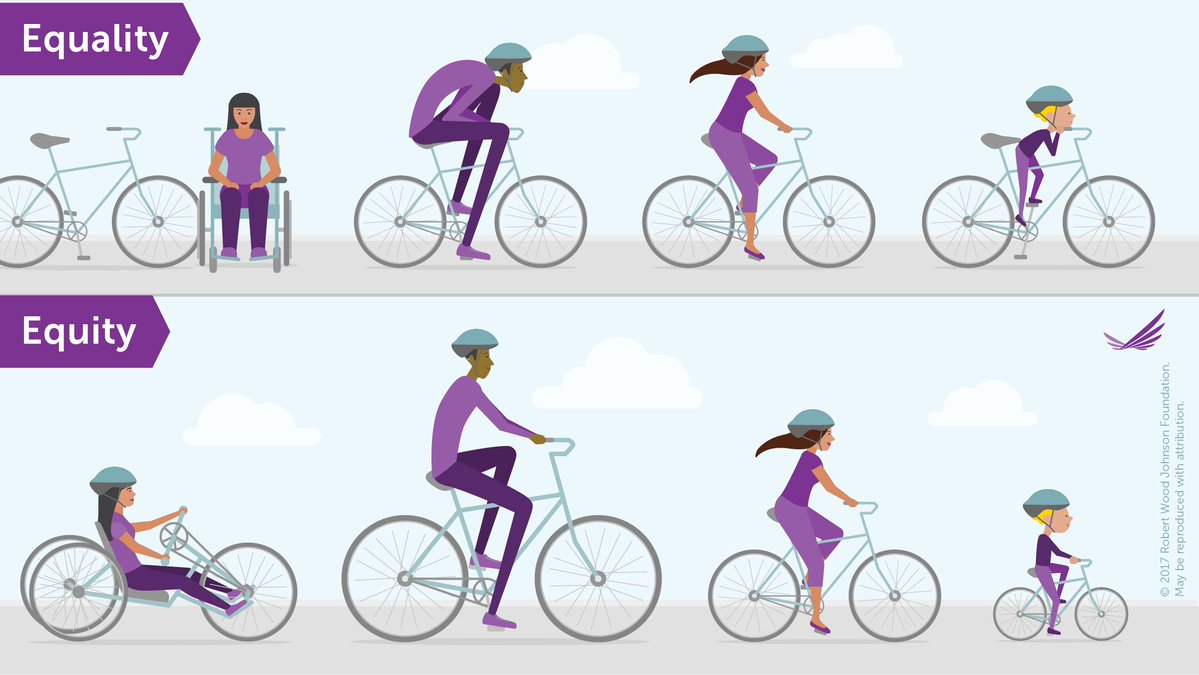
So, what’s the difference between equity and equality – and why is it important to understand and acknowledge this? Equality means each individual or group of people is given the same resources or opportunities. Equity recognizes that each person has different circumstances, and allocates the exact resources and opportunities needed to reach an equal outcome. Equity can be defined as giving everyone what they need to be successful. In other words, it’s not giving everyone the same thing. If we give everyone the same thing, expecting that will make people equal, it assumes that everyone started in the same place – and this can be vastly inaccurate because everyone isn’t the same.

We can all truly embrace equity. It should not be just something we say or write about. It’s something we need to think about, know, and embrace. It’s what we believe in, unconditionally. Equity means creating an inclusive world. All of us, irrespective of gender can play a part in creating an inclusive world by actively supporting and embracing equity within our sphere of influence. We can and should challenge gender stereotypes, call out discrimination, draw attention to bias, and seek out inclusion. Collective activism is what drives change. From grassroots action to wide-scale momentum, we can all embrace equity. Forging gender equity isn’t limited to women solely fighting the good fight. Allies are incredibly important for the social, economic, cultural, and political advancement of women.

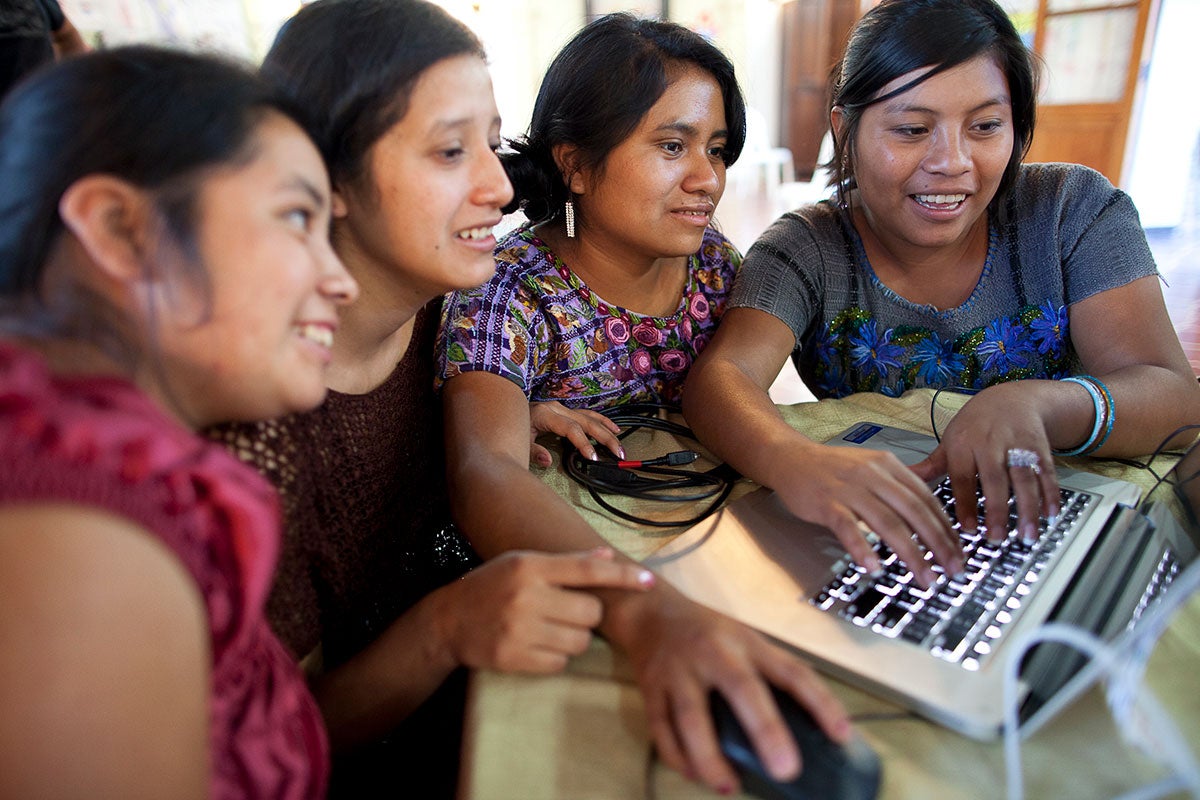
Over at the United Nations, the theme for International Women’s Day is DigitALL: Innovation and technology for gender equality. This theme highlights the need for inclusive and transformative technology and digital education.

The United Nations recognises and celebrates the women and girls who are championing the advancement of transformative technology and digital education. This IWD will explore the impact of the digital gender gap on widening economic and social inequalities and will also spotlight the importance of protecting the rights of women and girls in digital spaces and addressing online and ICT-facilitated gender-based violence. Bringing women and other marginalised groups into technology results in more creative solutions and has greater potential for innovations that meet women’s needs and promote gender equality. Their lack of inclusion, by contrast, comes with massive costs. As per the UN Women’s Gender Snapshot 2022 report, women’s exclusion from the digital world has shaved $1 trillion from the gross domestic product of low-and middle-income countries in the last decade—a loss that will grow to $1.5 trillion by 2025 without action. Reversing this trend will require tackling the problem of online violence, which a study of 51 countries revealed 38 percent of women had personally experienced.

A gender-responsive approach to innovation, technology, and digital education can increase the awareness of women and girls regarding their rights and civic engagement. Advancements in digital technology offer immense opportunities to address development and humanitarian challenges and to achieve the 2030 Agenda’s Sustainable Development Goals. Unfortunately, the opportunities of the digital revolution also present a risk of perpetuating existing patterns of gender inequality. Growing inequalities are becoming increasingly evident in the context of digital skills and access to technologies, with women being left behind as the result of this digital gender divide. The need for inclusive and transformative technology and digital education is therefore crucial for a sustainable future.

Lets us all celebrate women’s achievements today and raise awareness about the discriminations we face. Let’s take action to drive gender parity and embrace equity.

Festivals of India: Sekrenyi Festival

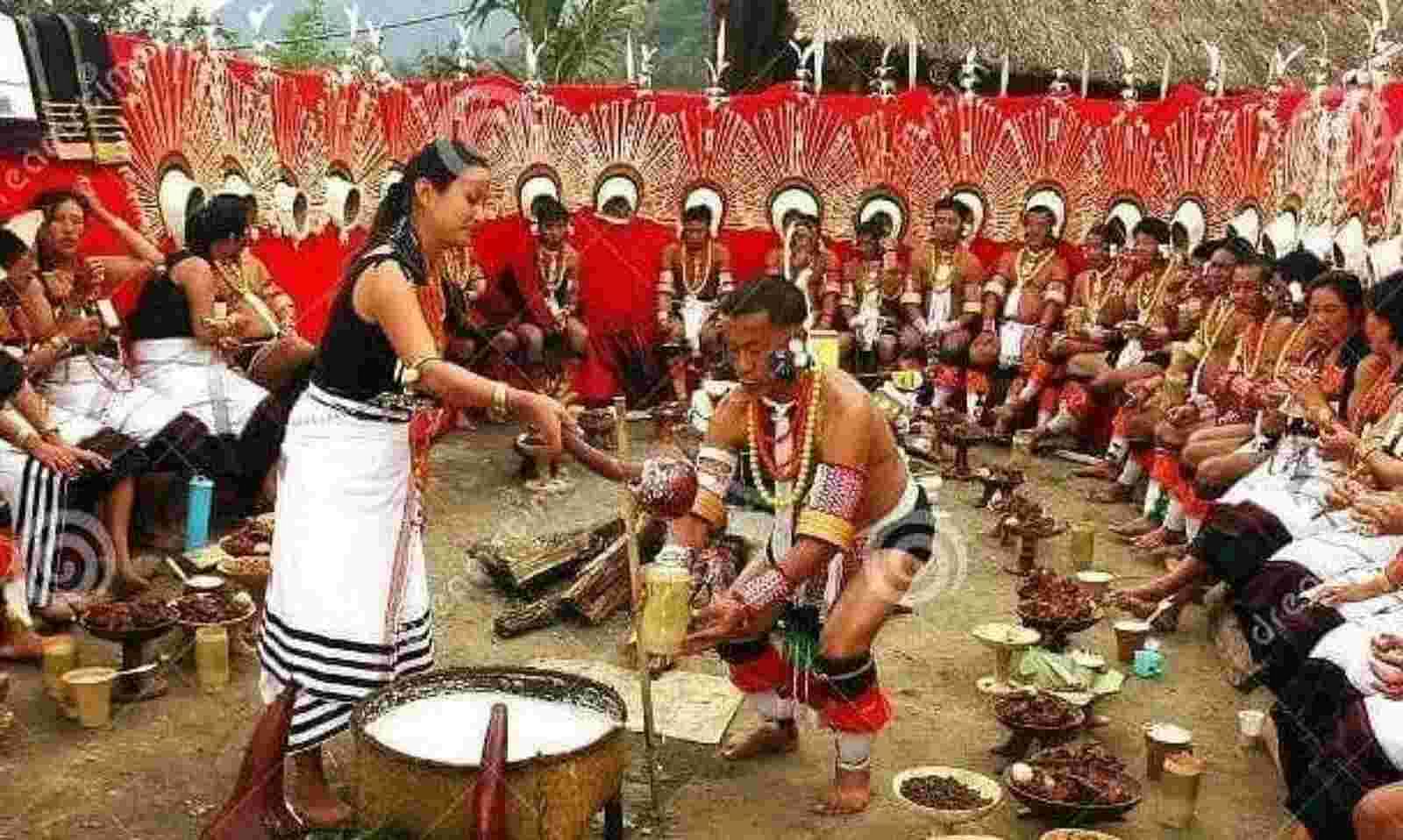
Also known as Sokre-n and Phousanyi, Sekrenyi is a major annual festival of the Angami Nagas, in the northeast Indian state of Nagaland. It is observed for ten days from the 25th day of the Angami calendar month of Kezei, usually corresponding to 25 February in the Gregorian calendar. The festival is a time for purification, renewal, and thanksgiving, and is celebrated with a variety of rituals, feasts, and dances. It is a purification festival held to wash off all past sins. The objective of the festival is to renew and make holy by cleansing the body and the soul of the village as a whole, and to bring forth unity among all communities of Nagaland. It also marks the initiation of young people to adulthood and is considered an identity marker of the Angami. Christian converts among the tribals have gradually rejected these rituals.

Sekrenyi is a compound word formed by Sekre meaning sanctification and Nyi meaning festival. The festival calendar is linked to the agricultural cycle, which varies from village to village. Thus, the celebration is held between the months of December–March, and the duration also varies from ten to fifteen days. It is celebrated by both the Kruna Angami or Pfutsana and Christian Angami. The duration is reduced to five days for the Christian villagers who had earlier converted to Christianity but belonged to the same ethnic group; they participate in the festivities but they do not follow any of the rituals connected with it.

Many rituals and ceremonies are involved with the festival. On the first day, which is known as Kezie, people sprinkle themselves with a few drops of rice water drawn from a pot named Zumho. The water drops are first gathered into leaves, and the chief lady of the house reverently fixes the leaves at the three main corner pillars of the house. This is followed by the men assembling at the well to bathe. On the second day, young men of the village assemble in the village to perform ablutions. They adorn themselves with two new shawls, and then ritualistically sprinkle the holy water on their chests, knees and right arms as a mark of washing away all their sins and ill luck. When they come back from the well, a sacrificial offer of a cock is performed.

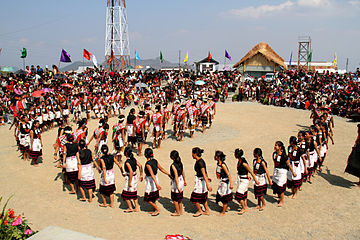
The fourth day of the festival marks the New Year of the Angamis. It begins with revelry by singing and feasting which lasts for three days. The young people, both men and unmarried girls with shaven heads gather and sing traditional songs the entire day; the songs relate to past days of valour and bravery. For the revelry of music and dance, the men and women of the community wear the traditional dress; while men carry head hunting spades, women carry baskets. The seventh day is devoted to hunting by the young men of the ethnic group. On the eighth day, the ritual involves pulling down a gate and replacing the old gate that demarcates the property. This is followed in the next two days by the people of villages formally exchanging visits and offering greetings. During the period of the ten-day festivities, field operations are suspended, In local terminology, this is called Penyu. Following the completion of the festival period, when men of the villages have cleansed themselves and sought blessings, cultivation, house building and marriages may restart for the year.

One of the most important rituals of the Sekrenyi festival is the offering of food and other items to the ancestors and the gods. This is done in the form of a feast, known as the Thuwali feast. The Thuwali feast is a grand affair, with a variety of dishes being prepared and served to the community. The food is prepared by the women of the community, who spend days preparing for the feast. This feast is a time for the community to come together and give thanks for the blessings of the past year, and ask for continued blessings in the coming year.

Another important ritual of the Sekrenyi festival is the performance of dances. The Angami people are known for their traditional dances, which are performed during the festival. These dances are performed by both men and women and are a form of storytelling. They tell the stories of the Angami people, their history, and their culture. The dances are accompanied by music, which is played on traditional instruments such as the nga or a bamboo flute and the dama or a drum. The dances are a vibrant and colourful spectacle and are enjoyed by the entire community.

The Sekrenyi festival is also an important social and cultural event, bringing together members of the community from across the region. During the festival, people from different villages come together to participate in the rituals and ceremonies. This is an opportunity for people to reconnect with friends and family, and to strengthen the bonds of the community. The festival is also an opportunity for young people to meet and mingle, and for potential partners to be introduced.

Are you a Fox or a Hedgehog?

The ancient Greek poet Archilochus wrote a now-lost parable with the following moral: “The fox knows many things, but the hedgehog knows one big thing.” The general gist of the line is this: Some people see the details in everything they do, like the fox, while others are great at having one singular vision, like the hedgehog. This animal-centric adage is at the heart of a lesson in “On Grand Strategy,” an instruction manual for would-be leaders based on popular seminars by Yale professor John Lewis Gaddis. Taking a cue from a 1953 essay by British-American philosopher Isaiah Berlin, Gaddis discusses how great leaders and thinkers can be categorized as either hedgehogs or foxes. Berlin went so far as to say that this split is “one of the deepest differences [that] divide writers and thinkers, and, it may be, human beings in general.”

Source

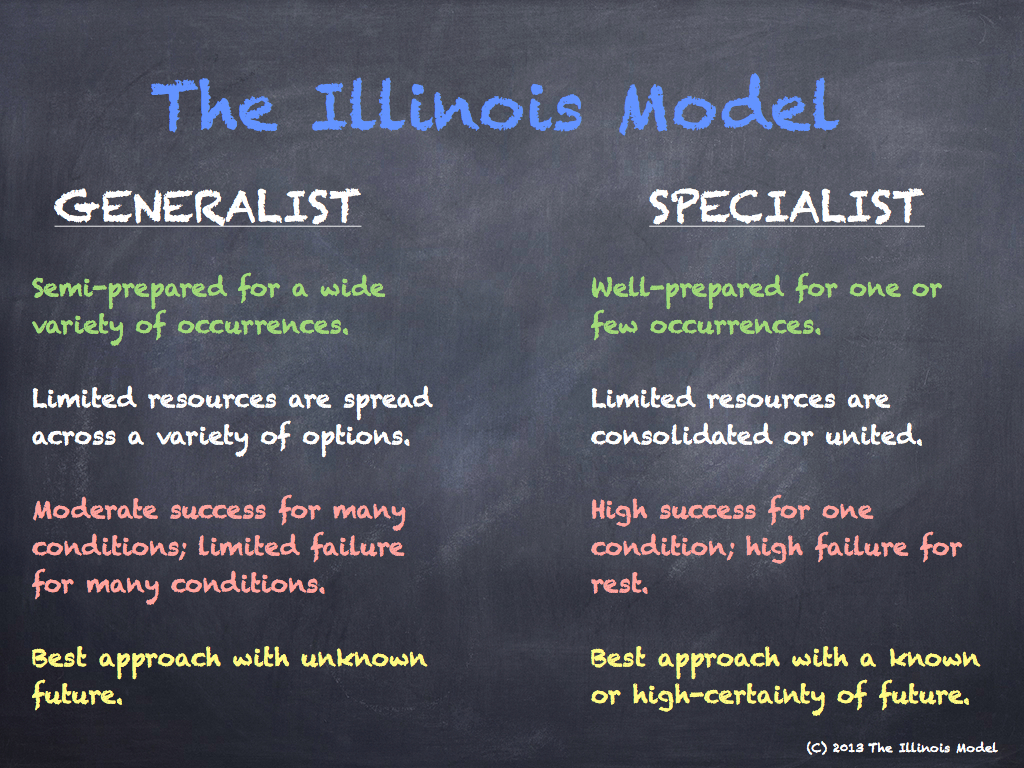
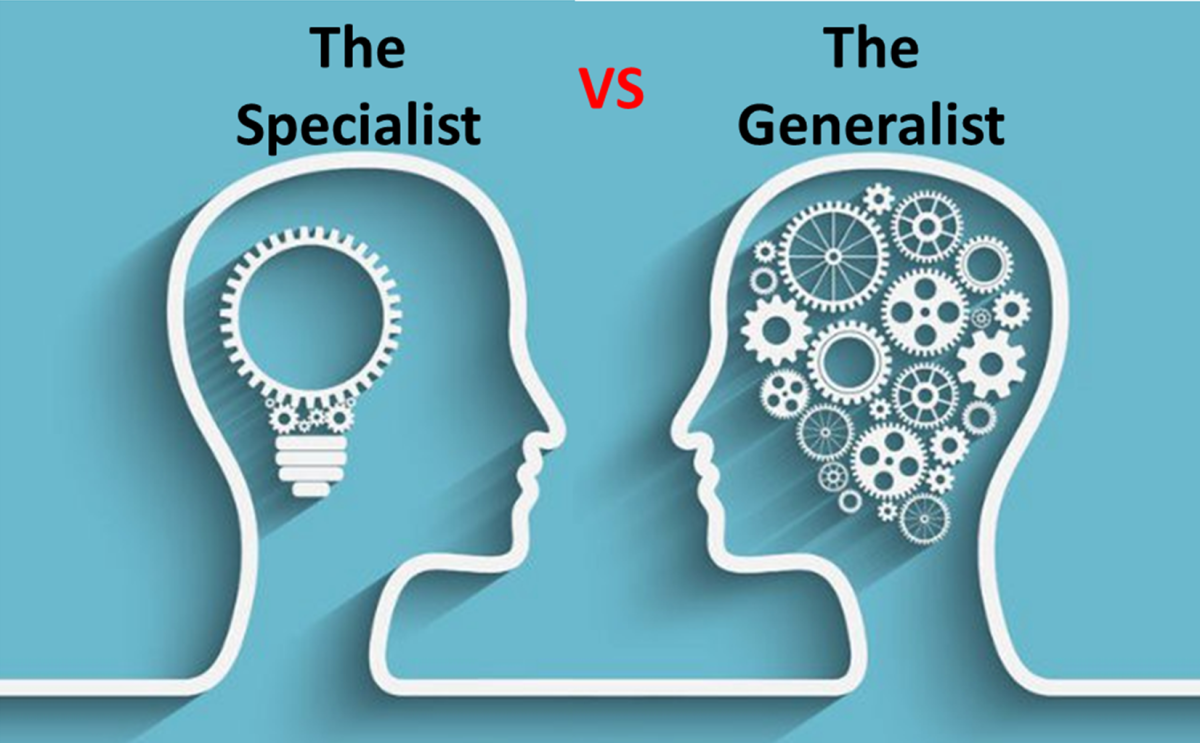
Typically, a generalist is someone who has a broad range of knowledge and skills across multiple fields, while a specialist is someone who has deep knowledge and expertise in a specific field or area. Generalists tend to have a wider range of job opportunities and can adapt to new situations and changing circumstances more easily than specialists. They also tend to have a better understanding of how different fields and disciplines are interconnected and can often see connections and opportunities that specialists might miss. Specialists, on the other hand, tend to have a more in-depth understanding of their field of expertise and can contribute more to projects and teams that require specialized knowledge and skills. They also tend to be more sought after and command higher salaries in their field of expertise. Generalists can understand and see connections between different subjects, while specialists can focus on and solve complex problems within their area of expertise. Generalists are often more adaptable and can work on a wider range of tasks, while specialists have a deeper understanding of their field and can contribute significantly to its advancement.

While a specialist systematically hones skills related to their domain, a generalist seeks to sharpen a wide range of related skills that will prove useful in multiple domains. The proliferation of startups and small businesses has surged the demand for generalists who come with a vast spectrum of knowledge and experience. However, when the requirement is for deep technical knowledge in critical fields, the skills of a specialist are much more marketable. When a company is looking at upscaling operations within its domain, the specialist is more progressive when it comes to creative ideas. Generalists are progressive when it comes to accepting a varied number of clients with different needs and expectations. Owing to their interpersonal skills and a broad-based learning curve, generalists can handle uncertainties efficiently. In terms of transferability, generalists fare better than specialists as their wide range of specialities is easily transferable to different domains. Specialists aren’t able to transfer their domain-related expertise to another field or even to another discipline within the same domain.

Both generalists and specialists have their own advantages and disadvantages, depending on the particular situation and the needs of the employer or organization. It’s also worth mentioning that, while some people may naturally lean towards being a generalist or a specialist, it is also possible to develop skills in both areas through continuous learning and development.

Specialists have expertise in their area of specialisation because they are focused on one domain, which attracts high-paying clients since subject-specific expertise gaps are more difficult to fill. The ability to undertake extensive targeted research and a quality understanding of the domain earn specialists attractive remuneration. Specialists are also more equipped to handle any new technological complexity in the field as they dedicate years to exploring the different facets of the domain. On the other hand, because they are focused on one area of expertise, the lack of diversity within the job profile hinders growth. A specialized portfolio has limited scope for independent expansion. With rapid technological advancements, specialists risk falling behind if they don’t update their skill sets frequently. Specialists usually perform within a narrower domain than generalists. As they dive deeper into their domain, the relevant working fields surrounding them gradually shrink.

Generalists cover several domains and envision the bigger picture as they combine multiple perspectives from different departments. A direct result of being open to a lot of unique challenges is acquiring strong critical thinking skills and this enables generalists to offer actionable insights into their areas of expertise. Their ability to explore various domains and a high multitasking quotient make generalists excel in leadership roles. A large number of skills arm generalists with the capacity to diversify their services which helps them swap career paths easily and give their clients a lot of alternatives to work with. But a lack of specific expertise in any domain puts them on a back foot as they aren’t that competent in niche projects. A high percentage of generalists work across multiple teams and tackle a host of responsibilities, especially if they are in leadership roles. This often leads to psychological burnout. Generalists are also easier to replace owing to their overlapping or vaguely defined work responsibilities and so these positions are prone to lower pay scales as compared to a specialist.

Whether it is better to be a generalist or a specialist depends on the individual’s goals, interests, and circumstances. For some careers, such as medicine or law, specialisation is required to achieve a high level of expertise and be successful in the field. In other fields, a generalist approach can be beneficial, as it allows individuals to have a wider range of skills and knowledge, making them more versatile and adaptable in the face of changing circumstances. In many cases, a combination of both generalist and specialist skills can be advantageous, allowing individuals to understand the broader context of their area of expertise and effectively communicate and apply their knowledge. Ultimately, the choice between being a generalist or a specialist is a personal one and should be based on individual strengths, interests, and career goals.

Some of the questions one needs to ask themselves are if one seeks a diverse breadth of knowledge or if one prefers deep research on any specific topic. Do they change their career perspective often and prefer taking time to find the niche they are interested in? Or have they already determined their career trajectory? One also needs to work out what kind of work ignites their interests and passions and if it requires them to hone different skills or demands specific subject-matter expertise. The ideal workforce of today is a carefully balanced group of specialised generalists who recognise their varied strengths but rely on others’ domain-specific expertise, and generalised specialists who are people with core competencies who also delve into other related areas.

So would you rather be a fox or a hedgehog? I am going to ask BB and GG this question after making them read this article.