
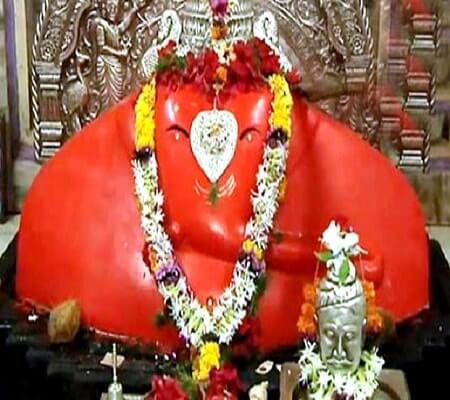
In the lush, rolling hills of Maharashtra’s Raigad district, nestled between the ancient Sarasgad fort and the gentle flow of the Amba River, stands the Ballaleshwar Temple at Pali, one of the eight sacred Ashtavinayak shrines dedicated to Lord Ganesha. Unique among Ganesha temples, Ballaleshwar is the only incarnation of the deity known by the name of his devotee rather than his own. This temple is not only a centre of deep spiritual resonance but also a living testament to the transformative power of unwavering devotion.
Pali is a picturesque village, approximately 30 km from Karjat, surrounded by verdant hills and blessed with natural beauty. The temple’s location, between the imposing Sarasgad fort and the tranquil Amba river, imbues the site with a sense of protection and serenity. Two lakes flank the temple, their waters used for ritual purposes and adding to the sanctity of the environment.

The story of Ballaleshwar is inseparable from that of Ballal, a young boy whose devotion to Lord Ganesha was so profound that it changed the course of his life and the spiritual landscape of Pali forever. Ballal was the son of Kalyansheth, also called Kalyan or Kalyani Seth, and Indumati, a wealthy and respected couple in the village. While his parents were initially childless, they were eventually blessed with Ballal, who from an early age showed an extraordinary inclination toward worship and spirituality.
Ballal’s devotion was infectious. He would gather his friends and lead them into the forest to conduct elaborate rituals, using stones as makeshift idols of Lord Ganesha. So engrossed were the children in their prayers that they would lose track of time, often returning home late. This behaviour soon drew the ire of the other villagers, whose complaints reached Ballal’s father.
Angered by Ballal’s neglect of worldly duties and the complaints of the villagers, Kalyansheth stormed into the forest. There, he disrupted the children’s worship, threw away the Ganesha idol, destroyed the pandal, or the temporary shrine, and beat Ballal mercilessly. To punish him further, he tied Ballal to a tree, taunting him to see if his beloved Ganesha would come to his rescue.
Despite his pain and injuries, Ballal’s faith never wavered. He continued to chant Ganesha’s name, his prayers echoing through the forest. Moved by such unshakeable devotion, Lord Ganesha appeared before Ballal in the guise of a Brahmin. Ganesha untied the boy, healed his wounds, and asked him to make a wish. Ballal, ever selfless, requested that Ganesha remain in Pali and bless all devotees who came to worship him there. Pleased, Ganesha agreed, promising to take Ballal’s name before his own, thus becoming Ballaleshwar, “the Lord of Ballal.”

The stone idol that Ballal’s father had thrown away was later found and installed near the main temple as Dhundi Vinayak. Tradition holds that devotees must first pay respects to Dhundi Vinayak before entering the Ballaleshwar temple, acknowledging the resilience of faith even in adversity.
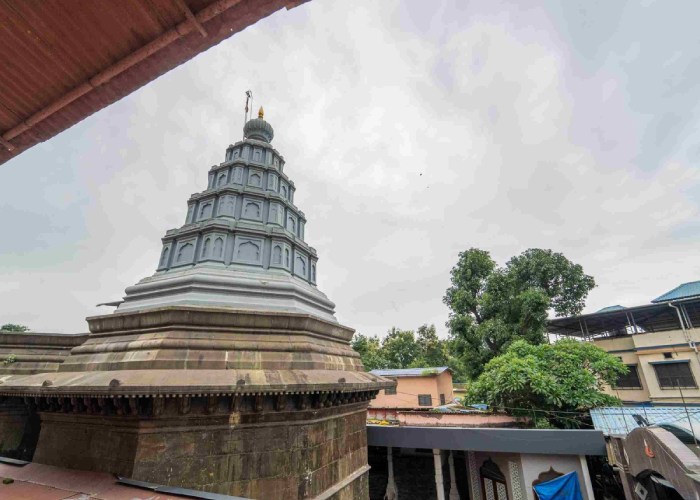
The original temple at Pali was a simple wooden structure, its date of origin lost to history. The current stone temple was reconstructed in 1640 by Moreshwar Vitthal Sindkar and later renovated by Nana Phadnavis in 1760. The temple faces east, and its design is such that during Dakshinayana, the period when the sun moves southward, the first rays of the morning sun fall directly on the main idol, a marvel of ancient engineering and devotion. The temple itself is shaped like the sacred “Shree” symbol in Devanagari script, further emphasising its spiritual significance.
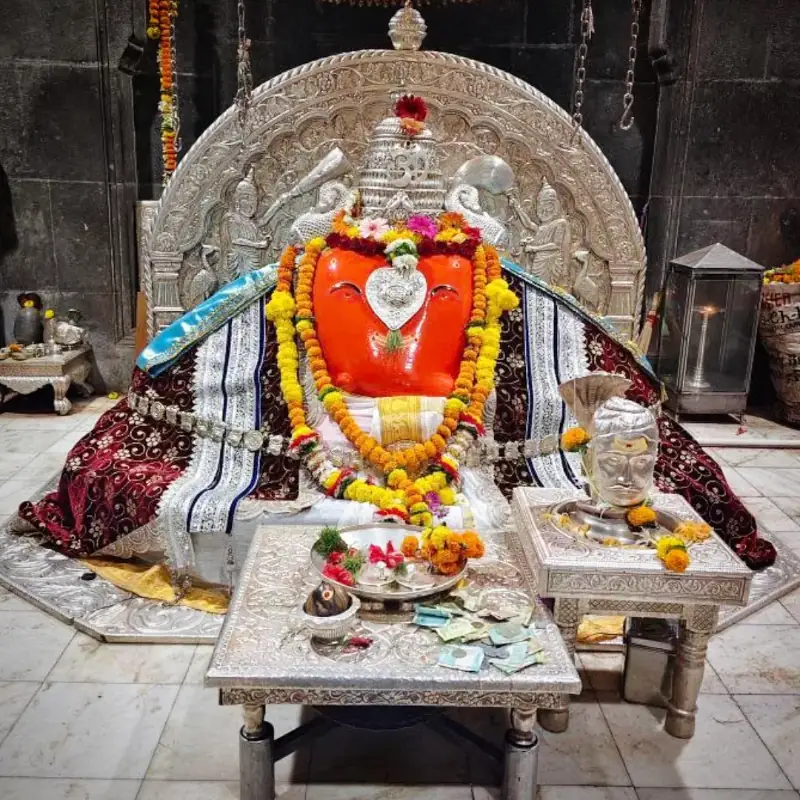
The idol of Ballaleshwar is three feet tall, seated on a stone throne with a silver backrest. The idol’s trunk turns to the left, and its eyes and navel are studded with precious diamonds. Uniquely, Ganesha is depicted here in the attire of a Brahmin, a nod to his appearance before Ballal. On either side of the idol stand are Riddhi and Siddhi, the goddesses of prosperity and spiritual power, waving chamaras, or fly-whisks, in service.
Two lakes, one on either side of the temple, provide water for rituals. The lake on the right is especially significant, as its water is used for the deity’s daily worship and other auspicious occasions.
The temple is a hive of activity throughout the year, with daily rituals conducted following ancient tradition. The day begins with the early morning aarti, the Kakad Aarti, awakening the deity and invoking his blessings. Offerings of food, Neivedhya, are made to the deity and later distributed as prasad to devotees. Maha Aarti is held at noon and in the evening; these aartis are accompanied by devotional singing and the rhythmic clanging of bells. Shej Aarti is the final ritual of the day, performed before the deity is symbolically put to rest.
A unique tradition at Ballaleshwar is that devotees must first seek the blessings of Dhundi Vinayak, the stone idol thrown away by Ballal’s father, before entering the main temple. This act honours the resilience of faith and the sanctity of all forms of devotion, however humble their origins. During Dakshinayana, the temple’s east-facing design allows the first rays of the sun to illuminate the main idol, symbolising the dispelling of darkness and ignorance by divine light.
On the fourth day of the Bhadrapada month, a special Maha Bhog, or grand offering, is made to the deity. It is believed that the imprint of Ganesha’s fingers can be seen on the offerings, a miraculous sign that draws thousands of devotees to witness and receive blessings on this auspicious day.
During the Magh festival, the third day is marked by a grand palkhi, or palanquin, procession. The idol is carried through the village, accompanied by singing, dancing, and bands, as devotees join in a vibrant celebration of faith.
The Bhadrapadi Utsav, held from the first to the fifth day of the bright fortnight in the month of Bhadrapada, is one of the temple’s main festivals. The temple is adorned with colourful lights, and the air resonates with the sounds of bhajans, devotional songs, kirtans or spiritual discourses, and traditional music. Eminent scholars and local literati participate, recounting the birth and exploits of Lord Ganesha.
The Maghi Utsav, celebrated from the first to the fifth day of the bright fortnight in the month of Magh, is another major festival. The highlight is the evening palkhi procession, which winds through the village with much fanfare. Devotees are blessed with prasad after the procession, and the entire temple complex is suffused with joy and spiritual fervour.
Every month, on the fourth day of the waxing moon, Chaturthi, the temple witnesses a surge of devotees. Special decorations, rituals, and offerings mark these occasions, reinforcing the temple’s role as a living centre of faith and devotion.
Ballaleshwar is unique among the Ashtavinayak temples, and indeed, among all Ganesha shrines, in being named after a devotee rather than the deity himself. This reflects the deep Hindu belief in the power of bhakti or devotion to move the divine, and the reciprocal relationship between the devotee and the deity. The story of Ballal is a powerful reminder that true devotion is characterised by innocence, persistence, and selflessness. Ballal’s unwavering faith, even in the face of suffering, is held up as an ideal for all devotees.
The temple’s eastward orientation and the phenomenon of sunlight illuminating the idol are rich in symbolism, representing the triumph of light over darkness, knowledge over ignorance, and faith over adversity.
 Memories and Such