In My Hands Today…

Slow Noodles: A Cambodian Memoir of Love, Loss, and Family Recipes – Chantha Nguon

A haunting and beautiful memoir from a Cambodian refugee who lost her country and her family during Pol Pot’s genocide in the 1970s but who finds hope by reclaiming the recipes she tasted in her mother’s kitchen.

Take a well-fed nine-year-old with a big family and a fancy education. Fold in 2 revolutions, 2 civil wars, and one wholesale extermination. Subtract a reliable source of food, life savings, and family members, until all are gone. Shave down childhood dreams for approximately two decades, until only subsistence remains.

In Slow Noodles, Chantha Nguon recounts her life as a Cambodia refugee who lost everything and everyone—her house, her country, her parents, her siblings, her friends—everything but the memories of her mother’s kitchen, the tastes and aromas of the foods her mother made before the dictator Pol Pot tore her country apart in the 1970s, killing millions of her compatriots. Nguon’s irrepressible spirit and determination come through in this emotional and poignant but also lyrical and magical memoir that includes over 20 recipes for Khmer dishes like chicken lime soup, banh sung noodles, pâté de foie, curries, spring rolls, and stir-fries. For Nguon, recreating these dishes becomes an act of resistance, of reclaiming her place in the world, of upholding the values the Khmer Rouge sought to destroy, and of honoring the memory of her beloved mother.

From her idyllic early years in Battambang to hiding as a young girl in Phnom Penh as the country purges ethnic Vietnamese like Nguon and her family, from her escape to Saigon to the deaths of mother and sister there, from the poverty and devastation she experiences in a war-ravaged Vietnam to her decision to flee the country. We follow Chantha on a harrowing river crossing into Thailand—part of the exodus that gave rise to the name “boat people”—and her decades in a refugee camp there, until finally, denied passage to the West, she returns to a forever changed Cambodia. Nguon survives by cooking in a brothel, serving drinks in a nightclub, making and selling street food, becoming a suture-nurse treating refugees abused by Thai authorities, and weaving silk. Through it all, Nguon relies on her mother’s “slow noodles” approach to healing and to cooking, one that prioritizes time and care over expediency. Haunting and evocative, Slow Noodles is a testament to the power of culinary heritage to spark the rebirth of a young woman’s hopes for a beautiful life.

In My Hands Today…

Dangerous Tastes: The Story of Spices – Andrew Dalby

Spices and aromatics―the powerful, pleasurable, sensual ingredients used in foods, drinks, scented oils, perfumes, cosmetics, and drugs—have long been some of the most sought-after substances in the course of human history. In various forms, spices have served as appetizers, digestives, antiseptics, therapeutics, tonics, and aphrodisiacs. Dangerous Tastes explores the captivating history of spices and the fascination that they have aroused in us, and the roads and seaways by which trade in spices has gradually grown. Andrew Dalby, who has gathered information from sources in many languages, explores each spice, interweaving its general history with the story of its discovery and various uses.

Dalby concentrates on traditional spices that are still part of world cinnamon, cloves, ginger, pepper, saffron, and chili. He also discusses aromatics that are now little used in food but still belong to the spice trade and to traditional frankincense, myrrh, aloes-wood, balsam of Mecca. In addition, Dalby considers spices that were once important but that now are almost long pepper, cubebs, grains of Paradise.

Dangerous Tastes relates how the Aztecs, who enjoyed drinking hot chocolate flavored with chili and vanilla, sometimes added annatto (a red dye) to the drink. This not only contributed to the flavor but colored the drinker’s mouth red, a reminder that drinking cacao was, in Aztec thought, parallel with drinking blood. In the section on ambergris, Dalby tells how different cultures explained the origin of this Arabs and Persians variously thought of it as solidified sea spray, a resin that sprung from the depths of the sea, or a fungus that grows on the sea bed as truffles grow on the roots of trees. Some Chinese believed it was the spittle of sleeping dragons. Dalby has assembled a wealth of absorbing information into a fertile human history that spreads outward with the expansion of human knowledge of spices worldwide.

In My Hands Today…

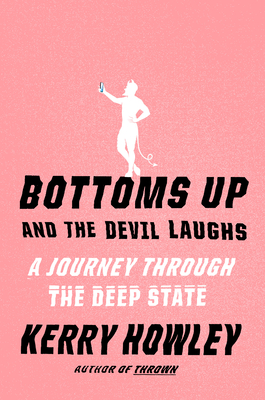
Bottoms Up and the Devil Laughs: A Journey Through the Deep State – Kerry Howley

Who are you? You are data about data. You are a map of connections–a culmination of everything you have ever posted, searched, emailed, liked, and followed. In this groundbreaking work of narrative nonfiction, Kerry Howley investigates the curious implications of living in the age of the indelible. Bottoms Up and the Devil Laughs tells the true story of intelligence specialist Reality Winner, a lone young woman who stuffs a state secret under her skirt and trusts the wrong people to help. After printing five pages of dangerous information she was never supposed to see, Winner finds herself at the mercy of forces more invasive than she could have possibly imagined.

Following Winner’s unlikely journey from rural Texas to a federal courtroom, Howley maps a hidden world, drawing in John Walker Lindh, Lady Gaga, Edward Snowden, a rescue dog named Outlaw Babyface Nelson, and a mother who will do whatever it takes to get her daughter out of jail. Howley’s subjects face a challenge new to history: they are imprisoned by their past selves, trapped for as long as the Internet endures. A soap opera set in the deep state, Bottoms Up and the Devil Laughs is a free fall into a world where everything is recorded and nothing is sacred, from a singular writer unafraid to ask essential questions about the strangeness of modern life.

In My Hands Today…

Some People Need Killing: A Memoir of Murder in My Country – Patricia Evangelista

My job is to go to places where people die. I pack my bags, talk to the survivors, write my stories, then go home to wait for the next catastrophe. I don’t wait very long.”

Journalist Patricia Evangelista came of age in the aftermath of a street revolution that forged a new future for the Philippines. Three decades later, in the face of mounting inequality, the nation discovered the fragility of its democratic institutions under the regime of strongman Rodrigo Duterte.

Some People Need Killing is Evangelista’s meticulously reported and deeply human chronicle of the Philippines’ drug war. For six years, Evangelista chronicled the killings carried out by police and vigilantes in the name of Duterte’s war on drugs—a war that has led to the slaughter of thousands—immersing herself in the world of killers and survivors and capturing the atmosphere of fear created when an elected president decides that some lives are worth less than others.

The book takes its title from a vigilante whose words seemed to reflect the psychological accommodation that most of the country had “I’m really not a bad guy,” he said. “I’m not all bad. Some people need killing.”

In My Hands Today…

The Power of Regret: How Looking Backward Moves Us Forward – Daniel H. Pink

Everybody has regrets, Daniel H. Pink explains in The Power of Regret. They’re a universal and healthy part of being human. And understanding how regret works can help us make smarter decisions, perform better at work and school, and bring greater meaning to our lives.

Drawing on research in social psychology, neuroscience, and biology, Pink debunks the myth of the “no regrets” philosophy of life. And using the largest sampling of American attitudes about regret ever conducted as well as his own World Regret Survey–which has collected regrets from more than 15,000 people in 105 countries–he lays out the four core regrets that each of us has. These deep regrets offer compelling insights into how we live and how we can find a better path forward.

As he did in his bestsellers Drive, When, and A Whole New Mind, Pink lays out a dynamic new way of thinking about regret and frames his ideas in ways that are clear, accessible, and pragmatic. Packed with true stories of people’s regrets as well as practical takeaways for reimagining regret as a positive force, The Power of Regret shows how we can live richer, more engaged lives.