In My Hands Today…

A Brief History of the World in 47 Borders: Surprising Stories Behind the Lines on Our Maps – Jonn Elledge

A fascinating and surprising history of the world told through the lines people have drawn on maps

People have been drawing lines on maps for as long as there have been maps to draw on. Sometimes rooted in physical geography, sometimes entirely arbitrary, these lines might often have looked very different if a war or treaty or the decisions of a handful of tired Europeans had gone a different way. By telling the stories of these borders, we can learn a lot about how political identities are shaped, why the world looks the way it does—and about human folly.

From the Roman attempts to define the boundaries of civilization, to the secret British-French agreement to carve up the Ottoman Empire during the First World War, to the reason why landlocked Bolivia still maintains a navy, this is a fascinating, witty, and surprising look at the history of the world told through its borders.

In My Hands Today…

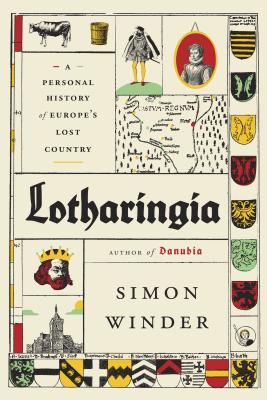
Lotharingia: A Personal History of Europe’s Lost Country – Simon Winder

In 843 AD, the three surviving grandsons of the great emperor Charlemagne met at Verdun. After years of bitter squabbles over who would inherit the family land, they finally decided to divide the territory and go their separate ways.

In a moment of staggering significance, one grandson inherited the area we now know as France, another Germany and the third received the piece in between: Lotharingia.

Lotharingia is a history of in-between Europe. It is the story of a place between places. In this beguiling, hilarious, and compelling book, Simon Winder retraces the various powers that have tried to overtake the land that stretches from the mouth of the Rhine to the Alps and the might of the peoples who have lived there for centuries.

In My Hands Today…

The New Silk Roads: The Present and Future of the World – Peter Frankopan

‘All roads used to lead to Rome. Today, they lead to Beijing.’

When The Silk Roads was published in 2015, it became an instant classic. A major reassessment of world history, it compelled us to look at the past from a different perspective. The New Silk Roads brings this story up to date, addressing the present and future of a world that is changing dramatically.

Following the Silk Roads eastwards, from Europe through to China, by way of Russia and the Middle East, The New Silk Roads provides a timely reminder that we live in a world that is profoundly interconnected. In an age of Brexit and Trump, the themes of isolation and fragmentation permeating the Western world stand in sharp contrast to events along the Silk Roads since 2015, where ties have been strengthened and mutual cooperation established.

With brilliant insight, Peter Frankopan takes a fresh look at the network of relationships being formed along the length and breadth of the Silk Roads today, assessing the global reverberations of these continual shifts in the centre of power – all too often absent from headlines in the West. This important – and ultimately hopeful – book asks us to reassess who we are and where we are in the world, illuminating the themes on which all our lives and livelihood depend.

In My Hands Today…

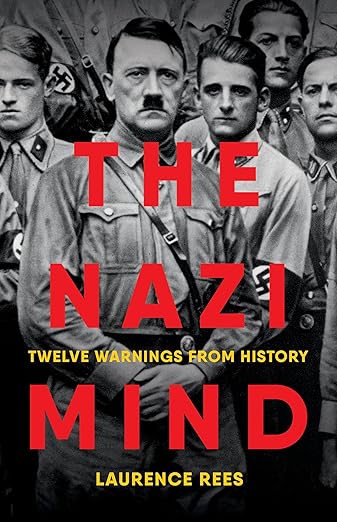
The Nazi Mind: Twelve Warnings from History – Laurence Rees

How could the Nazis have committed the crimes they did? Why did commandants of concentration and death camps willingly – often enthusiastically – oversee mass murder? How could ordinary Germans have tolerated the removal of the Jews? In THE NAZI MIND, bestselling author Laurence Rees combines history and the latest research in psychology to help answer some of the most perplexing questions surrounding the Second World War and the Holocaust.

Ultimately, he delves into the darkness to explain how and why these people were capable of committing the worst crime in the history of the world. Rees traces the rise and eventual fall of the Nazis through the lens of ‘twelve warnings’ – from talk about ‘them’ and ‘us’ to the escalation of racism – whilst also highlighting signs to look out for in present day leaders.

Rees uses previously unpublished testimony from former Nazis and those who grew up in the Nazi system, and in-depth psychological insights including cutting edge work on obedience, authority and the brain. THE NAZI MIND is a revelatory new way of understanding how so many people committed the most appalling crime of the 20th century.

Poem: The People Who Love Libraries

There has always been something quietly comforting about libraries and bookstores. Perhaps it is the silence, the scent of paper, or the feeling that entire worlds are waiting patiently on shelves to be discovered. For some of us, these places become more than buildings filled with books. They become sanctuaries. Spaces where we can escape, wander, reflect, and feel understood without having to explain ourselves. This poem is a love letter to libraries, bookstores, and to the people who find pieces of themselves hidden among the shelves.

The People Who Love Libraries

There is a certain kind of person
who walks into a library
and immediately breathes easier.

You can spot us quietly.

We wander slowly between shelves
without needing help.
We run our fingers across spines
as though greeting old friends.
We stand in corners reading blurbs
for books we may never borrow,
yet somehow still feel grateful exist.

Libraries are strange places.

Thousands of voices live there,
yet nobody raises their volume.
Entire wars, love stories, heartbreaks,
adventures, philosophies and confessions
sit quietly beside one another
without demanding attention.

And somehow,
inside all that silence,
some of us feel understood.

Maybe it is because books do not judge.

They do not ask
whether you are successful enough,
healed enough, confident enough,
certain enough.

They simply open.

Growing up,
libraries were not woven
into the fabric of my childhood.
There were school libraries, yes.
Later, the British Council in Mumbai.
The American Centre.
Places that felt almost magical then.

But it was in Singapore
that libraries became part of my life.
Public libraries tucked into malls,
neighbourhoods and quiet corners of the city.
Cool air.
Soft footsteps.
The familiar scent of paper and possibility.

I visited them often.
Sometimes for books.
Sometimes for escape.
Sometimes because the world outside
felt too loud.

There is comfort
in being surrounded by stories.

Comfort in knowing
that somewhere on a shelf,
another person once felt
exactly what you are feeling now.

And bookstores carry
their own kind of romance.

Grand libraries awaken awe,
their towering shelves reminding us
how small one lifetime really is.

Tiny independent bookstores
feel like acts of faith.
Proof that people still believe
stories matter.

And secondhand bookstores…
those may be the saddest
and most beautiful of all.

A folded corner.
A handwritten name.
A forgotten receipt tucked between pages.

Evidence that a stranger
once held this exact book
in their hands
years before you did.

Two readers connected
without ever meeting.

Perhaps that is why
people like us love libraries so much.

Not because we are lonely, necessarily.
But because libraries understand
the quiet ways humans search for refuge.

Some people find peace in crowds.
Others find it in prayer.
Some in music.

And some of us find it
standing between shelves,
holding a borrowed book,
while the rest of the world
waits patiently outside.