In My Hands Today…

Beijing Rules: How China Weaponized Its Economy to Confront the World – Bethany Allen
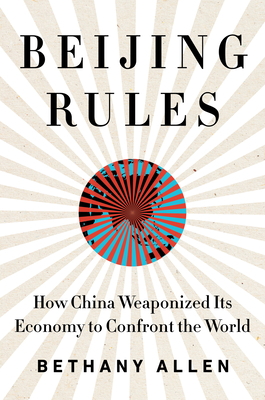
Beijing Rules is a superb expose which reveals how China learned to master capitalism which it now wields in its own authoritarian form to achieve global dominance. As Bethany Allen, the China reporter for Axios, reveals, the long-standing belief that free-trade capitalism is a democratizing force–the assumption underlying much of American and Western policy since World War II–is demonstrably false. Capitalism is actually a two-way street: if democratic values can travel in one direction, authoritarianism can travel in the other. The Chinese Communist Party (CCP) has successfully engineered what Cold War champions believed to be impossible: an unabashedly Communist Party leading a prosperous capitalist state.

Written by the first American journalist to expose covert Chinese influence operations in the United States, Beijing Rules includes headline-making stories of western institutions bowing to Beijing’s coercion–a glimpse of what American’s future might look like should liberal democracy come firmly under the thumb of authoritarian capitalism. Grounded in deep investigative reporting, it sounds the alarm about what we must do to prevent the loss of freedoms we now take for granted.
In My Hands Today…

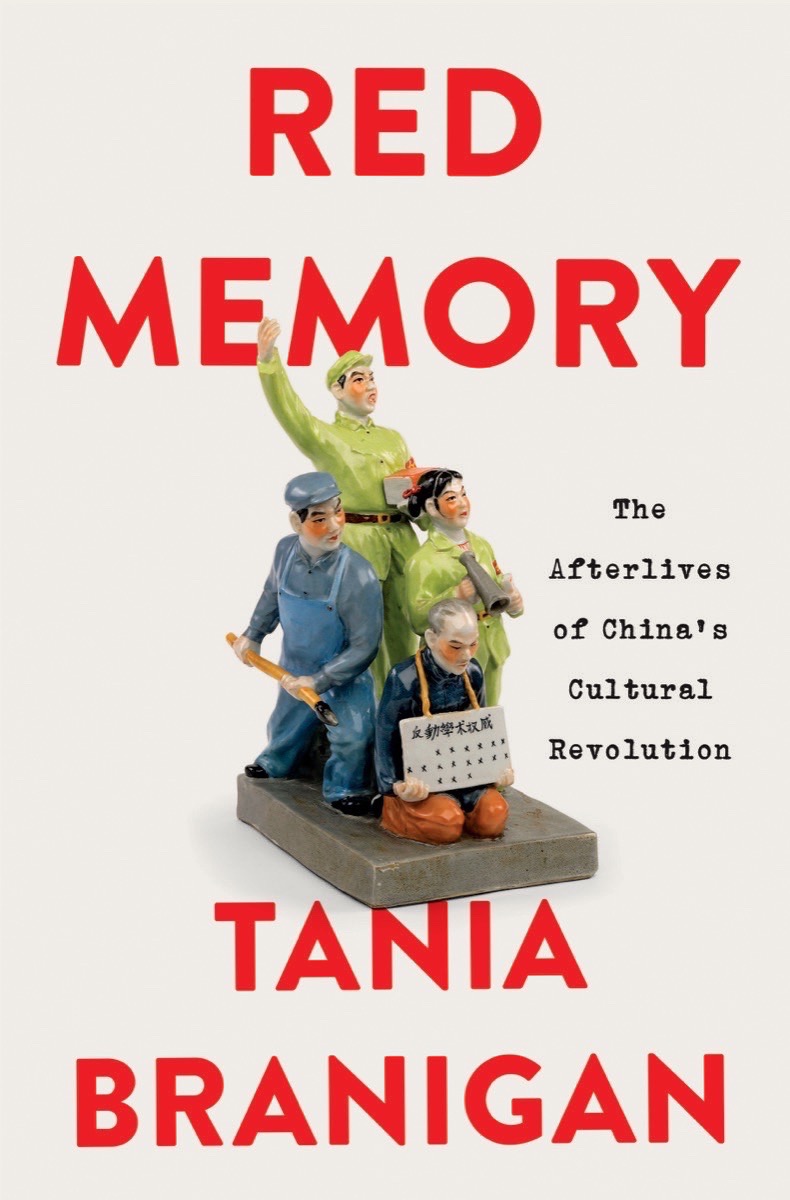
Red Memory: The Afterlives of China’s Cultural Revolution – Tania Branigan

“It is impossible to understand China today without understanding the Cultural Revolution,” Tania Branigan writes. During this decade of Maoist fanaticism between 1966 and 1976, children condemned parents, students condemned teachers, and as many as two million people died for their supposed political sins, while tens of millions were hounded, ostracized, and imprisoned.

Yet in China this brutal and turbulent period exists, for the most part, as an absence; official suppression and personal trauma have conspired in national amnesia. Red Memory uncovers forty years of silence through the stories of individuals who lived through the madness. Deftly exploring how this era defined a generation and continues to impact China today, Branigan asks: What happens to a society when you can no longer trust those closest to you? What happens to the present when the past is buried, exploited, or redrawn? And how do you live with yourself when the worst is over?

In My Hands Today…

Waiting to Be Arrested at Night: A Uyghur Poet’s Memoir of China’s Genocide – Tahir Hamut Izgil, translated by Joshua L Freeman

One by one, Tahir Hamut Izgil’s friends disappeared. The Chinese government’s brutal persecution of the Uyghur people had continued for years, but in 2017 it assumed a terrifying new scale. The Uyghurs, a predominantly Muslim minority group in western China, were experiencing an echo of the worst horrors of the twentieth century, amplified by China’s establishment of an all-seeing high-tech surveillance state. Over a million people have vanished into China’s internment camps for Muslim minorities.

Tahir, a prominent poet and intellectual, had been no stranger to persecution. After he attempted to travel abroad in 1996, police tortured him until he confessed to fabricated charges and sent him to a re-education through labor camp. But even having endured three years in the camp, he could never have predicted the Chinese government’s radical solution to the Uyghur question two decades later. Was the first sign when Tahir was interrogated for hours after a phone call with a fellow poet in the Netherlands? Or when his old friend was sentenced to life in prison simply for calling for Uyghurs’ legal rights to be enforced? Perhaps it was when the police seized Uyghurs’ radios and installed jamming equipment to cut them off from the outside world.

Once Tahir noticed that the park near his home was nearly empty because so many neighbors had been arrested, he knew the police would be coming for him any day. One night, after Tahir’s daughters were asleep, he placed by his door a sturdy pair of shoes, a sweater, and a coat so that he could stay warm if the police came for him in the middle of the night. It was clear to Tahir and his wife that fleeing the country was the family’s only hope.

Waiting to Be Arrested at Night is the story of the political, social, and cultural destruction of Tahir Hamut Izgil’s homeland. Among leading Uyghur intellectuals and writers, he is the only one known to have escaped China since the mass internments began. His book is a call for the world to awaken to the unfolding catastrophe, and a tribute to his friends and fellow Uyghurs whose voices have been silenced.

In My Hands Today…

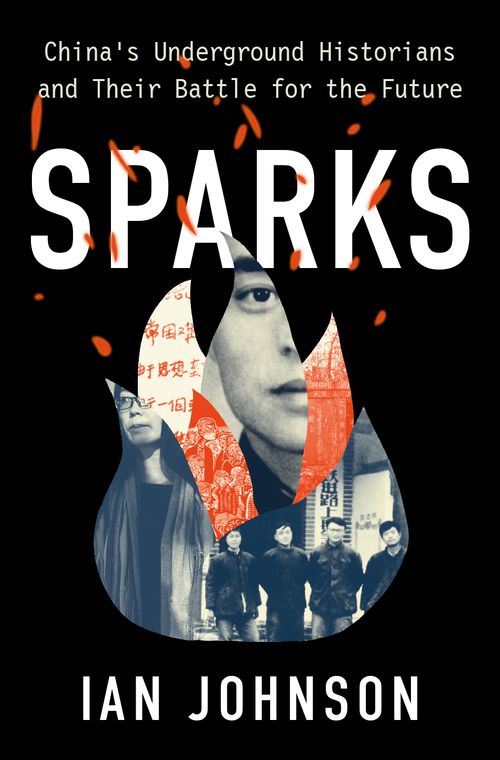
Sparks: China’s Underground Historians and their Battle for the Future – Ian Johnson

China’s Underground Historians and their Battle for the Future describes how some of China’s best-known writers, filmmakers, and artists have overcome crackdowns and censorship to forge a nationwide movement that challenges the Communist Party on its most hallowed its control of history.

The past is a battleground in many countries, but in China it is crucial to political power. In traditional China, dynasties rewrote history to justify their rule by proving that their predecessors were unworthy of holding power. Marxism gave this a modern gloss, describing history as an unstoppable force heading toward Communism’s triumph. The Chinese Communist Party builds on these ideas to whitewash its misdeeds and glorify its rule. Indeed, one of Xi Jinping’s signature policies is the control of history, which he equates with the party’s survival.

But in recent years, a network of independent writers, artists, and filmmakers have begun challenging this state-led disremembering. Using digital technologies to bypass China’s legendary surveillance state, their samizdat journals, guerilla media posts, and underground films document a regular pattern of from famines and purges of years past to ethnic clashes and virus outbreaks of the present–powerful and inspiring accounts that have underpinned recent protests in China against Xi Jinping’s strongman rule.

Based on years of first-hand research in Xi Jinping’s China, Sparks challenges stereotypes of a China where the state has quashed all free thought, revealing instead a country engaged in one of humanity’s great struggles of memory against forgetting―a battle that will shape the China that emerges in the mid-21st century.

In My Hands Today…

Invitation to a Banquet: The Story of Chinese Food – Fuchsia Dunlop

Chinese was the earliest truly global cuisine.

When the first Chinese laborers began to settle abroad, restaurants appeared in their wake. Yet Chinese has the curious distinction of being both one of the world’s best-loved culinary traditions and one of the least understood.

For more than a century, the overwhelming dominance of a simplified form of Cantonese cooking ensured that few foreigners experienced anything of its richness and sophistication, but today that is beginning to change.

In Invitation to a Banquet, award-winning cook and writer Fuchsia Dunlop explores the history, philosophy, and techniques of Chinese culinary culture. In each chapter, she examines a classic dish, from mapo tofu to Dongpo pork, knife-scraped noodles to braised pomelo pith, to reveal a distinctive aspect of Chinese gastronomy, whether it’s the importance of the soybean, the lure of exotic ingredients, or the history of Buddhist vegetarian cuisine.

Meeting food producers, chefs, gourmets, and home cooks as she tastes her way across the country, Fuchsia invites readers to join her on an unforgettable journey into Chinese food as it is cooked, eaten, and considered in its homeland. Weaving together history, mouthwatering descriptions of food, and on-the-ground research conducted over the course of three decades, Invitation to a Banquet is a lively, landmark tribute to the pleasures and mysteries of Chinese cuisine.