Receipes: Plum Chutney

I first made this plum chutney on a whim last week. S loved it so much that today he brought loads of Plums for me to recreate it. That’s when I knew it was a winner. This recipe is inspired by Sanjeev Kapoor’s Aloo Bhukare ki Chutney, which I then tweaked to make it my own! This is a super easy recipe with just a handful of ingredients, so read on and enjoy!!

Plum Chutney

IMG_4542[1]Ingredients:

  • 4 red/purple plums
  • 1 small cup raisins
  • 2 tsps cumin seed powder
  • Red chilli powder to taste
  • Salt to taste

Method:

  • In a small bowl, soak the raisins in water for while till they plump up and soften. Using hot water may speed this up.
  • Next chop and deseed the plums and blend the plums and raisins together untill they become a smooth purée.
  • Next take a thick bottomed pan and pour this purée in it. Add salt and red chilli powder and let it start boiling.
  • Once it reaches a rolling boil, and cumin seed powder and stir well.  Let it boil for a while till it thickens.
  • At this point, the colour was slightly brownish with a glaze to the mixture. Once it has thickened to your satisfaction, remove from heat and cool. Once cool, it becomes this rich purple colour.
  • Transfer to a covered dish and refrigerate. This should keep well for upto a week in the fridge.

IMG_4541[1] IMG_4543[1]

This chutney tastes sweet, salty and a bit spicy. If you need to make it more spicy, just increase the chilli while cooking it. It goes well with most Indian food and I also loved having it with bread as a sandwich spread.
Curry Leaves Chutney

I had a load of curry leaves today and while talking to my mum, told her about this chutney I make sometimes using these leaves. Now curry leaves are mostly used in South Indian cooking as part of the tadka, but you can also make chutneys and thogayals out of it. Here is my version.

Curry Leaves Chutney

Ingredients:

1 cup curry leaves
1/4 cup black raisins
A small sized ball of tamarind
6-7 green chillies
1/2 cup chopped coriander leaves
1/2 cup raw peanuts
1 inch piece ginger
Salt to taste

Method:
Dry roast the curry leaves until they just start becoming crisp. In the meantime, put
the raisins and tamarind in a small bowl and pour just enough hot water to cover. Once the water has cooled a bit, grind everything together – the curry leaves, raisins, tamarind, chillies, coriander leaves, peanuts and ginger. Add water as needed and  grind it to a fine paste. Add salt to taste and you have yummy curry leaves chutney

This is yummy even with bread, idli, dosa etc.

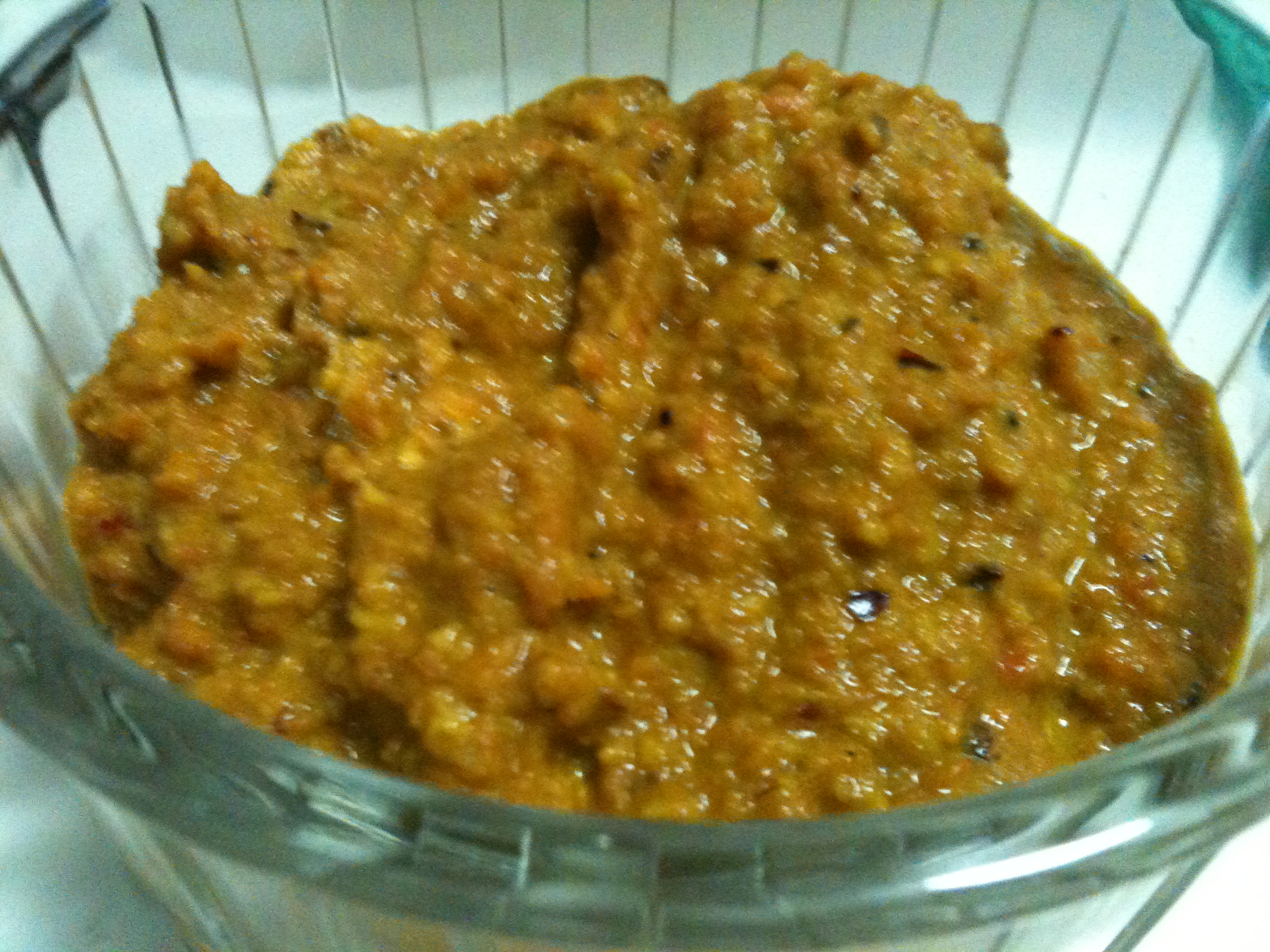
Carrot Chutney/Thuvaiyal

My definition of a Thuvaiyal is a chutney to which coconut has been added. A chutney is a mixture of vegetables and spices. A thuvaiyal, on the other hand, has in addition to the chutney ingredients, coconut to give it some body.

I had some carrots which were slightly bitter to taste. I didn’t know what to do with them, then remembered this thuvaiyal that my mom used to make. This thuvaiyal  can be eaten with idli/dosa/bread or even mixed with rice. My mom used to make thuvaiyals to be eaten with rice when she didn’t want to cook much that day.

Carrot Thuvaiyal

Ingredients:

  • 1 cup chopped carrots
  • 1/2 cup grated coconut
  • 1 tsp mustard seeds
  • 4-5 dried red chillies
  • 1 tsp urad dal
  • a pinch of asafoetida
  • a small lime-sized ball of tamarind
  • 1 tsp oil
  • Salt to taste
Method:
Heat oil in a pan and put in the mustard seeds. When they pop, add the urad dal, asafoetida and red chillies. Stir for a few seconds and then add the carrots and tamarind. Fry for a while till the carrots a bit soft and the raw smell goes away. You do not need to cook the carrots, but they do need to lose the raw hardness. When the carrots soften, remove from the fire and let it cool.
When the carrots mixture are cool, blend it in a mixer with coconut adding water if needed. Since my carrots were a bit bitter, I added some jaggary to this, but if you have sweet carrots, you can omit this. Once the carrot-coconut mixture is finely ground, add salt to taste and transfer to a serving bowl. This can be eaten mixed with rice when you don’t want to cook or eaten with idli, dosa or even with bread. This keeps for upto a week in the fridge.