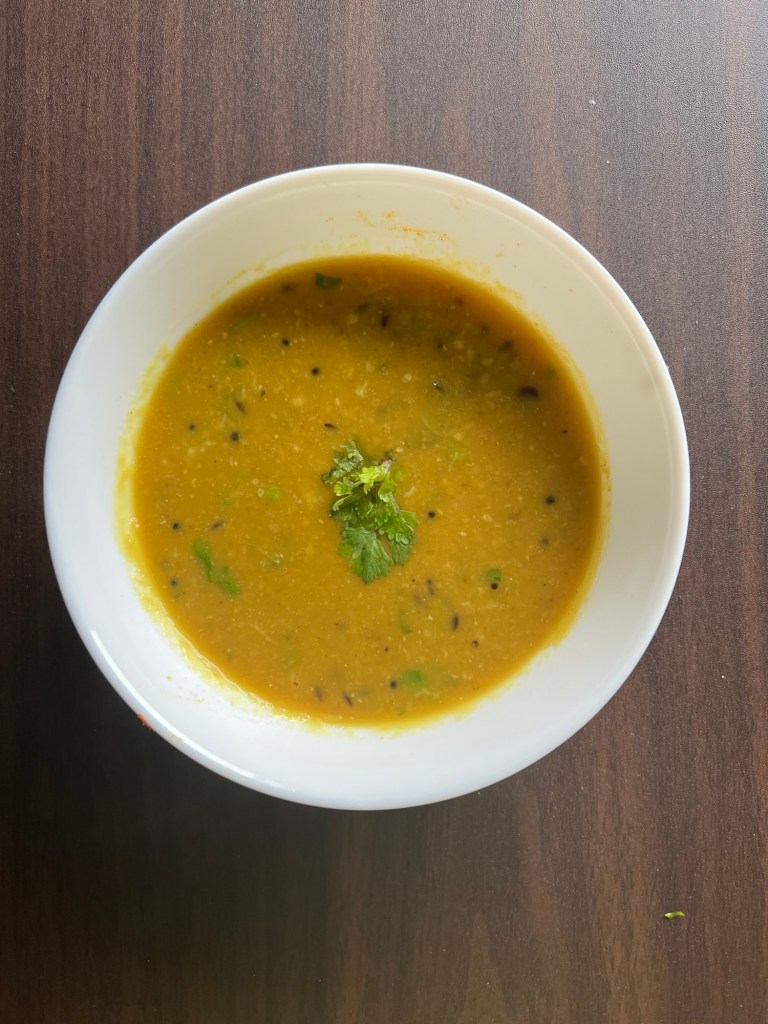
Recipes: Chincha Gul Amti

Known for its tangy and sweet flavour, Chincha Gul Amti is a traditional Maharashtrian dal made from tamarind or chincha and jaggery or gul. I got this recipe from one of the many recipe books I own (so old school, right). This version of the recipe includes coconut, which enhances the richness and texture of the dish, but you can opt to omit this if you don’t like the taste. 
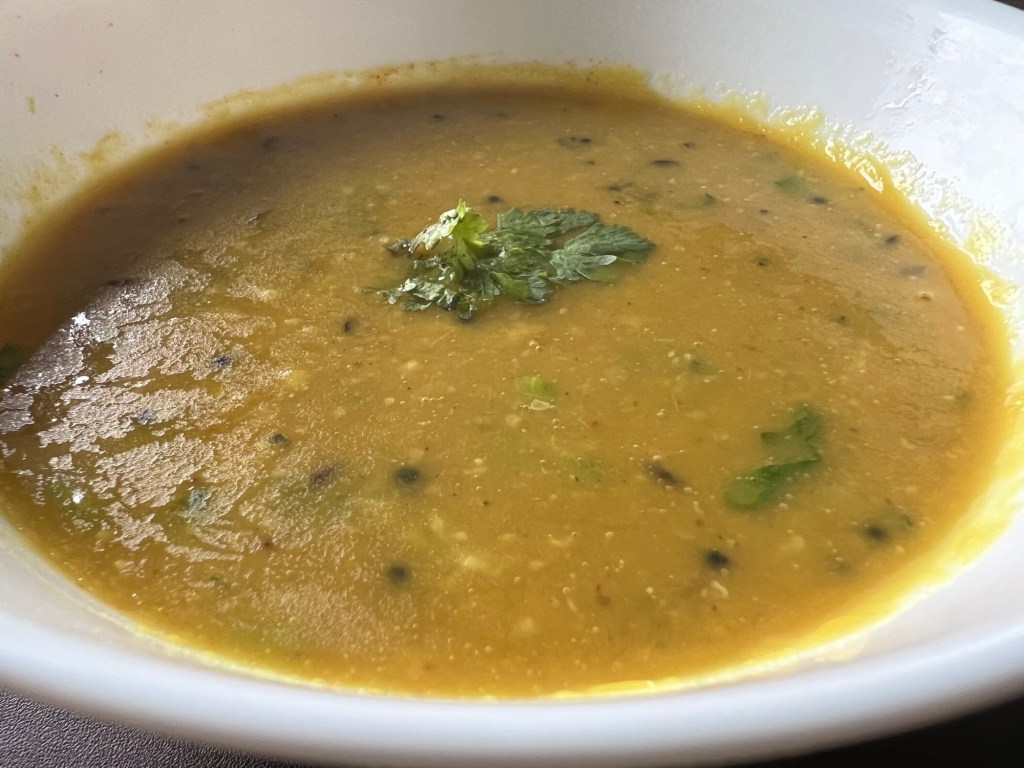
Chincha Gul Amti

Ingredients:

  • 1 cup toor dal or pigeon pea lentils
  • 2 tbsp tamarind pulp or paste 
  • 2 tbsp jaggery powder
  • 2 tbsp grated coconut, either fresh or desiccated
  • 1 tbsp oil or ghee
  • ½ tsp mustard seeds
  • ½ tsp cumin seeds
  • ¼ tsp asafoetida 
  • 2 dried red chilies
  • 8-10 curry leaves
  • ½ tsp turmeric powder
  • 1 tsp red chili powder 
  • 1 tsp goda masala (optional) or garam masala
  • Salt to taste
  • Water as needed
  • Finely chopped coriander leaves to garnish

Method:

  • Wash the dal well and soak in hot water for 30 minutes. 
  • Then pressure cook the dal with 2-3 cups of water until soft. This should take around 3-4 whistles. Mash or whisk the cooked dal to a smooth paste and set it aside.
  • If using tamarind pulp, soak tamarind in warm water for about 10-15 minutes. Extract the tamarind pulp by squeezing the tamarind, and set it aside. 
  • If using rock jaggery, dissolve the jaggery in a small amount of water, ensuring no lumps, and set aside.
  • In a deep pan or kadai, heat the oil or ghee on medium heat. Add mustard seeds and cumin seeds, and let them splutter. Add asafoetida, dried red chilies, and curry leaves. Saute for a minute until fragrant.
  • Add turmeric powder, red chili powder, and goda or garam masala and stir for a few seconds. Then add the grated coconut and sauté for another 2-3 minutes until the coconut turns slightly golden.
  • Pour the cooked and mashed dal into the pan. Stir well and adjust the consistency by adding water as needed. Bring it to a gentle simmer.
  • Add the tamarind pulp or paste and jaggery to the simmering dal. Stir well to combine the sweet and tangy flavors. Cook for another 5-7 minutes, allowing the flavours to meld.
  • Add salt to taste and adjust the level of tamarind and jaggery according to your preference. If the amti is too thick, add a bit more water to achieve a medium consistency.
  • Once done, turn off the heat and garnish with freshly chopped coriander leaves.
  • Serve Chincha Gul Amti hot with steamed rice or roti.
Recipes: Vegetable Alleppey Curry

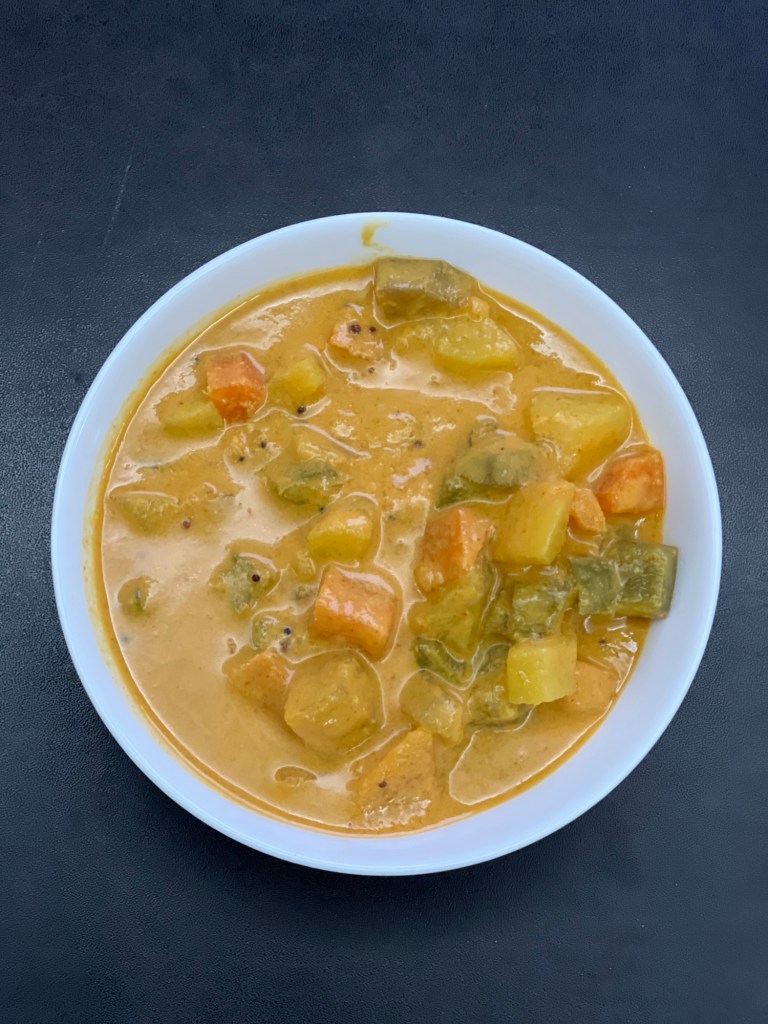
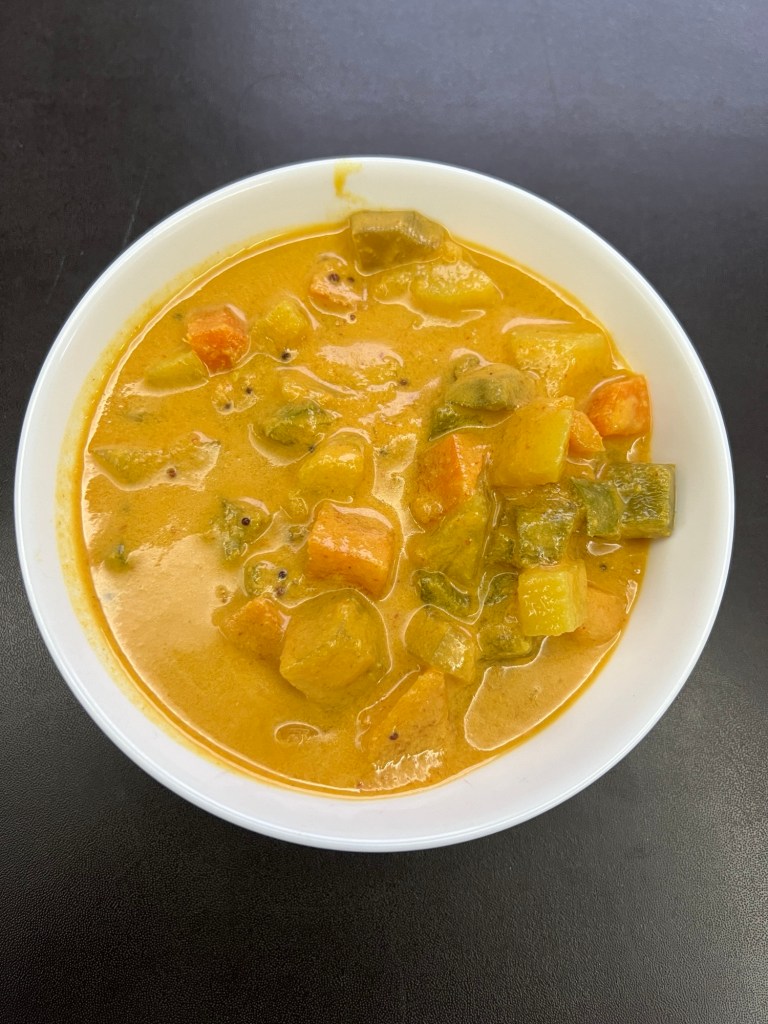
A couple of months back, we went to this fusion restaurant to celebrate S’ birthday. This restaurant took traditional South Indian recipes and presented them in a contemporary format, which was very interesting. One of the recipes, we had was Alleppey Curry. I loved it and immediately tried to replicate it.

Alleppey Curry originates from the coastal town of Alleppey or Alappuzha, in Kerala. Known for its backwaters and vibrant culinary scene, Alleppey is celebrated for this curry’s unique blend of local spices and coconut-based gravies. This curry typically features an assortment of fresh vegetables, often including carrots, beans, potatoes, and peas, cooked in a coconut milk-based sauce. It’s frequently served with rice, appam, which are rice pancakes, or parotta, offering a delicious and wholesome vegetarian option.

Now, I don’t like the smell and taste of coconut milk, so instead of using that, I used freshly grated coconut and blended it with some spices to make the sauce. So here’s how I made it.

Vegetable Alleppey Curry

Ingredients:

  • 2 cups mixed vegetables, chopped into medium-sized pieces. I used a mixture of carrots, beans, potatoes, cauliflower, broccoli, and peas
  • 2 raw mangoes, peeled and chopped into medium-sized pieces
  • ½ cup freshly grated coconut
  • 5-6 dried red chillies
  • 1 tsp cumin seeds
  • 1 tsp oil or ghee
  • 1 tsp mustard seeds
  • ¼ tsp turmeric powder
  • Salt to taste
  • 5-6 curry leaves

Method:

  • In a blender, blend the coconut, dried red chillies, cumin seeds and ¼ of the chopped mangoes into a fine paste. Keep aside.
  • In another pan, add the chopped vegetables and the remaining raw mango pieces. some salt and turmeric powder and cook until about 80% done. Heat the oil and when it warms, add the mustard seeds and let them splutter. Then add the curry leaves, pour the tempering into the curry and cover immediately to trap the flavours.
  • Serve hot with rice.

Recipes: Kosamali Salad

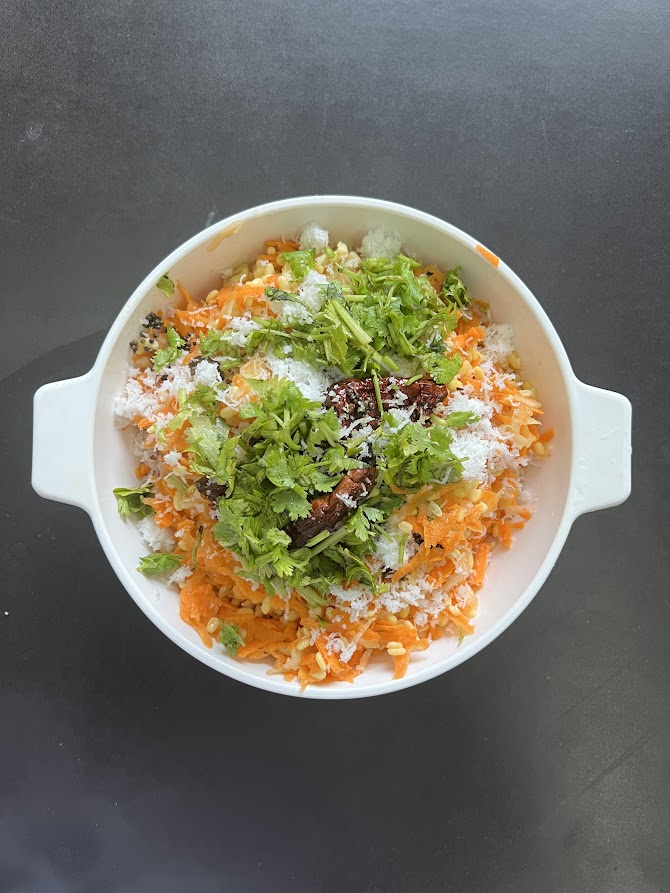
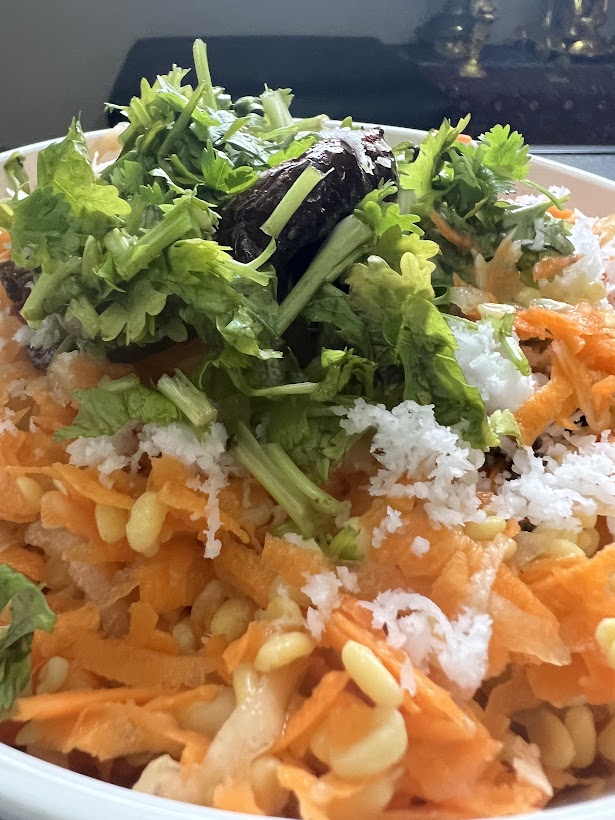
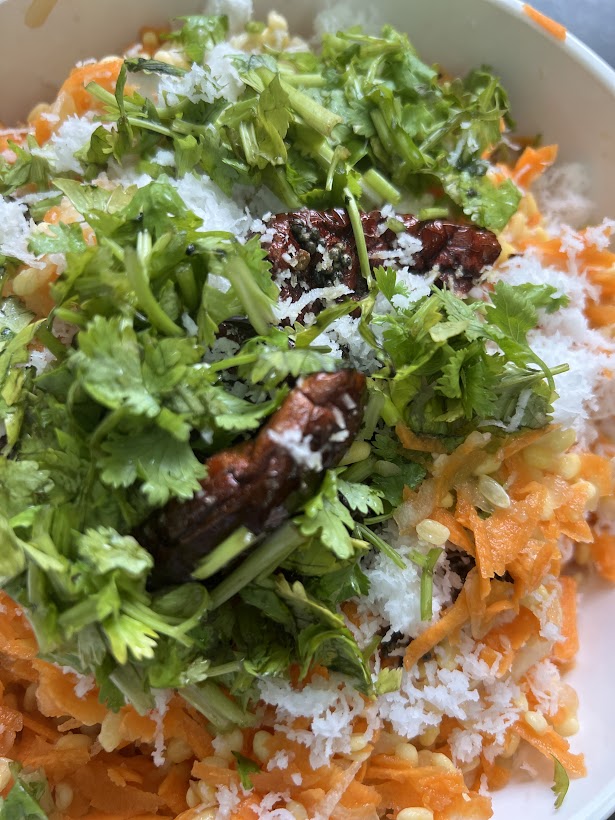
Also known as Koshambari, Kosamalli is a no-cook protein-rich salad that is made as a neividhyam for Rama Navami and also served in certain Tamil Brahmin weddings. It’s a super easy recipe to make, but one which I have never made. So in April, during the Tamil New Year, since I had my mother with me, I learned how to make it from her. And since it has been super hot in Singapore (no surprise there, right?), I also added in some raw mangoes which added a nice tinge of sourness to the salad.

Kosamali Salad

Ingredients:

  • ½ cup grated carrots
  • ½ cup grated cucumber
  • ¼ cup grated raw mango
  • ¼ cup yellow moong dal
  • 6-7 tbsp fresh grated coconut
  • 1 tsp oil or ghee
  • ½ tsp mustard seeds
  • 1/8 tsp asafoetida
  • 2 dried red chillies, broken
  • 4-6 curry leaves
  • 1 tbsp chopped coriander leaves
  • Salt as required
  • 1 tsp lemon juice

Method:

  • Soak the yellow moong dal in a pan in hot water for about 30 mins, then drain completely and keep aside. You can also soak it in normal tap water for about 2 hours and then drain and keep aside. Just make sure when you drain it, all the water is completely drained.
  • In a large bowl, add the drained moong dal, grated carrots, grated mangoes and grated cucumbers and lemon juice and mix well.
  • In a small skillet, add the oil or ghee and when the oil or ghee warms up, add in the mustard seeds and let them pop. Then add the curry leaves and let them splutter for a bit.
  • Then add the dried red chillies, and asafoetida and let it cook for a couple of seconds.
  • Switch off the flame and add the tempering to the mixed dal and vegetables.
  • Now add in the grated coconut and the finely chopped coriander leaves to the salad and cover and keep aside for at least 10 minutes.
  • If you are eating the salad immediately, then add in the salt and mix well and serve.
  • If this salad is meant to be eaten later, or you plan to chill it for a while, add the salt just before serving otherwise the cucumber will start to ooze water.

This was a super delicious salad and will make a good addition to our salad repertoire.

World Coconut Day

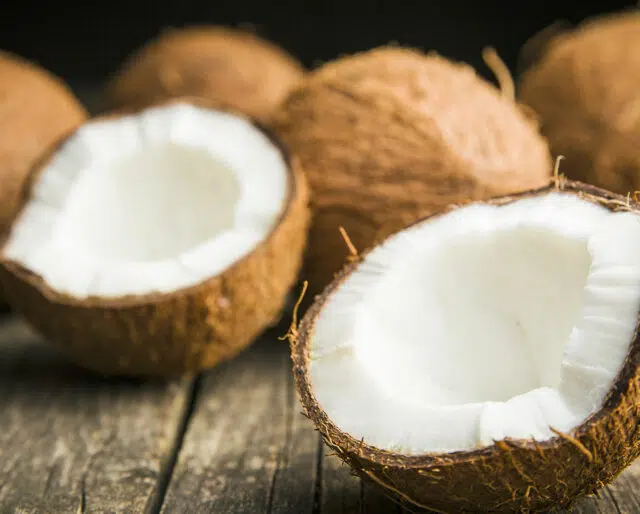
Known as the Tree of Life due to its incredible value to man and the large number of products and byproducts that can be created by it, the coconut is the edible fruit of the coconut palm, a tree of the palm family. Coconuts probably originated somewhere in Indo-Malaya and are one of the most important crops of the tropics. The coconut flesh is high in fat and can be dried or eaten fresh or processed into coconut milk or coconut oil. The liquid of the nut, known as coconut water, is used in beverages. A single coconut palm may yield 100 coconuts annually, and each fruit requires a year to fully ripen. Mature coconuts have a thick fibrous husk surrounding the familiar single-seeded nut and a hard shell encloses the insignificant embryo with its abundant endosperm, composed of both meat and liquid. Coconut fruits float readily and have been dispersed widely by ocean currents and by humans throughout the tropics. A coconut palm itself can live as long as 100 hundred years, but her productive period is around 25 years. As the coconut develops the coconut palm naturally filters water through its many fibres, purifying it as it travels to be stored inside the sterile coconut.

Besides the edible kernels and the drink obtained from green nuts, the harvested coconut also yields copra, the dried extracted kernel, or meat, from which coconut oil, a major vegetable oil, is expressed. The meat may also be grated and mixed with water to make coconut milk, which is used in cooking and as a substitute for cow’s milk. The oil which is generated from the coconut is edible, can also be applied on the skin and contains various antifungal, antiviral, antioxidants and antibacterial elements. The dry husk yields coir, a fibre highly resistant to salt water and used in the manufacture of ropes, mats, baskets, brushes, and brooms.

In Indian culture, specifically Hinduism, the coconut is referred to as a divine or God’s fruit and is one of the most important parts of rituals and customs because it represents the Hindu trinity of Brahma, Vishnu and Shiva, the creator, protector and destroyer. The three dots in the coconut symbolises the three eyes of Lord Shiva with another belief system suggesting that the kernel symbolises Devi Parvati, the water signifies Ganga, and the brown shell represents Lord Kartikeya. The coconut is also compared to a human head. The fibre is the hair, the shell is the skull, the water is blood, and the flesh represents the brain. Therefore, by offering a coconut, a devotee surrenders themselves or their mind and bows before the Supreme Power. It is also said that the coconut shell represents ego, the soft pulpy part is the human heart, and the water symbolises purity. Therefore, a devotee can experience God’s grace only when he breaks their ego and surrenders before the Almighty with a pure heart. Thus, it reminds us that ego stops us from embracing the goodness all around us. Therefore, it inspires us to get rid of ignorance and embrace knowledge or God.

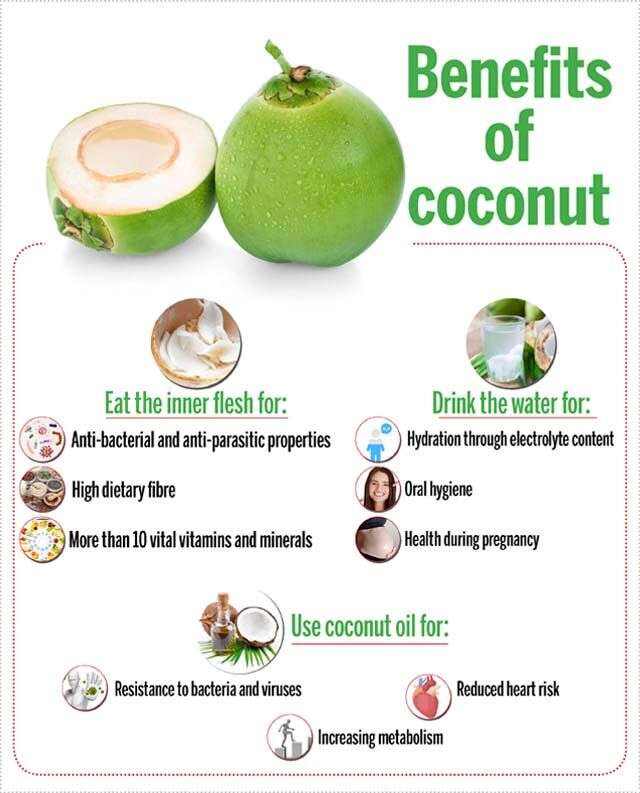
To showcase this incredible fruit, World Coconut Day is celebrated every year today to highlight and raise awareness about the importance and benefits of coconut. The day began in 2009 when the Asian and Pacific Coconut Community or the APCC, in collaboration with UN-ESCAP or the United Nations Economic and Social Commission for Asia-Pacific was founded. The APCC is an intergovernmental organisation that supervises and facilitates Asia-Pacific states that produce coconuts. Headquartered in Jakarta, Indonesia, all major coconut-growing countries are members of APCC. World Coconut Day is organised to highlight APCC’s policies and promote this tropical fruit. So today, drink coconut water, make something out of coconut, maybe a coconut barfi or just eat the flesh of the coconut to celebrate this incredible fruit.

Recipes: Radish Chutney

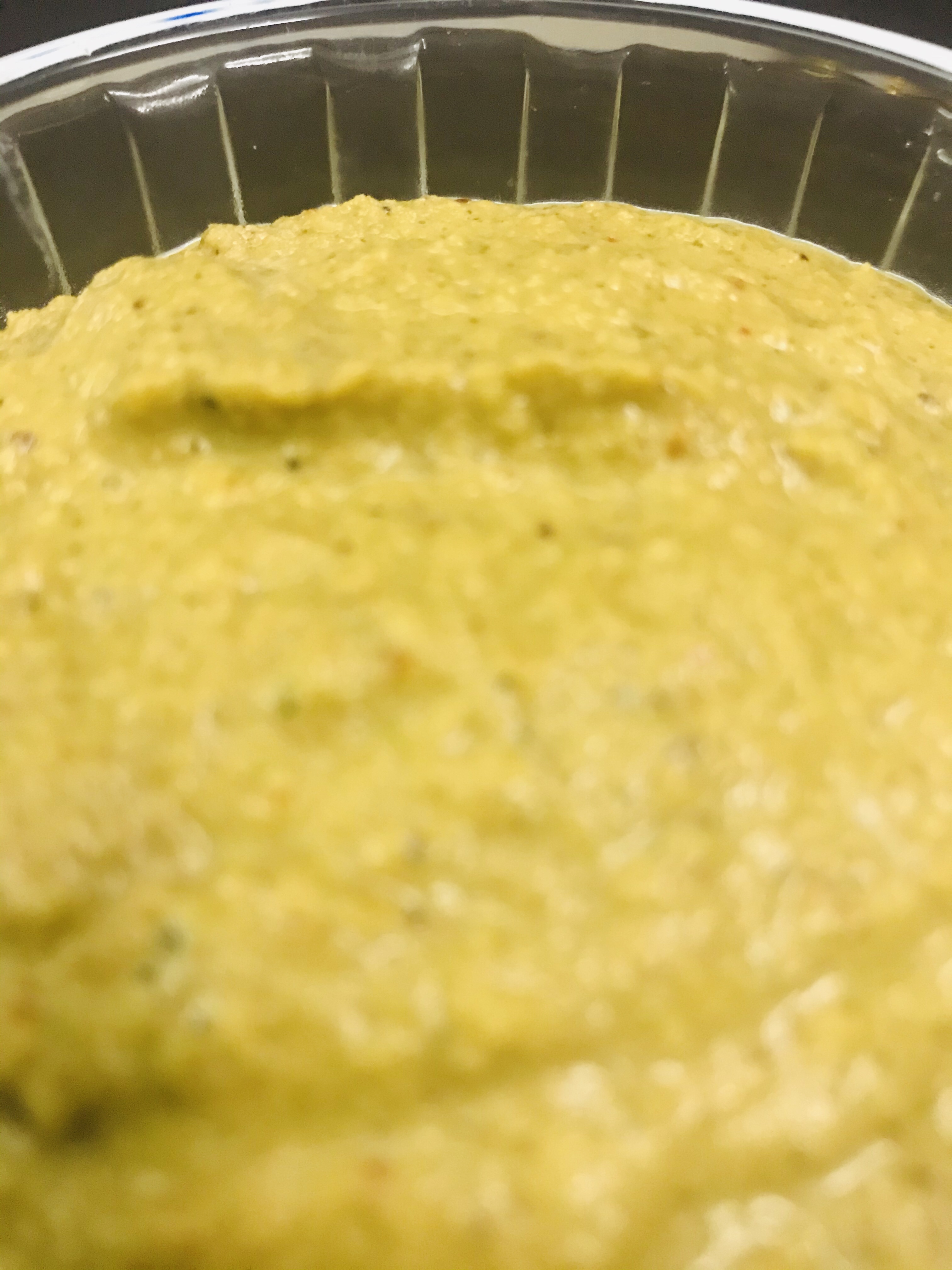
The other day I wanted to make some coconut chutney to go with our dinner of dosai, but realised at the last minute that I didn’t have enough coconut to make the chutney. I dug through my fridge and saw a couple of radishes which I used to make this yummy chutney. When the children ate the chutney, they could not believe that it had radishes in it. This is a very simple recipe which hardly takes 10 minutes to make from start to end.

Radish Chutney

Ingredients:

  • 2 medium sized radishes, peeled and chopped into bite sized pieces
  • 2 tbsp grated coconut
  • 1 tsp mustard seeds
  • 1 tsp broken urad dal
  • 2-3 dried red chillies
  • 1 tbsp white sesame seeds
  • 1 small lime sized piece of tamarind
  • 2 tsp chopped coriander
  • Salt to taste
  • 1 tsp oil

Method:

  • Heat the oil in a pan and when warm, add the mustard seeds. When the seeds pop, add the urad dal, red chillies and sesame seeds.
  • Once the urad dal becomes slightly brown and the red chillies start to darken, add the chopped radish, tamarind and some salt and cook until the radishes are cooked and slightly opaque.
  • Take off from the fire and cool completely.
  • In a mixer, blend together the fried ingredients, coconut and coriander leaves to a smooth paste. Add salt to taste and serve with idlis, dosai or even chapati. This goes very well as a spread for bread too.