
In a world increasingly dominated by fast-paced lifestyles and processed foods, mindful eating has emerged as a powerful antidote. This practice encourages individuals to cultivate awareness around their food choices, fostering a deeper connection between the mind and body.
What is mindful eating?
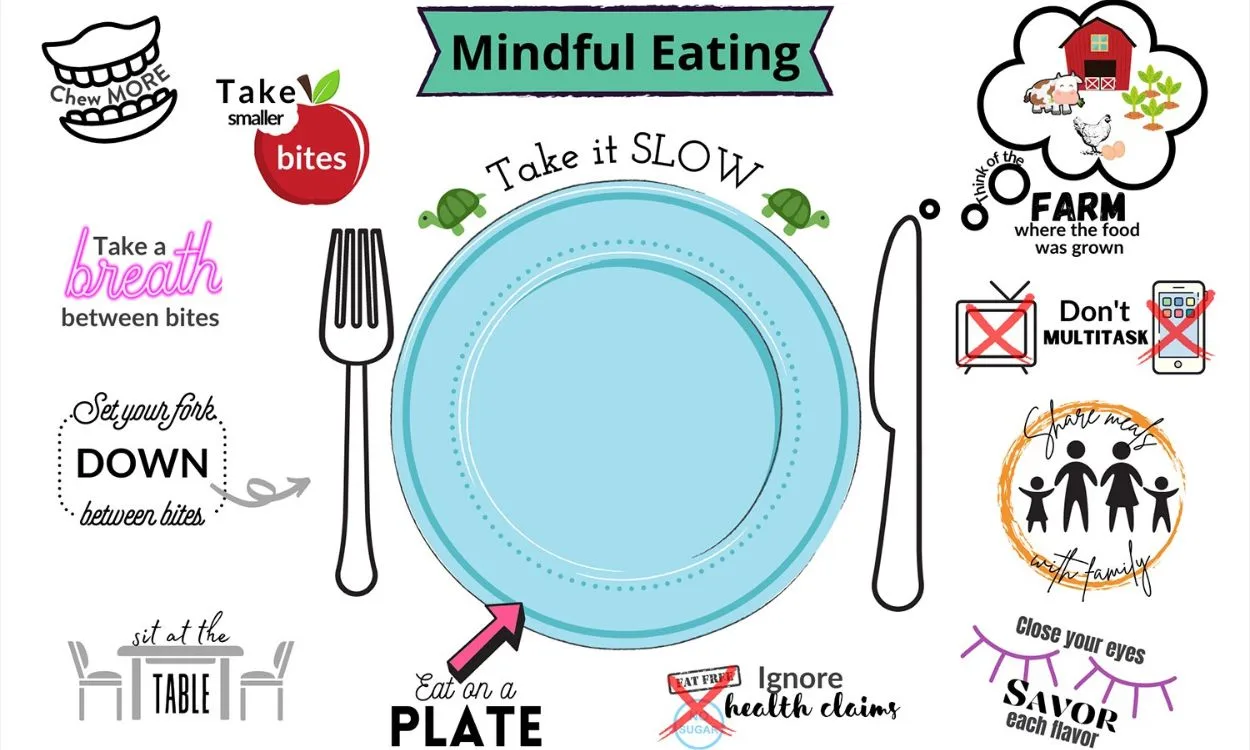
Mindful eating is the practice of being fully present and aware during the eating process. It involves paying attention to the sensory experience of eating, including the taste, texture, aroma, and appearance of food. This approach encourages individuals to slow down, savour each bite, and listen to their body’s hunger and satiety cues.
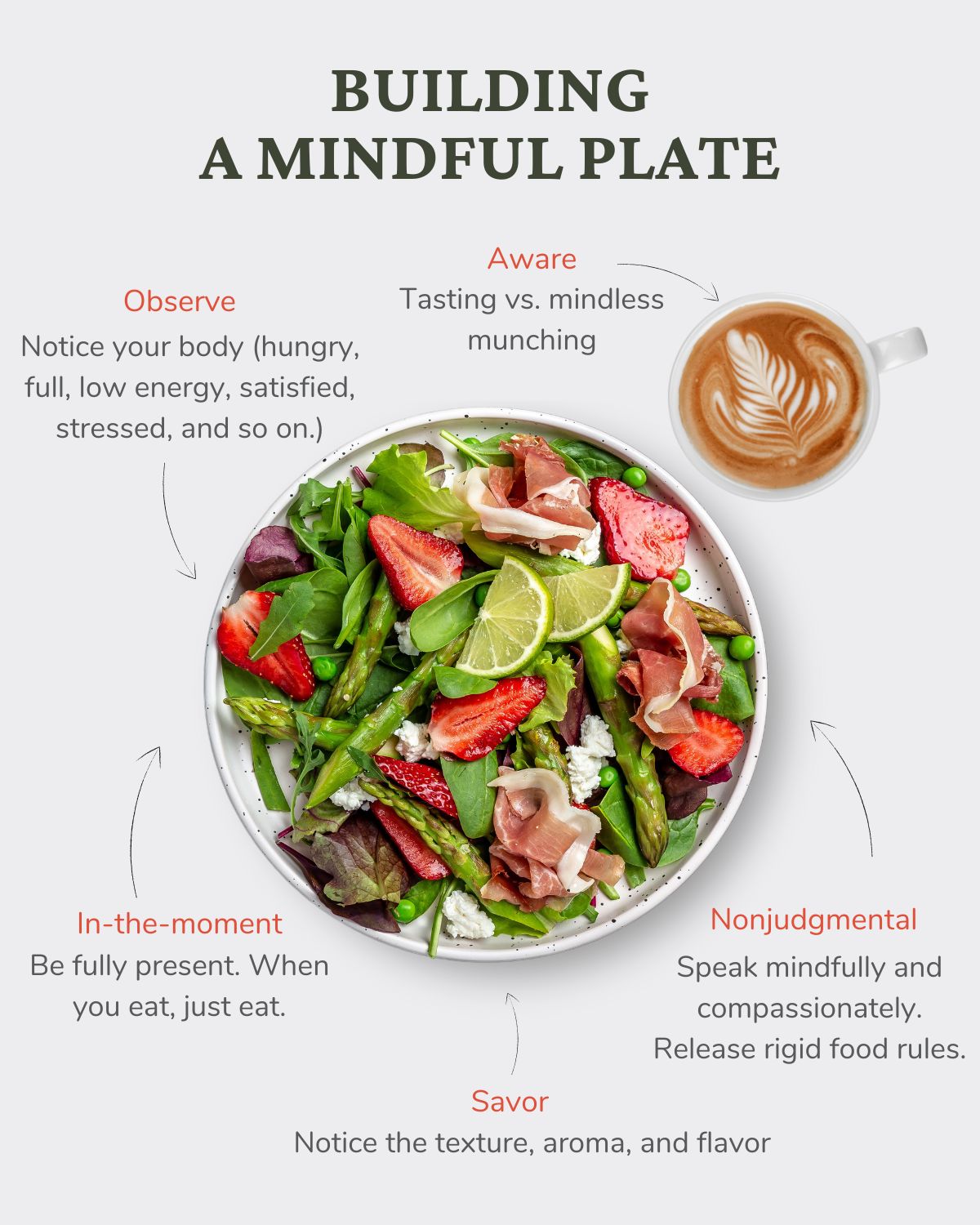
The core principles of mindful eating include being aware and conscious of the food one eats and the sensations associated with it; being non-judgmental and accepting one’s eating experiences without criticism or guilt; savouring and taking the time to enjoy one’s food, enhancing the pleasure of eating; and listening to the body and recognising and responding to hunger and fullness signals.
Origin of Mindful Eating
The term “mindful eating” is rooted in the broader concept of mindfulness, which has its origins in Buddhist meditation practices. Mindfulness emphasises living in the present moment and being aware of one’s thoughts, feelings, and surroundings. In the late 20th century, the application of mindfulness to eating began to gain traction, particularly through the work of researchers and dietitians.
A pioneer in the field of mindfulness, Jon Kabat-Zinn developed the Mindfulness-Based Stress Reduction (MBSR) program in the late 1970s, which helped popularise mindfulness in the West. In her book, “Mindful Eating,” Dr. Jan Chozen Bays outlines practical strategies for incorporating mindfulness into eating habits, emphasising awareness and compassion.
Benefits of Mindful Eating
Mindful eating offers a wide range of benefits for both physical and mental health. Here are some key advantages:
- Improved Digestion: Eating slowly and mindfully allows one’s body to properly digest food. When one eats quickly, they may swallow air and have difficulty recognising when they’re full, leading to overeating. Mindful eating encourages thorough chewing and salivation, aiding digestion.
- Enhanced Relationship with Food: Mindful eating fosters a positive relationship with food. By eliminating guilt and judgment, individuals can enjoy their meals without anxiety. This can lead to a more balanced and healthy attitude toward food choices.
- Weight Management: Research indicates that mindful eating can contribute to weight loss and management. By being aware of portion sizes and listening to hunger cues, individuals are less likely to overeat and more likely to make healthier food choices.
- Reduced Emotional Eating: Mindful eating helps individuals recognise emotional triggers that lead to overeating. By developing awareness around these feelings, people can address emotions in healthier ways rather than turning to food for comfort.
- Increased Satisfaction: Taking the time to savour food can lead to greater satisfaction with smaller portions. When one truly enjoys their food, they may find that one needs less to feel full and satisfied.
How to Practice Mindful Eating?
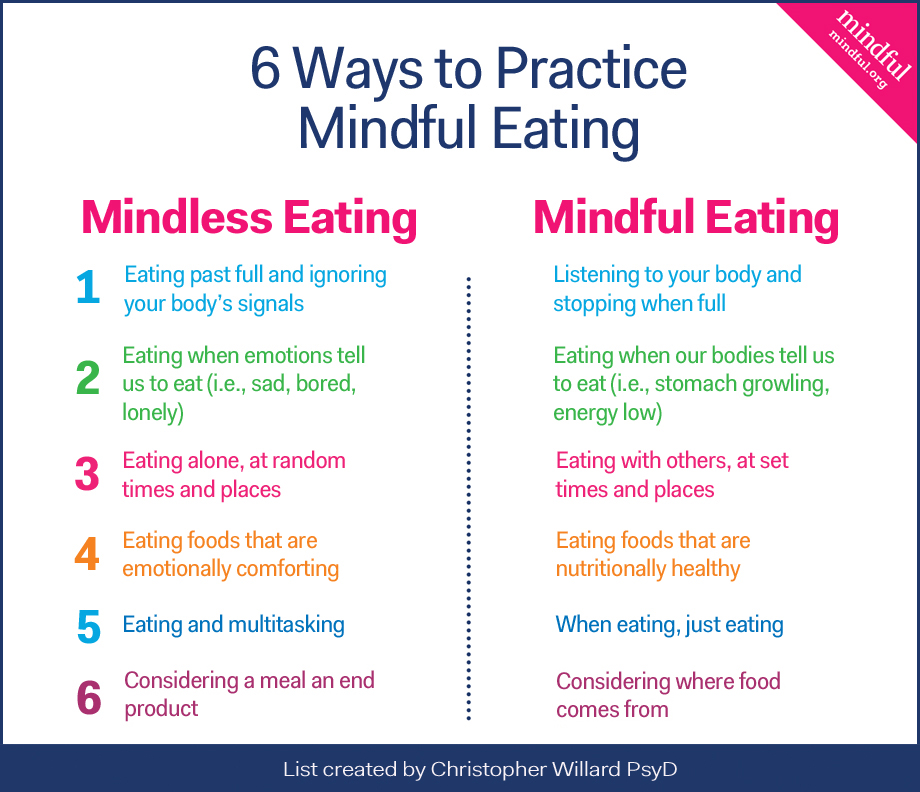
Incorporating mindful eating into one’s daily routine doesn’t have to be daunting. Here are some practical steps to get started:
- Create a Mindful Eating Environment: Set the stage for mindful eating by minimising distractions. Turn off electronic devices, find a quiet space, and focus solely on the meal.
- Engage the Senses: Before one eats, take a moment to observe one’s food. Notice its colours, textures, and aromas. As one eats, one should pay attention to the sensations of taste and the feeling of each bite in one’s mouth.
- Slow Down: Take time while eating. Chew each bite thoroughly and place the utensils down between bites. This not only enhances the eating experience but also gives the brain time to register fullness.
- Listen to the Body: Tune in to the body’s signals. Ask oneself if one is truly hungry before reaching for food. During the meal, check in with one’s hunger and fullness levels, and stop eating when one feels satisfied.
- Practice Gratitude: Before meals, take a moment to express gratitude for the food. Acknowledging the effort that went into preparing the meal can enhance the enjoyment and appreciation of it.
- Keep a Mindful Eating Journal: Consider keeping a journal where one can reflect on one’s eating experiences. Note how certain foods make one feel, any emotional triggers one notices, and one’s hunger levels throughout the day.
Mindful Eating and Weight Loss
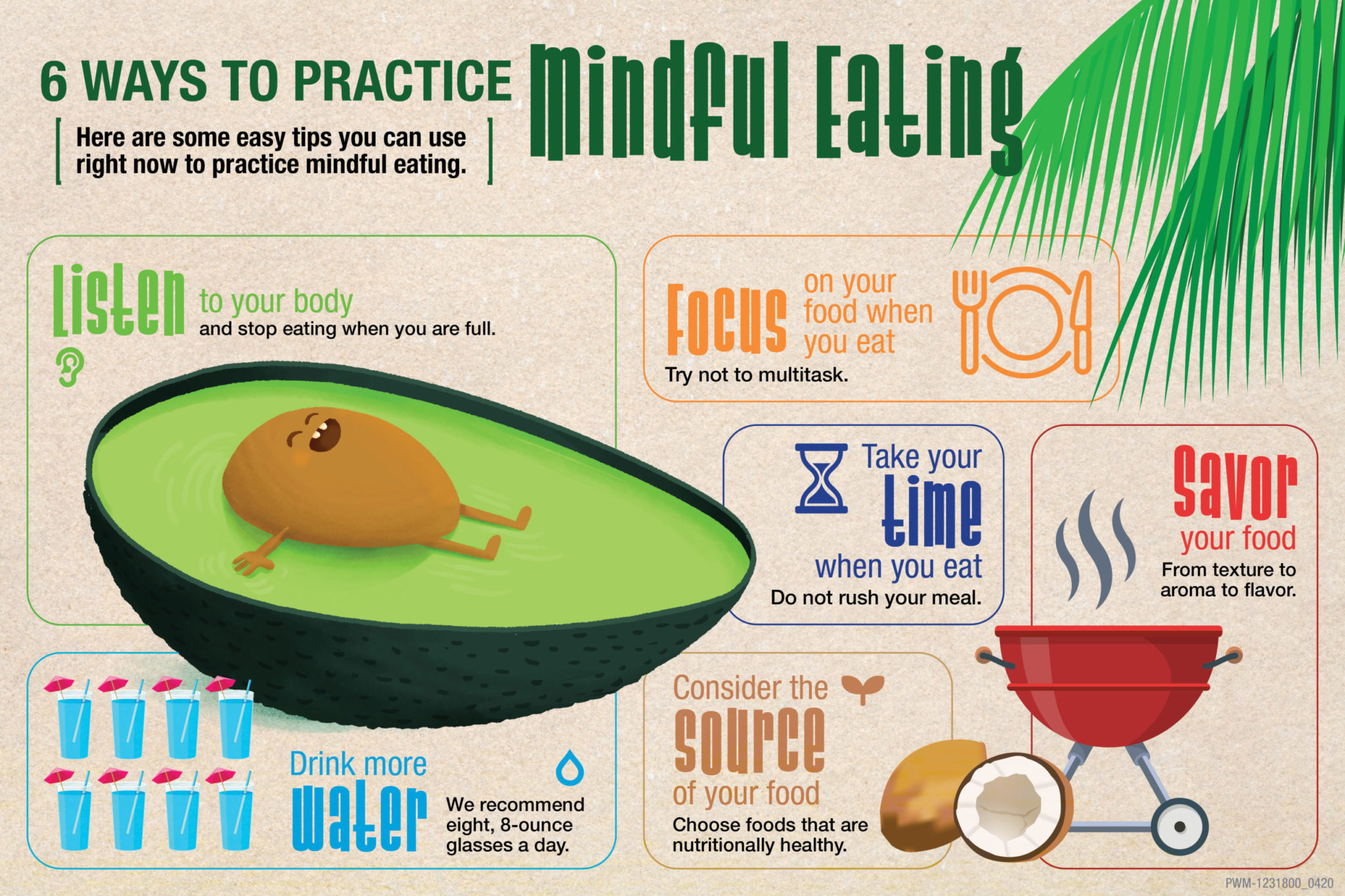
For those looking to lose weight, mindful eating can be an effective strategy. Here’s how it can help:
- Awareness of Portions: Mindful eating encourages portion control. By paying attention to how much one eats and recognising when one is full, one can avoid overeating, which is often a major barrier to weight loss.
- Better Food Choices: When one practices mindful eating, one is more likely to choose foods that nourish one’s body. One may find oneself gravitating toward whole, unprocessed foods that provide better nutrition compared to processed options.
- Reduced Cravings: By understanding one’s body’s hunger signals, one can better distinguish between physical hunger and emotional cravings. This awareness can help reduce mindless snacking and emotional eating.
- Sustainable Habits: Mindful eating fosters a long-term, sustainable approach to health and weight management. It promotes a balanced relationship with food rather than a cycle of restrictive dieting and bingeing.

Mindful eating is more than just a method for losing weight; it is a holistic approach to nourishing the body and mind. By fostering awareness, reducing emotional eating, and cultivating a positive relationship with food, individuals can experience profound benefits that extend beyond the dining table. As one embarks on their journey toward mindful eating, remember that it is a practice—one that requires patience and self-compassion. By taking small steps to incorporate mindfulness into one’s meals, one can transform their eating habits and, ultimately, their relationship with food. Whether one aims to lose weight, improve one’s digestion, or simply savour the joy of eating, mindful eating can help achieve their health goals while enhancing their overall well-being. Embrace the journey, and enjoy each bite!
 Memories and Such