
The sun beat down mercilessly on the lush green canopy of the Nilgiri Mountains. Even in the shade of the dense forest, the heat was oppressive. Twelve-year-old twins Neel and Neelima Swaminathan trudged along a narrow path, sweat beading on their foreheads.
“I can’t believe Dad made us come on this hike,” Neel grumbled, swatting at a mosquito. “It’s too hot!” Neelima rolled her eyes at her brother. “Stop complaining, Neel. We’ve been cooped up in boarding school all year. Don’t you want to explore?”
The twins had just returned home to Gudalur for their summer holidays. After months in the regimented environment of their boarding school in Ooty, they were eager for adventure. Their father, Mukesh Swaminathan, was the head forest ranger for this section of the Nilgiri Biosphere Reserve. He had suggested they accompany him on his rounds to reacquaint themselves with the forest.
“I suppose,” Neel conceded. “I just wish it wasn’t so hot. How much further, Dad?” Mukesh turned back to look at his children, a fond smile on his weathered face. “Not much further now. There’s a stream up ahead where we can rest and cool off.”
As they walked, Mukesh pointed out various plants and animal tracks, quizzing the twins on their knowledge. Despite their initial reluctance, Neel and Neelima found themselves getting drawn into their father’s enthusiasm. They had grown up in these forests, after all. It felt good to be home.
Finally, they reached the promised stream. The twins rushed to the water’s edge, splashing the cool liquid on their faces and arms. Mukesh chuckled at their eagerness. “Alright, you two. We’ll rest here for a bit before heading back. Don’t wander off too far, okay?”
Neel and Neelima nodded absently, already absorbed in exploring the stream bank. They picked their way carefully over the slippery rocks, searching for interesting pebbles and watching tiny fish dart about in the clear water.
Suddenly, Neelima froze. “Neel,” she whispered urgently. “Do you hear that?” Neel cocked his head, listening intently. At first, he heard nothing but the gentle burble of the stream and the rustle of leaves in the breeze. Then, faintly, he caught it – a high-pitched trumpeting sound, followed by distressed squeals.
The twins exchanged a wide-eyed look. “Elephants,” they said in unison. Without a word, they scrambled up the bank towards the sound, their earlier fatigue forgotten. Their father’s warnings faded from their minds as curiosity took over. As they pushed through the undergrowth, the sounds grew louder. Finally, they burst into a small clearing and stopped short, mouths agape at the sight before them.
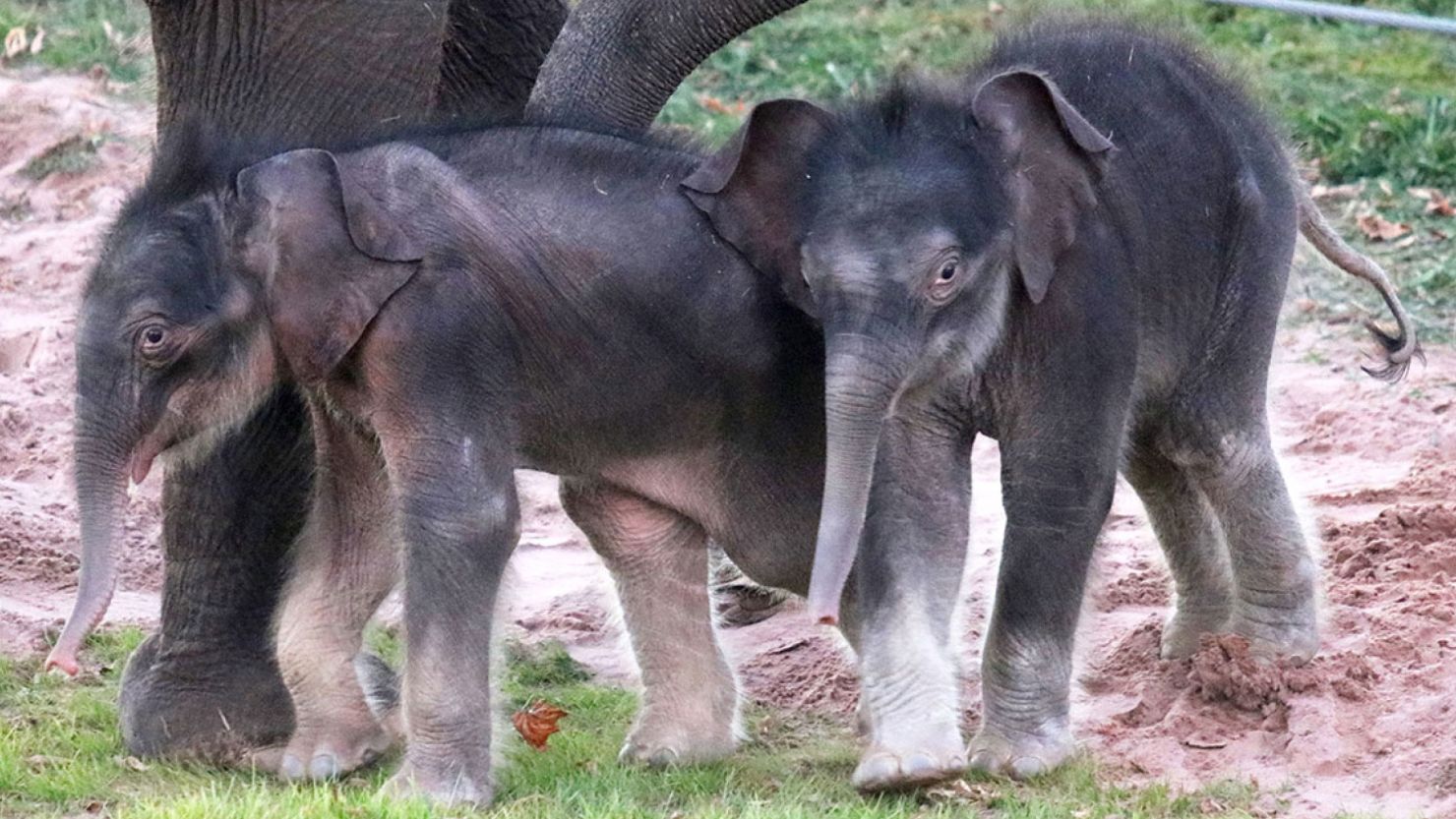
Two baby elephants, no more than a few months old, stood huddled together in the centre of the clearing. They were distressed, their trunks entwined as they trumpeted plaintively. One was slightly larger than the other, but both were small enough that Neel and Neelima could have touched their backs if they stood on tiptoes.
“Oh my goodness,” Neelima breathed. “They’re twins! Just like us!” Neel nodded, too stunned to speak. He had never seen wild elephants up close before, let alone baby ones. Despite their size, the calves looked fragile and scared.
As the human twins watched, frozen in place, the elephant calves suddenly noticed them. The larger one – probably the male, Neel thought – moved protectively in front of its sibling. It raised its trunk and let out a high-pitched trumpet that was probably meant to be threatening but came out more as a squeak. Neelima giggled despite herself. “They’re so cute!” she whispered to Neel. “But where’s their mother? Baby elephants don’t usually leave the herd.”
As if in answer to her question, a loud, booming trumpet echoed through the forest, causing the twins to jump. The baby elephants perked up, answering with excited squeals of their own. “We should go,” Neel said urgently, tugging on his sister’s arm. “If the mother elephant finds us here with her babies, she might think we’re a threat.” Neelima nodded reluctantly. As fascinating as the baby elephants were, she knew her brother was right. They turned to leave the clearing, but before they could take more than a few steps, they heard their father’s voice calling out.
“Neel! Neelima! Where are you?” The twins exchanged a panicked look. They were going to be in so much trouble. Mukesh burst into the clearing, his face a mixture of relief and anger when he spotted his children. “What were you thinking, wandering off like that? I was worried sick!” His tirade cut off abruptly when he noticed the baby elephants. His eyes widened in surprise, then narrowed as he assessed the situation. “Step away slowly,” he instructed the twins in a low voice. “Don’t make any sudden movements.”
Neel and Neelima obeyed, carefully backing away until they were behind their father. Mukesh kept his eyes on the elephant calves, who were watching them warily. “Dad,” Neelima whispered. “We heard them crying. I think they’re lost. Their mother was calling for them just now.” Mukesh nodded, his expression grave. “Yes, I heard it too. This isn’t good. If these calves have become separated from their herd, they’re in danger.”
“Can’t we help them?” Neel asked. Mukesh shook his head. “It’s too risky. If the mother elephant sees us near her babies, she might attack. We need to leave and call for backup.” As if on cue, another trumpet sounded, closer this time. The baby elephants trumpeted back excitedly, taking a few steps towards the sound before hesitating.
Mukesh ushered the twins out of the clearing quickly. Once they were a safe distance away, he pulled out his radio to call for assistance. As he spoke rapidly into the device, Neel and Neelima exchanged worried glances.
“We can’t just leave them,” Neelima whispered to her brother. “What if a predator finds them before their mother does?” Neel bit his lip, torn between concern for the elephant calves and fear of disobeying their father. But as he looked at his sister’s determined face, he knew they were thinking the same thing. When Mukesh finished his call, he turned to the twins with a stern expression. “I’ve called for a team to come to assess the situation. We’re going to head back now, and I don’t want any arguments. It’s not safe for us to stay here.”
Neel and Neelima nodded obediently, but as they followed their father back towards the stream, they lagged slightly. When Mukesh was a few paces ahead, focused on finding the safest path back, Neelima tugged on Neel’s sleeve. “We have to go back,” she whispered urgently. “We can’t leave those babies alone.” Neel hesitated for a moment, then nodded. “Okay, but we have to be careful. If Dad catches us…” “He won’t,” Neelima assured him. “We’ll be quick. We just need to make sure the calves are safe until their mother finds them.”
Taking advantage of their father’s distraction, the twins slipped away, retracing their steps back to the clearing. They moved as quietly as they could, hearts pounding with a mixture of excitement and fear. When they reached the edge of the clearing, they peered out cautiously. The baby elephants were still there, looking even more distressed than before. They had moved to the far side of the clearing, as if trying to go in the direction of their mother’s calls, but seemed too scared to venture into the dense forest alone.
“Poor things,” Neelima murmured. “They must be so frightened.” Neel nodded, feeling a surge of protectiveness towards the elephant twins. “Maybe we can guide them towards their mother somehow?” Before Neelima could respond, a loud crash came from the forest behind them. The twins whirled around, expecting to see their angry father. Instead, they found themselves face to face with a large, snarling leopard.
Neel and Neelima froze, terror rooting them to the spot. The leopard’s yellow eyes fixed on them, its powerful muscles coiled to spring. At that moment, the twins were certain their adventure was about to come to a very painful end. Suddenly, a high-pitched trumpet split the air. The larger of the elephant calves charged forward, placing itself between the human twins and the leopard. Its smaller sibling followed close behind, adding its own squeaky trumpet to the commotion.
The leopard, caught off guard by the unexpected intervention, hesitated. It was used to hunting smaller prey, not facing off against elephant calves, no matter how young. After a tense moment, it slunk back into the undergrowth, disappearing as silently as it had appeared. Neel and Neelima let out shaky breaths, their hearts racing. They turned to look at their unlikely saviours with awe and gratitude.
“They… they protected us,” Neel said in disbelief. Neelima nodded, her eyes wide. “I guess they decided we’re not a threat after all.” The elephant calves, seemingly satisfied that the danger had passed, turned their attention back to the human twins. The larger one reached out with its trunk, gently touching Neelima’s arm as if checking if she was okay. Neelima giggled at the ticklish sensation. “Thank you,” she said softly, reaching out to pat the calf’s trunk. “You were very brave.” Neel, emboldened by his sister’s actions, stepped forward to pet the other calf. “Both of you were,” he added. “You saved our lives.”
As the human and elephant twins regarded each other curiously, a bond began to form. Despite the vast differences between their species, there was a sense of kinship – two sets of siblings looking out for each other.
“We definitely can’t leave them alone now,” Neelima said firmly. “We owe them.” Neel nodded in agreement. “But what can we do? We don’t know where their herd is, and it’s not safe to wander around the forest.” As if in answer to their dilemma, another trumpet sounded in the distance – closer this time, but still too far away. The elephant calves perked up at the sound, trumpeting back eagerly.
“That must be their mother,” Neel said. “She’s looking for them, but she can’t find this clearing.” Neelima’s face lit up with an idea. “What if we lead the calves towards her? We can use the sounds to guide us.” Neel looked sceptical. “I don’t know, Neeli. It could be dangerous. What if we run into more predators? Or angry adult elephants?”
“We’ll be careful,” Neelima insisted. “And we have our new friends to protect us.” She gestured at the elephant calves, who were watching them intently as if understanding their conversation. Neel hesitated for a moment longer, then nodded. “Okay. But at the first sign of real danger, we come straight back here and wait for Dad and the rescue team.”
With their decision made, the twins turned to the elephant calves. “Come on,” Neelima said gently, gesturing towards the forest. “Let’s go find your mama.” To their surprise and delight, the calves seemed to understand. They moved towards the twins, their trunks outstretched trustingly. Neel and Neelima each took hold of a trunk, marvelling at the strange, leathery texture. Together, this odd little group set off into the forest, guided by the distant calls of the mother elephant and the instincts of two very determined sets of twins.
As they made their way through the dense forest, Neel and Neelima quickly realised that guiding baby elephants was no easy task. The calves, while eager to find their mother, were easily distracted by interesting plants or small animals scurrying across their path.
“No, not that way,” Neel said for what felt like the hundredth time, gently tugging the male calf’s trunk away from a colourful butterfly. “We need to go this way, remember?” Neelima giggled at her brother’s exasperated tone. “You sound just like Dad when he’s trying to get us to focus on our homework.” Neel rolled his eyes, but couldn’t help smiling. It was true – he felt a bit like a parent himself, trying to keep the curious calves on track.
They had been walking for what felt like hours, following the intermittent calls of the mother elephant. The sounds were getting louder, which the twins took as a good sign, but the forest seemed to be getting denser and harder to navigate. “I hope we’re going the right way,” Neelima said, pushing a low-hanging branch out of her face. “Everything looks the same in here.”
As if in response to her doubt, the female calf suddenly stopped, raising its trunk and sniffing the air. Its sibling did the same, and both calves let out excited trumpets. “What is it?” Neel asked, looking around nervously. “Do you think they smell their mother?” Before Neelima could respond, they heard it – the unmistakable sound of large animals moving through the forest, accompanied by low rumbles that the twins could feel in their chests. “The herd,” Neelima breathed, a mixture of excitement and apprehension in her voice. “They must be close.”
The elephant calves began to move faster, pulling the twins along with surprising strength. Neel and Neelima had to jog to keep up, their hearts pounding with a mixture of exertion and nerves. As they rounded a large tree, they suddenly found themselves on the edge of a small glade. And there, not twenty meters away, was a group of adult elephants.
The twins froze, awe and fear warring for dominance. They had seen wild elephants from a distance before, but never this close. The sheer size of the animals was overwhelming. The elephant calves, however, had no such hesitation. With joyful trumpets, they rushed forward towards a large female who was their mother. She met them halfway, her trunk caressing them gently as they pressed against her legs.
For a moment, Neel and Neelima forgot their fear, smiling at the touching reunion. Then the mother elephant raised her head, her small eyes fixing on the human twins with an unreadable expression. “Neel,” Neelima whispered, gripping her brother’s hand tightly. “What do we do now?”
The glade fell silent as the elephant herd became aware of the human presence. The adult elephants formed a protective circle around the calves and their mother, their massive bodies creating an intimidating wall. Neel and Neelima stood frozen, barely daring to breathe. They knew from their father’s teachings that elephants were generally peaceful animals, but they could be fiercely protective of their young. And right now, the twins were strangers near two very young calves.
“Maybe we should back away slowly,” Neel whispered, tugging gently on his sister’s hand. But before they could move, the two calves they had guided broke away from their mother. To the twins’ astonishment, the baby elephants positioned themselves between the human children and the herd, facing their family with raised trunks.
A series of low rumbles and soft trumpets followed – a conversation the twins couldn’t understand, but which meant something to the elephants. The mother elephant took a step forward, her gaze moving between her calves and the human twins.
Neelima, always the bolder of the two, decided to take a chance. Slowly, she raised her hand in a non-threatening gesture. “It’s okay,” she said softly. “We helped your babies. We won’t hurt them.” For a tense moment, nothing happened. Then, to the twins’ amazement, the mother elephant extended her trunk towards them. The calves immediately moved to the side, allowing her to approach.
Neel and Neelima stood perfectly still as the enormous trunk gently touched each of them, sniffing curiously. They had learned about elephants’ incredible sense of smell in school – perhaps the mother was picking up her calves’ scent on them? After what felt like an eternity, the mother elephant stepped back. She let out a low rumble that seemed to reverberate through the entire glade. To the twins’ amazement, the tension in the air dissipated almost immediately. The other elephants relaxed their protective stance, some even turning away as if the human children were no longer of interest.
“I think… I think she’s thanking us,” Neelima whispered, awe evident in her voice. Neel nodded, too stunned to speak. The elephant calves trumpeted happily, moving back to nuzzle their mother before turning to give one last friendly nudge to the human twins.
Just then, they heard shouts coming from the forest behind them. “Neel! Neelima!” The twins turned to see their father bursting into the glade, followed by several other forest rangers. Mukesh skidded to a halt, his eyes widening as he took in the scene before him.
“Don’t move,” he called out, his voice tense with worry. “We’ll get you out of there.” But before the rangers could take another step, the mother elephant moved, placing herself between the humans and the twins. She raised her trunk and let out a low, rumbling sound that was somehow both a warning and a reassurance. Mukesh froze, clearly torn between his protective instincts as a father and his knowledge as a ranger. He watched in disbelief as the elephant gently nudged Neel and Neelima with her trunk, guiding them towards him.
As soon as they were within reach, Mukesh grabbed his children and pulled them into a tight embrace. “What were you thinking?” he scolded, though his voice was more relieved than angry. “You could have been killed!” “We’re sorry, Dad,” Neel said, his voice muffled against his father’s chest. “But we couldn’t leave the baby elephants alone. They were lost and scared.” Neelima nodded vigorously. “And then they saved us from a leopard! We had to help them find their mom.”
Mukesh pulled back, looking at his children with a mixture of exasperation and pride. “You two are going to turn my hair grey before it’s time,” he sighed. Then he turned to look at the elephant herd, who were watching the reunion with what seemed like curiosity.
“I’ve never seen anything like this,” one of the other rangers murmured. “Those elephants are acting like they’re protecting the kids.” Mukesh nodded slowly. “It seems my children have made some unlikely friends,” he said, a note of wonder in his voice.
Over the next hour, Mukesh and the other rangers observed the elephant herd from a respectful distance. The twins, under close supervision, were allowed to approach the calves one last time to say goodbye. As they watched the herd finally move off into the forest, Neel and Neelima felt a mixture of sadness and excitement. They knew they had experienced something truly special – something they would remember for the rest of their lives.
On the walk back home, Mukesh listened intently as the twins recounted their adventure. Though he was still upset about their disobedience, he couldn’t help but feel proud of their bravery and compassion. “You two took a huge risk,” he said seriously. “But you also showed great kindness and resourcefulness. I think you’ve learned an important lesson about the balance between helping animals and respecting their wild nature.”
Neel and Neelima nodded solemnly. “We understand, Dad,” Neelima said. “We won’t wander off like that again.” “But we’re glad we were able to help,” Neel added. “Those elephant twins were just like us in a way. They needed someone to look out for them.” Mukesh smiled, ruffling his son’s hair. “You’re right. And I’m proud of you both for caring so much. But next time, come to me first, okay? We can figure out how to help together.”
As they neared their home, where they knew their mother, Deepa would be waiting anxiously, Neelima turned to her father with a hopeful expression. “Dad? Do you think we’ll ever see those elephant twins again?” Mukesh chuckled. “Well, the forest is their home, and we must respect that. But who knows? Elephants have excellent memories. Perhaps one day, when you’re older and working in the forest yourselves, you might cross paths again.”
The idea lit up the twins’ faces. As they walked into their yard, already planning future careers as forest rangers or wildlife biologists, Mukesh couldn’t help but smile. His children had always loved the forest, but now they had formed a connection he never could have imagined.
That night, as Neel and Neelima drifted off to sleep, their dreams were filled with images of playful elephant calves and the vast, mysterious forest they called home. They knew that whatever the future held, their lives had been forever changed by their encounter with the elephant twins of the Nilgiris. And somewhere in the depths of the Nilgiri forests, two young elephant calves trumpeted softly in their sleep, perhaps dreaming of the strange, two-legged creatures who had helped guide them home.






 Memories and Such