Festivals of India: Sekrenyi Festival

Also known as Sokre-n and Phousanyi, Sekrenyi is a major annual festival of the Angami Nagas, in the northeast Indian state of Nagaland. It is observed for ten days from the 25th day of the Angami calendar month of Kezei, usually corresponding to 25 February in the Gregorian calendar. The festival is a time for purification, renewal, and thanksgiving, and is celebrated with a variety of rituals, feasts, and dances. It is a purification festival held to wash off all past sins. The objective of the festival is to renew and make holy by cleansing the body and the soul of the village as a whole, and to bring forth unity among all communities of Nagaland. It also marks the initiation of young people to adulthood and is considered an identity marker of the Angami. Christian converts among the tribals have gradually rejected these rituals.

Sekrenyi is a compound word formed by Sekre meaning sanctification and Nyi meaning festival. The festival calendar is linked to the agricultural cycle, which varies from village to village. Thus, the celebration is held between the months of December–March, and the duration also varies from ten to fifteen days. It is celebrated by both the Kruna Angami or Pfutsana and Christian Angami. The duration is reduced to five days for the Christian villagers who had earlier converted to Christianity but belonged to the same ethnic group; they participate in the festivities but they do not follow any of the rituals connected with it.

Many rituals and ceremonies are involved with the festival. On the first day, which is known as Kezie, people sprinkle themselves with a few drops of rice water drawn from a pot named Zumho. The water drops are first gathered into leaves, and the chief lady of the house reverently fixes the leaves at the three main corner pillars of the house. This is followed by the men assembling at the well to bathe. On the second day, young men of the village assemble in the village to perform ablutions. They adorn themselves with two new shawls, and then ritualistically sprinkle the holy water on their chests, knees and right arms as a mark of washing away all their sins and ill luck. When they come back from the well, a sacrificial offer of a cock is performed.

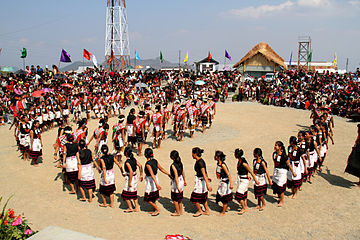
The fourth day of the festival marks the New Year of the Angamis. It begins with revelry by singing and feasting which lasts for three days. The young people, both men and unmarried girls with shaven heads gather and sing traditional songs the entire day; the songs relate to past days of valour and bravery. For the revelry of music and dance, the men and women of the community wear the traditional dress; while men carry head hunting spades, women carry baskets. The seventh day is devoted to hunting by the young men of the ethnic group. On the eighth day, the ritual involves pulling down a gate and replacing the old gate that demarcates the property. This is followed in the next two days by the people of villages formally exchanging visits and offering greetings. During the period of the ten-day festivities, field operations are suspended, In local terminology, this is called Penyu. Following the completion of the festival period, when men of the villages have cleansed themselves and sought blessings, cultivation, house building and marriages may restart for the year.

One of the most important rituals of the Sekrenyi festival is the offering of food and other items to the ancestors and the gods. This is done in the form of a feast, known as the Thuwali feast. The Thuwali feast is a grand affair, with a variety of dishes being prepared and served to the community. The food is prepared by the women of the community, who spend days preparing for the feast. This feast is a time for the community to come together and give thanks for the blessings of the past year, and ask for continued blessings in the coming year.

Another important ritual of the Sekrenyi festival is the performance of dances. The Angami people are known for their traditional dances, which are performed during the festival. These dances are performed by both men and women and are a form of storytelling. They tell the stories of the Angami people, their history, and their culture. The dances are accompanied by music, which is played on traditional instruments such as the nga or a bamboo flute and the dama or a drum. The dances are a vibrant and colourful spectacle and are enjoyed by the entire community.
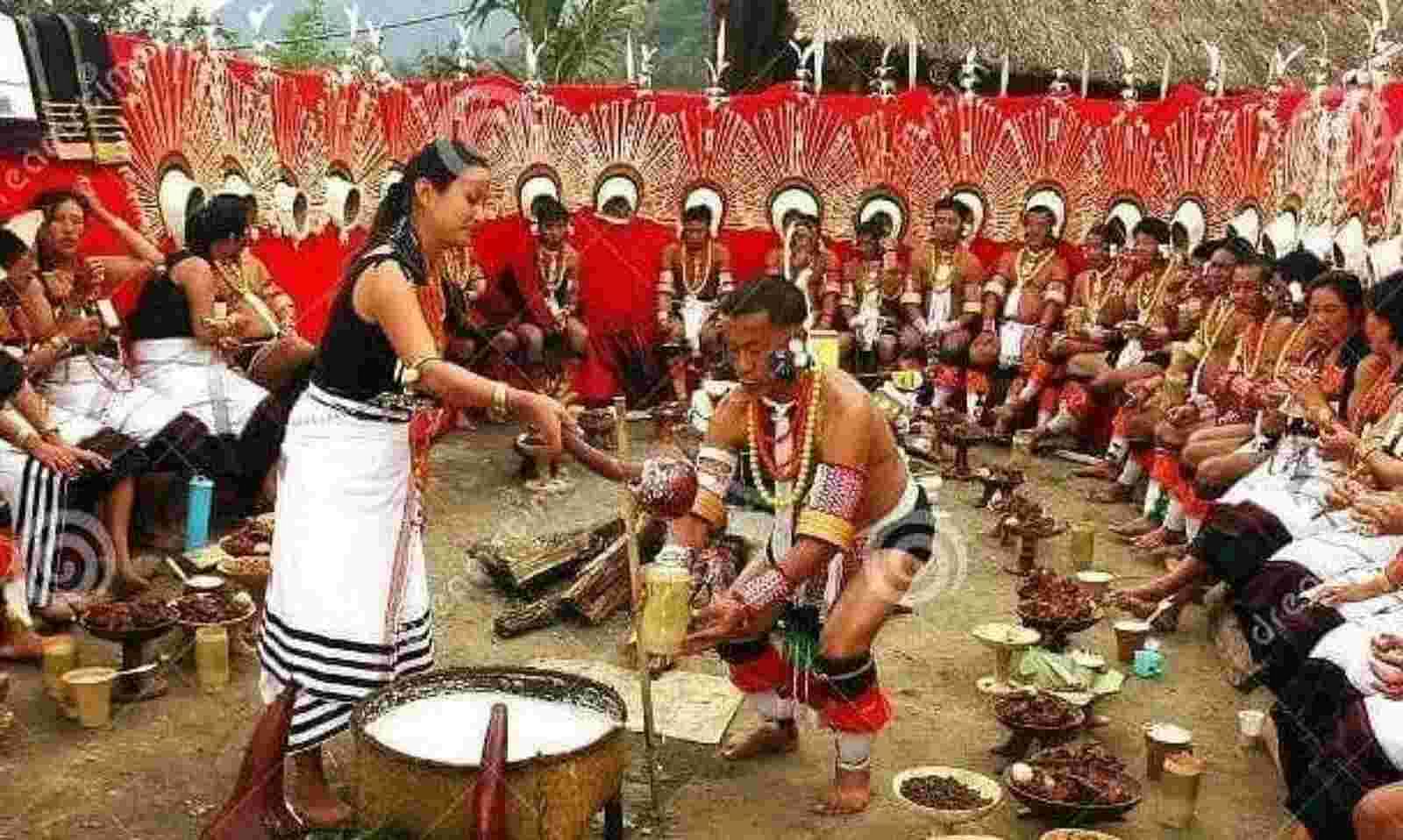
The Sekrenyi festival is also an important social and cultural event, bringing together members of the community from across the region. During the festival, people from different villages come together to participate in the rituals and ceremonies. This is an opportunity for people to reconnect with friends and family, and to strengthen the bonds of the community. The festival is also an opportunity for young people to meet and mingle, and for potential partners to be introduced.
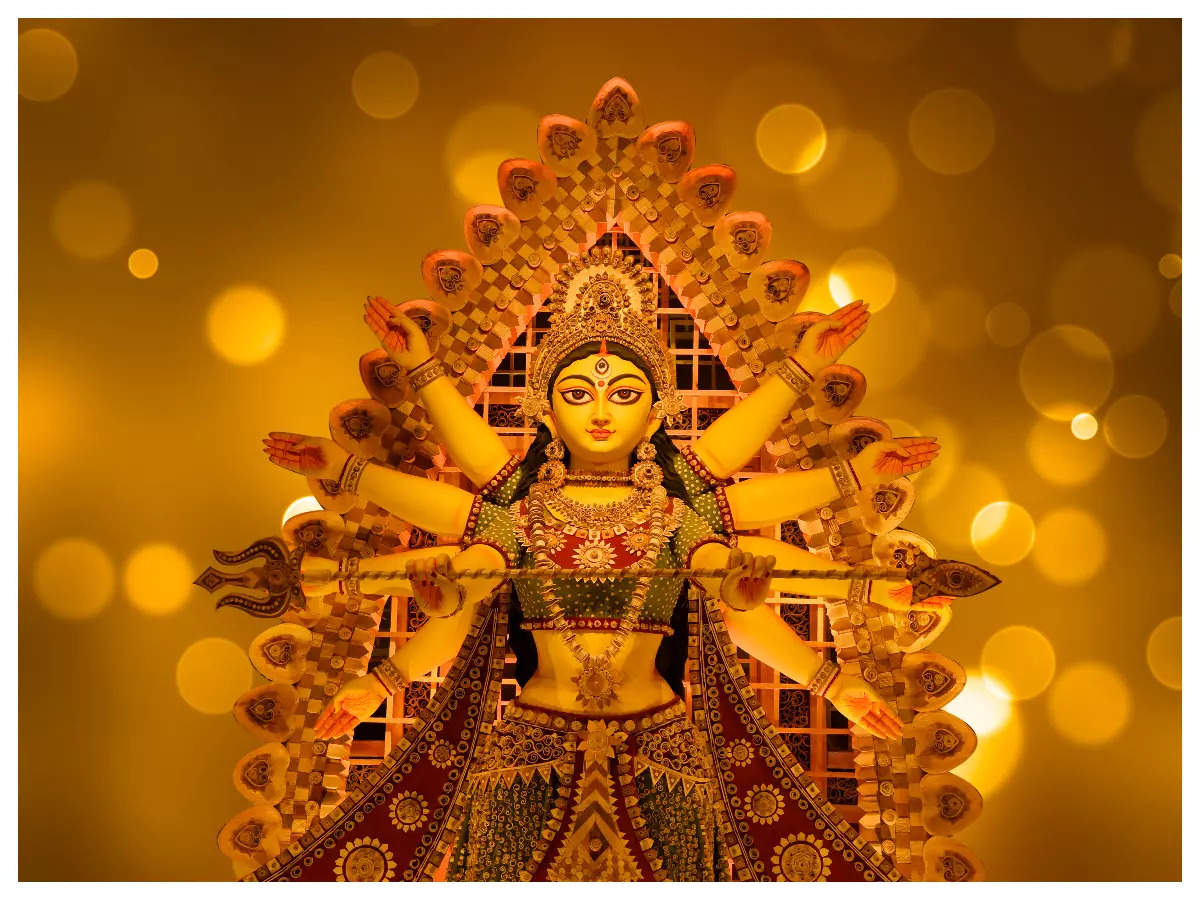
Festivals of India – Navaratri

Dedicated to the Mother Goddess and the feminine energy, one of Hinduism’s most revered festivals, the Navaratri is a biannual festival spanning over nine nights and ten days, first in the month of Chaitra which translates to March/April of the Gregorian calendar and again in the month of Sharada which translates to September/October in the Gregorian calendar. It is observed for different reasons and celebrated differently in various parts of the country.

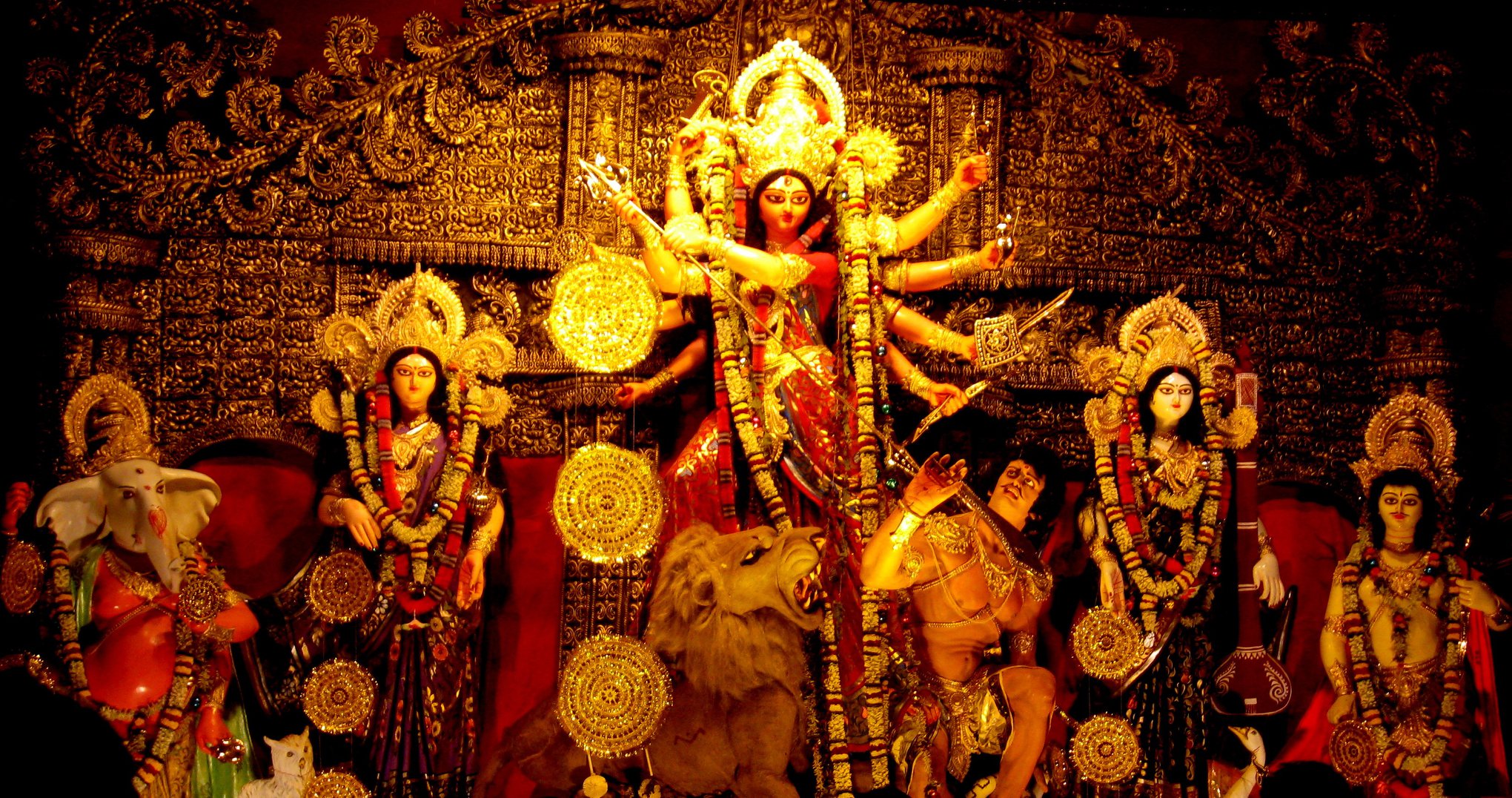
The word Navaratri means nine nights in Sanskrit, with nava meaning nine and ratri meaning nights. Navaratri, which is dedicated to Goddess Durga is all about the victory of good over evil. Goddess Durga fought the demon king Mahishasura for nine days and killed him, marking the triumph of good over evil. In the eastern and northeastern states of India, Durga Puja is synonymous with Navaratri, where Goddess Durga battles and emerges victorious over the buffalo demon Mahishasur to help restore dharma. In the southern states, the victory of Durga or Kali is celebrated. In all cases, the common theme is the battle and victory of good over evil based on a regionally famous epic or legend such as the Devi Mahatmya.

Celebrations include worshipping nine goddesses during nine days, stage decorations, recital of the legend, enacting of the story, and chanting of the scriptures of Hinduism. The nine days are also a major crop season cultural event, such as competitive design and staging of pandals, a family visit to these pandals, and the public celebration of classical and folk dances of Hindu culture. Many devotees often celebrate Navaratri by fasting. On the final day, called Vijayadashami or Dusshera, the statues are either immersed in a water body such as a river or ocean, or the statue symbolising evil is burnt with fireworks, marking the destruction of evil. During this time preparations also take place for Deepavali or Diwali which is the festival of lights which is celebrated twenty days after Vijayadashami.

The nine forms of Goddess Durga, collectively known as Navdurga, are celebrated during Navratri. Every day of the festival is dedicated to a different incarnation of the Goddess. There is a colour for every day that can be worn throughout the festival. These colours have a lot of importance and are considered auspicious.

On the first day, Goddess Durga is worshipped as Shailputri, the daughter of the king of mountains, or Goddess Parvati who is worshipped as the wife of Lord Shiva. This avatar embodies the combined power of Brahma, Vishnu, and Mahesh. The colour for the first day is red indicating strength. An individual who leads a frugal lifestyle, who is cheerful and bestows happiness, richness, tranquillity, and grace upon all of her devotees, Brahmcharini is worshipped on the second day. Brahmcharini is supposed to be the way to Moksha and royal blue is the colour for the day, associated with a calm yet powerful soul. On the third day, Goddess Durga is worshipped as Chandraghanta who is the epitome of grace and dignity. A symbol of peace and prosperity, she is a strong woman with a lot of power and so yellow is the colour for the day.

Kushmunda who is worshipped on the fourth day, is believed to be the founder of the cosmos and is said to have created the universe and enriched it with flora and fauna. This is why the colour of the day is green which symbolises the globe and greenery. Skand Mata, the commander-in-chief in their war against evil is worshipped on the fifth day. She is the representation of the vulnerability of a mother who can fight anyone when anyone troubles her children. The colour of the day is grey which represents a mother’s fear when her child is in danger and she is determined to do everything it takes to keep her child safe. On the sixth day, Katyayani is worshipped. She was born to the great sage Kata as an avatar of Goddess Durga. While clothed in orange, she emits immense courage and so orange is the colour of the day symbolising bravery.

Worshipped as Kalratri for her three eyes, dark skin, unkept hair and exuding a fearless attitude with her breath-producing flames, Kalratri resembles Goddess Kali, Goddess Durga’s most terrifying aspect. She wears white, the colour of peace and tranquilly and so the day’s colour is also white. On the eighth day, Goddess Durga is worshipped as Maha Gauri, representing intelligence, peace, prosperity and calm. Her hue was said to have changed from white to black after spending time in the deep Himalayan forests. After Shiva bathed her in the waters of the sacred River Ganga, her body regained its beauty, and she was given the name Maha Gauri, which means extremely white. Pink is the colour of the day, representing hope and a fresh start. On the last day, she is worshipped as Siddhidatri who has incredible healing abilities. She has four arms and looks to be in a cheerful mood. She blesses everyone as a manifestation of the Mother Goddess. The goddess is shown in a happy state as if she were a clear day’s sky. As a result, this day’s colour is sky blue, symbolising awe at nature’s splendour. In South India, on this day, Goddess Saraswati is worshipped who is the manifestation of learning, knowledge, music and the arts through the Ayudha Puja. On this day, everyone worships their tools of the trade so students pray to their books, musicians thank their instruments, office workers pray to their laptops etc. Students visit their teachers, express respect, and seek their blessings.

The festival ends with Dusshera on the tenth day when Goddess Durga was victorious over the demon Mahishasura. In some parts of India, Dussehra is associated with the victory of the God Rama over the demon-king Ravana. In northern India, the Ram Lila of the Play of Rama is the highlight of the festival with different episodes of the epic Ramayana dramatised on successive nights. On Dusshera, the actor playing Lord Rama fires a flaming arrow at an effigy of Ravana which is then burned. In many regions, Dussehra is considered an auspicious time to begin educational or artistic pursuits, especially for children.

Today, we are on the third day of Navaratri and my prayer is that may Goddess Durga and her various incarnations protect you from everything and remove all obstacles from your lives. May the divine feminine energy grant you all your wishes!

Festivals of India: Pola

A little-known thanksgiving festival, Pola or Bail Pola is celebrated by farmers in Maharashtra and Chhattisgarh to acknowledge the importance of bulls and oxen, who are a crucial part of agriculture and farming activities. It falls on the day of the Pithori Amavasya the new moon day in the month of Shraavana, which usually falls in August. During Pola, farmers don’t work their bulls in the farmland, and the day is a school holiday in the rural parts of Maharashtra. This year, the festival of Pola falls today, 26 August.

The cow is considered a sacred animal and is worshipped in the Hindu religion. The states of Maharashtra, Chhattisgarh, Madhya Pradesh, Telangana, and Karnataka celebrate the festival called Bail Pola whereas, in states like Madhya Pradesh and Chhattisgarh, the day is also celebrated as Pola Amavasya. The Hindu God and Goddesses are accompanied by animals like a bull named Nandi to Lord Shiva, and the Cow to Lord Krishna. This day is celebrated by the farmers of Maharashtra to pay importance to the cows and bullocks named Bail Pola, meaning Bullock Pola.

The festival is celebrated among the Marathas of central and eastern Maharashtra with a similar festival observed by farmers in other parts of India, known as Mattu Pongal in the South and Godhan in the North and West India. In Telangana, a similar festival is celebrated on full moon day and is called Eruvaka Purnima.

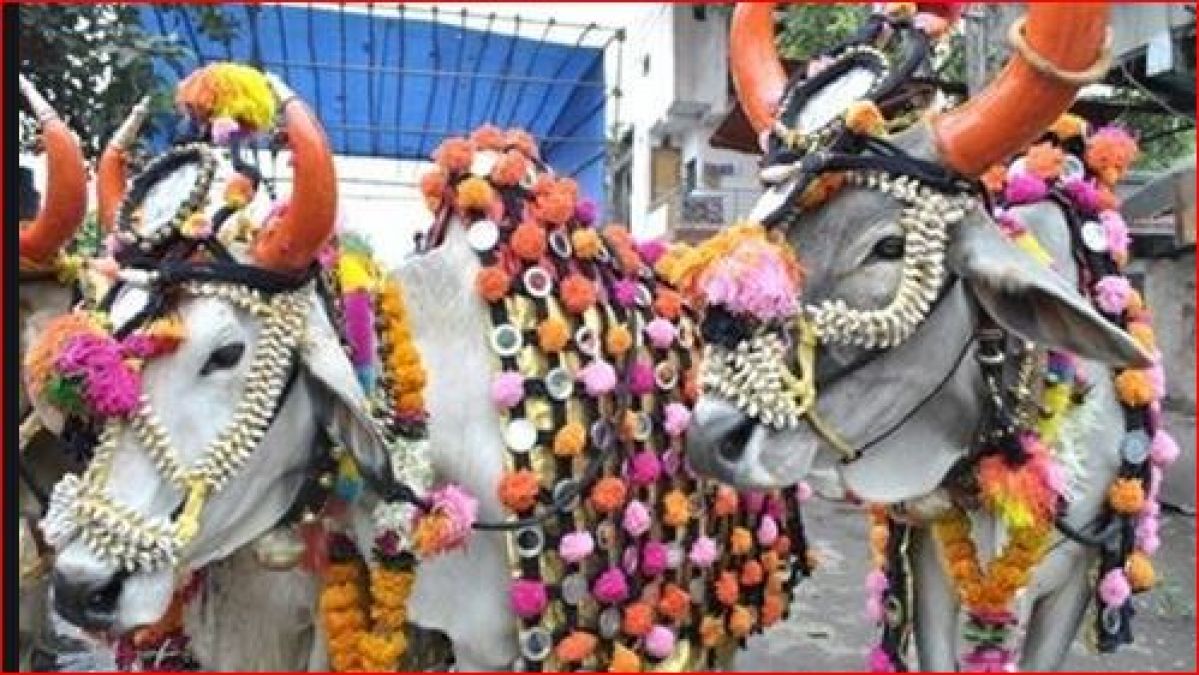
In preparation for the festival, bulls are washed and massaged with oils and then decorated with shawls, bells, and flowers, and their horns coloured, and they get new reins and ropes. The decorated cattle are offered a special food called khichadi, made of bajari or pearl millet. The decorated bulls and oxen are walked in a procession to the village field accompanied by music and dancing with lezhims, a musical instrument found in Maharashtra made of a wooden rod and an iron chain full of metallic pieces and drums. The first bullock to go out is an old bullock with a wooden frame called makhar tied on its horns. This bullock is made to break a toran, a wreath of mango leaves stretched between two posts, and is followed by all the other cattle in the village. A big fair is also organised during the festival including various sports activities including volleyball, wrestling, kabaddi and kho-kho.

Homes in the village are decorated with rangolis and toran on top of doors. Puja thalis with kumkum, water, and sweets are prepared, and when the cattle are returned from the procession they are formally greeted by family members, with an earthen lamp with ghee for puja and aarti. On the day following Pola, children decorate wooden bulls with beads and flowers.

It is believed that the festival has gotten its name from mythological events and texts. In one of the episodes of Lord Krishna’s life where he killed a demon named Polasur to save the villagers while still a child. And so this day is dedicated to children and animals and children get special treatment on this day.

Festivals of India: Muharram

This is the month of Muharram, the first month of the Islamic calendar and one of the four sacred months of the year when warfare is forbidden. It is held to be the second holiest month after Ramadan. The tenth day of Muharram is known as Ashura and as part of the Mourning of Muharram, Shi’i Muslims mourn the tragedy of Ḥusayn ibn ʿAlī’s family, and Sunni Muslims practice fasting on Ashura.

Muslims mourn the martyrdom of Ḥusayn and his family, honouring the martyrs by prayer and abstinence from joyous events. Shiʿi Muslims eat as little as possible on the Ashura; however, this is not seen as fasting. Alevis fast twelve days, each day for one of the Twelve Imams of Shiʿa Islam, to commemorate and mourn the Imams, as if a very close relative has died. Some, excluding children, the elderly or the sick, don’t eat or drink until zawal or afternoon as a part of their mourning for Husayn. In addition, there is an important ziyarat or a form of pilgrimage book, the Ziyarat Ashura about Ḥusayn. In Shiʿism, it is popular to read this ziyarat on this date.

The sighting of the new moon ushers in the Islamic New Year. The first month, Muharram, is one of the four sacred months mentioned in the Quran, along with the seventh month of Rajab, and the eleventh and twelfth months of Dhu al-Qi’dah and Dhu al-Hijjah, respectively, immediately preceding Muharram. During these sacred months, warfare is forbidden. Before the advent of Islam, the Quraish and Arabs also forbade warfare during those months. Muslims believe that in this month of Muharram, one should worship Allah a lot.

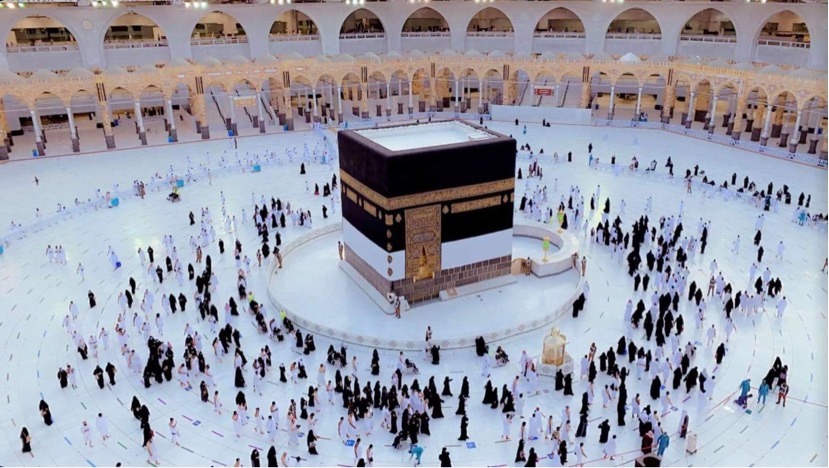
Muharram is a month of remembrance. Ashura, which means the Tenth in Arabic, refers to the tenth day of Muharram and is well known because of the historical significance and mourning for the Shahadat or martyrdom of Ḥusayn ibn Ali, the grandson of Muhammad. Muslims begin mourning from the first night of Muharram and continue for ten nights, climaxing on the 10th day of Muharram, known as the Day of Ashura which is considered the most important by both Shia and Sunni Muslims. Tomorrow, the 10th day of Muharram or the Day of Ashura will be commemorated. Shia Muslims observe it as a day of mourning to commemorate the death of the grandson of Prophet Muhammad, Hussayn Ibn Ali. The last few days up until and including the Day of Ashura are the most important because these were the days in which Hussain and his family and followers, including women, children and elderly people were deprived of water from the 7th day onward and on the 10th day, Husayn and 72 of his followers were killed by the army of Yazid I at the Battle of Karbala on Yazid’s orders. The surviving members of Husayn’s family and those of his followers were taken captive, marched to Damascus, and imprisoned there. This was because, according to legend, Imam Hussayn objected to the legitimacy of the Caliph Yazid and revolted against him leading to the battle of Karbala in 680 AD. Sunni Muslims believe that the religious leader Moses led Israel through the Red Sea and got victory over the Egyptian Pharaoh and his army of war chariots on the 10th day of Muharram. There is another belief that Adam and Eve were created by God on the 10th day of this month. It was also during this time that Prophet Muhammad migrated from Mecca to Medina, which is known as Hijrah, and so Muharram marks this important event as well.

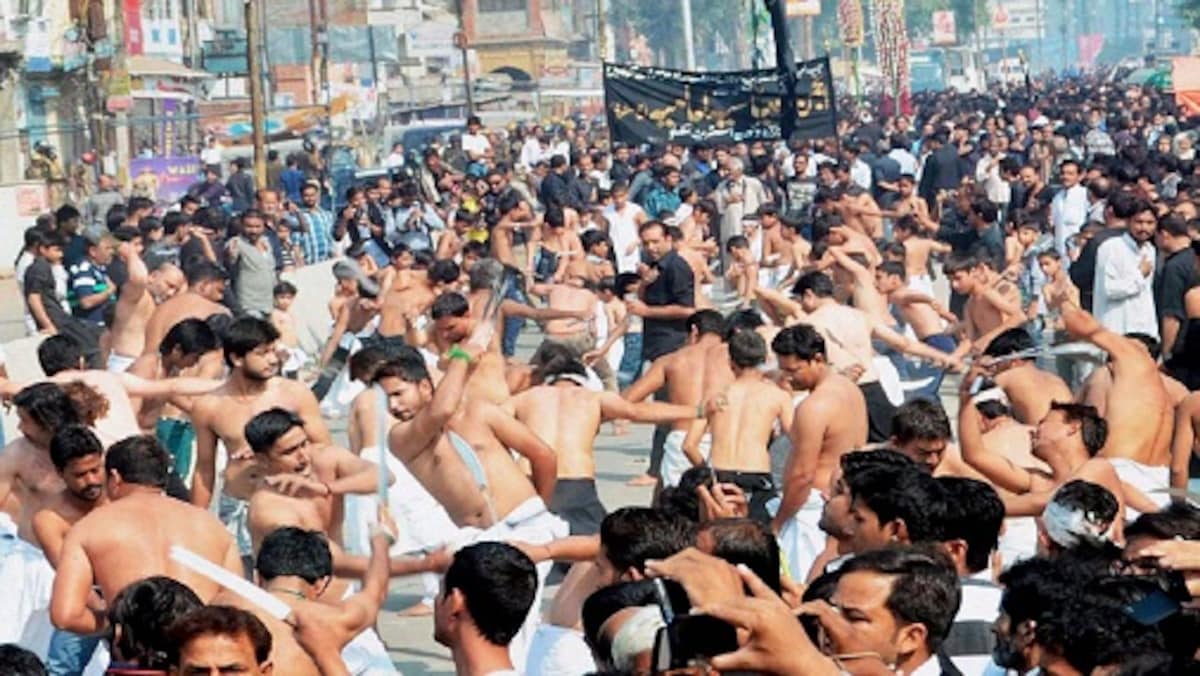
In India, though both Shias and Sunnis observe Muharram, for the Shias, it is a day of observance and not joy, and thus, they are in mourning for the 10 days. They dress in black, attend special prayer meetings at mosques and even refrain from listening to music or attending events like weddings. On the 10th day, street processions take place in which they walk barefoot, chanting and whipping their chests until it draws blood to commemorate the sufferings of Imam Hussayn. Sunnis observe this day with fasting from the first to the 10th or 11th day of the month. This is voluntary, and the ones who fast are believed to be rewarded by Allah.

Festivals of India: Aadi Perukku

Today is Aadi Perukku or Aadi 18, a little-known festival celebrated in the state of Tamil Nadu. Also known as Aadi 18, Aadi Perukku is the monsoon festival celebrated in the month Aadi monsoon festival and celebrated on the 18th day of the Tamil month of Adi, which should be sometime between mid-July to mid-August. The festival pays tribute to water’s life-sustaining properties. Nature worship in the form of Amman deities is organised to shower Nature’s bountiful grace on human beings and to bless mankind with peace, prosperity and happiness.

Aadi is a month of fervour and observances dedicated to the Goddesses related to water and other natural forces where prayers and pujas are offered to propitiate the powerful goddess to seek their protection from the inauspicious aspects that are often associated with the month. No weddings or other similar functions are celebrated during this month. It is during this time that the monsoon peaks on the west coast and the rivers of Tamil Nadu, shrunken in the summer heat, get replenished, often to near full levels. The month of Aadi is the fourth month of the year with the first day of the month, usually falling on 16 July, celebrated as Aadi Pandigai or Aadi Perukku, and an important festival to most Tamils, especially newly-weds.

In India the rivers Ganga and Yamuna, Cauvery, Narmada and Godavari are considered sacred. Just like the earth gives us food, water is considered a sacred necessity to meet the needs of individuals. People began to worship water in the form of wells, tanks and rivers. It is common among people to throw fruits, flowers and saffron cloths when the rivers and lakes are in spate purely based on the belief that these rivers are the species of female deities. Similarly, every temple has sacred wells and tanks, and the water in these resources is considered pure.

Aadi Perukku is a unique South Indian and especially a Tamil festival celebrated on the 18th day of the Tamil month of Adi. The festival coincides with the annual freshness of rivers and pays tribute to water’s life-sustaining properties. It is celebrated near river basins, water tanks, lakes and wells of Tamil Nadu when the water level rises significantly heralding the onset of the monsoon.

Aadi Perukku, also called Padinettam Perukku where Padinettu signifies eighteen, and Perukku denotes rising is a unique occasion dedicated to all the perennial river basins of Tamil Nadu and major lakes water source areas and is intended to celebrate the water rising levels due to the onset of monsoon, which is expected to occur invariably on the 18th day of the solar month, Aadi which corresponds to the 2 or 3 August every year. This festival is observed predominately by women in Tamil Nadu as a water ritual, to honour nature.

The association of this ritual with fertility, sex and reproduction is both natural and human. This water ritual practice is performed on the banks of Rivers, which is described as a rice-cultivation tract. The history of this ritual practice dates back to the ancient period and was patronised by the Kings and royal households. Aadi is the month for sowing, rooting and planting of seeds and vegetation since it is peak monsoon time when rain is showered in abundance.

Apart from people flocking to waterfalls for pre-monsoon and monsoon festivals, people living on the banks of rivers and other water sources offer pujas to the water goddess and river gods so that when nurseries are raised in the fields subsequently and sustained by the northeast monsoon, the crops will be ready for harvest during the Thai Pongal celebration in 5 months in mid-January.

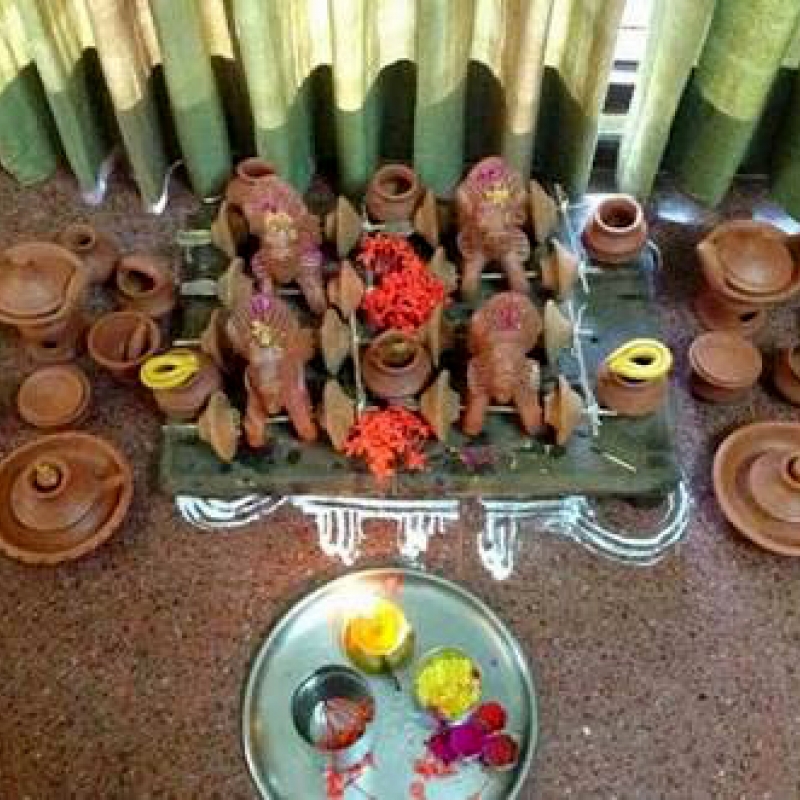
The most visible manifestations of the month of Aadi are the huge kolams or rangolis that are painstakingly patterned early each morning in front of houses. They are usually bordered with red and across the front doorway at the top are strung mango leaves. The first of the month is marked with a special puja, followed by a feast with payasam prepared with coconut milk, boli and vadai.

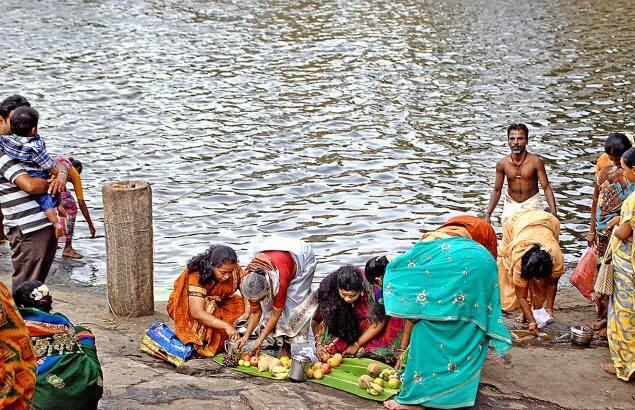
Aadi Perukku is a day of offerings and prayers to these rivers, which mean so much to the lives and prosperity of the people. The day is an occasion for rejoicing particularly for those living on the banks of all the main rivers, their branches and tributaries. The festival of Aadi Perukku is mainly observed by families living on the banks of the Cauvery River. On this auspicious day, relatives and friends collectively pray for the intermittent supply of water that would ultimately result in a good harvest. The devotees take a dip in the holy water. After the bath, they wear new clothes and perform some rituals at the bathing ghats along the Cauvery River. This is followed by abhishekham or the bathing of the Goddess Kaveri or Kaveri Amman.

A special lamp is prepared using jaggery and rice flour. The lamp is placed on the mango leaves, to which a yellow thread, turmeric and flowers are also added. The lamp is lit by the women and together with its accompaniments is floated in the river. Different forms of rice dishes are prepared and offered to the Goddess. Some of the commonly prepared rice dishes that vary in ingredients, colours or flavours include coconut rice, sweet Pongal, curd rice, lemon rice and tamarind rice. The devotees also worship the sacred river Mother Cauvery with rice offerings, Akshata and flowers. After completing the puja, the devotees eat the feast along the banks of the river with their families. The entire event turns out to be like a picnic on the banks of the Cauvery River.

Young girls observe this auspicious puja together with married women. It is a popular belief that maiden girls who make the offerings of Kaapparisi, a sweet dish made from jaggery and hand-crushed rice, Karugamani which are black coloured beads and Kaadholai which are earrings carved out of palm leaves shall be rewarded with good husbands. Young women play and dance to the tunes of folk songs on the occasion of Aadi Perukku. In some Tamil communities, the sons-in-law are invited on the day of Aadi Perukku and gifted new clothes. There is also a ritual in some districts of Tamil Nadu, wherein the newlyweds spend a month before Aadi Perukku at their parents’ home. Then on the day of Aadi Perukku, a gold coin is added to their Thali or Mangalsutra and they return with their husbands.

Mulaipari or the sprouting or germination of nine grains or navadhanyam in baskets or clay mud pots is a very important ritual which takes place at almost every village Goddess celebration. In its most original form, it is an exclusively women’s ritual and is of great importance to the whole village. The participants of the processions carry earthen pots with grown grains from nine different types of grains inside on their heads and walk towards a river where the contents are dissolved. Before the procession starts, special songs and dances like Kummi Pattu and Kummi are performed. The original meaning of the ritual performance is a request to the village Goddess for rain and the fertility of the land, to secure a rich harvest. The women are involved in large groups significantly implying the fertility of women also ensures the continuity of the human race with peace and harmony through empowered women.

All the year’s major festivals are packed into the six months that follow, culminating with Thai Pongal in mid- January, giving meaning to the Tamil saying, Aadi Azhaikkum, Thai Thudaikkum which means