Recipes: Apple Pickle or Chutney

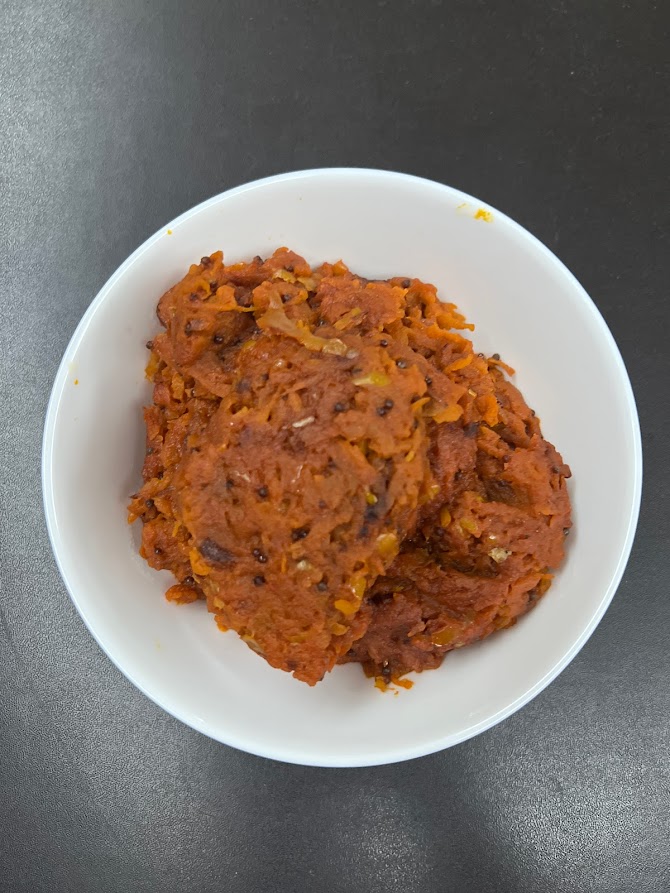
The other day, I had about 5-6 green apples in the fridge which would go bad in a couple of days. I didn’t feel like eating the apples, and when S asked me to make something with them, I decided to make this fusion chutney, thokku and chunda. I was cooking on the fly, but knew that if not good, at least the recipe won’t be bad. But it astounded me. I really enjoyed the result and this combination of chutney and pickle is so versatile. It can be used as a pickle, or as a spread, or even as a dip. Go ahead, try it and let me know how it tasted.

Apple Pickle or Chutney

Ingredients:

  • 5-6 green apples
  • 5-6 tbsp oil
  • 1 tsp mustard seeds
  • ¼ tsp asafoetida
  • ½ tsp turmeric powder
  • ¼ tsp cinnamon powder
  • 3 tsp (or more) red chilli powder
  • 3 tsp (or more) powdered jaggery
  • 2 tsp (or more) salt

Method:

  • Peel the apples and grate them. Once you have grated them, put the grated apples in a colander and salt them and let them sit for about 30 minutes.
  • The apples will start to ooze water. Once the water has drained out, remove it from the colander and keep it aside.
  • In a pan, heat the oil and when the oil is smoking hot, add in the mustard seeds.
  • Once the mustard seeds pop, add in the asafoetida and turmeric powder and stir.
  • Add in the grated apples and saute for about 2-3 minutes.
  • Once the apples soften, add in the red chilli powder, mix well and cook covered until the apples are cooked.
  • You may need to add more oil at this stage and continue cooking until the oil starts to ooze out.
  • At this point, add in the powdered jaggery or brown sugar and check for seasoning. Add what is missing and if need be, add some more oil.
  • Once the jaggery has combined with the apples and the apples start to look brownish-red and glossy, add in the cinnamon powder and combine well.
  • Mix for about a minute and switch off the gas. Cover and let the chutney cool. Transfer to a container and enjoy your meals.

Note: You can use any oil, but I used a combination of canola olive and gingelly oils. You can also make this with a combination of red and green apples. In that case, reduce the jaggery powder otherwise it will become too sweet.

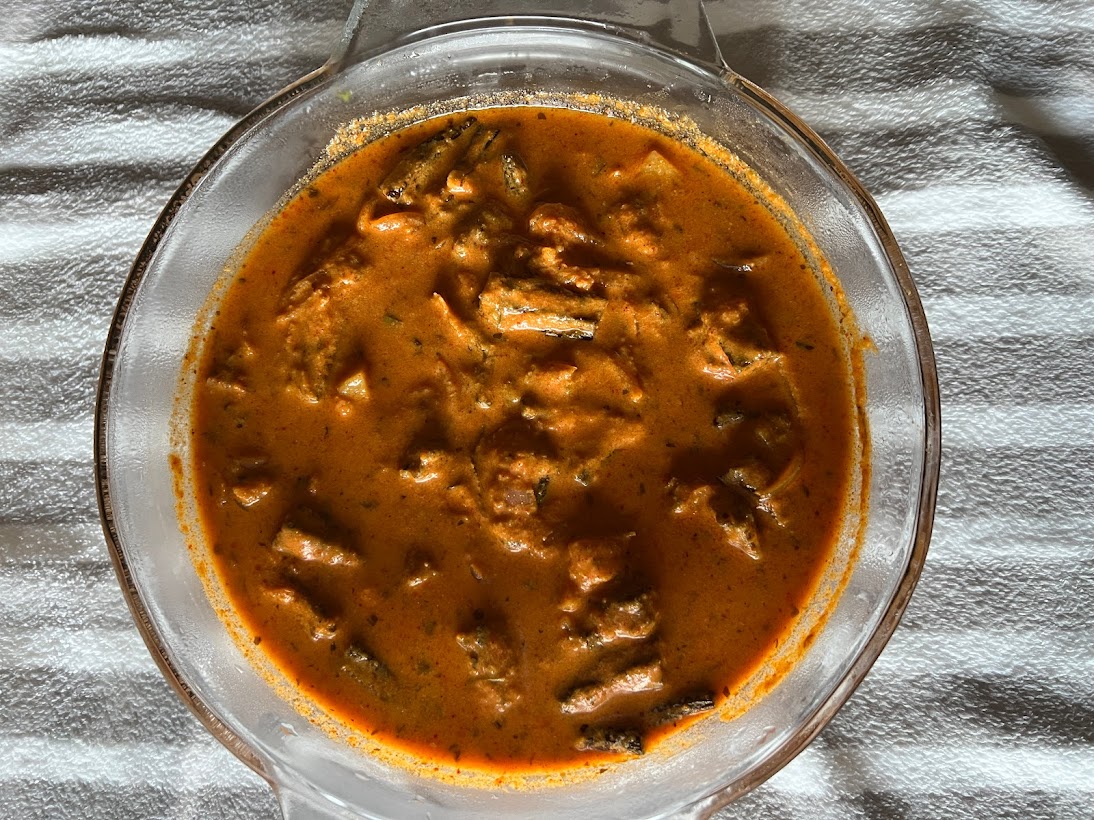
Recipes: Kadamba Kuzhambu

This is another typical recipe which is usually served in temples. It is a no-onion, no-garlic recipe. My mother was talking about this recipe and so I got her to make it while she was here. In Tamil, Kadamba means mixed and this can be eaten as a sambar or a gravy which makes this dish very versatile. The masala is similar to arachavitta sambar and the vegetables are cut similarly to how we cut them for avial. You can use pretty much all root vegetables, including pumpkin, potatoes, sweet potatoes, carrots, drumsticks, raw bananas, beans etc. This was the first time I made this and it was so yummy.

Kadamba Kuzhambu

Ingredients:

  • 2 raw bananas, cut into bite-sized pieces
  • 2 potatoes, cut into bite-sized pieces
  • 1 sweet potato, cut into bite-sized pieces
  • 2 carrots, cut into bite-sized pieces
  • 2 drumsticks, cut into bite-sized pieces
  • 1 small piece of white pumpkin, cut into bite-sized pieces
  • 1 tsp mustard seeds
  • 5-6 curry leaves
  • 1½ tbsp + 1 tsp chana dal
  • 2½ tbsp coriander seeds
  • 10-12 dried red chillies
  • ½ cup fresh coconut
  • 1 lemon-sized ball of tamarind, soaked in hot water for 30 minutes
  • ½ cup toor dal, soaked for 20 minutes
  • 1 tbsp oil
  • Finely chopped coriander leaves to garnish
  • 2 tsp jaggery powder
  • ½ tsp turmeric powder
  • 2 tsp sambar powder (optional)
  • Salt to taste

Method:

  • In a small pressure cooker, pressure cook the toor dal with ¼ tsp turmeric powder till it is soft and the dal has broken down completely. This usually will take around 3 whistles in the cooker. When the pressure reduces, open the cover of the cooker and then whisk the dal well. Keep aside.
  • Mash the tamarind when it becomes cool to touch and then squeeze the tamarind and drain the water so the fibres get separated and you have the water. Alternatively, use 3-4 tbsp tamarind paste which you can get at any Indian store.
  • In a pan, dry roast 8-10 dried red chillies, 1½ tbsp chana dal and 2½ tbsp coriander seeds and once the seeds start to brown, add in the coconut and roast, stirring continuously, until the coconut loses moisture and turns brown. Remove from the flame, and let it cool completely and then grind to a fine powder and keep aside.
  • Heat oil in the same pan and when the oil heats up, add in the mustard seeds, balance chana dal and dried red chillies which have been broken into 2-3 pieces each. Let the mustard seeds splutter and then add the chopped and washed vegetables.
  • Now add the balance of turmeric powder and sambar powder and let the vegetables cook for about 5 minutes. When the vegetables are almost cooked, add the tamarind water and salt as required. You can also add in the jaggery powder if you are using it at this point. Let the water come to a boil and let it simmer for another five minutes.
  • Next, add the cooked dal and the ground powder and mix well. At this point, check for seasoning and add if anything is missing. You can also add extra water if the kuzambu is still thick.
  • Let it come to a boil and let it boil for five minutes.
  • Garnish with finely chopped coriander leaves and shut off the flame. Let it stay covered for 10 minutes for the flavours to infuse and serve hot with rice.

Recipes: Kosamali Salad

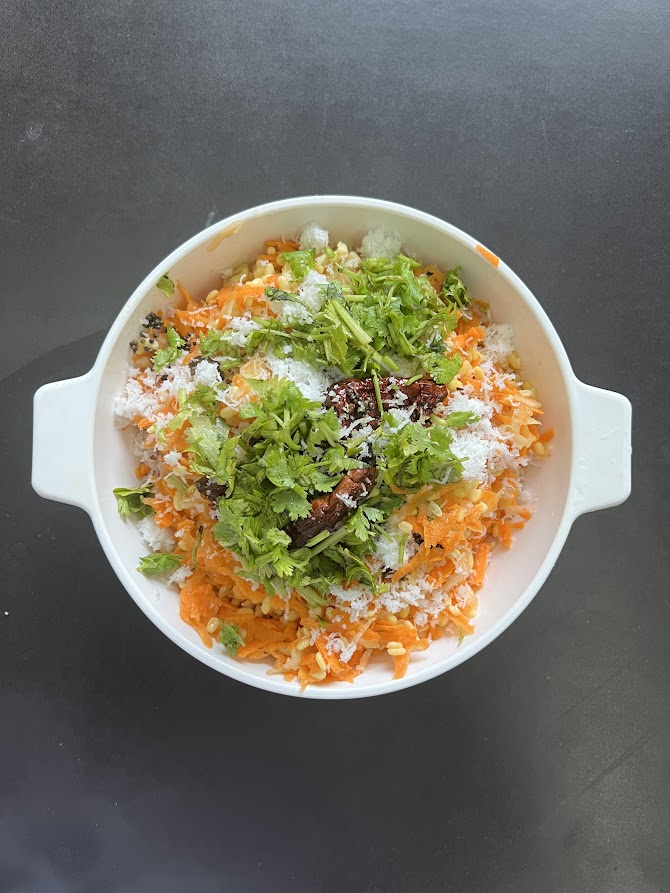
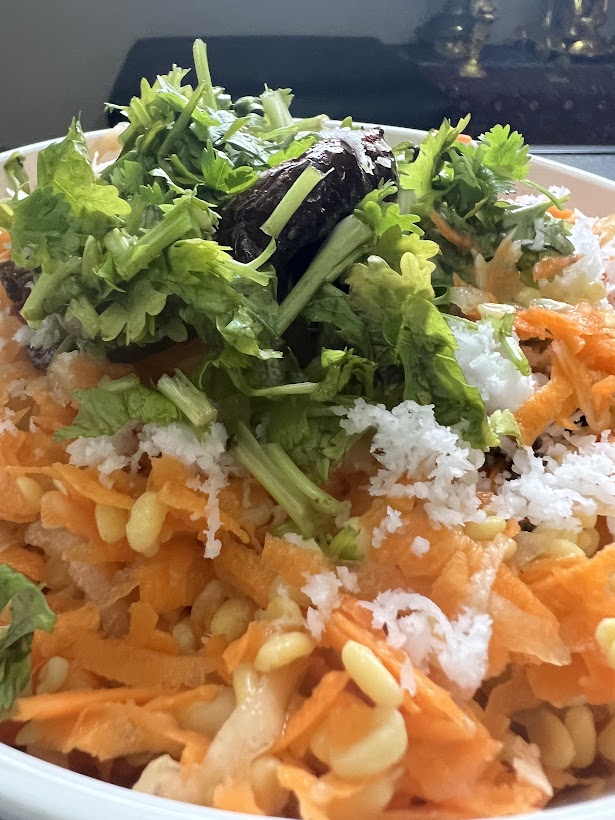
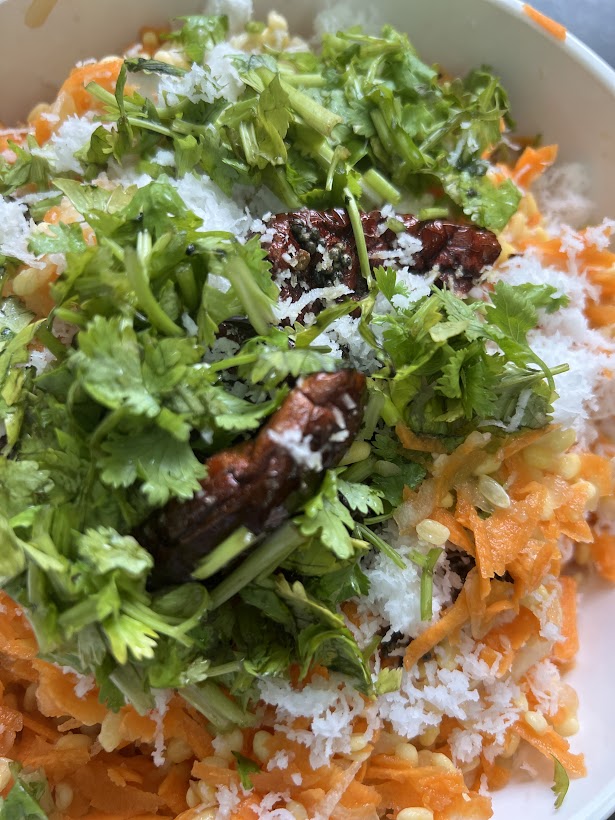
Also known as Koshambari, Kosamalli is a no-cook protein-rich salad that is made as a neividhyam for Rama Navami and also served in certain Tamil Brahmin weddings. It’s a super easy recipe to make, but one which I have never made. So in April, during the Tamil New Year, since I had my mother with me, I learned how to make it from her. And since it has been super hot in Singapore (no surprise there, right?), I also added in some raw mangoes which added a nice tinge of sourness to the salad.

Kosamali Salad

Ingredients:

  • ½ cup grated carrots
  • ½ cup grated cucumber
  • ¼ cup grated raw mango
  • ¼ cup yellow moong dal
  • 6-7 tbsp fresh grated coconut
  • 1 tsp oil or ghee
  • ½ tsp mustard seeds
  • 1/8 tsp asafoetida
  • 2 dried red chillies, broken
  • 4-6 curry leaves
  • 1 tbsp chopped coriander leaves
  • Salt as required
  • 1 tsp lemon juice

Method:

  • Soak the yellow moong dal in a pan in hot water for about 30 mins, then drain completely and keep aside. You can also soak it in normal tap water for about 2 hours and then drain and keep aside. Just make sure when you drain it, all the water is completely drained.
  • In a large bowl, add the drained moong dal, grated carrots, grated mangoes and grated cucumbers and lemon juice and mix well.
  • In a small skillet, add the oil or ghee and when the oil or ghee warms up, add in the mustard seeds and let them pop. Then add the curry leaves and let them splutter for a bit.
  • Then add the dried red chillies, and asafoetida and let it cook for a couple of seconds.
  • Switch off the flame and add the tempering to the mixed dal and vegetables.
  • Now add in the grated coconut and the finely chopped coriander leaves to the salad and cover and keep aside for at least 10 minutes.
  • If you are eating the salad immediately, then add in the salt and mix well and serve.
  • If this salad is meant to be eaten later, or you plan to chill it for a while, add the salt just before serving otherwise the cucumber will start to ooze water.

This was a super delicious salad and will make a good addition to our salad repertoire.

Recipes: Amritsari Dal or Langarwali Dal

I have been curious about this dal for a few months now, but the couple of times I wanted to make it, I didn’t have the whole urad dal on hand. So a couple of months back, when I had some on hand, I decided it was time to finally make this.

This dal is rustic and comes from the homes of Punjab and is also called Langarwali Dal as it is often served at Sikh Gurudwaras, especially the Harmandir Saheb in Amritsar. Made from two types of dals, urad and chana, this dal does not have too many spices and is usually slow cooked, sometimes overnight to make a creamy, soft dal that just melts in the mouth. But because we don’t have the time these days to slow cook it, it’s made in the pressure cooker.

Amritsari Dal or Langarwali Dal

Ingredients:

  • 1 cup whole black urad dal
  • ¼ cup chana dal
  • ¼ tsp turmeric powder
  • 2 tbsp finely minced ginger
  • 2 tbsp finely mined garlic
  • 2-3 tbsp ghee, oil or butter
  • 1 tsp minced green chillies
  • 1 medium sized onion, finely chopped
  • 2 medium sized tomotoes, finely chopped
  • ½ tsp red chilli powder
  • 2 tbsp finely chopped coriander leaves
  • 1 tbsp finely chopped mint leaves (optional)

Method:

  • Soak the urad dal and chana dal in water for at least 5-6 hours until the urad dal is soft to touch.
  • Wash the dal well and put inside the pressure cooker with enough water to cover it, add turmeric powder, 1 tbsp each of ginger and garlic and about 1 tsp salt and cook for about five to six whistles. Open the cooker when the pressure goes away and slightly mash the dals with the back of a spoon or a whisk.
  • In a separate pan, heat the ghee, oil or butter and when it heats up, add in the finely chopped onion, stir until the onions turn translucent.
  • Then add in the balance minced ginger and garlic and stir well.
  • Add the mined green chillies and stir.
  • Saute until the onions become a nice golden colour.
  • When the onions turn golden, add In the finely chopped tomatoes. Mix well and let the tomatoes cook until they become mushy
  • Let the mixture cook until the oil releases from the sides. At this point, add the red chilli powder
  • Pour the tempering into the dal mixture and mix well
  • Add salt and water if needed and mix well
  • Let the dal come to a nice rolling boil.
  • Lower the flame and let the dal simmer for about 5 minutes. You can simmer for longer if you want, and the results will be better.
  • Garnish with coriander leaves and mint leaves, if you are using them and serve hot with rice, rotis or nan.

Note that the dal will thicken as it cools, so you may need to thin it a bit before serving if you plan on cooking it ahead of time. Also the dal tastes much better if eaten the next day, so it may be a good idea to cook it ahead of time.

Recipes: Coriander Mint Pulao

During GG’s internship, she used to take her lunch when she had to work in the office and this meant I made one pot meals more than usual. When I got bored of making the usual pulaos, I tried this coriander and mint pulao as I had some mint leaves which was getting spoilt. The recipe is different from my usual mint pulao where I grind the mint leaves to a paste and this one had a very subtle smell and taste of mint and coriander and was very tasty. It is a definite keeper and I will be making this again soon.

Coriander Mint Pulao

Ingredients:

  • 2 cups basmati rice, soaked in water for about 20-30 minutes
  • 2 tbsp ghee
  • 1 large onion, finely sliced
  • 1 carrot, peeled and cut into 2-inch sticks
  • 1 potato, peeled and cut into 2-inch sticks
  • ¼ cup green peas
  • 1 green chilli, slit
  • A one-inch piece of ginger, julienned
  • 10-12 pieces of cashew nut
  • 1 tsp cumin seeds
  • 3 cloves
  • 3 cardamom
  • 1 bay leaf
  • A one-inch piece of cinnamon
  • 2 tbsp mint leaves, chopped
  • 2 tbsp coriander leaves, chopped
  • Salt to taste

Method:

  • Wash the basmati rice well and drain keep aside.
  • In a pan, heat the ghee and when the ghee heats up, add in the cumin seeds and let them splutter.
  • Then add the cloves, cardamom, cinnamon and bay leaf and saute for a few seconds.
  • Next, add in the green chilli and ginger and saute for a few seconds.
  • Now add in the cashew nuts and saute till the cashew nuts turn golden brown.
  • At this point, add in the sliced onions and saute till the onions become translucent.
  • When the onions are translucent, add in the chopped vegetables and saute for a few minutes.
  • Add in the chopped coriander and mint leaves and saute for a few seconds. We don’t need to cook them, just let them wilt.
  • Lastly, add in the rice and salt and saute for a minute or two.
  • Transfer everything to a rice cooker and add water. I usually add 2 cups of water for every cup of rice, but please use your discretion and the instructions in the packet of rice.
  • Cook the rice either in the rice cooker or on the stovetop and once the rice is done, let the pan stand for about 5 minutes before opening it.
  • Fluff the rice with a fork before serving. Serve hot with a raita of your choice.