Carrot Chutney/Thuvaiyal

My definition of a Thuvaiyal is a chutney to which coconut has been added. A chutney is a mixture of vegetables and spices. A thuvaiyal, on the other hand, has in addition to the chutney ingredients, coconut to give it some body.

I had some carrots which were slightly bitter to taste. I didn’t know what to do with them, then remembered this thuvaiyal that my mom used to make. This thuvaiyal  can be eaten with idli/dosa/bread or even mixed with rice. My mom used to make thuvaiyals to be eaten with rice when she didn’t want to cook much that day.

Carrot Thuvaiyal
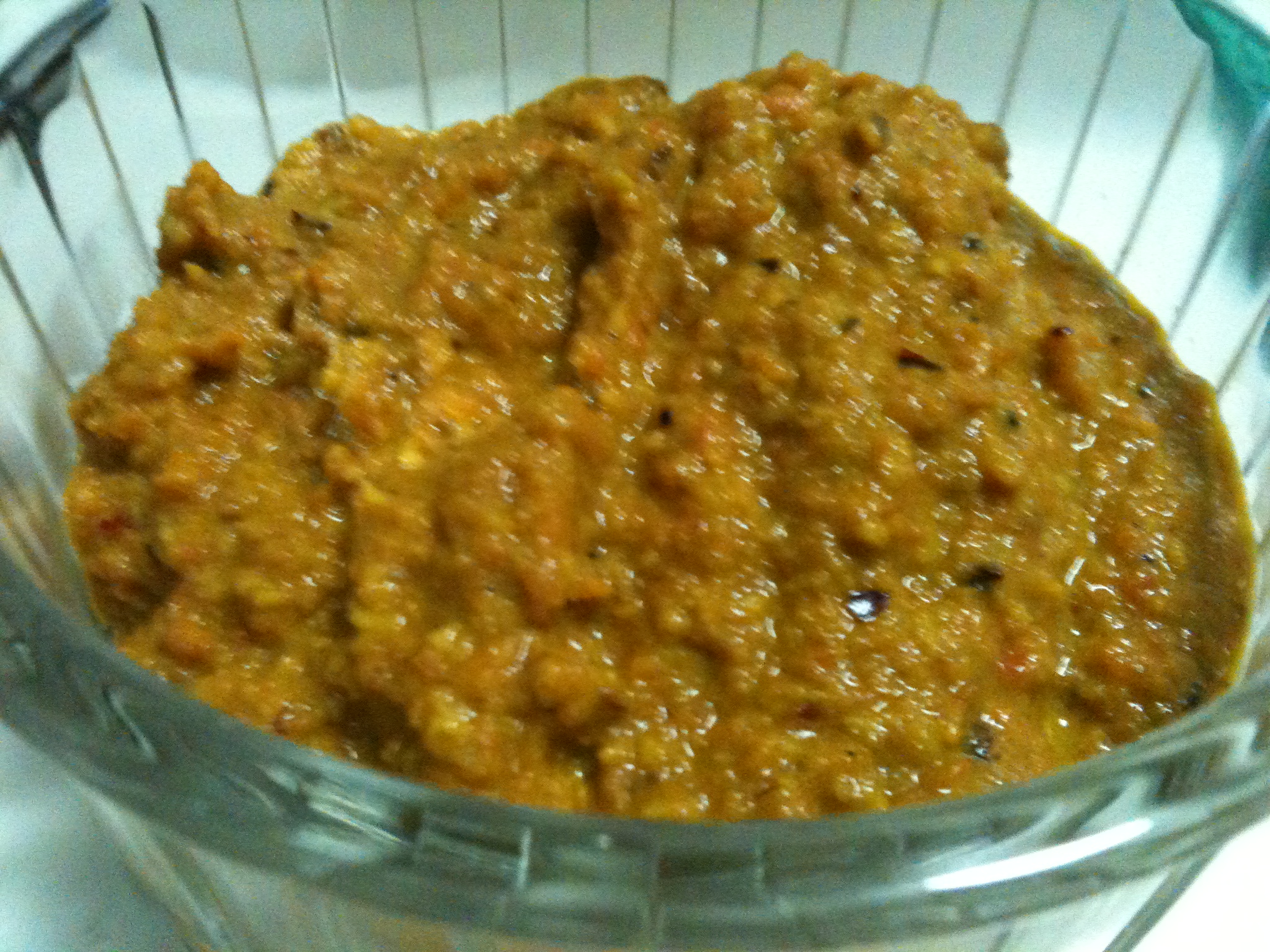
Ingredients:

  • 1 cup chopped carrots
  • 1/2 cup grated coconut
  • 1 tsp mustard seeds
  • 4-5 dried red chillies
  • 1 tsp urad dal
  • a pinch of asafoetida
  • a small lime-sized ball of tamarind
  • 1 tsp oil
  • Salt to taste
Method:
Heat oil in a pan and put in the mustard seeds. When they pop, add the urad dal, asafoetida and red chillies. Stir for a few seconds and then add the carrots and tamarind. Fry for a while till the carrots a bit soft and the raw smell goes away. You do not need to cook the carrots, but they do need to lose the raw hardness. When the carrots soften, remove from the fire and let it cool.
When the carrots mixture are cool, blend it in a mixer with coconut adding water if needed. Since my carrots were a bit bitter, I added some jaggary to this, but if you have sweet carrots, you can omit this. Once the carrot-coconut mixture is finely ground, add salt to taste and transfer to a serving bowl. This can be eaten mixed with rice when you don’t want to cook or eaten with idli, dosa or even with bread. This keeps for upto a week in the fridge.
Milagai Podi

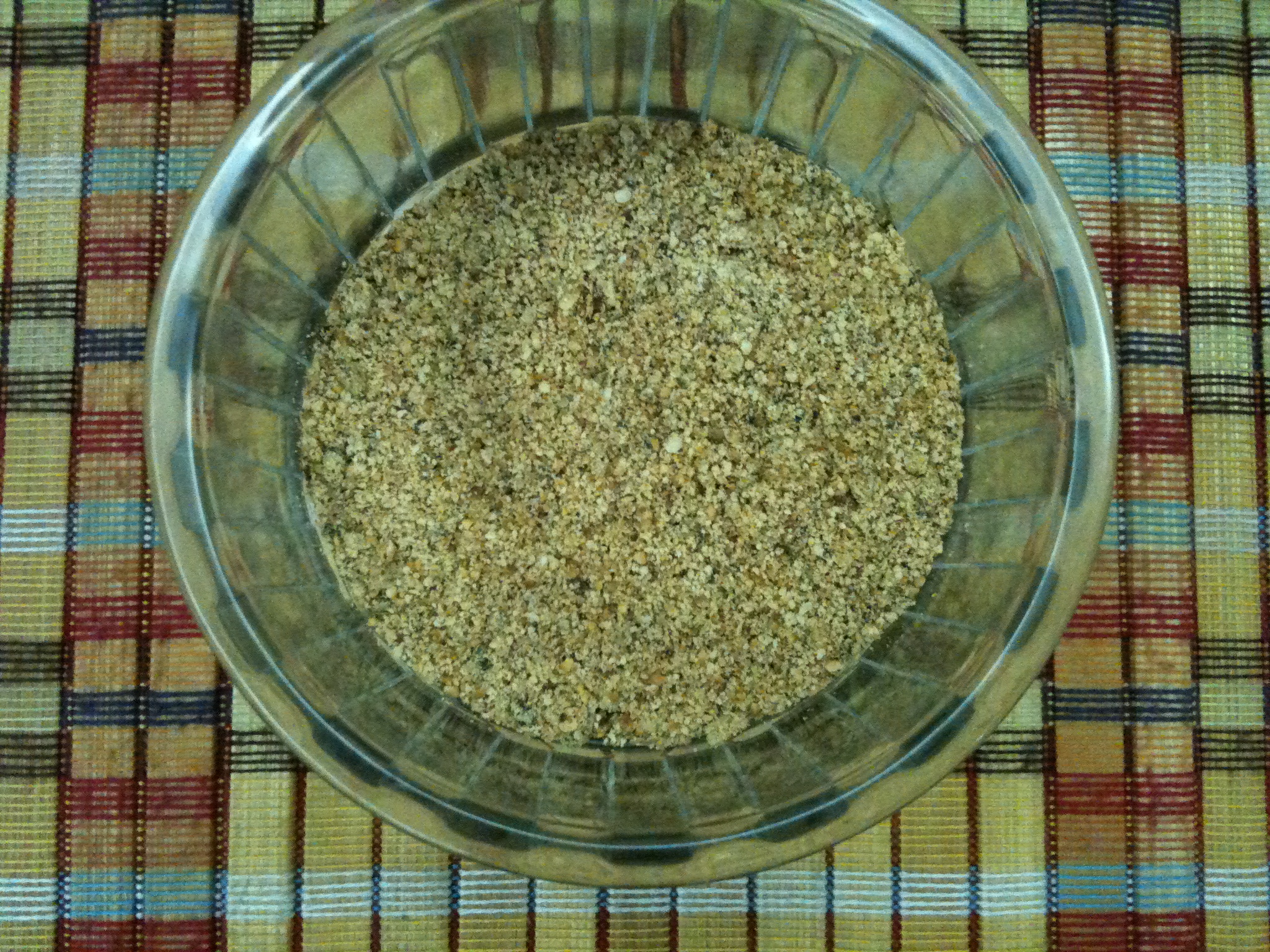
Milagai Podi or Gunpowder as it is commonly called, is a staple in most South Indian homes. It is basically a coarse to fine powder made out of different lentils and chillies. The powder is used as an accompaniment to Idlis and Dosas and is eaten with a serving of sesame or gingelly oil poured in it and mixing it up. The oil tones down the spiciness and dryness of the powder.

Different communities and families play around with the basic recipe to have a milagai Podi recipe which is unique to their home. This version was taught to me by my mother and is probably a variation of what is made in most Tamil Brahmin households.


Milagai Podi

Ingredients:

I cup Chana Dal

1 cup Urad Dal

¾ cup white Sesame seeds

1 cup chopped dry red chilies

1 tsp oil

¼ tsp asafetida

2 tbsps jaggary

Salt to tast

Method:

Before starting, soak the sesame seeds in water for around 10-15 minutes. While it is soaking, dry roast the chana dal and urad dal separately. Keep stirring the dal while roasting so that they do not burn. This is an important part of the whole cooking process. The dals should be totally dry and if you bite a piece, it should not have any softness or wetness in it. Once the dals are roasted, put them in separate plates to cool. At this point, strain the sesame seeds and dry roast it too. When the seeds start popping, it usually means they are done. At this point, pop a few into your mouth. If they crackle, they are done. Put this also in a separate plate to cool down. Now pour 1 tsp of oil (any oil can be used, I used my normal cooking oil, which is a blend of canola and olive oils) and add the asafetida powder. Then add in the chillies and stir for around 5-7 minutes. Switch off the gas and now we are ready for the blending. The chillies can be kept in the pan itself to cool down.

Once the dals are cool, grind each of them separately in a mixer. I prefer to have the podi more fine than coarse, but that is personal choice. If you prefer a coarser podi, grind it that way. Once you’ve ground the chana dal, put it in a big bowl to mix. Then grind the urad dal and the sesame seeds separately and add it to the bowl. Now grind the chillies and add it to the mixed lentils. Lastly, take the jaggary and run it in the mixer to powder it (if you have pre-powdered jaggary, this step is redundant) and add it to the bowl. Using a spoon or your hands, if you prefer, mix the various powders thoroughly. Add salt to taste and the podi is ready.

The colour of the podi will vary, depending on the type and colour of the red chillies. For best colour, use Kashmir chillies, they give you oodles of colour without being very spicy. The chillies I had were not Kashmiri chillies, so the colour is like this.

This recipe gives approximately 3 cups of powder, so if you want more or less, just reduce the proportions accordingly. The proportions according to my mom is like this for urad dal, chana dal, chillies and sesame seeds 1:1:1:3/4

Ven Pongal

During Navratri, I do not use either onion or garlic in my cooking and so finding different things to make daily is a bit of a challenge. After all, how many days can one make idli and dosa? Having two (actually make that three) fussy eaters in the house does not help.

I made Ven Pongal yesterday. This is a traditional South Indian breakfast dish which is incredibly filling. There are two versions of Ven Pongal – a sweet version called Sakara Pongal which is generally used as a neividhyam (offering) to God and the savoury version called Ven Pongal.This has a creamy buttery taste and it is traditionally served with coconut chutney. Here is my version of Ven Pongal.

Ingredients:

2 cups rice

1 cup moong dal

2 tbsps ghee

2 tbsps broken pieces of cashewnuts

a small bunch of curry leaves

2 green chillies, chopped

1 inch piece of ginger, peeled and chopped

1 tsp pepper powder

1 tsp cumin seeds

salt to taste

Method:

In a pressure cooker, dry roast the moong dal for a few minutes till it lightly browns and a nice aroma is released. Then add the rice, water and salt and cook it for around 4 whistles or till it is finely cooked. Once the steam is released, open the cooker and mix well. At this point, check for the salt and add more, if needed.

In another small pan, heat the ghee and fry the cashewnuts till they are crisp and brown. Drain them and put them into the rice/lentil mixture and using the same ghee fry the cumin seeds, pepper corns, curry leaves, ginger, green chillies and pepper powder for a few seconds. Then add this to the rice, mix well and serve hot. I served this with coconut chutney.

Kadhi

One of my favourite things to make when I can’t think of anything else to make is Gujarati Kadhi. This dish comes from the western state of Gujarat and was taught to me by a friend in college – M. The recipe has undergone many changes in the years that I’ve been making it. Kadhi can also be drunk as a yoghurt soup. The taste is a bit sour with slightly sweet undertone.

Ingredients:

2 cups slightly sour yoghurt

2 tablespoons gram flour (besan)

2 tsp salt

2 tsp sugar

1/4 tsp turmeric powder

1 tsp red chilli powder

1 tsp cumin seed powder (jeera powder)

1 tsp coriander seed powder (dhaniya powder)

2 green chillies, cut into big pieces and slightly smashed

2 inch piece ginger cut into fairly big chunks and slightly smashed

3 cups of water

For the tempering

1 tsp oil

1 tsp mustard seeds

1 tsp cumin seeds

a handful of curry leaves

1/2 tsp fenugreek seeds (methi seeds)

2 dried red chillies, broken

coriander leaves to garnish

Method:

In a big vessel, beat the yoghurt well and keep aside. In another smaller bowl take the besan and add the spices (salt, sugar, chilli powder, coriander seed powder, cumin seed powder) and beat well. Mix this with the yoghurt, adding water to make the consistency. Now add the ginger and green chillies. Leave it aside for about 10 minutes, this will allow the flavours to blend in well. Now put it on the gas and let it simmer for another 10 minutes making sure that gas is low and the mixture does not come to a rolling boil. When it starts boiling switch off the gas. In another small skillet, heat the oil and put the mustard in first. When it starts sputtering, put in the cumin seeds, fenugreek seeds, curry leaves and the dried red chillies. Stir it for a couple of seconds and then put the whole mixture into the kadhi. Garnish with coriander leaves and eat hot with rice or rotis or even drink it like a soup!

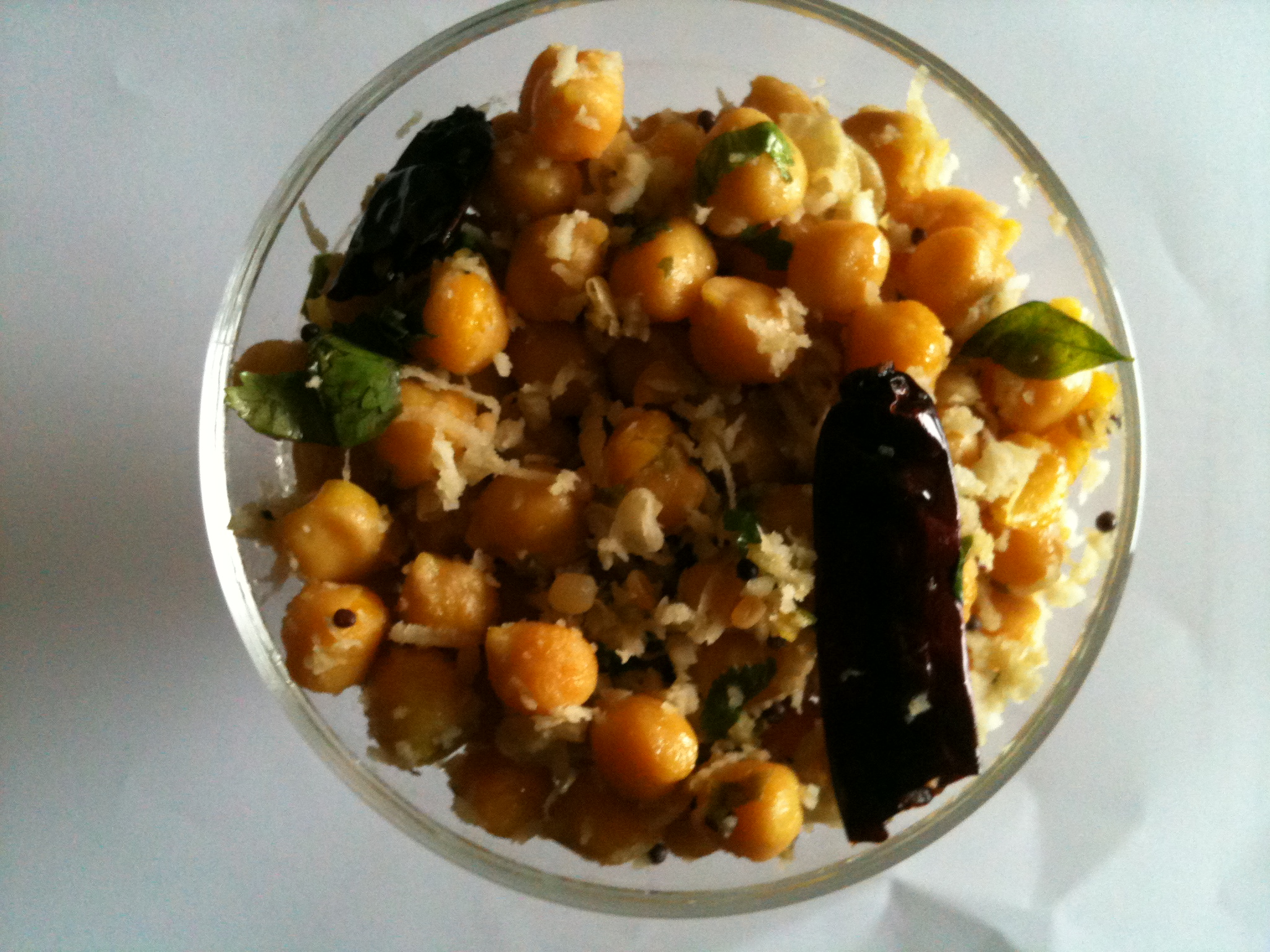
Navratri Chick pea Sundal

Yesterday GG & BB had a small concert in a nearby temple where they, along with their group mates sang one song the Lingashtakam. It was so cute seeing them sing it. I have recorded it and would love to put it here, but you the rules….Instead here is S.P. Balasubramanian singing the same song


Anyways, the temple has Sundal as one of the prasadams and so I also wanted to make it at home. It’s very easy and a very traditional Navratri offering.

Chickpea Sundal

Ingredients:

1 cup dry chick peas (Chole), soaked in water overnight, then pressure-cooked for about 4-5 whistles till it is soft

1 tsp oil

t tsp mustard seeds

1 tsp black gram dal or urad dal

a handful of curry leaves

half a tsp of green chilli paste

3 dried red chillies, broken

a pinch of asafoetida (hing)

2 tbsps dessicated cocounut

Salt to taste

coriander leaves to garnish

Method:

In a pan, heat oil and put the mustard seeds. When the seeds splutter, add the urad dal and the asafoetida. Now add the dried red chillies, curry leaves and green chilli paste. Stir for a few seconds and add the pressure-cooked chole along with salt. Stir again for a couple of seconds and then add the dessicated coconut. Stir well and switch off the gas, add the coriander leaves and serve.