
“Your daughter carries your lineage forward, not your son.”

It is one sentence, almost deceptively simple. At first glance, it sounds provocative. Perhaps even designed to provoke outrage in cultures deeply invested in the idea of sons as heirs and carriers of the family line. Yet the sentence lingers because it quietly unsettles one of humanity’s oldest social assumptions.
For centuries, patriarchal societies across the world have centred sons in conversations about legacy, inheritance, lineage, continuity, and family identity. Sons inherit surnames, sons are expected to continue the bloodlines, sons perform last rites in many cultures, and sons are seen as carrying the family name into the future.
Daughters, meanwhile, are often treated as temporary members of the household. In some parts of the world, phrases like “raising another family’s daughter” still exist. Women marry and traditionally leave their homes, their surnames, and sometimes even large parts of their identities behind. Even today, children are overwhelmingly identified through their father’s names and family lines.
And yet, from a biological perspective, the story becomes far more complicated. The sentence resonates because it exposes a contradiction between how societies define lineage and how life itself is physically carried forward. It opens a deeper conversation about biology, inheritance, patriarchy, memory, caregiving, and what human legacy actually means.
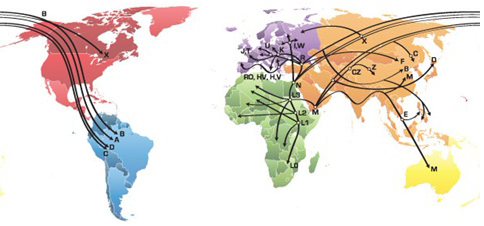
The science behind the statement is not entirely symbolic. One of the most discussed examples is mitochondrial DNA, which is passed almost exclusively from mothers to children. Fathers contribute nuclear DNA, but mitochondrial DNA, inherited through the maternal line, moves through generations via daughters. Sons receive it, but generally do not pass it onward.
This has allowed scientists to trace maternal ancestry across vast stretches of human history. In evolutionary biology, the concept of “Mitochondrial Eve” refers to the most recent common matrilineal ancestor from whom all living humans inherited their mitochondrial DNA. The phrase does not suggest there was only one woman alive at the time, but it highlights something fascinating: maternal lineage leaves a distinct biological trail through history.
Suddenly, the old cultural narrative begins to wobble slightly. The irony is striking. Many societies spent centuries insisting that sons carried lineage while simultaneously depending upon women to physically create, sustain, nurture, and transmit life itself. Of course, biology alone cannot explain the emotional force of the statement. What truly gives it weight is the historical imbalance surrounding how societies have valued men and women differently.
Most patriarchal cultures have overvalued sons in visible and institutional ways. Sons inherited property, family names, wealth, titles, religious authority, and social prestige. In many communities, the birth of a son was celebrated differently from the birth of a daughter. Families continued trying for boys after multiple daughters. In some places, a family was considered “complete” only once a male child arrived.
These attitudes were not random. They emerged from systems built around inheritance, warfare, labour, religion, property ownership, and male-controlled power structures. Patriarchy did not simply privilege men socially. It shaped how human continuity itself was imagined.
Yet underneath these systems existed another reality, quieter but no less important. Women carried civilisation forward in ways history often underacknowledged. Not only through childbirth, though that alone is extraordinary enough, but through caregiving, oral storytelling, emotional continuity, ritual preservation, and the daily labour of holding families and communities together. Across cultures, daughters frequently became the emotional archivists of family life. They remembered birthdays, maintained kinship ties, preserved traditions, cared for ageing parents, and passed stories between generations.
Much of this work remained invisible precisely because it was feminised.
Societies frequently glorified motherhood symbolically while limiting women socially. Mothers were revered in poetry, religion, and cultural rhetoric, yet denied equal autonomy, inheritance, authority, or recognition. Women gave birth to children who were then absorbed into the father’s lineage, surname, clan, and family identity. There is a strange emotional contradiction in that arrangement.
A woman physically carries life within her body for months, experiences the risks and transformations of pregnancy, contributes profoundly to the child’s earliest biological environment, and often becomes the primary emotional caregiver, yet the child is culturally framed as belonging primarily to the father’s family line.
The question becomes difficult to ignore: who exactly defines lineage, and why? Historically, men largely controlled inheritance systems, legal institutions, religious structures, and property rights. It is, therefore, unsurprising that lineage itself became defined through male continuity. Family names followed fathers. Dynasties followed fathers. Historical memory often followed fathers.
But lineage has never been purely biological. Even societies obsessed with bloodlines understood this instinctively. What survives across generations is not merely DNA. It is memory. Values. Stories. Rituals. Emotional inheritance. Ways of seeing the world.
This is perhaps where daughters have historically played a far larger role than societies openly acknowledged.
In many families, women become the carriers of emotional continuity. They remember recipes, customs, songs, languages, festivals, family histories, and the emotional geography of relationships. They become bridges between generations. Anthropologists have long noted that women frequently act as social connectors within kinship networks, maintaining ties that men sometimes participate in more loosely.
This does not mean men are incapable of caregiving or emotional preservation. Rather, societies traditionally conditioned women into these responsibilities while often giving men greater freedom from them.

Patriarchy created a peculiar imbalance: women were expected to preserve culture while men were publicly credited with representing it. Even surnames reveal something revealing about this system. In many cultures, women lose or change their surnames after marriage, symbolically entering another family line. The practice is so normalised that questioning it can seem radical despite how deeply identity-altering it actually is. A woman may spend her entire childhood associated with one family name only to relinquish it in adulthood.
Yet even within these systems, resistance exists quietly. Many women now retain their surnames, hyphenate them, or seek ways to preserve maternal identity within family structures. These choices may seem administrative on the surface, but they often carry deeper emotional meaning. They challenge centuries-old assumptions about who gets remembered and how.
Interestingly, not all societies historically organised themselves around strict patriarchal lineage. Several matrilineal or matriarchal communities around the world structured inheritance and family identity differently. In India, the Khasi community of Meghalaya is one of the most well-known examples. Property traditionally passes through daughters, especially the youngest daughter, and children take the mother’s surname. Maternal uncles often play major roles in family structures. The Nairs of Kerala historically followed matrilineal systems as well, with lineage and inheritance traced through women. Similar patterns appear in parts of Indonesia, China, Africa, and among some Indigenous communities globally.
These societies complicate the idea that patriarchy is somehow biologically inevitable. They remind us that human cultures are constructed systems, not fixed laws of nature.
At the same time, even matrilineal societies are not necessarily perfect reversals of patriarchy. Power dynamics remain complicated. Yet they offer important evidence that lineage itself can be imagined differently.
The biology surrounding motherhood deepens this conversation further. Pregnancy is not merely a passive process where women “carry” babies. Maternal health, stress, nutrition, environment, and emotional wellbeing can shape foetal development profoundly. Epigenetics, the study of how behaviours and environments influence gene expression, suggests that experiences may leave biological traces across generations.
Researchers continue exploring how trauma, famine, stress, and environmental exposure affect descendants through epigenetic changes. The science is still developing, but it reinforces an idea many cultures intuitively understood long before genetics existed: mothers shape generations in ways deeper than visible inheritance alone.
Even the language surrounding pregnancy often understates the scale of what women physically do. Human reproduction is frequently framed socially rather than biologically. Yet from a physical perspective, women create life using their own bodies as the environment through which future generations first encounter existence.
This reality becomes strangely minimised in patriarchal cultures that centre male lineage so heavily. Perhaps this explains why the sentence about daughters carrying lineage feels emotionally charged. It does not merely present a scientific curiosity. It exposes a historical imbalance between recognition and reality.
Still, the article cannot become simplistic. Patriarchy is not merely the result of men consciously suppressing women because they understood female biological importance. Human societies evolved through complicated mixtures of survival, labour division, violence, inheritance structures, religion, economics, migration, and social organisation.
Yet it is difficult to ignore how frequently women’s contributions became both essential and undervalued simultaneously.
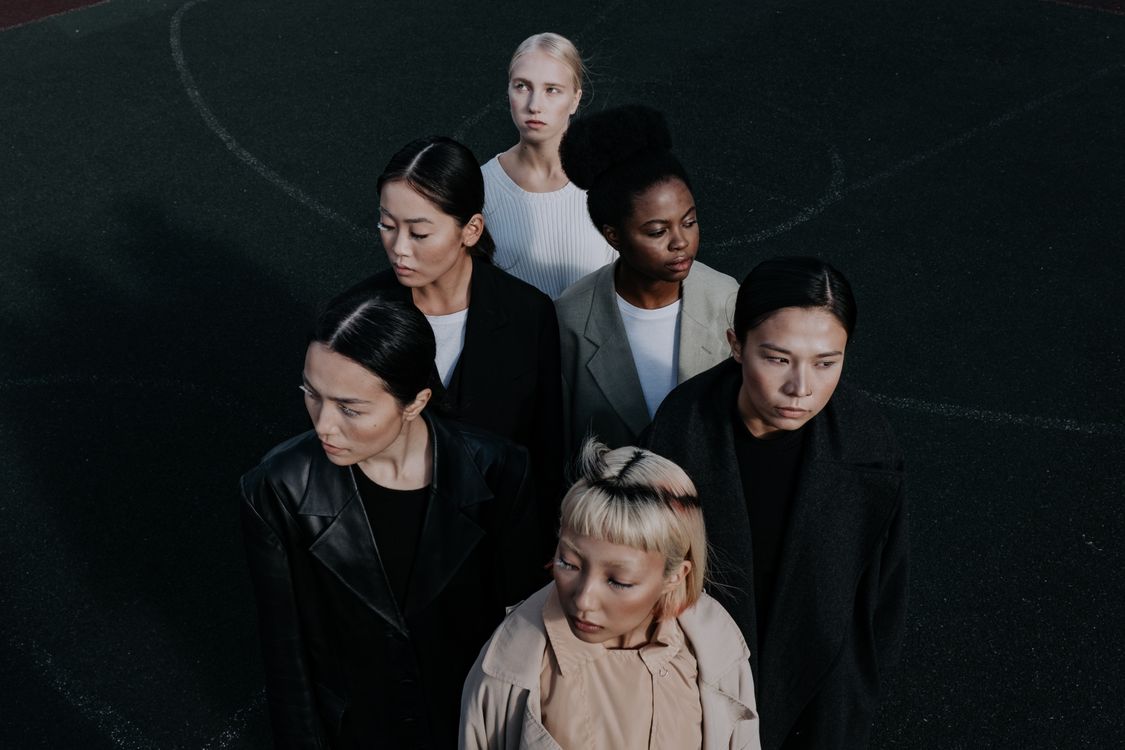
Women have often carried enormous responsibility while receiving limited authority. They preserved households while lacking ownership over them. They transmitted culture while being excluded from shaping formal institutions. They sustained communities emotionally while remaining underrepresented in historical memory.
Even today, traces of these patterns remain everywhere. Women continue performing disproportionate amounts of unpaid emotional and caregiving labour globally. Daughters are still frequently expected to care for ageing parents more than sons. Cultural traditions often rely heavily upon women to preserve them. At the same time, many societies still subtly prioritise male continuity in language, inheritance, and social status.
Modern urban cultures may be shifting gradually, but patriarchy remains deeply embedded structurally. Most children still inherit paternal surnames. Family identity still tends to follow fathers socially. Many women continue facing pressure surrounding marriage, motherhood, and domestic expectations in ways men do not experience equally.
The emotional impact of all this becomes especially visible in motherhood itself. Societies often celebrate mothers abstractly while controlling women concretely. Motherhood is idealised, sanctified, and romanticised, yet actual mothers may receive limited structural support, autonomy, or recognition. The same culture that reveres mothers may still deny women equal authority over inheritance, naming conventions, reproductive choices, or public power.
There is something profoundly contradictory about that arrangement. Perhaps the deeper power of the original sentence lies not in proving daughters are biologically “more important” than sons. That would simply reverse one hierarchy into another. Its real significance lies in forcing reconsideration.
What if lineage was never only about surnames, inheritance, or male continuity? What if lineage is actually carried through memory, care, values, emotional continuity, and the countless invisible ways human beings shape one another across generations? If that is true, then women have always carried civilisation forward far more deeply than historical systems often acknowledged.
This does not diminish fathers or sons. Nor does it reduce women to biology or motherhood. Not all women become mothers, and no woman’s worth should depend upon reproduction. The conversation is larger than that. It is about recognising how societies define significance itself. For centuries, visible power was coded masculine, while invisible sustaining labour was coded feminine. Public achievement was remembered more easily than emotional continuity. Dynasties and surnames became historical markers while caregiving and preservation faded quietly into the background despite being equally essential to human survival.
Yet memory has its own kind of endurance. People are often remembered within families differently along gendered lines. Men may be remembered through status, professions, achievements, or public roles. Women are frequently remembered through relationships, emotional warmth, rituals, food, caregiving, and family continuity.
One form of legacy is not necessarily greater than the other. But history has rarely valued them equally. Perhaps that imbalance is slowly beginning to shift. More people now question naming conventions, inheritance assumptions, caregiving expectations, and gendered family roles. Feminist thought has expanded conversations about invisible labour, emotional work, reproductive justice, and historical erasure. Science itself has also complicated simplistic ideas about lineage and inheritance.
And maybe that is why the sentence resonates so strongly now. Because it arrives at a moment when many women are reassessing what they were told about family, identity, legacy, and belonging. For generations, daughters were often taught they would eventually leave one family to join another. Yet many women continued carrying emotional continuity between generations regardless of where they lived or what surnames they held. They remained the keepers of stories, rituals, relationships, and care.
Perhaps lineage was never as simple as societies claimed. Perhaps the people who carried humanity forward were not always the ones history centred most visibly. And perhaps the future will require redefining lineage itself, not as ownership or patriarchal continuity, but as the human responsibility to preserve life, memory, dignity, and connection across generations.
If so, daughters have been carrying it all along.

