
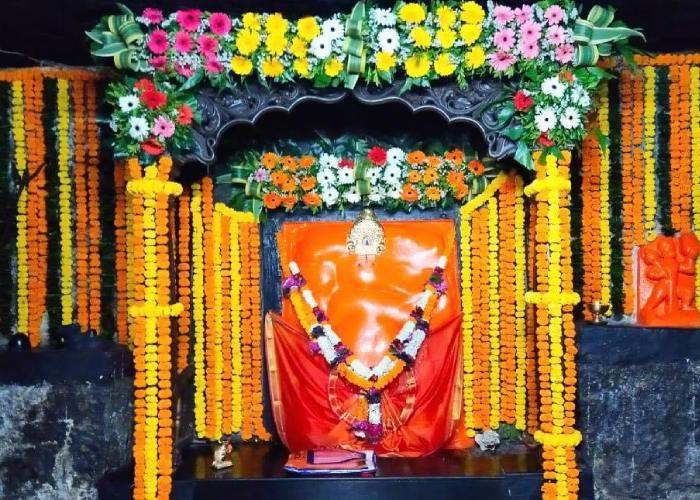
Perched high on the rugged hills of Junnar in Pune district, the Girijatmaj Temple at Lenyadri is a remarkable confluence of natural beauty, ancient history, and deep spiritual resonance. Unique among the eight Ashtavinayak shrines dedicated to Lord Ganesha, Girijatmaj is the only temple set atop a mountain and carved into a single monolithic rock within a complex of ancient Buddhist caves. Here, Ganesha is worshipped as the “son of Girija”, another name for Goddess Parvati, and the temple is a living testament to the power of maternal devotion, the endurance of faith, and the seamless blending of India’s Buddhist and Hindu heritages.
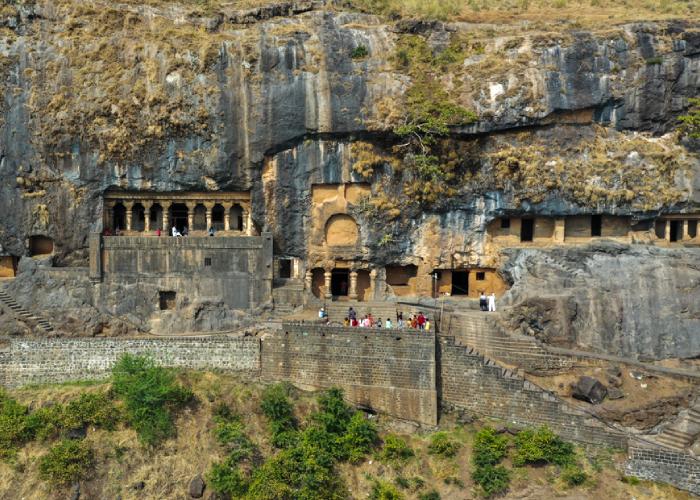
Lenyadri, also known as Ganesh Lena or Ganesh Pahar, is located about 95 km from Pune and 5 km from Junnar. The temple sits at the heart of a cluster of 30 rock-cut Buddhist caves, which date back to the 1st–3rd centuries AD and are scattered along a cliff face. The caves overlook the Kukadi River valley, offering breathtaking views of the surrounding green hills, especially after the monsoon when the landscape is lush and vibrant. To reach the temple, pilgrims and visitors must climb 307–315 stone steps, flanked by playful monkeys and mountain streams. The ascent is both a physical and spiritual journey, with the panoramic vistas and the cool mountain air preparing the mind for the sanctity that awaits at the summit.
The story of Girijatmaj is rooted in the deep yearning of Goddess Parvati for a child. According to the Ganesh Purana, after taking the form of Parvati, having previously been Sati, the goddess desired to have Ganesha as her son. She chose the caves of Lenyadri, then known as Jirnapur or Lekhan Parbat, as her place of penance. For twelve years, Parvati performed intense austerities and prayers inside these caves, seeking the blessing of motherhood.
Pleased by her unwavering devotion, Lord Ganesha granted her wish. On the auspicious day of Bhadrapada Shuddha Chaturthi, or Ganesh Chaturthi, Parvati scraped the dirt from her body, mixed it with oil and ointment, and fashioned an idol of Ganesha. As she worshipped this idol, it miraculously came to life, and Ganesha declared that he had incarnated as her son, as desired. Shiva later named the child Ganesh, meaning “one who keeps the three qualities: Satva, Raja, and Tama, under control.” Ganesha spent his childhood at Lenyadri, and for fifteen years, the caves were his playground and home.
The caves of Lenyadri are also the backdrop for several of Ganesha’s legendary childhood adventures. According to the Ganesh Purana, the demon king Sindhu, forewarned that his death would come at the hands of Ganesha, sent a series of demons—Krur, Balasur, Vyomasur, Kshemma, and Kushal—to kill the young deity. Ganesha, even as a child, vanquished all his adversaries and performed many playful miracles, or balleelas, in and around the caves. These stories are cherished by devotees and add to the temple’s aura of divine protection and joy.
The Lenyadri caves were originally carved as Buddhist viharas and chaityas, monastic dwellings and prayer halls, during the Hinayana phase of Buddhism, between the 1st and 3rd centuries AD. Of the approximately 30 caves, most served as monastic quarters, while a few were chapels. Cave 7, which now houses the Girijatmaj Temple, was originally a vihara, a communal hall for monks.
Over centuries, as Buddhism waned and Hinduism reasserted itself in the region, the caves were adapted for Hindu worship. The transformation of Cave 7 into a Ganesha shrine is a striking example of India’s syncretic religious history, where sacred spaces evolve and retain their spiritual significance across faiths.

The entire temple is hewn from a single rock, with no separate structural additions. This gives the temple its cool, serene ambience, regardless of the weather outside. The main hall, the sabha-mandapa, is a spacious, unpillared chamber measuring 53 feet long, 51 feet wide, and 7 feet high. It contains 20 cells of varying sizes, originally used by Buddhist monks. The central entrance is flanked by two windows, and a pillared veranda leads into the hall. The sanctum is not a separate structure but a niche in the back wall of the cave. The image of Ganesha is not a free-standing idol but a relief carved directly into the stone wall. The idol faces east, with its trunk turned to the left, and only one eye is visible. The icon is covered in indoor, or vermilion, in keeping with the tradition of Ashtavinayak temples. During the day, sunlight streams into the sanctum, bathing the idol in a celestial glow and enhancing the temple’s mystical atmosphere. The temple lacks a separate shikhara, or spire; gopuram, or gateway; or ornate carvings typical of Hindu temples, emphasising its monastic origins and simplicity.
The temple opens early in the morning and closes at sunset. Devotees offer flowers, durva grass, and modaks to the deity. The idol, being part of the rock, is not adorned with clothes or ornaments but is anointed with sindoor and sometimes oil. Ritual bathing, abhishek and aarti, and the waving of lamps are performed daily. Devotees can sponsor abhishek or aarti as a special offering. Circumambulation, or pradakshina, of the temple is performed within the main hall, as the structure is carved into the mountain. The most important festival is Ganesh Chaturthi, or Bhadrapada Shuddha Chaturthi, when thousands of pilgrims climb the steps to offer prayers. Special aartis, abhisheks, and communal feasting mark the occasion. Other festivals like Maghi Ganesh Jayanti, which is Ganesha’s birthday, and Sankashti Chaturthi, a monthly festival, are also celebrated with great devotion.
Many devotees undertake the climb of 307–315 steps barefoot as an act of penance or to fulfil vows, believing that the effort itself invokes Ganesha’s blessings. The temple’s monastic origins and serene setting make it a favoured spot for meditation and quiet contemplation. The absence of loud music or elaborate rituals preserves the cave’s tranquil atmosphere.

The name “Girijatmaj” combines “Girija,” another name for Parvati, the daughter of the mountain, and “Atmaj,” or son, emphasising Ganesha’s identity as the beloved child of Parvati. The temple thus celebrates the bond between mother and son, and by extension, the nurturing, protective aspect of the divine.
Girijatmaj is the only Ashtavinayak temple located on a mountain, symbolising the spiritual ascent a devotee must undertake to reach the divine. The physical climb is a metaphor for the inner journey of discipline, faith, and perseverance. The temple’s setting within a Buddhist vihara highlights the fluidity of India’s religious traditions. The peaceful coexistence of Buddhist and Hindu elements is a powerful reminder of the region’s pluralistic heritage.
Girijatmaj is traditionally the sixth temple visited on the Ashtavinayak pilgrimage, though the order can vary. Its unique location and the legend of Ganesha’s birth make it a highlight of the yatra. Pilgrims often combine their visit with a trek through the other caves, exploring the rich tapestry of Buddhist art and architecture that surrounds the temple.
The Girijatmaj Temple at Lenyadri is a living symbol of faith, perseverance, and the enduring bond between mother and child. Its legends speak of penance rewarded, demons vanquished, and the joy of divine play. Its architecture, carved from living rock, stands as a testament to the artistry and spiritual vision of ancient India.
 Memories and Such