
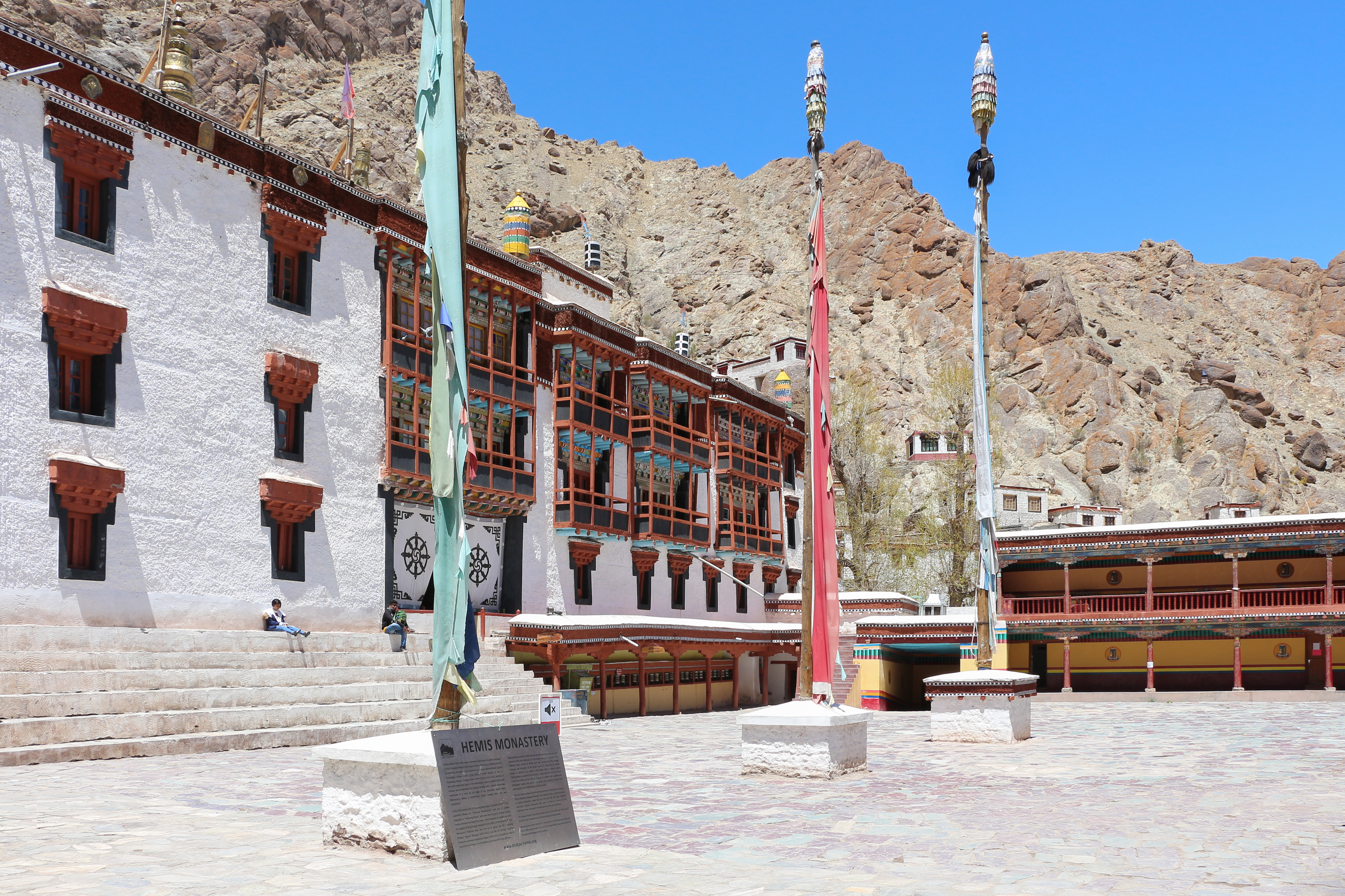
Ladakh, a mesmerising region nestled in the Indian Himalayas, is renowned for its breathtaking landscapes and its vibrant cultural heritage. Among the various festivals celebrated in Ladakh, Hemis Tsechu holds a significant place. The annual two-day festival is a symbol of the region’s deep-rooted Buddhist traditions. The festival commemorates the birth anniversary of Guru Padmasambhava, a revered Buddhist master, credited with spreading Tantric Buddhism in the region in the 8th century.
Hemis Tsechu is an annual festival celebrated at the Hemis Monastery, one of the most significant monastic establishments in Ladakh. The festival honours the birth anniversary of Guru Padmasambhava, also known as Guru Rinpoche and the Second Buddha, the founder of Tibetan Buddhism. Guru Padmasambhava is revered for his teachings and his role in spreading Buddhism across the Himalayan region. Hemis Monastery, situated in the Hemis village, becomes the focal point of the festivities during this occasion. The festival is observed by the Drukpa lineage of Tibetan Buddhism, which is a sub-sect of the ancient Kagyu order. For the Drukpa order, Padmasambhava is considered an incarnation of the Buddha himself, and his birthday is celebrated annually with great reverence and devotion.
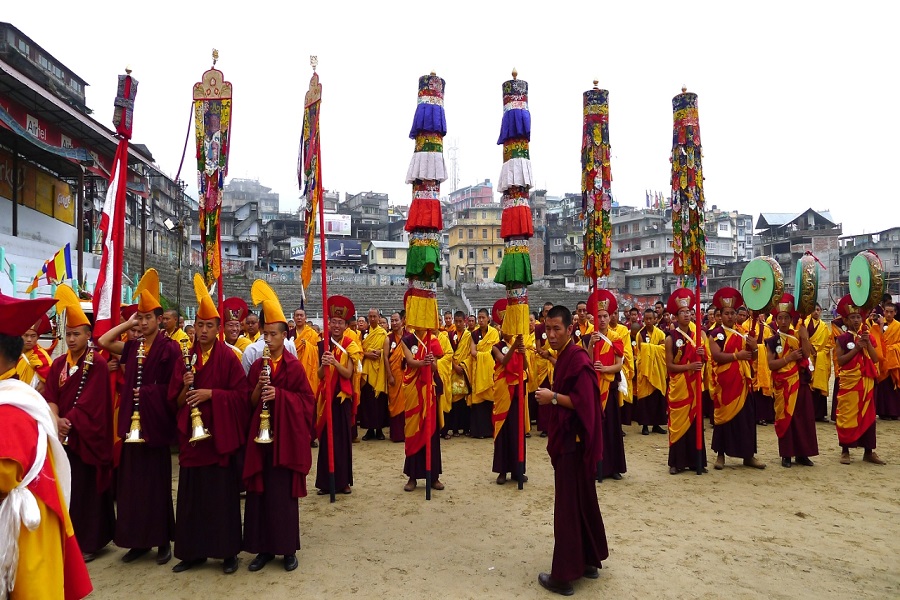
The Hemis Gompa or monastery, is the venue of the festival. The gompa is one of the largest and wealthiest Buddhist monasteries in Ladakh. Nestled in the picturesque Zanskar Range, the Hemis Monastery was founded in the 17th century under the patronage of King Sengge Namgyal and has since been a prominent centre of Buddhist learning and spirituality. The festival takes place in the vast courtyard of the monastery, where the sacred rituals and performances unfold against the backdrop of the majestic Himalayas. The monastery’s intricate architecture, adorned with vibrant murals and statues, creates an awe-inspiring atmosphere for the celebrations.
Hemis Tsechu is a two-day extravaganza filled with sacred rituals, mesmerising dances, and vibrant cultural displays. The festivities typically commence on the 10th day of the fifth month of the Tibetan calendar, which usually falls in June or July according to the Gregorian calendar. Preparations for Hemis Tsechu begin well in advance. The monastery is meticulously cleaned and adorned with colourful decorations, intricate Thangka paintings, and elaborate murals. The festival attracts devotees from far and wide, who arrive dressed in their finest traditional attire. The main highlight of the festival is the Cham Dance, a masked dance performed by the lamas or monks, of the monastery.
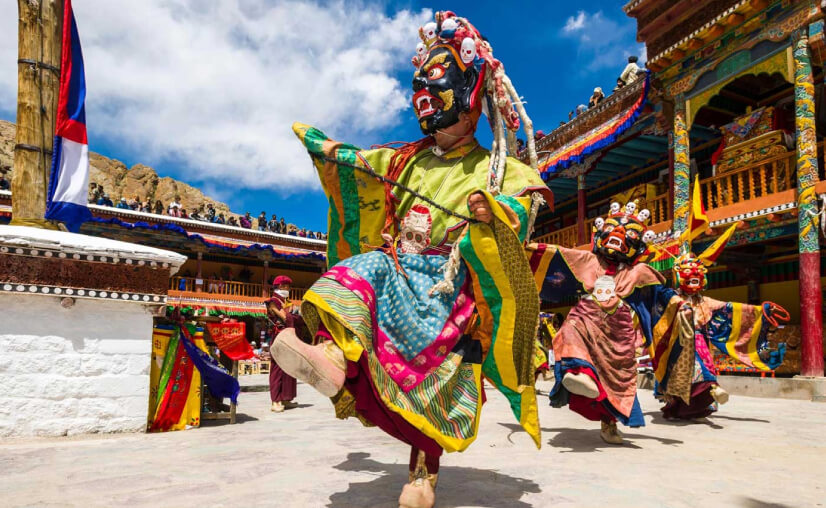
The Cham Dance is the heart and soul of Hemis Tsechu. Also known as the Masked Dance, the dance is performed by skilled monks adorned in elaborate costumes and intricate masks and depicts the victory of good over evil through a series of symbolic movements and gestures. The dancers represent various manifestations of Guru Padmasambhava, each with its unique mask and costume. The dances are accompanied by the rhythmic beats of drums, cymbals, and long horns, creating a hypnotic and mesmerising atmosphere. The dance not only entertains the audience but also serves as a medium of spiritual enlightenment and blessings.

Another significant ritual during the Hemis Tsechu is the unfurling of a massive silk thangka, a Buddhist religious scroll painting, depicting Guru Padmasambhava. This sacred ritual occurs every 12 years on the Tibetan calendar’s Monkey Year and is highly anticipated. Thangkas, considered a sacred art, depict various Buddhist deities, mandalas, and spiritual symbols. The unveiling of the Thangka is a solemn and awe-inspiring ceremony, with monks chanting sacred mantras and offering prayers as the intricate artwork is slowly revealed to the public. The thangka’s vibrant colours and intricate details are believed to bestow blessings upon those who witness it.
Throughout the two-day festival, monks from the monastery perform various rituals and ceremonies. These include prayer recitations, offerings to deities, and the destruction of a symbolic effigy representing evil forces. These rituals are believed to bring prosperity, happiness, and spiritual well-being to all those in attendance. The festival also features traditional Ladakhi music and dance performances, adding to the vibrant cultural tapestry of the celebrations.

The Hemis Tsechu festival stands out for its unique blend of ancient Buddhist traditions, vibrant cultural expressions, and the breathtaking natural setting of Ladakh. The festival holds deep spiritual significance for the Buddhist community, as it celebrates the life and teachings of Guru Padmasambhava, a revered figure who played a pivotal role in spreading Buddhism in the Himalayas. The Cham Dance, with its intricate masks and costumes, is unique to the festival. The dancers’ movements and gestures are steeped in symbolism, depicting the triumph of good over evil and the various manifestations of Guru Padmasambhava. The ceremonial unfurling of the massive silk thangka depicting Guru Padmasambhava is a rare and awe-inspiring event that occurs only once every 12 years, making it a truly unique experience for visitors. Hemis Tsechu offers a profound opportunity for cultural immersion, allowing visitors to experience the rich traditions, music, dance, and cuisine of the Ladakhi people against the backdrop of the majestic Himalayas. The festival’s location in the remote and isolated region of Ladakh adds to its mystique and allure, providing visitors with a chance to escape the hustle and bustle of modern life and immerse themselves in the serene and spiritual atmosphere of the Himalayas.
Hemis Tsechu offers a glimpse into the vibrant Ladakhi culture. The festival provides a platform for local artisans, craftsmen, and traders to showcase their traditional handicrafts, jewellery, and textiles. Visitors can explore the bustling market stalls and immerse themselves in the rich tapestry of Ladakhi artistry. Moreover, the festival provides an opportunity to savour the delicious traditional Ladakhi cuisine, including momos or dumplings, thukpa or noodle soup, and butter tea. The festival is a captivating celebration that seamlessly blends ancient Buddhist traditions with the vibrant cultural heritage of Ladakh. It offers a unique opportunity to witness the spiritual and artistic expressions of a region steeped in history and mysticism, making it a truly unforgettable experience for visitors from around the world.
 Memories and Such