In My Hands Today…

Masala Lab : The Science of Indian Cooking – Krish Ashok
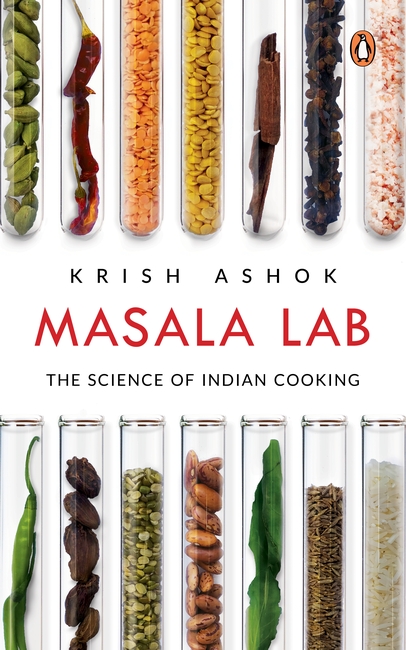
Ever wondered why your grandmother threw a teabag into the pressure cooker while boiling chickpeas or why she measured using the knuckle of her index finger? Why does a counter-intuitive pinch of salt make your kheer more intensely flavourful? What is the Maillard reaction, and what does it have to do with fenugreek? What does your high school chemistry knowledge, or what you remember of it, have to do with perfectly browning your onions?

Masala Lab by Krish Ashok is a science nerd’s exploration of Indian cooking with the ultimate aim of making the reader a better cook and turning the kitchen into a joyful, creative playground for culinary experimentation. Just like memorizing an equation might have helped you pass an exam but not become a chemist, following a recipe without knowing its rationale can be a suboptimal way of learning how to cook.

Exhaustively tested and researched, and with a curious and engaging approach to food, Krish Ashok puts together the one book the Indian kitchen definitely needs, proving along the way that your grandmother was right all along.

Recipe: Orange Kozambu

During the Chinese New Year period, here in Singapore, you get lots of different types of Mandarin oranges. I love Mandarin oranges and during that time, on a call with my mum and sister, we started talking about the Orange Kozambu my mum used to make. Inspired by that call and the two cartons of Mandarin oranges I had in the house, I made some of this delicious kozambu. I made it slightly different from how my mother makes it, making it more like my Milagu Kozambu and I felt this was a better way to make it as it kept for more than a week in the fridge. This is perfect with some rice and any stir-fried curry on a cold or rainy day. You can increase the number of peppercorns depending on your spice tolerance.

Orange Kozambu

Ingredients:

  • 2 mandarin oranges
  • 2 tsp Peppercorns
  • 7-8 Red Chillies
  • 2 tsp Urad Dal
  • 3 tsp Chana Dal
  • 1 tsp Cumin Seeds
  • 3 tsp Coriander Seeds
  • 1 tsp Mustard Seeds
  • Tamarind piece as big as a piece of lime (make sure you remove all fibre from the tamarind as well as any seeds which may be there). Alternatively, you can use 1-2 tbsp tamarind paste
  • Salt to taste
  • 2-3 tbsp jaggery powder
  • ¼ tsp Asafoetida
  • 2 tbsp Gingelly Oil (if this oil is not available, then use the oil you use for your daily cooking)

Method:

  • Peel the oranges and remove any fibre from the peel as well as the segments.
  • Chop the orange peel into fine pieces and remove the seeds from the segments and chop them also finely.
  • Wash the peel and the segments and keep them aside.
  • In a pan, heat about 1 tbsp gingelly oil and after the oil warms up, add the tamarind piece, peppercorns, red chillies, urad dal, chana dal, asafoetida, cumin seeds and coriander seeds and fry them until the urad dal turns a golden brown colour.
  • If you are using tamarind paste, don’t add the paste to the oil, instead, you can use it while cooking the kozambu.
  • Once the spices cool down, blend them to a fine paste and keep aside.
  • Heat the balance gingelly oil and when the oil warms up, add the mustard seeds and let them splutter.
  • Then add the chopped mandarin orange peel and segments and fry for about 5-7 minutes, until the peel is fully cooked.
  • Then add the blended paste and enough water to make the kozambu to the consistency you require. This kozambu will thicken slightly when cool, so thin it accordingly.
  • Add salt to taste as well as some jaggery if you find it spicy and let it cook till the orange peel and segments are fully cooked and the mixture becomes thick and reduces.
  • Check for seasoning and switch off the gas.
  • Serve hot with rice and any curry. Potatoes go very well with this kozambu.

Recipes: Vazhakai Podimas

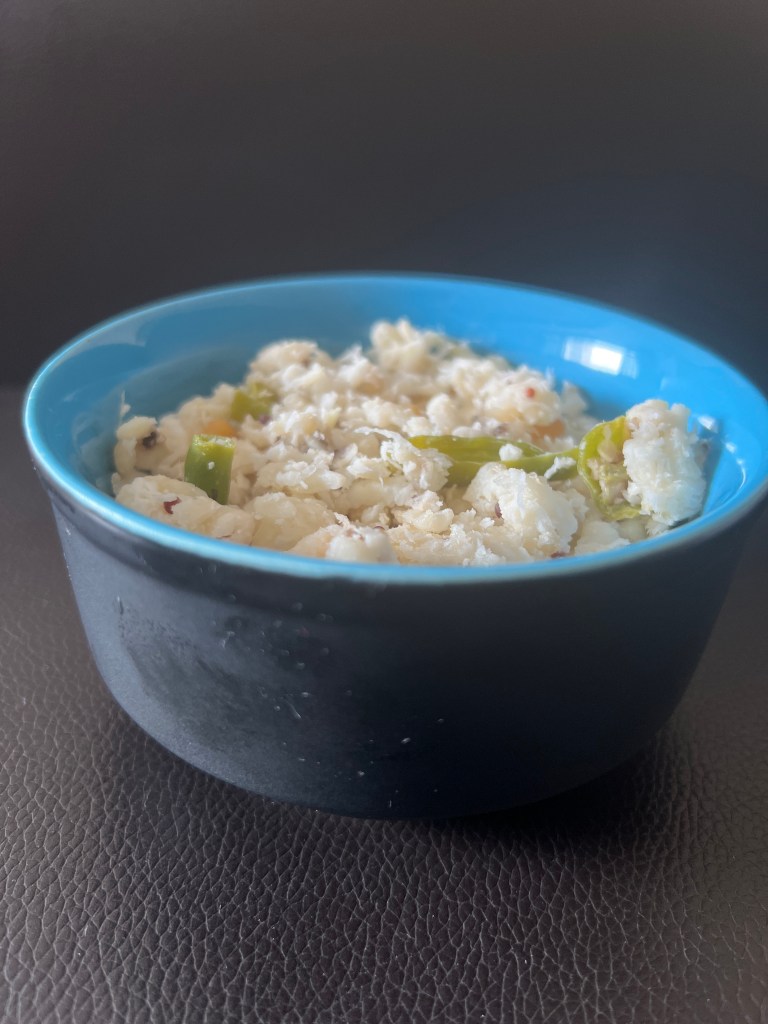
A very traditional tambram dish, Vazhakai Podimas is a healthy plantain stir fry which barely uses any oil. So this is a very good alternative for those who want to eat green bananas, but don’t want to fry them.

Vazhakai Podimas

Ingredients:

  • 4 medium-sized raw bananas
  • 4 tbsp grated coconut
  • 1 tbsp grated ginger
  • 1 tbsp oil or ghee
  • 1 tsp mustard seeds
  • 1 tbsp split urad dal
  • 1 tsp green chilli paste or 2 green chillies, chopped
  • 3-4 curry leaves, torn
  • 1-2 tsp lemon juice
  • Salt to taste

Method:

  • Wash the raw banana and discard the top and bottom. Cut the bananas into 2-3 large pieces.
  • In a large pan heat water and once the water comes to a rolling boil add the raw bananas and cook them for about 5-6 minutes until the bananas are cooked. You can also steam the bananas.  
  • Once the bananas are cooked evenly and the skin darkens, remove them from the water and peel the skin. Because it is fully cooked, the skin should come off easily.
  • Take out the cooked raw bananas from the water and allow them to cool completely. Peel the skin and grate them after peeling.
  • Now add the grated ginger, coconut and salt and gently mix so the grated raw banana does not get mushy.
  • Heat the oil or ghee in a pan. Once the oil is warm, add the mustard seeds and let them splutter. At this point, add the urad dal and let the dal slightly brown.
  • Then add the green chilli paste or green chilles and curry leaves and stir well.
  • At this point, add the grated bananas which has been mixed with ginger, coconut and salt and mix gently so the tempering is mixed with the vegetable.
  • Drizzle some lemon juice and serve hot with any south Indian meal like sambar or rasam.

Recipes: Sweet Aval or Poha

During the last Krishna Jayanthi festival, while I was speaking with my mum, she told me that Lord Krishna loves aval or poha which are flattened rice flakes and that I should include this dish when I make my neividhyam to the Lord. I had not made this recipe before so I asked her the recipe and this is what she told me. The result was a sweet dish which was not too rich and once that took me barely 15 minutes to make. All the ingredients are usually pantry staples, so if you are in a hurry and have these ingredients on hand, you can make a quick offering to God in 15 minutes or less. The colour of your dish will depend on your jaggery, so try and get the darkest jaggery you can find.

Sweet Aval or Poha

Ingredients:

  • 1 cup aval or poha
  • ½ cup powdered jaggery
  • ¼ tsp cardamom powder
  • 1 tbsp grated coconut
  • 1 tbsp ghee
  • 5-10 cashew nuts

Method:

  • Wash the poha well, drain and keep it aside
  • In a pan, heat the ghee and when the ghee heats up, fry the cashew nuts to a golden brown colour. Drain into a kitchen towel and keep aside.
  • In the same pan, add the powdered jaggery and 1 tbsp of water and bring the jaggery to a nice rolling boil.
  • When the jaggery has completely melted, add in the washed and drained poha and mix well.
  • Add the cardamom powder and coconut and mix well.
  • Add in the fried cashew nuts, mix well and switch off the gas.
  • Remove to a serving dish and serve hot.

Note: I used organic powdered jaggery, so I didn’t have to strain it. If you are using the lump jaggery, chop enough to make ½ a cup and heat it with a tablespoon of water. Once the jaggery syrup has cooled down, strain it to remove any impurities and continue with the recipe.

Recipes: Badam Doodh or Almond Milk

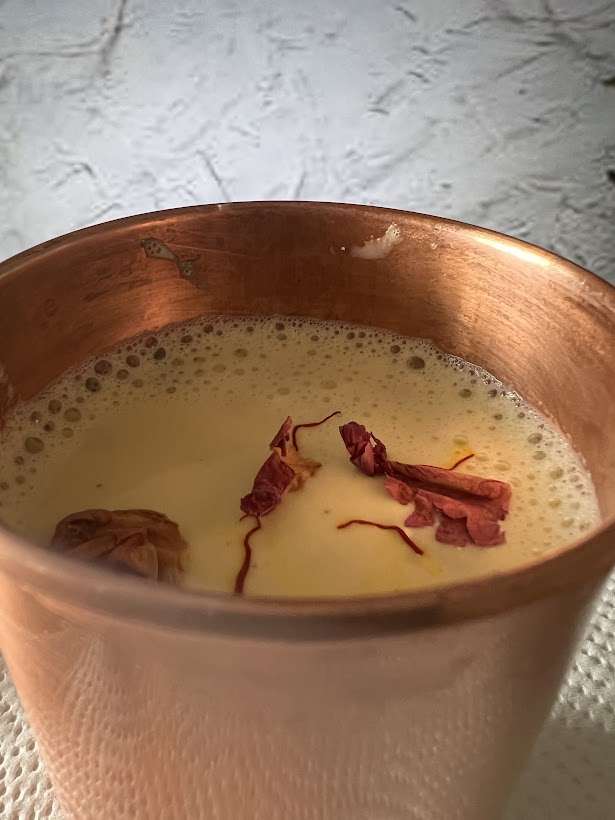
A very refreshing drink made out of milk and almonds, Badam or Almond Milk. Flavoured with cardamoms, saffron and rose water, this exotic, but simple and easy-to-make drink is the perfect drink when you have a sweet craving. Almond milk is rich in vitamin E, which is an important antioxidant which can help lower the risk of serious health conditions like stroke, heart disease, and even cancer. You can also make this for neividhyam or as an offering to God, which is what I made it for. Tasting great hot and cold, my family prefers this cold as that is when the flavours have had time to meld together, giving you a yummy almondy drink.

Badam Doodh or Almond Milk

Ingredients:

  • litre full cream milk
  • 30-40 almonds
  • 4- 6 tbsp sugar
  • ½ tsp cardamom powder
  • 2 generous pinches saffron
  • ½ tsp rose water

Method:

  • Soak the almonds in hot water for 20-30 minutes, then drain and remove the skin
  • Blend the almonds with some of the milk until the almonds become a fine paste. Keep aside.
  • Heat the milk in a deep-bottomed pan on medium-high and let the milk come to a boil.
  • Once the milk starts to warm up, take a couple of teaspoons of the milk and add it to the small cup in which the saffron strands are lightly crushed. Mix this a bit and keep aside for later.
  • Once the milk in the pan has come to a boil, add the sugar and stir well until the sugar completely dissolves.
  • Once the sugar is dissolved, add in the blended almond paste and stir and mix well.
  • Reduce the flame to a low and stir constantly for about 10 minutes so that the milk and almond paste do not stick to the bottom of the pan.
  • Once the raw smell of the almonds disappears, add in the crushed saffron and the cardamom powder and mix well.
  • Once the saffron and cardamom have mixed well, switch off the gas and add in the rose water. Mix well one last time and keep aside until it is completely cool.
  • Transfer to a serving bowl and refrigerate until it is cold. Enjoy your almond or badam milk