
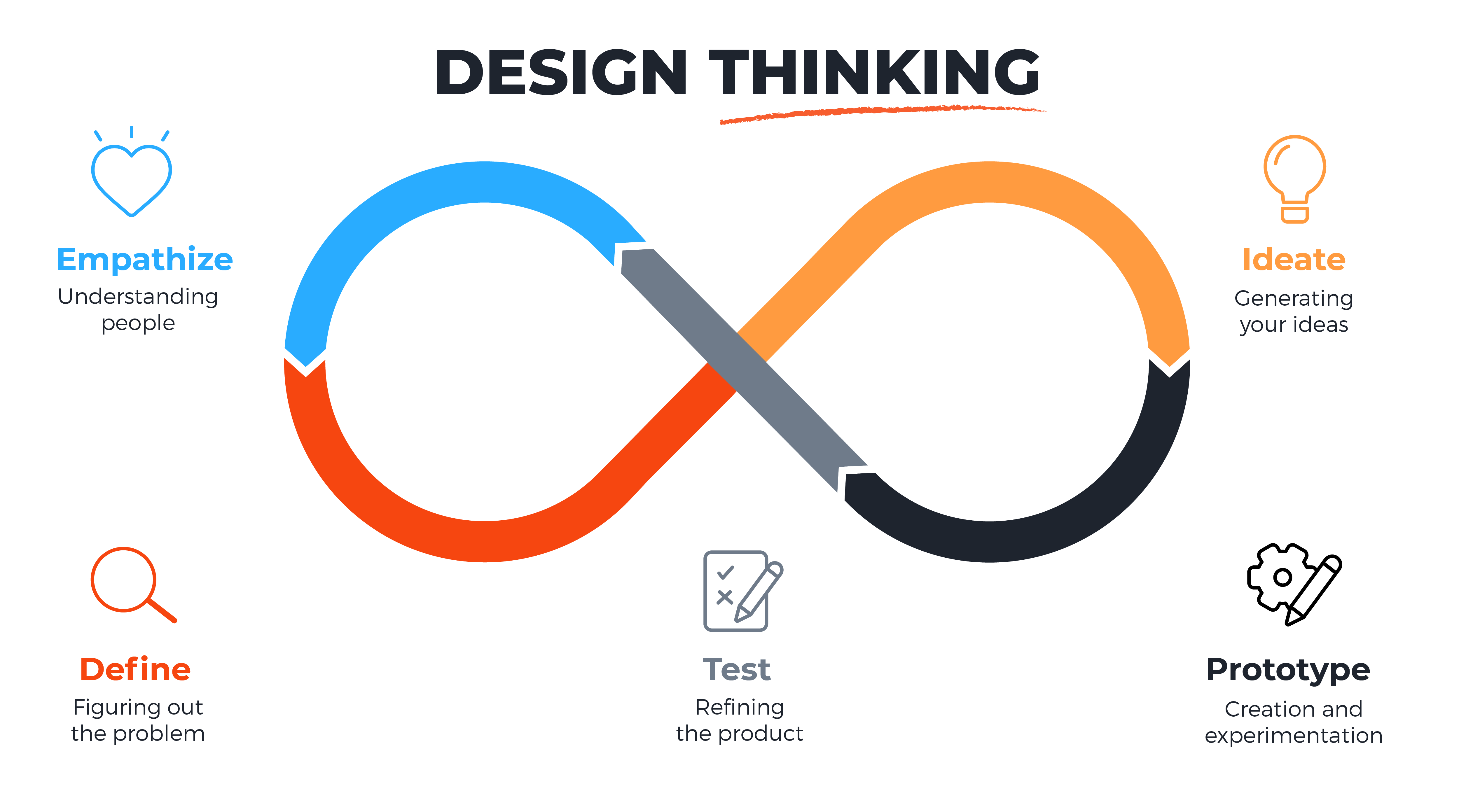
Design thinking is a powerful problem-solving approach that has gained significant traction in recent years. Originating from the design field, this methodology has evolved to become a versatile tool applicable across various domains, from business and education to personal life. At its core, design thinking emphasises empathy, creativity, and a user-centric mindset, enabling individuals and organizations to tackle complex challenges in innovative and impactful ways.
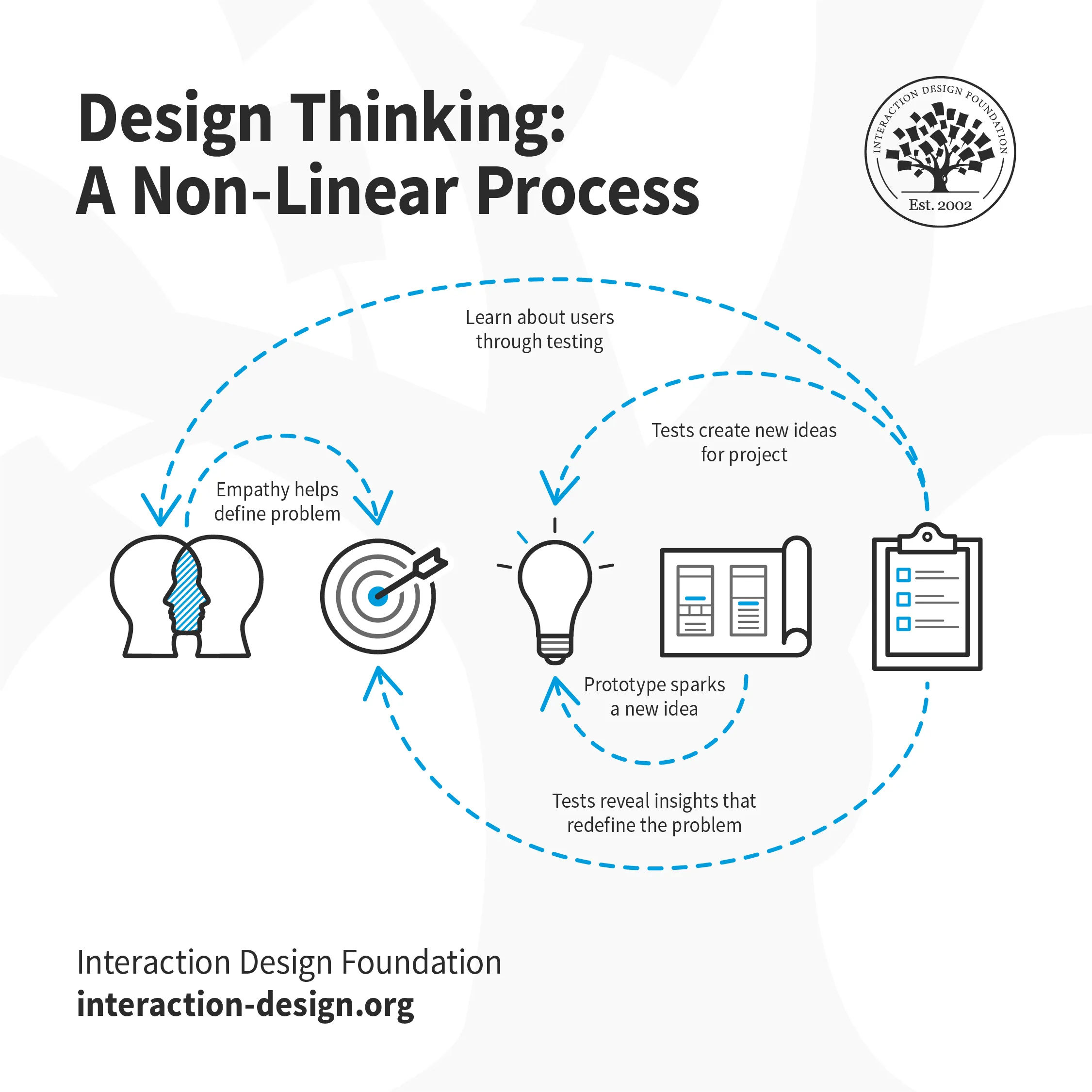
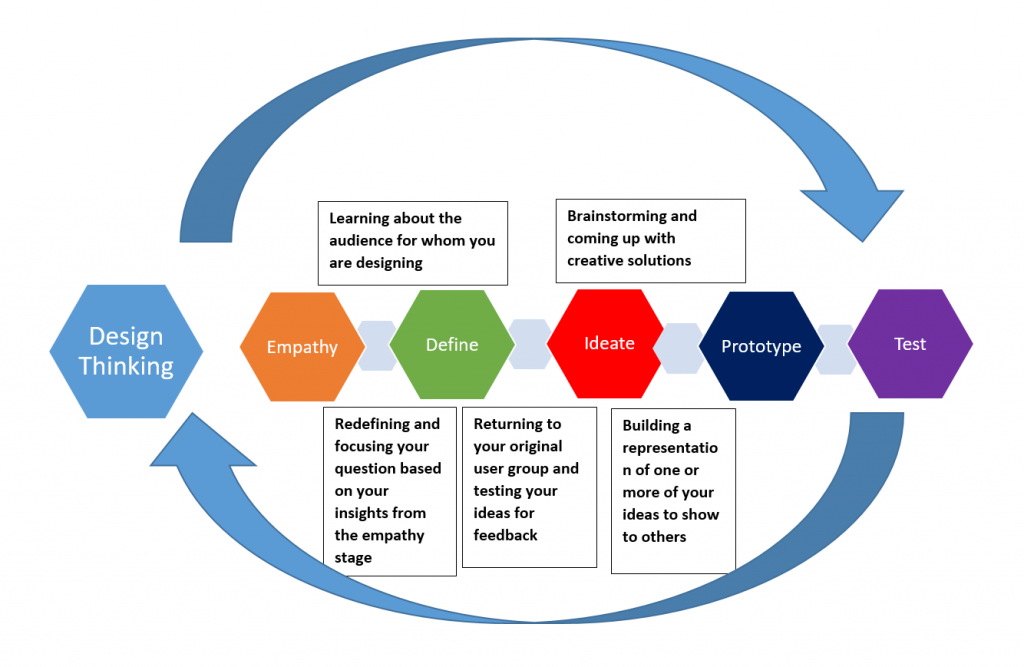
Design thinking is a human-centred approach to problem-solving that involves a deep understanding of the user’s needs, the exploration of multiple solutions, and the iterative testing and refinement of those solutions. It is a non-linear process that typically consists of five key stages:
Empathise: The first step is to develop a deep understanding of the user’s needs, pain points, and motivations. This involves observing, engaging with, and immersing oneself in the user’s experience.
Define: Based on the insights gathered during the empathise stage, the problem or challenge is clearly defined, often through the creation of a user-centric problem statement.
Ideate: This stage encourages the generation of a wide range of creative ideas and solutions, often through techniques like brainstorming, mind mapping, and lateral thinking.
Prototype: Selected ideas are then transformed into tangible prototypes, which can be tested and refined to gather feedback and insights.
Test: The prototypes are tested with users, and the feedback is used to further refine and improve the solutions.
The design thinking process is iterative, allowing for continuous learning and improvement. It encourages a mindset of experimentation, embracing failure as a valuable learning opportunity, and a willingness to adapt and evolve solutions based on user feedback.
Applications of Design Thinking
Design thinking has found applications in a wide range of domains, from business and innovation to education and personal development. Here are some examples of how design thinking can be leveraged in different contexts:
Business and Innovation: Design thinking has become a powerful tool for businesses and organisations seeking to drive innovation and create products or services that truly resonate with their customers. By focusing on the user’s needs and pain points, companies can develop solutions that are more relevant, user-friendly, and competitive in the market.
Many leading companies, such as Apple, IDEO, and Airbnb, have successfully integrated design thinking into their product development and business strategies. This approach has enabled them to identify new opportunities, create innovative solutions, and stay ahead of the curve in their respective industries.
Education: Design thinking has also found a strong foothold in the education sector, where it is being used to enhance teaching and learning experiences. Educators are incorporating design thinking principles into their classrooms, empowering students to tackle real-world problems, develop critical thinking skills, and foster a culture of creativity and innovation.
Through design thinking, students learn to empathise with their target users, define relevant challenges, generate creative ideas, and prototype and test their solutions. This process not only enhances their problem-solving abilities but also helps them develop essential skills like collaboration, communication, and adaptability.
Personal Development: Design thinking can also be applied to personal life, helping individuals navigate various challenges and unlock their creative potential. By adopting a design thinking mindset, people can approach personal goals, such as career development, lifestyle changes, or personal relationships, with a more empathetic and iterative approach.
For example, individuals can use design thinking to better understand their own needs, define personal challenges, explore creative solutions, and prototype and test new approaches to personal growth and fulfilment. This can lead to more meaningful and impactful changes in one’s life.

Applying Design Thinking at Home, School, and Work
So how can one incorporate this powerful approach into their daily life, whether at home, in school, or in the workplace?
At Home
Design thinking can be a valuable tool for tackling various challenges and improving one’s personal life. Here are some ways one can apply design thinking at home:
Improving Household Routines: Use design thinking to analyse the daily household routines, such as meal planning, cleaning, or family activities. Observe the family’s needs, define pain points, ideate solutions, and prototype and test new approaches to streamline these processes.
Enhancing Home Spaces: Apply design thinking to reimagine and optimize the living spaces. Empathise with how one and their family use different rooms, define areas for improvement, ideate creative design solutions, and prototype and test new layouts or furnishings.
Solving Personal Challenges: Leverage design thinking to address personal challenges, such as managing stress, improving work-life balance, or developing new hobbies. Empathise with own needs, define the problem, explore creative solutions, and prototype and test new approaches to personal growth and well-being.
Fostering Family Collaboration: Engage the family in design thinking exercises to solve shared challenges, such as planning family vacations, organising family events, or addressing sibling conflicts. Encourage everyone to contribute their ideas and perspectives, and work together to prototype and test solutions.

In School
Design thinking can be a powerful tool for enhancing the educational experience, both for students and educators. Here are some ways to apply design thinking in a school setting:
Student-Centred Learning: Incorporate design thinking into the curriculum, empowering students to tackle real-world problems and develop essential skills like critical thinking, creativity, and collaboration. Encourage students to empathise with the needs of their target users, define relevant challenges, ideate solutions, and prototype and test their ideas.
Improving the Learning Environment: Use design thinking to analyse and enhance the physical and digital learning environments. Observe how students and teachers interact with the space, define areas for improvement, ideate creative solutions, and prototype and test new designs for classrooms, libraries, or online learning platforms.
Addressing Educational Challenges: Apply design thinking to tackle systemic challenges in the education system, such as improving student engagement, enhancing teacher professional development, or addressing educational inequities. Engage stakeholders, including students, teachers, and administrators, to empathise with their needs, define the problems, and collaboratively develop and test innovative solutions.
Fostering Interdisciplinary Collaboration: Encourage cross-disciplinary collaboration among students and educators, leveraging design thinking to tackle complex, multifaceted challenges. This can help break down silos, promote holistic problem-solving, and prepare students for the interdisciplinary nature of the real world.

At Work
Design thinking can be a valuable asset in the workplace, helping organisations and employees alike to drive innovation, improve processes, and enhance the employee and customer experience. Here are some ways to apply design thinking in a professional setting:
Product and Service Development: Integrate design thinking into the product or service development process, ensuring that the result truly meets the needs and expectations of the target customers. Empathize with the user, define the problem, ideate solutions, prototype, and test to create innovative and user-centric offerings.
Organisational Transformation: Apply design thinking to drive organisational change and transformation. Observe and empathize with the needs of employees, customers, and other stakeholders, define the challenges, ideate solutions, and prototype and test new processes, policies, or structures to improve the overall organizational experience.
Workplace Optimisation: Use design thinking to analyse and optimise the work environment, from physical office spaces to digital tools and workflows. Empathize with the needs of employees, define areas for improvement, ideate creative solutions, and prototype and test new designs or processes to enhance productivity, collaboration, and job satisfaction.
Employee Development: Incorporate design thinking into employee training and development programs, empowering individuals to tackle their professional challenges and unlock their creative potential. Encourage employees to empathise with their own needs, define personal goals, ideate solutions, and prototype and test new approaches to career growth and skill development.
By embracing design thinking in personal, academic, and professional life, one can unlock a world of creativity, innovation, and problem-solving. Whether one is tackling a complex challenge or simply seeking to improve their daily routines, the design thinking approach can help develop a more empathetic, user-centric, and iterative mindset, leading to more meaningful and impactful solutions.
In a world marked by complexity, uncertainty, and rapid change, design thinking offers a beacon of hope—a pathway to innovation, creativity, and human-centred solutions. By embracing empathy, creativity, and collaboration, individuals, organizations, and communities can unlock new possibilities, drive positive change, and shape a better future for all.

 Memories and Such